

Greece
by Henry Miller
Anne Poor’s postwar drawings meet Miller’s memories of prewar Greece in a compact, independent collaboration.
- 1964
- 55
- Atmospheric
- Elegiac
- lyrical
- autobiographical
- intimate
About Henry Miller
The story, briefly
Spoiler-freeGreece is a short illustrated book pairing Henry Miller’s new text with drawings by Anne Poor. Poor made most of the drawings while living in Greece in 1949–50; Miller’s accompanying prose looks back to his own transformative 1939 journey. Viking published the collaboration as a Studio Book in 1964. It is related to The Colossus of Maroussi but is not an abridgment of it.
The story, in more detail
The book joins two visits separated by a decade and a world war. Poor records architecture, landscape, and daily life with an artist’s economical line, while Miller writes from memory about the Greece he encountered on the eve of war.
That temporal layering gives the small volume its character: neither conventional guidebook nor simple picture portfolio, it is a dialogue between an illustrator’s postwar observations and a writer’s remembered revelation.
Themes and analysis
Two visits, brought together on the page
Miller’s prose looks back to his 1939 Greek journey. Anne Poor’s drawings came from a later encounter with the country, around 1949–1950. The book is consequently a meeting of two responses to Greece, not the illustrated diary of a trip they took together.
The distinction changes how the pictures should be read. They are not documentary evidence that Poor stood beside Miller at a particular episode in The Colossus of Maroussi. Each contributor has a separate experience of the landscape, and the 1964 volume lets those experiences answer one another.
Ancient monuments and inhabited places
Poor depicts monumental Greece, including the Acropolis, but also boats, buildings, and people. Her images move between archaeological subjects and the country’s continuing everyday life. The contrast keeps the book from functioning only as a collection of views of classical ruins.
Historian Natalia Vogeikoff-Brogan draws attention to Poor’s differing treatments of the Parthenon and to a drawing dated April 26, 1950. Such details give the artwork a history independent of Miller’s recollection. The prose, meanwhile, is a retrospective return: Miller treats this contribution as an epilogue to his first journey.
A collaboration rather than a sequel
Viking published Greece in 1964 as a Studio Book. Its brief text and substantial visual component make it a different reading experience from the sustained travel narrative of The Colossus of Maroussi. Anne Poor is a co-creator of the book’s account of place, not a character in Miller’s earlier travels.
Miller’s admiration is also a viewpoint, not a comprehensive description of Greek society. His idealized country should be read beside Poor’s particular observed scenes. The pleasure of the book lies in that difference between remembered revelation and a draughtsperson’s sustained attention.
Why we recommend it
Two journeys in one object
Miller’s 1939 memories and Poor’s 1949–50 drawings preserve different historical moments.
A concentrated Greece
The brief format distills Miller’s attachment to the country without repeating his longer travel narrative.
Two separate encounters with Greece
Miller’s prose and Anne Poor’s later drawings let readers compare two artists’ responses to the country without assuming they traveled together.
What this book explores
The people in its pages

Anne Poor
The American artist whose drawings of Greece, made largely in 1949–50, shape the book’s visual journey.
Timeline
1939
Miller travels through Greece.
1949–1950
Anne Poor makes most of the drawings used in the book.
1964
Viking publishes Greece.
Book editions
Hardcover
- Hardcover
- Viking Press
- 1964
Reader reviews
Readers may also like


Greece: frequently asked questions
Is Greece an abridged Colossus of Maroussi?
No. Miller wrote a new text for this collaboration with Anne Poor.
When were Anne Poor’s drawings made?
Most date from her time in Greece in 1949–50.
Who published Greece?
Viking Press issued it as a Studio Book in 1964.
Did Henry Miller and Anne Poor make the book on a shared trip?
No. Miller visited Greece in 1939, while most of Anne Poor’s drawings date from 1949–1950.
Who supplied the text and the pictures?
Henry Miller supplied the text; Anne Poor supplied the drawings.
If you like Henry Miller
Explore authors with a similar voice, perspective, and influence.

Louis-Ferdinand Céline
Miller's acknowledged master at making literature out of the gutter. Journey gave him permission; Cancer is what he did with it.
View author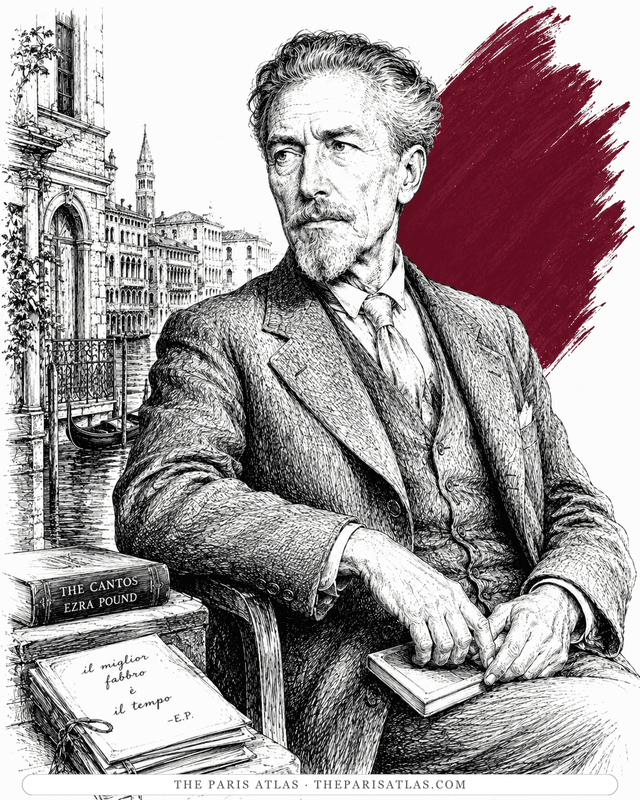
Ezra Pound
Pound read Cancer and sent Miller a famously backhanded postcard. Both believed literature's job was to wake the reader by any means necessary.
View author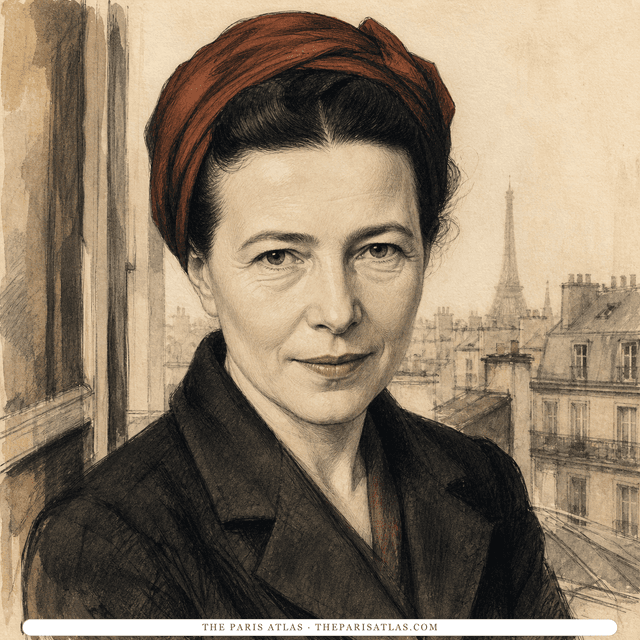
Simone de Beauvoir
French writer and philosopher whose novels, memoirs, and social analysis examined freedom, gender, responsibility, aging, and the material conditions that shape a life.
View author
References
References
The sources below include the primary text, editions, scholarship, archival materials, and other records that informed this page. They document Greece, its publication, and its place in literary history.


1Greece
MemoirHenry Miller, 1964Used forThe primary text represented by this page, used for descriptions of the work’s contents and for any quoted passages shown here.
2Greece — Viking Studio Book edition record
WebsiteCiNii BooksUsed forWeb source consulted for documented facts and historical context presented on the Greece page.

3Henry Miller’s Timeless Greece through the Drawings of Anne Poor
PeriodicalFrom the Archivist’s Notebook, American School of Classical Studies at AthensUsed forContemporary reporting or criticism used to document the historical reception and context of Greece.
4The Happiest Man Alive: A Biography of Henry Miller
BiographySimon & Schuster, 1991Used forBiographical evidence used to verify chronology, relationships, and historical context connected to Greece.
5Henry Miller: A Life
BiographyW. W. Norton, 1991Used forBiographical evidence used to verify chronology, relationships, and historical context connected to Greece.
6Henry Miller: An Inventory of His Collection
ArchiveHarry Ransom Center, The University of Texas at AustinUsed forArchival evidence used to document the historical record connected to Greece.
i
Why these sources are here
The primary text is the baseline reference for every book page. Additional references document publication history, interpretation, and historical context where that evidence is available.
 Explore more resources