
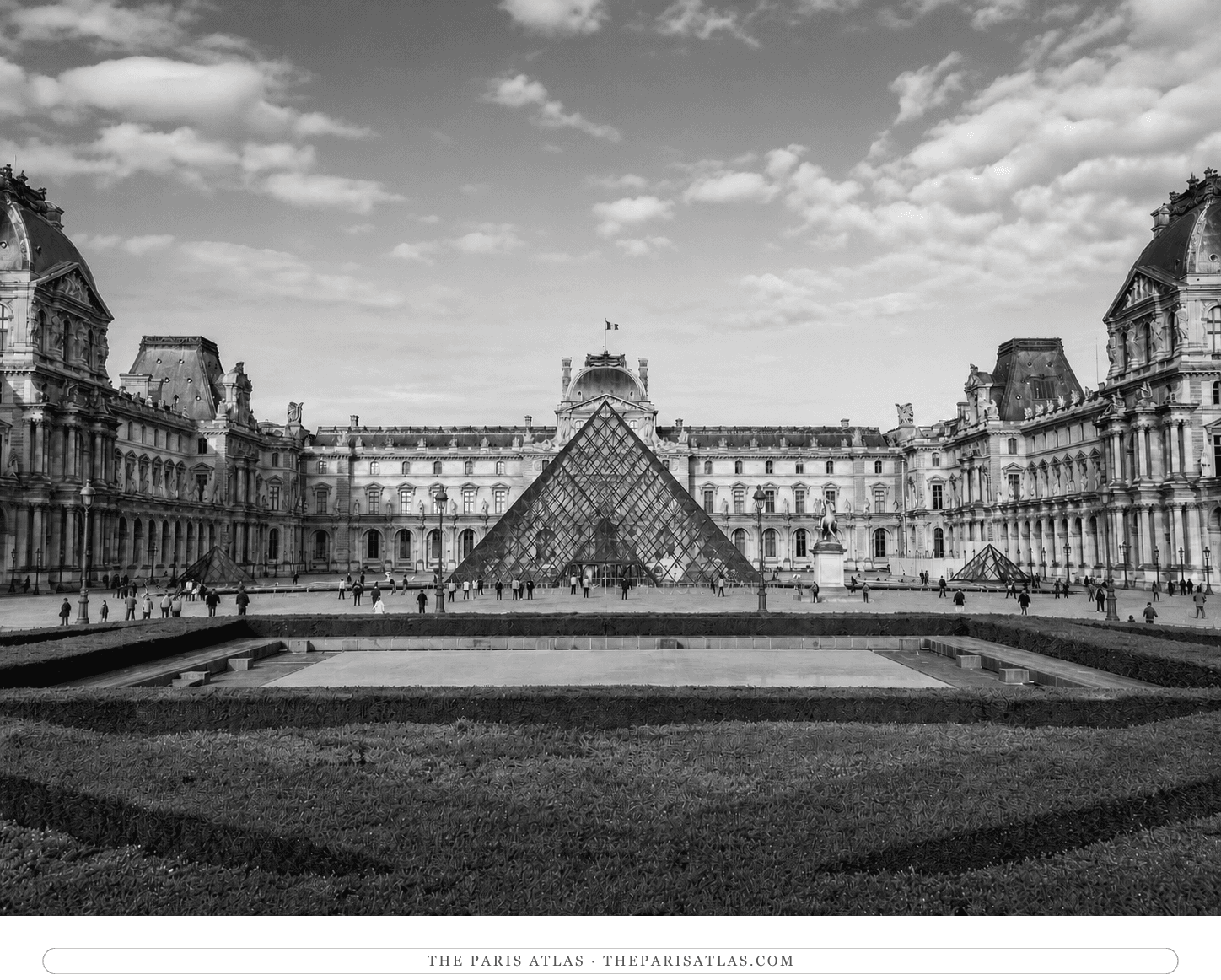
Displayed at
Musée du Louvre
The live Louvre collection record places the painting in Room 700, the Salle Mollien, in the Denon wing on Level 1.
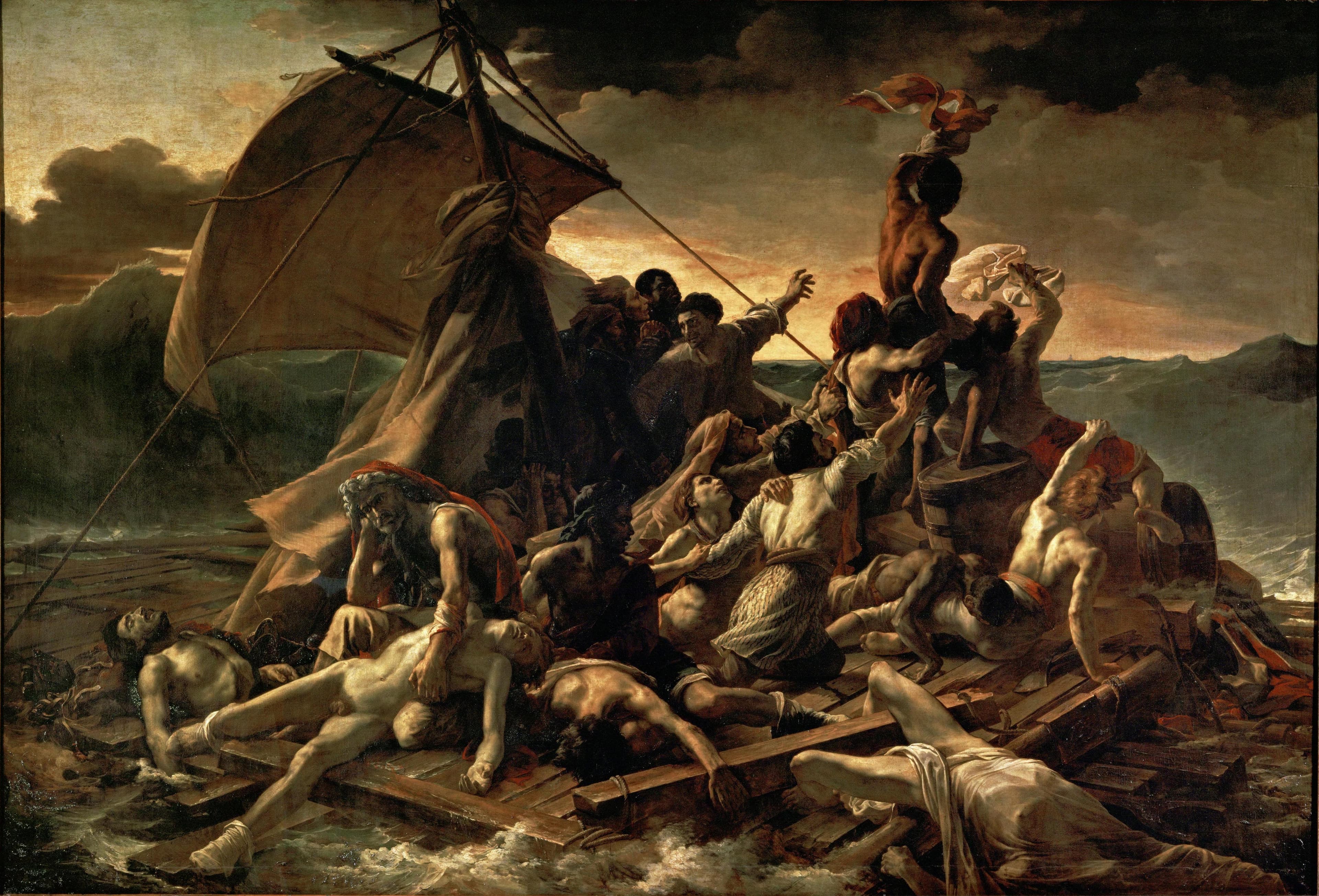
Théodore Géricault made this monumental painting from a recent French naval disaster. It shows the survivors of the Méduse raft trying to signal the distant rescue ship Argus after nearly two weeks at sea.
A makeshift raft fills the lower half of the canvas. Dead and dying bodies lie across its wet timbers. Above them, the living turn toward the horizon, lift one another, and wave cloth at a ship that is almost too small to see. A dark sail drives in the opposite direction, while a wave rises at the left edge.
The painting does not show the shipwreck itself. Théodore Géricault chose a later and less certain moment: the survivors have sighted the brig Argus, but they do not yet know whether its crew has seen them. The tiny ship is a possible rescue, not a completed one. Hope and failure occupy the same instant.[1]
The French frigate Méduse sailed in 1816 as part of an expedition to restore French control in Senegal after the Napoleonic Wars. Its commander, Hugues Duroy de Chaumareys, had received the post under the restored Bourbon monarchy and had not sailed for roughly twenty-five years. On 2 July, the ship ran onto the Bank of Arguin off the coast of present-day Mauritania.[2]
There was not enough room in the boats for everyone. A raft made from the frigate's timbers took about 150 people and was initially tied to the boats. The tow was cut, leaving the raft adrift. The people aboard endured thirst, hunger, violence, exposure, and cannibalism before the Argus found fifteen alive. Counts differ in later retellings because some sources count those first put on the raft, some those found alive, and some those who survived after rescue. The Louvre's object record uses 150 people and fifteen rescued survivors.[2]
This was not understood as an unavoidable storm at sea. The frigate grounded in calm conditions after poor navigation, and the abandonment of the raft exposed failures of command. The disaster became evidence against a Restoration government accused of rewarding aristocratic loyalty over competence.[2]
Two survivors, the naval surgeon Jean-Baptiste-Henri Savigny and the engineer-geographer Alexandre Corréard, published an account in 1817. Their testimony gave the public names, decisions, and physical details rather than a distant legend. Corréard lost an expected government post after the unauthorized publication. Géricault chose the subject while the wreck, the inquiry, and the survivors' accusations were still current news.[2]
Géricault organized the figures into two crossing diagonals. One rises from the dead man at lower left through the men who strain toward the horizon. The other follows the mast and dark sail down toward the wave. The upward movement carries the eye toward the waving figure; the sail and sea push back against it.[3]
The bodies also form a broad pyramid, a stable structure borrowed from classical history painting. Géricault used that prestigious form for unnamed, recently shipwrecked people rather than saints, rulers, or ancient heroes. The figures are larger than life, but the raft beneath them looks unable to support their weight. Monumental scale does not turn the scene into an easy victory.
Géricault treated the recent event as something that had to be reconstructed. He met survivors, studied their account, and worked with a scale model of the raft. The Louvre records that he visited morgues and observed dying patients in hospitals. His surviving studies include severed limbs, individual heads, bodies, and changing arrangements for the final group.[1]
The finished picture was not a literal report. The real raft was more crowded, and nearly two weeks of starvation would not produce the muscular bodies seen here. Géricault combined witness evidence with the anatomy, scale, and structured poses of European history painting. The research establishes the event; the composition interprets it.[1]
At full scale the canvas reads as a rising diagonal of bodies. Up close it is a catalogue of specific people in specific stages of hope, exhaustion, and death. Géricault drew every figure from a study, and the picture is designed to reward reading from the base upward — in the order the survivors' own attention would have moved on the morning the Argus appeared.
At the lower left, an old man cradles the body of a dead young man. Géricault's studies for the old survivor date from his visits to the Paris morgue, and the young man's grey-green flesh is the coldest tone in the painting. The two are linked to the top of the composition by a length of red cloth — one of the two red passages in the painting, the other being the flag being waved at the summit — that runs up along the raft's timbers.
In front of them, the dead figures lying across the raft are painted with the anatomical precision of the studies Géricault made in the Beaujon hospital in Paris, where he drew corpses and the muscles of dying patients. One body dangles a leg over the raft's edge into the water. Another lies face-down with an arm outstretched. Géricault drew both bodies from real studies of death rather than from convention.
The central mass of figures is a group of pushing arms and shouting mouths. Géricault built this crowd by working through pose after pose in oil sketches, moving individual figures in and out of the composition until the eye's movement from the dead lower half into the living upper half became continuous. The overall shape of the group is the classical pyramid used in academic history painting, but the top of the pyramid is not a hero — it is a Black man seen from behind, waving a piece of cloth.
The muscular bodies of the climbing survivors — the blonde-haired man reaching for the barrel, the twisting arms above him — show where Géricault's academic training is most visible. He had studied in the atelier of the neoclassical painter Pierre-Narcisse Guérin and spent 1817 and 1818 drawing corpses and dying patients at the Beaujon hospital in Paris. His anatomical precision runs through the whole painting. It also produced a tension the Louvre's own commentary flags: after nearly two weeks of thirst and starvation, the real survivors could not have carried this much muscle. Géricault gave them the bodies of classical heroic nudes because he needed the vocabulary of European history painting to make a Salon audience read the shipwreck the way they read a battle scene.
The Black figure at the summit is developed from studies of a Haitian professional model named Joseph. His body is turned away from the viewer, one arm raised with a red-and-white cloth, the other arm braced on the shoulder of the man below him — the moment at which signalling to the Argus becomes physical labour. Géricault placed a Black man at the top of a monumental French Salon painting in 1819, seventeen years after Napoleon had restored colonial slavery in the French empire, without drawing the viewer's attention to the placement in any inscription or Salon text. The Louvre asks in its own commentary whether the painting can be read against slavery.[4]
The mast rises to the left of the summit at a shallower angle than the figures. Its dark sail bellies in the wrong direction, driving the raft away from the Argus — the wind is blowing against the rescue. Two diagonals cross the canvas: bodies rising toward the Argus, sail pulling back toward the wave at the far left. The composition presses toward rescue and toward failure at the same time.
At the far right, on the horizon, is the tiny silhouette of the brig Argus. Géricault painted it small enough that many viewers miss it on a first look. The survivors on the raft on the morning of 17 July 1816 could not see the Argus clearly either — they were signalling to a ship whose crew might not yet have seen them. Géricault built the whole composition around a rescue that is present in the picture only as a shape the viewer has to search for.
The highest figure is a Black man, seen from behind, waving a red-and-white cloth toward the Argus. Géricault developed the body from studies of Joseph, a Haitian man who came to Paris with an acrobatic troupe and became a professional artist's model. The National Gallery of Art identifies Joseph as the model; that does not make the painted figure a portrait of one securely identified survivor.[4]
The placement matters. France had abolished slavery in 1794, Napoleon Bonaparte restored it in 1802, and the restored monarchy maintained colonial slavery when Géricault painted the work. The Louvre asks whether the painting can be read against slavery and notes the unusual prominence of the Black figure. That context supports an abolitionist reading, but the canvas contains no written program that settles the question by itself.[4]
Géricault submitted the painting to the Salon of 1819 under the less specific title Scène de naufrage, or Shipwreck Scene. Viewers nevertheless recognized the Méduse disaster. Critics divided over its brutal bodies, dark color, political subject, and refusal to supply one exemplary hero.[1]
The painting is now treated as a defining work of French Romanticism. That label does not mean it abandoned every classical method. Its pyramidal design and carefully drawn bodies came from the academic tradition. What changed was the use of those methods for current catastrophe, extreme physical experience, political failure, and an ending that remains uncertain.
The canvas measures 4.91 metres high and 7.16 metres wide — about 16 feet 1 inch by 23 feet 6 inches. It is wider than a city bus is long. Géricault rented a large Paris studio at 80 rue du Faubourg-du-Roule, now rue du Faubourg-Saint-Honoré, because an ordinary room could not hold it.[1]
He painted in oil on canvas. The darkened surface seen today is partly historical: some of the materials and heavy dark passages have aged unevenly. The Louvre record notes nineteenth-century concern about the increasing darkness and repeated conservation work. Reproductions can brighten the scene substantially, so the live painting may look darker than the image on a screen.
As verified on 13 August 2026, The Raft of the Medusa is displayed in Room 700, the Salle Mollien, on Level 1 of the Denon wing. From the Mona Lisa in the Salle des États, the Louvre's route directs visitors behind that painting, into the next room, then left into the long red gallery.[3]
The Louvre acquired the painting at Géricault's posthumous sale in 1824 and has displayed it permanently since 1826 except during wartime removals. Room assignments and gallery closures can change, so check the live collection record and museum map before a visit built around this one work.[1]
2 July 1816
The frigate Méduse runs aground on the Bank of Arguin while sailing toward Senegal.
July 1816
About 150 people are placed on a makeshift raft and abandoned when its tow is cut; the Argus later finds fifteen alive.
1817
Jean-Baptiste-Henri Savigny and Alexandre Corréard publish their survivor account, turning the wreck into a documented political scandal.
1818
Géricault begins the monumental canvas in a specially rented Paris studio after studying witnesses, models, bodies, and the construction of the raft.
July 1819
The painting is completed after being moved to the foyer of the Théâtre-Italien, on the site of today's Opéra-Comique.
25 August 1819
It opens at the Paris Salon under the title Scène de naufrage and divides critics.
1820–1821
The canvas is rolled for transport and exhibited to paying audiences in London and Dublin.
1824
Géricault dies at thirty-two; the French Crown buys the painting at his posthumous sale for the royal museum.
1826
The work goes on permanent display at the Louvre, where it remains apart from wartime removals and conservation periods.
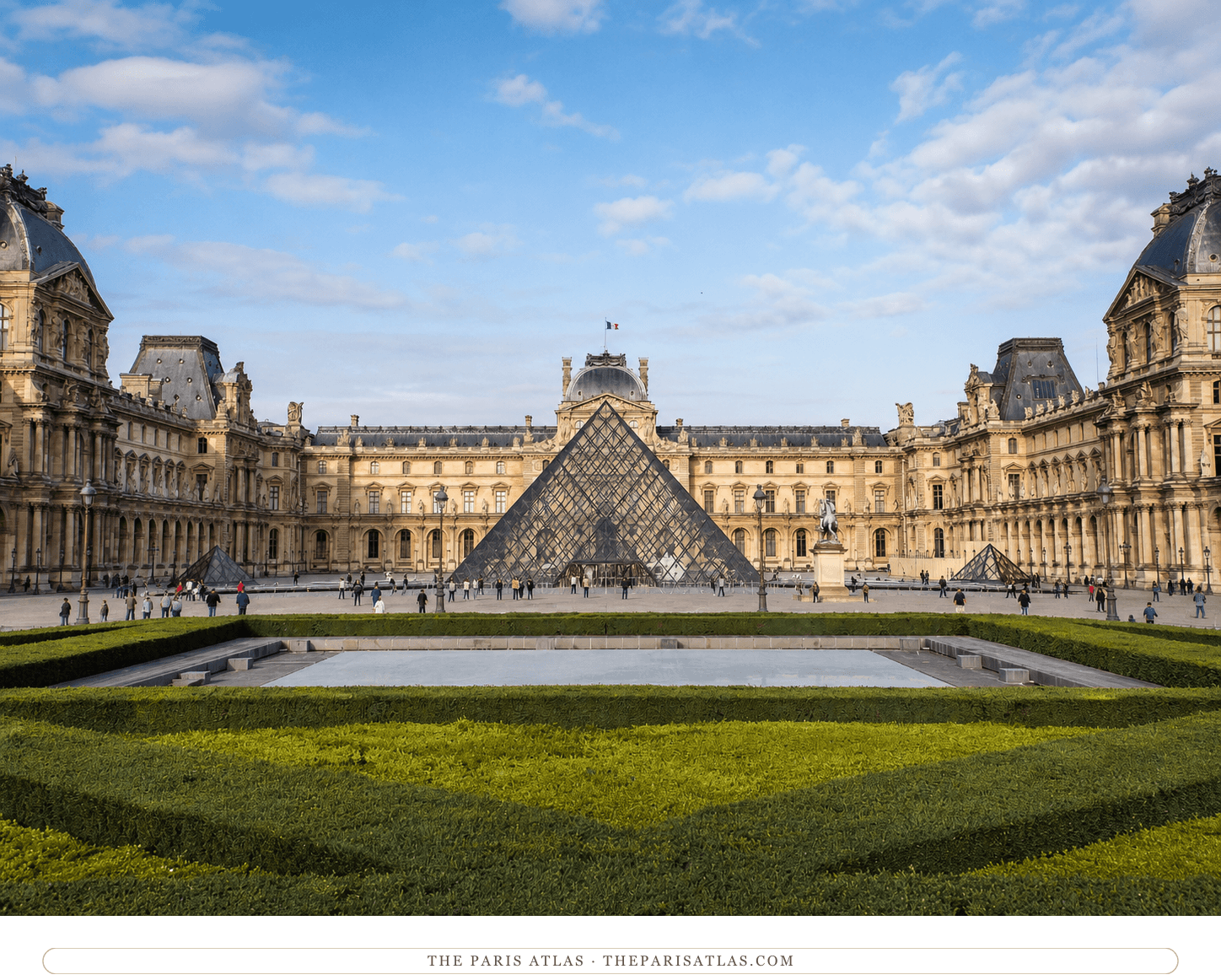
Musée du Louvre, Paris
Rue de Rivoli, 75001 Paris, France
Displays and loans can change. Check whether this work is on view before making a special trip.
Plan your visitThe French painter Théodore Géricault painted it in Paris in 1818 and 1819. He was twenty-seven when he began the full canvas and died five years after its Salon debut.
The French frigate Méduse grounded off present-day Mauritania in 1816. About 150 people were put on a makeshift raft, whose tow was cut; after days of thirst, hunger, violence, exposure, and cannibalism, the Argus found fifteen people alive.
It shows the survivors trying to signal the distant Argus. Rescue is visible but not yet assured, which lets the composition hold hope and despair at the same time.
Its most direct subject is survival after political and naval failure. Géricault gives anonymous victims the monumental scale of history painting, but he avoids a completed rescue or a single conventional hero.
The wreck had exposed an incompetently led Restoration expedition, and the survivors had publicly blamed those in command. Géricault also presented dead bodies, cannibalism, Black figures, and political failure on a scale usually reserved for elevated historical subjects.
Yes. Museums treat it as a defining early work of French Romanticism because it combines current disaster, extreme emotion, physical danger, and uncertain hope. Its drawing and pyramidal composition still use classical academic methods.
The body was developed from studies of Joseph, a Haitian professional model in Paris. The painting does not securely identify the figure as one named historical survivor, so Joseph should be credited as the model rather than presented as the character's proven identity.
Its immediate subject is the Méduse disaster, but the ship sailed to restore French colonial rule in Senegal, where slavery remained central, and Géricault placed a Black figure at the composition's summit. The Louvre presents an abolitionist reading as a serious question rather than a conclusively documented single meaning.
The Louvre records it as 4.91 metres high and 7.16 metres wide, or roughly 16 feet 1 inch by 23 feet 6 inches.
Géricault designed a dark, storm-lit scene, and some of his oil materials have also darkened with age. The Louvre record documents nineteenth-century concern about that change, so bright reproductions may not match the canvas in the gallery.
Room 700, the Salle Mollien, on Level 1 of the Denon wing, as verified on 13 August 2026. The Louvre's route reaches it from the room behind the Mona Lisa and then left into the red gallery.
At the Salon of 1819 it appeared as Scène de naufrage, meaning Shipwreck Scene. The less specific title did not prevent contemporary viewers from recognizing the recent Méduse disaster.
Displayed at
The live Louvre collection record places the painting in Room 700, the Salle Mollien, in the Denon wing on Level 1.
Explore painters from the same movements and circles.
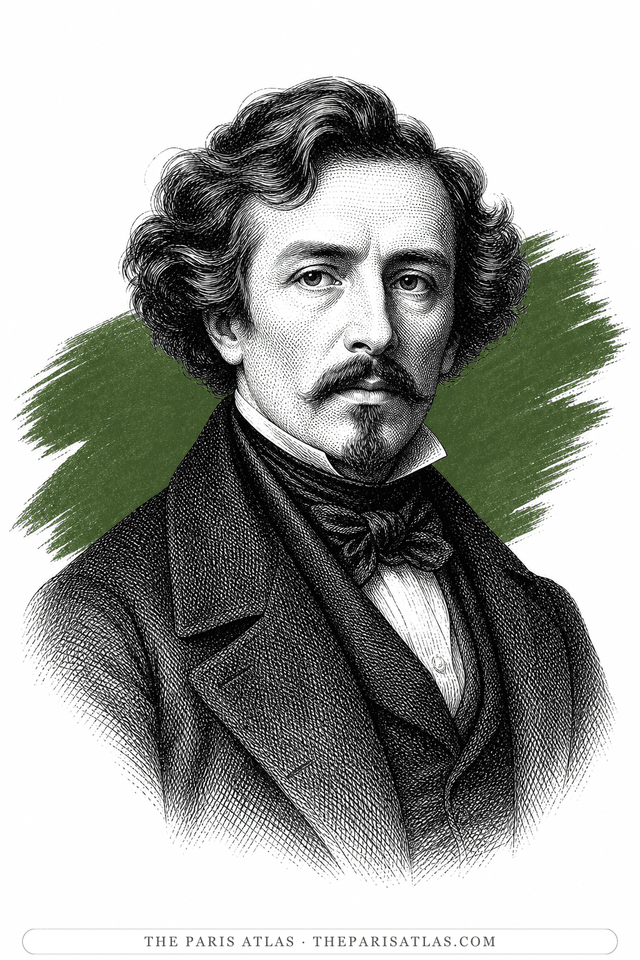
The leading painter of French Romanticism, who put a barricade of the 1830 revolution on the wall of the Salon — the state's official art exhibition — in Liberty Leading the People, spent twelve years on a chapel in the church of Saint-Sulpice, and died in the small apartment on the rue de Furstemberg that is now a museum.
View artist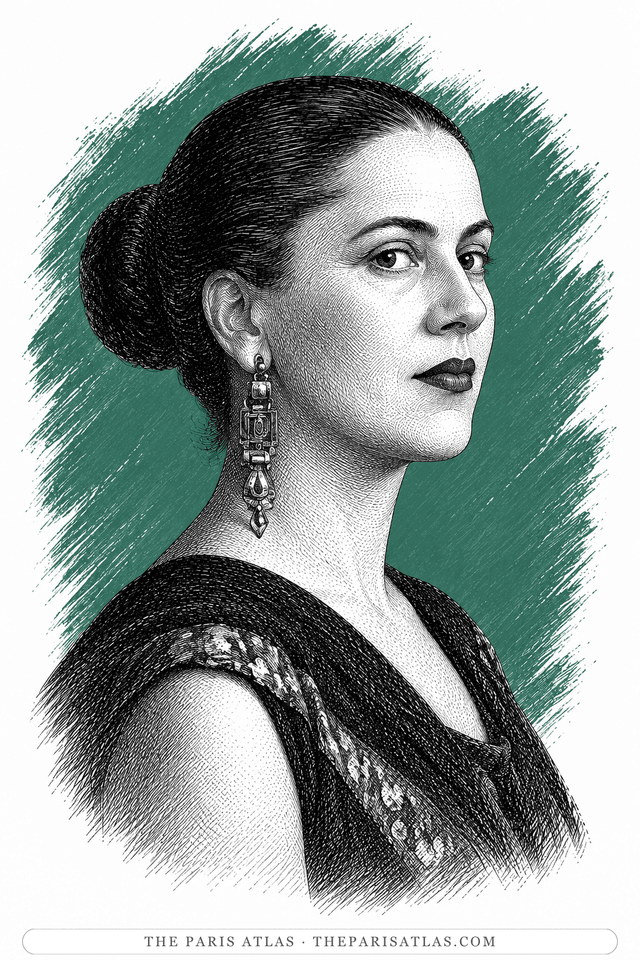
Brazilian painter who spent the 1920s moving between São Paulo and Paris, studied Cubism under André Lhote, Albert Gleizes and Fernand Léger, and used what she learned to paint Brazilian towns, railways, plants and bodies. Her 1928 painting Abaporu prompted the manifesto that gave the Anthropophagic movement its name.
View artist
French-American artist, lifelong friend of Yves Klein, and a founder of New Realism.
View artistThe sources below include collection records, catalogues, scholarly research, and primary materials that informed this page. They document The Raft of the Medusa, its making, and its place in cultural history.


Web source consulted for documented facts and historical context presented on the The Raft of the Medusa page.
Web source consulted for documented facts and historical context presented on the The Raft of the Medusa page.
These references provide the documented foundation for this work's history and interpretation. Claim-level citations remain attached to the specific claims they support.
 Explore more resources