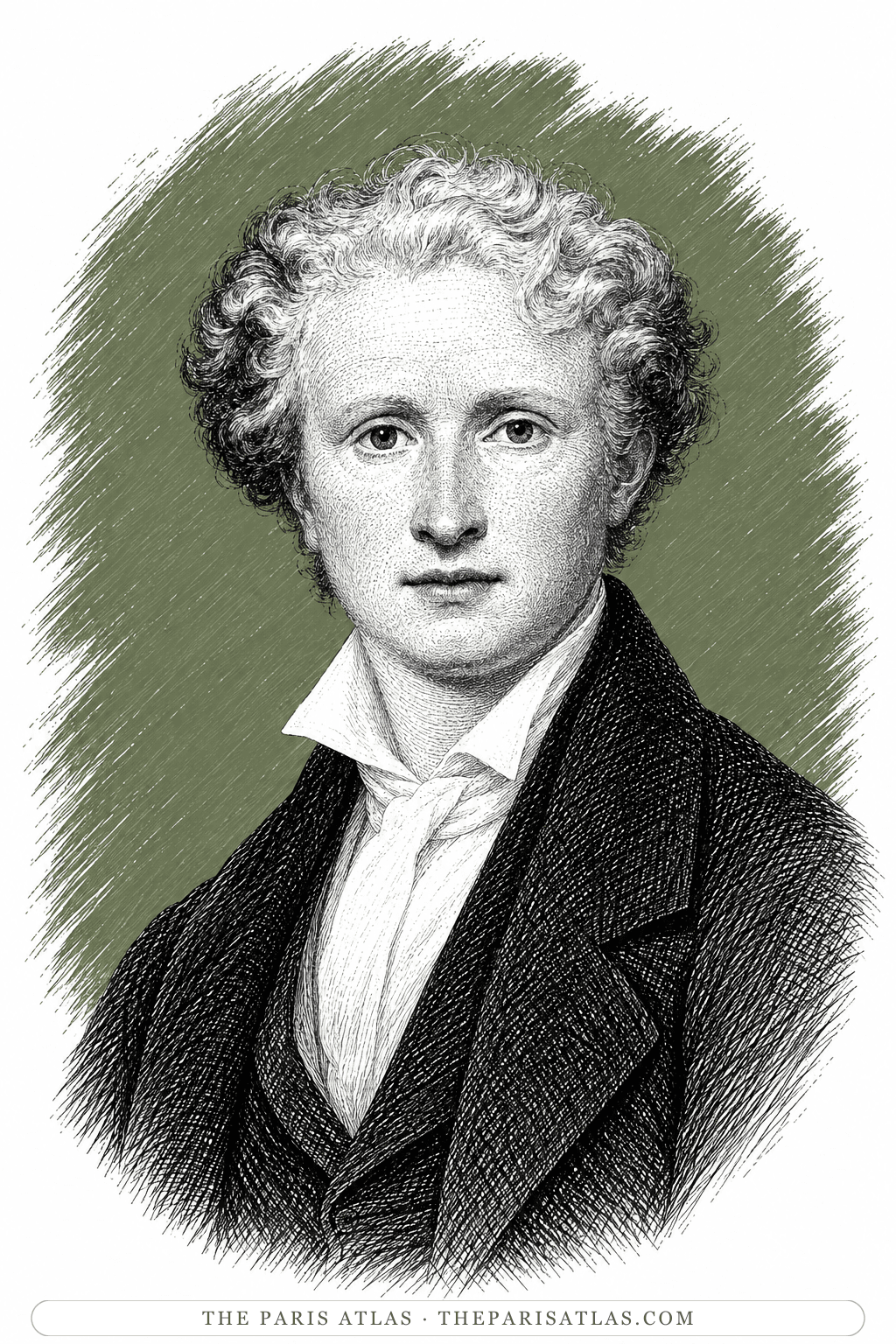
Raymond Bonheur
- Painter
Child of
Raymond Bonheur was Rosa’s father and provided her private training in drawing and painting.
At the horse markets of Paris and in her studio beside the forest of Fontainebleau, Rosa Bonheur gave animals the presence of great portrait subjects. The success of The Horse Fair helped her build a life shaped by her work, financial independence, and the women she loved.
Rosa Bonheur (1822–1899) made animals the principal subjects of an exceptionally successful artistic career. Her oxen, horses, sheep and lions were observed with the care normally given to important human sitters, while her largest canvases gave agricultural work and animal movement the scale associated with history painting. Ploughing in the Nivernais established her reputation in France; The Horse Fair carried it abroad. Their success made her one of the most celebrated women artists of the nineteenth century and helped demonstrate that animal painting could sustain both serious artistic ambition and an international market.
Her independence was practical as well as artistic. Trained outside the official academy, she earned enough through painting and reproductions to establish a substantial home and studio near Fontainebleau. She shared her life with women, wore trousers when they suited her work and maintained a professional identity that did not depend on marriage. Yet she also accepted state commissions, exhibited at the Salon and received honors from European rulers. Her career challenges the assumption that a woman had to stand entirely outside established institutions to change what was possible within them.
Marie-Rosalie Bonheur was born in Bordeaux on 16 March 1822. Her father, Raymond Bonheur, was a painter and drawing teacher; her mother, Sophie, taught music. The family moved to Paris in 1829, when Rosa was seven. Art became a family occupation: her brothers Auguste and Isidore and her sister Juliette also pursued artistic careers, with Isidore becoming particularly known as a sculptor. Her father eventually provided the training that allowed her to turn a childhood interest in drawing into a profession.
That artistic inheritance did not make her early life secure. Raymond became involved in the Saint-Simonian movement and spent time living apart from the family in its communal environment, leaving Sophie struggling to support the children. Sophie died in 1833, when Rosa was eleven. The contrast between her father’s progressive convictions and the hardship borne by her mother is important to the family’s history. Bonheur grew up with an example of intellectual support for women’s possibilities, but also with direct experience of how precarious a woman’s economic position could be.
Women were excluded from the École des Beaux-Arts during Bonheur’s youth, making private instruction and family connections particularly important. Her father taught her drawing and painting, and she copied works in the Louvre, studying how earlier artists organized bodies, light and space. This education was more substantial than the accomplishments encouraged in a conventional drawing room. It prepared her to pursue professional recognition through the same public exhibitions in which male artists built their careers.
Animal study gave that training its distinctive direction. Bonheur observed livestock, visited markets and slaughterhouses, and investigated anatomy through dissection. She wanted to understand the structures beneath a coat of hair or wool: how a joint bends, how weight passes through a leg and how muscles change when an animal turns or strains. Her paintings’ convincing physical presence grew from this sustained investigation rather than from an ability to invent appealing animals without reference to living models.
Bonheur made her Paris Salon debut in 1841, aged nineteen, with pictures of rabbits and of goats and sheep. These were modest subjects, but they announced an enduring commitment. She did not use animal painting merely as a preliminary stage before advancing to more prestigious human narratives; she progressively enlarged its ambitions. A third-class medal in 1845 and a gold medal in 1848 marked her rapid progress within the exhibition system.
The distinction of 1848 was followed by a French state commission that became Ploughing in the Nivernais. Her early career consequently developed through official recognition rather than a succession of rejections. This matters when placing her within nineteenth-century French art: Bonheur’s independence took a different institutional form from the later Impressionists’ organization of their own exhibitions. Her work could challenge expectations about women and artistic subject matter while succeeding at the Salon.
Completed in 1849, Ploughing in the Nivernais depicts oxen turning the soil in preparation for the following agricultural season. The animals dominate the broad canvas, their bodies illuminated above a foreground of heavy, freshly opened earth. The workers remain important to the activity but occupy less of the viewer’s attention. Bonheur makes the physical power of the teams, and their relationship to the land, the painting’s central event.
The commission had originally been intended for Lyon, but the state retained the successful painting for the Musée du Luxembourg in Paris. Its reception established Bonheur as a major painter of rural life. The work also offered an image of agricultural order at a politically unsettled moment following the Revolution of 1848. That reassuring quality does not erase its attention to labor: the mass of the oxen and the resistance of the soil make the work of cultivation materially visible.
When Raymond Bonheur died in 1849, Rosa succeeded him at the free drawing school for girls where he had taught. Her sister Juliette assisted her, and Rosa remained associated with its direction until 1860. Teaching made her professional example available to younger women at a time when access to formal artistic education remained restricted. She participated directly in the instruction through which others could develop their skills.
Bonheur’s most famous painting grew from a thoroughly urban setting: the horse market on the boulevard de l’Hôpital in Paris, near the Salpêtrière. For a year and a half, she returned to observe horses and handlers. The completed composition organizes their movements into a sweeping procession, combining the specificity of a contemporary market with the force of a monumental frieze.
The canvas appeared at the Salon of 1853, although Bonheur continued revising it until 1855. More than five meters wide, it made an ambitious claim for the importance of animal painting. Its scale and motion drew upon traditions associated with classical sculpture and painters such as Géricault, but its subject remained the sale of working horses. The painting’s dramatic effect depends on the sense that immense bodies are being directed by people whose control is never effortless.
The dealer Ernest Gambart helped turn Bonheur’s French reputation into international celebrity. Exhibitions, sales and reproductive prints allowed the same composition to reach audiences far beyond the people who could encounter its original canvas. Bonheur’s fame in Britain and the United States was therefore sustained by the relationship between ambitious paintings and the commercial systems that circulated their images.
The National Gallery’s smaller version of The Horse Fair, dated 1855, belongs to that history. It was produced for the engraver Thomas Landseer, who needed an image at a manageable scale, and Bonheur worked on it with Nathalie Micas. It is a separate version, not the enormous original later given to the Metropolitan Museum of Art by Cornelius Vanderbilt in 1887. The existence of several versions and reproductions helps explain how a single subject became familiar across different countries and kinds of collection.
Bonheur’s trousers became almost as famous as her paintings. They made it easier to move through livestock markets, work around animals and avoid the encumbrance of fashionable skirts. A surviving 1857 police authorization documents the permission she obtained to wear male clothing under the Paris regulations of the period. The document gives a concrete form to a restriction that can otherwise seem abstract: clothing and freedom of movement were practical conditions of artistic work.
Her appearance also belonged to a broader rejection of conventional gender expectations. She did not organize her life around becoming a wife, and her long-term partnerships were with women. Modern histories of lesbian and queer culture have consequently recognized her as an important figure. That significance should not reduce the paintings to illustrations of her biography, but neither should her public reputation be used to make the unconventional structure of her private life disappear.
Bonheur traveled through the Auvergne, Nivernais and Pyrenees to observe animals and agricultural practices. During the British tour associated with The Horse Fair in 1856, she visited Scotland. Its cattle, sheep and mountain landscapes supplied subjects she continued to develop after returning to France.
These pictures are not interchangeable arrangements of livestock. In Sheep in the Highlands, for example, the animals’ thick coats, the clouded sky and the character of the terrain work together to establish a particular environment. The studies she brought home allowed travel to have a long afterlife in the studio. An encounter with a breed or landscape could become the basis of paintings made well after the original journey.
Commercial success allowed Bonheur to purchase the Château de By at Thomery in 1859. She moved there in 1860, after arranging for the architect Jules Saulnier to create a substantial studio. Situated near the forest of Fontainebleau, the property offered more room for work and animals than she could obtain in Paris, as well as greater control over the interruptions that accompanied fame. She remained there for the rest of her life.
By was a working environment rather than simply the country residence of a successful painter. Its fields, woodland surroundings, animal quarters and studio connected observation with the preparation of finished pictures. The house also supported a shared domestic life with Nathalie Micas and, later, Anna Klumpke. Bonheur’s financial independence acquired a physical form there: the income from her work helped secure the space and daily arrangements in which further work could be made.
Nathalie Micas was Bonheur’s companion for decades, until her death in 1889. An artist herself, Micas belonged to both Bonheur’s personal life and her working practice. Their household challenged the assumption that a woman’s stable adult life required a husband. It also provided the companionship and practical cooperation behind a career often described too simply as an achievement of solitary independence.
Micas’s contribution extended beyond managing domestic affairs. The Musée d’Orsay records her work transferring designs and laying in backgrounds, and identifies her participation in the smaller Horse Fair. These activities place her within the production of Bonheur’s art rather than outside it as an anonymous assistant. Recognizing that collaboration does not diminish Bonheur’s authorship; it gives a more accurate picture of the labor and relationships that sustained it.
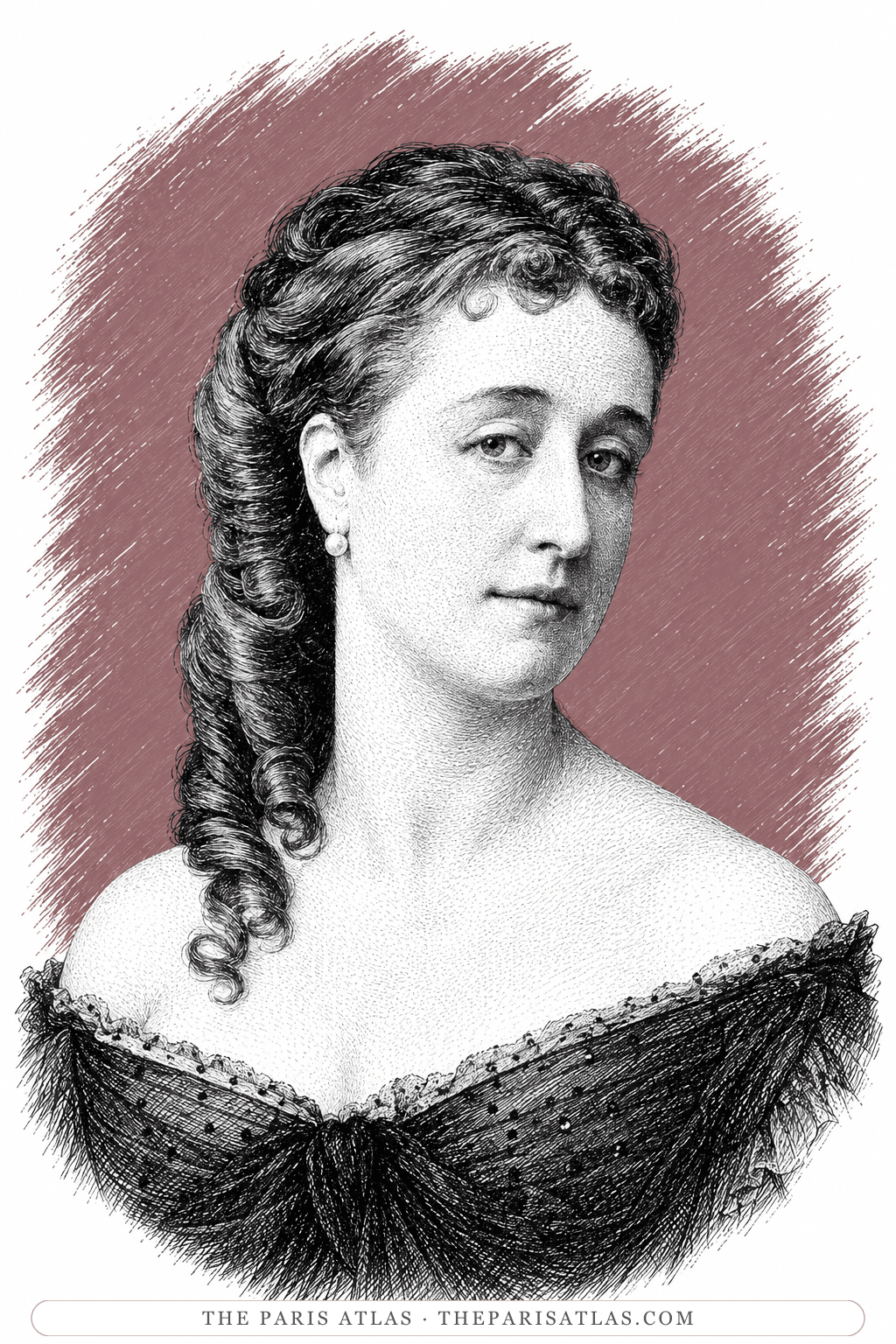
Bonheur’s unusual way of life did not prevent recognition at the highest official level. Empress Eugénie visited her and developed an interest in her work. On 10 June 1865, the empress came to By to present the insignia of the Légion d’honneur. Bonheur’s recollection of the encounter, preserved in Anna Klumpke’s account, presents the honor as a personal visit to the artist’s working environment rather than merely an administrative announcement.
Bonheur was the first woman painter to receive the Légion d’honneur, not the first woman ever admitted to the order. In 1894, she became the first woman promoted to its rank of officer. The distinction between those two milestones is important. Together they show the exceptional institutional standing she achieved, first under the Second Empire and subsequently under the Third Republic.
Although agricultural subjects established her fame, Bonheur’s interests included deer, dogs, eagles and large cats. Her later animal portraits often concentrate on a single face or body rather than a crowded narrative. In such pictures, the direction of an animal’s gaze, the position of its ears or the tension around its mouth can become the principal event. The Musée d’Orsay’s reassessment of her work emphasizes this attention to animals as distinct beings with their own presence, rather than as interchangeable accessories in a human story.
Her close study should nevertheless be understood within the practices of her century. She worked from animals kept in captivity as well as those encountered outdoors, and used anatomical investigation alongside affectionate observation. The resulting art brings together intimacy and scrutiny. Its force lies partly in the degree of attention she gave to animals, even where the circumstances under which she knew them differ from modern ideals of observing wildlife.
In 1889, William F. “Buffalo Bill” Cody brought his Wild West show to Paris. Bonheur visited its grounds to draw the American animals and Native American participants and their families. Cody subsequently visited her at By, where she painted his portrait. Their encounter brought together two internationally recognizable figures whose reputations had been carried abroad through exhibition and publicity.
For Bonheur, Cody represented an appealing image of American freedom. The circumstances of their meeting also matter to the interpretation of the resulting work: her access to these subjects came through a touring entertainment in France. The pictures belong to a transatlantic exchange shaped by performers, audiences and the commercial presentation of the West, rather than to an unmediated record of life in North America.
The American painter Anna Klumpke became central to Bonheur’s final year. They had met previously, but their relationship deepened when Klumpke came to paint her portrait in 1898. The portrait now in the Metropolitan Museum presents Bonheur as an established professional, seated with the materials of her work and wearing her decoration. It records one woman artist attending closely to another’s public identity and achievements.
Klumpke remained at By, becoming Bonheur’s companion and eventual heir. Their relationship was not simply that of an elderly celebrity and an admirer; it involved plans for a shared life in which both women would continue working. After Bonheur’s death, Klumpke assumed responsibility for much of her property and became an essential interpreter of her career. The preservation of the studio and the publication of the artist’s recollections owe much to that commitment.
Bonheur continued pursuing large ambitions late in life. Among the works left unfinished was Treading Wheat in the Camargue, a monumental painting begun in the 1860s and developed over many years. Its horses circle across the canvas as they thresh grain, returning to the combination of agricultural work and powerful animal movement that had made her famous. The picture remained incomplete when she died, rather than serving as a deliberately finished summation.
Rosa Bonheur died at By on 25 May 1899, aged seventy-seven. She was buried in the Micas family tomb at Père Lachaise Cemetery in Paris, alongside Nathalie. Anna Klumpke’s ashes were later placed there in 1948. The burial brings together the relationships through which Bonheur had constructed her adult household, while returning an artist closely associated with Fontainebleau to the city where her professional life had begun.
Klumpke published Rosa Bonheur: sa vie, son œuvre in 1908. Drawing on conversations, memories and documents, the book remains fundamental to Bonheur’s biography. It is also a work shaped by the closeness of its author to its subject. Bonheur’s recollections and Klumpke’s presentation should be read as a valuable account of a life, not as a record entirely free from selection, interpretation or the desire to protect a reputation.
Letters provide another perspective. The correspondence preserved at Southern Methodist University includes communications with the artist Paul Chardin and material involving Nathalie Micas and Bonheur’s brother Isidore. Such documents place Bonheur within continuing artistic and personal exchanges. They complicate the familiar image of an isolated woman surrounded only by animals, showing the human relationships through which advice, friendship and professional activity continued around her.
Bonheur is usually associated with Realism, particularly through her attention to contemporary agricultural life and the physical specificity of animals. Her subjects depend on recognizable structures rather than generalized ideas of a horse, ox or sheep. In Relay Hunting, the Saint Louis Art Museum emphasizes both her scientific knowledge and the way the animals’ bodies command attention. Understanding anatomy enabled her to make weight and strength visible, while the quieter details of posture prevented physical accuracy from becoming merely diagrammatic.
Her surviving studies show an artist breaking difficult subjects into manageable observations. The National Sporting Library & Museum’s Lion Studies gathers heads, paws and an eye on a small canvas. These are not elements arranged as a finished scene; they are separate problems under investigation. A change in the position of a muzzle or the handling of fur could be examined without committing the entire composition to a particular solution. The sheet-like arrangement preserves the exploratory work behind the authority of her finished animals.
Drawing served a similarly constructive purpose. The Metropolitan Museum’s Study for “The Horse Fair”, worked in black chalk, gray wash and white heightening, demonstrates how different materials could establish contour, shadow and illuminated volume. Bonheur could test the body as a structure before resolving the surrounding setting or the full color of a painting. Her command of animals therefore rested on repeated acts of analysis as well as on sympathetic familiarity.
Bonheur’s realism did not require the abandonment of older compositional traditions. In The Horse Fair, the National Gallery identifies the legacy of classical friezes and the dramatic equestrian art she admired. Individual movements are coordinated into a larger rhythm, allowing many horses to remain legible within a crowded scene. What initially appears to be an uncontrolled surge is held together by a deliberate arrangement of bodies, intervals and directional changes.
Her finish varies more than a simple description of her as a meticulous realist suggests. In Sheep by the Sea, passages of substantial paint help describe wool and fleece. Elsewhere, smoother transitions give the animals’ heads and bodies a different tactile character. The contrast allows the viewer to register surfaces as distinct, making texture part of the subject rather than merely an incidental demonstration of skill.
Conservation also affects how her color is understood. The National Gallery’s treatment of its Horse Fair removed discolored later coatings that had obscured relationships within the picture. The restoration revealed a fresher balance of colors and clarified details, reminding viewers that an old painting’s brownish appearance may owe something to its subsequent material history. Those coatings should not be confused with Bonheur’s own intentions or original paint handling.
This early painting, held in Bordeaux, belongs to the beginning of Bonheur’s public career. The French national collections database dates it to 1840, while its Salon appearance came the following year. The small scale differs greatly from the monumental canvases of the 1850s, but the choice of animals as sufficient subjects in themselves already anticipates her mature practice. It is a useful starting point for understanding that continuity without assuming her later success was inevitable.
The oxen’s slow progress gives the picture a measured rhythm, while the opened earth establishes the resistance against which they work. Human activity is present without displacing the animals from the composition’s center. The painting belongs to the Musée d’Orsay and remains a defining example of Bonheur’s treatment of agricultural labor.
Bonheur’s most celebrated composition makes a Paris market into a monumental study of energy and control. The original canvas belongs to the Metropolitan Museum of Art, through Cornelius Vanderbilt’s 1887 gift. Its familiar title covers a work developed over several years, not a painting completed in a single burst for the Salon of 1853.
This painting extends Bonheur’s attention to the agricultural cycle from ploughing to harvesting. Workers gather hay while the animals required to transport it occupy the foreground. Presented at the Exposition Universelle of 1855, the work reinforced the standing she had established with her earlier rural subjects. Its broad arrangement makes human and animal labor parts of one coordinated process, linking the landscape to the work performed within it. The painting is in the Château de Fontainebleau’s collection.
In this smaller painting in the Wallace Collection, the setting matters as much as the individual animals. Sheep occupy a landscape whose terrain and changing sky suggest exposure to the elements. Their closely observed coats and bodies retain the specificity characteristic of Bonheur, but the composition’s mood depends on the relationship between flock and place. It demonstrates the lasting importance of her Scottish subjects without the theatrical crowding of The Horse Fair.
Despite the title’s suggestion of conflict, “raid” here refers to an old Scottish word for a road. Cattle and sheep move through mountainous terrain beneath an unsettled sky, with their keepers directing the journey. The National Museum of Women in the Arts emphasizes the combination of anatomical knowledge and dramatic landscape. The painting gives movement a different character from the Paris horse market: the animals’ progress is shaped by terrain and weather rather than by the circling demands of a sale.
Commissioned by Empress Eugénie and exhibited at the Salon of 1867, this picture combines an imperial commission with one of Bonheur’s characteristic subjects. Its tactile handling of fleece rewards close attention, while the coastal setting prevents the flock from becoming a purely decorative group. The work belongs to the National Museum of Women in the Arts, where it also documents the relationship between Bonheur’s animal painting and her elite patronage.
The eagle gives Bonheur a subject markedly different from her herds and working teams. The Los Angeles County Museum of Art dates the painting to approximately 1870, a qualification worth retaining. Rather than making an unsupported identification of the bird with a particular political event, the work can be approached first through its stated subject: an injured animal whose vulnerability complicates the power ordinarily associated with a bird of prey.
This portrait of a lion in the Museo del Prado concentrates the viewer’s attention on the animal’s head and expression. Its title associates the subject with the name of the medieval Spanish warrior, while the close framing gives the lion the presence of an individual sitter. The painting belongs to Bonheur’s sustained interest in large cats and offers a quieter counterpart to the collective movement of her horses and cattle.
Three horses occupy the foreground while the human attendant remains secondary. They are replacement mounts waiting for the demands of a hunt, a situation that allows Bonheur to study expectation and physical readiness without depicting a chase. In the Saint Louis Art Museum’s interpretation, their muscular bodies and carefully differentiated appearances demonstrate the connection between scientific observation and her realist practice. The subject’s potential action remains latent rather than becoming a spectacle of speed.
The equestrian portrait of Buffalo Bill joins Bonheur’s expertise in horses with the recognizable identity of an international showman. Painted after their meeting during the Paris tour, it is also a record of a particular cultural encounter. It belongs to the Whitney Western Art Museum at the Buffalo Bill Center of the West in Cody, Wyoming.
The largest of Bonheur’s compositions presents horses moving over sheaves of wheat to separate out the grain. The Musée des Beaux-Arts de Bordeaux dates its long development from 1864 to 1899 and connects its conception with Frédéric Mistral’s poem Mireille. Light concentrates attention on the pale horses within the moving group. The work’s unfinished state makes visible the persistence of a major project across decades of other commissions and changing circumstances.
Paris supplied both Bonheur’s artistic education and the institutions through which her career became public. The Louvre offered earlier paintings to study, while markets and slaughterhouses provided access to the bodies and movements that interested her most. Her training combined established art with working environments rarely associated with a young woman’s education.
The city was also the subject of her most famous painting. The Horse Fair represents a specific commercial site near the Salpêtrière, not an anonymous country gathering. The animals belong to the economic life of nineteenth-century Paris, where horse-drawn transport was fundamental. Their presence gives the capital’s history a dimension that can be missed when it is imagined only through boulevards, cafés and theaters.
Her move to By shifted the center of her working life outside the city, but the Paris years remained fundamental to her reputation. Her connection also survives through collections and burial: Ploughing in the Nivernais belongs to the Musée d’Orsay, while the tomb she shares with Nathalie Micas and Anna Klumpke is at Père Lachaise. These associations connect her public career with the household and relationships that sustained it.
Bonheur’s reputation rests on more than the unusual circumstances of her life. She gave animal subjects an authority grounded in anatomy, close observation and ambitious composition. Her paintings invite attention to work, physical effort, temperament and vulnerability beyond the human figure. The Musée d’Orsay’s bicentenary presentation placed this sustained examination of animal life at the center of her achievement, alongside her exceptional international standing.
Her subsequent reception also shows how artistic reputations change. As accounts of nineteenth-century art increasingly emphasized the innovations leading toward modernism, her realist practice could seem less central than it had to her contemporaries. She was never wholly absent from museums or public memory, however. The continued presence of her work in major collections complicates a simple story in which a famous artist disappeared and was later recovered intact.
Bordeaux devoted a retrospective to her in 1997, and the 2022 bicentenary brought another major exhibition there, followed by the Musée d’Orsay in 2022–2023. These reassessments broadened discussion beyond the familiar anecdotes about trousers, celebrity and animals at By. They renewed attention to her drawings, working methods, landscapes and relationships, allowing the famous paintings to be understood within a more extensive and varied career.
Her importance to the history of women artists and queer lives remains inseparable from that career without replacing it. The independence for which she is remembered was built through skills, earnings, collaborations and choices sustained over many years. Bonheur’s example matters because it makes those conditions visible, while the paintings continue to ask viewers to give animal life a seriousness of attention usually reserved for their own.
Marie-Rosalie Bonheur is born in Bordeaux into an artistic family.
Moves with her family to Paris, where her father works as an artist and teacher.
Her mother, Sophie, dies when Rosa is eleven.
Trains with her father and studies earlier paintings in the Louvre, developing a particular interest in animals.
Paints Two Rabbits, subsequently shown at her first Salon.
Debuts at the Paris Salon with pictures of rabbits and of goats and sheep.
Receives a third-class medal at the Salon.
Wins a gold medal and receives the state commission that leads to Ploughing in the Nivernais.
Exhibits Ploughing in the Nivernais, establishing her reputation as a major painter of rural subjects.
After her father’s death, takes over his role at a free drawing school for girls, with assistance from Juliette Bonheur.
Develops The Horse Fair through repeated observations at the Paris horse market.
Exhibits The Horse Fair at the Salon, gaining wide acclaim.
Completes further work on the original Horse Fair and produces a smaller version associated with Thomas Landseer’s engraving.
Presents Haymaking in the Auvergne at the Exposition Universelle.
Travels in Britain, including Scotland, during the period of international promotion organized by Ernest Gambart.
A surviving police authorization records permission for her to wear male clothing.
Paints Sheep in the Highlands.
Purchases the Château de By at Thomery, near Fontainebleau.
Moves to By, where a purpose-built studio supports the next four decades of her career.
Paints The Highland Raid.
Begins the long development of Treading Wheat in the Camargue, left unfinished at her death.
Receives the Légion d’honneur from Empress Eugénie, becoming the first woman painter admitted to the order.
Paints Sheep by the Sea for Empress Eugénie; the picture is later exhibited at the Salon of 1867.
Paints The Wounded Eagle.
Paints El Cid, her portrait of a lion.
Paints Relay Hunting. That year, Cornelius Vanderbilt gives the original Horse Fair to the Metropolitan Museum of Art.
Nathalie Micas, her companion of many decades, dies.
Visits Buffalo Bill’s Wild West show in Paris and paints Cody’s portrait following his visit to By.
Becomes the first woman promoted to officer of the Légion d’honneur.
Anna Klumpke paints Bonheur’s portrait and joins her household at By.
Dies at By, aged seventy-seven, and is buried in the Micas family tomb at Père Lachaise.
Anna Klumpke publishes Rosa Bonheur: sa vie, son œuvre.
Klumpke’s ashes are placed in the tomb shared with Bonheur and Nathalie Micas.
The Musée des Beaux-Arts de Bordeaux presents a retrospective of Bonheur’s work.
The bicentenary retrospective is presented in Bordeaux and then at the Musée d’Orsay in Paris.
Child of
Raymond Bonheur was Rosa’s father and provided her private training in drawing and painting.
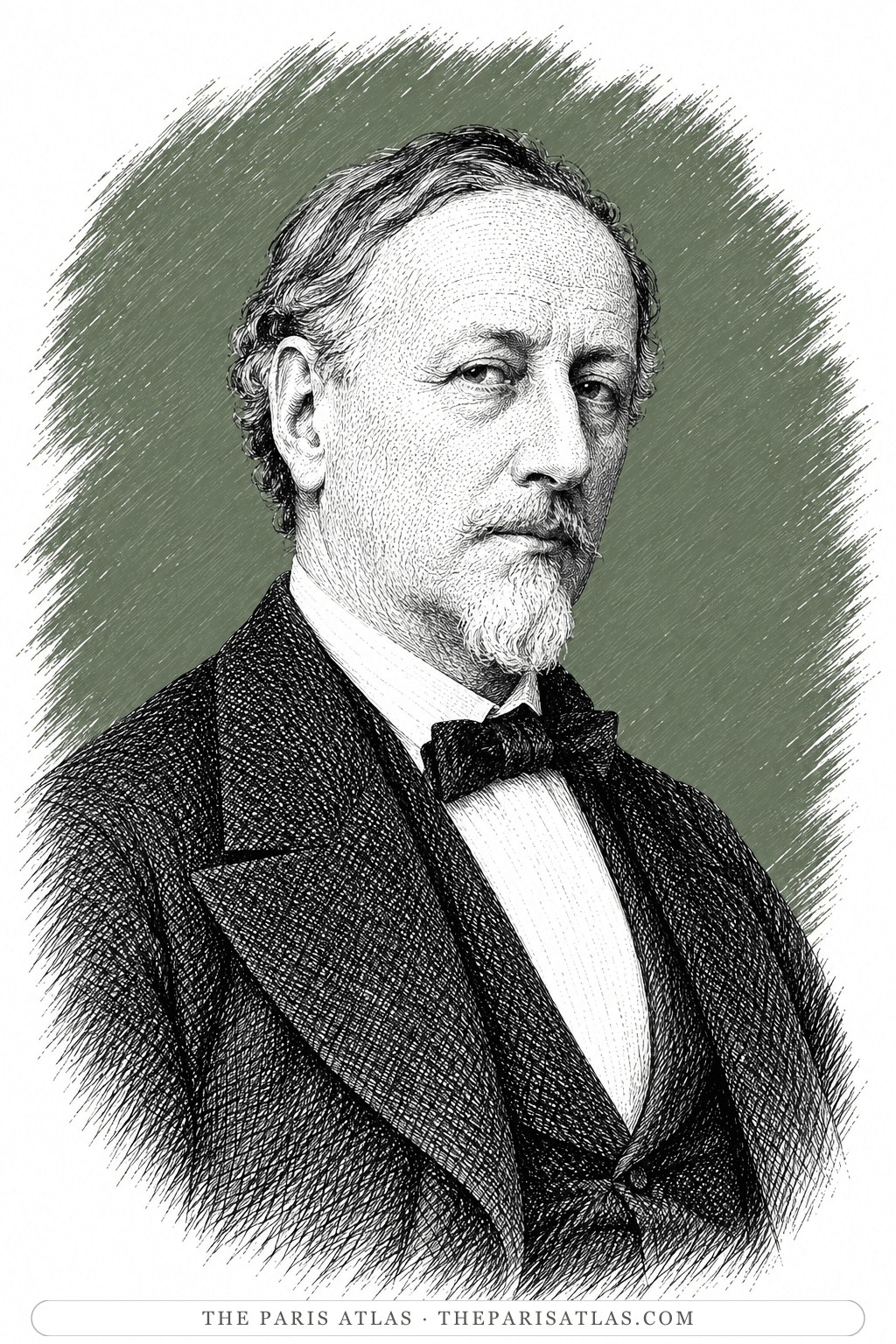
Collaborated with
Gambart promoted Bonheur’s work through international exhibitions and reproductions, including the British tour of The Horse Fair.
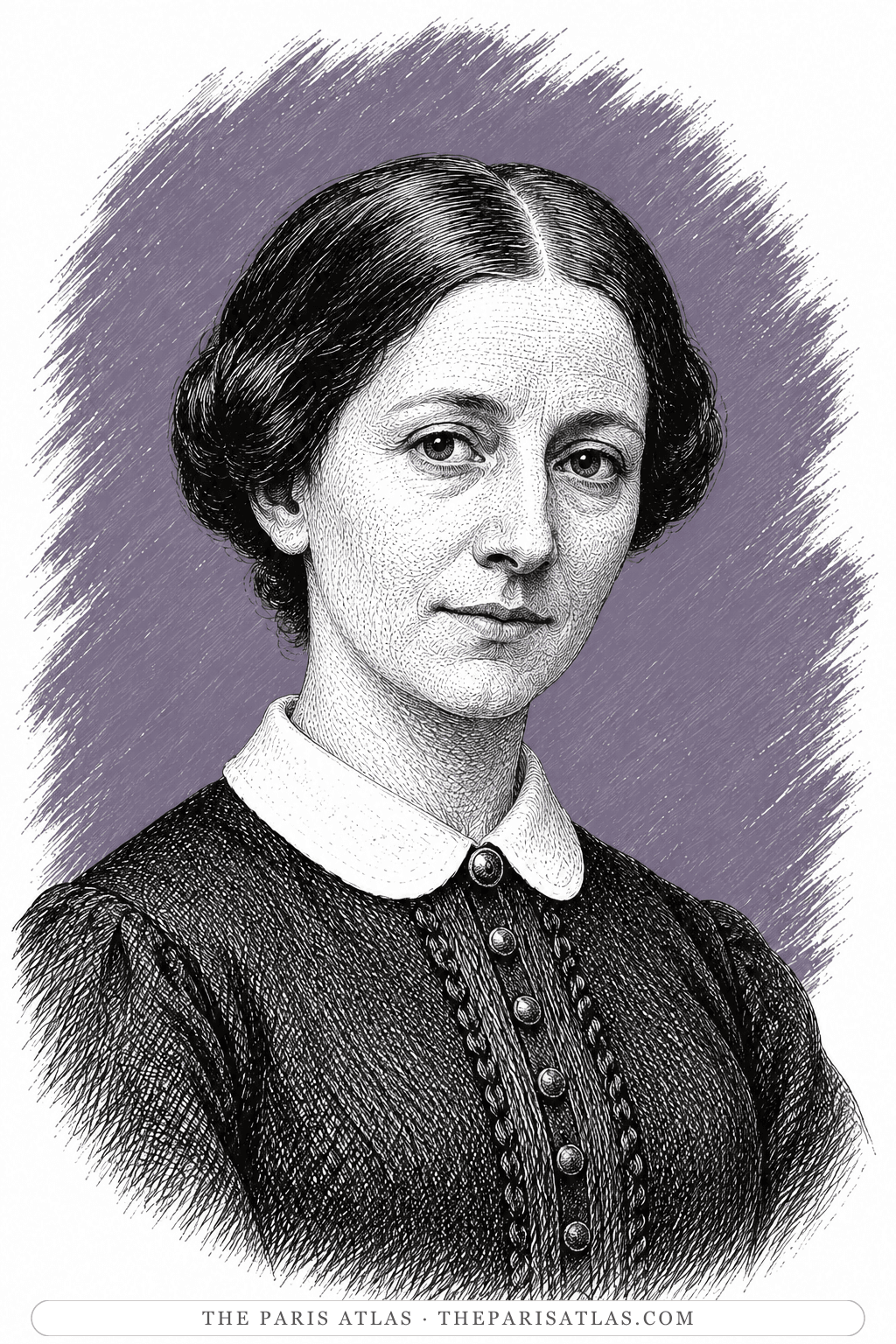
Collaborated with
After their father’s death in 1849, Rosa took over teaching at the free drawing school for girls with assistance from her sister Juliette.
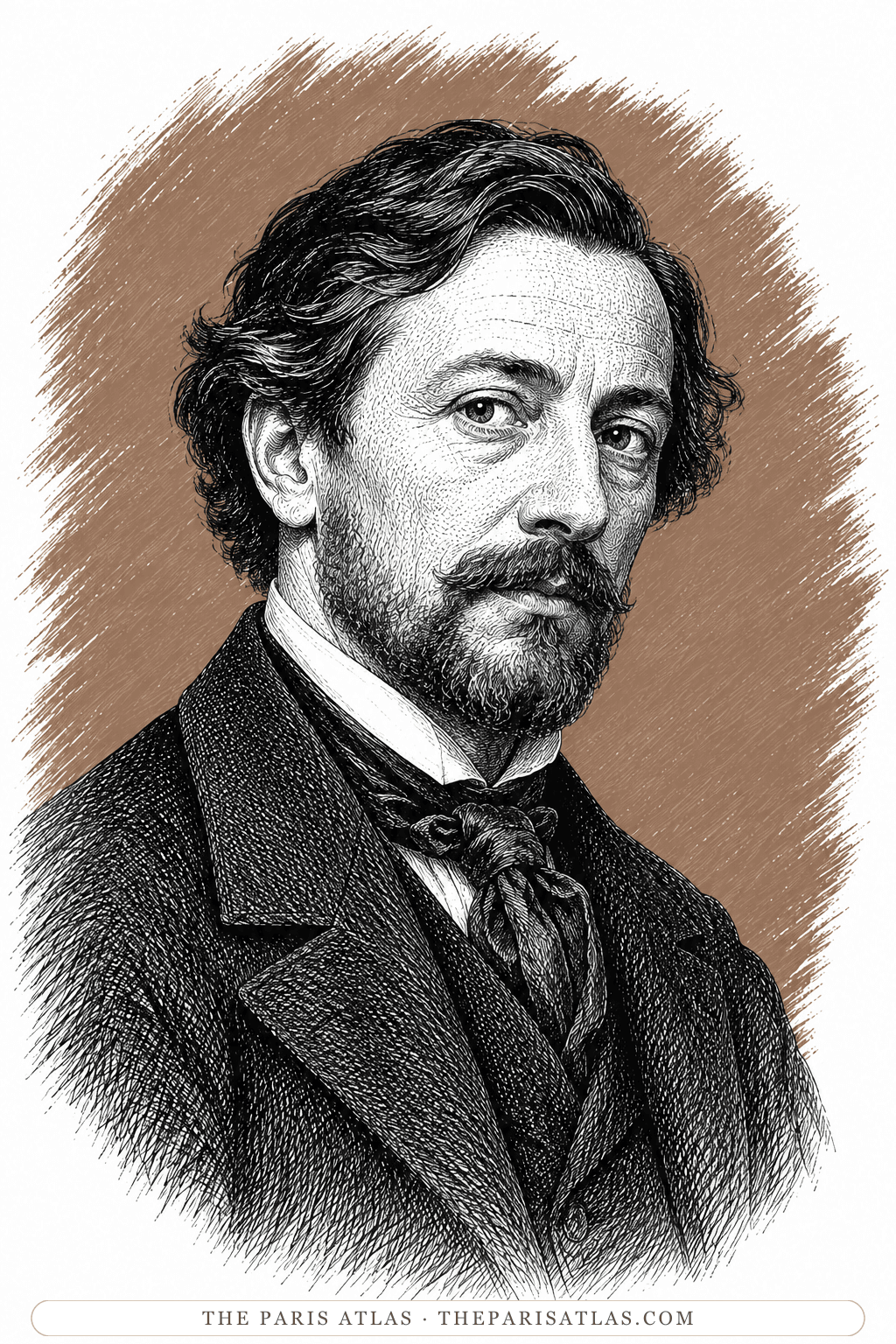
Corresponded with
Letters from Bonheur to the artist Paul Chardin survive in SMU’s Rosa Bonheur correspondence collection.
Met
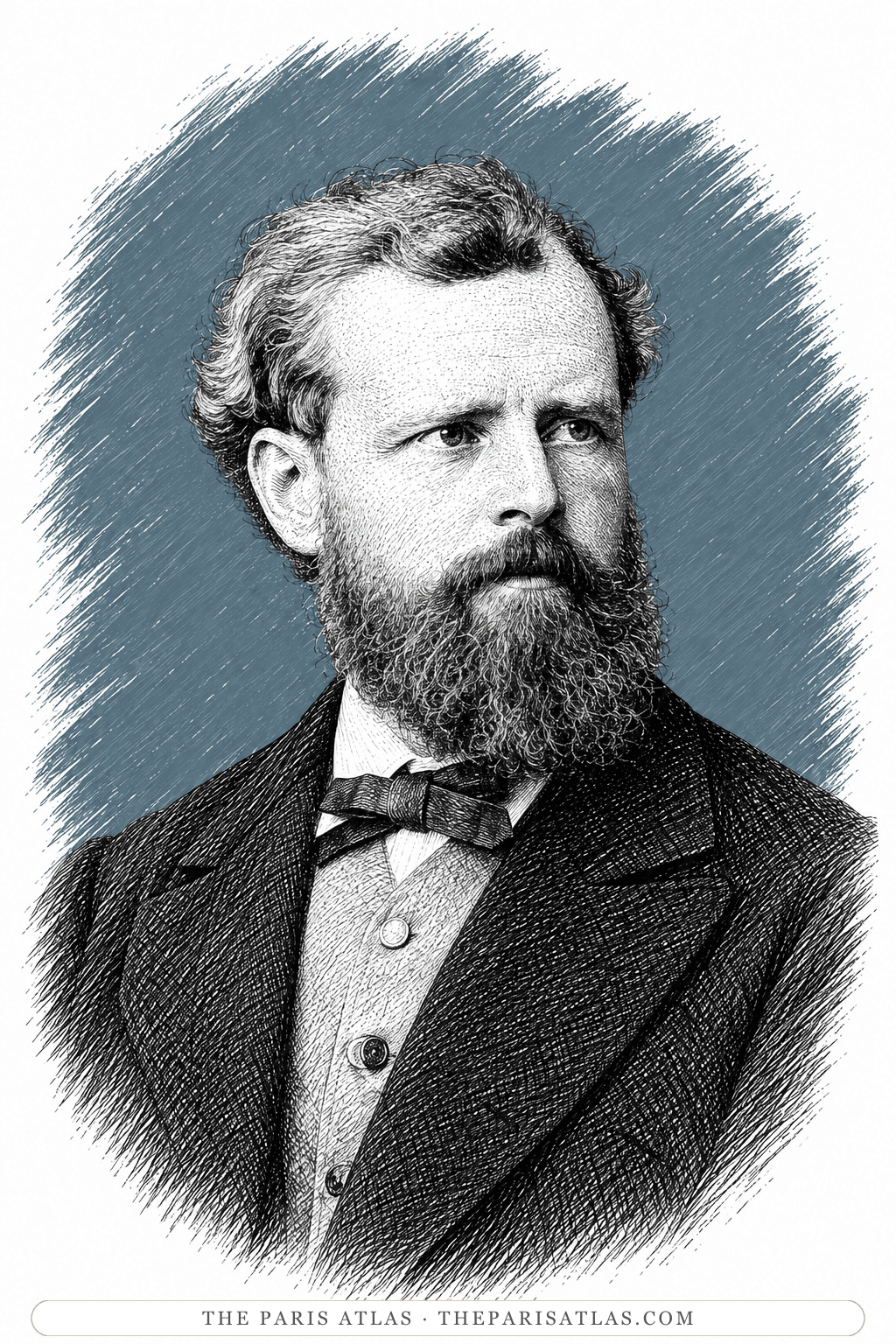
Rosa and her younger brother Isidore grew up in the Bonheur family of artists, receiving their early training from their father Raymond. Isidore became an animal sculptor.
Partner of
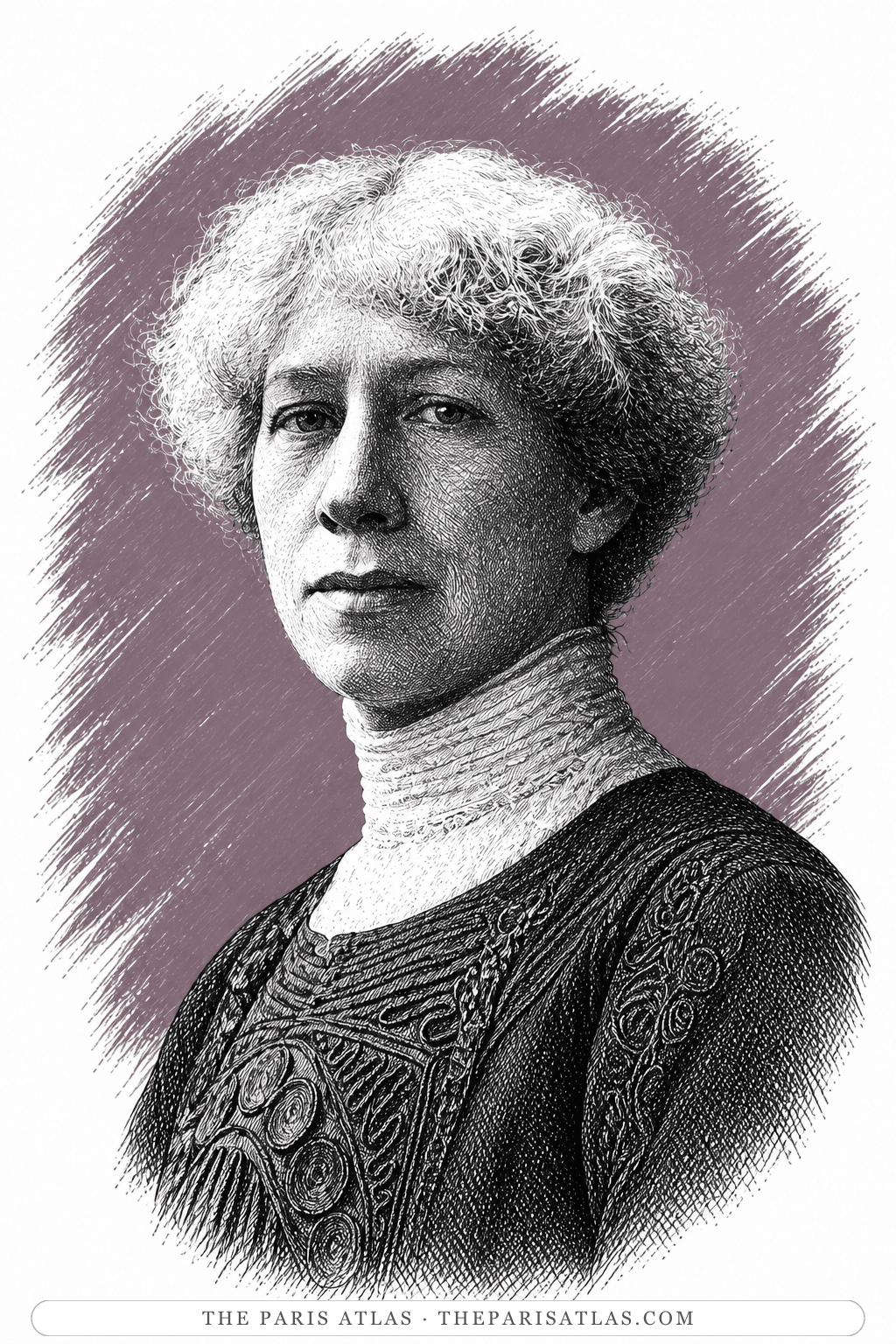
Klumpke joined Bonheur at By in 1898. The two painters planned a shared life; after Bonheur’s death in 1899, Klumpke inherited her home and studio and preserved her legacy.
Partner of
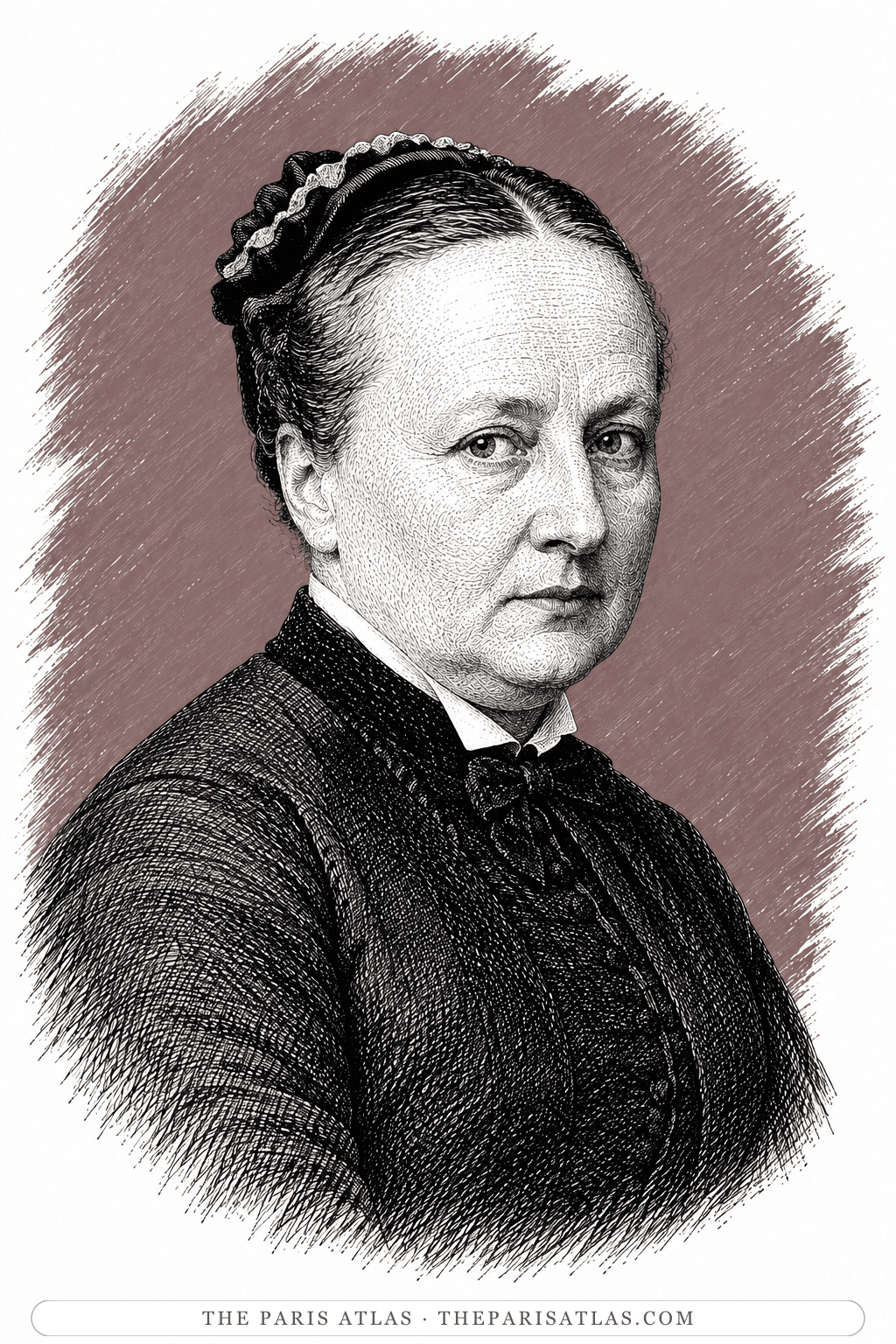
Bonheur and Micas shared their lives for decades until Micas’s death in 1889. Micas was also an artist who collaborated in Bonheur’s studio.
Painted a portrait of
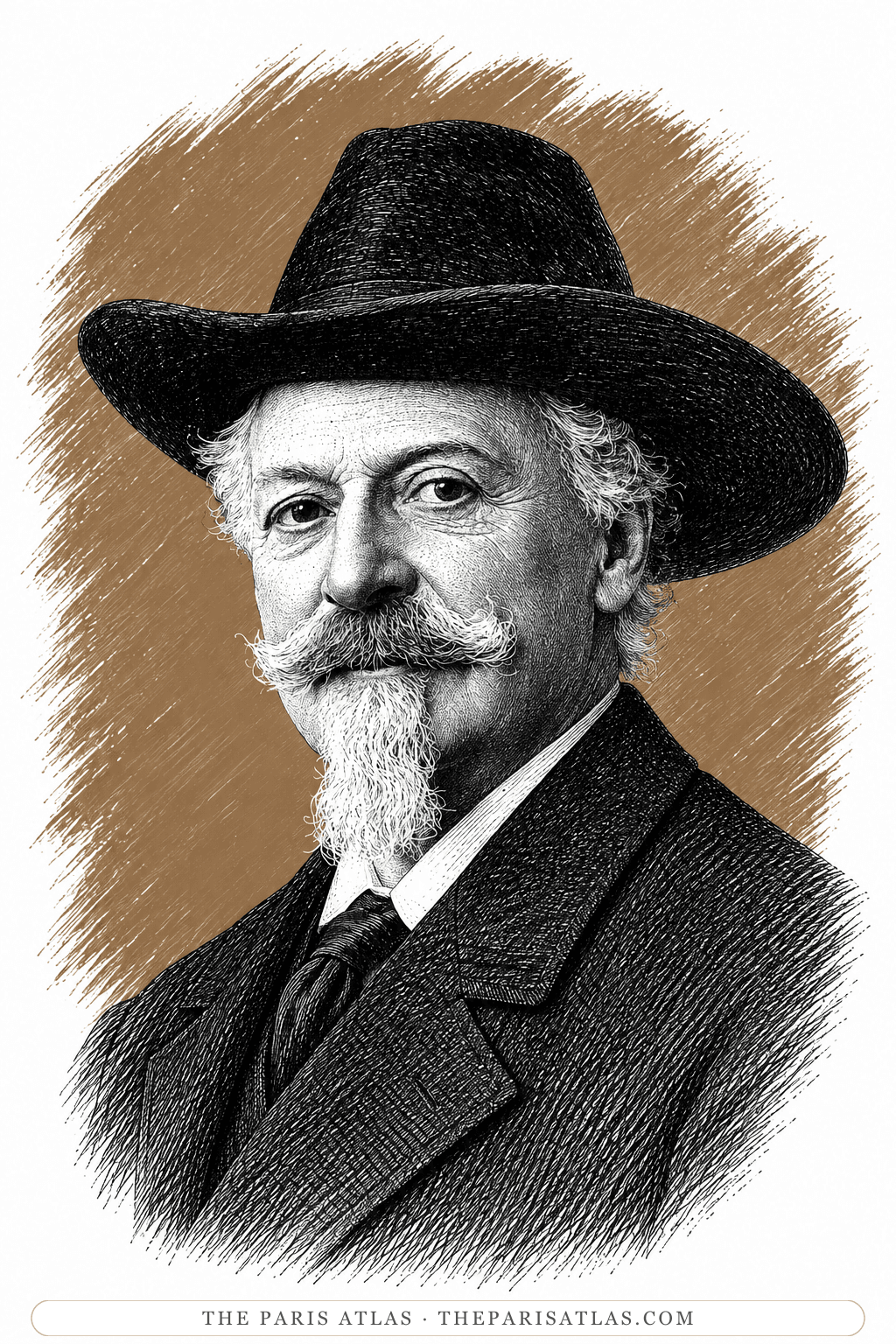
Bonheur met Buffalo Bill during his 1889 Paris tour. Cody visited her at By, where she painted his equestrian portrait.
Supported by
Eugénie commissioned Sheep by the Sea and visited Bonheur at By to present the Légion d’honneur on 10 June 1865.
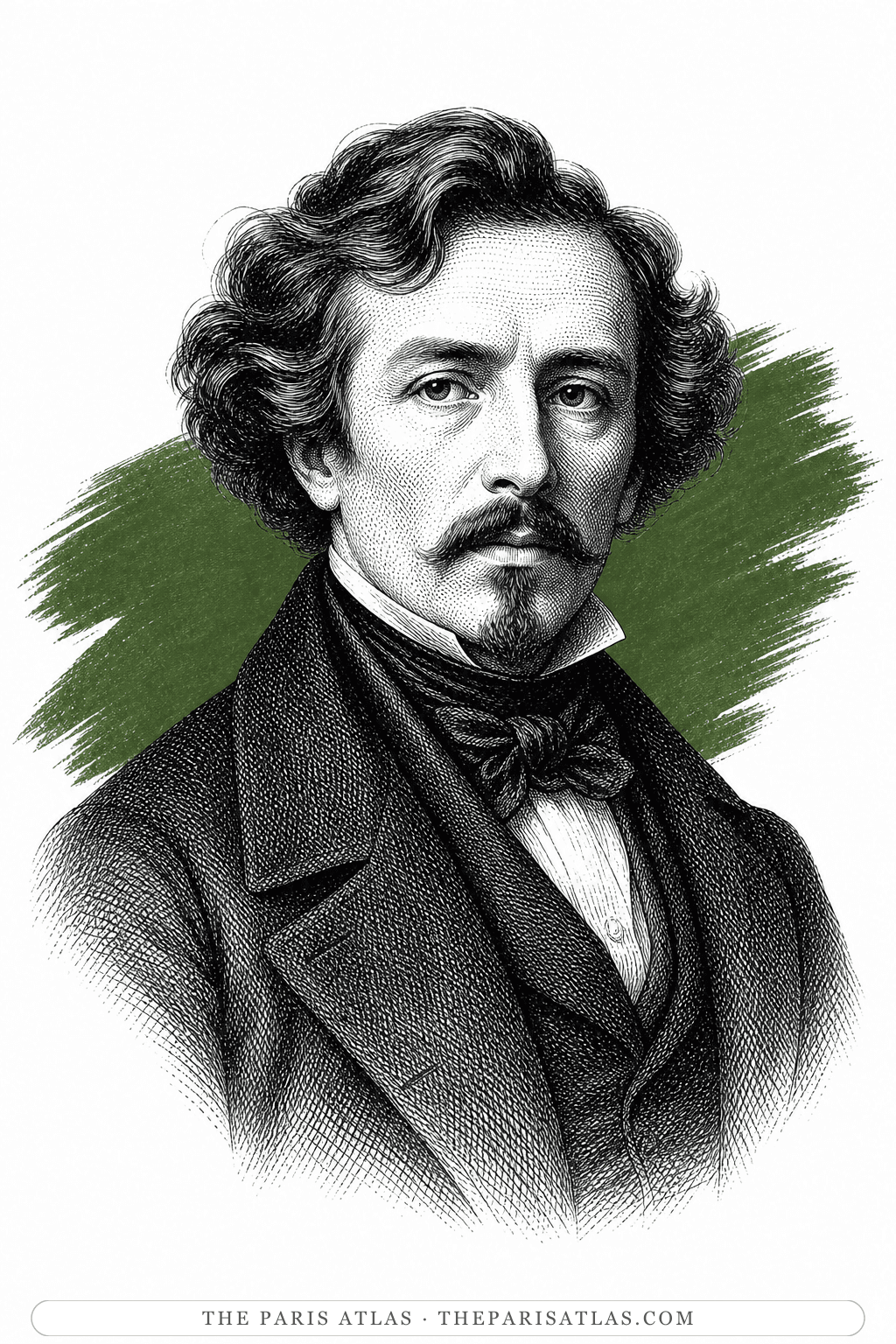
The Metropolitan Museum identifies Eugène Delacroix among the artists Bonheur drew on in developing the composition of The Horse Fair.
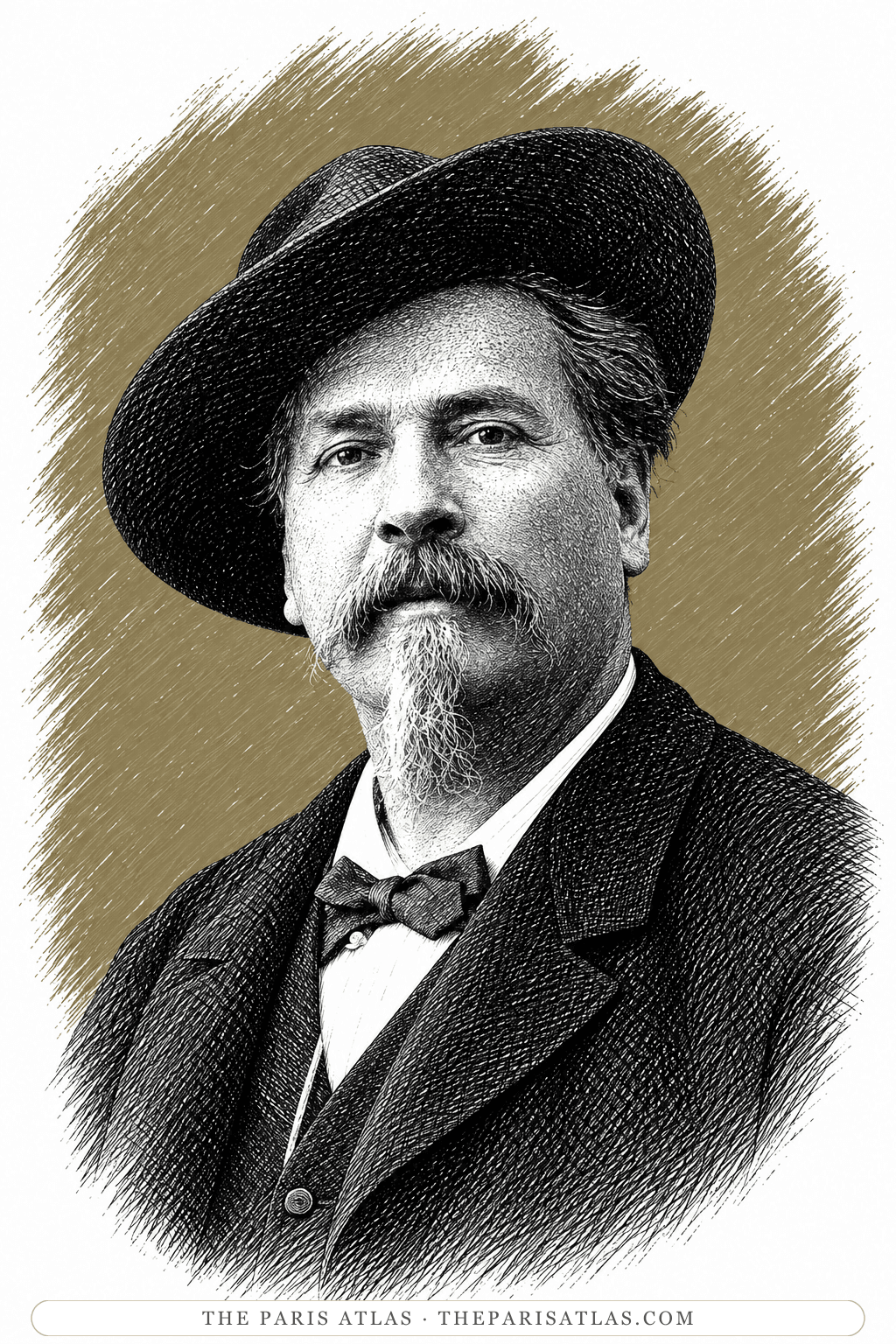
The Musée des Beaux-Arts de Bordeaux identifies Mistral’s poem Mireille as the inspiration for Treading Wheat in the Camargue.
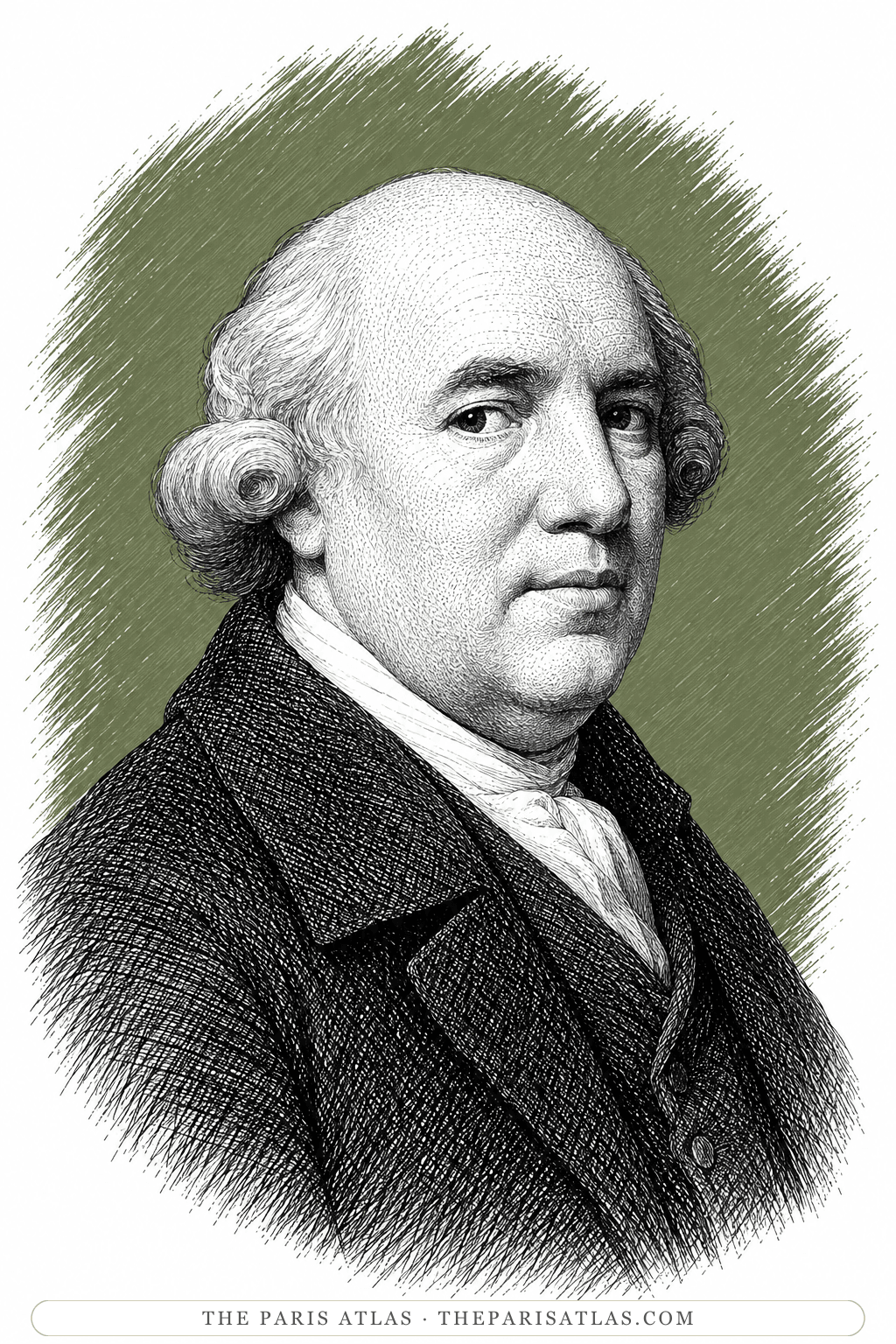
The Metropolitan Museum identifies George Stubbs among the artists Bonheur drew on in developing the composition of The Horse Fair.
Rosa learned drawing and painting from her father Raymond, whose teaching provided her artistic foundation outside the official academy.
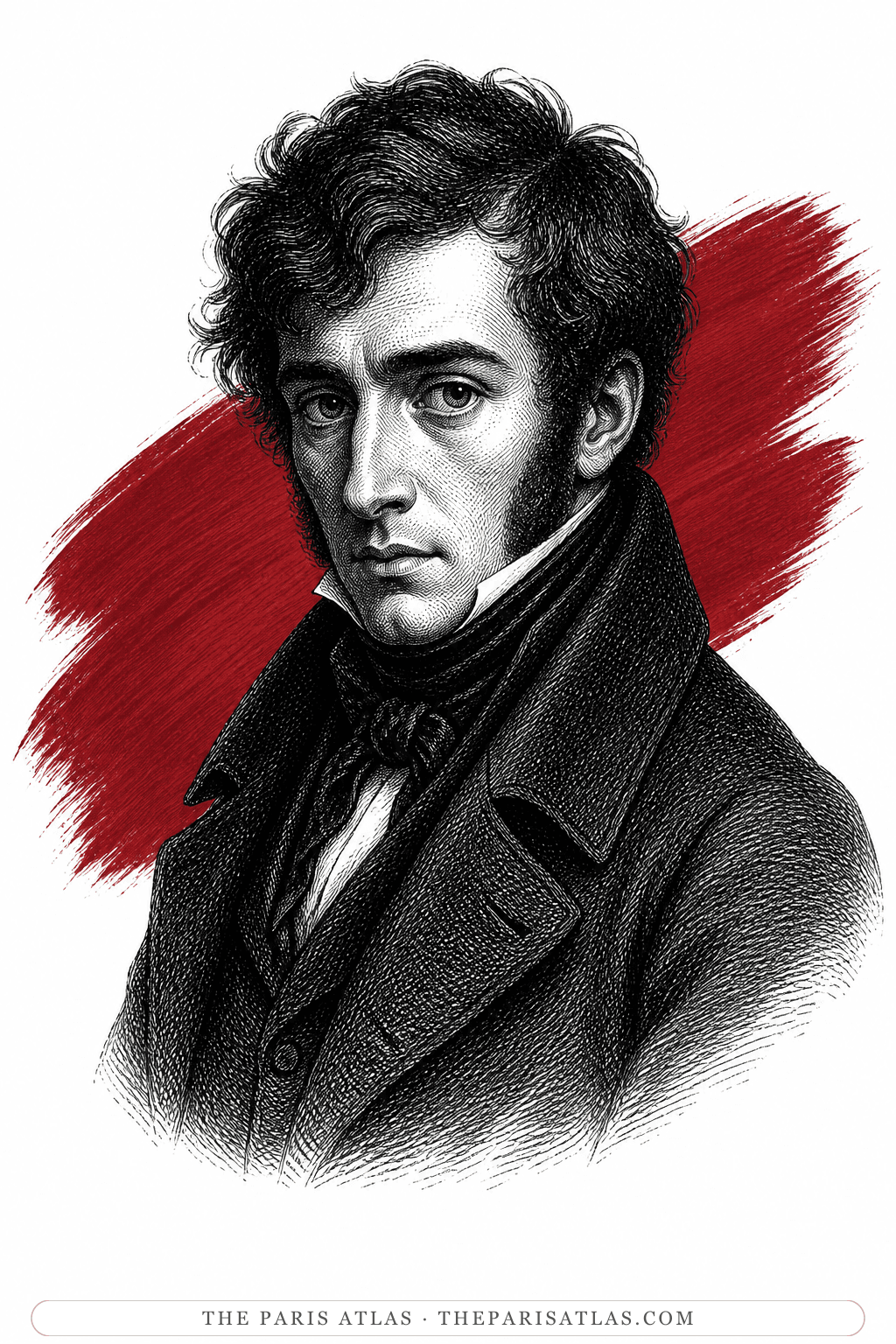
The Metropolitan Museum identifies Théodore Géricault among the artists Bonheur drew on in developing the composition of The Horse Fair.
Klumpke long admired Bonheur as a woman artist, returned to France to paint her in 1898, and devoted herself to preserving her work and biography.
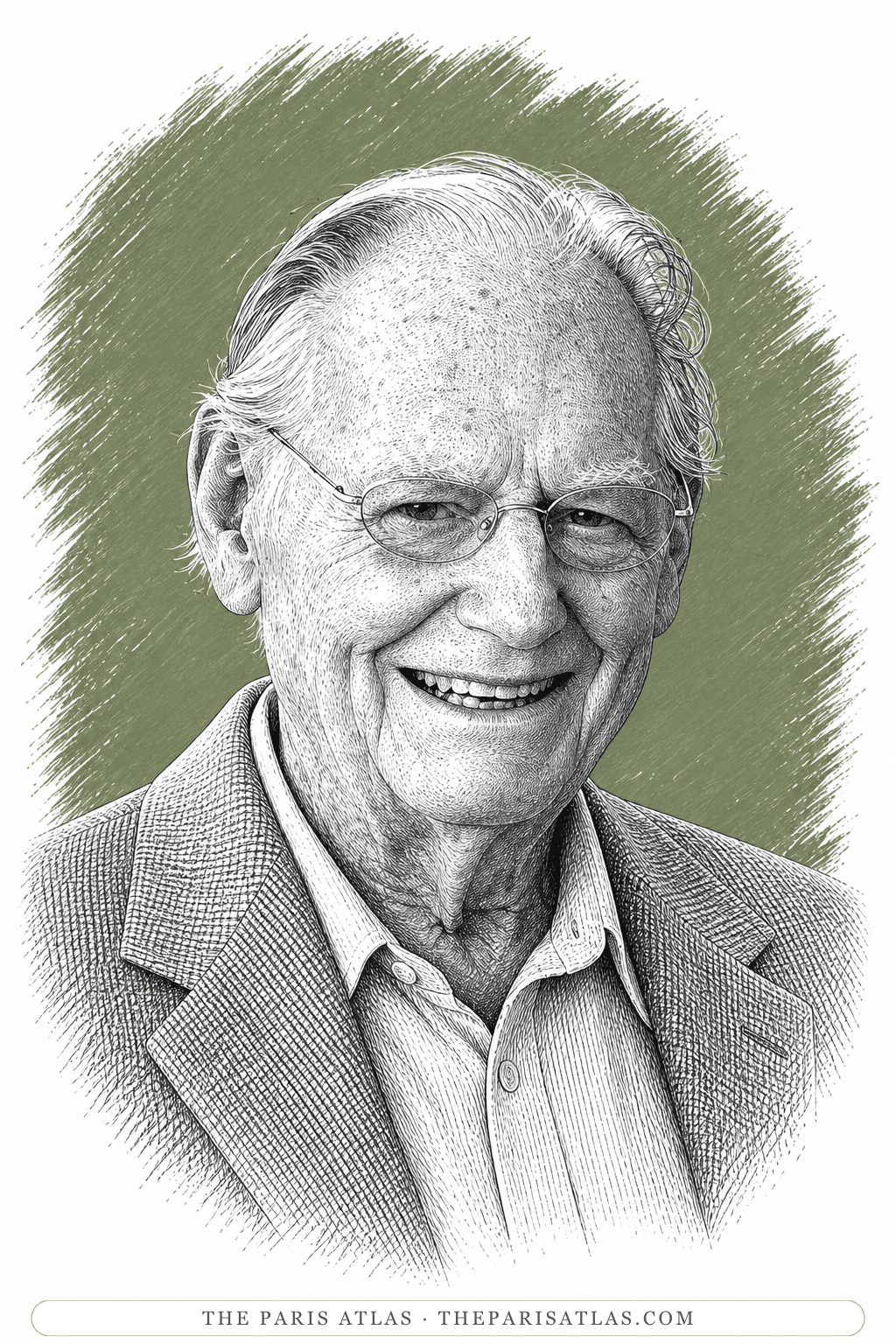
Thiebaud recalled seeing The Horse Fair in reproduction at about seven years old and discussed its lasting interest for him as a painter and teacher, particularly its light, spatial construction and animal movement.
Child of
Raymond Bonheur was Rosa’s father and provided her private training in drawing and painting.
Collaborated with
Gambart promoted Bonheur’s work through international exhibitions and reproductions, including the British tour of The Horse Fair.
Collaborated with
After their father’s death in 1849, Rosa took over teaching at the free drawing school for girls with assistance from her sister Juliette.
Corresponded with
Letters from Bonheur to the artist Paul Chardin survive in SMU’s Rosa Bonheur correspondence collection.
Influenced
Klumpke long admired Bonheur as a woman artist, returned to France to paint her in 1898, and devoted herself to preserving her work and biography.
Influenced
Thiebaud recalled seeing The Horse Fair in reproduction at about seven years old and discussed its lasting interest for him as a painter and teacher, particularly its light, spatial construction and animal movement.
Met
Rosa and her younger brother Isidore grew up in the Bonheur family of artists, receiving their early training from their father Raymond. Isidore became an animal sculptor.
Partner of
Klumpke joined Bonheur at By in 1898. The two painters planned a shared life; after Bonheur’s death in 1899, Klumpke inherited her home and studio and preserved her legacy.
Partner of
Bonheur and Micas shared their lives for decades until Micas’s death in 1889. Micas was also an artist who collaborated in Bonheur’s studio.
Painted a portrait of
Bonheur met Buffalo Bill during his 1889 Paris tour. Cody visited her at By, where she painted his equestrian portrait.
Supported by
Eugénie commissioned Sheep by the Sea and visited Bonheur at By to present the Légion d’honneur on 10 June 1865.
Influenced by
The Metropolitan Museum identifies Eugène Delacroix among the artists Bonheur drew on in developing the composition of The Horse Fair.
Influenced by
The Musée des Beaux-Arts de Bordeaux identifies Mistral’s poem Mireille as the inspiration for Treading Wheat in the Camargue.
Influenced by
The Metropolitan Museum identifies George Stubbs among the artists Bonheur drew on in developing the composition of The Horse Fair.
Influenced by
Rosa learned drawing and painting from her father Raymond, whose teaching provided her artistic foundation outside the official academy.
Influenced by
The Metropolitan Museum identifies Théodore Géricault among the artists Bonheur drew on in developing the composition of The Horse Fair.
The sources below include biographies, scholarly essays, interviews, and primary materials that informed this page. They reflect both the historical record and ongoing critical conversations about Rosa Bonheur and their work.


Web source consulted for documented facts and historical context presented on the Rosa Bonheur page.
Distinguishes her admission as the first woman painter in 1865 from her promotion as the first woman officer in 1894.
Web source consulted for documented facts and historical context presented on the Rosa Bonheur page.
Web source consulted for documented facts and historical context presented on the Rosa Bonheur page.
Used for gender expression and her relationships with Nathalie Micas and Anna Klumpke.
Web source consulted for documented facts and historical context presented on the Rosa Bonheur page.
Curatorial biography in partnership with the Musée d’Orsay.
Includes childhood, travel, Nathalie Micas’s collaboration and the organization of the studio.
Web source consulted for documented facts and historical context presented on the Rosa Bonheur page.
Web source consulted for documented facts and historical context presented on the Rosa Bonheur page.
Web source consulted for documented facts and historical context presented on the Rosa Bonheur page.
Video transcript reproduced by Humanities LibreTexts.
Web source consulted for documented facts and historical context presented on the Rosa Bonheur page.
Web source consulted for documented facts and historical context presented on the Rosa Bonheur page.
Web source consulted for documented facts and historical context presented on the Rosa Bonheur page.
Web source consulted for documented facts and historical context presented on the Rosa Bonheur page.
Web source consulted for documented facts and historical context presented on the Rosa Bonheur page.
Extracts from Bonheur’s recollections as published by Anna Klumpke.
Web source consulted for documented facts and historical context presented on the Rosa Bonheur page.
Web source consulted for documented facts and historical context presented on the Rosa Bonheur page.
This is a portrait of Bonheur by Klumpke, not a work by Bonheur.
Web source consulted for documented facts and historical context presented on the Rosa Bonheur page.
Web source consulted for documented facts and historical context presented on the Rosa Bonheur page.
Web source consulted for documented facts and historical context presented on the Rosa Bonheur page.
Used for burial and the placement of Klumpke’s ashes in 1948.
Description of correspondence and associated archival holdings.
Curatorial interpretation of *Relay Hunting* and her realist methods.
Web source consulted for documented facts and historical context presented on the Rosa Bonheur page.
Used for the work’s date, imperial commission, Salon exhibition and handling of paint.
Web source consulted for documented facts and historical context presented on the Rosa Bonheur page.
Collection record dating the painting to 1840.
Collection record and museum description.
Web source consulted for documented facts and historical context presented on the Rosa Bonheur page.
Collection record dates the work to circa 1870.
Web source consulted for documented facts and historical context presented on the Rosa Bonheur page.
Web source consulted for documented facts and historical context presented on the Rosa Bonheur page.
Web source consulted for documented facts and historical context presented on the Rosa Bonheur page.
Web source consulted for documented facts and historical context presented on the Rosa Bonheur page.
These references anchor the page in the documented record and in the scholarly conversations around Rosa Bonheur. Every claim on this page traces back to one or more of the works listed here.
 Explore more resources