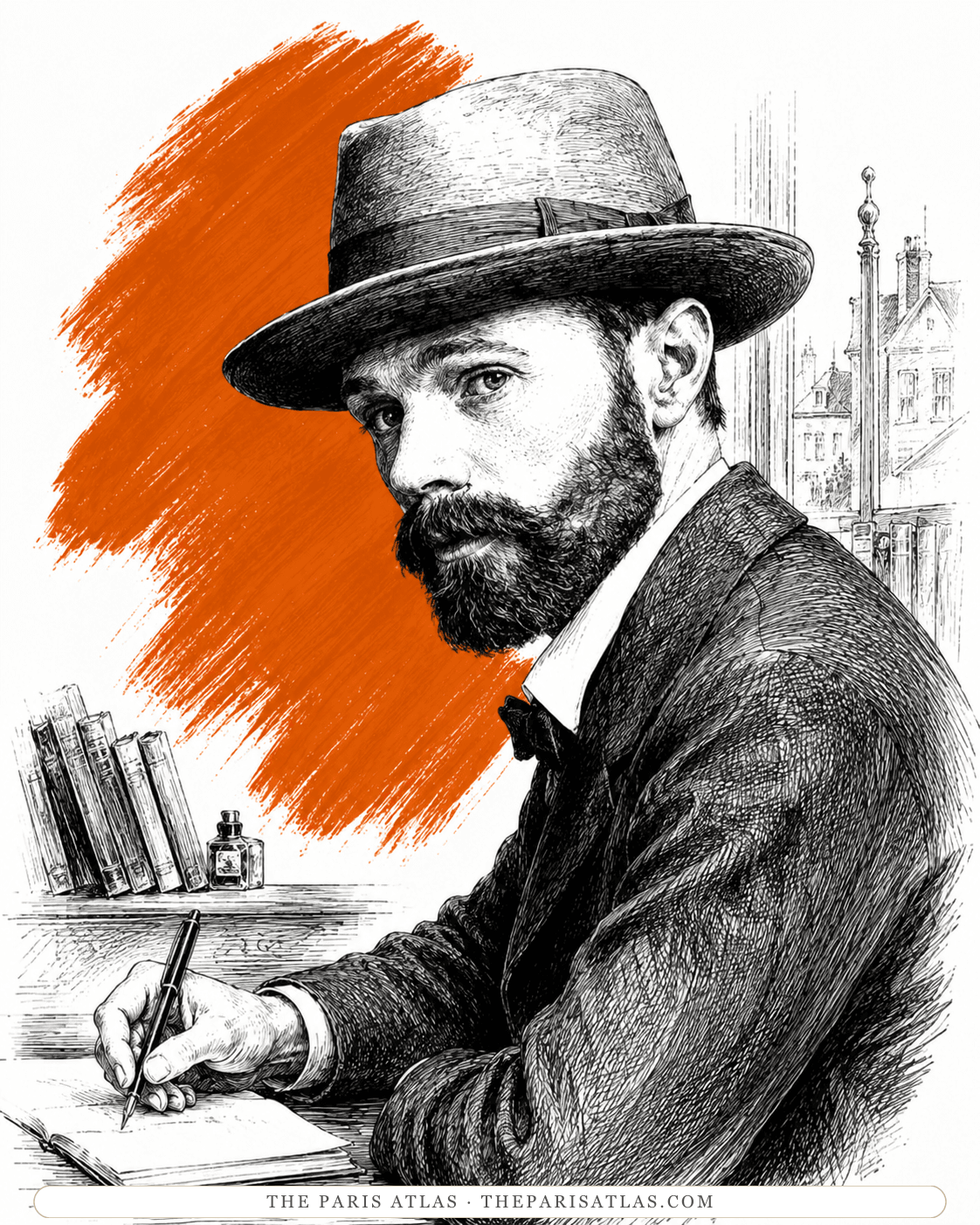
D. H. Lawrence
Frequented by · 1929
Harry and Caresse Crosby's town house and the address of the Black Sun Press, which printed his story "Sun" and the novella The Escaped Cock. Caresse Crosby tried to introduce him to James Joyce here; Joyce left.
The Paris town house of Harry and Caresse Crosby, and the address of the Black Sun Press, which published D. H. Lawrence, James Joyce, Hemingway and Hart Crane in editions made to be beautiful rather than to sell.
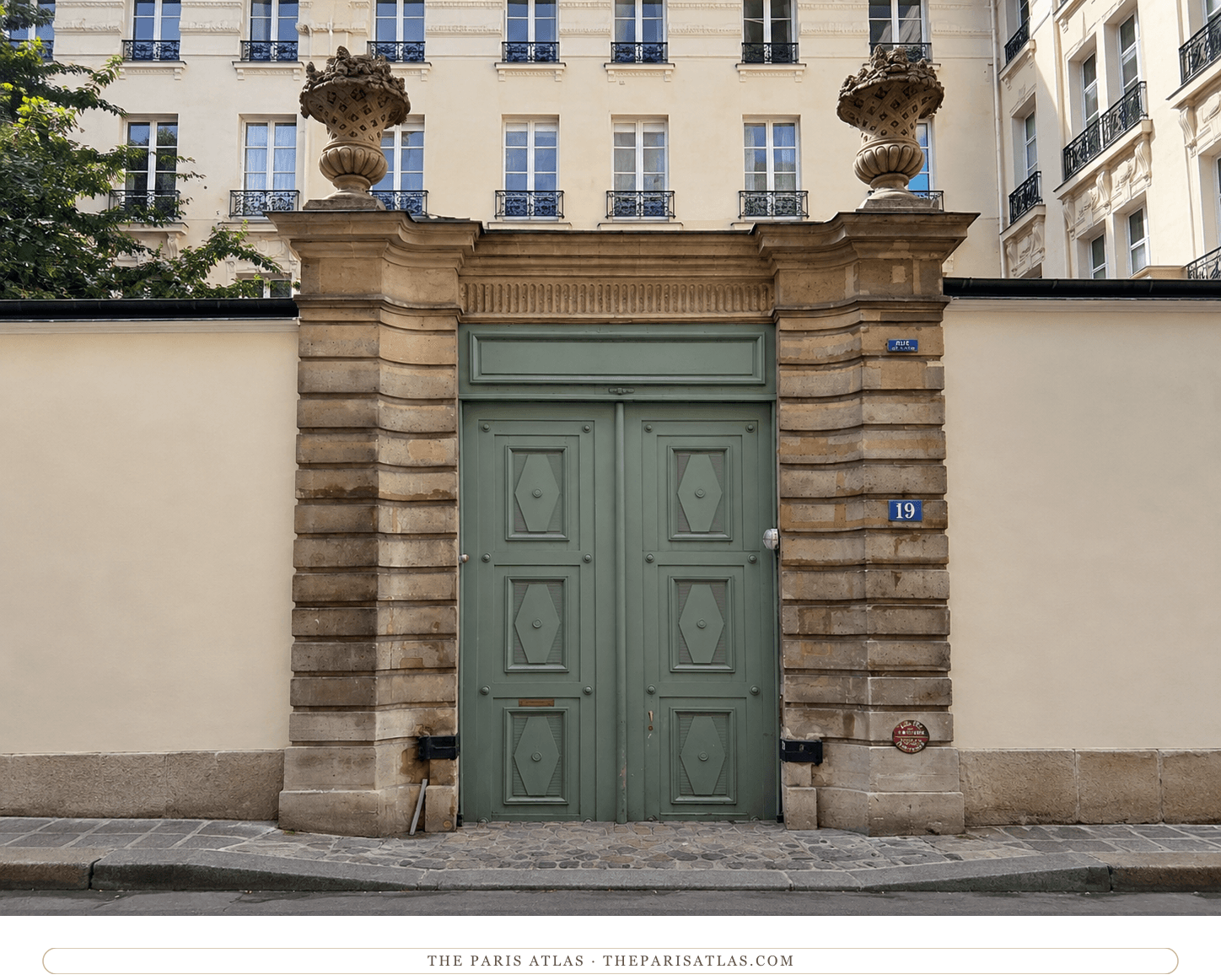
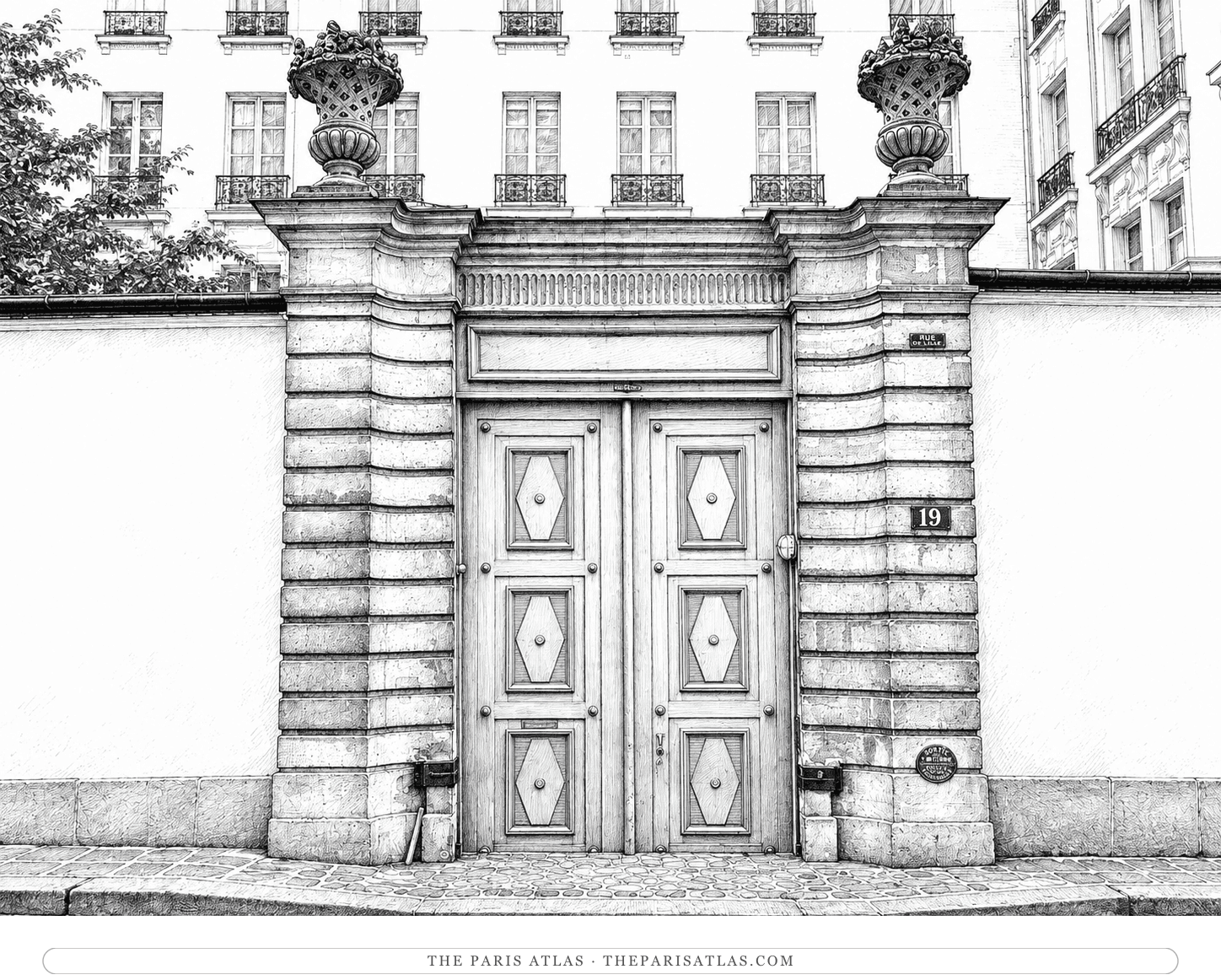
Rue de Lille runs parallel to the Seine behind the Musée d'Orsay, a quiet street of eighteenth-century town houses in what was once the grandest residential quarter in France. The Crosbys took No. 19 and put a press in it.
They had no need of the income and no interest in volume. The Black Sun printed short runs on good paper with the typography got exactly right, and priced accordingly. What makes the list remarkable is not the production but the judgment: Joyce, Hart Crane, Kay Boyle, Hemingway and Lawrence, published in several cases before the wider world had settled on them.[1]
For Lawrence they printed the story "Sun" and then The Escaped Cock, his novella about a man who comes out of a tomb and decides not to resume being a god. It is a strange, late, physical book, and the Black Sun was exactly the kind of press that could publish it without argument.[1]
Lawrence spent March and part of April 1929 in Paris arranging the cheap edition of Lady Chatterley's Lover. He saw the Crosbys in both their houses, here and at the mill at Ermenonville where the Lawrences spent the Easter weekend.[2]
Caresse Crosby thought Lawrence and Joyce should meet. The two men were the most argued-about novelists writing in English, both published by small Paris presses because the trade would not have them, and both in the city at the same time. Joyce muttered something about his eye playing up and made an exit. Nothing came of it, then or later.[2]
Harry Crosby died on 10 December 1929, eight months after the Easter weekend. He was found in a friend's studio at the Hotel des Artistes in New York, on a bed beside Josephine Rotch Bigelow, a married woman he had been involved with since meeting her in Venice. Both had a bullet in the temple from the same .25 calibre pistol. The coroner put her death about two hours before his. There was no note, and the papers spent days arguing over whether it was a pact she had agreed to or a killing she had not. Lawrence, who was holding onto his own life with both hands by then, was censorious about it. He had fifteen months left.[3]
Last verified: August 2026.
The Crosbys found the press in April as Éditions Narcisse, at 19 rue de Lille.
It takes the name Black Sun Press, after Harry Crosby's private solar religion.
Lawrence sees the Crosbys here during his month in Paris; the Lawrences spend Easter at their mill.
Caresse Crosby tries to introduce Lawrence to James Joyce. Joyce leaves.
Harry Crosby dies by suicide in New York on 10 December, beside Josephine Rotch Bigelow.
Caresse Crosby carries the press on alone through the decade.
A private press founded in April 1927 by the American couple Harry and Caresse Crosby and run from their house at 19 rue de Lille. It printed small, expensively made editions and had an unusually good list for its size: James Joyce, Hart Crane, Kay Boyle, Ernest Hemingway and D. H. Lawrence.
The story "Sun", and then the novella The Escaped Cock. Both are late work, and both are the kind of book a commercial house of the period would have refused.
No. Caresse Crosby tried to arrange it in Paris in 1929, when both men were in the city and both were being published by small local presses because the trade would not have them. Joyce said something about his eye troubling him and left. They never met.
Wealthy Americans living in Paris. He was a war veteran who built a private religion around the sun; she had invented and patented the modern brassiere before they married. They founded the press together in 1927. He died by suicide on 10 December 1929 in a friend's studio in New York, shot in the temple, beside Josephine Rotch Bigelow, who had died of the same pistol about two hours earlier; whether she consented was never established. Caresse Crosby carried the press on through the 1930s.
Not inside. It is a private address in the Faubourg Saint-Germain with no plaque and no public access. The street can be walked, and the Musée d'Orsay is three minutes away.
Frequented by · 1929
Harry and Caresse Crosby's town house and the address of the Black Sun Press, which printed his story "Sun" and the novella The Escaped Cock. Caresse Crosby tried to introduce him to James Joyce here; Joyce left.
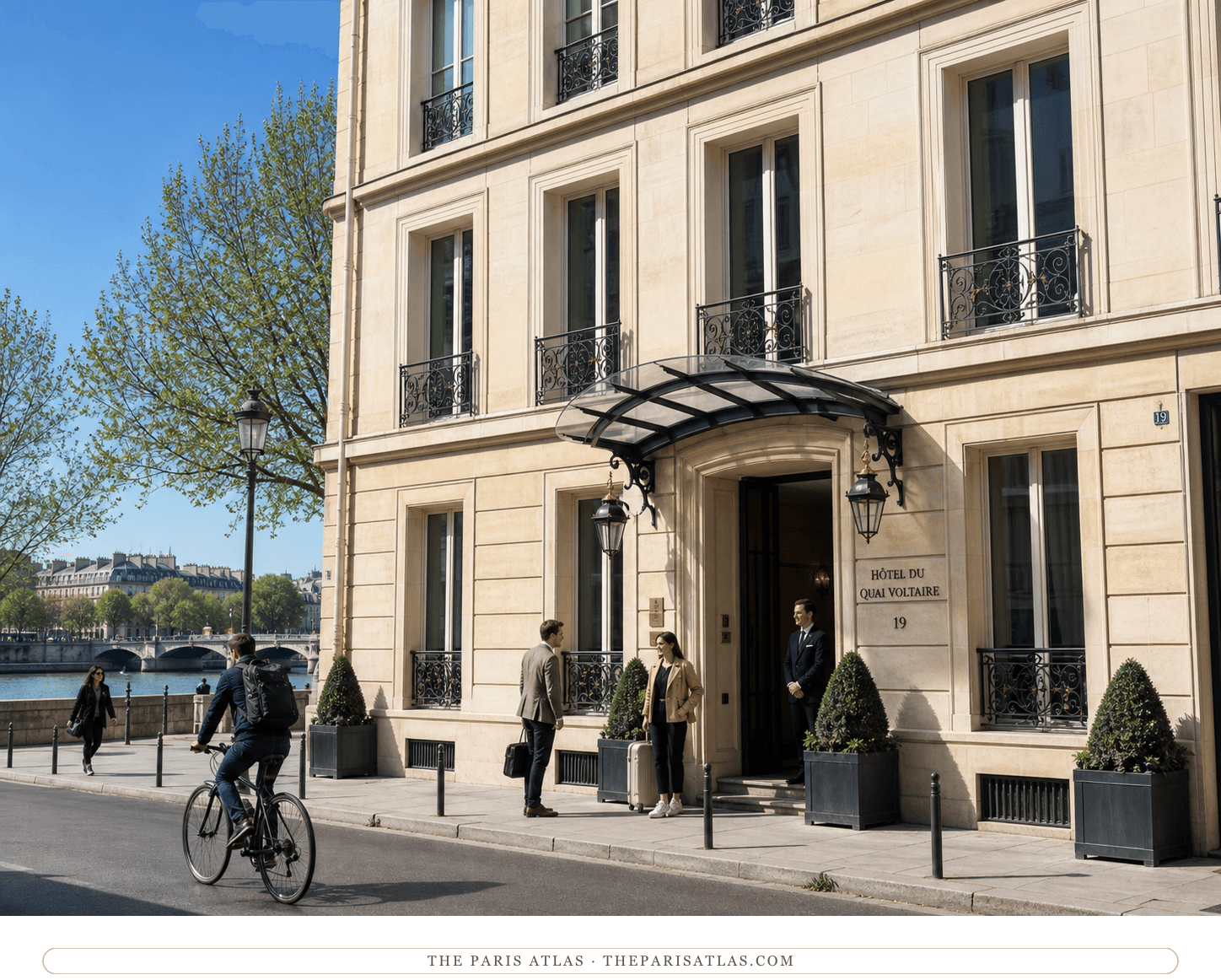
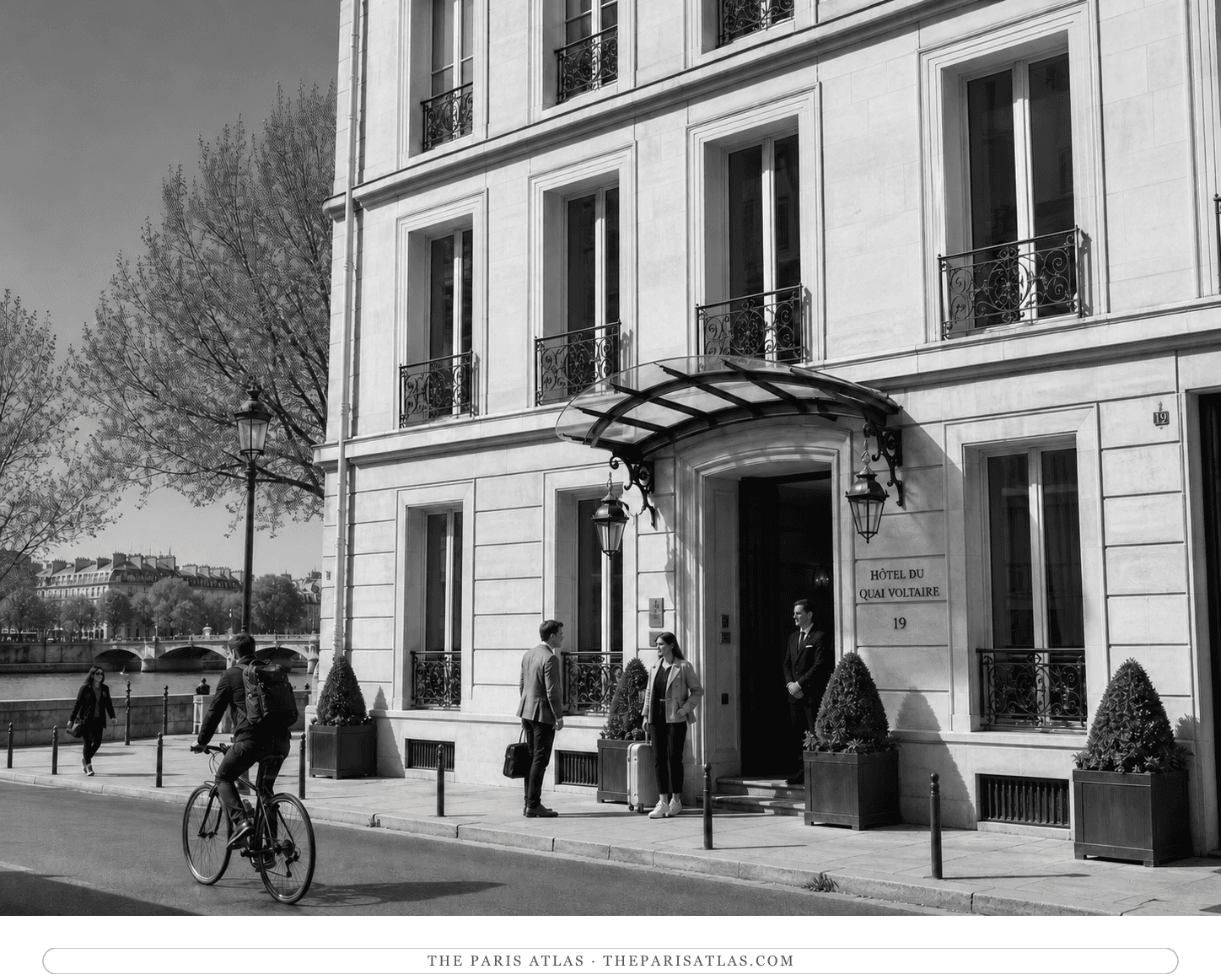
The hotel facing the Louvre across the Seine where Camille Pissarro took a third-floor room in the spring of 1903 and painted the Pont Royal, the Pavillon de Flore and the river — the last series he made in Paris.
Visit the place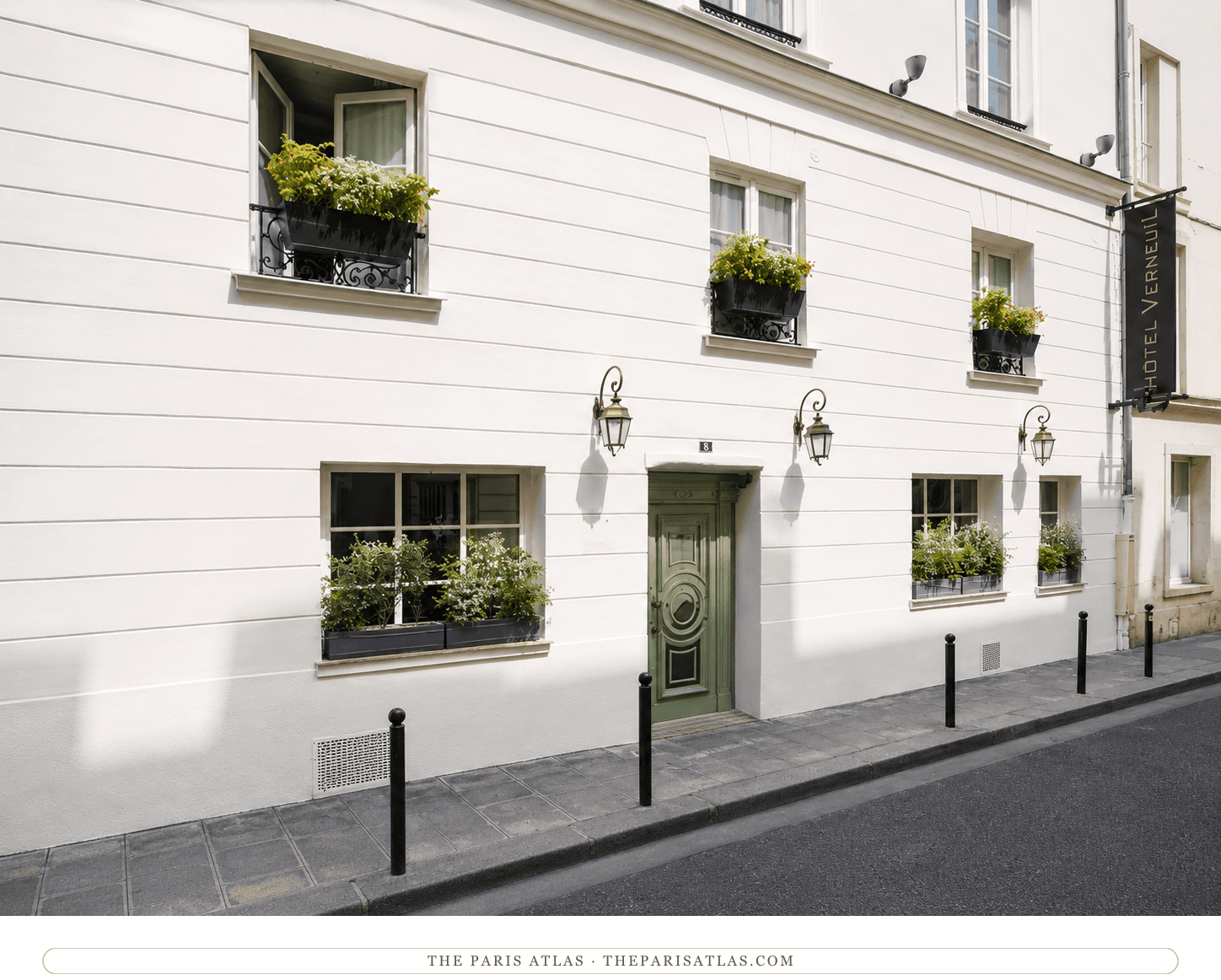
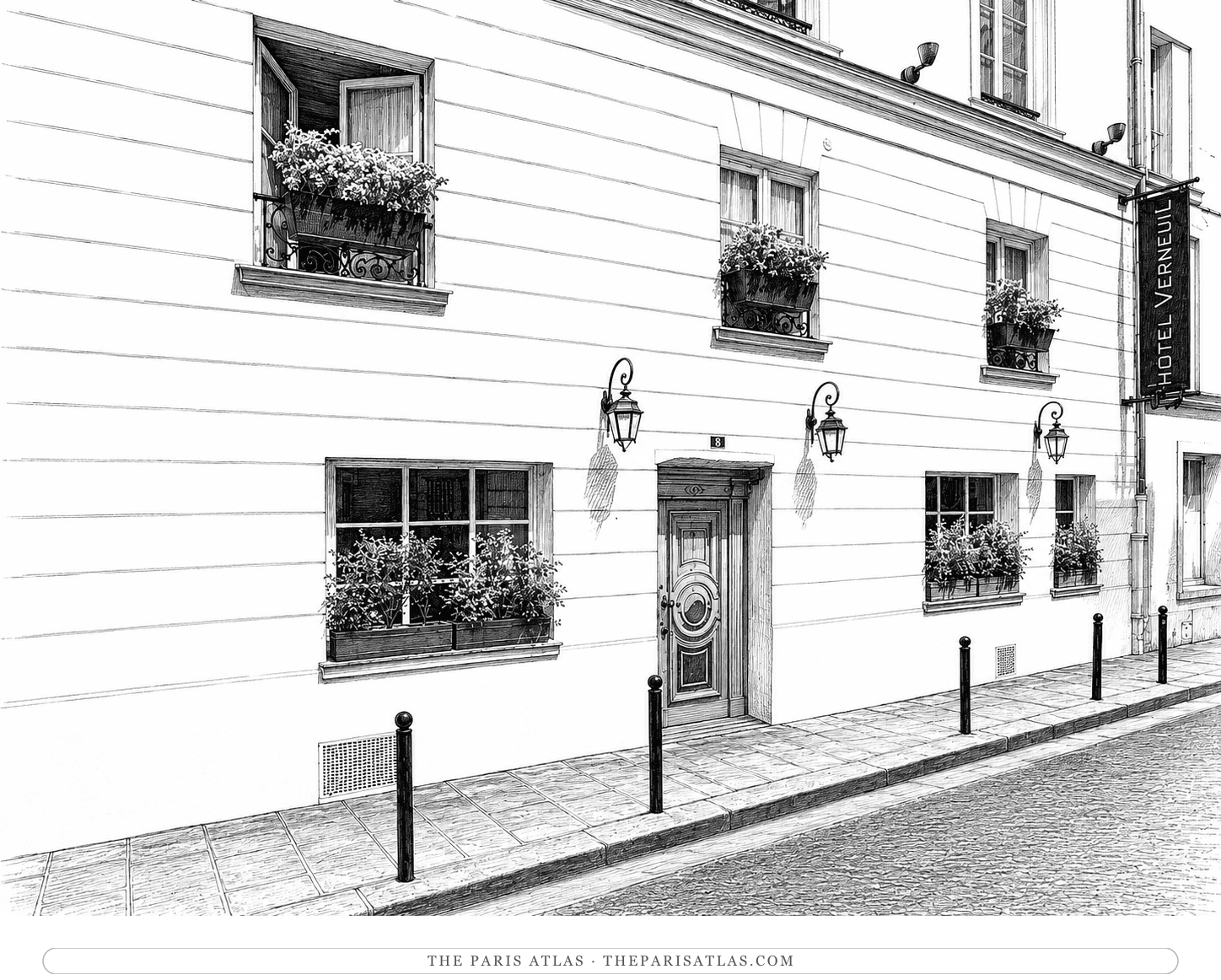
The Left Bank hotel where James Baldwin settled after arriving in Paris in November 1948, and where his first published essays were written.
Visit the place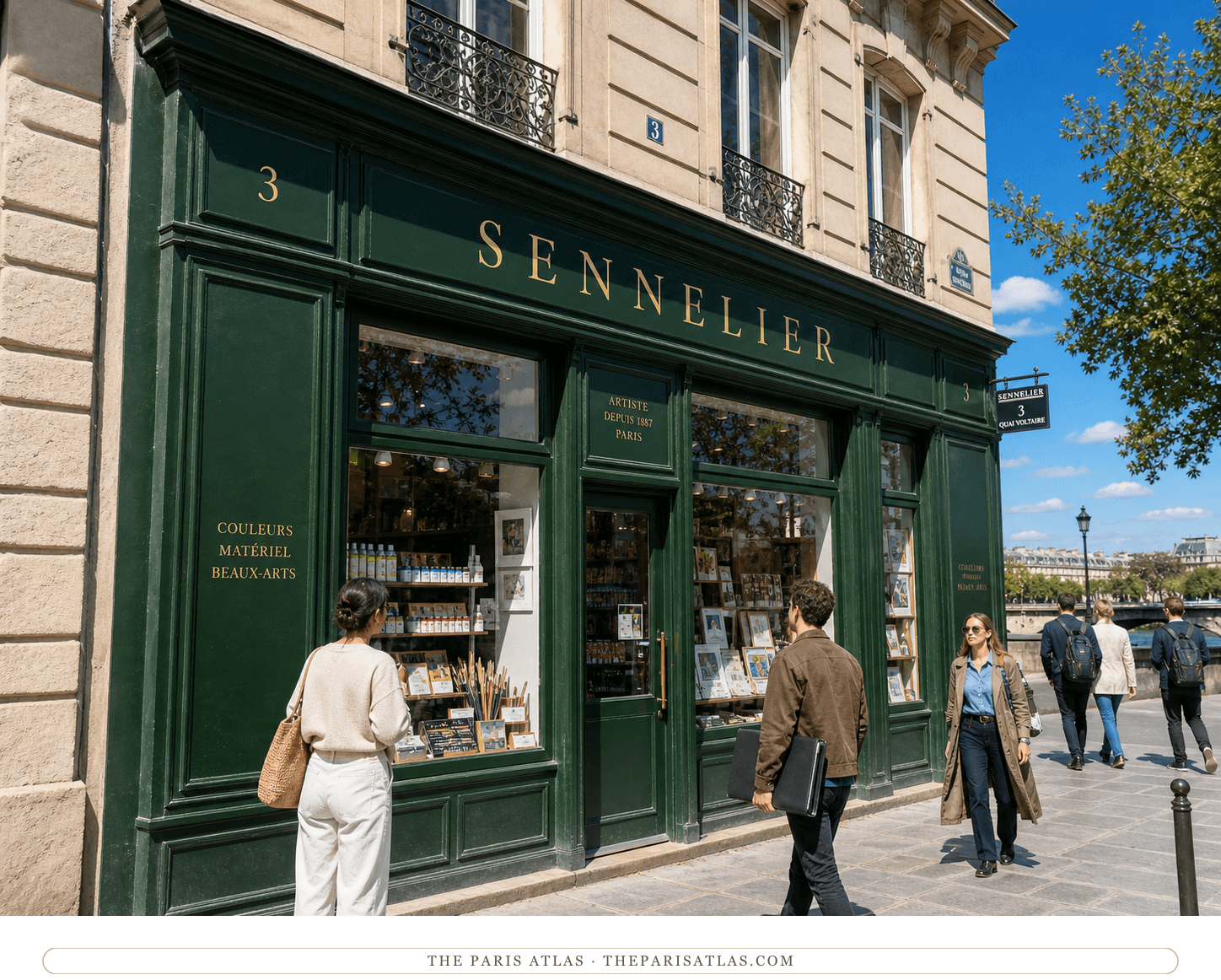
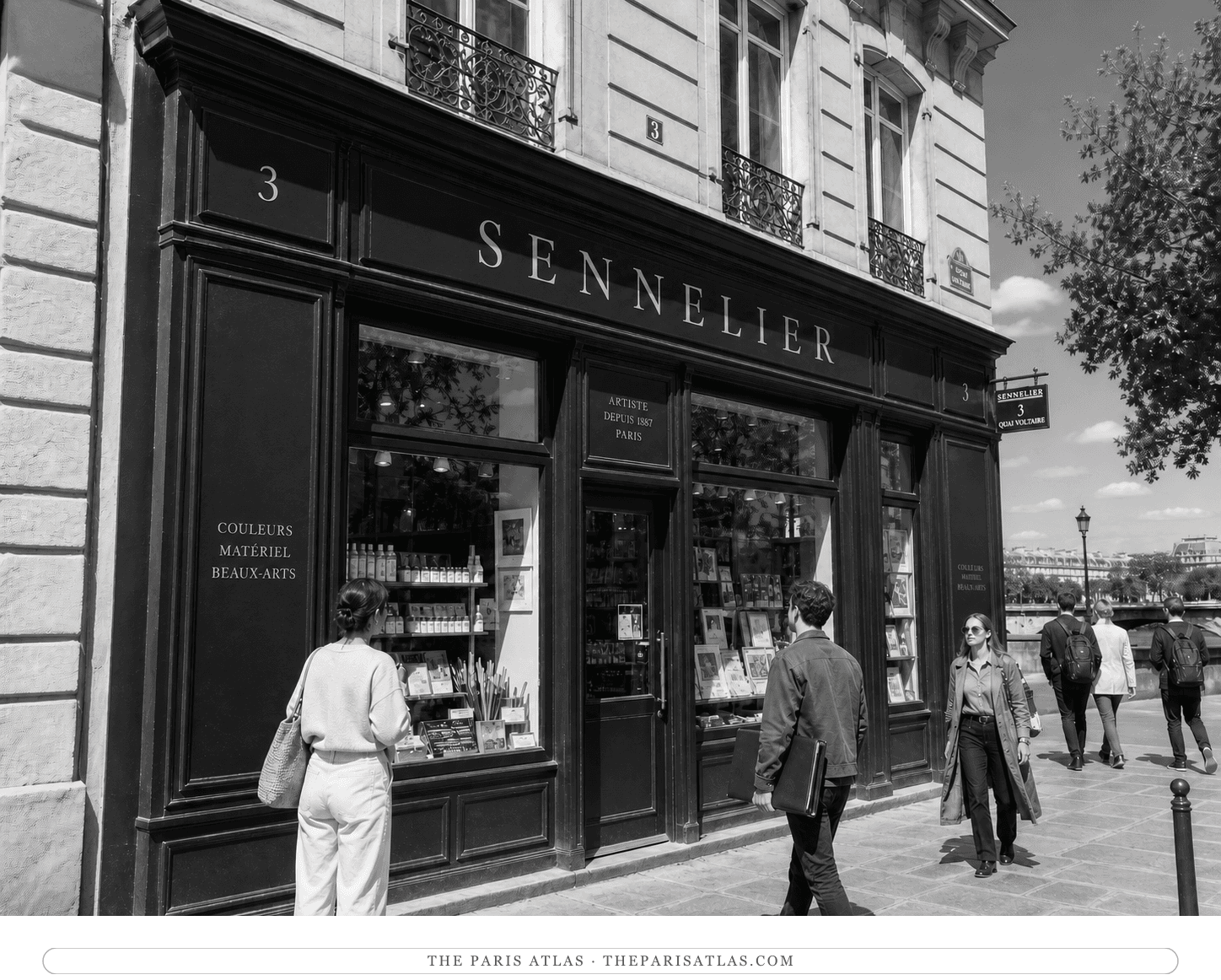
The artists' colourman opened by Gustave Sennelier on the quai Voltaire in 1887, opposite the Louvre — still trading, still grinding pigment, and still looking very much as it did.
Visit the place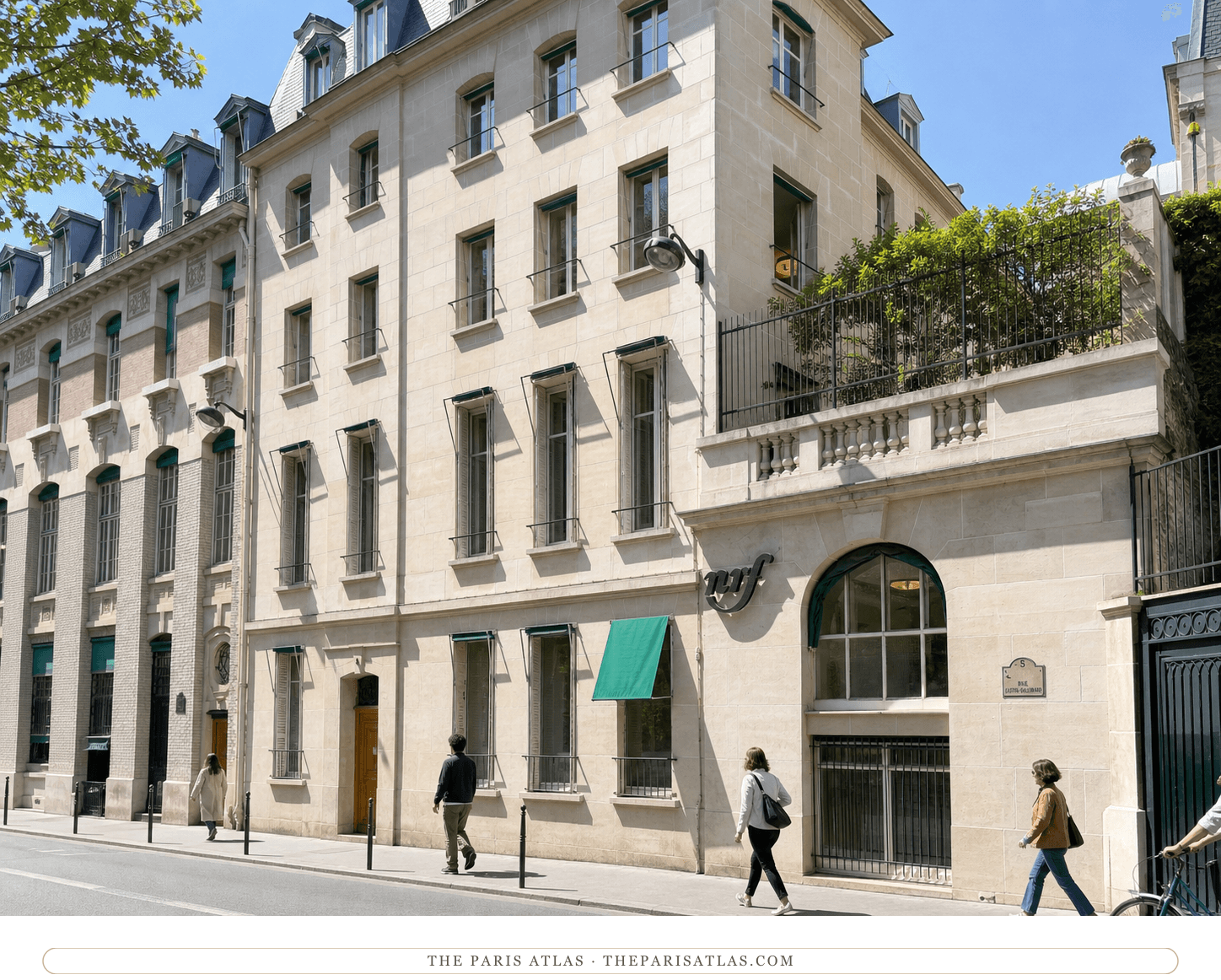
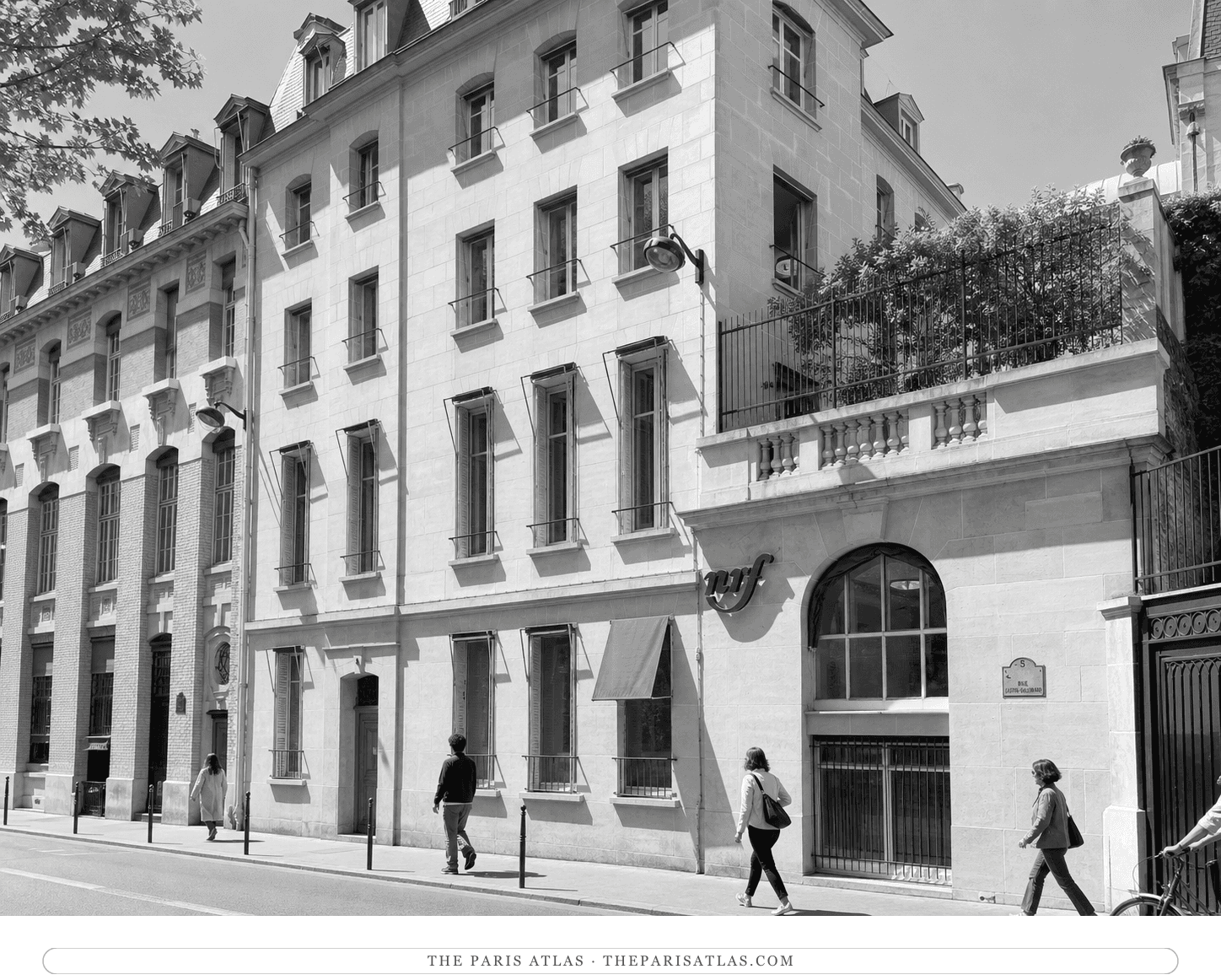
The headquarters of Éditions Gallimard, the publishing house that has issued a large share of modern French literature. Albert Camus worked here as director of a collection, and the street itself was renamed after the publisher's founder in 2011.
Visit the placeThe sources below include histories, archival materials, scholarly research, and official records that informed this page. They document Black Sun Press (19 Rue de Lille), the people connected to it, and its place in Paris.


Web source consulted for documented facts and historical context presented on the Black Sun Press (19 Rue de Lille) page.

Contemporary reporting or criticism used to document the historical reception and context of Black Sun Press (19 Rue de Lille).
These references provide the documented foundation for this page's history and context. Claim-level citations remain attached to the specific claims they support.
 Explore more resources
Newsletter
The cafés, studios, and walk-up flats where the work was made — one story from the map in every letter.