Displayed at · 1986
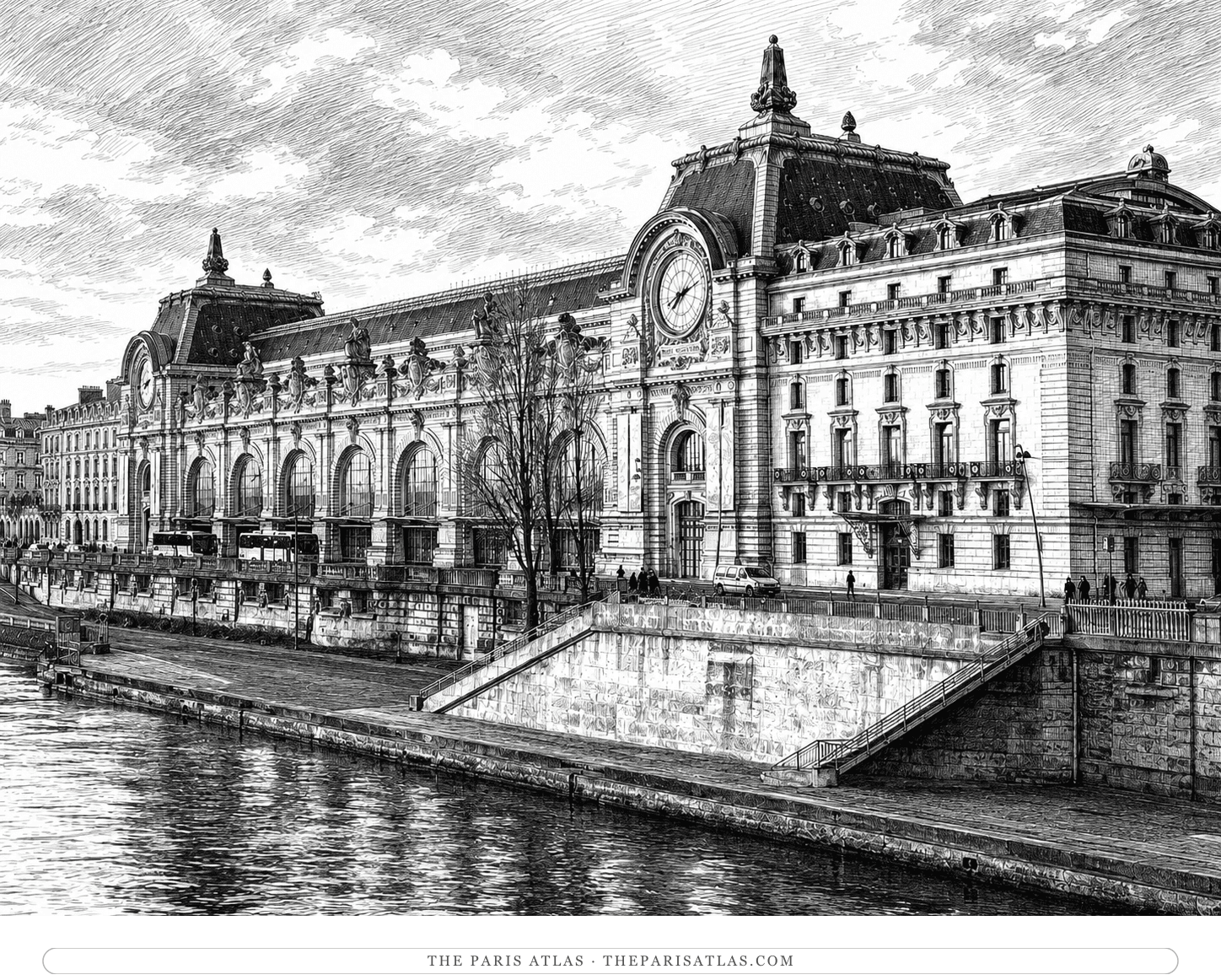
Gare d'Orsay
The painting was assigned to the Musée d'Orsay in 1986. The museum occupies the former Gare d'Orsay; collection membership does not guarantee current gallery display.
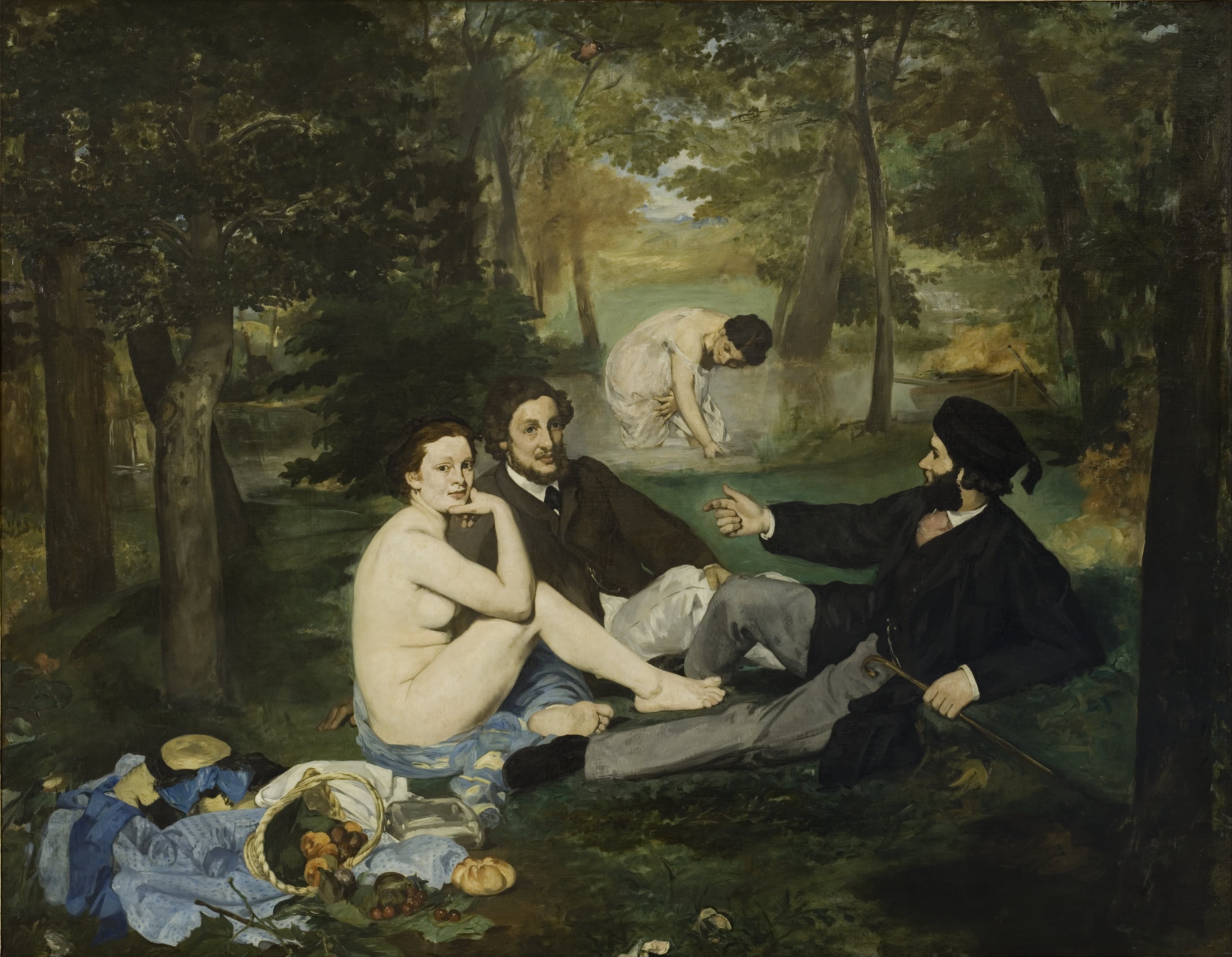
Édouard Manet's Le Déjeuner sur l'herbe places a nude woman beside two dressed men in a wooded setting. Rejected by the official Salon in 1863, the painting was shown that year at the Salon des Refusés.
Édouard Manet places three large figures in the foreground of Le Déjeuner sur l'herbe. The woman is nude, while the men wear contemporary clothes. Behind them, another woman bends toward the water.
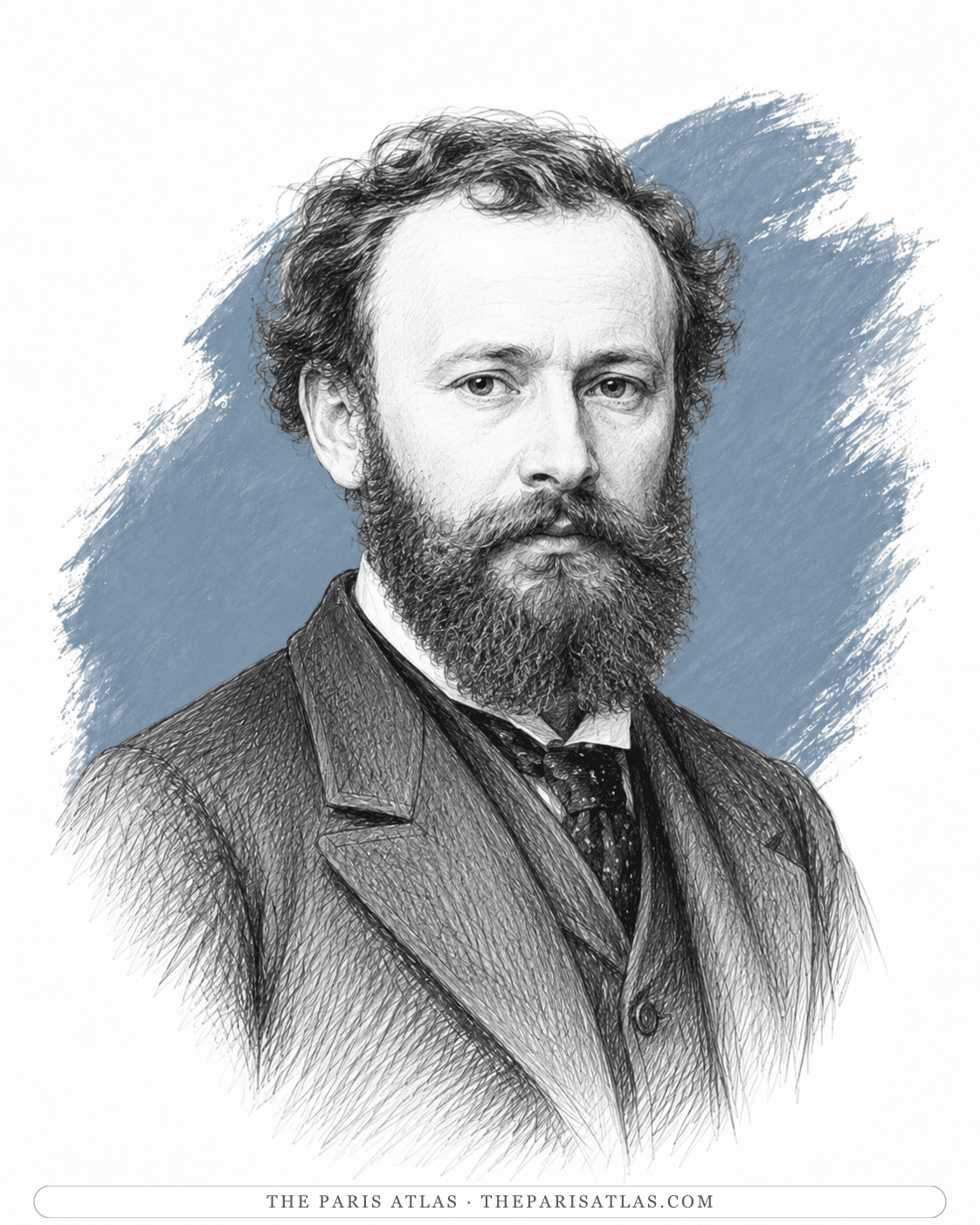
The Musée d'Orsay identifies the foreground models as Victorine Meurent, Manet's brother-in-law Ferdinand Leenhoff, and Manet's brother Eugène. Its object record does not name the woman bathing in the background.
Food and discarded clothing occupy the lower-left corner. The objects explain the picnic setting, but the painting does not give a clear story for the group's different states of dress. The foreground woman's gaze turns attention outward toward the viewer.
The right-hand man's extended leg runs diagonally across the lower part of the group. His outstretched hand points back into the gathering. These crossing directions keep the figures connected despite their different gazes.
The official Salon jury rejected the painting in 1863. Manet then showed it at the Salon des Refusés, an exhibition arranged for rejected works after widespread objections to the jury's decisions.
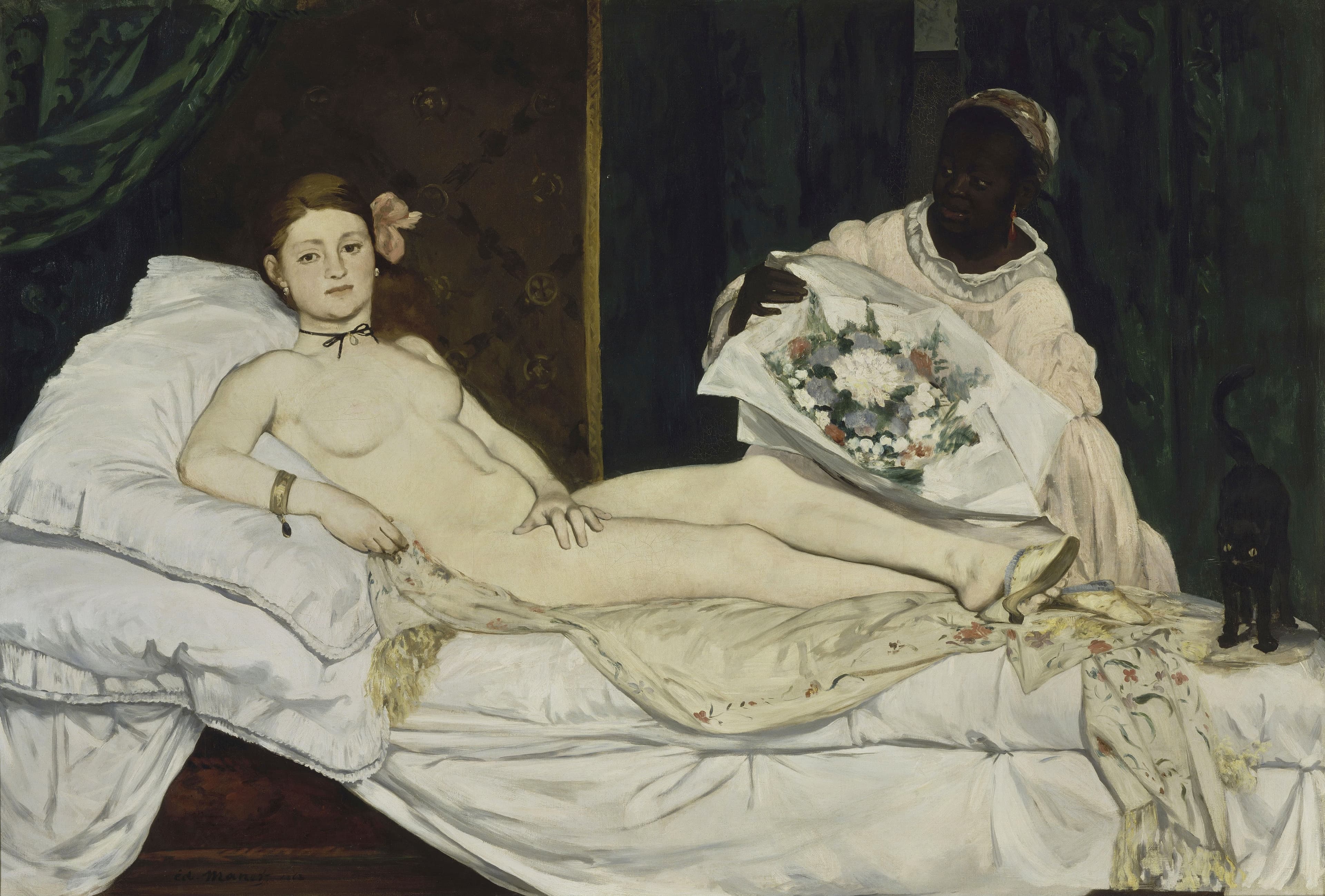
The painting appeared under the title Le Bain, or The Bath. Its present title means Luncheon on the Grass. Olympia was painted in the same year but caused its Salon scandal two years later.
The Musée d'Orsay traces the seated group to figures in Marcantonio Raimondi's engraving after Raphael's Judgment of Paris. Manet also drew on the tradition of nude and clothed figures sharing a landscape, represented by Titian's Pastoral Concert.
Manet's borrowings from Renaissance compositions show that the picnic group was carefully posed. Its pale body, dark coats, and crossed legs form large interlocking shapes.
The Salon jury refused the painting in 1863. It hung instead at the Salon des Refusés, an exhibition of rejected work that Napoleon III authorised after widespread anger at the jury's decisions, and where visitors met it under the title Le Bain, or The Bath.[1]
Manet's defiance is easy to overstate. He kept submitting to the Salon and wanted a place inside the institution that kept criticising him, which is a more awkward position than rejecting the art establishment outright: he wanted serious contemporary painting admitted to it. He was close to the Impressionists and never exhibited in their independent group shows.[2]
Émile Zola became his most useful defender. In 1867 Zola predicted that the much-mocked painting would end up in the Louvre. Set against its reception four years earlier, that confidence is the origin of the durable story about Manet as an artist whose innovations outran his public.[2]
The bather seems unusually large in relation to the figures in front. The narrow strip of water and loose background do little to settle the distance. Manet leaves the viewer to negotiate a space that is less consistent than a conventional perspective study.
The canvas entered the French national collections through Étienne Moreau-Nélaton's gift in 1906. It is now at the Musée d'Orsay.
Close reading
The main group, distant bather, and foreground still life are painted at different scales. Follow their edges to see how Manet connects them without making the space fully consistent.
1.Victorine Meurent looks out of the group
Her pale shoulder and face stand out against the dark foliage. The outward gaze creates a different relationship from the men's sideways conversation.
2.Ferdinand Leenhoff gestures across the center
The hand and forearm reach across the space between the figures. The gesture connects bodies that otherwise face different directions.
3.The bather is large in the distance
The bather occupies a substantial area despite her position behind the group. The limited space around her makes the depth difficult to measure.
4.A still life fills the corner
The basket spills toward the viewer. Its rounded fruit and bread contrast with the longer folds of fabric beneath it.
5.Eugène Manet's legs form a long diagonal
The extended legs run across the group's base. Light trousers separate the body from the darker ground, making the diagonal easy to follow.
6.Trees frame a pale opening
The trunks divide the background into vertical areas. The brighter opening offers a route into the landscape, though the foreground figures keep most of the attention.
1863
In 1863, the official Salon rejected Manet's painting, which he then exhibited at the Salon des Refusés as Le Bain.
1906
In 1906, Étienne Moreau-Nélaton gave Le Déjeuner sur l'herbe to the French national collections.
1986
In 1986, Le Déjeuner sur l'herbe was assigned to the Musée d'Orsay.
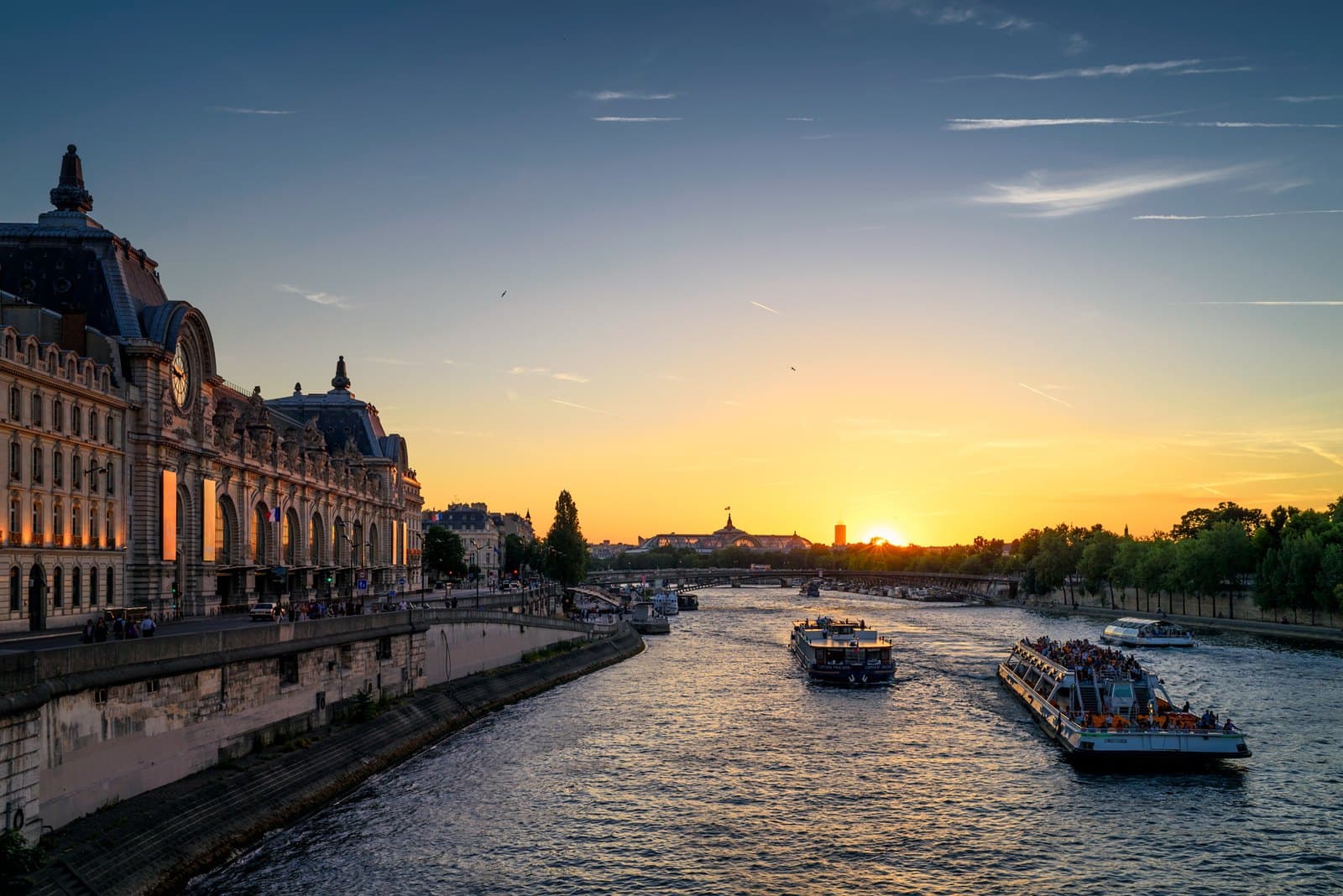
Musée d'Orsay, Paris
Esplanade Valéry Giscard d’Estaing, 75007 Paris, France
Displays and loans can change. Check whether this work is on view before making a special trip.
Plan your visitLuncheon on the Grass. Manet exhibited the painting in 1863 under the earlier title Le Bain, meaning The Bath.
In Le Déjeuner sur l'herbe, a nude woman sits with men in contemporary dress without a mythological explanation. Critics also objected to Manet's handling of figures and space.
Manet's Le Déjeuner sur l'herbe was rejected by the official Salon in 1863 and exhibited at the Salon des Refusés instead.
The 1863 Le Déjeuner sur l'herbe is by Édouard Manet. Claude Monet later made a different painting with the same French title.
Le Déjeuner sur l'herbe is in the Musée d'Orsay collection in Paris as accession RF 1668.
Displayed at · 1986
The painting was assigned to the Musée d'Orsay in 1986. The museum occupies the former Gare d'Orsay; collection membership does not guarantee current gallery display.
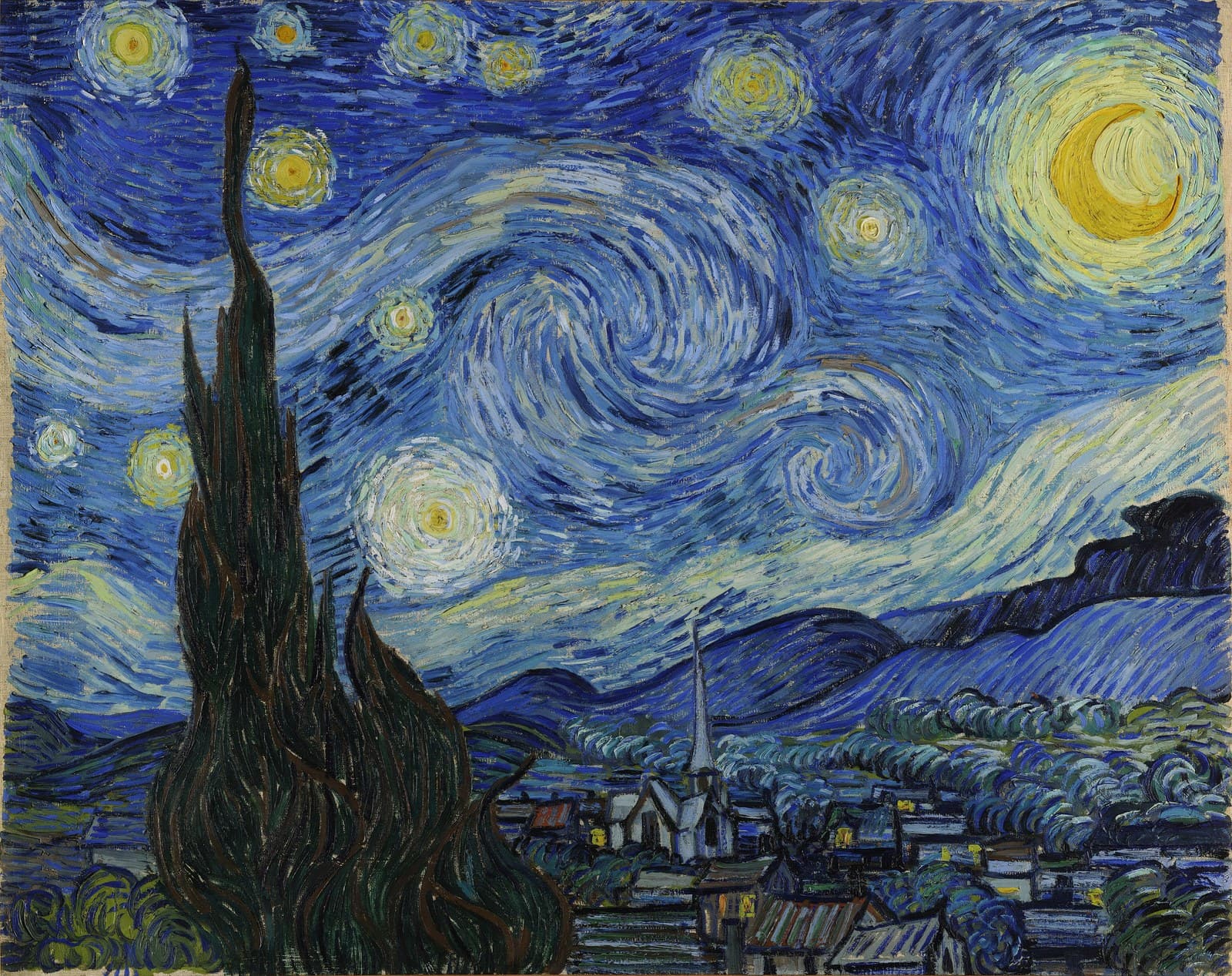
Associated with · 1863
Édouard Manet's Le Déjeuner sur l'herbe was rejected by the official Salon in 1863 and shown instead at the Salon des Refusés, where its nude woman seated beside two clothed men in contemporary dress drew accusations of indecency. Manet built the group on Renaissance precedents, including an engraving after Raphael's Judgment of Paris, which is what makes the provocation deliberate rather than ignorant.
Explore painters from the same movements and circles.
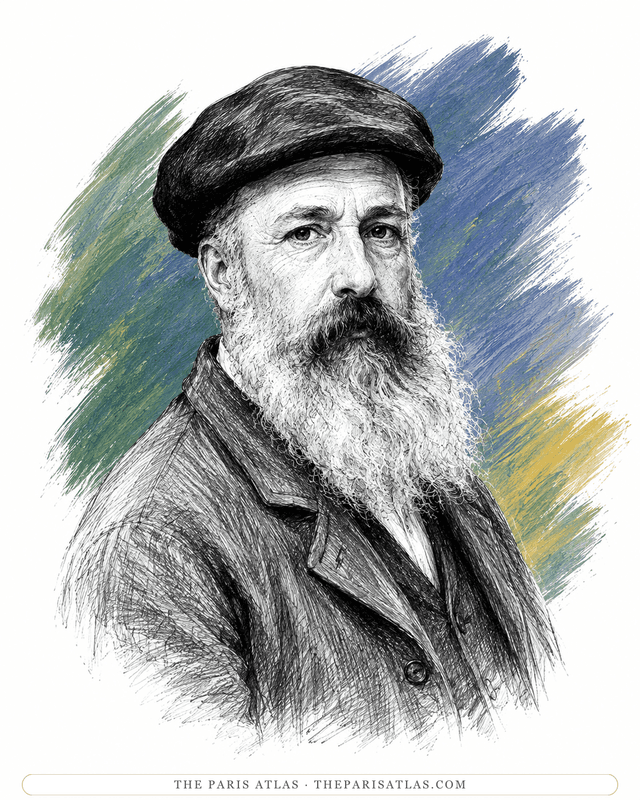
Impressionist painter whose late Water Lilies cycle fills the Orangerie's two oval rooms — a gift to France offered the day after the 1918 Armistice and installed to his design.
View artist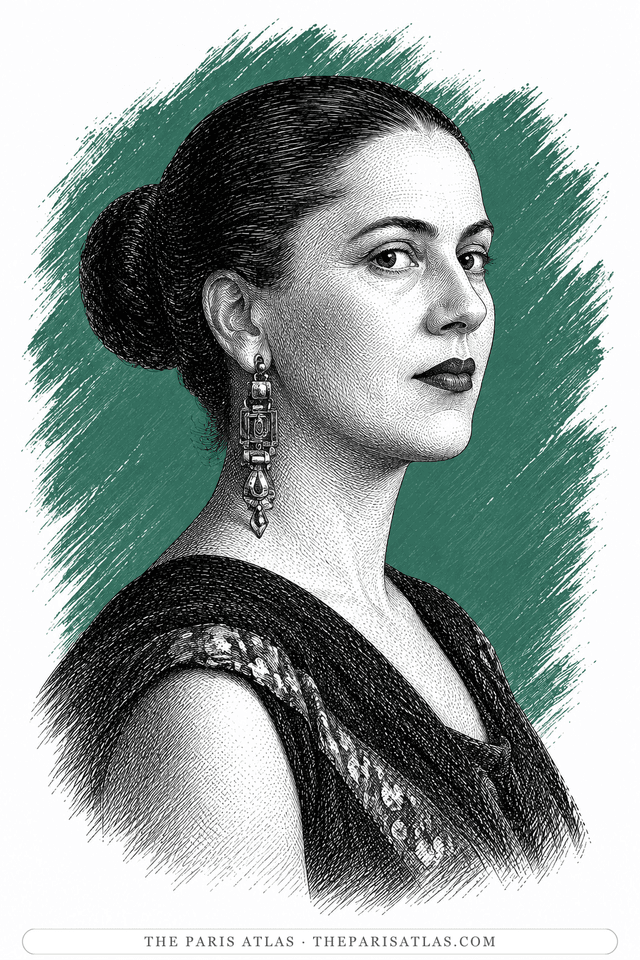
Brazilian painter who spent the 1920s moving between São Paulo and Paris, studied Cubism under André Lhote, Albert Gleizes and Fernand Léger, and used what she learned to paint Brazilian towns, railways, plants and bodies. Her 1928 painting Abaporu prompted the manifesto that gave the Anthropophagic movement its name.
View artist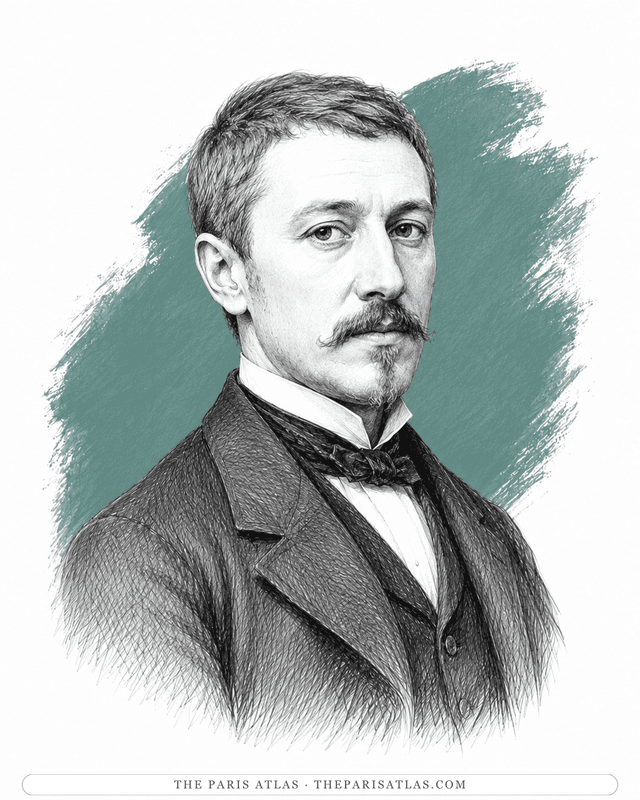
Painter of Haussmann's geometry and the group's organizer-financier; his bequest of Impressionist paintings forced the French state to take the movement in.
View artistThe sources below include collection records, catalogues, scholarly research, and primary materials that informed this page. They document Le Déjeuner sur l'herbe, its making, and its place in cultural history.


Web source consulted for documented facts and historical context presented on the Le Déjeuner sur l'herbe page.
The reproduction is the primary visual source for the close-reading details; rights metadata is preserved separately.
Web source consulted for documented facts and historical context presented on the Le Déjeuner sur l'herbe page.
These references provide the documented foundation for this work's history and interpretation. Claim-level citations remain attached to the specific claims they support.
 Explore more resources
 View source