
Painting · The early years
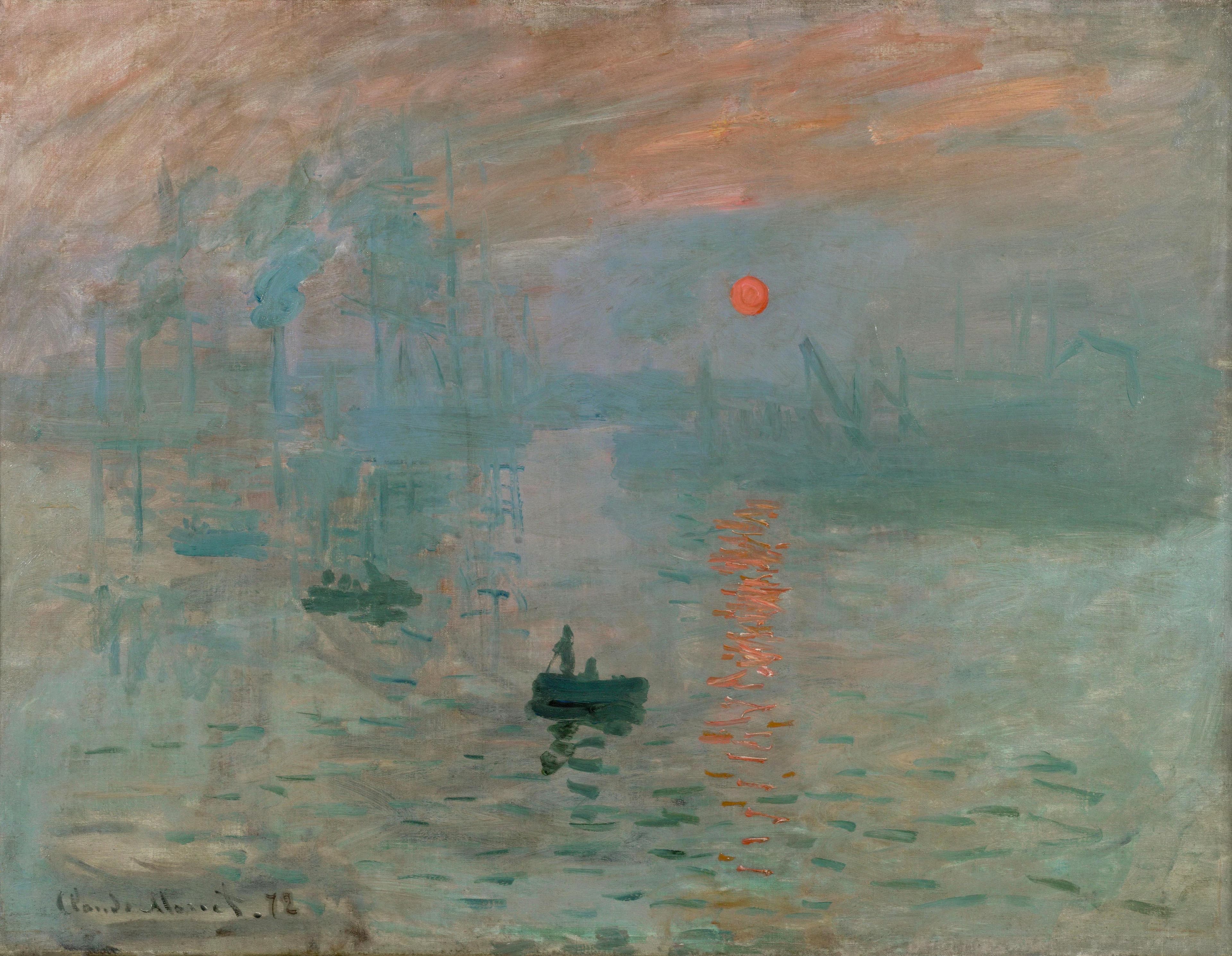
Impression, Sunrise
Claude Monet's 1872 view of the Le Havre harbor at dawn, whose catalogue title at the first independent exhibition of 1874 gave Impressionism its name. It hangs at the Musée Marmottan Monet in Paris.
Impressionist painter whose late Water Lilies cycle fills the Orangerie's two oval rooms — a gift to France offered the day after the 1918 Armistice and installed to his design.
Claude Monet was a French painter, the central figure of Impressionism and the man whose painting gave the movement its name. He was born in Paris on 14 November 1840 and died at Giverny, north-west of Paris, on 5 December 1926.
In 1874 he exhibited a harbour scene called Impression, Sunrise.[1] A hostile critic used the title to mock the whole group of painters showing with him, calling them Impressionists, and the insult became the name of the movement.
His subject was light. He painted the same haystacks, the same cathedral front and the same water lilies over and over, at different hours and in different weather, to record what changes when nothing changes[2] but the light.
He spent the last forty-three years of his life at Giverny, from 1883 until his death in 1926. There he built a water garden and painted it until he was nearly blind. The largest of those paintings, the Water Lilies panels he gave to the French state, fill two oval rooms at the Musée de l'Orangerie in Paris.[3]
Oscar-Claude Monet was born in Paris on 14 November 1840. When he was five the family moved to Le Havre, on the Normandy coast, where his father ran a grocery and ship-chandlery business.
He was a bad student and a good caricaturist. By fifteen he was selling charcoal caricatures of local people in a shop window for money.
The painter Eugène Boudin saw the caricatures in the shop window, sought him out, and took him outdoors to paint. Monet resisted at first and then, in his own account, understood suddenly what painting could be. Boudin's lesson was to work outside, in front of the subject, in the changing light — which became the method Monet used for sixty years.
Monet went to Paris in 1859 and refused the conventional training. Instead of the École des Beaux-Arts he enrolled at the Académie Suisse and later the studio of Charles Gleyre, where in 1862 he met Auguste Renoir, Alfred Sisley and Frédéric Bazille.
Monet, Renoir, Sisley and Bazille went to the forest of Fontainebleau to paint outdoors together. They were interested in ordinary modern subjects — a picnic, a river, a railway station — painted in bright colour, and in finishing pictures in front of the thing rather than working them up in a studio.
He was conscripted to Algeria in 1861, came back ill within a year, and his aunt paid to buy him out of the remaining service on condition he study art properly.
In 1865 Monet met Camille Doncieux, who modelled for him and became his companion.[1] Their son Jean was born in 1867.
Monet's family disapproved and cut off his allowance, and the couple spent years in real poverty. He wrote begging letters to friends and moved from village to village to escape landlords. At one low point in 1868 he wrote to a friend that he had tried to drown himself, though he treated it afterwards as a moment of despair rather than a settled intention.
They married in 1870. When the Franco-Prussian War broke out that year, Monet went to London to avoid conscription, and there he saw Turner's paintings and met the dealer Paul Durand-Ruel, who bought his work for the next forty years.
In April 1874 Monet and about thirty other painters, refused or ignored by the official Salon, held their own exhibition in the former studio of the photographer Nadar on the boulevard des Capucines. They constituted themselves formally as the Société anonyme des artistes peintres, sculpteurs, graveurs.
Monet showed a small canvas of the harbour at Le Havre at dawn, orange sun over blue-grey water and masts, painted quickly and loosely. Asked for a title for the catalogue, he said to call it Impression.
The critic Louis Leroy wrote a mocking review built around that word, saying that wallpaper in its early stages was more finished than this seascape, and headlined it "Exhibition of the Impressionists". The painters took the name. The group held eight exhibitions in all, between 1874 and 1886.
The painting is at the Musée Marmottan Monet in Paris.
The Impressionists painted outdoors, finished pictures on the spot, and used bright unmixed colours laid side by side rather than blended, so that the eye does the mixing. They painted shadows in colour instead of in brown or black.
The subjects changed too. Instead of history, myth and religion, they painted railway stations, boulevards, boating parties, suburbs, and weather. Ready-made paint in metal tubes, available from the 1840s, is part of the reason they could: it made carrying a full palette outdoors practical.
Critics objected that the pictures looked unfinished. By the standards of the Salon they were, and the painters meant them to be.
From about 1890 Monet worked in series: the same subject painted many times under different light. He would work on several canvases in a single day, changing to the next as the light moved.
He painted about twenty-five grainstacks in 1890 and 1891, standing in a field near his house through autumn, winter and spring. He painted the west front of Rouen Cathedral more than thirty times in 1892 and 1893, from a room hired opposite. He painted poplars, the Thames at Waterloo Bridge, and the Doge's Palace in Venice.
The series show it plainly. The grainstack does not change; the painting changes completely. What he was painting was never the object.
In 1883 Monet moved to Giverny, a village on the Seine about forty-five miles from Paris. He rented the house at first and bought it in 1890, when his paintings had finally made him money.
Camille had died of cancer in 1879, aged thirty-two. Monet painted her on her deathbed and wrote afterwards, appalled at himself, that he had caught himself studying the colours death was putting on her face. Ernest Hoschedé, a patron who had gone bankrupt, died in 1891, and Monet married his widow Alice in 1892. Her six children joined his two.
At Giverny he made the garden that became his last subject. There was a flower garden in front of the house, and from 1893 a water garden fed by a diverted stream, with a Japanese bridge and imported water lilies.
From about 1897 until his death Monet painted the water garden. In the late works the horizon disappears entirely: there is no bank, no sky except as reflection, only the surface of the water with lilies on it and clouds and willows in it.
He had wanted a room of them for years. In 1909 he told the critic Gustave Geffroy that he wanted the water-lily theme carried along the walls. In June 1914 he wrote that he was embarking on a great project, and in 1916 he had a third studio built at Giverny, lit by roof windows, big enough to hold canvases two metres high and four wide.
The project reached the French state through Georges Clemenceau, who was prime minister for the last two years of the war. The two men had met in 1860, lost touch, and found each other again after 1908, when Clemenceau bought a property near Giverny.
On 12 November 1918, the day after the Armistice, Monet wrote to him. He was on the verge of finishing two decorative panels, he said, which he wanted to sign on Victory Day, and he was offering them to the State with Clemenceau acting as intermediary.
The gift kept growing. Two panels became twelve in the agreement of 1920, and nineteen in the contract signed on 12 April 1922. Monet reworked them continually, destroyed some outright, and asked to keep them until his death.
Monet's sight failed while he was working on the panels. He had cataracts in both eyes, and by 1914 his colour vision was badly affected, so that canvases from those years went red and muddy.
In 1922 the ophthalmologist Charles Coutela recorded that the right eye perceived only light. Clemenceau pressed him through two operations in early 1923, after years of refusal. Afterwards Monet complained that he saw everything with a bluish tint, and he destroyed canvases painted during the cataract years.
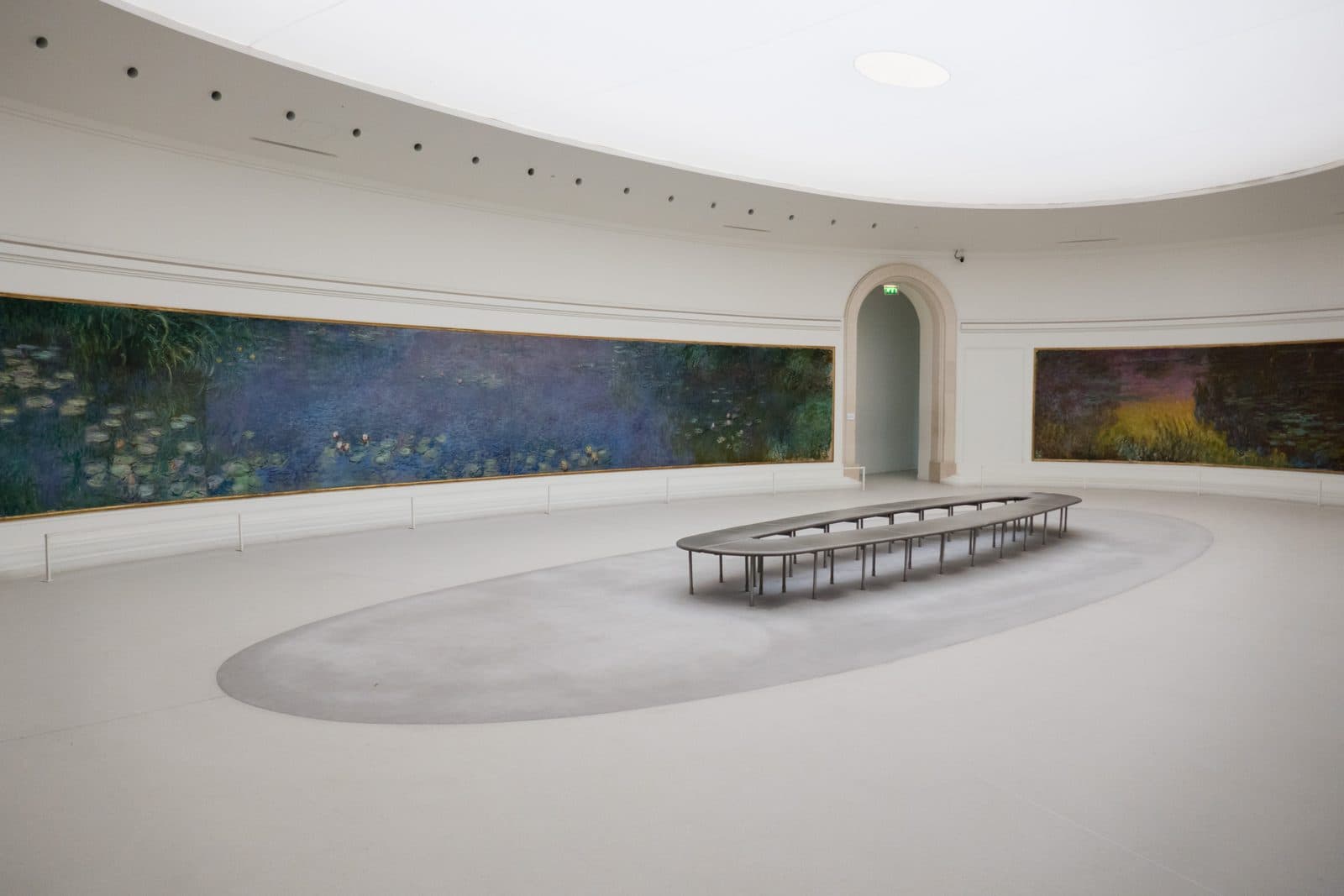
The installation was worked out with the architect Camille Lefèvre and with Clemenceau's backing. Two oval rooms were built inside the Musée de l'Orangerie, in the Tuileries gardens, so that the panels run continuously round the walls with no corners.
There are eight compositions, assembled from panels, all 1.97 metres high. The sunrise tones hang to the east and the sunset tones to the west, so that the light of the day runs round the rooms.
They opened to the public in May 1927, six months after Monet's death. A floor below them hangs the collection assembled by the dealer Paul Guillaume.
Monet died of lung cancer at Giverny on 5 December 1926, aged eighty-six, with Clemenceau at his bedside. There was no religious ceremony, at his own request, and about fifty people attended.
Georges Clemenceau, the former prime minister, who had been his friend for decades and had pushed the Orangerie project through the French state, pulled the black cloth off the coffin at the graveside, saying that Monet should not have black.
Monet made a way of painting that treated light and the passage of time as the actual subject, and he pursued it for sixty years with more discipline than anyone else in the group. The series paintings show a picture as the record of one moment of seeing rather than a description of an object.
The late Water Lilies had an effect he did not intend. Painted almost blind, with the horizon gone and the surface dissolved, they were taken up in the 1950s as an ancestor of American abstract painting. The painter André Masson called the Orangerie rooms the Sixtine Chapel of Impressionism in 1952, and in 1955 the Museum of Modern Art in New York bought and hung one of the great late canvases. Critics drew the line from them to Pollock, Rothko, Newman and Still, and Monet's reputation, which had faded badly, was rebuilt on it.
The Musée Marmottan Monet holds Impression, Sunrise and the largest group of his work. The Musée d'Orsay holds the broad Impressionist survey, and the Orangerie holds the Water Lilies rooms.
Monet's house and gardens at Giverny, west of Paris, are kept as a museum and open to visitors seasonally, in the months when the water garden he painted is in flower.
Born Oscar-Claude Monet in Paris on 14 November, the second son of a grocer.
The family moves to Le Havre on the Normandy coast, where his father runs a grocery and ship-chandlery business.
Sells charcoal caricatures of local people from a shop window in Le Havre at fifteen.
The painter Eugène Boudin seeks him out and takes him outdoors to paint in front of the subject, the method Monet uses for the next sixty years.
Moves to Paris and enrols at the Académie Suisse rather than the École des Beaux-Arts.
Is conscripted and sent to Algeria, and comes back ill within a year. His aunt buys him out of the rest of his service on condition he study art properly.
Enters the studio of Charles Gleyre in Paris, where he meets Auguste Renoir, Alfred Sisley and Frédéric Bazille.
Has two seascapes accepted by the Salon. Meets Camille Doncieux, who becomes his model and companion.
Paints Woman in a Green Dress, a full-length portrait of Camille, which is a success at the Salon.
His son Jean is born. His family disapproves and cuts off his allowance.
Writes to a friend that he has tried to drown himself in despair over money.
Marries Camille. When the Franco-Prussian War breaks out he goes to London to avoid conscription, sees Turner's paintings and meets the dealer Paul Durand-Ruel.
Paints Impression, Sunrise, a view of the harbour at Le Havre at dawn.
Shows the painting at the group's first independent exhibition in April. The critic Louis Leroy mocks it and heads his review "Exhibition of the Impressionists". The painters adopt the name.
Meets Ernest Hoschedé, a department-store owner and patron, and his wife Alice.
Paints at Argenteuil, where Édouard Manet and Pierre-Auguste Renoir work alongside him on the riverbank.
His second son Michel is born. Hoschedé goes bankrupt and the two families begin sharing a house.
Camille dies of cancer at thirty-two. Monet paints her on her deathbed and is appalled to catch himself studying the colours in her face.
Moves out of Paris in stages, living at Argenteuil, then Vétheuil, then Poissy.
Moves to Giverny, a village on the Seine about forty-five miles from Paris.
Travels to Belle-Île in Brittany and paints the rocks and sea in a storm.
Buys the house at Giverny, his paintings having finally made him money. Begins the grainstack series.
Exhibits fifteen grainstack paintings together at Durand-Ruel's gallery. They sell within days.
Ernest Hoschedé dies.
Begins painting the west front of Rouen Cathedral from a room hired opposite, returning more than thirty times over two years. Marries Alice Hoschedé.
Buys land at Giverny and diverts a stream to make a water garden, with a Japanese bridge and imported water lilies.
Begins painting the water garden, the subject of his last thirty years.
Paints the Japanese bridge series. Travels to London and begins the Thames paintings.
Travels to Venice and paints the Doge's Palace and the lagoon.
Alice dies. Monet stops painting for a period.
Is diagnosed with cataracts in both eyes. His colour vision deteriorates and the canvases go red and muddy.
His son Jean dies. Georges Clemenceau persuades him to begin the large decorative panels of water lilies, and a studio is built at Giverny for them.
Offers the water lily panels to the French state the day after the Armistice in November.
Writes to Georges Clemenceau on 12 November, the day after the Armistice, offering two decorative panels to the State.
The gift grows from two panels to twelve in an agreement with the State.
Signs the contract for nineteen panels on 12 April, and is photographed among them in the third studio by Pierre Choumoff.
The ophthalmologist Charles Coutela records that his right eye perceives only light.
Has two cataract operations, after resisting for years. Afterwards he complains of a bluish tint and destroys canvases painted during the cataract years.
Dies of lung cancer at Giverny on 5 December, aged eighty-six. About fifty people attend the funeral, and Clemenceau pulls the black cloth from the coffin.
The Water Lilies panels open to the public in two oval rooms at the Musée de l'Orangerie in May.
American abstract painters take up the late Water Lilies as an ancestor of their own work, and Monet's reputation is rebuilt on them.
These landscapes of water and reflections have become an obsession. It's quite beyond my powers at my age, and yet I want to succeed in expressing what I feel.
I'm getting so slow at my work it makes me despair, but the further I get, the more I see that a lot of work has to be done in order to render what I'm looking for: 'instantaneity', the 'envelope' above all, the same light spread over everything.
I'm giving myself a hard time over it as I haven't yet managed to capture the colour of this landscape; there are moments when I'm appalled at the colours I'm having to use, I'm afraid what I'm doing is just dreadful and yet I really am understating it; the light is simply terrifying.
Painting · The early years
Claude Monet's 1872 view of the Le Havre harbor at dawn, whose catalogue title at the first independent exhibition of 1874 gave Impressionism its name. It hangs at the Musée Marmottan Monet in Paris.

Painting · Impressionism
Eight enormous curved paintings of Monet's lily pond at Giverny, hung in two oval rooms built to hold them at the Musée de l'Orangerie. Monet gave them to France the day after the Armistice of 11 November 1918, worked on them until he died, and never saw them installed. The rooms opened in May 1927, and the eight panels have been there ever since.

Painting · The Gare Saint-Lazare series
One of twelve canvases Claude Monet painted inside the Gare Saint-Lazare in 1877, and the picture in which he first worked a single motif over and over to catch it under changing conditions — the method he would later carry to the wheat stacks and the cathedral front.

Painting · The Normandy coast
Two young women on a clifftop above the Channel at Pourville, painted in 1882 during a Normandy campaign that was also an escape from grief, money trouble and the quarrels breaking up the Impressionist group.

Painting · The Normandy coast
The cliffs at Étretat in saturated blue, orange and pink, painted in the off-season of 1885 when the resort was empty and the beach held nothing but local fishing boats.

Painting · The London campaigns
Westminster dissolving in Thames fog, painted from a hospital terrace across the river during the London campaigns of 1900 and 1901 — Monet working the same silhouette that Turner and Whistler had worked before him.

Painting · The early years
Camille Doncieux on an island in the Seine, painted in 1868 during a few poor months at Gloton that Émile Zola had recommended to Monet as somewhere cheap to live within reach of Paris. It is the only canvas known to survive from that stay.

Painting · The series paintings
One of the wheat stacks Monet painted in the field outside his own farmhouse at Giverny across 1890 and 1891 — the series whose Paris exhibition in May 1891 turned him from a difficult painter into a successful one.

Painting · The Argenteuil years
Monet's own garden at Argenteuil in 1873, with his wife Camille in the doorway and their son Jean playing with a hoop on the path — painted in the one stretch of his early career when he was not short of money.

Painting · The early years
The shingle beach below Le Havre in the summer of 1867, painted when Monet was staying with his aunt and watching the fishing village he grew up beside turn into a resort.

Painting · Giverny and the water lilies
A near-square canvas from the middle of Monet's water-lily years, in which the bridge, the bank and the sky have all gone and only the surface of the pond is left — the step that leads directly to the Orangerie murals.

Painting · Giverny and the water lilies
The Japanese footbridge at Giverny in 1900, one of eighteen versions of the motif Monet painted in a single campaign — the pond he had dug himself, becoming the subject that would occupy the rest of his life.

Met · 1860
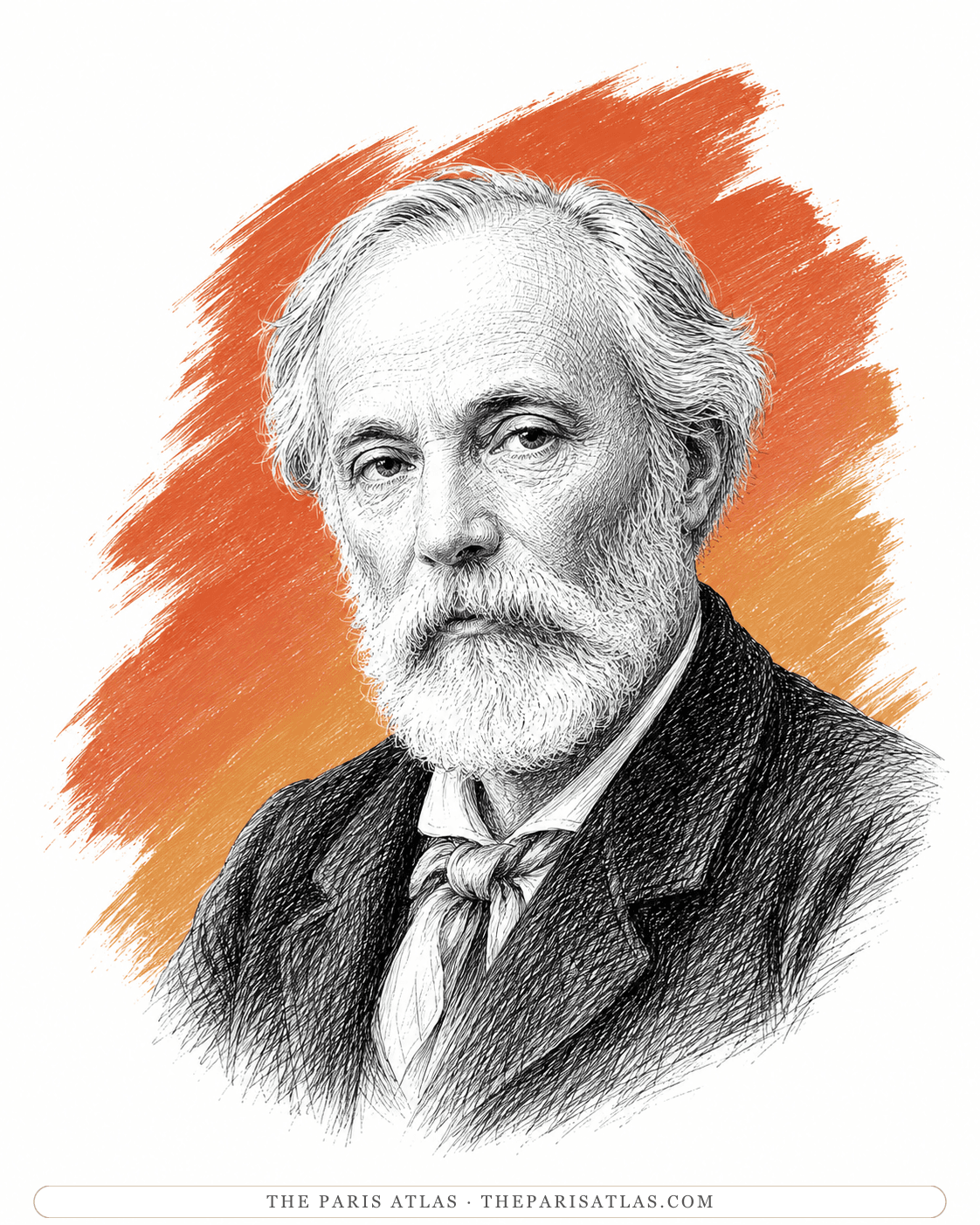
The Orangerie's account: they met in 1860, lost touch, and met again after 1908, when Clemenceau bought a property near Giverny. Clemenceau received the Armistice-day offer of the Water Lilies, pushed the donation to its 1922 contract, and pressed Monet through the cataract operations that let him finish.
Met
A friendship of the movement's core: the Met records Renoir among the friends who gathered at Monet's homes and gardens and often painted alongside their host.
Collaborated with · 1869
In September 1869 the two painted side by side at La Grenouillère, a bathing and boating spot on the Seine, working the same views in quick broken strokes. The Met credits the campaign with catalyzing the Impressionist aesthetic; the Nationalmuseum counts the paired canvases among the first fully Impressionist pictures.

Met · 1862
They met in Charles Gleyre's studio in 1862, alongside Renoir and Bazille — the Orsay's account of the movement's student generation.

Met
The Met places Manet among the friends who gathered at Monet's homes and gardens and often painted alongside their host.

Met · 1862–1870
Enrolled at Gleyre's studio in 1862, where he met Monet, Renoir, and Sisley. He was killed in action on 28 November 1870; the Orsay notes that not a single Bazille hung at the 1874 exhibition his friends went on to mount.

Met · 1874
Named together by the Met among the founding members of the independent society whose 1874 exhibition named Impressionism. Pissarro showed in all eight of the group's exhibitions; Monet's Impression, Sunrise named the movement.
Met · 1874
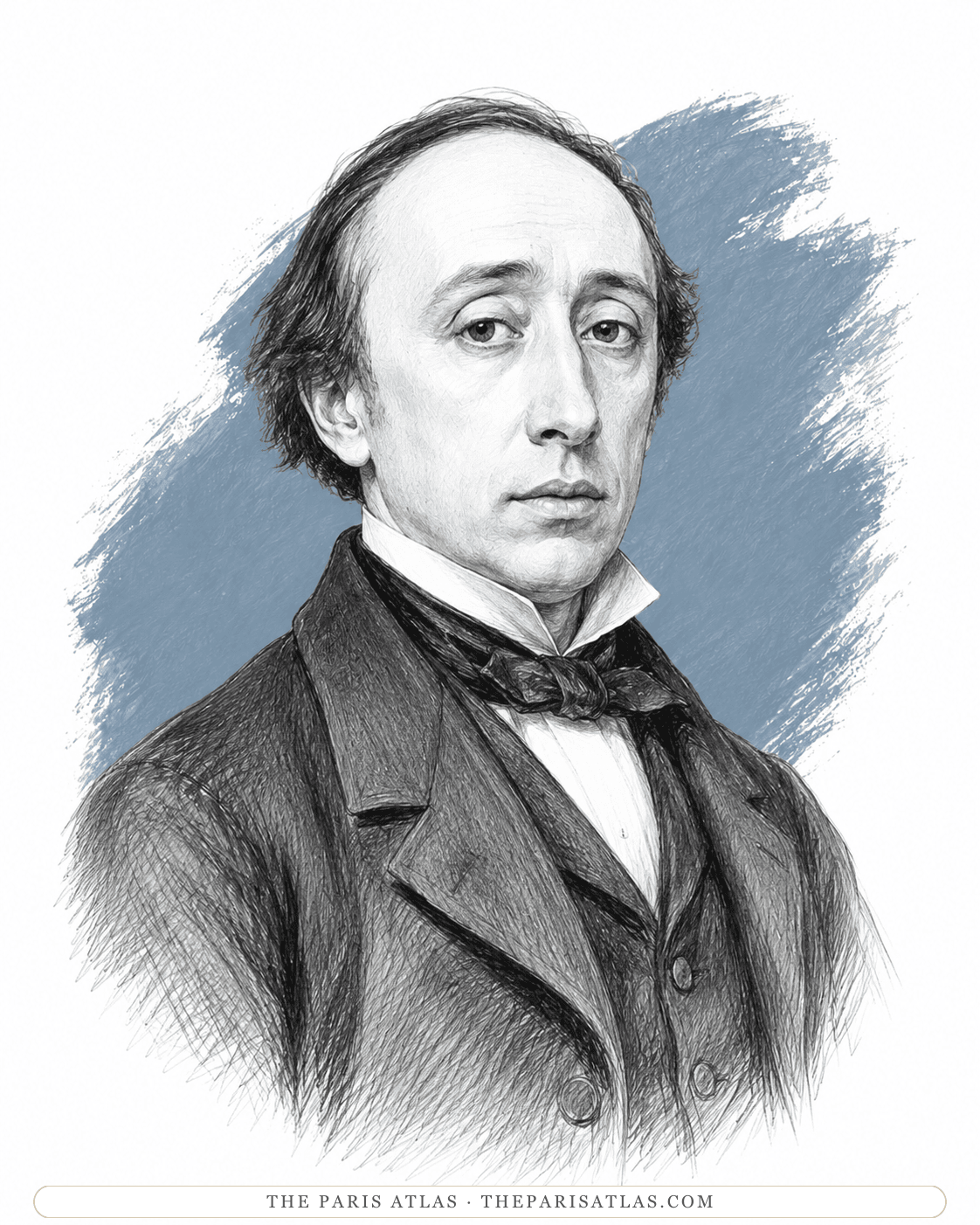
Co-founders of the independent society, per the Met's account — Degas beside Monet and Pissarro at the 1874 exhibition that earned the group its unwanted name.

Collaborated with · 1922–1927
Lefèvre drew up the Orangerie's two oval Water Lilies rooms to Monet's specifications — curved walls, diffused top light, the canvases curving with the walls. The rooms opened in May 1927, months after the painter's death.

Met
Patron, fellow exhibitor, and fellow gardener. Caillebotte paid Monet's rent when it needed paying, took a studio for him near the Gare Saint-Lazare, and owned sixteen of his paintings — including three of the 1877 station pictures. Monet kept Caillebotte's oil sketch for Paris Street; Rainy Day in his bedroom at Giverny until his death, and the two traded horticultural letters and cuttings for years.

Parent of
Claude Monet's younger son and his sole heir. The paintings that stayed in the family passed to the Musée Marmottan through him.

Sat for a portrait by · 1885
Claude Monet Painting by the Edge of a Wood, oil on canvas, which Tate dates to about 1885 and holds as N04103: Monet at his easel working outdoors, painted by the American portraitist who had just lost Paris over Madame X. The Getty's authority record notes the Impressionist current in Sargent's unofficial work, Monet's above all.

Met · 1912
After buying Ma Roulotte at nearby Vernonnet, Bonnard visited Monet at Giverny; the two painters shared a sustained interest in gardens and perception while organizing their landscapes very differently.

Courbet knew the young Monet in the 1860s and encouraged him, and the scale and frankness of the Realist canvases are behind Monet's early figure paintings.
Manet's flat handling and contemporary subjects gave the younger painters who became the Impressionists their starting point, and Monet took the modern-life subject and the loose brushwork directly. The two painted alongside each other at Argenteuil in the summer of 1874, after which Manet's own palette lightened. Monet later organised the public subscription that bought Olympia for the French state.
Art movement · 1874–1886
His Impression, Sunrise, shown at the first independent exhibition in 1874, gave the movement its name when the critic Louis Leroy used the title against it. Monet showed in the group's exhibitions and outlived the movement by four decades.
Historical period and art category · circa 1860s–1970s
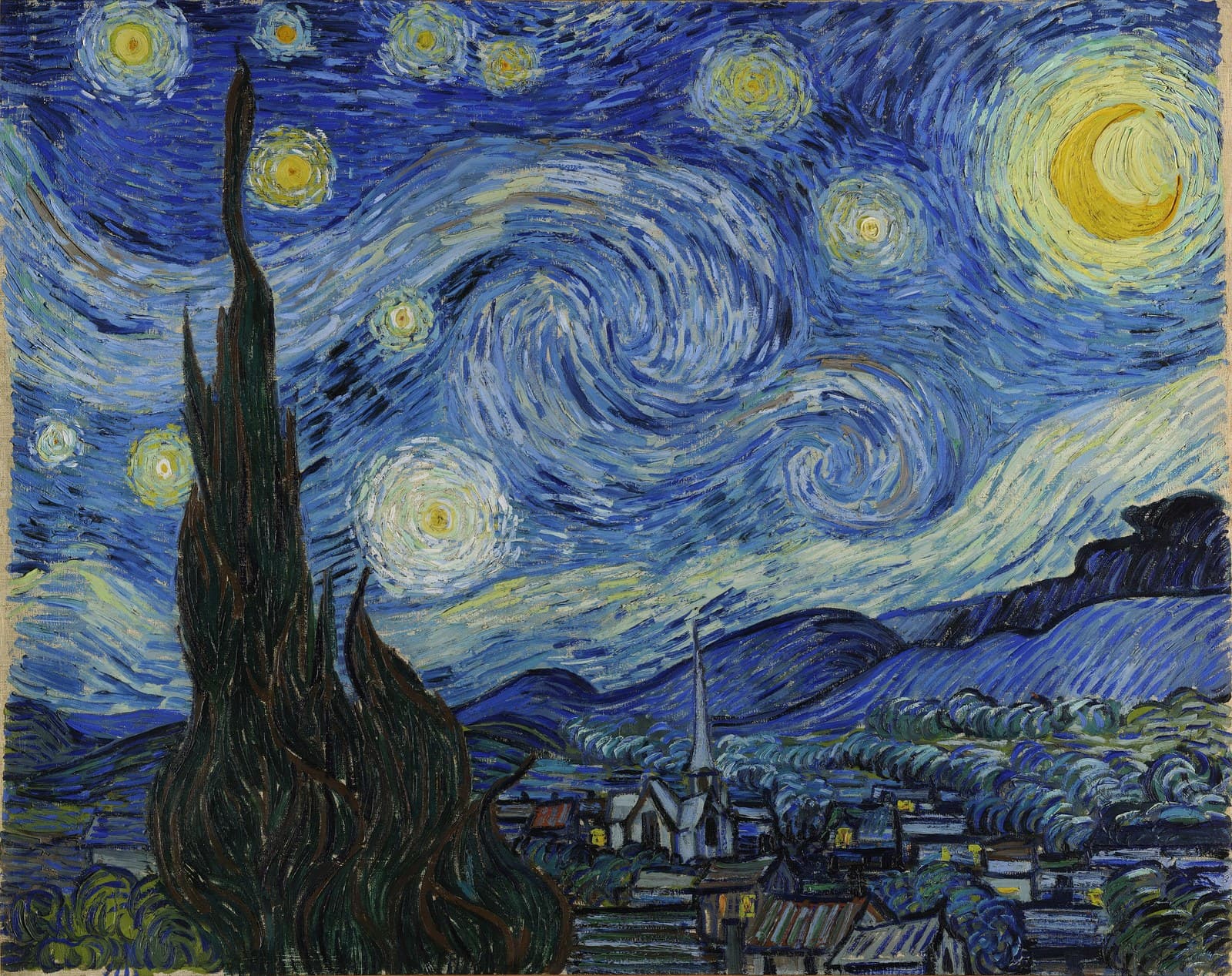
Monet's Impression, Sunrise of 1872 hung in the independent exhibition that opened on 15 April 1874 in Nadar's former premises. The critic Louis Leroy used the word impression mockingly, meaning the pictures looked unfinished; the abbreviated encounter he treated as a defect became the movement's name.
Founded · 1918–1927
The museum in its present form exists to hold his gift: nineteen panels donated by the 1922 contract, installed as eight compositions in two oval rooms whose shape, spacing, and light he specified with the architect Camille Lefèvre.
A French painter, born in Paris in 1840 and died at Giverny in 1926. He was the central figure of Impressionism, and the movement was named after his painting Impression, Sunrise.
From a hostile review. Monet showed a harbour scene at the group's first independent exhibition in 1874 and titled it Impression, Sunrise. The critic Louis Leroy built a mocking notice around the word and headed it "Exhibition of the Impressionists". The painters took the insult as their name.
To record what changes when the subject does not. From about 1890 he painted grainstacks, the front of Rouen Cathedral, poplars and water lilies many times each, in different light and weather, often working on several canvases in a day and swapping as the light moved. The object stays the same and the painting changes completely.
The largest are the panels he gave to the French state, installed in two oval rooms at the Musée de l'Orangerie in the Tuileries gardens in Paris and opened in May 1927, six months after his death. Other canvases from the series are in museums worldwide.
Nearly. He developed cataracts in both eyes, diagnosed in 1912, and his colour vision deteriorated so badly that canvases from those years went red and muddy. He resisted surgery for a decade, had two operations in 1923, and repainted parts of the water lily panels afterwards.
Yes. The house and both gardens at Giverny — the flower garden in front and the water garden with the Japanese bridge — are open to visitors. He rented the house from 1883 and bought it in 1890.
Associated with · 1874
His Impression, Sunrise, shown at the first independent exhibition in 1874, gave the movement its name when the critic Louis Leroy used the title against it. Monet showed in the group's exhibitions and outlived the movement by four decades.
Met · 1860
The Orangerie's account: they met in 1860, lost touch, and met again after 1908, when Clemenceau bought a property near Giverny. Clemenceau received the Armistice-day offer of the Water Lilies, pushed the donation to its 1922 contract, and pressed Monet through the cataract operations that let him finish.
Founded · 1918–1927
The museum in its present form exists to hold his gift: nineteen panels donated by the 1922 contract, installed as eight compositions in two oval rooms whose shape, spacing, and light he specified with the architect Camille Lefèvre.

Lived at · 1883–1926
Monet moved to Giverny in 1883, bought the house and garden in the autumn of 1890, and lived there until his death on 5 December 1926 — the Fondation Claude Monet's own timeline. Forty-three years, longer than every other address in his life combined.
Worked at · 1883–1926
The property was the studio as well as the home: the Fondation's timeline records a new studio built with the 1890 purchase, and the pond he dug across the road in 1893 supplied the Water Lilies — the subject of his final three decades, through the mural-scale panels donated to the Musée de l'Orangerie.
Associated with · 1872–1926
Monet's Impression, Sunrise of 1872 hung in the independent exhibition that opened on 15 April 1874 in Nadar's former premises. The critic Louis Leroy used the word impression mockingly, meaning the pictures looked unfinished; the abbreviated encounter he treated as a defect became the movement's name.
Met
A friendship of the movement's core: the Met records Renoir among the friends who gathered at Monet's homes and gardens and often painted alongside their host.
Met · 1862
They met in Charles Gleyre's studio in 1862, alongside Renoir and Bazille — the Orsay's account of the movement's student generation.
Met
The Met places Manet among the friends who gathered at Monet's homes and gardens and often painted alongside their host.
Met · 1862–1870
Enrolled at Gleyre's studio in 1862, where he met Monet, Renoir, and Sisley. He was killed in action on 28 November 1870; the Orsay notes that not a single Bazille hung at the 1874 exhibition his friends went on to mount.
Met · 1874
Named together by the Met among the founding members of the independent society whose 1874 exhibition named Impressionism. Pissarro showed in all eight of the group's exhibitions; Monet's Impression, Sunrise named the movement.
Met · 1874
Co-founders of the independent society, per the Met's account — Degas beside Monet and Pissarro at the 1874 exhibition that earned the group its unwanted name.
Collaborated with · 1869
In September 1869 the two painted side by side at La Grenouillère, a bathing and boating spot on the Seine, working the same views in quick broken strokes. The Met credits the campaign with catalyzing the Impressionist aesthetic; the Nationalmuseum counts the paired canvases among the first fully Impressionist pictures.
Collaborated with · 1922–1927
Lefèvre drew up the Orangerie's two oval Water Lilies rooms to Monet's specifications — curved walls, diffused top light, the canvases curving with the walls. The rooms opened in May 1927, months after the painter's death.
Influenced by
Courbet knew the young Monet in the 1860s and encouraged him, and the scale and frankness of the Realist canvases are behind Monet's early figure paintings.
Met
Patron, fellow exhibitor, and fellow gardener. Caillebotte paid Monet's rent when it needed paying, took a studio for him near the Gare Saint-Lazare, and owned sixteen of his paintings — including three of the 1877 station pictures. Monet kept Caillebotte's oil sketch for Paris Street; Rainy Day in his bedroom at Giverny until his death, and the two traded horticultural letters and cuttings for years.
Parent of
Claude Monet's younger son and his sole heir. The paintings that stayed in the family passed to the Musée Marmottan through him.
Sat for a portrait by · 1885
Claude Monet Painting by the Edge of a Wood, oil on canvas, which Tate dates to about 1885 and holds as N04103: Monet at his easel working outdoors, painted by the American portraitist who had just lost Paris over Madame X. The Getty's authority record notes the Impressionist current in Sargent's unofficial work, Monet's above all.
Met · 1912
After buying Ma Roulotte at nearby Vernonnet, Bonnard visited Monet at Giverny; the two painters shared a sustained interest in gardens and perception while organizing their landscapes very differently.
Influenced by
Manet's flat handling and contemporary subjects gave the younger painters who became the Impressionists their starting point, and Monet took the modern-life subject and the loose brushwork directly. The two painted alongside each other at Argenteuil in the summer of 1874, after which Manet's own palette lightened. Monet later organised the public subscription that bought Olympia for the French state.
The sources below include biographies, scholarly essays, interviews, and primary materials that informed this page. They reflect both the historical record and ongoing critical conversations about Claude Monet and their work.

Museum essay on Monet's development, the series paintings and the late work.
Web source consulted for documented facts and historical context presented on the Claude Monet page.
The museum's record of the two oval rooms, the gift to the French state and the 1927 opening.
The translated letters; the wording of the three letter quotes.
Edition-level word-order confirmation of the two recorded remarks.
Web source consulted for documented facts and historical context presented on the Claude Monet page.
Web source consulted for documented facts and historical context presented on the Claude Monet page.
Web source consulted for documented facts and historical context presented on the Claude Monet page.

Contemporary reporting or criticism used to document the historical reception and context of Claude Monet.
Web source consulted for documented facts and historical context presented on the Claude Monet page.
Web source consulted for documented facts and historical context presented on the Claude Monet page.
Web source consulted for documented facts and historical context presented on the Claude Monet page.
Web source consulted for documented facts and historical context presented on the Claude Monet page.
Web source consulted for documented facts and historical context presented on the Claude Monet page.
Web source consulted for documented facts and historical context presented on the Claude Monet page.
Web source consulted for documented facts and historical context presented on the Claude Monet page.
Web source consulted for documented facts and historical context presented on the Claude Monet page.
Web source consulted for documented facts and historical context presented on the Claude Monet page.
Web source consulted for documented facts and historical context presented on the Claude Monet page.
Web source consulted for documented facts and historical context presented on the Claude Monet page.
Web source consulted for documented facts and historical context presented on the Claude Monet page.
Web source consulted for documented facts and historical context presented on the Claude Monet page.
Archival evidence used to document the historical record connected to Claude Monet.
These references anchor the page in the documented record and in the scholarly conversations around Claude Monet. Every claim on this page traces back to one or more of the works listed here.
 Explore more resources
