The Paris AtlasCharting the artists, works, and places worth returning to.
  • Painter
· French · 1834–1917

Edgar Degas

Painter of dancers, racecourses, and café interiors — among the founders of the independent exhibitions that became Impressionism, though he preferred the word 'independent' himself.

In images

Details

Lived
1834–1917
Born
19 July 1834
Birthplace
Paris, France
Died
27 September 1917 · aged 83
Place of death
Paris, France
Nationality
French
Roles
Painter
Also known as
Hilaire-Germain-Edgar De Gas

About Edgar Degas

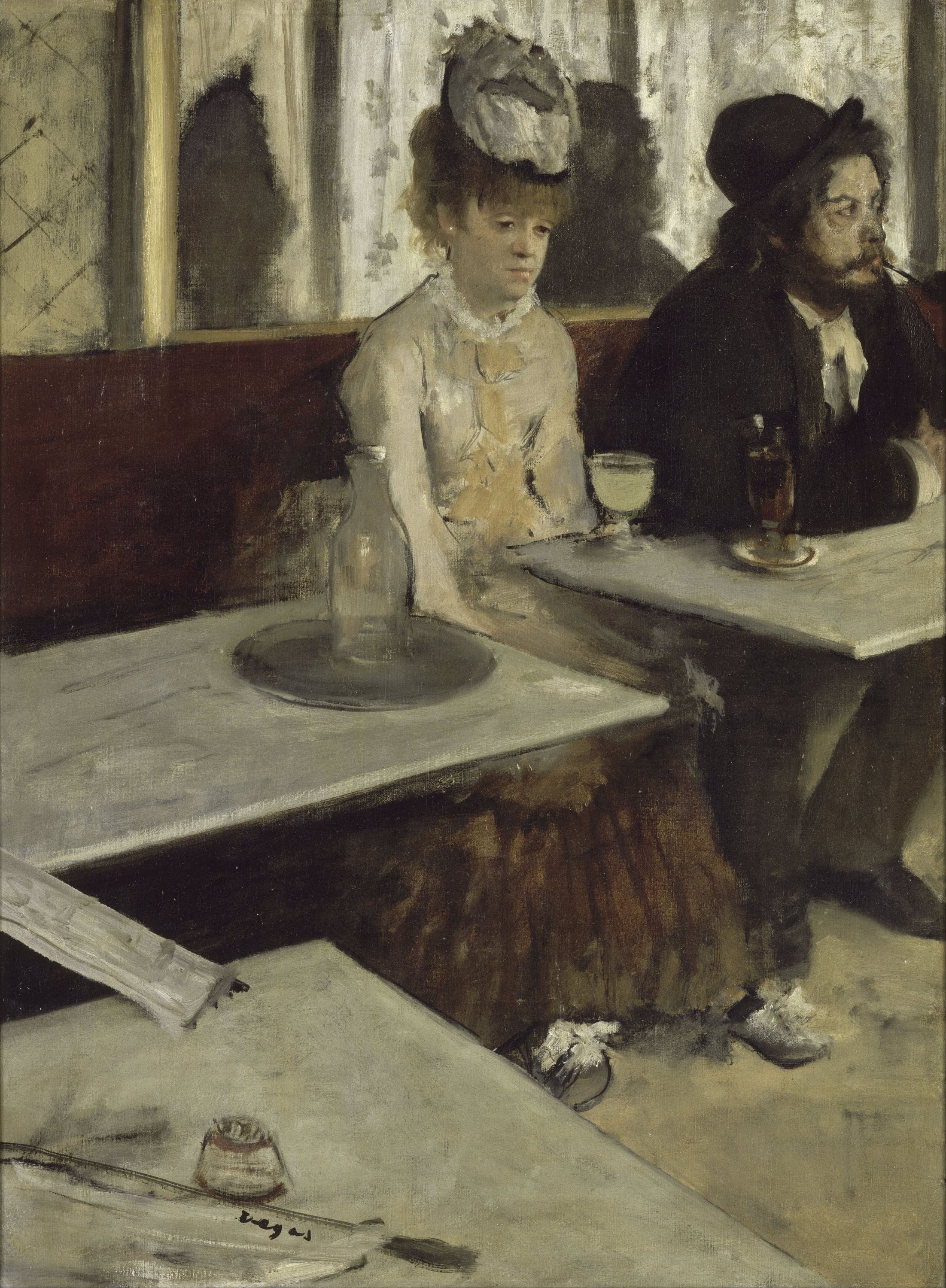
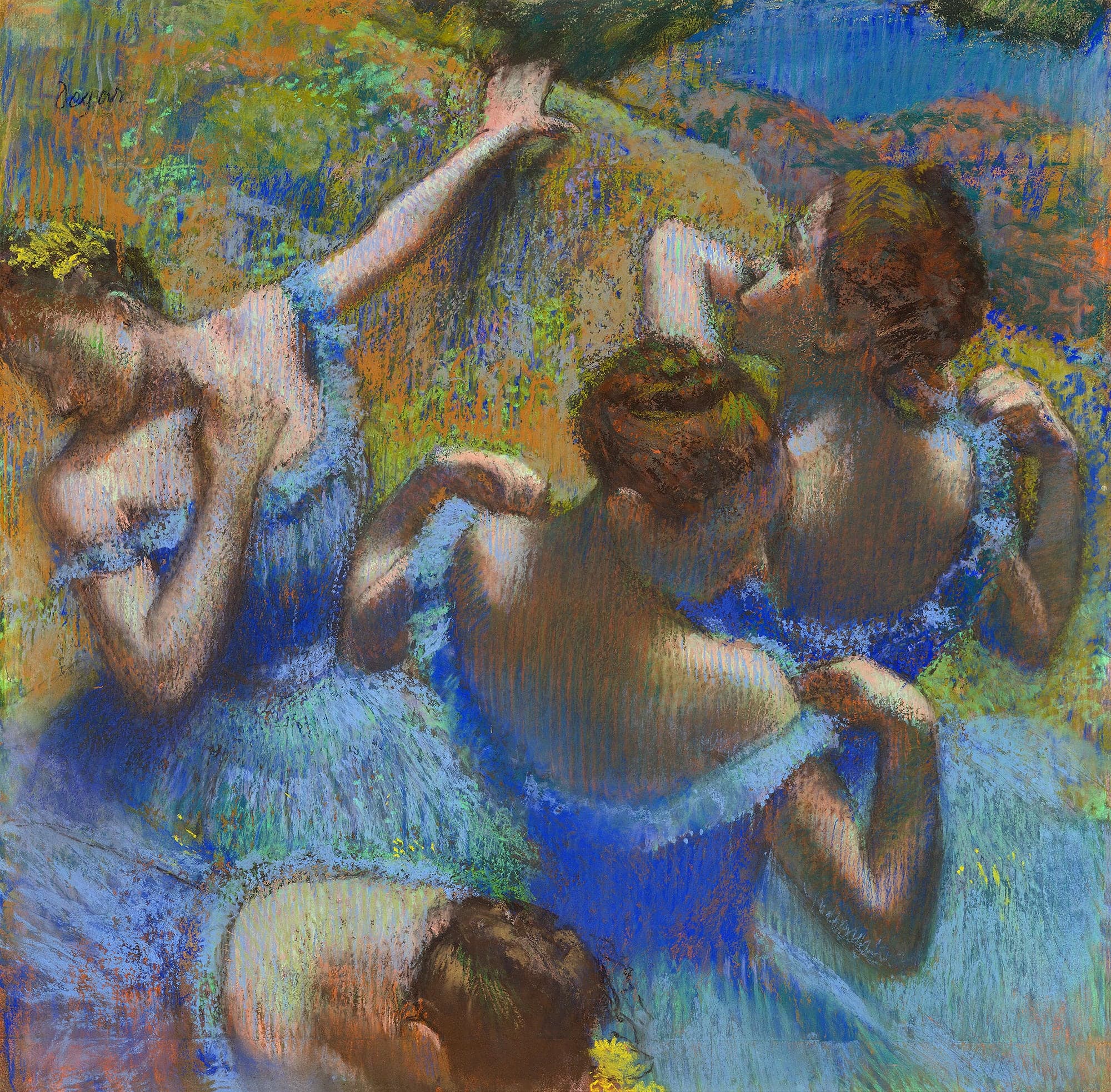
Edgar Degas was one of the founders of the independent exhibitions of 1874 to 1886, the shows that gave Impressionism its name, and he showed in seven of the eight while refusing the name itself. He preferred to be called a realist, or simply an independent. More than half of his work depicts ballet dancers, and the rest maps the modern Paris he watched at close range: laundresses, milliners, café-concert singers, racehorses at Longchamp.

A banking family and the Old Masters

He was born Hilaire-Germain-Edgar De Gas in Paris on 19 July 1834, the eldest son of a banker, Augustin De Gas, and Célestine Musson De Gas, a Creole from New Orleans. He studied at the Lycée Louis-le-Grand, took his baccalauréat in literature in 1853, and registered as a copyist at the Louvre. A brief enrollment in law school gave way to drawing lessons under Louis Lamothe, a follower of Ingres, and admission to the École des Beaux-Arts in 1855.

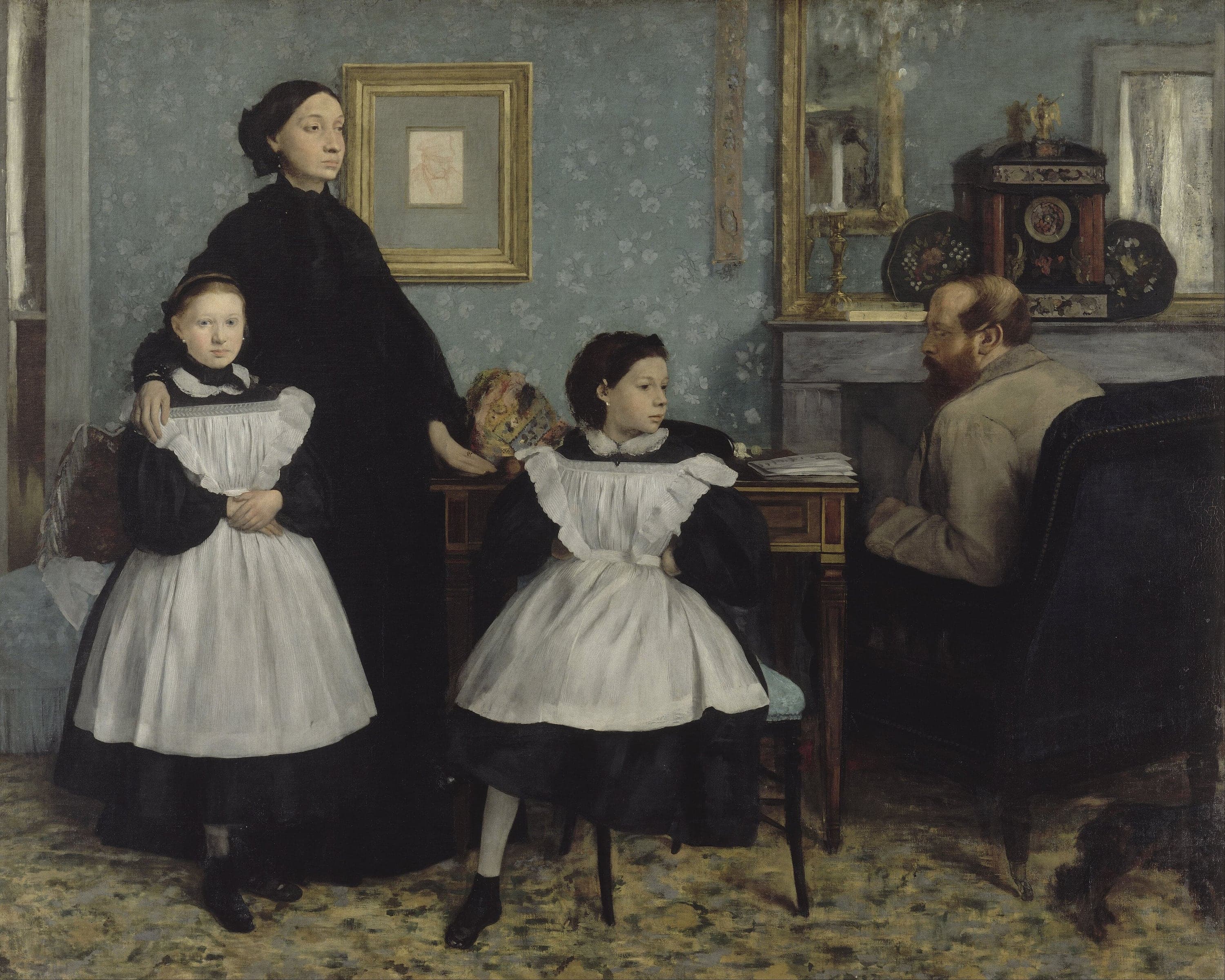
In July 1856 he left for Italy and stayed three years, copying in Florence, Rome, and Naples and beginning The Bellelli Family, a portrait of his aunt's household in Florence. Back in Paris he attempted history painting in the academic manner: Young Spartans Exercising and Sémiramis Building Babylon date from around 1860. Within a decade he had set the genre aside.

Modern subjects

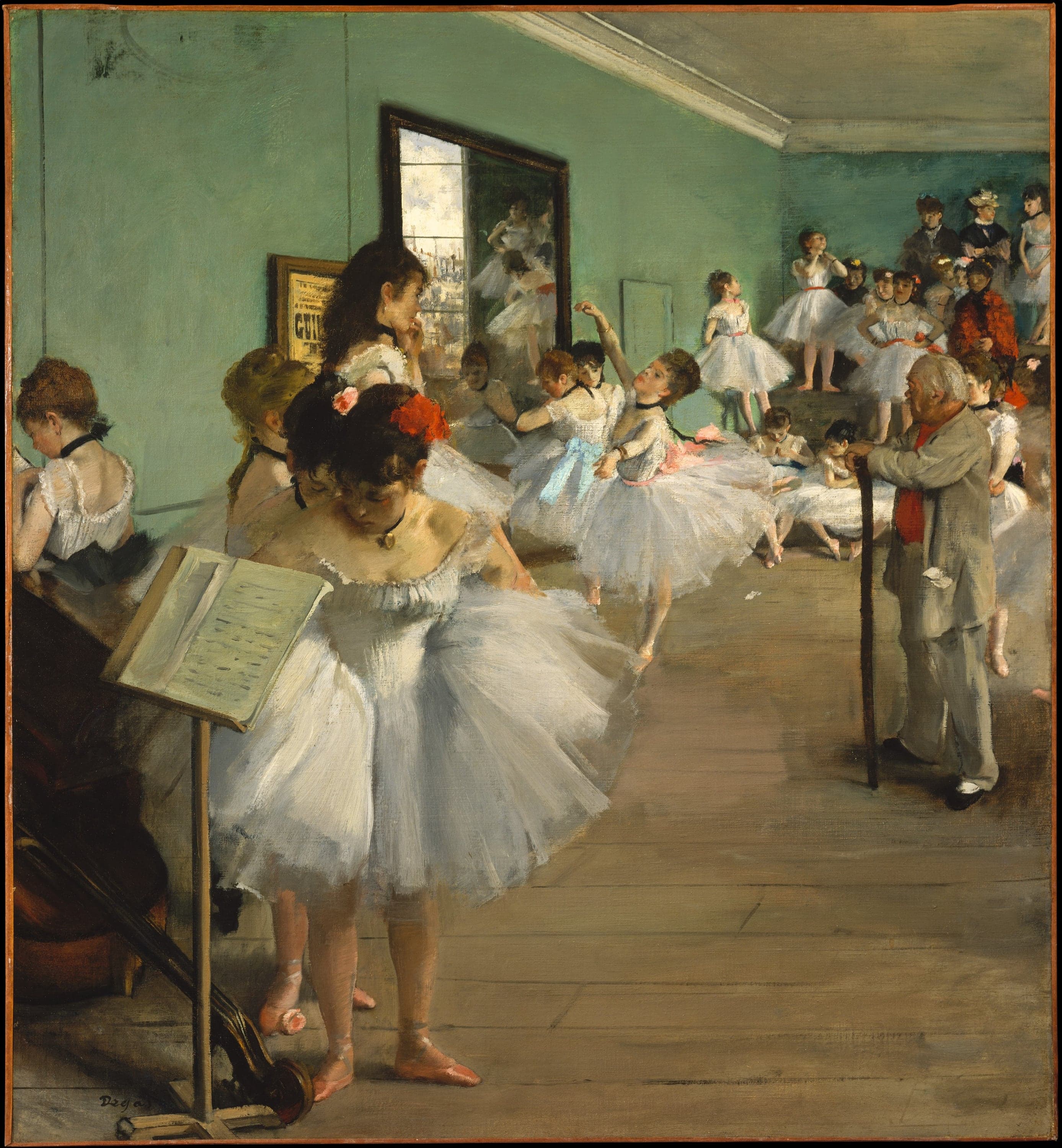
From the late 1860s Degas turned to contemporary life, and the subjects he chose stayed with him for the rest of his career. He painted the Opera's dance classes and wings rather than its performances, and worked the same ground in series:

  • Ballet dancers rehearsing, resting, and waiting — more than half of his mature output
  • Laundresses and milliners at work
  • Café-concert singers under gaslight
  • Racehorses and jockeys before the start
  • Women bathing, in the late pastels

A visit to his mother's family in New Orleans in 1872–73 produced a painting of the family cotton office, which in 1878 became the first work by any of the independents to be bought by a museum.

The independent exhibitions

In 1874 Degas was among the founding members of the independent exhibiting society, beside Claude Monet and Camille Pissarro, at the first exhibition that earned the group its unwanted name. He took a leading role in organizing the shows and appeared in seven of the eight held between 1874 and 1886, arguing throughout for a broader label than the one the critics had supplied. Édouard Manet, the admired elder of the circle, declined to show with them at all.

His closest working relationship in the group was with Mary Cassatt, the American painter he met in 1877 and invited to join the independents. He introduced her to pastel and printmaking, and by her own account he worked directly on her painting Little Girl in a Blue Armchair, adding the corner detail of the room. The friendship lasted, with interruptions, nearly forty years. He also remained a colleague of Pierre-Auguste Renoir through the exhibitions and the circle around the Manet family; in December 1895 Degas photographed Renoir beside the poet Stéphane Mallarmé at the apartment of Julie Manet, Berthe Morisot's daughter.

The Little Dancer and the sculptures

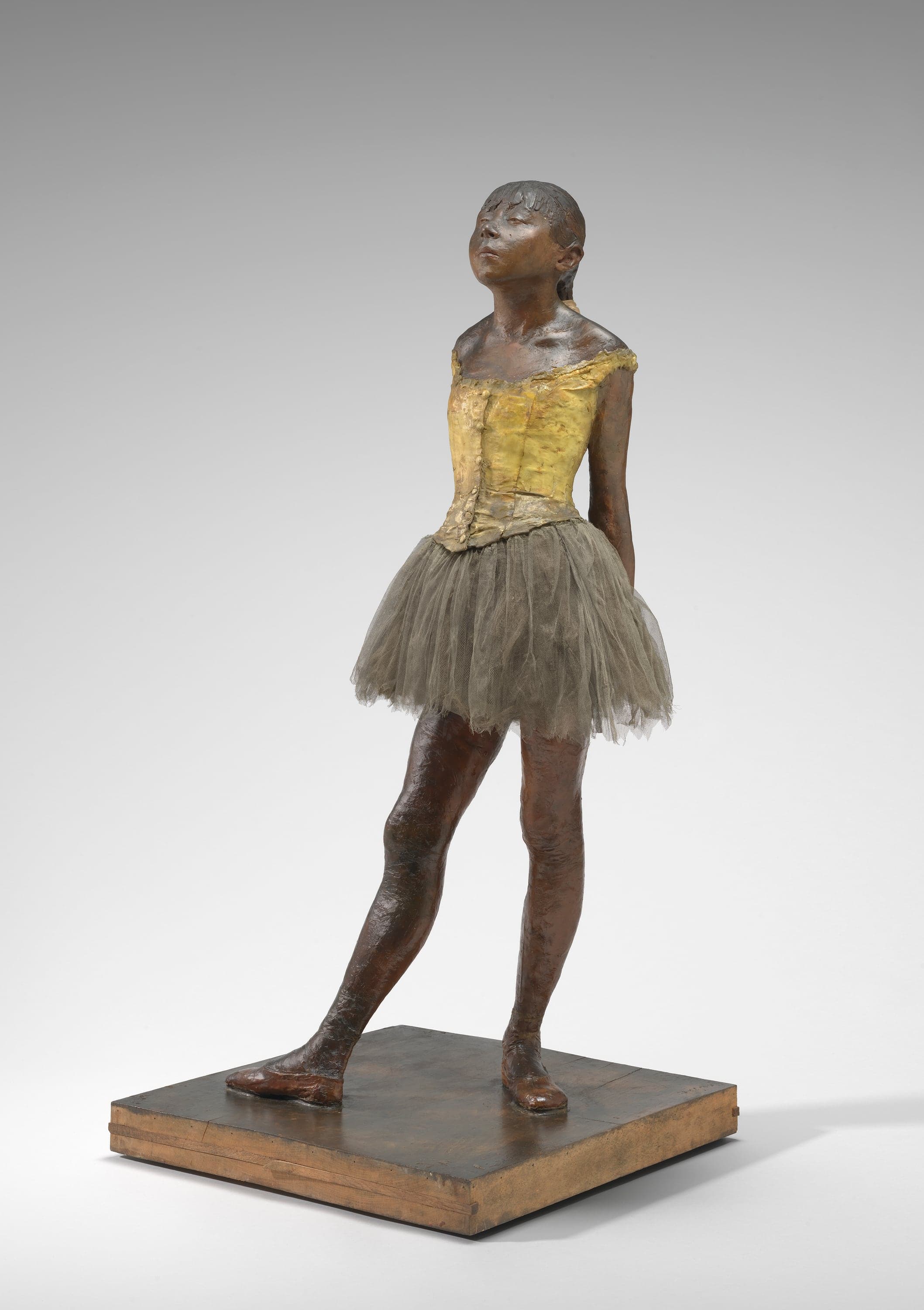
At the sixth exhibition, in April 1881, Degas showed the only sculpture he ever exhibited in public: Little Dancer Aged Fourteen, a nearly life-size figure in tinted wax, dressed in a real bodice, a cloth tutu, ballet slippers, and a wig of human hair. The model was Marie van Goethem, a young student at the Paris Opera's dance school. Most critics found the realism startling and the girl ugly.

The first truly modern attempt at sculpture I know.

Joris-Karl Huysmans, reviewing the 1881 exhibition

Degas kept modeling in wax for the rest of his life, mostly dancers and horses, and never exhibited another one. Roughly 150 wax figures were found in his studio after his death; the Hébrard foundry began casting them in bronze in 1919, which is how the Little Dancer and the rest reached the museums.

The Dreyfus affair and the last years

Edgar Degas in a photographic self-portrait, probably taken in the autumn of 1895. Degas took up photography late in life; the print is now in the Fogg Museum at Harvard. (Edgar Degas — Fogg Museum, Harvard Art Museums, via Wikimedia Commons · Public domain)

When the Dreyfus affair divided Paris in the 1890s, Degas sided with the army against Captain Alfred Dreyfus, the Jewish officer wrongly convicted of treason, and by the mid-1890s he had broken off relations with his Jewish friends. The break that contemporaries recorded most fully was with the Halévy family. Degas had dined at the home of the writer Ludovic Halévy on Thursdays for decades, and Ludovic's son Daniel grew up idolizing him. In the autumn of 1897, with the household firmly Dreyfusard, Degas sat silent through a last dinner, left, and never returned; Daniel Halévy recorded the evening in his diary. He also broke with Camille Pissarro, a Dreyfusard, and dismissed a model from his studio for doubting Dreyfus's guilt, telling her she must be Jewish. She was not.

In 1895 he had taken up photography, posing friends in lamplit interiors and turning the camera on himself. His eyesight, defective since at least the 1870s, deteriorated badly after 1890, and the late work is dominated by large pastels, their color broader and their drawing looser as his vision narrowed. He never married, holding that an artist's private life should stay unknown, and spent his last years nearly blind.

Degas died at his Paris apartment on 27 September 1917, at eighty-three. He is buried in the family vault in Montmartre Cemetery.

Life events

  1. 1834

    Born Hilaire-Germain-Edgar De Gas in Paris on 19 July, eldest son of a banking family.

  2. 1853

    Takes his baccalauréat in literature and registers as a copyist at the Louvre.

  3. 1855

    Admitted to the École des Beaux-Arts.

  4. 1856

    Leaves for Italy and stays three years, copying in Florence, Rome, and Naples.

  5. 1872

    Visits his mother's family in New Orleans and paints the family cotton office.

  6. 1874

    Co-founds the independent exhibiting society with Claude Monet and Camille Pissarro; the first exhibition earns the group the name Impressionism.

  7. 1877

    Meets Mary Cassatt and invites her to join the independent exhibitions.

  8. 1881

    Shows Little Dancer Aged Fourteen, in wax with real hair and a cloth tutu, at the sixth exhibition — the only sculpture he ever exhibits.

  9. 1886

    Shows in the eighth and final independent exhibition, his seventh of the eight.

  10. 1895

    Takes up photography, posing friends in lamplit interiors and photographing himself.

    Edgar Degas in a photographic self-portrait, probably taken in the autumn of 1895. Degas took up photography late in life; the print is now in the Fogg Museum at Harvard. (Edgar Degas — Fogg Museum, Harvard Art Museums, via Wikimedia Commons)
  11. 1897

    Sides against Alfred Dreyfus and breaks with the Halévy family after decades of Thursday dinners; he never returns to their table.

  12. 1917

    Dies at his Paris apartment on 27 September, at eighty-three; buried in Montmartre Cemetery.

People they knew

Documented connections — every one carries its source.

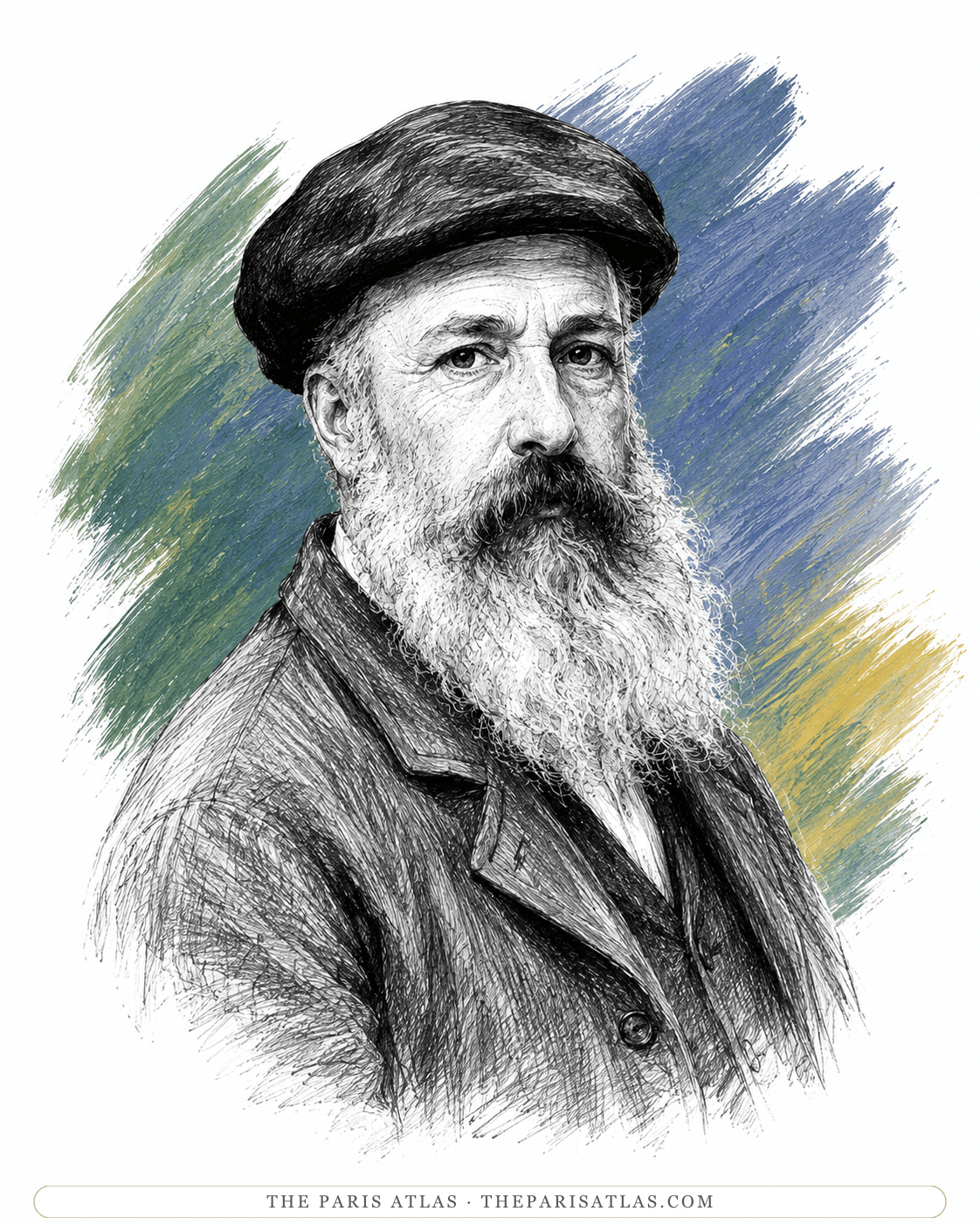
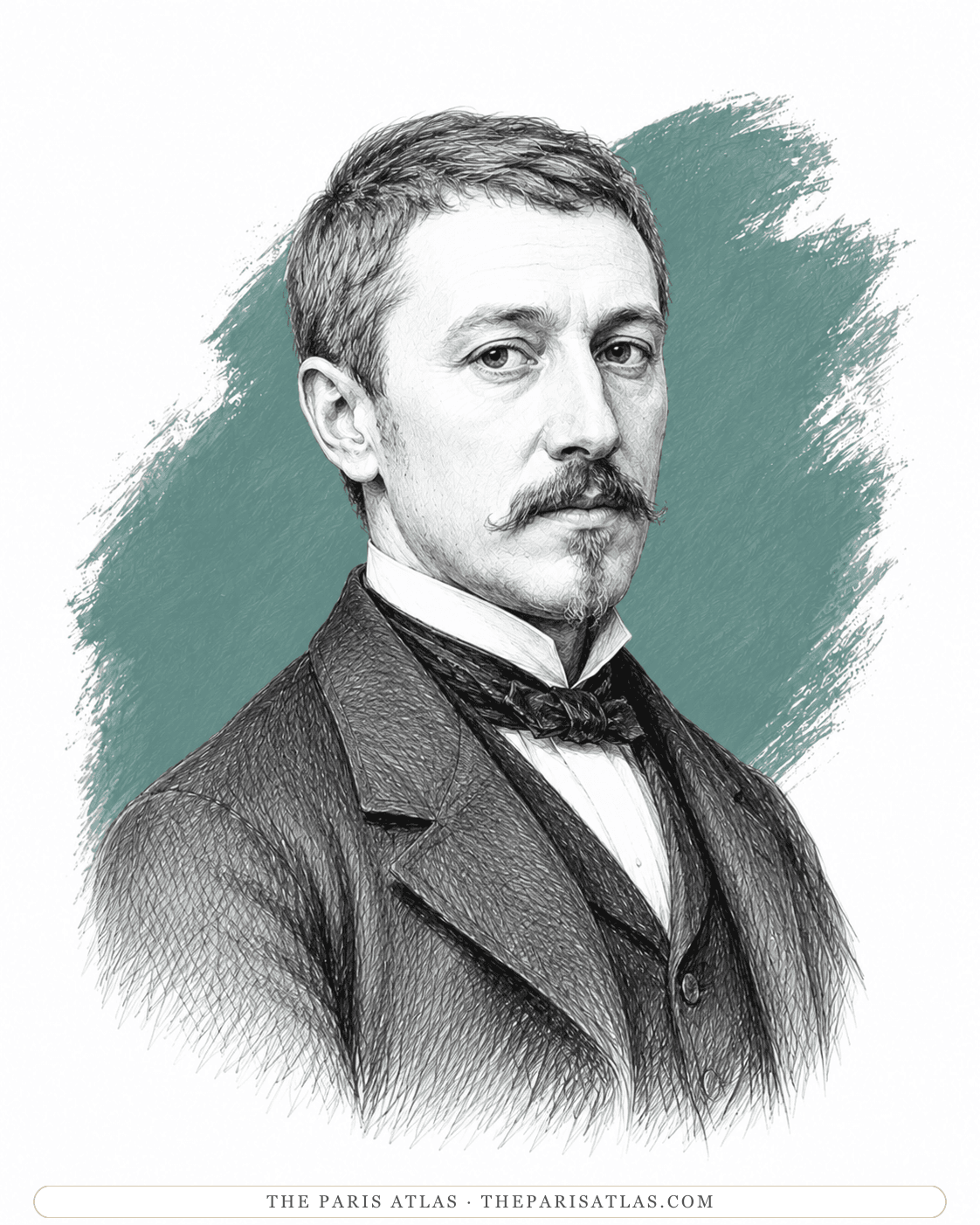
Illustrated portrait of Claude Monet

Claude Monet

  • Painter

Met · 1874

Co-founders of the independent society, per the Met's account — Degas beside Monet and Pissarro at the 1874 exhibition that earned the group its unwanted name.

Impressionism: Art and Modernity — The Metropolitan Museum of Art

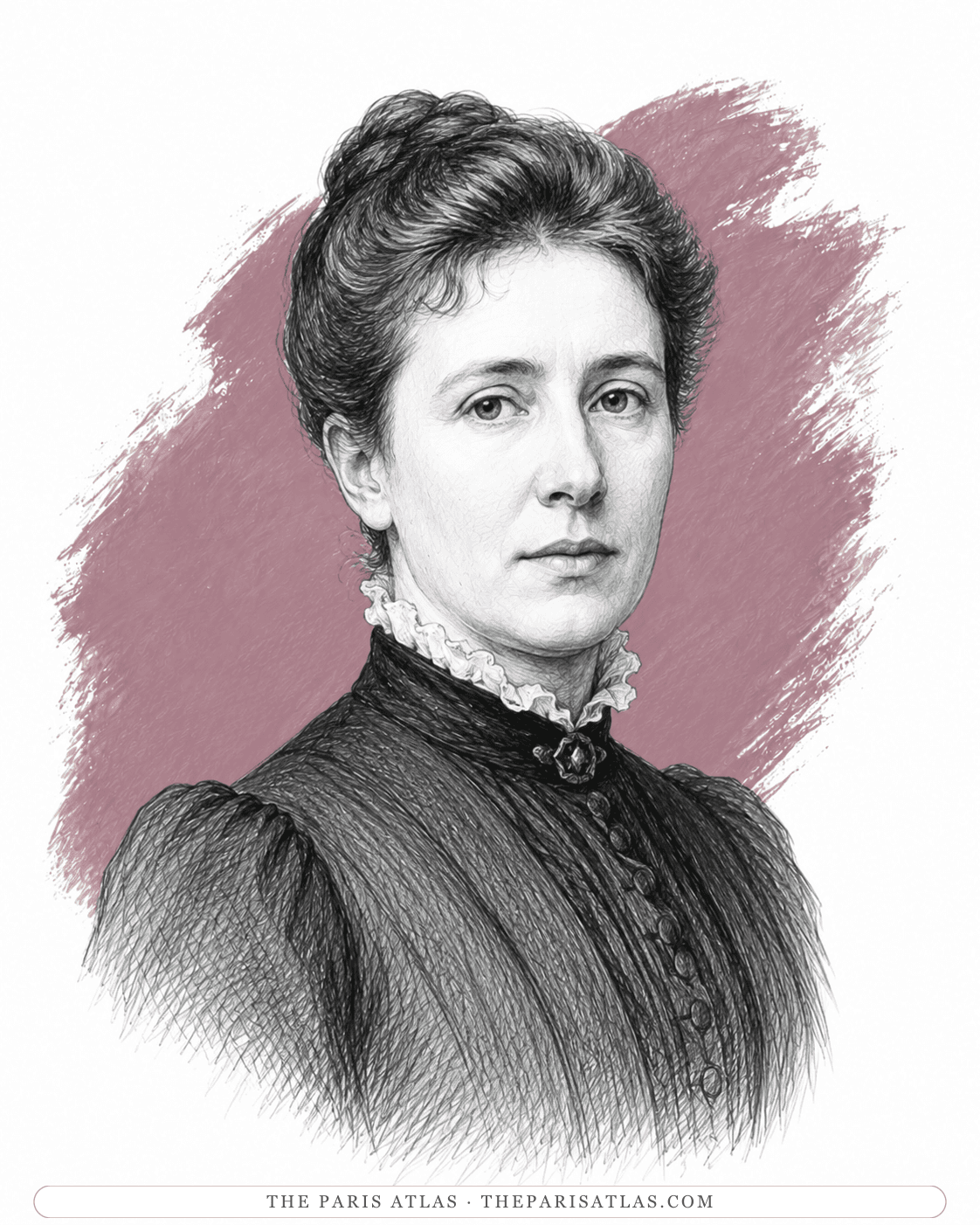
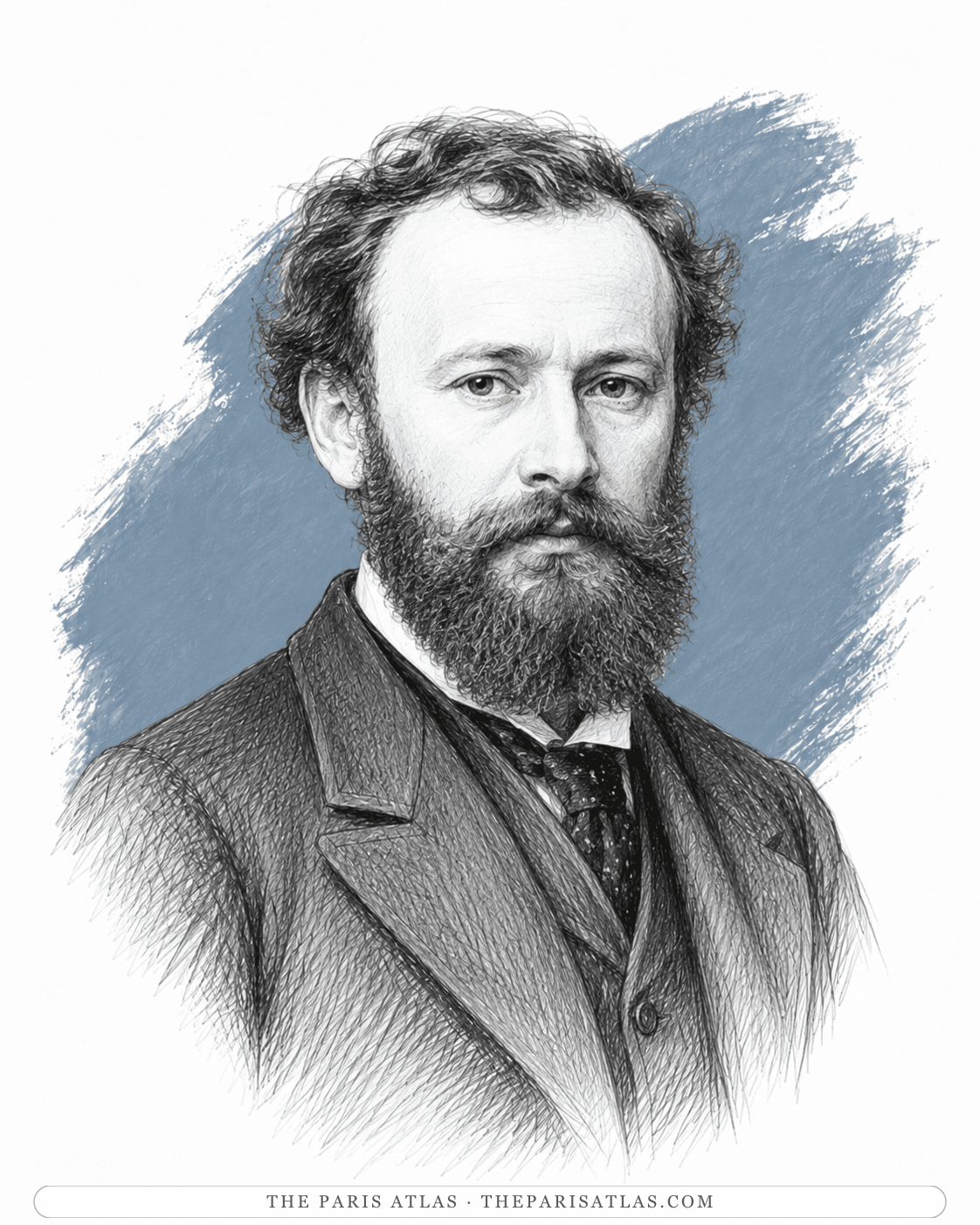
Illustrated portrait of Mary Cassatt

Mary Cassatt

  • Painter

Collaborated with

Degas invited her into the independents, and the NGA records her account that he worked directly on Little Girl in a Blue Armchair, adding the corner detail of the room.

Little Girl in a Blue Armchair (Mary Cassatt) — National Gallery of Art; Mary Cassatt Brings Girls and Women to the Museum — National Gallery of Art

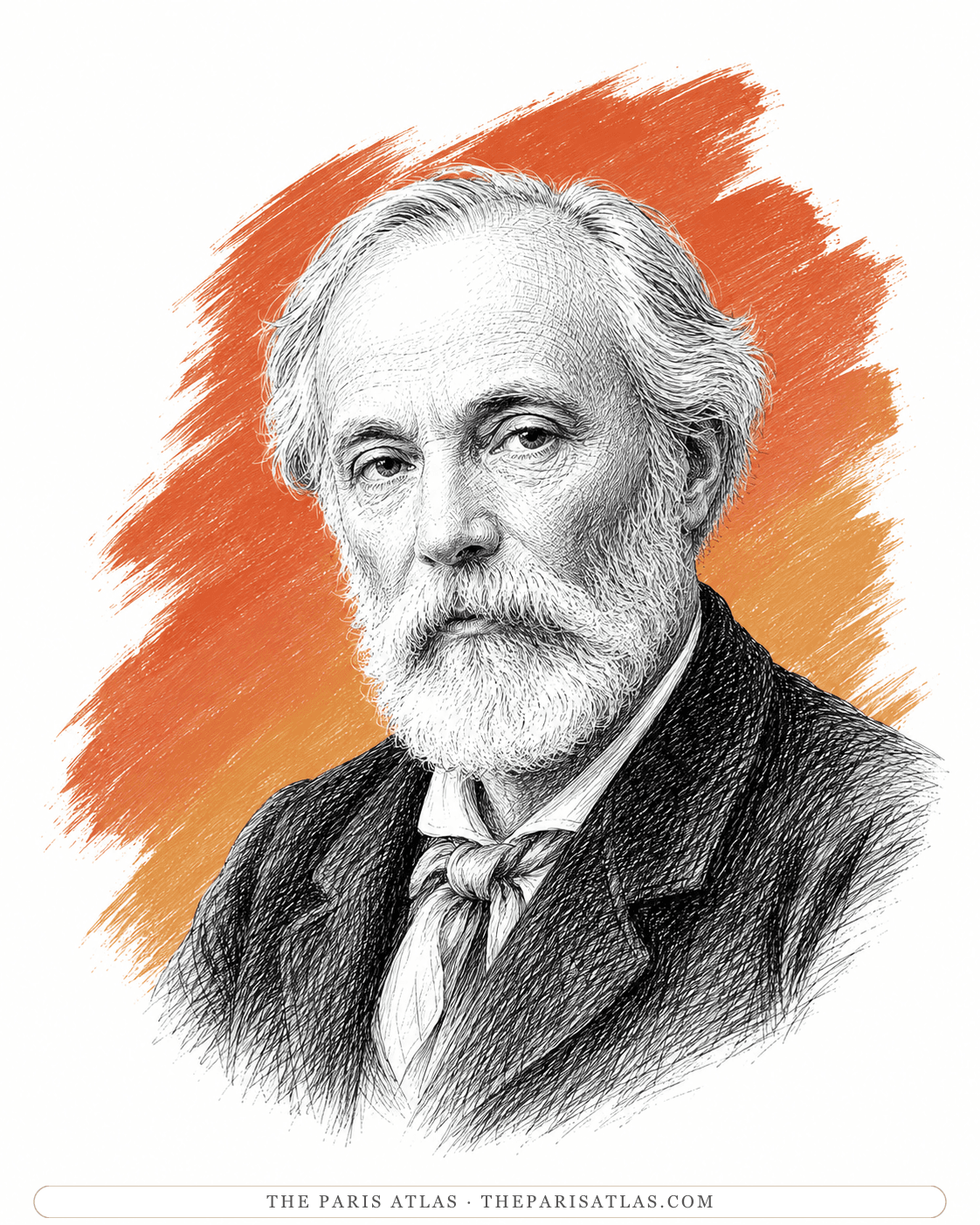
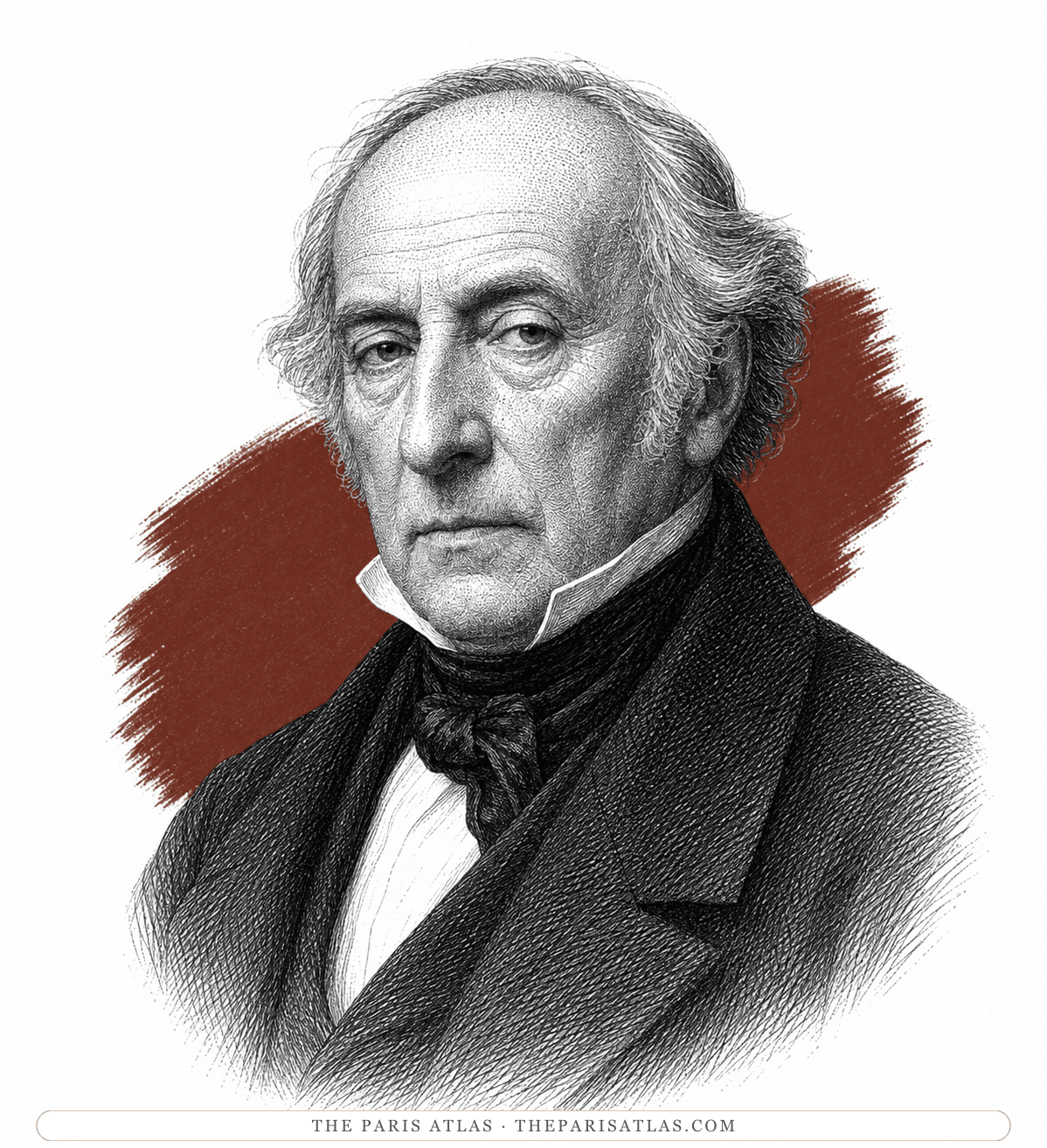
Illustrated portrait of Pierre-Auguste Renoir

Pierre-Auguste Renoir

  • Painter
  • Sculptor

Met

Colleagues of the independent exhibitions and fellow guests of the Manet–Morisot circle: Degas photographed Renoir beside Mallarmé at Julie Manet's apartment in December 1895.

Philip McCouat, Julie Manet, Renoir and the Dreyfus Affair — Journal of Art in Society

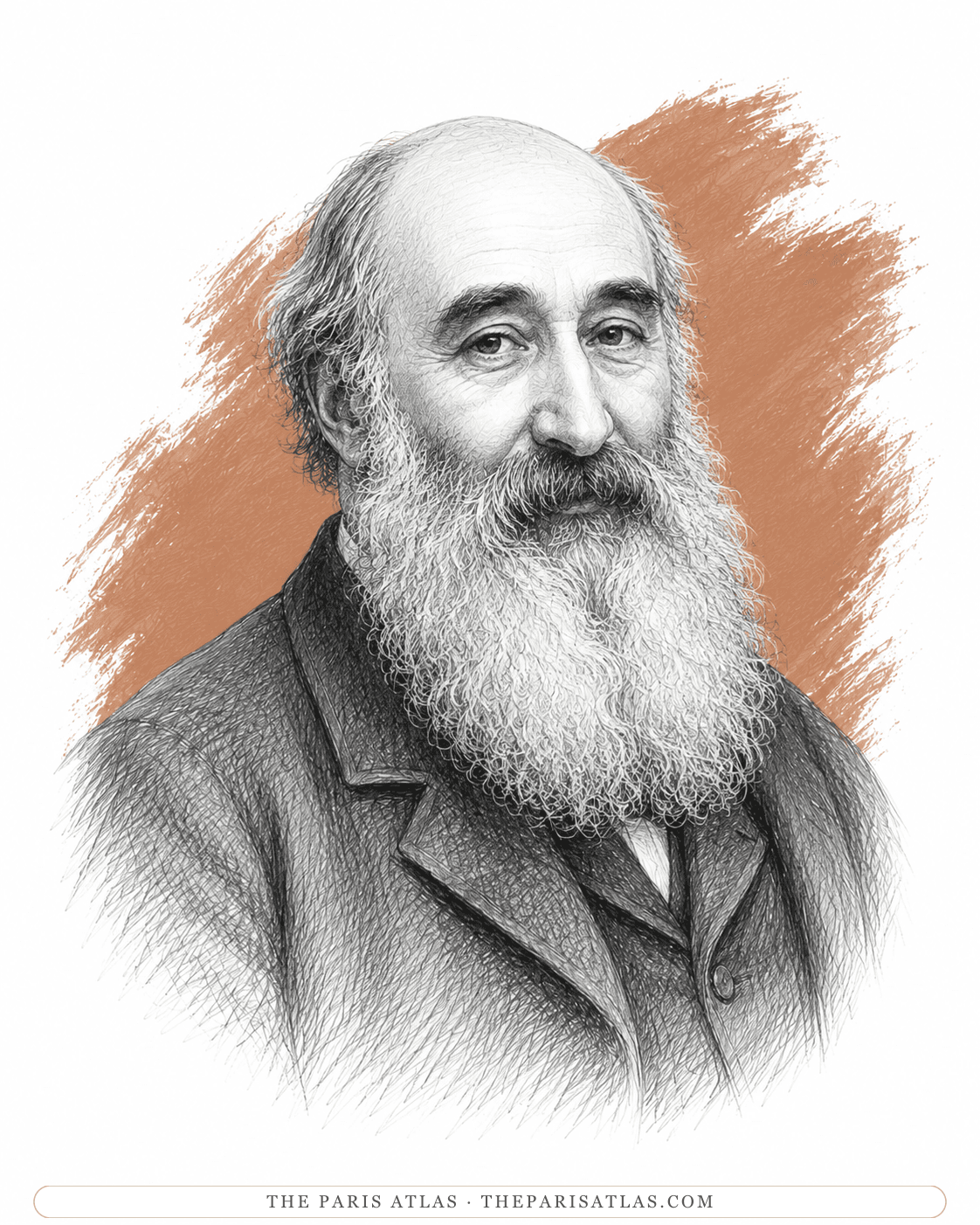
Illustrated portrait of Camille Pissarro

Camille Pissarro

  • Painter

Clashed with

They had worked together on printmaking. The Dreyfus Affair ended it: Pissarro supported Dreyfus, Degas took the other side, and after 1894 Degas stopped associating with him.

Pissarro: Father of Impressionism — exhibition press release; Camille Pissarro: Impressions of City & Country

Illustrated portrait of Gustave Caillebotte

Gustave Caillebotte

  • Painter

Met

Fellow exhibitor and frequent adversary inside the group. Caillebotte named Degas first among the painters his 1876 will was written to support, and owned eight of his pastels — but disagreements with Degas kept Caillebotte out of the sixth and eighth Impressionist exhibitions, per the Musée des impressionnismes Giverny's chronology.

Caillebotte, peintre et jardinier — dossier pédagogique, Musée des impressionnismes Giverny; Le testament de Gustave Caillebotte (3 novembre 1876, cote 112E623-1) — Archives départementales de Seine-et-Marne; Le legs Caillebotte (Fanny Matz) — Musée d'Orsay magazine, October 2024

Movements

The artistic and literary currents this life ran through.

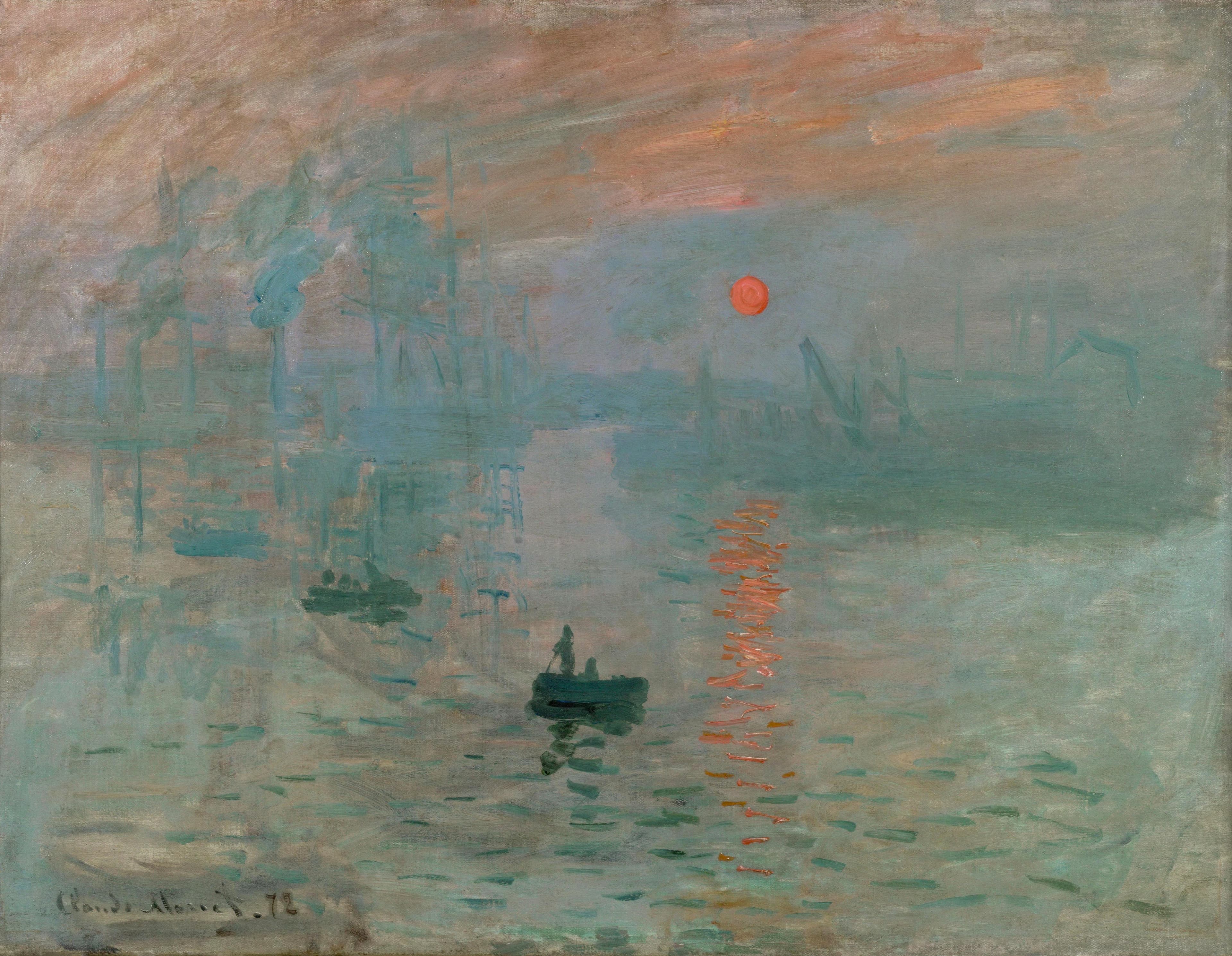
An orange sun over a hazy blue-grey harbor, small boats in the foreground, painted in loose broken strokes

Art movement · 1874–1886

Impressionism

Named by the Met among the founding members of the independent society, with Monet and Pissarro, at the first exhibition of 1874.

Impressionism: Art and Modernity — The Metropolitan Museum of Art

Questions about Edgar Degas

Why did Degas paint dancers?

Ballet dancers gave Edgar Degas what he wanted from modern life: trained bodies in unguarded moments, watched at rehearsal and in the wings rather than on stage. More than half of his mature work depicts dancers, and he returned to the same classes, poses, and waiting rooms for decades, in oil, pastel, and wax.

Was Degas an Impressionist?

He co-founded the independent exhibiting society whose 1874 show earned the group the name Impressionism, organized its exhibitions, and appeared in seven of the eight held through 1886 — but he rejected the label all his life, preferring 'realist' or 'independent.' His subjects were interiors and artificial light rather than the open-air landscapes the name suggests.

What is the Little Dancer Aged Fourteen?

A sculpture by Edgar Degas of a young ballet student, modeled in tinted wax and dressed in a real bodice, cloth tutu, ballet slippers, and a wig of human hair. Shown at the sixth independent exhibition in April 1881, it was the only sculpture Degas ever exhibited; most critics called the girl ugly while conceding the realism. The model was Marie van Goethem, a student at the Paris Opera's dance school, and the bronze casts in museums today were made after Degas's death from the original wax.

What was Degas's relationship with Mary Cassatt?

A working friendship of nearly forty years. Degas met the American painter Mary Cassatt in 1877 and invited her to show with the independents; he introduced her to pastel and printmaking, and by Cassatt's own account he painted part of her Little Girl in a Blue Armchair himself, adding the corner of the room. The relationship cooled at times but never fully ended.

What was Degas's role in the Dreyfus affair?

Edgar Degas sided with the army against Captain Alfred Dreyfus, the Jewish officer wrongly convicted of treason, and by the mid-1890s he had broken off relations with his Jewish friends. The most documented break was with the Halévy family, at whose table he had dined for decades: after a last silent dinner in the autumn of 1897 he never returned, an evening Daniel Halévy recorded in his diary. He also broke with the painter Camille Pissarro, a Dreyfusard.

Did Edgar Degas ever marry?

No. He never married and had no children, and he held that an artist's private life should remain unknown. He lived and worked alone in Paris until his death in 1917.

How did Edgar Degas die?

He died at his apartment in Paris on 27 September 1917, at the age of eighty-three, after years of near-blindness in which he had largely stopped working. He is buried in the family vault in Montmartre Cemetery in Paris.

Sourced claims

Every connection the graph holds for Edgar, with the evidence behind it.

Associated with · 1874

Impressionism

Named by the Met among the founding members of the independent society, with Monet and Pissarro, at the first exhibition of 1874.

Impressionism: Art and Modernity — The Metropolitan Museum of Art

Met · 1874

Claude Monet

Co-founders of the independent society, per the Met's account — Degas beside Monet and Pissarro at the 1874 exhibition that earned the group its unwanted name.

Impressionism: Art and Modernity — The Metropolitan Museum of Art

Collaborated with

Mary Cassatt

Degas invited her into the independents, and the NGA records her account that he worked directly on Little Girl in a Blue Armchair, adding the corner detail of the room.

Little Girl in a Blue Armchair (Mary Cassatt) — National Gallery of Art; Mary Cassatt Brings Girls and Women to the Museum — National Gallery of Art

Met

Pierre-Auguste Renoir

Colleagues of the independent exhibitions and fellow guests of the Manet–Morisot circle: Degas photographed Renoir beside Mallarmé at Julie Manet's apartment in December 1895.

Philip McCouat, Julie Manet, Renoir and the Dreyfus Affair — Journal of Art in Society

Clashed with

Camille Pissarro

They had worked together on printmaking. The Dreyfus Affair ended it: Pissarro supported Dreyfus, Degas took the other side, and after 1894 Degas stopped associating with him.

Pissarro: Father of Impressionism — exhibition press release; Camille Pissarro: Impressions of City & Country

Met

Gustave Caillebotte

Fellow exhibitor and frequent adversary inside the group. Caillebotte named Degas first among the painters his 1876 will was written to support, and owned eight of his pastels — but disagreements with Degas kept Caillebotte out of the sixth and eighth Impressionist exhibitions, per the Musée des impressionnismes Giverny's chronology.

Caillebotte, peintre et jardinier — dossier pédagogique, Musée des impressionnismes Giverny; Le testament de Gustave Caillebotte (3 novembre 1876, cote 112E623-1) — Archives départementales de Seine-et-Marne; Le legs Caillebotte (Fanny Matz) — Musée d'Orsay magazine, October 2024