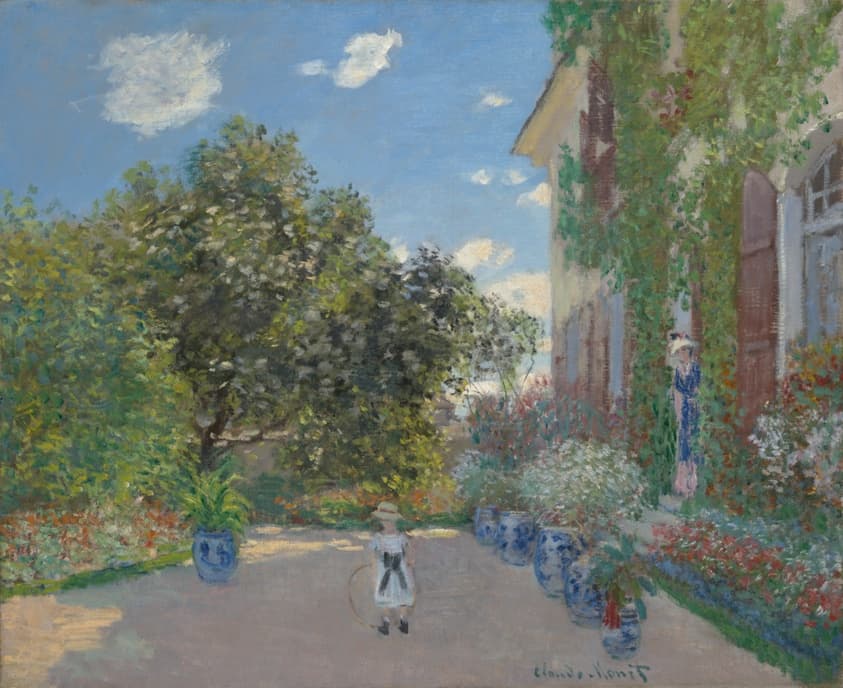
The Artist's House at Argenteuil
by Claude Monet
Monet's own garden at Argenteuil in 1873, with his wife Camille in the doorway and their son Jean playing with a hoop on the path — painted in the one stretch of his early career when he was not short of money.
- 1873
- Oil on canvas
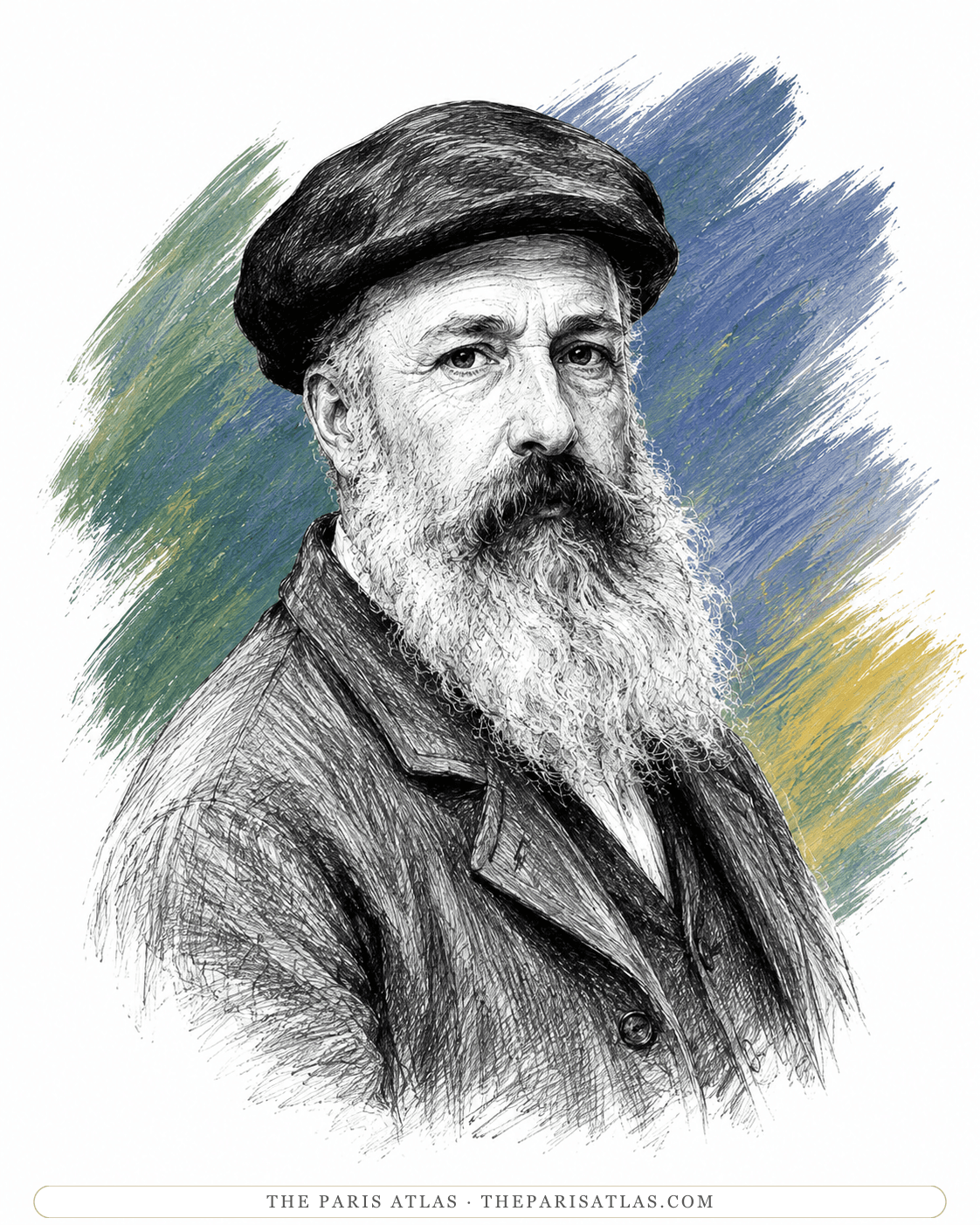
About Claude Monet
A garden, a doorway, a hoop
A gravel path runs back through a garden to a house whose front is half-swallowed by climbing plants. Large blue-and-white planters stand along the path, filled and overflowing. In the doorway, small and shadowed, Camille Doncieux looks out. On the path in front of her, Jean — five or six years old — stands with a hoop.
Nothing is happening, and that is the point. The weather is good, the beds are kept, the light is even. The picture's whole argument is domestic well-being, which is unusual in Monet and would not last.
The Argenteuil years
Monet and his family lived at Argenteuil, on the Seine just downstream of Paris, from 1871 to 1878. The town was close enough to reach from the Gare Saint-Lazare in minutes and rural enough to paint, and it drew the other Impressionists out to him — Renoir, Manet and Sisley all worked there.
This particular canvas comes from the comfortable part of that period. Paul Durand-Ruel had been buying Monet's work, and the household had money in it. The garden in the painting, tended and planted in pots, is recognisably an early version of the preoccupation that would eventually consume him at Giverny.
Close reading
Reading the work, detail by detail
The painting turns domestic space into a field of light. Its house, figures, and garden are ordinary, but the brushwork gives each a different tempo.
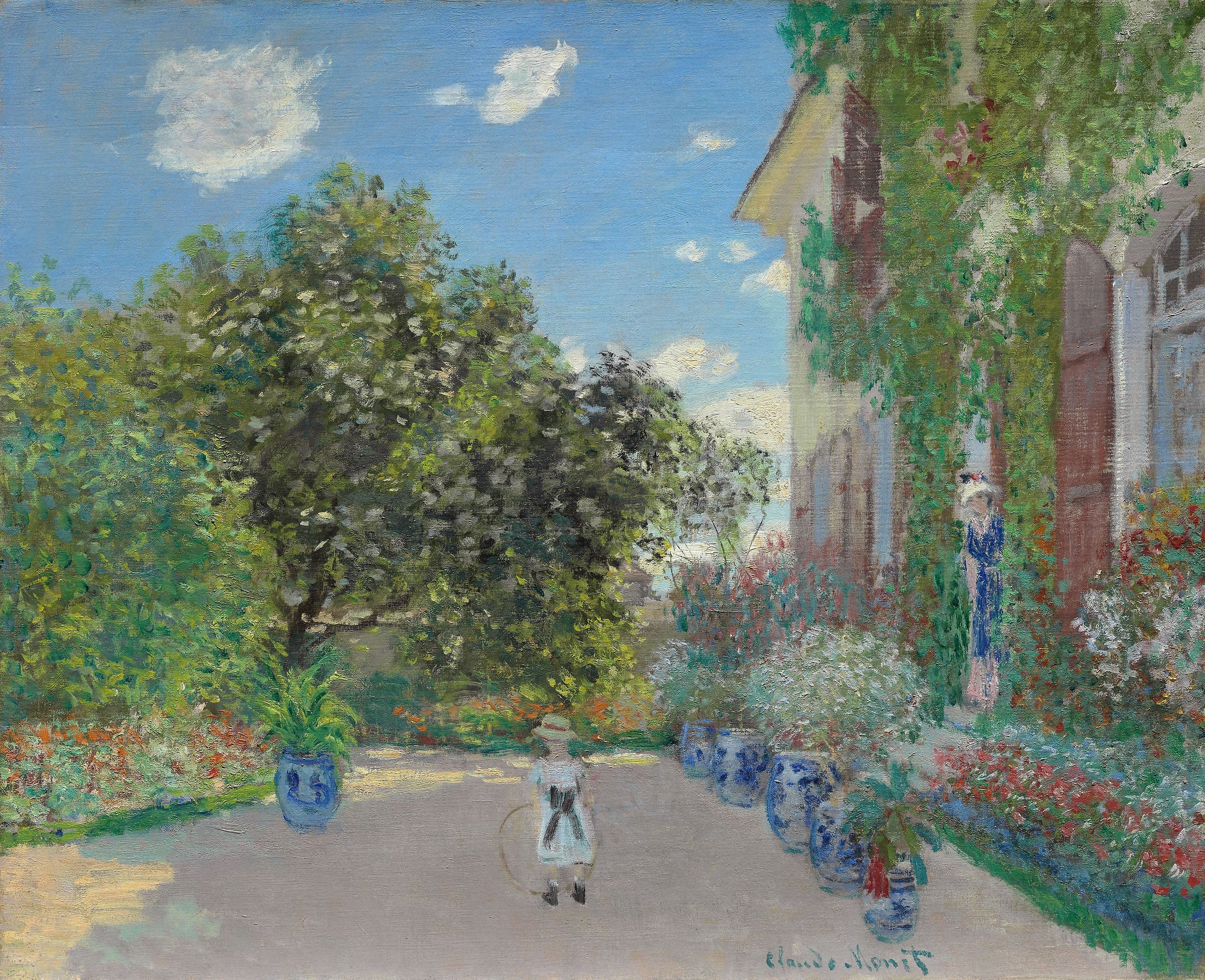
1.The facade is a patchwork of reflected color
Cream walls pick up pink, blue, and green from the garden and sky. The shutters provide the firmest rectangles, but even they soften at the edges. The house is stable architecture painted as changing light.
2.Family life is woven into the garden
The figures are modest colored notes rather than portrait studies. Their scale and placement animate the threshold between house and garden. The domestic scene matters, but it never overrules the sensation of the day.
3.The path is nearly buried in paint
Flowers do not appear as individually drawn blooms. Dabs of red, white, and yellow accumulate against green until a garden emerges. The path remains only as a pale interval through that density.
4.Blue pots measure the edge of the path
A row of blue and white pots leads diagonally toward the house. The nearer pots are larger and more separated; those farther away crowd together. Their repeated rounded shapes give a clear sense of distance beneath the much less orderly marks of the flowers.
5.A small figure stands in the open path
The small figure stands against a relatively open area of the path. Pale clothing meets darker strokes at the arms and legs, making the upright body easy to distinguish. The surrounding space gives this figure more separation than the flowers clustered beside the house.
6.The roof edge interrupts the blue sky
A sloping roofline cuts across the blue sky above the pale wall. Nearby white clouds have irregular edges, while the building holds a more definite angle. The meeting of these shapes distinguishes constructed space from the changing forms of the garden and sky.
Timeline
1871
Monet moves his family to Argenteuil on the Seine.
1873
Paints the house and garden with Camille and Jean, during a financially secure stretch supported by Durand-Ruel's purchases.
1878
The family leaves Argenteuil.
1933
Enters the Art Institute of Chicago with the Ryerson collection.
Where to see it
Art Institute of Chicago
111 South Michigan Avenue, Chicago, IL 60603, United States
Displays and loans can change. Check whether this work is on view before making a special trip.
Plan your visit on the museum’s official website (opens in a new tab)Frequently asked questions
Who are the figures in The Artist's House at Argenteuil?
Monet's first wife, Camille Doncieux, standing in the doorway, and their elder son Jean, aged about five or six, on the path with a hoop.
How long did Monet live at Argenteuil?
From 1871 to 1878 — seven years, and the period in which Impressionism took its recognisable form.
Where is the painting now?
At the Art Institute of Chicago, in the Mr. and Mrs. Martin A. Ryerson Collection (accession number 1933.1153).
Is this garden the one at Giverny?
No. Giverny came later, from 1883. But the planted pots and kept beds here are the same instinct that produced the Giverny garden two decades on.
More by Claude Monet
If you like Claude Monet
Explore painters from the same movements and circles.
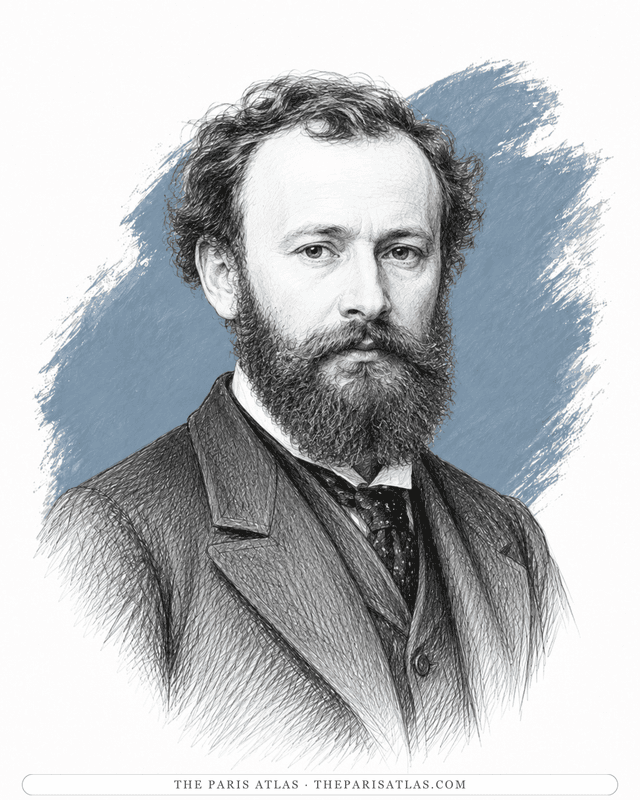
Édouard Manet
The admired elder of the independents — he painted beside Monet, befriended Morisot, and refused to show in all eight of the group's exhibitions.
View artist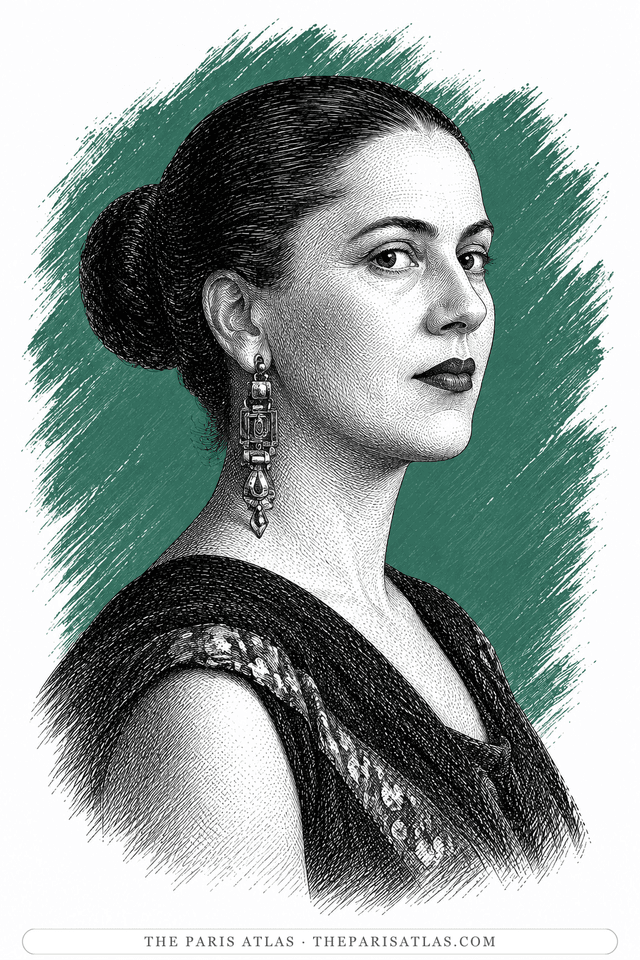
Tarsila do Amaral
Brazilian painter who spent the 1920s moving between São Paulo and Paris, studied Cubism under André Lhote, Albert Gleizes and Fernand Léger, and used what she learned to paint Brazilian towns, railways, plants and bodies. Her 1928 painting Abaporu prompted the manifesto that gave the Anthropophagic movement its name.
View artist
Gustave Caillebotte
Painter of Haussmann's geometry and the group's organizer-financier; his bequest of Impressionist paintings forced the French state to take the movement in.
View artist
References
The sources below include collection records, catalogues, scholarly research, and primary materials that informed this page. They document The Artist's House at Argenteuil, its making, and its place in cultural history.


1The Artist's House at Argenteuil — Art Institute of Chicago
WebsiteArt Institute of ChicagoUsed forWeb source consulted for documented facts and historical context presented on the The Artist's House at Argenteuil page.
2Claude Monet (1840–1926) — The Metropolitan Museum of Art
WebsiteThe Metropolitan Museum of Art, 2004Used forWeb source consulted for documented facts and historical context presented on the The Artist's House at Argenteuil page.
3Timeline — Maison et jardins de Claude Monet, Giverny
WebsiteFondation Claude MonetUsed forThe Fondation Claude Monet chronology places the Argenteuil house and garden within Monet's family life and Impressionist development.
4Claude Monet — Musée Marmottan Monet
WebsiteMusée Marmottan MonetUsed forThe Musée Marmottan Monet collection supplies independent museum context for Monet's domestic landscapes and career.
These references provide the documented foundation for this work's history and interpretation. Claim-level citations remain attached to the specific claims they support.
 Explore more resources