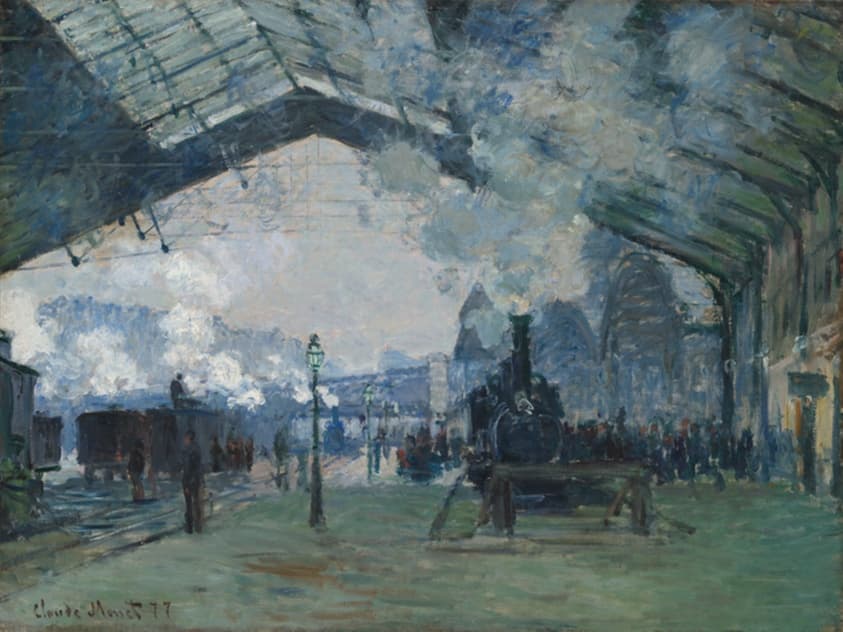
Arrival of the Normandy Train, Gare Saint-Lazare
by Claude Monet
One of twelve canvases Claude Monet painted inside the Gare Saint-Lazare in 1877, and the picture in which he first worked a single motif over and over to catch it under changing conditions — the method he would later carry to the wheat stacks and the cathedral front.
- 1877
- Oil on canvas
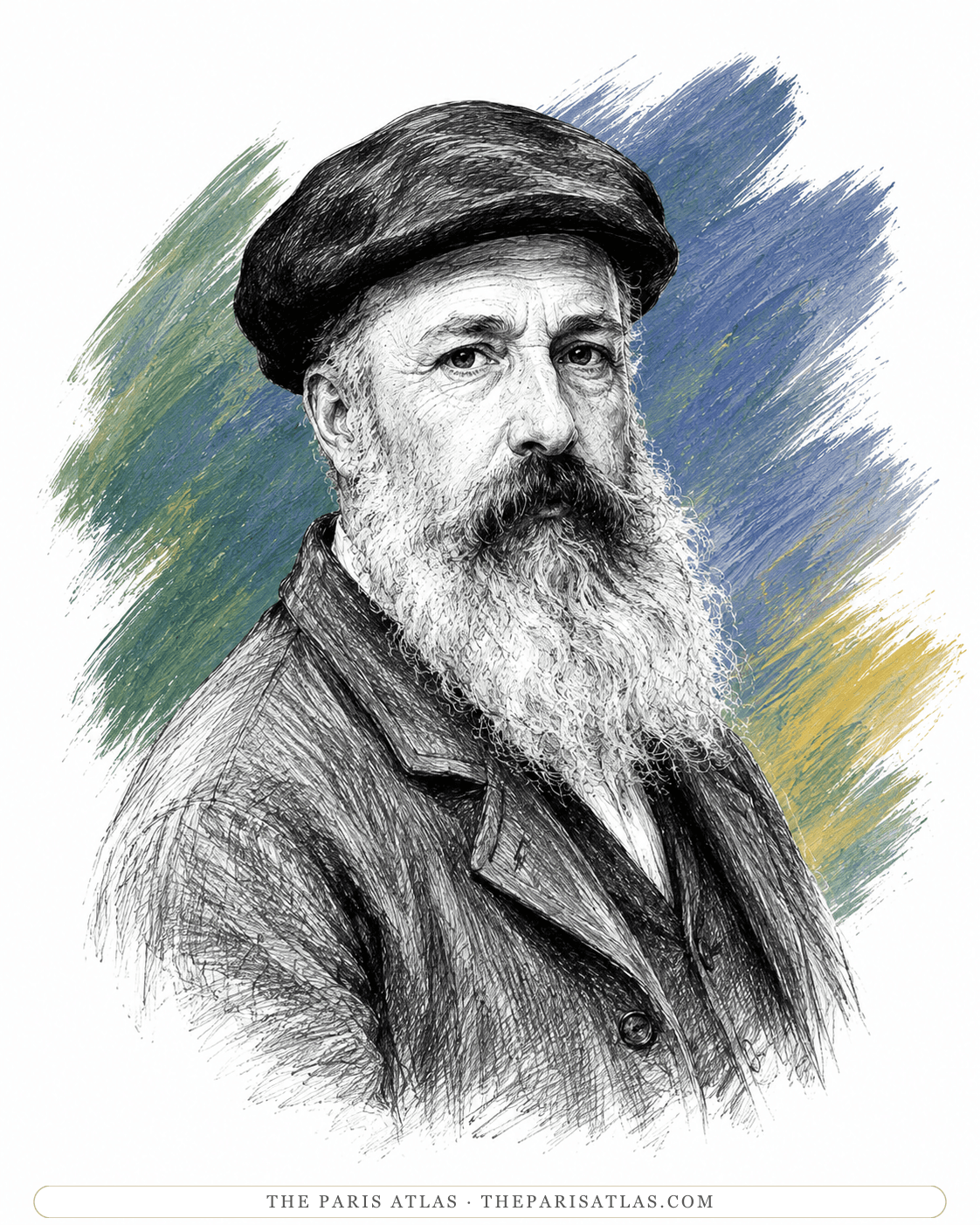
About Claude Monet
Steam under a glass roof
The subject is the train shed rather than the trains. Monet set himself under the great span of glass and iron and painted what happened in the air beneath it: locomotive steam rising, hitting the roof, and spreading sideways because it has nowhere else to go, while daylight comes down through the glazed sections and meets it. Engines, rails and figures are all present, but they are established in a few dark strokes and left there. The picture is about the collision of the two atmospheres, one manufactured and one natural, inside a box built of girders.
The canvas is not large — roughly 60 by 80 centimetres — and the paint is handled quickly, in short broken touches that keep the shed's geometry legible without ever tightening into description. The ironwork is drawn in paint, not ruled.
Why Monet chose this station
The choice was not arbitrary. Saint-Lazare was the terminus that linked Paris to Normandy, the coast where Monet had grown up and where he had taught himself to paint outdoors in the 1860s. It was also the station the Impressionists used to reach the towns west and north of the city — Argenteuil among them, where Monet had been living. The building was, in a literal sense, the hinge between his Paris life and everywhere else he painted.
In 1877 Monet was living in the Nouvelle Athènes quarter, a short walk away, and obtained permission to work inside the station. Twelve paintings are known from the campaign. Eight of them were ready in time for the third Impressionist exhibition that spring, where they seem to have hung together in a single room — an early instance of the serial display that would define his later career.
The beginning of the series method
The Saint-Lazare canvases mark the point at which Monet began returning to one motif deliberately, changing his position and his hour rather than his subject, in order to record how the same thing looks under different light and weather. Everything the phrase 'a Monet series' now means — the stacks of wheat, the poplars, the Rouen Cathedral facade, finally the water garden — starts here, in a railway shed.
They also close something. After the station pictures Monet largely stopped painting the modern city. The rest of his working life went to coastlines, rivers, fields and, eventually, his own garden.
Hoschedé, de Bellio, Chicago
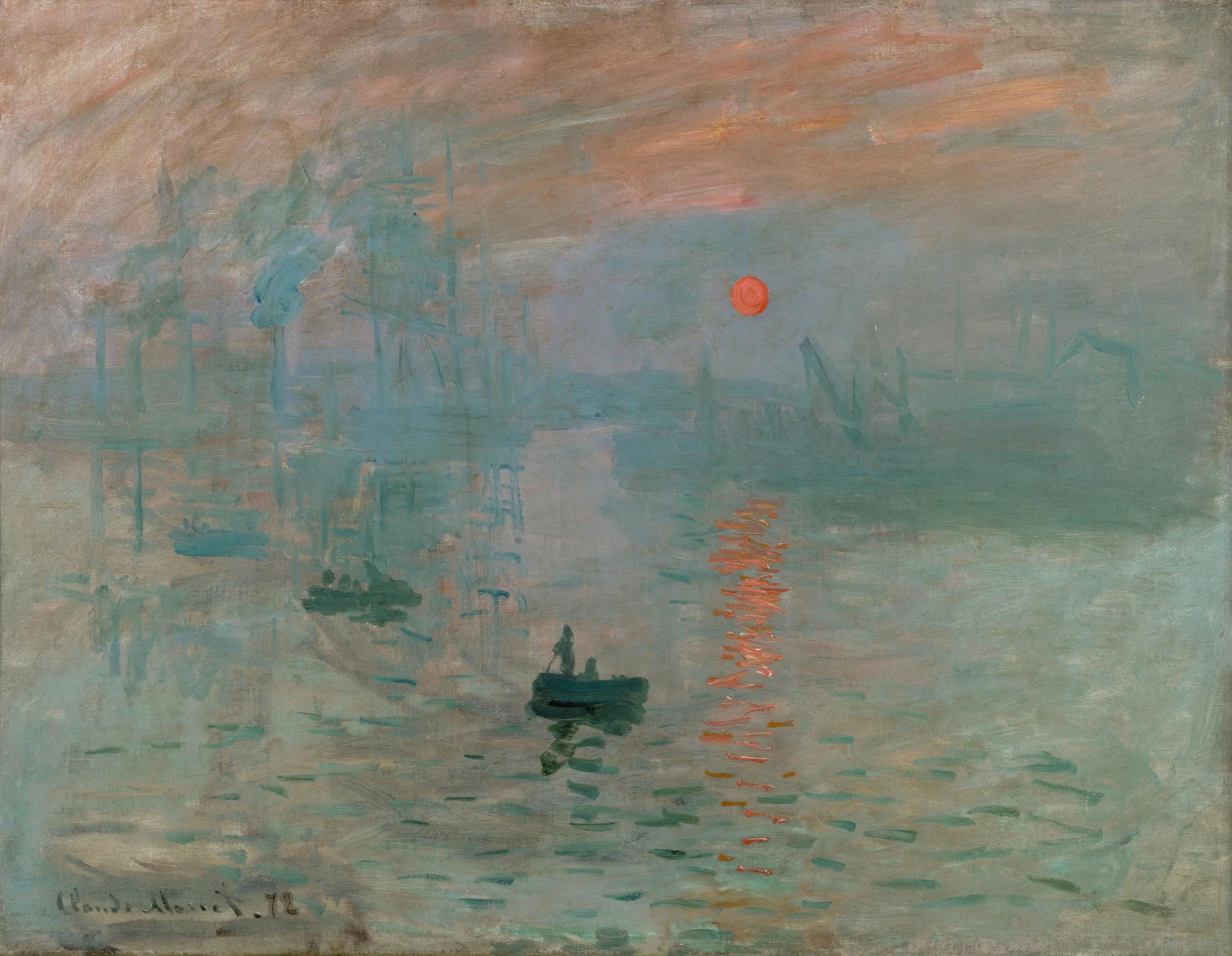
Monet sold the painting to Ernest Hoschedé in March 1877 — the department-store proprietor and collector whose wife, Alice, would later become Monet's second wife. By 1878 it belonged to Doctor Georges de Bellio, the Romanian physician who bought from the Impressionists when almost no one else would, and who also owned Impression, Sunrise. It passed by descent to de Bellio's daughter Victorine and her husband Eugène Donop de Monchy — the same couple who, decades later, gave Impression, Sunrise to the Musée Marmottan.
From there the painting moved through the trade: Bernheim-Jeune around 1899, Paul Rosenberg, and then Durand-Ruel, who bought it in Paris on 13 October 1911 for 13,000 francs and sent it to New York within the year. It entered the Art Institute of Chicago in 1933 with the Ryerson collection.
Close reading
Reading the work, detail by detail
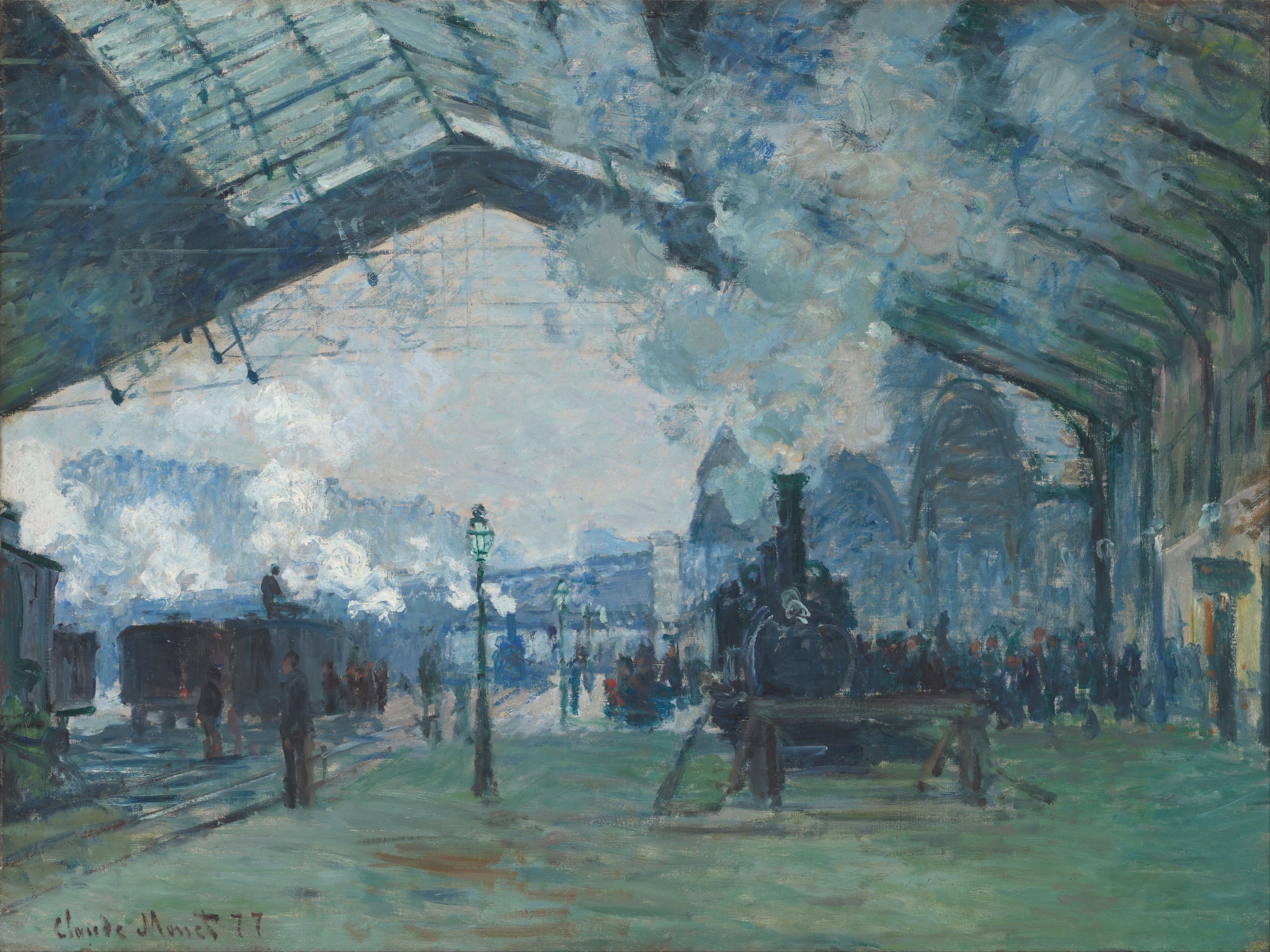
The station resolves at normal size into steam and iron. Enlarged, it becomes clear how Monet lets the building keep its geometry while almost everything moving through it begins to dissolve.
1.Steam caught under the iron roof
The roof is a hard grid; the steam has no outline at all. Monet paints the architecture in dark, directional strokes, then rubs blue, white, and lavender through it. The station remains measurable while the air inside it refuses to hold still.
2.The locomotive almost disappears
The engine is established with a few black masses and a small red accent; the people are shorter strokes still. Monet gives just enough machinery to orient us, then lets vapor take back the scene. Modern industry is present, but atmosphere gets the last word.
3.Rails turn light into perspective
The rails pull sharply toward the rear of the shed, the most conventional perspective device in the picture. Across them Monet lays broken touches of reflected blue and cream. Depth is drawn by steel and then interrupted by color.
4.The roof panes establish a repeated structure
Closely spaced dark bars divide pale strips of glass at the upper left. The panes repeat across a sloping plane, making the roof's direction easy to follow. Their regular spacing gives the expanding steam something visibly rigid to obscure.
5.Columns keep the platform edge visible
Vertical supports repeat along the right side of the shed, with pale wall patches between them. Dark figures collect near their bases. These repeated uprights hold the platform edge in place even where blue-gray vapor softens the space farther inside the station.
6.A few strokes make a standing figure
A narrow dark body stands against the much lighter platform, with separate strokes suggesting the legs. The figure's upright position contrasts with the tracks running away behind it. Monet establishes a person and a useful measure of scale with very little internal detail.
Timeline
1877
Monet obtains permission to paint inside the Gare Saint-Lazare and produces twelve canvases; eight are shown at the third Impressionist exhibition.
1877
Sold to the collector Ernest Hoschedé in March.
1878
In the collection of Doctor Georges de Bellio, Paris.
1911
Bought by Durand-Ruel in Paris on 13 October for 13,000 francs, and shipped to the firm's New York gallery.
1933
Enters the Art Institute of Chicago with the Mr. and Mrs. Martin A. Ryerson Collection.
Where to see it
Art Institute of Chicago
111 South Michigan Avenue, Chicago, IL 60603, United States
Displays and loans can change. Check whether this work is on view before making a special trip.
Plan your visit on the museum’s official website (opens in a new tab)Frequently asked questions
How many paintings did Monet make of the Gare Saint-Lazare?
Twelve are known. He painted them in 1877 after getting permission to work inside the station, and showed eight of them at the third Impressionist exhibition the same year.
Where is Arrival of the Normandy Train, Gare Saint-Lazare?
At the Art Institute of Chicago, in the Mr. and Mrs. Martin A. Ryerson Collection (accession number 1933.1158).
Can you visit the station Monet painted?
Yes — the Gare Saint-Lazare is still a working Paris terminus in the 8th arrondissement, and the glass-and-iron train shed Monet painted under is still the part of the building that carries the platforms.
Why is this painting important?
It is where Monet's series method begins. Working one motif repeatedly to record changing light and atmosphere became the organising idea of the rest of his career, from the stacks of wheat to the water lilies.
Are all twelve Saint-Lazare paintings in the same museum?
No. They are dispersed across public and private collections; the Art Institute of Chicago holds this one.
More by Claude Monet
If you like Claude Monet
Explore painters from the same movements and circles.
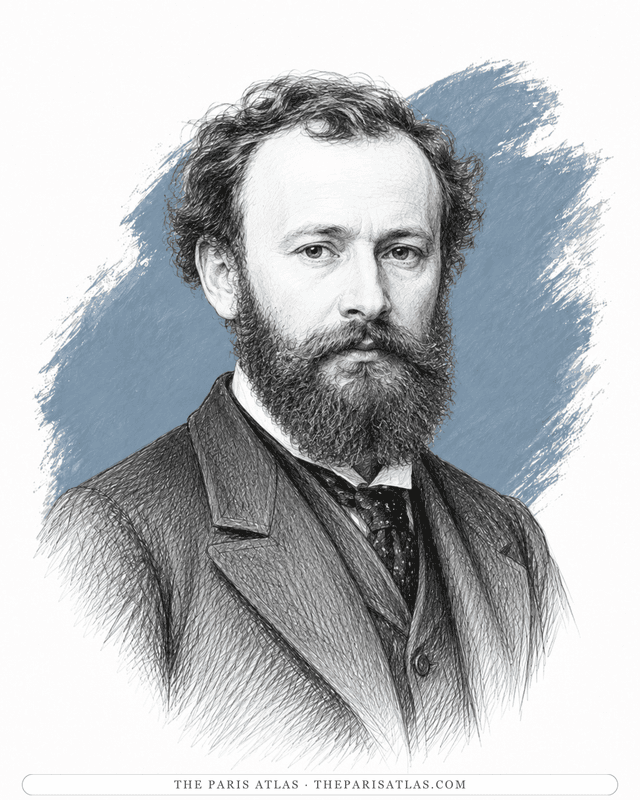
Édouard Manet
The admired elder of the independents — he painted beside Monet, befriended Morisot, and refused to show in all eight of the group's exhibitions.
View artist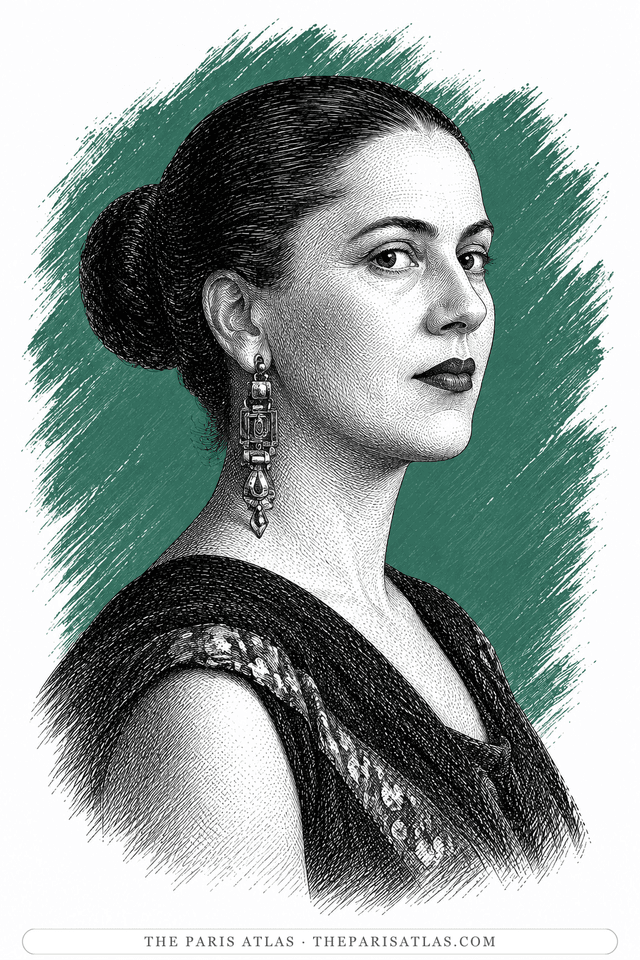
Tarsila do Amaral
Brazilian painter who spent the 1920s moving between São Paulo and Paris, studied Cubism under André Lhote, Albert Gleizes and Fernand Léger, and used what she learned to paint Brazilian towns, railways, plants and bodies. Her 1928 painting Abaporu prompted the manifesto that gave the Anthropophagic movement its name.
View artist
Gustave Caillebotte
Painter of Haussmann's geometry and the group's organizer-financier; his bequest of Impressionist paintings forced the French state to take the movement in.
View artist
References
The sources below include collection records, catalogues, scholarly research, and primary materials that informed this page. They document Arrival of the Normandy Train, Gare Saint-Lazare, its making, and its place in cultural history.


1Arrival of the Normandy Train, Gare Saint-Lazare — Art Institute of Chicago
WebsiteArt Institute of ChicagoUsed forWeb source consulted for documented facts and historical context presented on the Arrival of the Normandy Train, Gare Saint-Lazare page.
2Claude Monet (1840–1926) — The Metropolitan Museum of Art
WebsiteThe Metropolitan Museum of Art, 2004Used forWeb source consulted for documented facts and historical context presented on the Arrival of the Normandy Train, Gare Saint-Lazare page.
3Timeline — Maison et jardins de Claude Monet, Giverny
WebsiteFondation Claude MonetUsed forThe Fondation Claude Monet chronology places the 1877 Saint-Lazare campaign within Monet's Paris and Argenteuil years.
4Claude Monet — Musée Marmottan Monet
WebsiteMusée Marmottan MonetUsed forThe Musée Marmottan Monet collection supplies independent museum context for Monet's career and serial working practice.
These references provide the documented foundation for this work's history and interpretation. Claim-level citations remain attached to the specific claims they support.
 Explore more resources