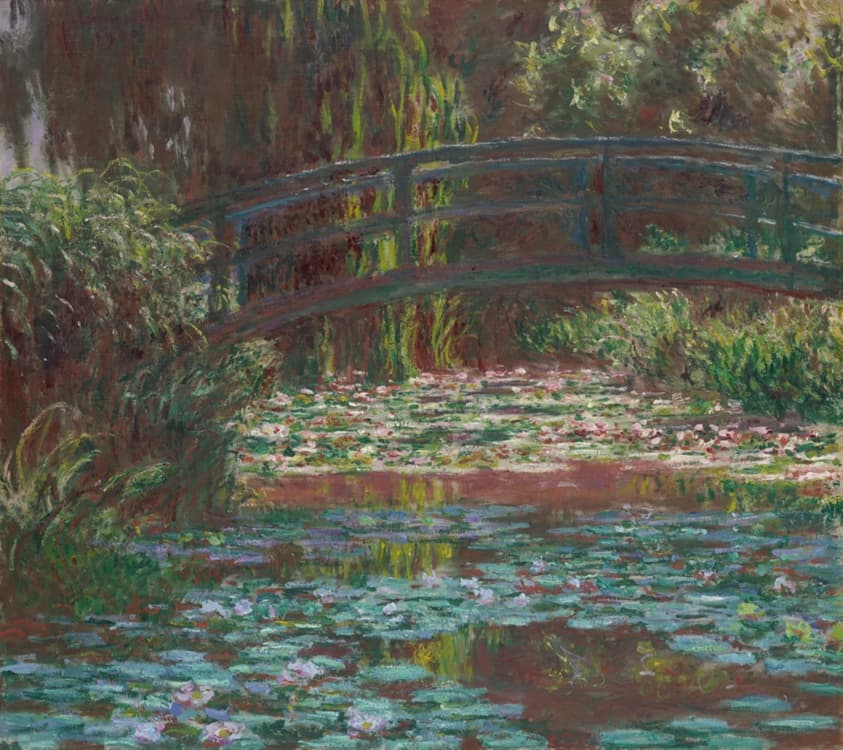
Water Lily Pond
by Claude Monet
The Japanese footbridge at Giverny in 1900, one of eighteen versions of the motif Monet painted in a single campaign — the pond he had dug himself, becoming the subject that would occupy the rest of his life.
- 1900
- Oil on canvas
About Claude Monet
The bridge and the surface
The wooden bridge arches across the top of the canvas, green against a dense screen of willow and other planting that closes off any view beyond. Below it the pond fills the rest of the picture, carrying pads and flowers in horizontal drifts and, between them, the reflected greens and darks of everything growing on the bank.
There is no sky and no horizon — only the water and what is behind it, compressed into a single vertical plane. The lilies and the reflections mingle on the same surface, which was the explicit theme of this group of canvases.
A garden he had to dig
Monet bought the property at Giverny in 1890, and in 1893 began converting the marshy ground behind the house into a water garden. He had the pond dug and built a Japanese-style wooden bridge across its narrow end, then planted the banks with a mixture of exotic and local species. The famous water lilies were part of the scheme from the start.
The result is unusual as a subject: not a landscape Monet found, but one he designed, planted and maintained specifically in order to paint it. From the late 1890s until his death in 1926 it was his principal motif.
Eighteen versions
This canvas belongs to a group of eighteen paintings of the bridge and pond made in 1899 and 1900, all working the same view and the same idea — lilies floating on a surface that simultaneously reflects the vegetation above and around it.
Monet sold it to the dealer Léonce Rosenberg in Paris in December 1900, within months of finishing it. It passed to the Prince de Wagram, back to Rosenberg, and then to Durand-Ruel, who bought it in Paris on 22 July 1914 for 21,000 francs and sold it in New York the following spring to Arthur Meeker of Chicago for $7,400. It entered the Art Institute of Chicago in 1933.
Close reading
Reading the work, detail by detail
The Japanese bridge gives this earlier water-garden picture a clear architectural center. The details show how quickly that structure is absorbed into foliage and reflection.
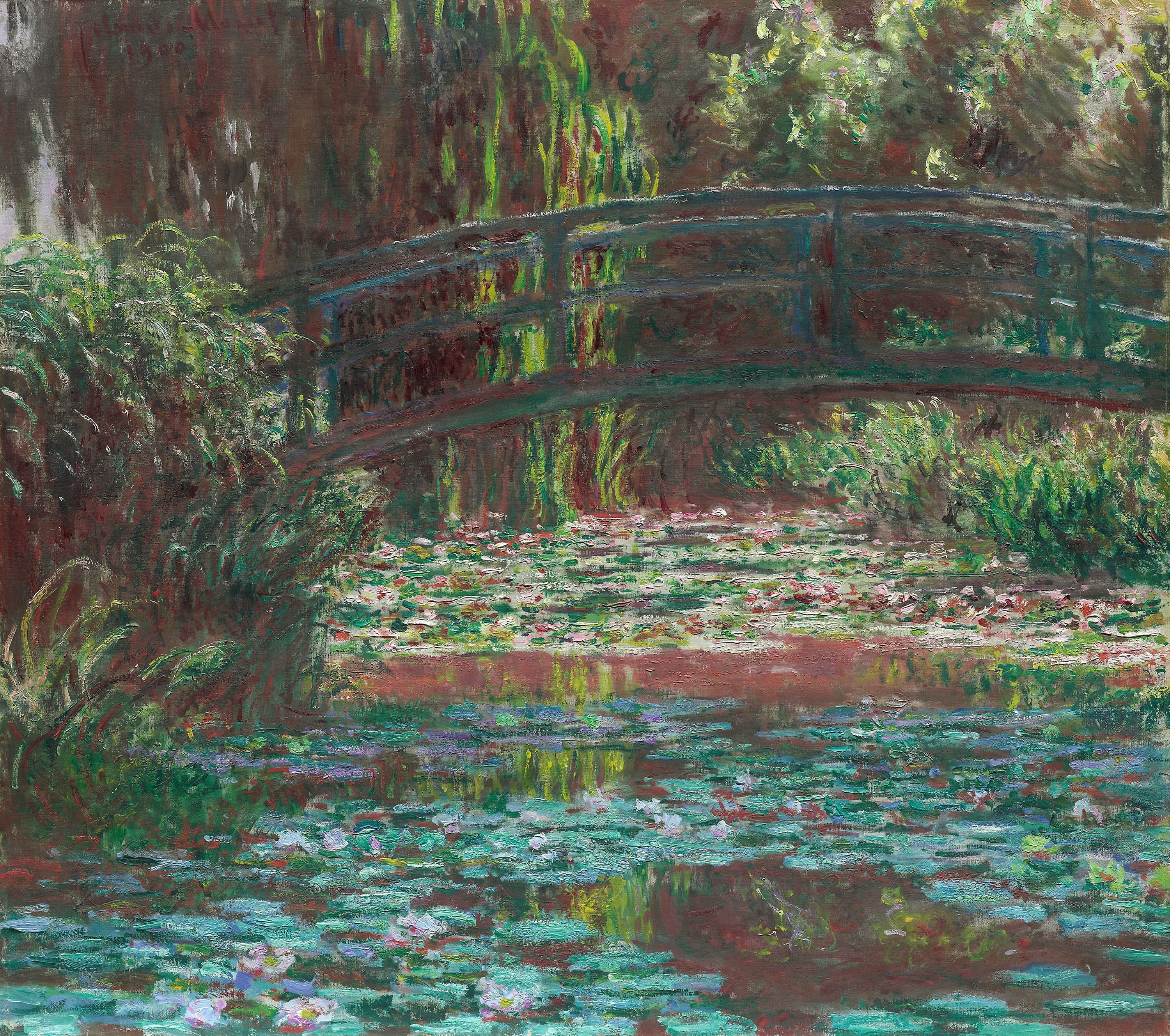
1.The bridge is a curve held inside other curves
The arch is the picture's firmest shape, but vines and willow branches crowd its rail and soften its outline. Monet gives the garden a piece of geometry and then lets growth overtake it.
2.Pads sit on a water surface made from reflections
The pads lie horizontally while dark reflected forms drop beneath them. That crossing tells the eye which marks float and which recede, even though both occupy the same literal layer of paint.
3.Willow branches turn the garden into enclosure
The hanging branches close the upper corners like a curtain and repeat themselves in the pond. The bridge leads across the image, but the foliage keeps the world beyond it inaccessible. This is a garden composed as an interior.
4.The near bank presses against the frame
Long leaves and small green touches crowd the left edge above the water. Dark passages remain visible between the brighter strokes. This dense bank differs from the more open pond beside it, helping to distinguish plants growing at the edge from leaves floating on the surface.
5.A bright group of pads gathers beneath the bridge
Pale pads gather in a tight horizontal band beneath the bridge. Pink and reddish-brown paint appears between their green and cream marks. The brighter cluster separates this patch of water from the dark opening above it, so the eye can follow the pond under the arch.
6.Dark openings remain between the floating leaves
Reddish-brown water shows through gaps between blue-green pads. Some marks stretch vertically through these openings, while the pads spread sideways. The exposed dark areas make the floating leaves easier to separate, and prevent the lower pond from becoming an uninterrupted carpet of green.
Timeline
1890
Monet buys the property at Giverny.
1893
Begins converting the marshy ground behind the house into a pond, with a Japanese-style wooden bridge at its narrow end.
1900
Paints this canvas, one of eighteen versions of the motif from 1899–1900, and sells it to Léonce Rosenberg in December.
1914
Bought by Durand-Ruel in Paris on 22 July for 21,000 francs.
1933
Enters the Art Institute of Chicago with the Coburn Memorial Collection.
Where to see it
Art Institute of Chicago
111 South Michigan Avenue, Chicago, IL 60603, United States
Displays and loans can change. Check whether this work is on view before making a special trip.
Plan your visit on the museum’s official website (opens in a new tab)Frequently asked questions
Is the Japanese bridge at Giverny still there?
Yes. The garden at Giverny is maintained and open to visitors, and the bridge over the water-lily pond remains one of its central features.
Did Monet build the pond himself?
He had it made. In 1893, three years after buying the Giverny property, he began converting the marshy ground behind the house into a pond, adding the bridge and planting the banks.
How many versions of this view did Monet paint?
Eighteen canvases of the bridge and pond come from the 1899–1900 campaign alone. The water garden as a whole occupied him for around thirty years and some 250 paintings.
Where is this painting now?
At the Art Institute of Chicago, in the Mr. and Mrs. Lewis Larned Coburn Memorial Collection (accession number 1933.441).
More by Claude Monet
If you like Claude Monet
Explore painters from the same movements and circles.
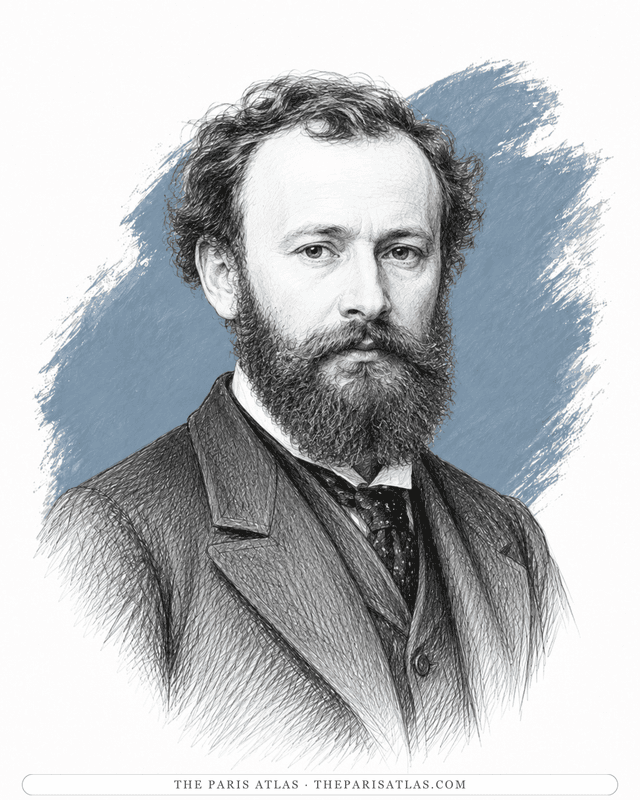
Édouard Manet
The admired elder of the independents — he painted beside Monet, befriended Morisot, and refused to show in all eight of the group's exhibitions.
View artist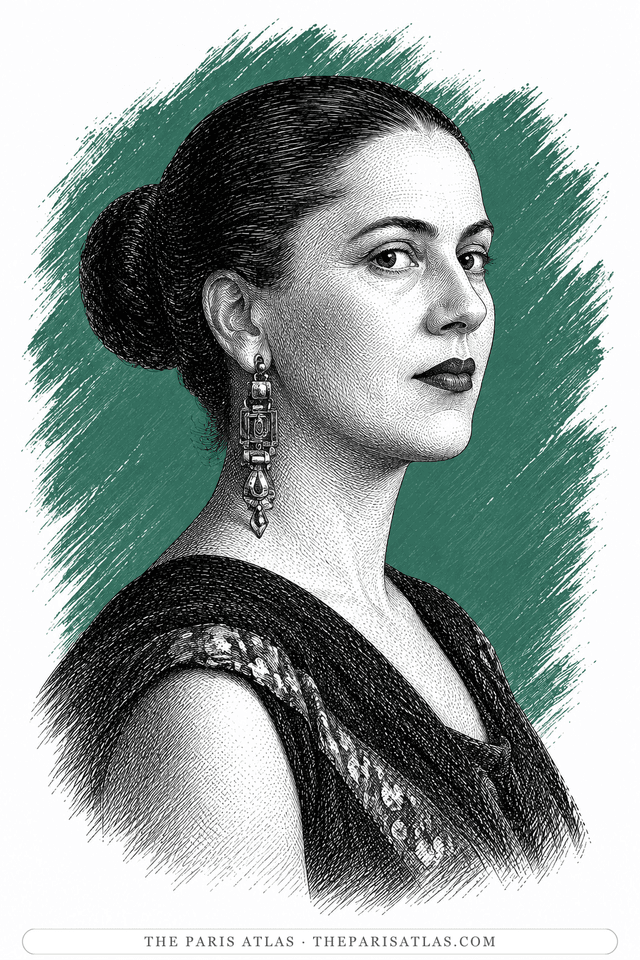
Tarsila do Amaral
Brazilian painter who spent the 1920s moving between São Paulo and Paris, studied Cubism under André Lhote, Albert Gleizes and Fernand Léger, and used what she learned to paint Brazilian towns, railways, plants and bodies. Her 1928 painting Abaporu prompted the manifesto that gave the Anthropophagic movement its name.
View artist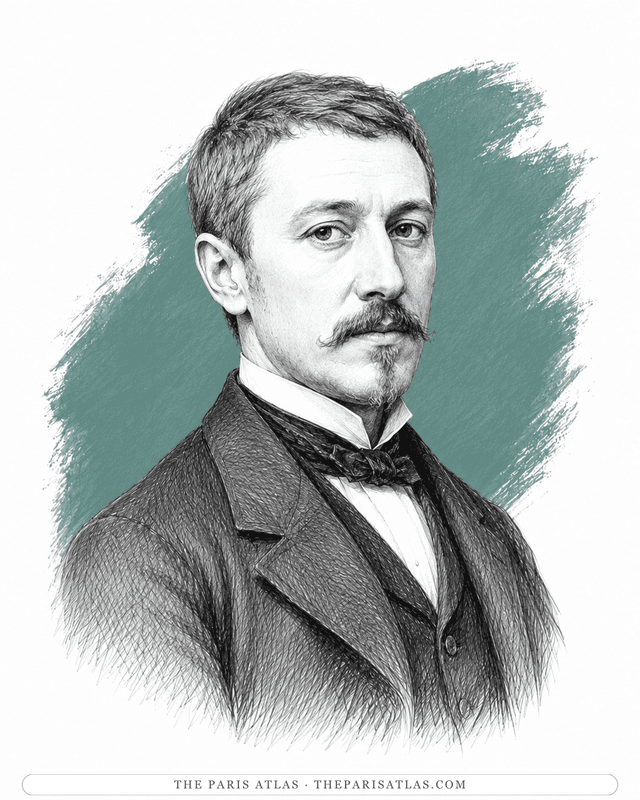
Gustave Caillebotte
Painter of Haussmann's geometry and the group's organizer-financier; his bequest of Impressionist paintings forced the French state to take the movement in.
View artist
References
The sources below include collection records, catalogues, scholarly research, and primary materials that informed this page. They document Water Lily Pond, its making, and its place in cultural history.


1Water Lily Pond — Art Institute of Chicago
WebsiteArt Institute of ChicagoUsed forWeb source consulted for documented facts and historical context presented on the Water Lily Pond page.
2Timeline — Maison et jardins de Claude Monet, Giverny
WebsiteFondation Claude MonetUsed forWeb source consulted for documented facts and historical context presented on the Water Lily Pond page.
3Claude Monet (1840–1926) — The Metropolitan Museum of Art
WebsiteThe Metropolitan Museum of Art, 2004Used forThe Metropolitan Museum's scholarly essay supplies independent context for Monet's Giverny garden and serial practice.
4Claude Monet — Musée Marmottan Monet
WebsiteMusée Marmottan MonetUsed forThe Musée Marmottan Monet collection provides additional institutional context for Monet's Water Lilies and late career.
These references provide the documented foundation for this work's history and interpretation. Claim-level citations remain attached to the specific claims they support.
 Explore more resources