Displayed at · 1940
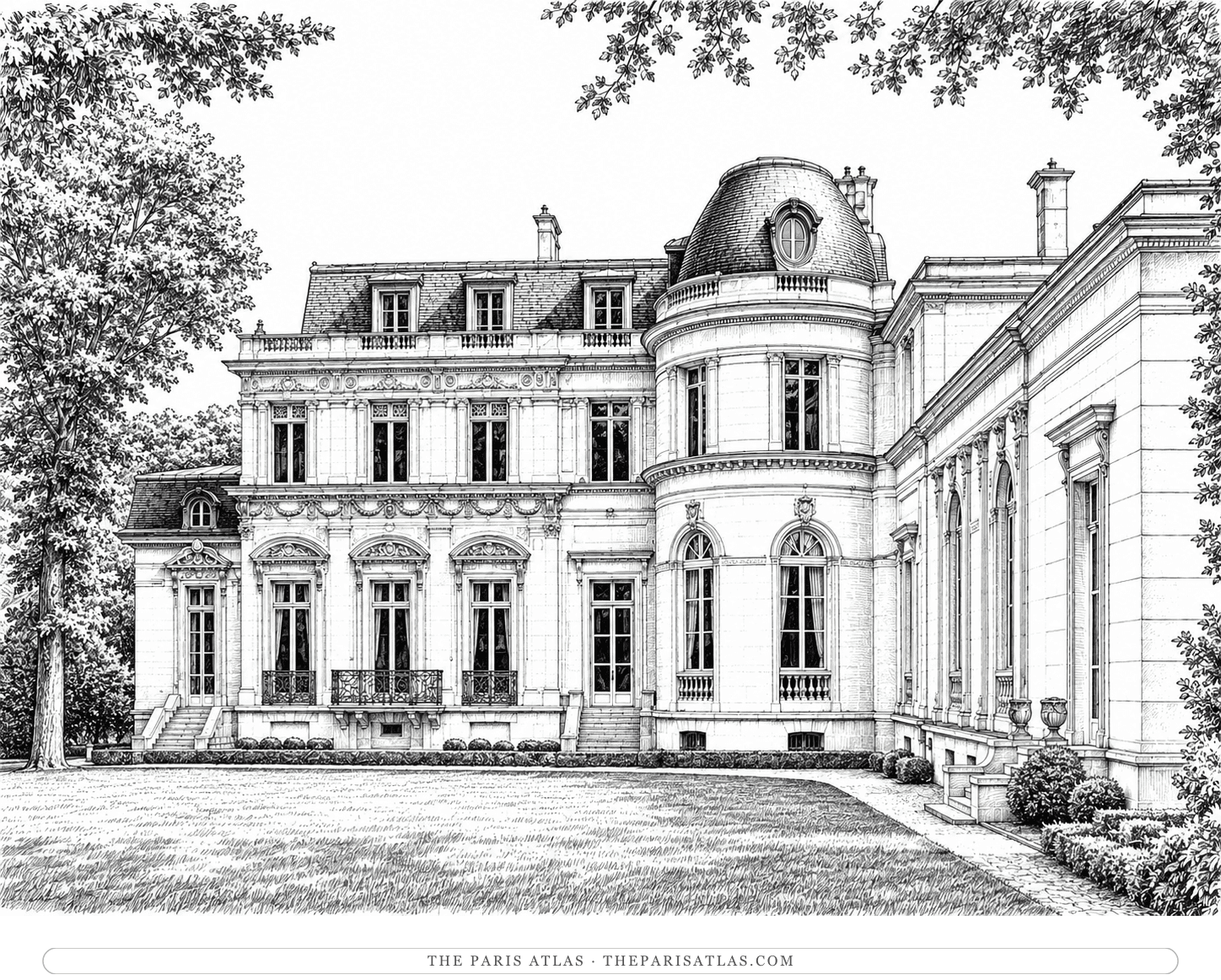
Musée Marmottan Monet
Given by Eugène and Victorine Donop de Monchy on 23 May 1940 (museum notice 4014); on display since, apart from the 1985–1990 theft interval.
by Claude Monet
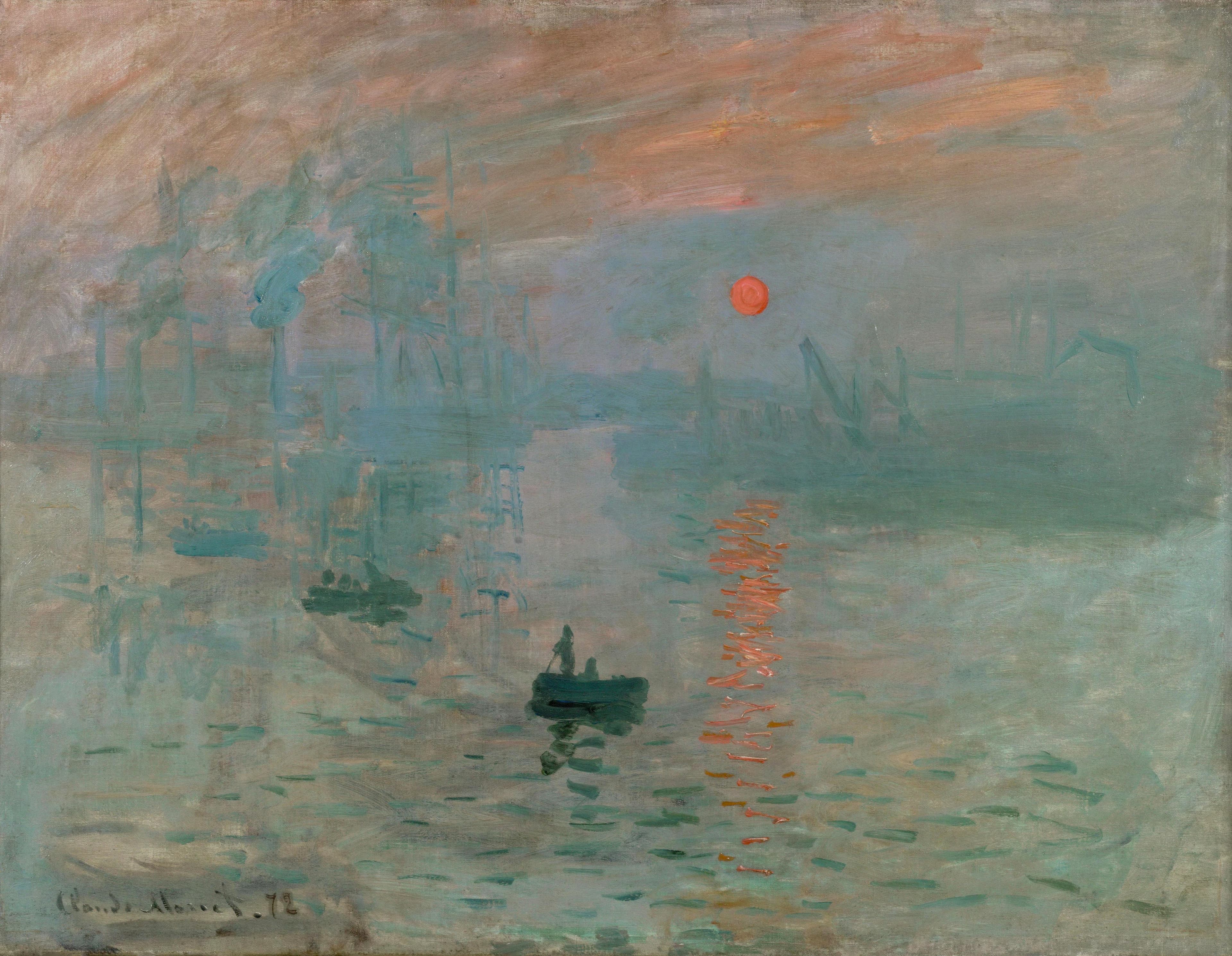
Claude Monet's 1872 view of the Le Havre harbor at dawn, whose catalogue title at the first independent exhibition of 1874 gave Impressionism its name. It hangs at the Musée Marmottan Monet in Paris.
In November 1872 Claude Monet was staying at the Hôtel de l'Amirauté in Le Havre, the port town where he had grown up. From his window he painted the view southeast across the outer harbor in the early morning: quays, cranes, smokestacks, and masts dissolved in mist, two small rowboats dark in the foreground, and an orange sun that the museum's notice records was added in the final touches.
The canvas is modest — 50 by 65 centimetres — and rapidly worked, closer to what the period called a sketch than to a finished marine painting. It is signed at lower left 'Claude Monet,' with the date '72' added later.
The painting hung in the first independent exhibition of April 1874, organized by Monet and his allies in the photographer Nadar's former studio on the boulevard des Capucines. Asked for a title for the catalogue, Monet chose 'Impression' — the painters' word, the museum notes, for a rapidly captured atmospheric effect rather than a finished view.
The critic Louis Leroy took the word and ran it through a satirical review in Le Charivari on 25 April 1874, under the heading 'The Exhibition of the Impressionists.' The name was meant to wound. It survived its author: the critic Jules Castagnary soon used 'Impressionists' without malice, and some of the group adopted the label themselves.
The painting passed into the collection of Doctor Georges de Bellio and from him to his daughter Victorine. On 23 May 1940 she and her husband Eugène Donop de Monchy gave it to the Musée Marmottan — the gift that turned a museum of Napoleonic decorative arts toward Impressionism. Ten more canvases from the family collection followed by 1947, and the painting has hung there since, with one interruption.
At about 10:15 on the morning of 27 October 1985, five masked men entered the museum during opening hours, held the visitors and guards at gunpoint, and left roughly five minutes later with nine paintings: Impression, Sunrise, four other Monets, two Renoirs, and a Morisot. Wire reports at the time put the paintings' value around twenty million dollars.
The investigation ran for five years and reached organized-crime circles in Japan before ending much closer to home. In December 1990, French police recovered all nine paintings from an apartment near Porto-Vecchio, in southern Corsica, and arrested seven people. The canvases had suffered humidity damage described as minor and repairable, and after conservation treatment the painting returned to display.
Close reading
The painting that gave Impressionism its name is remarkably spare. In close view, its famous sunrise depends on three concentrated devices: one warm disk, a vertical reflection, and a harbor assembled from abbreviated signs.
1.One orange note organizes the gray
The sun is a nearly flat orange circle, scarcely modeled at all. Its reflection repeats the same hue in short vertical dashes. Because the rest of the canvas stays in blue-gray half-light, that small warm note controls the whole field.
2.The foreground boats are calligraphic
A dark hull, two seated shapes, and a few strokes trailing into the water are enough to make a boat. Monet uses the figures as a sharp value contrast, bringing the foreground forward without detailing it.
3.The harbor arrives as vertical signs
Masts, chimneys, and cranes rise as thin vertical accents through the mist. They name an industrial port without describing its machinery. The background is legible because the mind completes what the paint only proposes.
4.Masts fade into the harbor air
Thin upright marks rise through a blue-green haze at the left. Their edges are much softer than the dark foreground boats. The difference in contrast suggests distance, while the repeated verticals keep the obscured harbor from becoming an undifferentiated patch of color.
5.Separate strokes make the near water ripple
Short horizontal strokes lie apart across the foreground water. Blue-green marks alternate with muted warmer touches, leaving the underlying color visible between them. Their spacing suggests small ripples without outlining individual waves, and carries movement into the open area beside the bright reflection.
6.Warm streaks spread beyond the sun
Muted pink and orange strokes cross the upper sky in broad, uneven bands. They are less concentrated than the orange disk below. This spread of warmth connects the sunrise to the surrounding atmosphere, so the sun's color does not appear only as an isolated spot.
1872
Monet paints the outer harbor of Le Havre at dawn from his window at the Hôtel de l'Amirauté in November.
1874
Shown at the first independent exhibition; Louis Leroy's review of 25 April turns its title into the movement's name.
1940
Victorine and Eugène Donop de Monchy give the painting to the Musée Marmottan on 23 May.
1985
Stolen with eight other paintings in an armed robbery on 27 October.
1990
Recovered near Porto-Vecchio, Corsica, in December; returned to display after treatment.
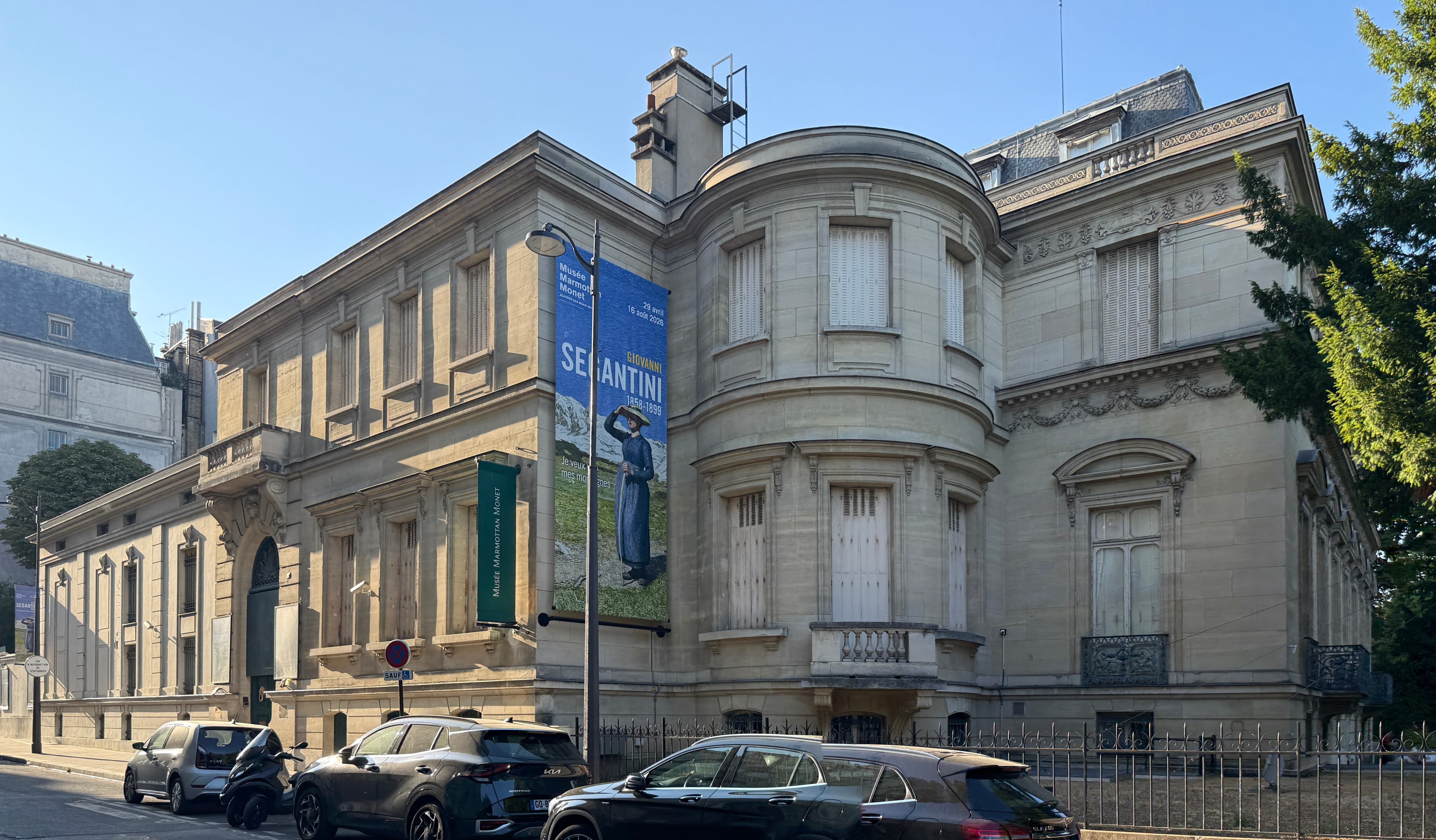
Musée Marmottan Monet, Paris
2 rue Louis-Boilly, 75016 Paris, France
Displays and loans can change. Check whether this work is on view before making a special trip.
Plan your visitAt the Musée Marmottan Monet, 2 rue Louis-Boilly, in the 16th arrondissement of Paris. It has been in the museum's collection since the Donop de Monchy gift of 1940.
Yes. Monet titled it 'Impression' in the catalogue of the group's first independent exhibition in 1874, and the critic Louis Leroy's satirical review of 25 April 1874, 'The Exhibition of the Impressionists,' fixed the word to the group. Some of the painters later adopted the name themselves.
The outer harbor of Le Havre at dawn, seen from Monet's hotel window in November 1872: masts, cranes, and smokestacks in mist, two small boats, and an orange sun over the water.
50 by 65 centimetres unframed — a small canvas, considerably smaller than reproductions tend to suggest.
Yes. Five armed men took it and eight other paintings from the Marmottan on 27 October 1985. All nine were recovered near Porto-Vecchio, Corsica, in December 1990 and returned to display after conservation treatment.
In November 1872, according to the museum. The '72' beside the signature was added later, and the painting was first shown publicly in April 1874.
Displayed at · 1940
Given by Eugène and Victorine Donop de Monchy on 23 May 1940 (museum notice 4014); on display since, apart from the 1985–1990 theft interval.
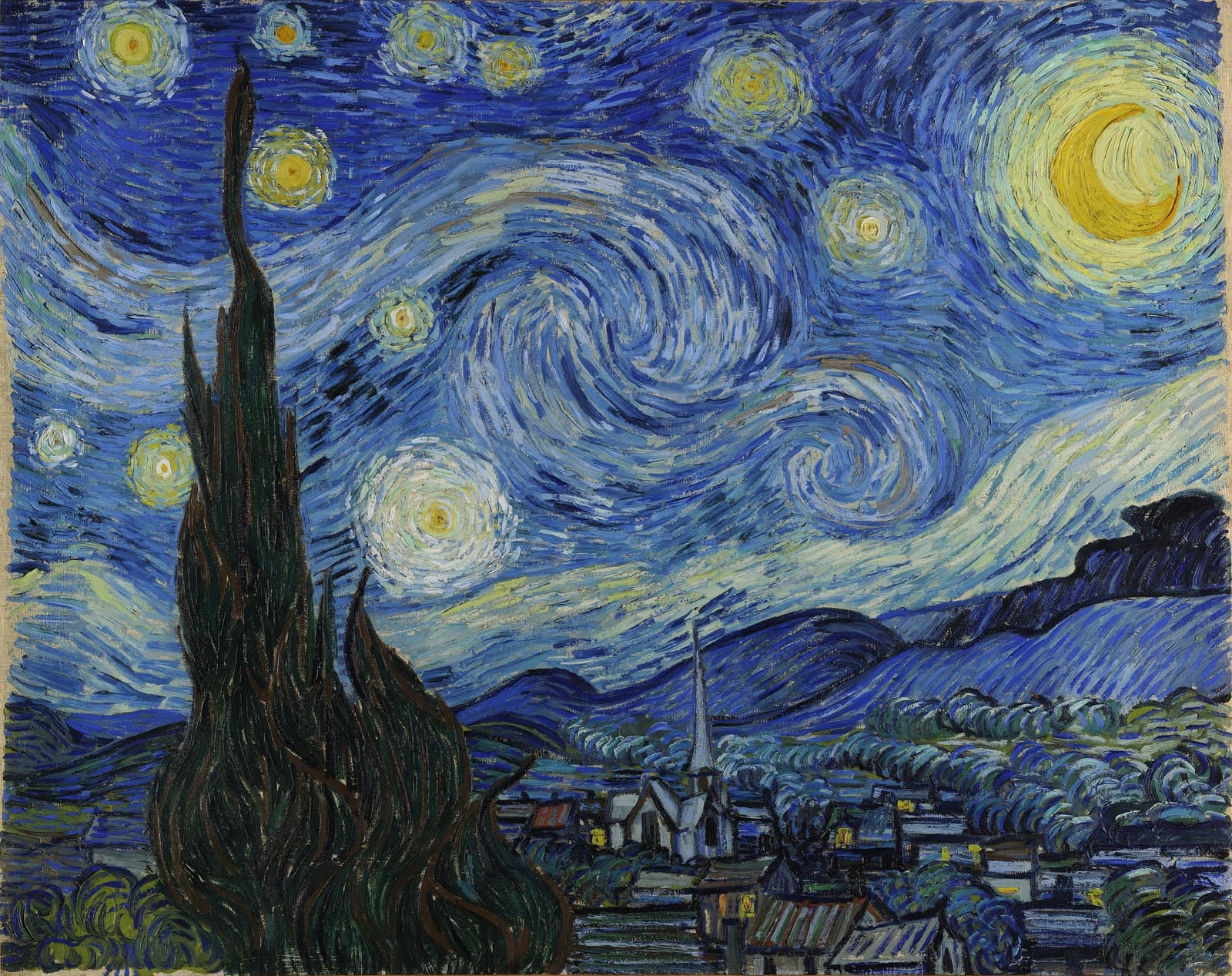
Associated with · 1872
Claude Monet painted the outer harbour at Le Havre at daybreak in 1872 and showed it at the group's first independent exhibition in April 1874. The critic Louis Leroy seized on the title to mean an unfinished sketch, and the insult became the name of the movement.
Explore painters from the same movements and circles.
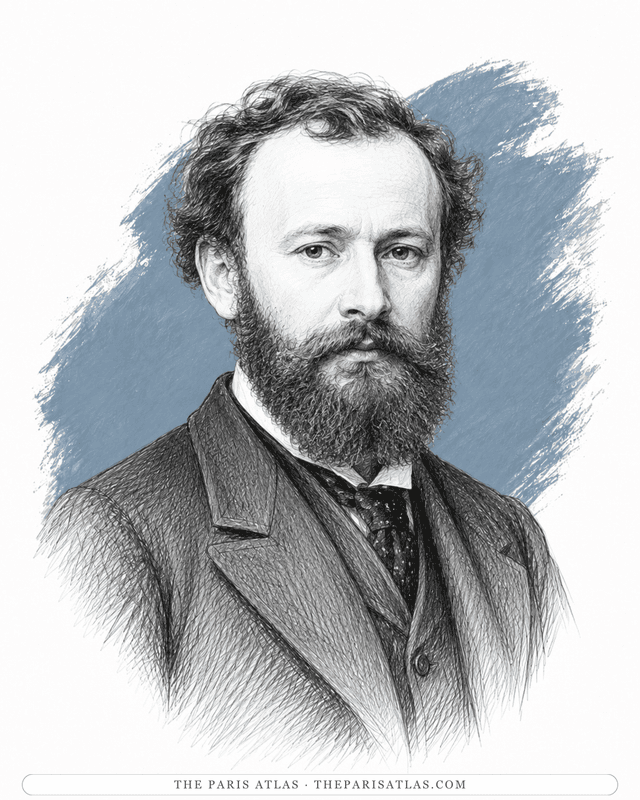
The admired elder of the independents — he painted beside Monet, befriended Morisot, and refused to show in all eight of the group's exhibitions.
View artist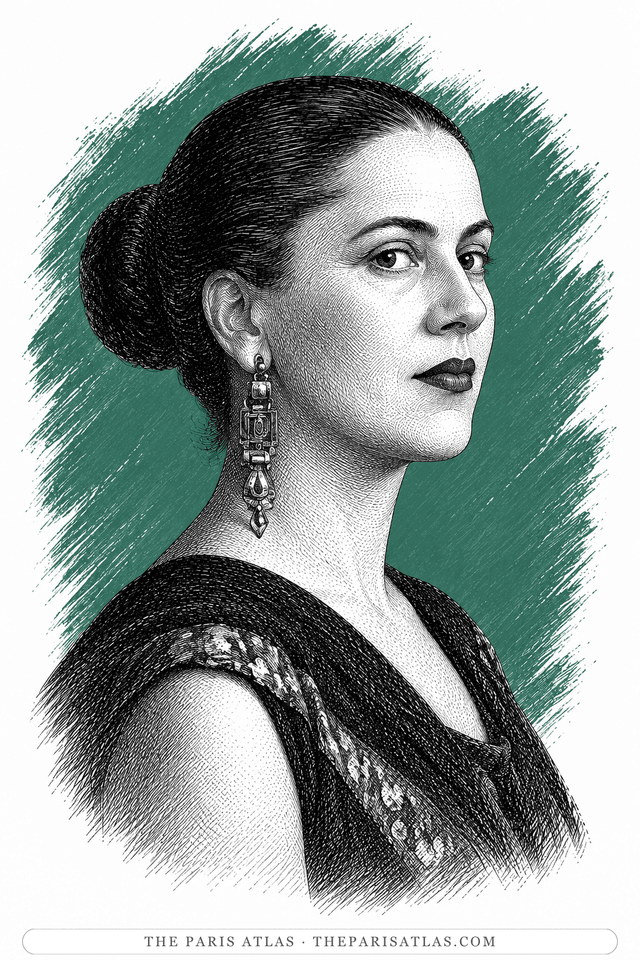
Brazilian painter who spent the 1920s moving between São Paulo and Paris, studied Cubism under André Lhote, Albert Gleizes and Fernand Léger, and used what she learned to paint Brazilian towns, railways, plants and bodies. Her 1928 painting Abaporu prompted the manifesto that gave the Anthropophagic movement its name.
View artist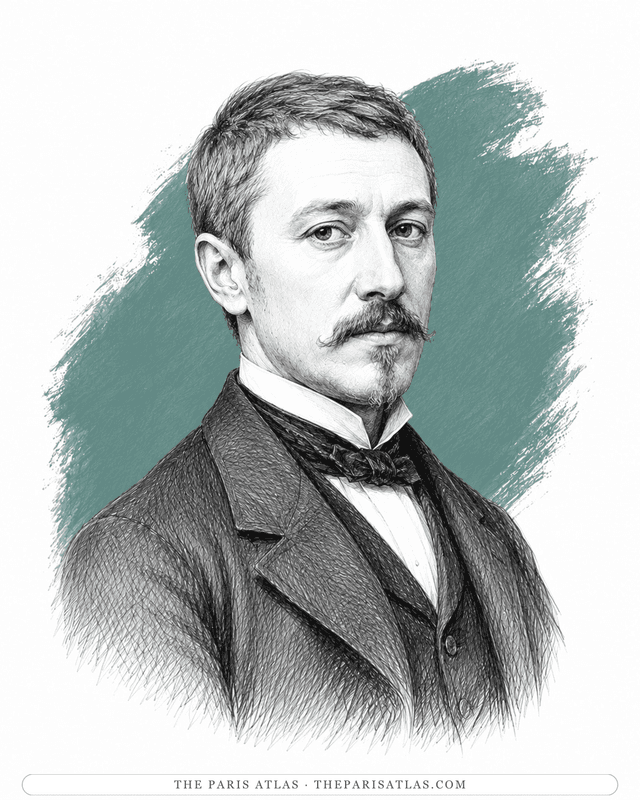
Painter of Haussmann's geometry and the group's organizer-financier; his bequest of Impressionist paintings forced the French state to take the movement in.
View artistThe sources below include collection records, catalogues, scholarly research, and primary materials that informed this page. They document Impression, Sunrise, its making, and its place in cultural history.


Web source consulted for documented facts and historical context presented on the Impression, Sunrise page.
Web source consulted for documented facts and historical context presented on the Impression, Sunrise page.
Web source consulted for documented facts and historical context presented on the Impression, Sunrise page.

Contemporary reporting or criticism used to document the historical reception and context of Impression, Sunrise.
Contemporary reporting or criticism used to document the historical reception and context of Impression, Sunrise.
These references provide the documented foundation for this work's history and interpretation. Claim-level citations remain attached to the specific claims they support.
 Explore more resources