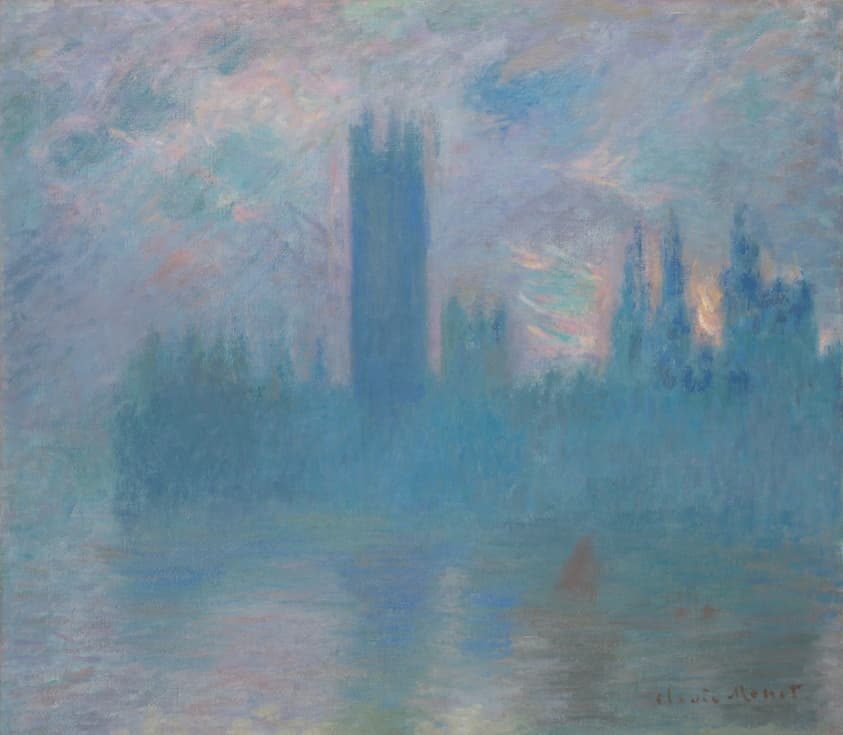
Houses of Parliament, London
by Claude Monet
Westminster dissolving in Thames fog, painted from a hospital terrace across the river during the London campaigns of 1900 and 1901 — Monet working the same silhouette that Turner and Whistler had worked before him.
- 1900–01
- Oil on canvas
About Claude Monet
A silhouette and some weather
The Palace of Westminster stands across the water as a flat blue-violet shape, its towers softened almost to the point of illegibility, with the light behind it. The Thames occupies the foreground in broken horizontal strokes that carry the reflected colour of the sky. There is very little architecture here in any descriptive sense: the building is a value and a contour, and the subject is the air between it and the painter.
Monet worked these canvases in the late afternoon and at sunset, when the low sun came through the industrial haze that London then had in quantity. The fog was not an obstacle to the picture; it was the picture.
The terrace at St Thomas's
Monet painted the Parliament series from a terrace at St Thomas's Hospital, on the opposite bank of the Thames. It is close to the vantage point J. M. W. Turner had used for his paintings of the fire that destroyed much of the old Parliament complex in 1834 — a coincidence of position that puts Monet in a direct line with the greatest British painter of atmospheric effect.
The more immediate influence, though, was a more recent painter of the same river: the American James McNeill Whistler, whose Thames nocturnes had already made the case that fog and dusk could carry a painting on their own. Monet's response to London weather owes more to Whistler than to Turner.
Paris to Chicago in two months
The painting was with the dealer Rosenberg in Paris by October 1916 and sold to Durand-Ruel that month for 22,500 francs. Durand-Ruel moved it to New York before the end of the year and sold it on 18 December 1916 to Martin A. Ryerson of Chicago for $10,000. It entered the Art Institute of Chicago with the Ryerson collection in 1933.
Close reading
Reading the work, detail by detail
The building is famous, but Monet denies it architectural clarity. Enlargement shows that the real subject is the colored veil between the eye and the stone.
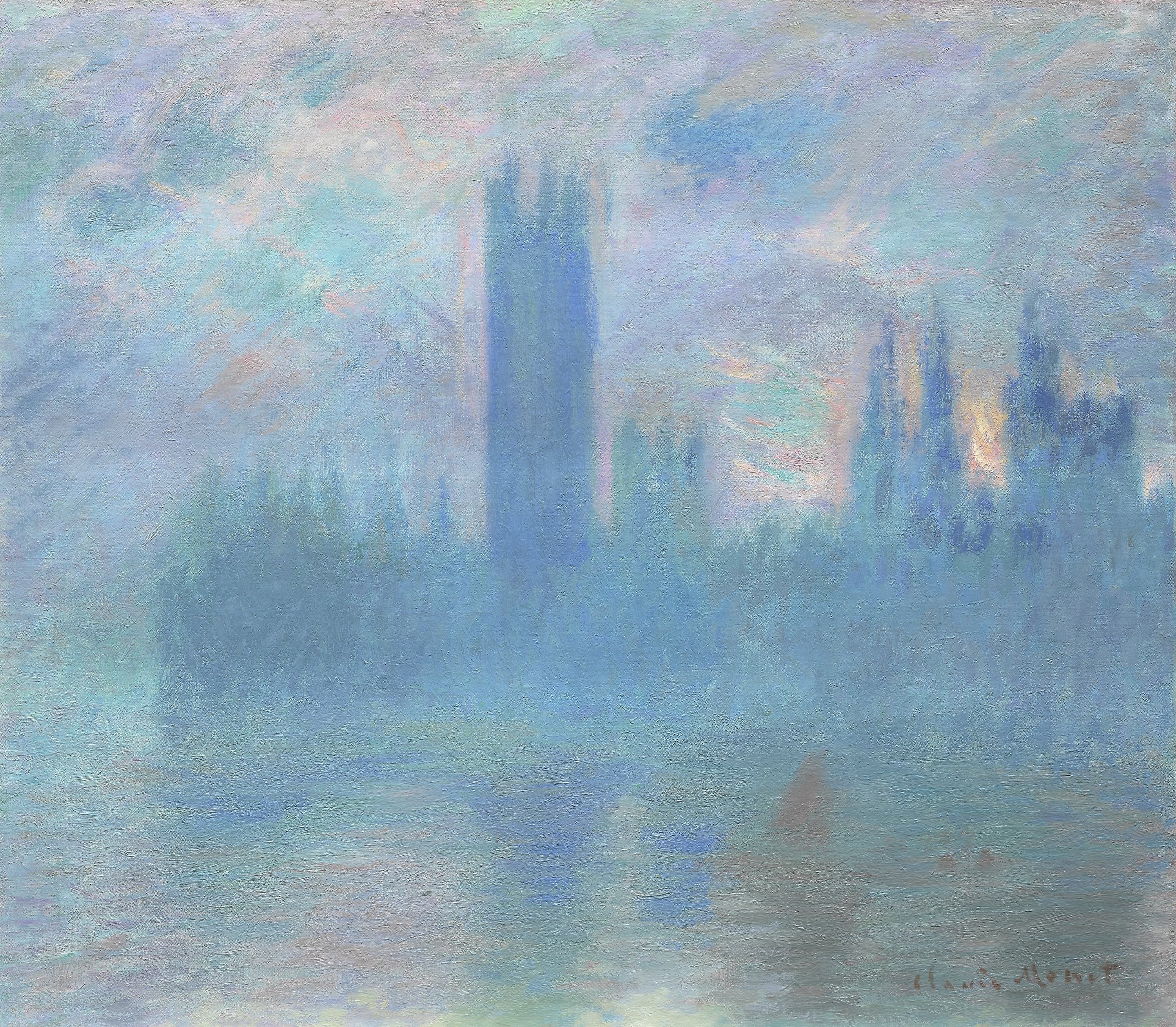
1.The tower is an interruption in fog
The tower is not modeled brick by brick; it is a vertical darkening inside mauve air. Its recognizable outline lets Monet withhold nearly every other fact. We identify the building precisely where the paint is least descriptive.
2.Fog is painted as color, not blankness
The haze is crowded with color: lilac against salmon, blue against dirty gold. Nothing is neutral. Monet makes reduced visibility more chromatic, not less, as though the fog were a screen catching every change in the light.
3.The Thames repeats the building vertically
Below the hard horizontal of the riverbank, strokes drop downward instead of spreading sideways. The water echoes the architecture as bands rather than shapes. The reflection is less an image of Parliament than a second register of the same color.
4.Thin pinnacles rise through the haze
Several narrow points rise above the blue-violet building on the right. Pale warm patches appear between them, making some edges easier to distinguish than others. The changing clarity keeps the roofline readable while allowing it to merge with the colored air.
5.A small boat gives the river a scale
A small brown form interrupts the blue and violet river, with a darker vertical trace beneath it. Its compact shape is unlike the building's broad reflections. The boat provides a modest foreground reference against the much larger, less clearly bounded architecture.
6.The sky contains strokes in several directions
Pale blue, pink, and cream strokes overlap above the building. Some run diagonally, and others gather in small cloudy patches. Without a hard architectural edge inside this passage, the visible changes are changes in paint color and direction, giving the haze an active surface.
Timeline
1900
Monet paints the Palace of Westminster from a terrace at St Thomas's Hospital during his London campaigns.
1916
Sold to Durand-Ruel in Paris on 10 October for 22,500 francs, and on to Martin A. Ryerson of Chicago on 18 December for $10,000.
1933
Enters the Art Institute of Chicago with the Ryerson collection.
Where to see it
Art Institute of Chicago
111 South Michigan Avenue, Chicago, IL 60603, United States
Displays and loans can change. Check whether this work is on view before making a special trip.
Plan your visit on the museum’s official website (opens in a new tab)Frequently asked questions
Where did Monet paint the Houses of Parliament from?
From a terrace at St Thomas's Hospital, on the south bank of the Thames directly opposite the Palace of Westminster.
How many London paintings did Monet make?
The London campaigns of 1899–1901 produced around a hundred canvases across three motifs: the Houses of Parliament, Charing Cross Bridge and Waterloo Bridge.
Was Monet influenced by Turner?
His viewpoint was close to the one Turner used for the 1834 Parliament fire paintings. But in handling dusk and mist he was working nearer to Whistler, whose Thames pictures were the more recent precedent.
Where is the painting now?
At the Art Institute of Chicago, in the Mr. and Mrs. Martin A. Ryerson Collection (accession number 1933.1164).
More by Claude Monet
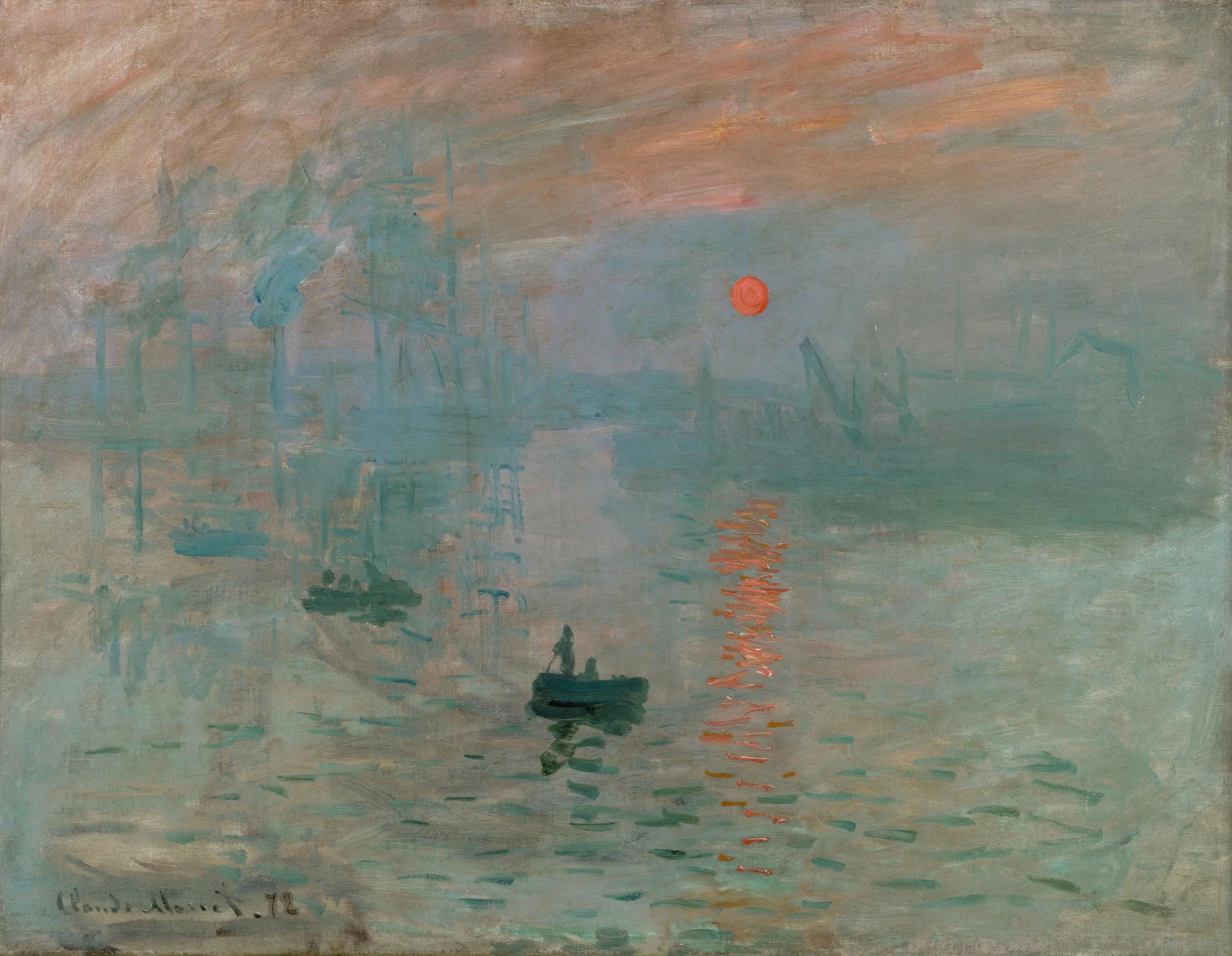
If you like Claude Monet
Explore painters from the same movements and circles.
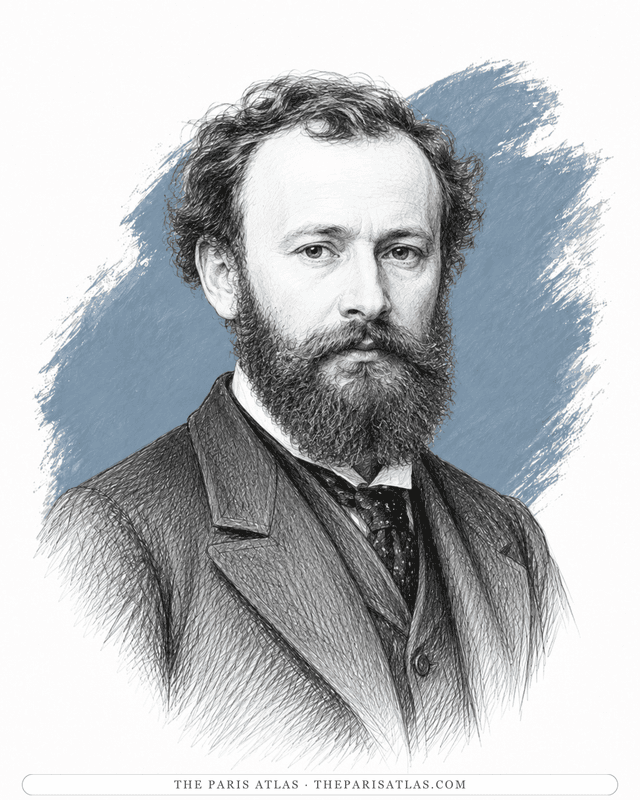
Édouard Manet
The admired elder of the independents — he painted beside Monet, befriended Morisot, and refused to show in all eight of the group's exhibitions.
View artist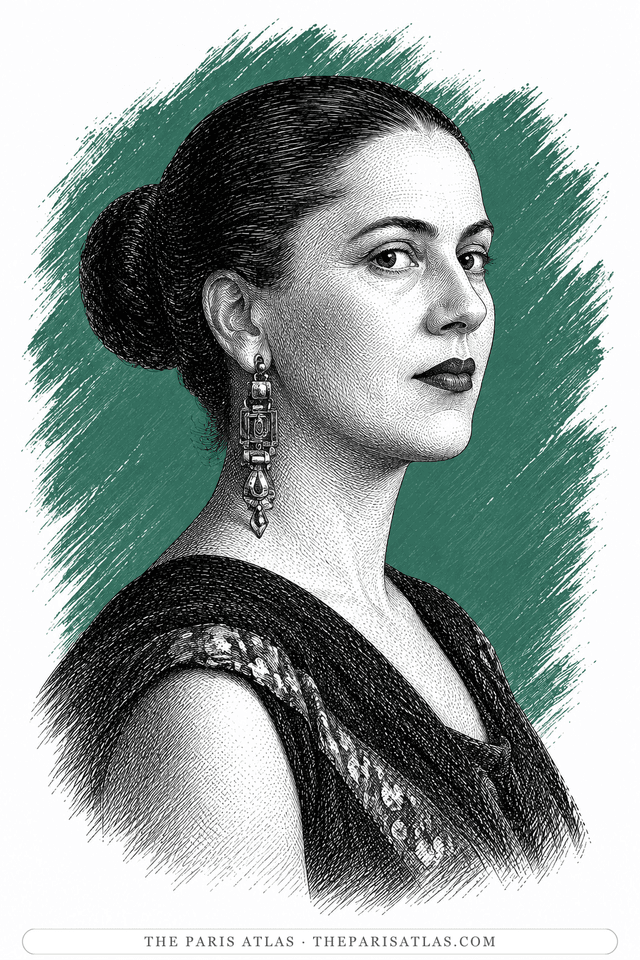
Tarsila do Amaral
Brazilian painter who spent the 1920s moving between São Paulo and Paris, studied Cubism under André Lhote, Albert Gleizes and Fernand Léger, and used what she learned to paint Brazilian towns, railways, plants and bodies. Her 1928 painting Abaporu prompted the manifesto that gave the Anthropophagic movement its name.
View artist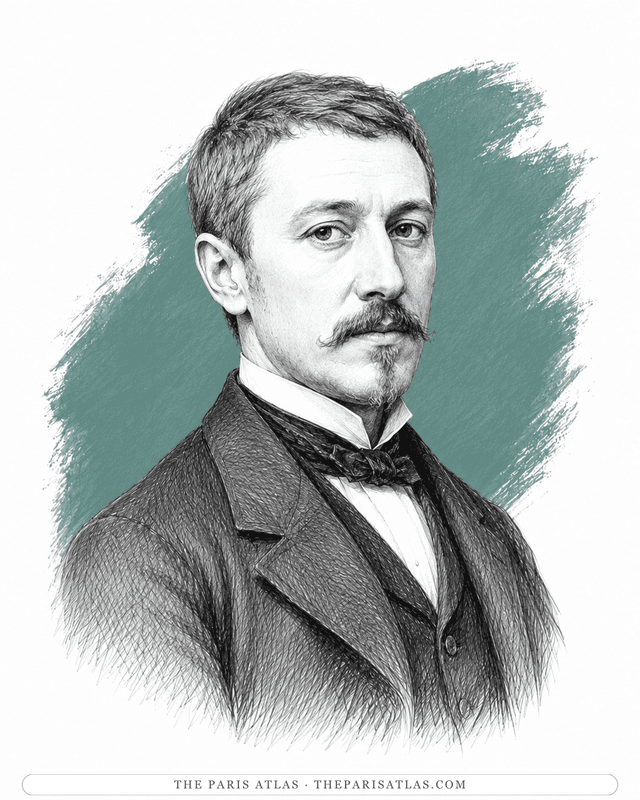
Gustave Caillebotte
Painter of Haussmann's geometry and the group's organizer-financier; his bequest of Impressionist paintings forced the French state to take the movement in.
View artist
References
The sources below include collection records, catalogues, scholarly research, and primary materials that informed this page. They document Houses of Parliament, London, its making, and its place in cultural history.


1Houses of Parliament, London — Art Institute of Chicago
WebsiteArt Institute of ChicagoUsed forWeb source consulted for documented facts and historical context presented on the Houses of Parliament, London page.
2Claude Monet (1840–1926) — The Metropolitan Museum of Art
WebsiteThe Metropolitan Museum of Art, 2004Used forWeb source consulted for documented facts and historical context presented on the Houses of Parliament, London page.
3Timeline — Maison et jardins de Claude Monet, Giverny
WebsiteFondation Claude MonetUsed forThe Fondation Claude Monet chronology places the London campaigns and their later completion at Giverny within Monet's career.
4Claude Monet — Musée Marmottan Monet
WebsiteMusée Marmottan MonetUsed forThe Musée Marmottan Monet collection provides independent museum context for Monet's mature serial paintings.
These references provide the documented foundation for this work's history and interpretation. Claim-level citations remain attached to the specific claims they support.
 Explore more resources