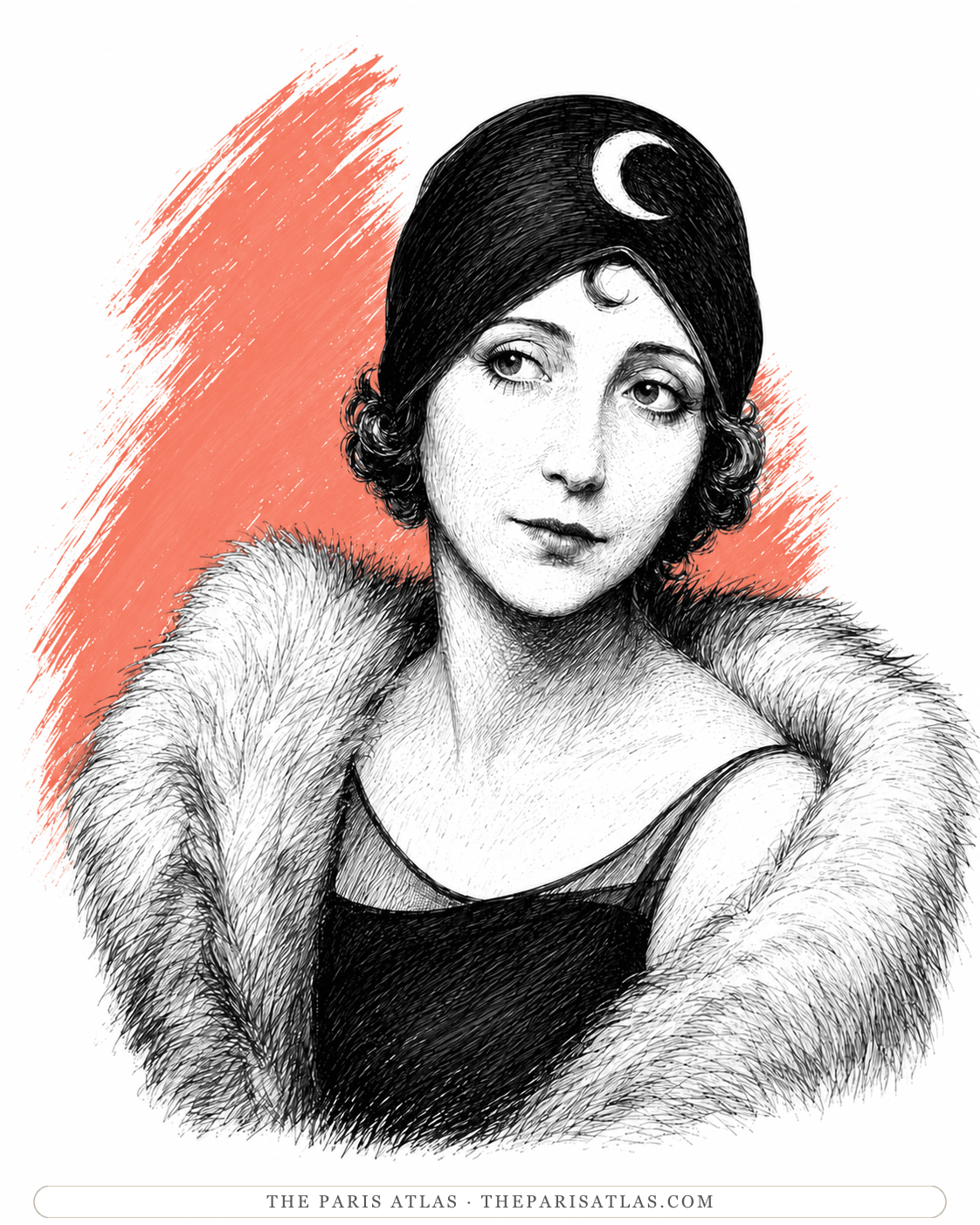


Fire
by Anaïs Nin
The third unexpurgated volume: New York with Rank, the return to Paris, and a private life running at full burn between two continents.
- 1995
About Anaïs Nin
The story, briefly
Spoiler-freeThe third 'Journal of Love' volume covers 1934 to 1937 — the years the published Diary's second volume rendered as the analyst experiment and the late Villa Seurat era, now restored to their full complication. Nin arrives in New York to work beside Otto Rank and the professional relationship is nothing like the whole story; back in Paris, the life with Henry Miller resumes while new attachments multiply, and the diary tracks the arithmetic of a heart running several accounts at once. Published in 1995. (A diary — the closing pages wait behind the reveal.)
The story, in more detail
The unexpurgated project's third volume is the one where the double-entry bookkeeping of Nin's life becomes the explicit subject. The published Diary showed the New York analysis experiment and the return to the Villa Seurat; the journal shows what the editing removed — Rank as lover as well as mentor, the crossings and recrossings of the Atlantic driven by entanglements as much as work, and the habit, now fully formed, of maintaining separate emotional worlds that must never meet.
It is also, like the whole series, a portrait of the era with the varnish off: Miller at work on the books that would make him famous, the Villa Seurat circle in full production, the political weather darkening toward Spain, and Nin financing, managing, and recording all of it while conducting the private life the title names. The volume's fire is literal appetite and the cost of it; the diary counts both.
The full story
1934–1937, uncut: New York with Rank, the analyst's chair and the hotel rooms the published version omitted; the decision that the couch was consuming the writer and the return to France; the Villa Seurat years with Miller at their center and the little imprints publishing what commerce would not; new attachments — among them the Peruvian Gonzalo Moré, entering the diary's life — and the beginnings of the houseboat era; and the ledger of it all, kept nightly by a diarist watching herself sustain more lives than one person's hours should hold.
How it ends — spoilers ahead
The volume closes in 1937 with the pattern set that the next volume will inherit: Miller established, Moré central, the marriage holding its impossible frame, and Europe's weather turning. There is no single curtain — the fire of the title simply banks, with every account still open, and Nearer the Moon picks up the ledger in the last Paris years.
Themes and analysis
Between two continents
Fire begins by making night, rather than morning, the sign of a beginning. Nin's arrival in New York unfolds between a man's insistent shipboard endearments and the welcome she anticipates from Rank. Her attention moves away from one voice toward the lights and the imagined other. The city's height and brilliance become extensions of expectation, and later it seems like a toy the lovers can handle. This is a landscape organized by desire: the arrival describes a changing relationship to the world, not merely a change of address.
The record kept apart
On January 7, Nin distinguishes the feelings preserved in her diary from the lies she tells others. The January 26 false-address episode tests that distinction. As Henry waits outside for a promised light signal, her account moves between pity, fear, improvisation and laughter. Recording those incompatible responses makes the scene more troubling than a simple confession followed by resolution. Emotional candor does not cancel the consequences of the invented story. The private record exposes a division between what she feels and what her actions lead another person to believe.
Why we recommend it
The middle panel
Between Incest's darkness and the war's arrival, the series' most sustained portrait of appetite in motion.
The Villa Seurat, uncut
The circle's high years with the private machinery visible — patronage, love, and publishing tangled as they actually were.
The comparison reading
Set against the published Diary's 1934–1939 volume, a master class in what editing conceals.
What this book explores
Timeline
1934–1935
New York with Rank — the experiment the published Diary printed at half its actual complication.
1935–1937
Paris again: the Villa Seurat at full production, Moré entering, the parallel lives multiplying.
1995
Harcourt publishes the unexpurgated text.
Book editions
Hardcover
- Hardcover
- Harcourt Brace
- 1995
Paperback
- Paperback
- Harvest
Reader reviews
Readers may also like


Fire: frequently asked questions
What years does Fire cover?
1934 to 1937 — the New York period with Otto Rank and the return to the Villa Seurat years in Paris, restored from the unexpurgated journal.
When was it published?
1995, by Harcourt Brace — the third volume of the posthumous 'Journal of Love' series.
How does it differ from the published Diary's account?
The 1967 second volume presented these years with the private life largely removed. Fire restores it — most consequentially the full character of the relationship with Rank and the web of attachments the crossings actually served.
Who is Gonzalo Moré?
The Peruvian revolutionary and musician who enters Nin's life in these pages — central to the houseboat years ahead and later her partner in the Gemor Press.
Where does the series go next?
Nearer the Moon (1937–1939), the last prewar Paris volume.
If you like Anaïs Nin
Explore authors with a similar voice, perspective, and influence.
Henry Miller
The entangled careers of the Villa Seurat: she financed and prefaced his scandal, he detonated her prose — and each wrote the other into the century's record.
View author
Louis-Ferdinand Céline
The doctor of the Paris slums who wrote the century's blackest, funniest novel — and changed the sound of French prose.
View author
Martha Gellhorn
War correspondent who covered the Spanish Civil War, D-Day, and conflicts across five more decades; Hemingway's third wife, 1940–1945.
View author
References
References
The sources below include the primary text, editions, scholarship, archival materials, and other records that informed this page. They document Fire, its publication, and its place in literary history.


1Fire
NovelAnaïs Nin, 1995Used forThe primary text represented by this page, used for descriptions of the work’s contents and for any quoted passages shown here.
2Anaïs Nin — biography
WebsiteThe Anaïs Nin FoundationUsed forUsed to place Fire within Anaïs Nin's published work and verify its bibliographic context.

3Anaïs Nin Papers — diary, March–September 1938
ArchiveUCLA Library Special CollectionsUsed forUsed for independent biographical, archival, or historical context surrounding Anaïs Nin's career and the period in which Fire appeared.
4Anaïs Nin: A Biography
BiographyG. P. Putnam's Sons, 1995Used forUsed to cross-check authorship, chronology, and the work's place in Anaïs Nin's wider catalogue.
5Anaïs: The Erotic Life of Anaïs Nin
BiographyLittle, Brown, 1993Used forUsed to verify Anaïs Nin's bibliography and place Fire within the broader chronology of Anaïs Nin's career.
6Fire — opening diary preview
WebsiteHoughton Mifflin Harcourt / Everand, 1995Used forPublic preview: December 1934 and January 7 and 26, 1935 entries, read with the surrounding opening and Pole's preface. The excerpt ends within January 26; no full-volume or manuscript collation is claimed.
i
Why these sources are here
The primary text is the baseline reference for every book page. Additional references document publication history, interpretation, and historical context where that evidence is available.
 Explore more resources