
Setting of the story
Giovanni's Room
David crosses it at dawn with Giovanni on the way to the oysters, walks it all spring, and looks down into it the night death first seems real. Giovanni is caught in a barge tied up along it.
The river through Paris, and the thread that runs the length of Giovanni's Room: the crossing at dawn, the men sleeping under the bridges, and the barge where Giovanni is caught.
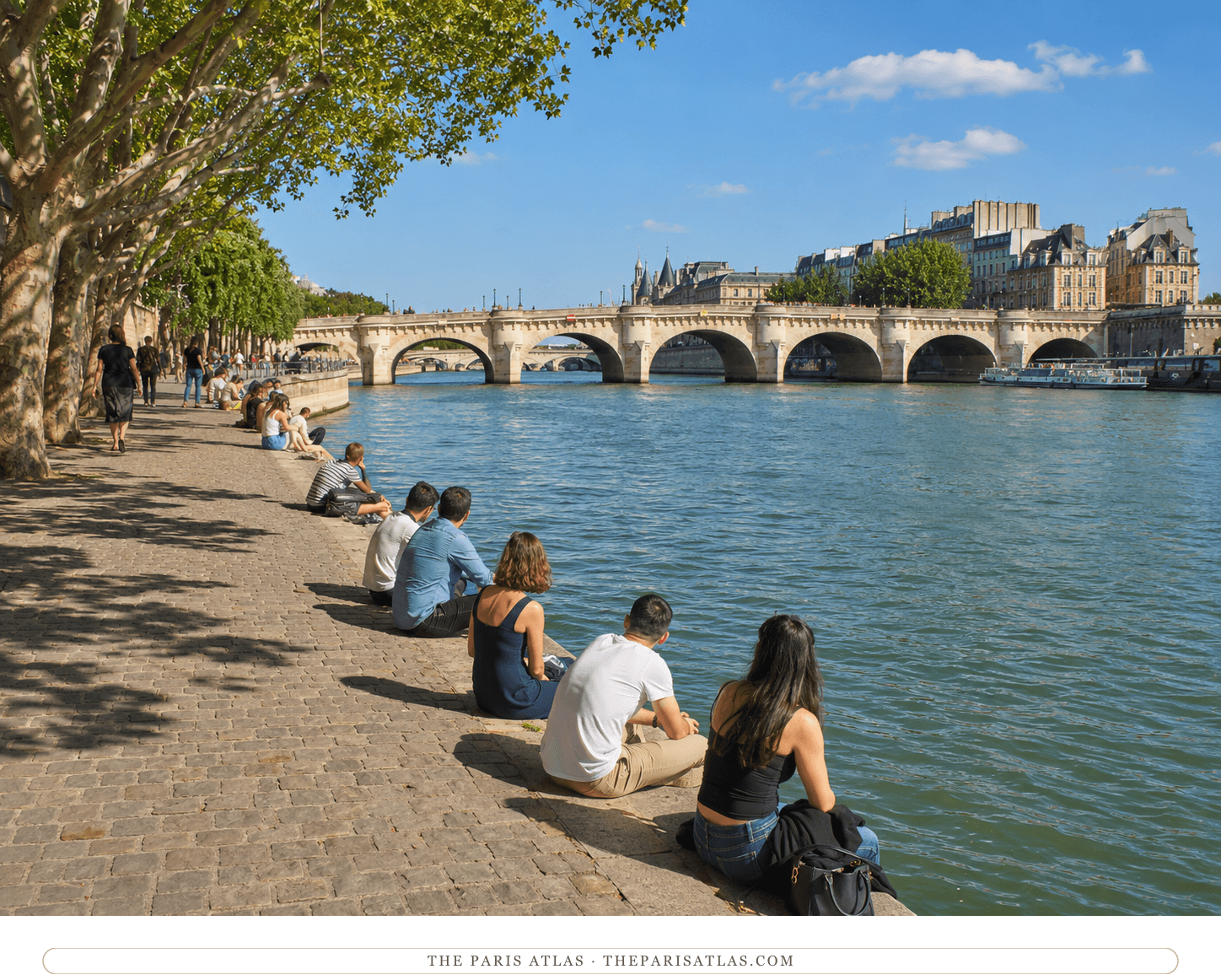
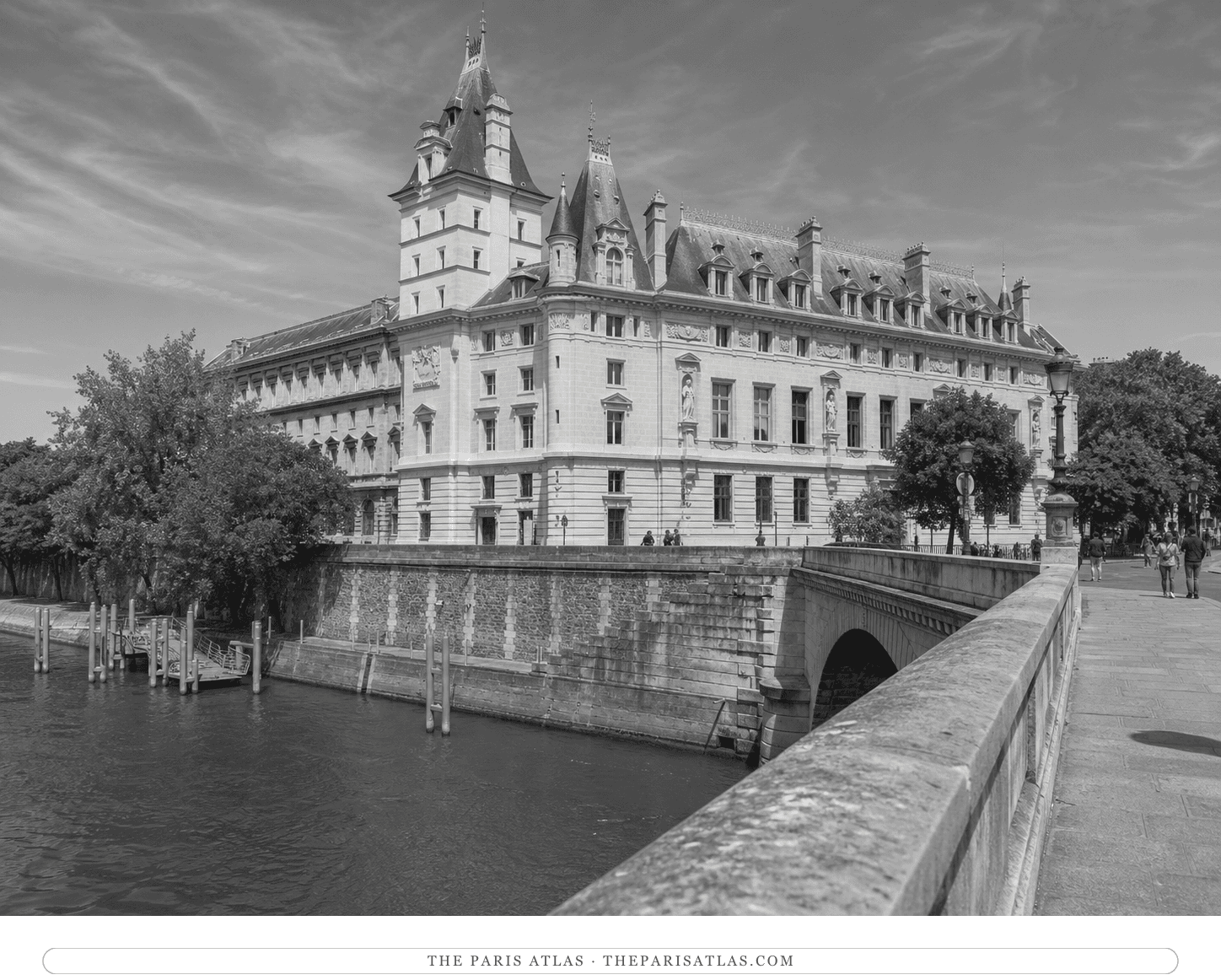
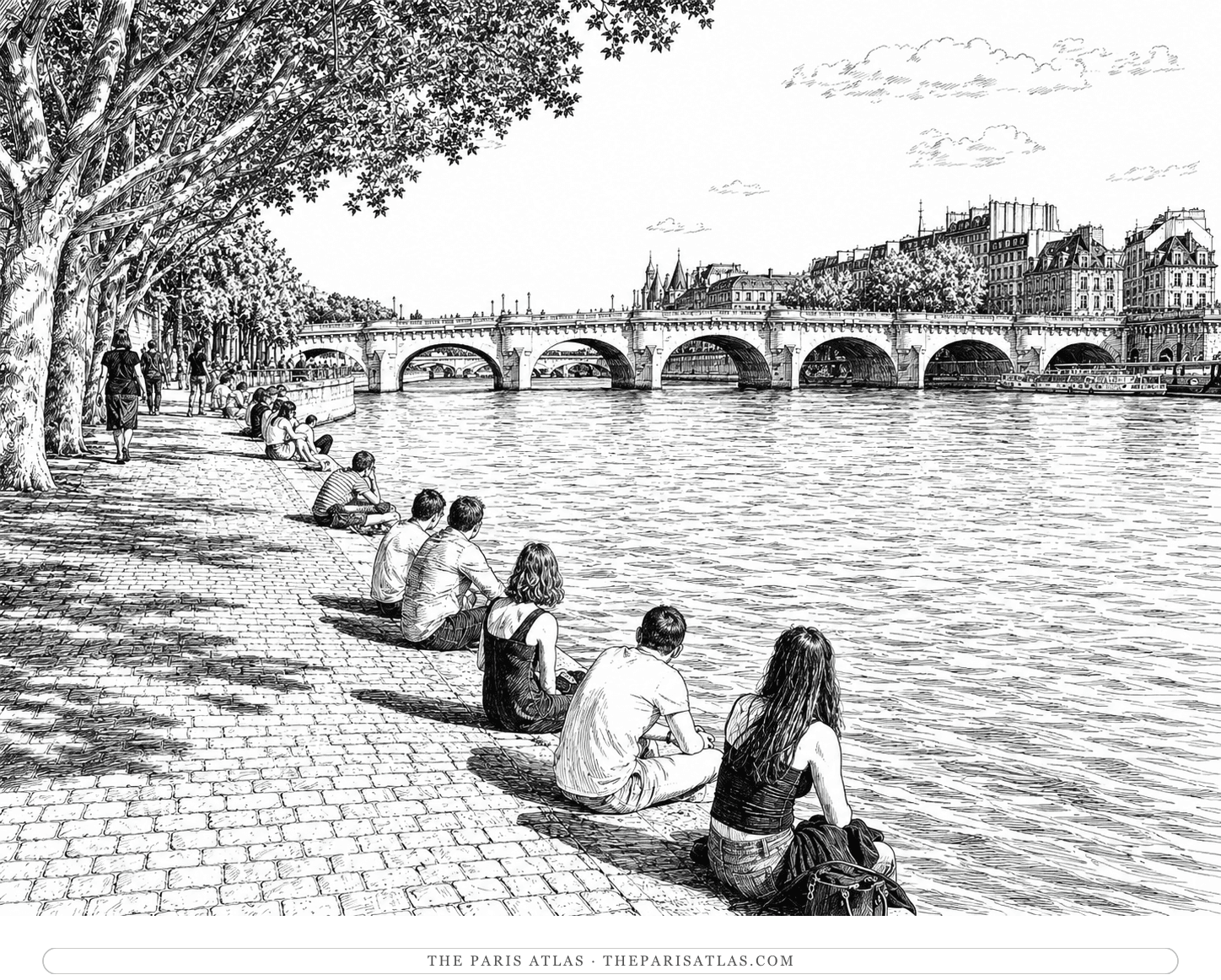
The Seine is the reason Paris exists. The city began on an island in it, and every arrondissement number in Paris still spirals out from that island. It runs 777 kilometres from Burgundy to the Channel and about thirteen of them through the city, under thirty-seven bridges, between stone quais that were built to stop it flooding and are now mostly used for walking.
In Giovanni's Room it is the book's most persistent piece of geography. Baldwin uses the name Seine only three times. He writes river thirty-two. David crosses it, walks along it, looks down into it, and thinks about going into it, and the river is doing something different each time.[1]
The first crossing is the good one. David and Giovanni are in a cab at dawn, going to Les Halles for oysters, and Giovanni looks out at the water and says that this old whore, Paris, as she turns in bed, is very moving. What David sees is exact and unhurried: the river swollen and yellow, nothing moving on it, barges tied up along the banks, the island widening away from them under the weight of the cathedral. It is the last completely happy passage in the novel.[1]
In the same paragraph the mist over the river is hiding the alleys and hanging like a curse on the men who slept beneath the bridges, and one of them goes past below, black and alone. Giovanni asks David whether he has ever slept under a bridge, or whether perhaps they have soft beds with warm blankets under the bridges in his country. It reads as a joke about being poor. It is not. When Giovanni loses his job and then his room and the police are looking for him, the bridges are where David imagines him, frightened and cold and not knowing where to go.
Through the spring the river is where the two of them walk home. Baldwin gives that stretch to an older David, remembering: walking up and down this house tonight, I see again the river, the cobblestoned quais, the bridges, and the low boats going under them with washing hung out to dry. The fishermen come back as the water drops. The bookstalls on the quais open up. Then the season turns, the fishermen disappear, the banks go clear, the colours on the river fade and the river begins to rise.[1]
The turn is where the river stops being scenery. Walking home alone one evening, David thinks for the first time about death as something real, and what he thinks about is specific: the people before him who had looked down at the river and gone to sleep beneath it. He wonders how they had done it, the physical act. Below him, along the bank and under the bridges, he can almost hear the lovers and the ruins.[1]
By then he has already frightened someone. When David vanishes for days, Jacques finds Giovanni convinced he is dead — he thought we should drag the river for you, Jacques says, but I assured him that you had not drowned yourself.
The river closes the book. Giovanni, wanted for Guillaume's murder, is caught early one morning in a barge tied up along the river. The newspapers had put him in Argentina. It was a great shock, David says, to discover that he had got no farther than the Seine, and that this lack of dash did nothing to endear him to the public. He is executed for it.[1]
So the water that carried the novel's happiest morning is also the width Giovanni could not get across. Baldwin does not explain the pattern and does not need to. He simply keeps putting the river there.
Giovanni's Room is published. The river runs through the novel from the dawn crossing to Giovanni's arrest on a barge.
The banks of the Seine through central Paris are inscribed as a UNESCO World Heritage site.
Setting of the story
David crosses it at dawn with Giovanni on the way to the oysters, walks it all spring, and looks down into it the night death first seems real. Giovanni is caught in a barge tied up along it.
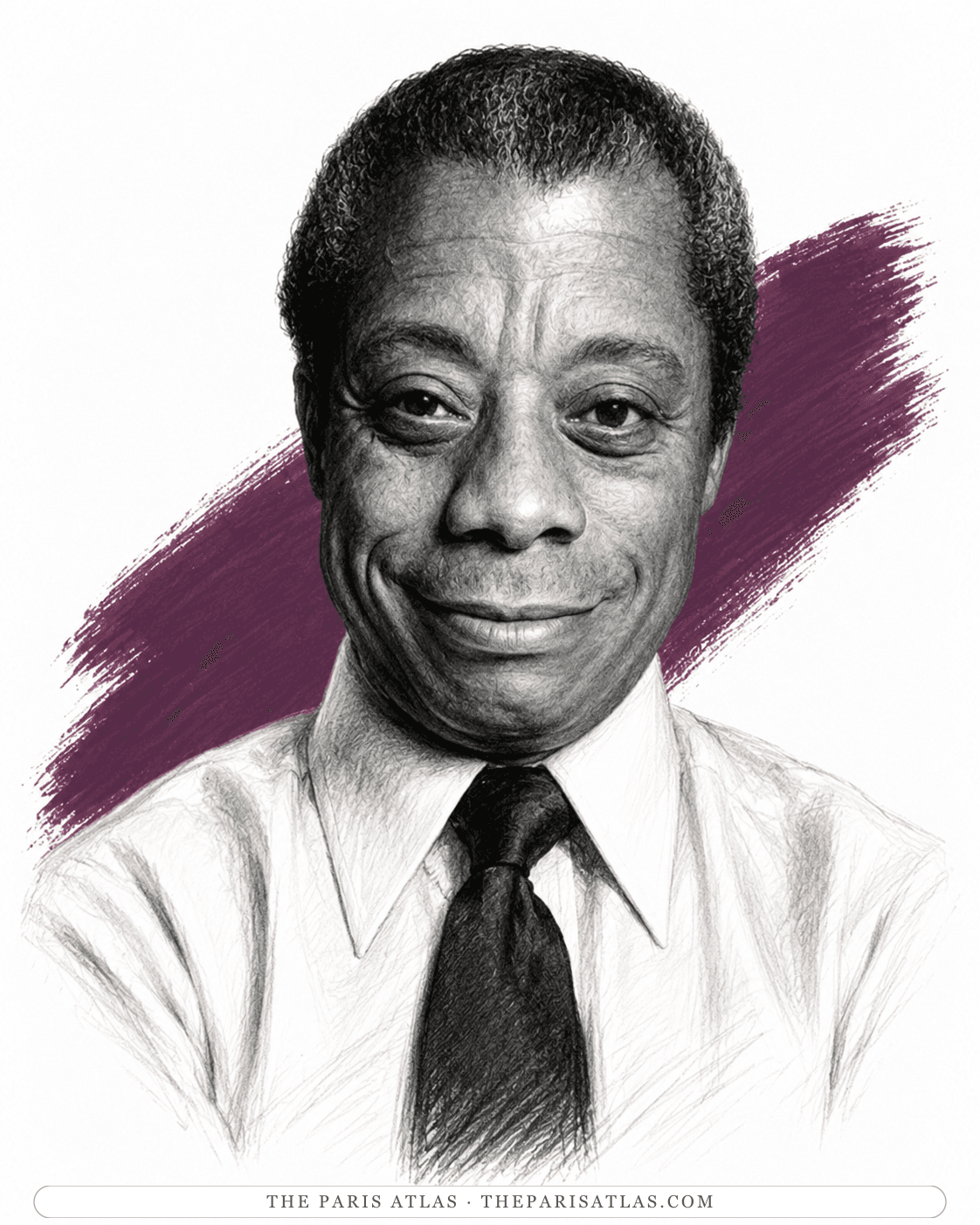
James Baldwin wrote about The Seine in Giovanni's Room.
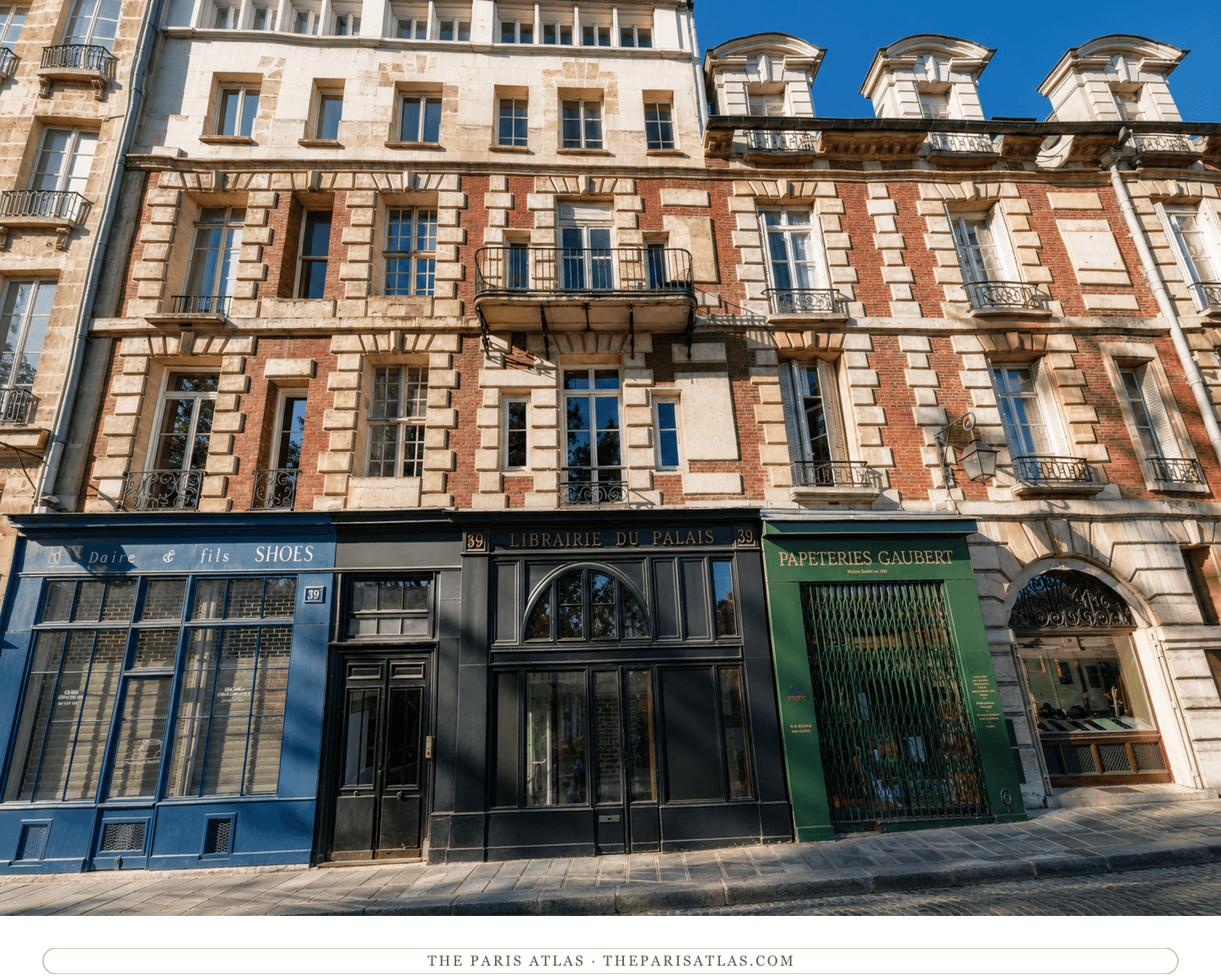
Daniel Halévy's literary salon on the Île de la Cité, where D. H. Lawrence went to a tea in March 1929 and met François Mauriac. It produced the only line about Paris that anyone quotes him on.
Visit the place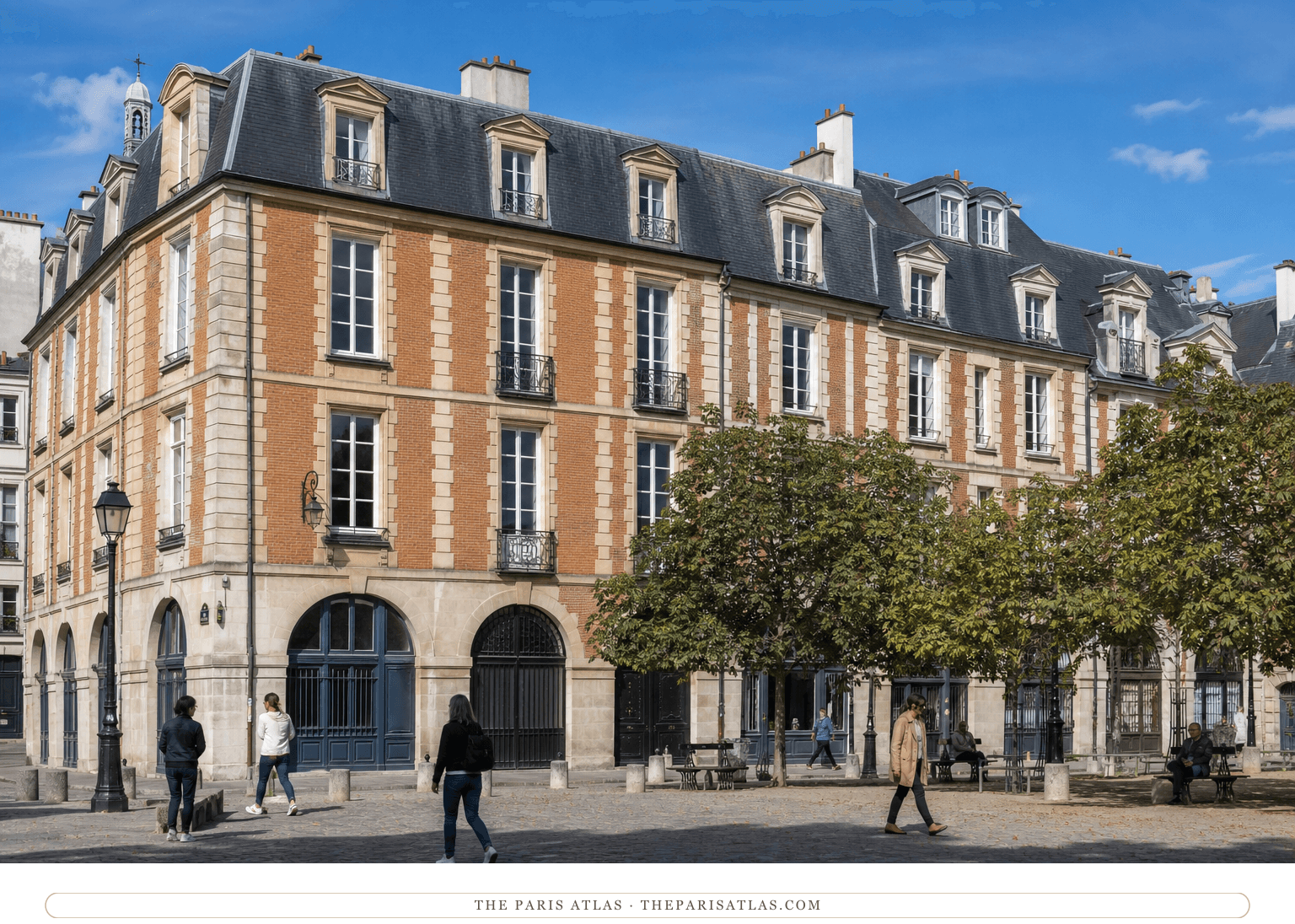
The apartment on the Île de la Cité from which Camille Pissarro painted twenty-six canvases between October 1901 and May 1902 — the Seine, the Pont Neuf, the Louvre and the statue of Henri IV, all from one set of windows.
Visit the place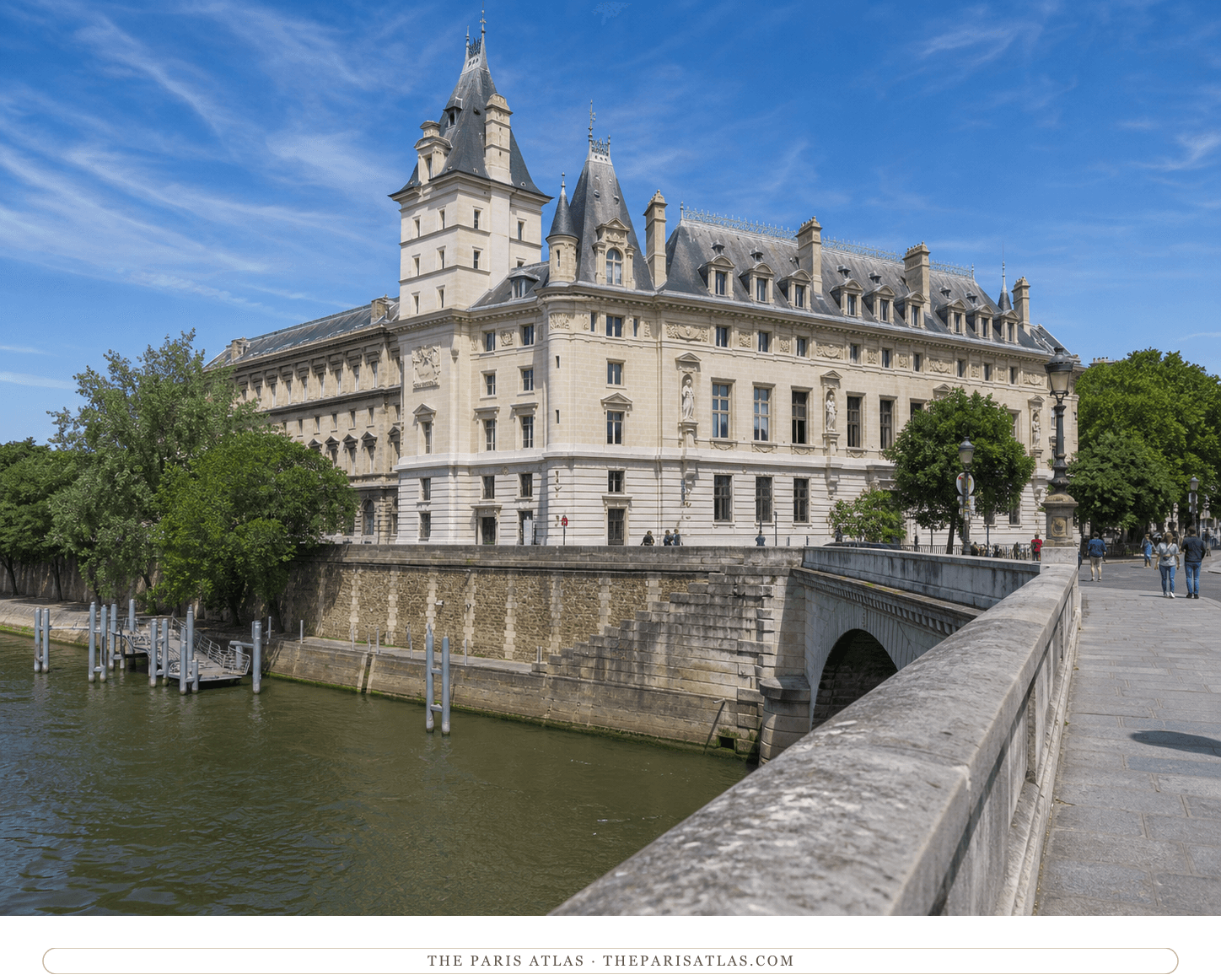
The informal life-drawing studio on the quai des Orfèvres where anyone could pay to draw from the model without an examination — and where Camille Pissarro met Paul Cézanne around 1861.
Visit the place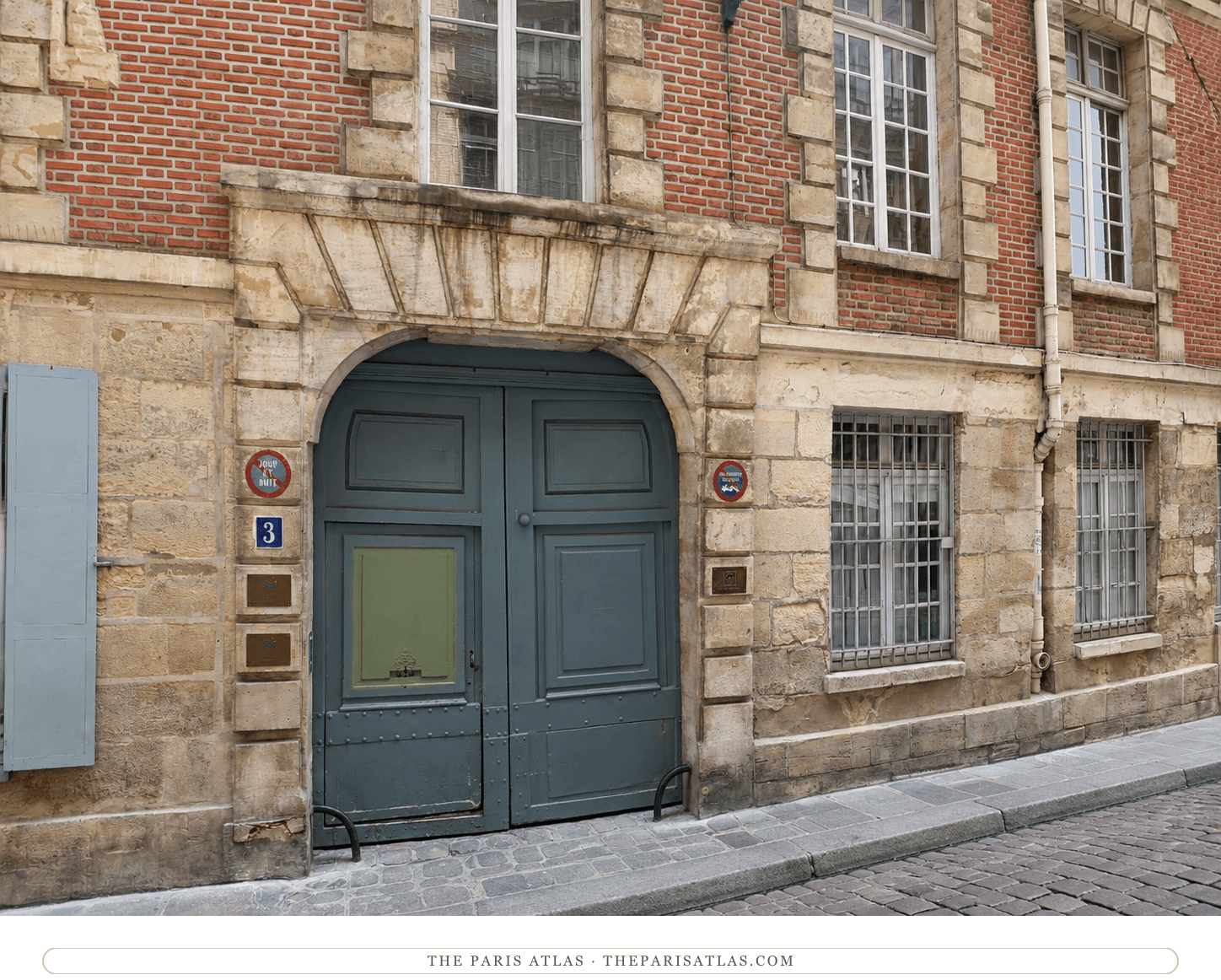
Robert and Sonia Delaunay's apartment and studio from 1910 to 1935 — where La Prose du Transsibérien took its colors, and whose key Blaise Cendrars held while the couple waited out the First World War abroad.
Visit the placeThe sources below include histories, archival materials, scholarly research, and official records that informed this page. They document The Seine, the people connected to it, and its place in Paris.


Web source consulted for documented facts and historical context presented on the The Seine page.
Web source consulted for documented facts and historical context presented on the The Seine page.

Published analysis and historical context used in preparing the The Seine page.
These references provide the documented foundation for this page's history and context. Claim-level citations remain attached to the specific claims they support.
 Explore more resources
Newsletter
The cafés, studios, and walk-up flats where the work was made — one story from the map in every letter.