
The Prose of the Trans-Siberian and of Little Jeanne of France
Cendrars and Sonia Delaunay developed the simultaneous book in the Delaunays' apartment-studio, joining his poem to her painted fields of color.
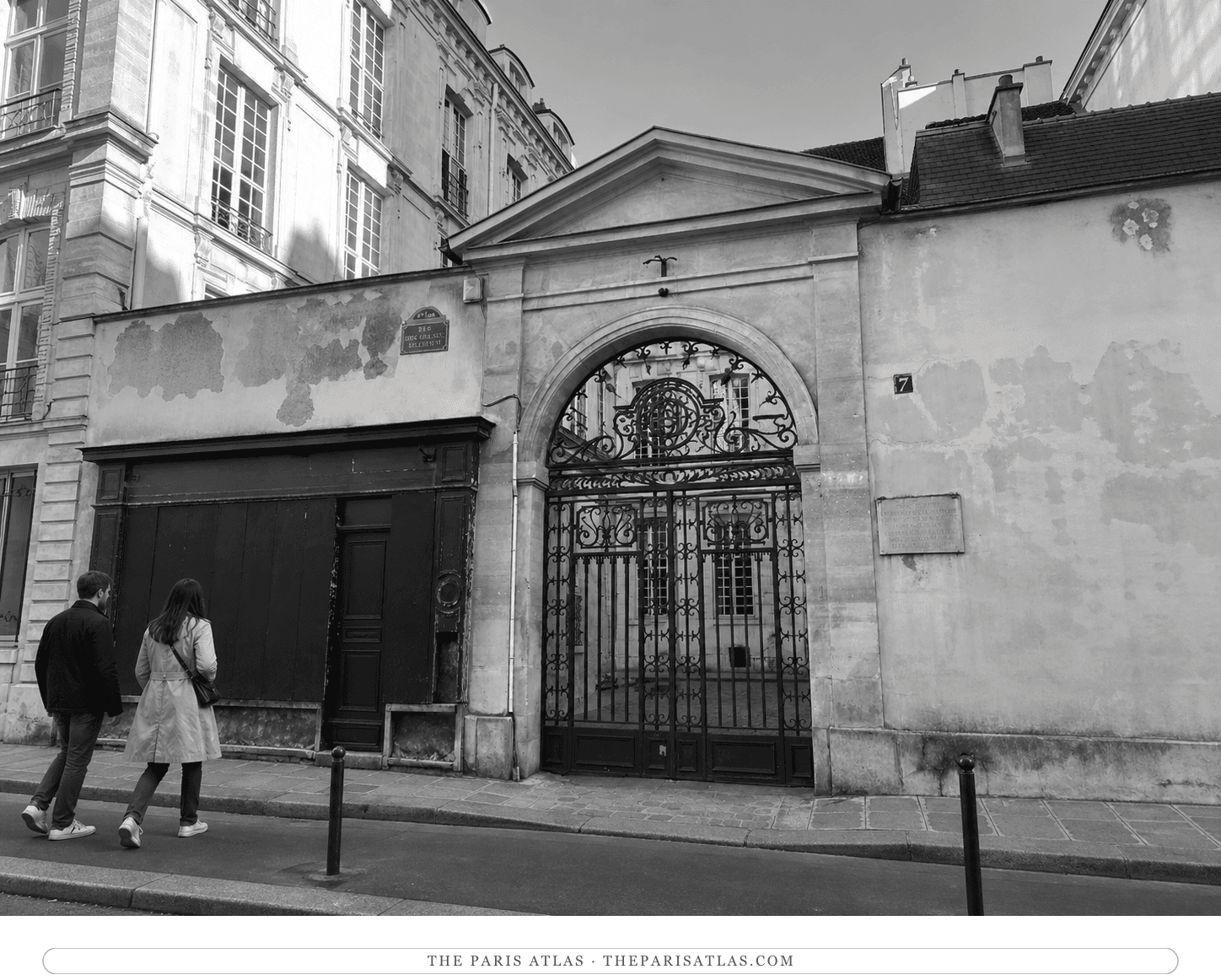
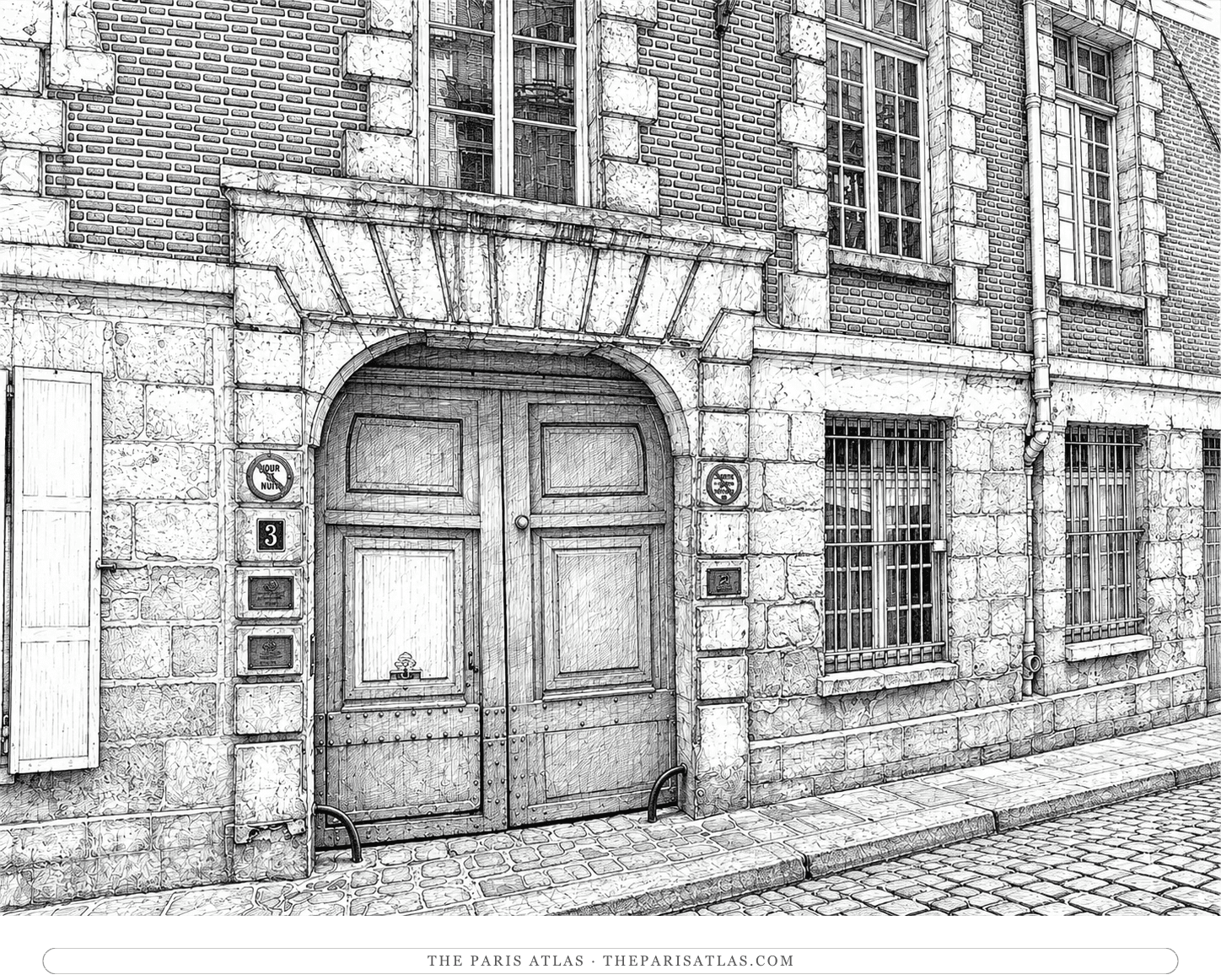
Robert and Sonia Delaunay's apartment and studio from 1910 to 1935 — where La Prose du Transsibérien took its colors, and whose key Blaise Cendrars held while the couple waited out the First World War abroad.
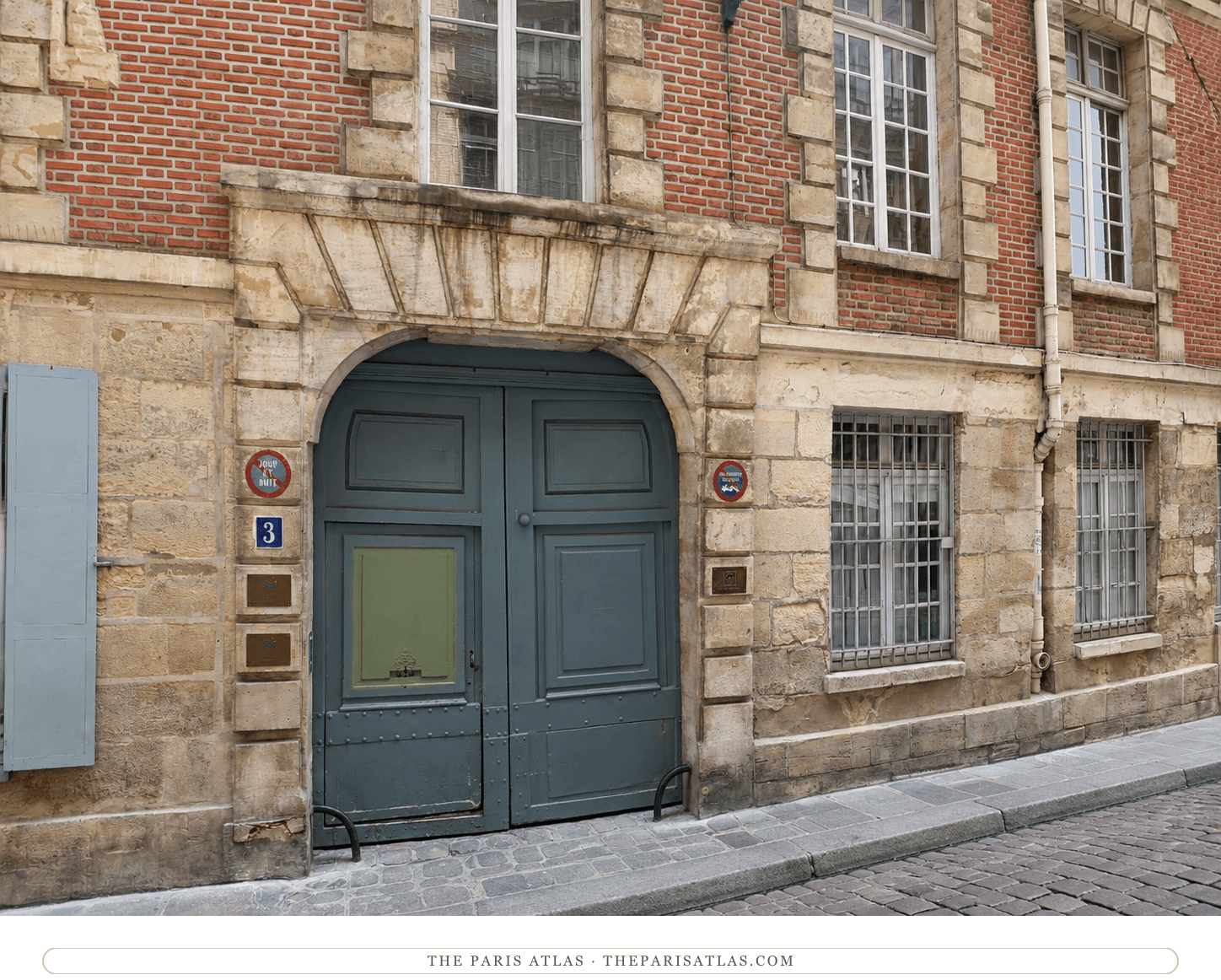
When the painters Robert and Sonia Delaunay married in 1910, they established their home and studio at 3 rue des Grands-Augustins, on a narrow Left Bank street only a few steps from the Seine. They would retain the studio until 1935. It became both a family apartment and a working center for the experiments in color, abstraction and "simultaneity" that made the Delaunays central figures of the Paris avant-garde.[1]
Their son Charles Delaunay was born in 1911. For his cradle, Sonia Delaunay made a patchwork quilt from brightly colored pieces of fabric, juxtaposing blocks of color in a mosaic arrangement that is considered her first abstract composition. At rue des Grands-Augustins she extended those experiments into paintings, bookbindings, textiles, clothing and decorated objects, while Robert Delaunay developed his own theories of simultaneous color contrast.[1]
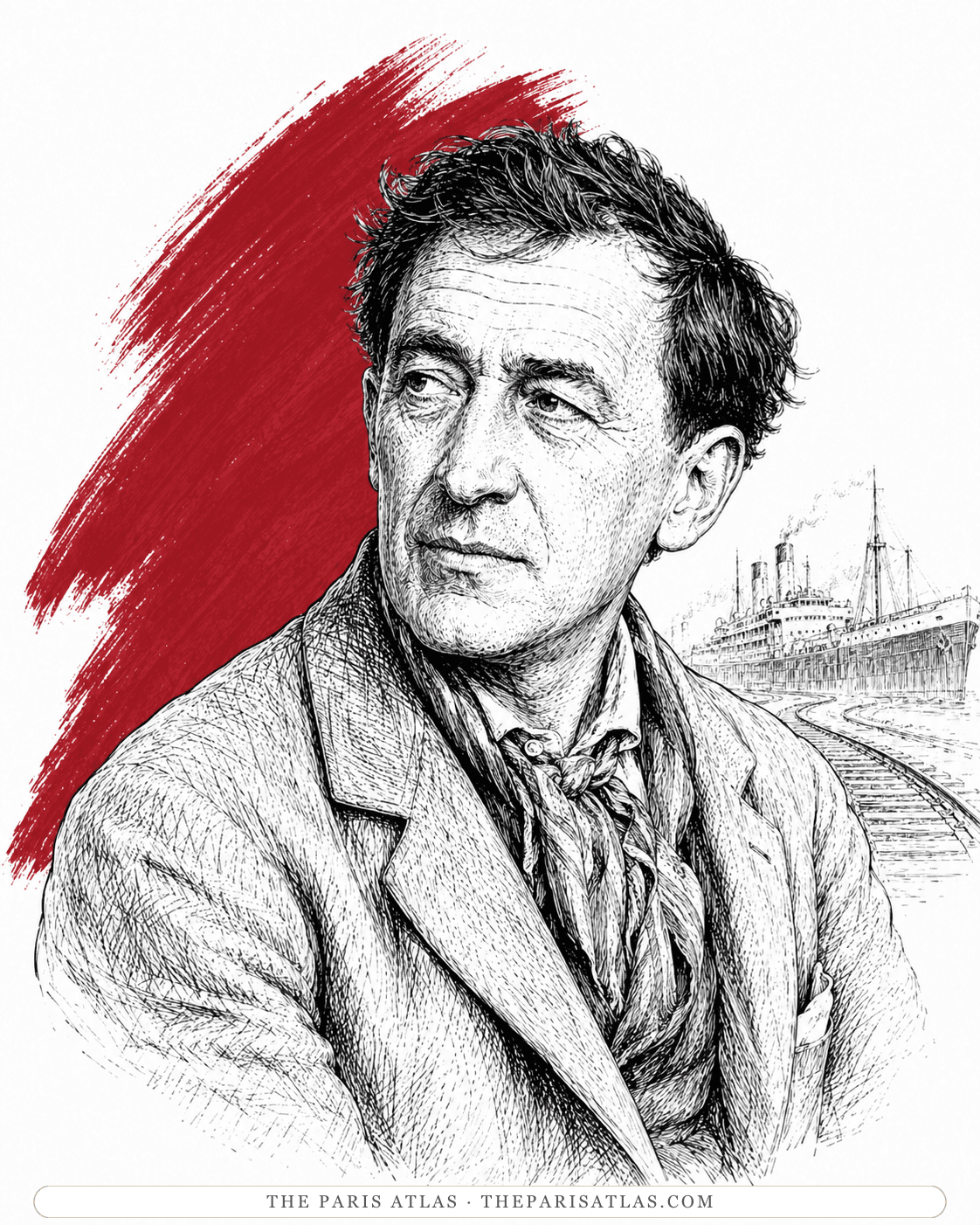
The apartment quickly became part of the social geography of the prewar avant-garde. Guillaume Apollinaire stayed with the Delaunays in November and December 1912. The following January, through Apollinaire's circle, the Delaunays met the still little-known Blaise Cendrars. Sonia Delaunay later remembered him as a frail, pale young man; the fact that both she and Cendrars spoke Russian helped create an immediate connection.[2]
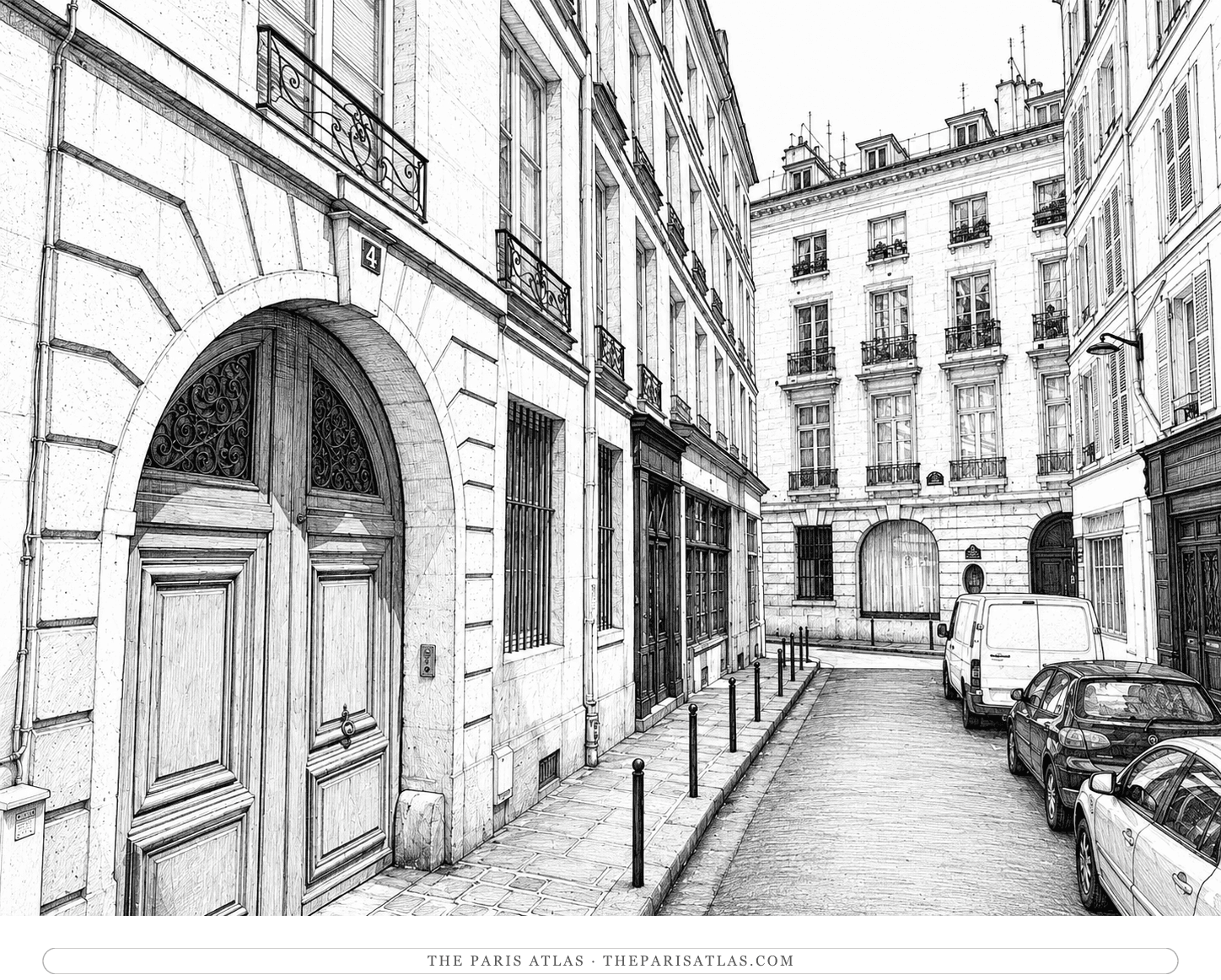
Cendrars's own attic at 4 rue de Savoie was just around the corner. He soon became a regular presence in the Delaunays' world. The first collaboration came almost immediately: Cendrars gave Sonia Delaunay a copy of his recently published Easter in New York, and she created a striking handmade binding from leather, paper and fabric arranged in geometric forms. Soon afterward he brought her the poem that would become La Prose du Transsibérien et de la petite Jehanne de France.
The work they developed in 1913 was neither a conventional illustrated poem nor an ordinary book. When unfolded, La Prose du Transsibérien extends to almost two meters — the Metropolitan Museum of Art's copy measures 199.4 by 35.2 centimeters. Cendrars's poem runs beside Sonia Delaunay's bands, arcs and pools of intense color on a long sheet folded accordion-style. In a declaration published in Paris-Journal in October 1913, the authors insisted the point was simultaneity, not illustration: the color contrasts and the text were to form depths and movements together.[3]
The text itself races between memory and imagination — Moscow, Siberia, war, trains, Paris and the young Jehanne of the title — while the color moves alongside it rather than depicting individual scenes. At the bottom, the composition arrives at a red Eiffel Tower, linking Cendrars's journey back to Paris and to one of Robert Delaunay's great recurring subjects. Even the typography was part of the experiment: the poem contains 445 lines printed in twelve different typefaces, and the colors were applied by pochoir and watercolor. Folded, the work is scarcely larger than a small book; opened, it becomes something closer to a vertical painting that can be taken in all at once.[4]
Cendrars and Delaunay called it the "first simultaneous book." The claim provoked a dispute almost immediately over who had invented literary "simultaneity" — the poet Henri-Martin Barzun contested their priority — and Guillaume Apollinaire eventually entered the argument, describing La Prose in Les Soirées de Paris in 1914 as a first attempt at simultaneous writing.[5]
They planned an edition of 150 copies, with a piece of avant-garde showmanship attached to the number: if all 150 copies were unfolded and laid end to end, their combined height was intended to approximate that of the Eiffel Tower. Only around sixty copies were completed, but the idea perfectly joined the book's physical form to the modern Paris celebrated by Cendrars and the Delaunays. The work traveled quickly beyond the apartment: Sonia Delaunay's composition for La Prose was shown at Berlin's Erster Deutscher Herbstsalon in the autumn of 1913.[3]
Then the First World War scattered the circle. Robert and Sonia Delaunay were in Spain when war began and spent the conflict in Spain and Portugal, remaining away from Paris even after the fighting ended. Cendrars, meanwhile, volunteered for the French forces and lost his right arm in Champagne in September 1915. Yet his relationship with the Delaunays continued across the separation.[1]
The most tangible evidence of that friendship is a key. Cendrars remained in correspondence with Robert and Sonia Delaunay throughout their wartime absence, and he held the key to their studio at 3 rue des Grands-Augustins. The art historian Christopher Green records the detail in his study of Cendrars's postwar collaboration with Fernand Léger; Sonia Delaunay herself later confirmed it to him. As late as 1919, when the Delaunays still had not returned to Paris, Cendrars retained access to the studio.
It is a small fact, but an unusually revealing one. Cendrars had his own room around the corner, yet the Delaunays trusted him with the physical key to their Paris home and workplace while they were abroad.
The Delaunays eventually returned and continued to keep the rue des Grands-Augustins studio until 1935. Today the address remains in private use. A business registered as Studio des Grands Augustins operates at number 3, but there is no Delaunay or Cendrars museum to visit. Farther along the same street stands another, much more famous artists' studio: 7 rue des Grands-Augustins, where Pablo Picasso installed his studio in 1937 and painted Guernica.[6]
But number 3 preserves an earlier chapter in the history of modern art. Here, poetry and painting ceased to behave like separate things. A poem became nearly two meters tall, typography became part of its rhythm, color was freed from the obligation to illustrate the words beside it, and a friendship between a poet and a painter produced one of the strangest books of the twentieth century.
Sonia and Robert Delaunay marry and establish their apartment and studio at 3 rue des Grands-Augustins.
Their son Charles is born. Sonia makes his patchwork cradle quilt, an early experiment in juxtaposed color that is considered her first abstract composition.
Guillaume Apollinaire stays with the Delaunays at rue des Grands-Augustins in November and December.
In January, Cendrars meets Robert and Sonia Delaunay through Apollinaire. He and Sonia quickly form a friendship, and she creates a handmade binding for his Les Pâques.
Cendrars and Sonia Delaunay develop the long folding "simultaneous" book combining his poem with her abstract color. La Prose du Transsibérien et de la petite Jehanne de France is published by Cendrars's Éditions des Hommes nouveaux.
Sonia Delaunay's composition for La Prose is presented at the Erster Deutscher Herbstsalon in Berlin, which runs from September to December.
The Delaunays remain outside France during the war, in Spain and Portugal, and are still away from Paris in 1919. Cendrars stays in correspondence with them and holds the key to their studio.
The Delaunays' long association with the studio at 3 rue des Grands-Augustins comes to an end.
Cendrars and Sonia Delaunay developed the simultaneous book in the Delaunays' apartment-studio, joining his poem to her painted fields of color.
Frequented by · 1913
The Delaunays' apartment-studio, where La Prose du Transsibérien was made with Sonia Delaunay in 1913. Christopher Green's Metropolitan Museum essay records that Cendrars held the key to the studio while the couple sat out the First World War abroad — a detail Sonia Delaunay confirmed to Green directly.
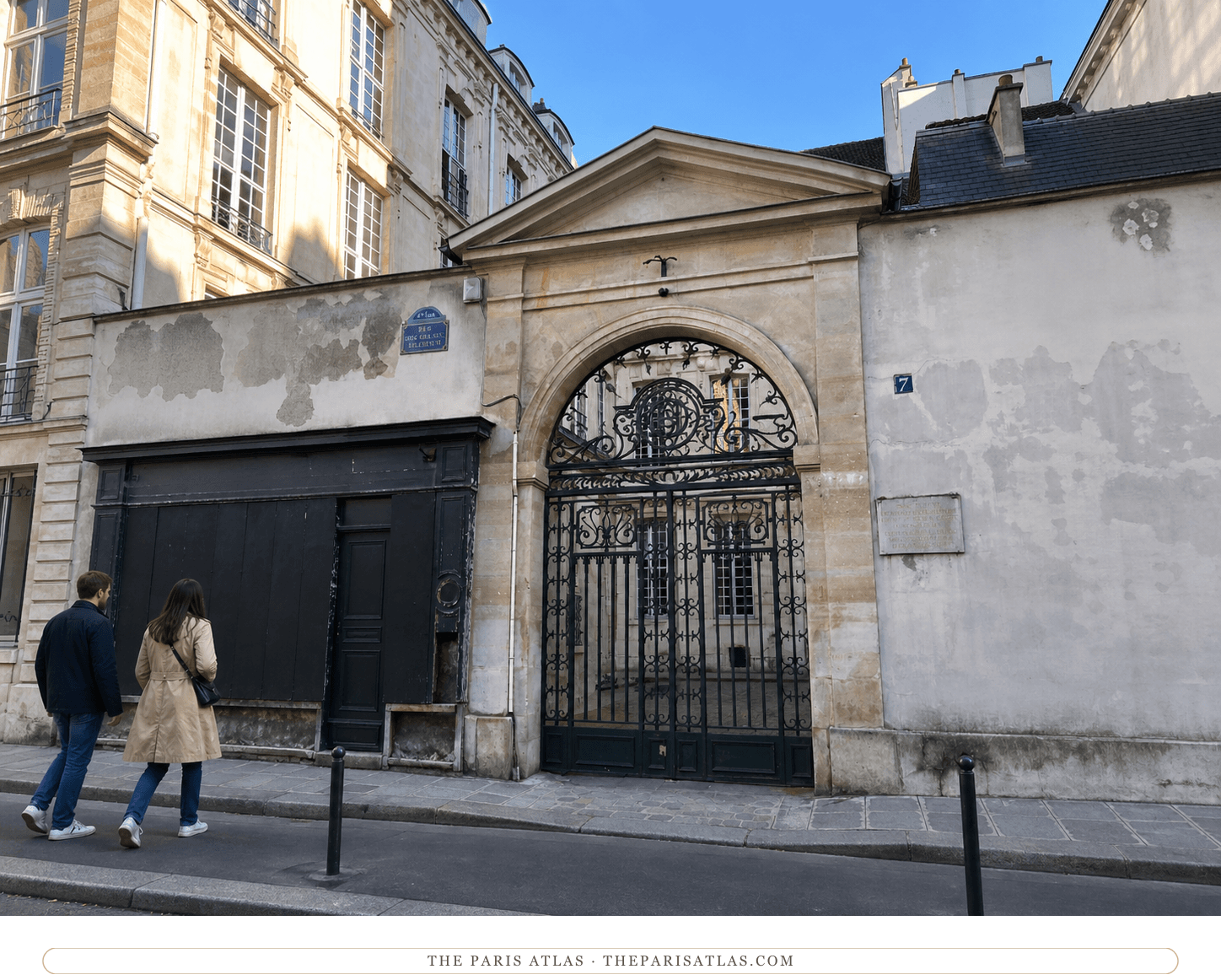
Pablo Picasso's Paris studio from the winter of 1936 until 1955, and the room in which Guernica was painted between 1 May and 4 June 1937. Dora Maar photographed the picture at every stage of its making here — the only complete photographic record of a major painting being built.
Visit the place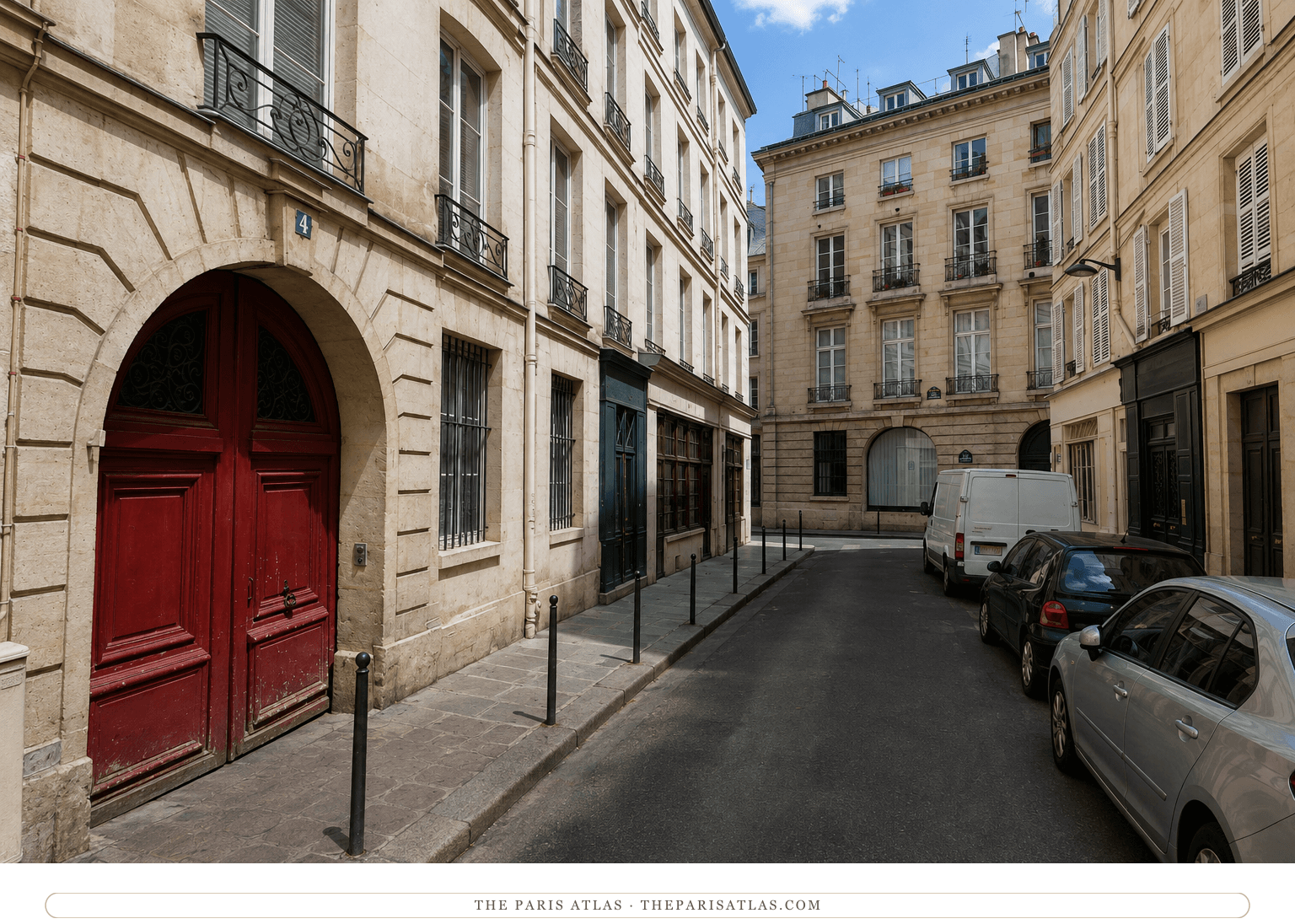
The attic room where Blaise Cendrars settled in 1912, back from New York — his home, the address of the one-man publishing house that issued La Prose du Transsibérien, and the room he came back to after losing his arm in the war.
Visit the place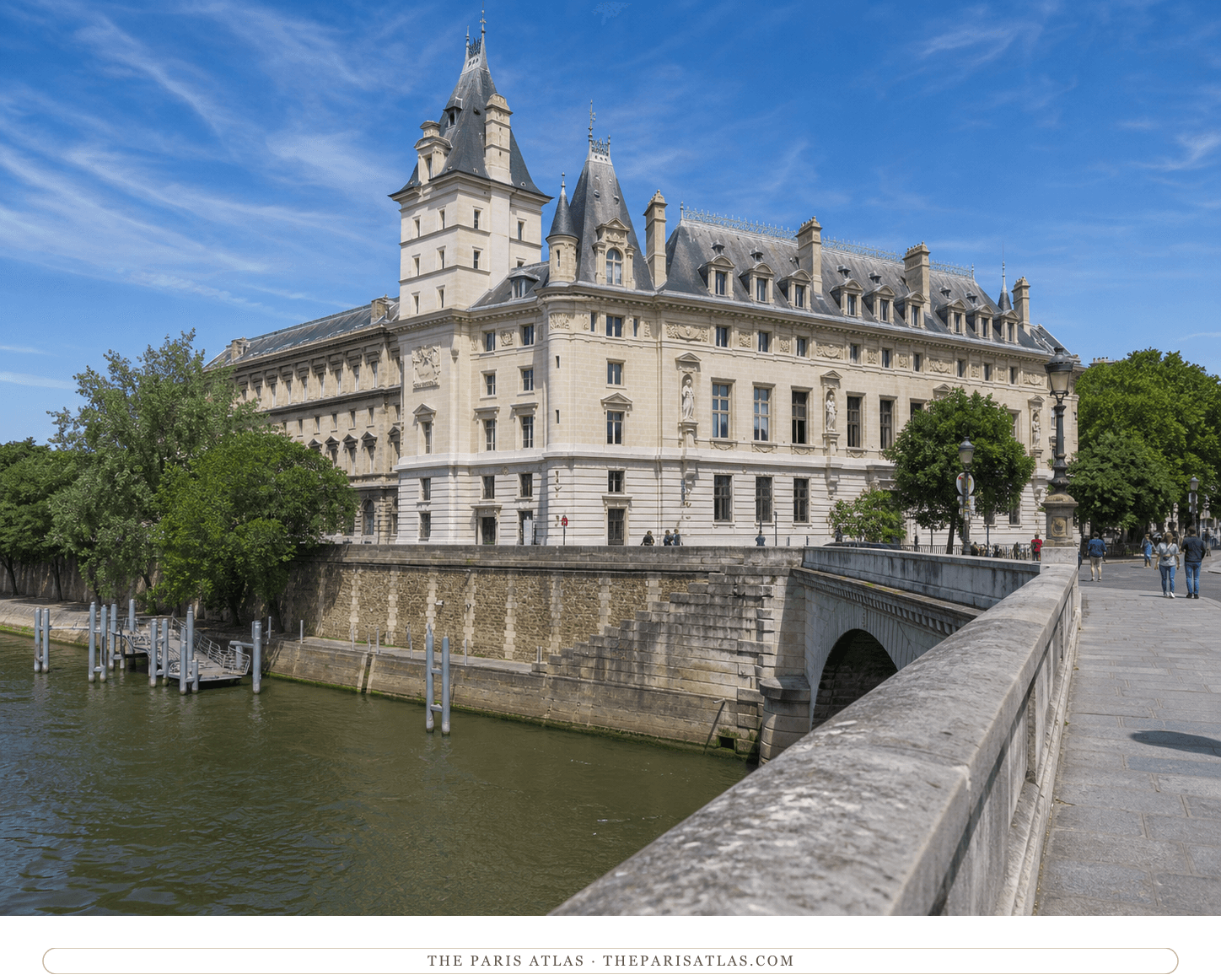
The informal life-drawing studio on the quai des Orfèvres where anyone could pay to draw from the model without an examination — and where Camille Pissarro met Paul Cézanne around 1861.
Visit the place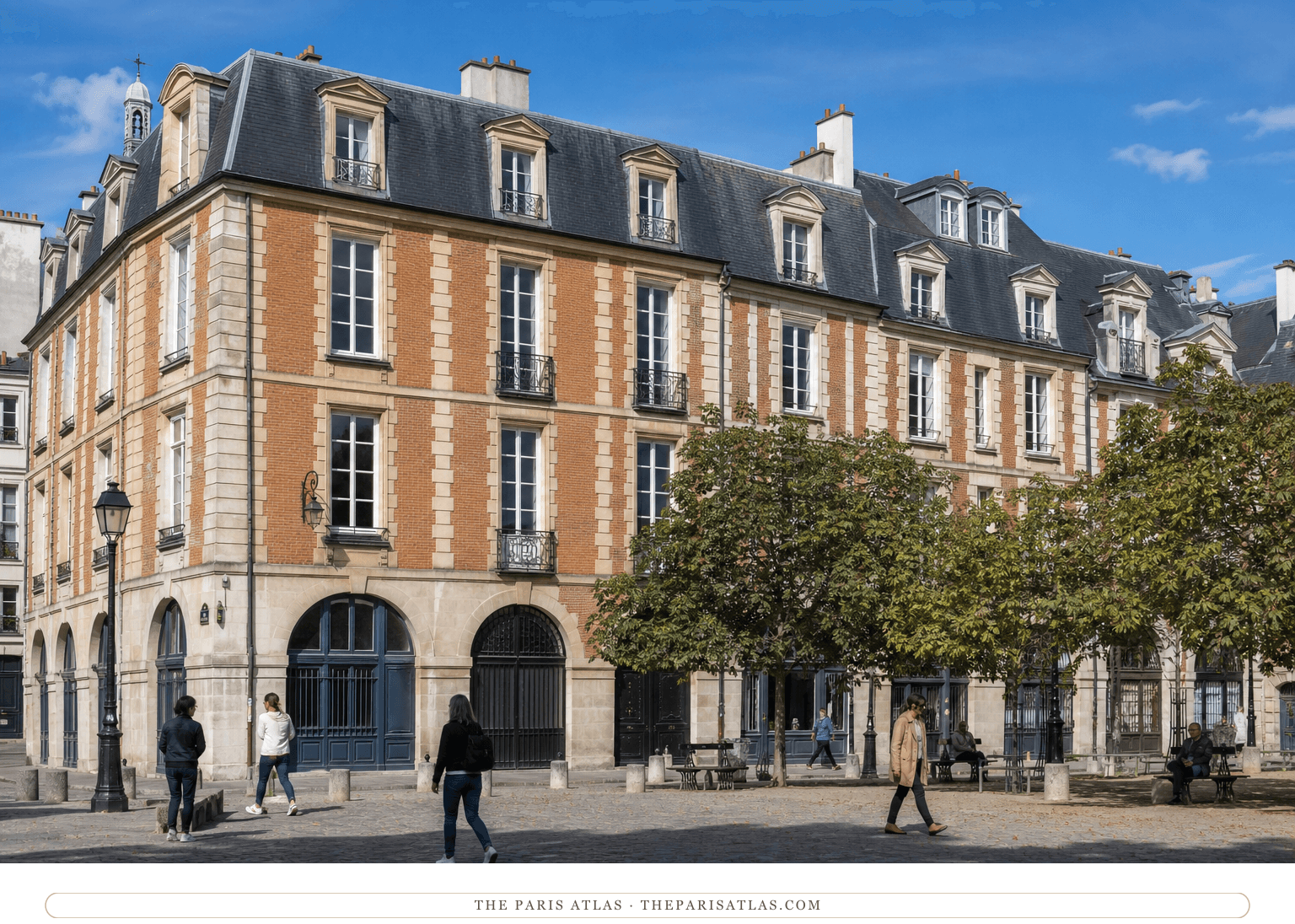
The apartment on the Île de la Cité from which Camille Pissarro painted twenty-six canvases between October 1901 and May 1902 — the Seine, the Pont Neuf, the Louvre and the statue of Henri IV, all from one set of windows.
Visit the placeThe sources below include histories, archival materials, scholarly research, and official records that informed this page. They document 3 Rue des Grands-Augustins, the people connected to it, and its place in Paris.


Web source consulted for documented facts and historical context presented on the 3 Rue des Grands-Augustins page.
Web source consulted for documented facts and historical context presented on the 3 Rue des Grands-Augustins page.
Web source consulted for documented facts and historical context presented on the 3 Rue des Grands-Augustins page.

Official record used to verify names, dates, institutional details, or other factual information on this page.
The city's own street register: the street takes its name from the convent of the Grands-Augustins and was the rue de l'Abbé-de-Saint-Denis in 1269.
Map data used to verify addresses, geographic coordinates, and the placement associated with 3 Rue des Grands-Augustins.
These references provide the documented foundation for this page's history and context. Claim-level citations remain attached to the specific claims they support.
 Explore more resources
Newsletter
The cafés, studios, and walk-up flats where the work was made — one story from the map in every letter.