
Easter in New York
The fuse before this detonation — the city-poem that announced the name.
Read our take
The two-meter poem: a train across Siberia, a girl asking if they're far from Montmartre, and Sonia Delaunay's colors running the whole way down.
In 1913 Cendrars and the painter Sonia Delaunay made a poem you unfold: La Prose du Transsibérien et de la petite Jehanne de France, printed as a single two-meter sheet with Delaunay's abstract color cascading beside the verse — the self-declared 'first simultaneous book.' The poem rides the Trans-Siberian out of Moscow with a sixteen-year-old poet and poor little Jeanne, whose refrain — 'Blaise, tell me, are we very far from Montmartre?' — became one of modern poetry's homing signals. The planned 150 copies, laid end to end, would have stood as tall as the Eiffel Tower. That was the point. (A poem — nothing here to spoil.)
The raw material was autobiography, upgraded: Sauser really had been shipped to Russia as a teenage apprentice, really had watched the 1905 revolution's smoke from a train window — and the poem compresses those years into one hallucinated ride, war and snow and rocking wheels, with Jeanne, the frail Montmartre girl beside him, asking her question like a bell. The verse invented a travel-rhythm French poetry didn't have: clattering, cinematic, tender and apocalyptic by turns, the whole modern world boarding one train.
The object was the second revolution. Sonia Delaunay's pochoir colors don't illustrate the poem — they run beside and through it, two meters of simultaneous contrast folding down to pocket size, painting and poem read in one act. The 1913 prospectus did the math proudly: the full edition, unfolded end to end, would equal the Eiffel Tower's height. Fewer copies than that were finished, and survivors now live in museum cases — but the gesture stands as the era's purest fusion of avant-garde word and image, and the poem inside remains one of the century's great journeys. It is also a landmark of the collaboration culture — poet and painter, one artwork — that Paris made possible.
One long poem, one long train: Moscow at sixteen, the merchant's strongbox, the Trans-Siberian rolling east through the 1905 war's wreckage — armored trains, burning stations, snow — while memory and fever intercut Paris, and Jeanne asks, again and again, whether they are far from Montmartre. The journey ends where all his journeys end and begin: Paris, 'city of the incomparable Tower,' the wheel still turning.
Read it in a facsimile if you can find one — the Delaunay colors are half the poem — but the verse survives any page it's printed on.
Moscow first appears through an adolescent imagination that cannot have enough of its towers and stations. The Kremlin becomes a cake, its cathedral shapes and golden bells transformed into appetizing textures. A monk's reading briefly offers an inherited story, but thirst, unfamiliar writing and flying birds keep attention moving. The speaker's repeated description of himself as an inadequate poet complicates the grandeur of these images. This is memory performing its own restlessness, not a reliable itinerary. The BnF likewise describes the journey as imaginary and Delaunay's accompanying color as abstract rather than literal illustration.
Jeanne's recurring question gives the poem a recognizable point of return while the landscape stretches, breaks and races past. Its apparent simplicity exposes how little the narrator's geographical answer can settle. His responses move from explanation to irritation and cruelty, then toward pity; he cannot keep affection separate from the violence of his speech. The refrain consequently measures emotional distance as well as distance from Paris. Set against the railway's speed, the need to be heard remains stubbornly unresolved. The carriage holds two travelers together without ensuring that they share the same experience.
A continent crossed in fever — travel writing, war reportage, and love poem on one unbroken track.
The Delaunay collaboration remains the standard case of avant-garde book-making — nothing since has fully matched the gesture.
The teenage Russia years were real — the poem is where Cendrars' life and myth first fuse in public.
1905
Shipped to Russia as a teenage apprentice, Sauser watches the revolution's smoke from a train window — the journey the poem later compresses into one hallucinated ride.
1913
With the painter Sonia Delaunay, Cendrars publishes La Prose du Transsibérien et de la petite Jehanne de France as a single two-meter folding sheet, her pochoir colors running beside the verse — the self-declared 'first simultaneous book,' issued by Les Hommes Nouveaux.
1919
Cendrars collects the poem with Les Pâques and Le Panama in Du monde entier, giving the text a new life beyond its original artist’s-book format.
The fuse before this detonation — the city-poem that announced the name.
Read our take

The war the poem saw coming from a train window — arrived, in the trenches, three years later.
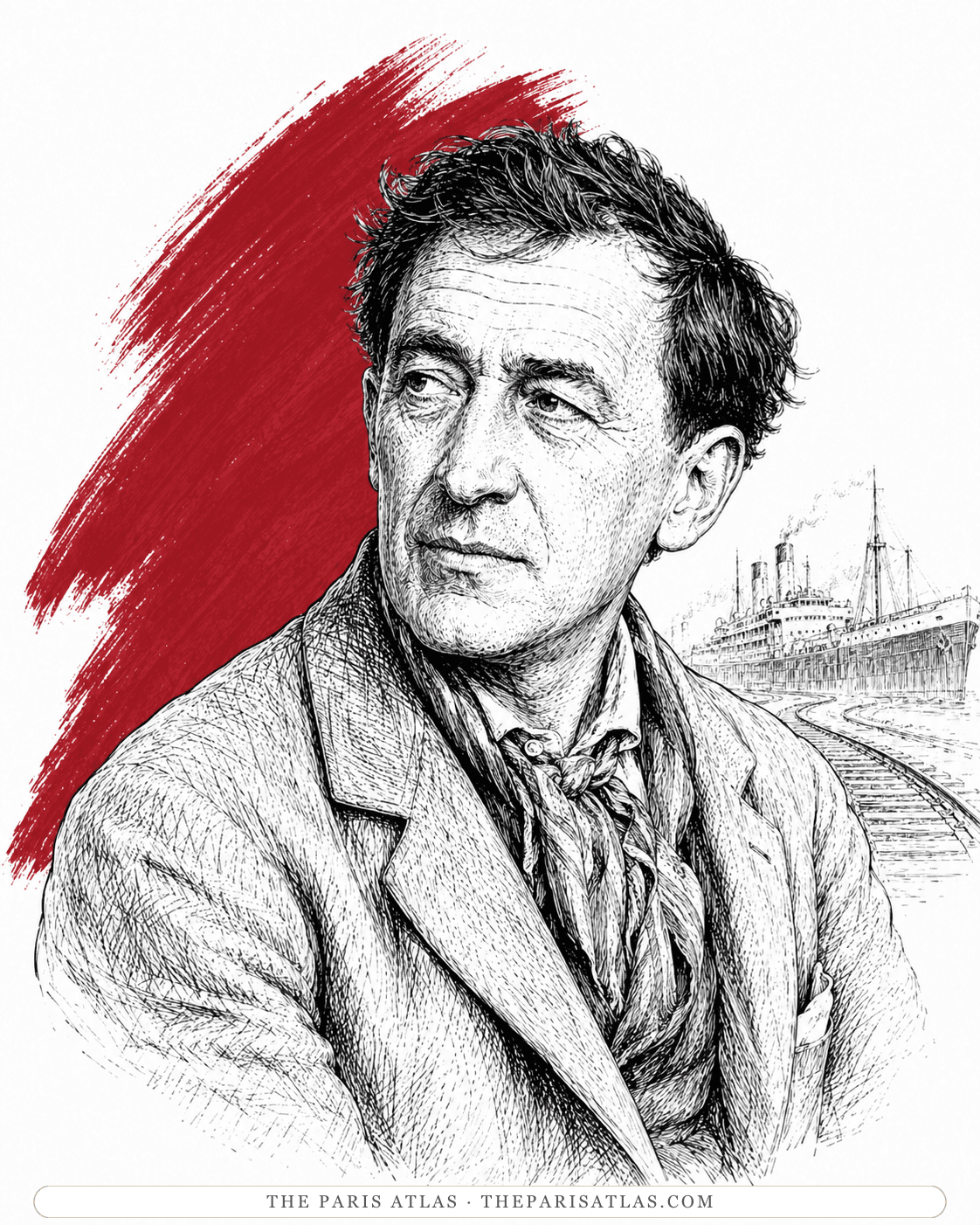
Read our takeThe poet Blaise Cendrars and the painter Sonia Delaunay, together, in 1913.
A long poem printed as a single two-metre fold-out sheet, with Delaunay's abstract color running down the page beside the verse — the self-declared "first simultaneous book."
A journey on the Trans-Siberian Railway out of Moscow with a young poet and "little Jeanne," whose recurring question — "Blaise, tell me, are we very far from Montmartre?" — sounds through the poem like a homing signal.
For fusing poem and painting into one object, and for its ambition: the planned 150 copies, laid end to end, would have stood as tall as the Eiffel Tower.
It draws on Cendrars's own youth, when he was shipped to Russia as a teenage apprentice and watched the smoke of the 1905 revolution from a train window.
Explore authors with a similar voice, perspective, and influence.

The devoted heir — Miller crowned Cendrars above every living writer, and the torrential first-person prose is the family resemblance.
View author
The other voyager at the end of the night — spoken rhythm, black exuberance, and a war wound at the center of everything.
View author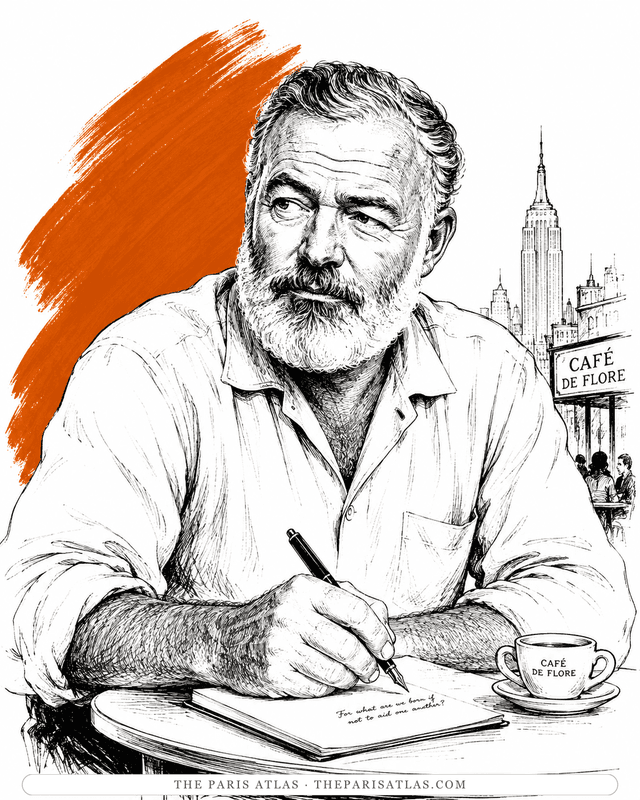
Author of The Sun Also Rises and A Moveable Feast; his pared-down style, developed in 1920s Paris, became the most imitated in American prose.
View authorThe sources below include the primary text, editions, scholarship, archival materials, and other records that informed this page. They document The Prose of the Trans-Siberian and of Little Jeanne of France, its publication, and its place in literary history.


The primary text represented by this page, used for descriptions of the work’s contents and for any quoted passages shown here.
Selected French opening and dialogue in Poesie.net's later transcription; BnF contextual notice. Not a whole-poem or original-layout collation.
Institutional context for the imaginary journey and abstract color. No original-layout inspection.
Selected French opening and dialogue in Poesie.net's later transcription; BnF contextual notice. Not a whole-poem or original-layout collation.

A work-specific source used for The Prose of the Trans-Siberian and of Little Jeanne of France's publication history, textual context, or critical reception.
A work-specific source used for The Prose of the Trans-Siberian and of Little Jeanne of France's publication history, textual context, or critical reception.
Used to cross-check authorship, chronology, and the work's place in Blaise Cendrars's wider catalogue.
Used to verify Blaise Cendrars's bibliography and place The Prose of the Trans-Siberian and of Little Jeanne of France within the broader chronology of Blaise Cendrars's career.
Web source consulted for documented facts and historical context presented on the The Prose of the Trans-Siberian and of Little Jeanne of France page.
The primary text is the baseline reference for every book page. Additional references document publication history, interpretation, and historical context where that evidence is available.
 Explore more resources