Journey to the End of the Night
Céline put Barbusse on his short list of admired moderns, and Journey's opening plunge into the war reads as Le Feu's testimony pushed past despair — the trench-novel tradition's direct line.

The first great trench novel — written in the mud by a forty-one-year-old private, Goncourt-crowned while the war it describes still ran.
A squad of French infantrymen — cabmen, farmers, miners, a narrator among them — endure the Western Front's true routine: mud, waiting, black comedy, and sudden obliteration, told at trench level in the ranks' own voices. Serialized mid-war, awarded the 1916 Prix Goncourt, and vouched for by the soldiers themselves, it is where modern war writing begins.
Barbusse was forty-one — a settled Parisian man of letters — when he enlisted in 1914, and he served seventeen months in the line as a private and stretcher-bearer, taking notes the whole way. The novel he built from them refused every convention of patriotic war fiction: no officers' vantage, no glory, no purpose imposed on the chaos — just the squad, its speech, its lice, its rotations between billet and trench, and its dead.
L'Œuvre serialized it through late 1916 with the censors fighting him line by line, and the book appeared from Flammarion in time to take the Prix Goncourt that December — a war novel crowned in the middle of the war it indicted. It sold by the hundreds of thousands, and its most important reviews came postmarked from the Front: soldiers writing to say that at last a book told it as it was. The patriotic press said the opposite, which confirmed everything.
Its long shadow is this shelf's war-writing lineage: Céline named Barbusse among the few moderns he rated, and Journey's opening plunge into the war reads like Le Feu pushed past endurance; Hemingway, editing Men at War in 1942, singled it out as the rare true book written while the fighting ran. The 1917 English translation as Under Fire carried it worldwide; the public domain now carries it free to anyone.
There is no plot in the officer's sense — which is the argument. The book follows a single squad of poilus through the war's actual shape: long rotations between filthy billets and filthier trenches, the economy of scrounged wine and dry socks, the letters, the rumors, the black jokes that are the ranks' real language. The men are a census of France from below — cabmen, farmers, a miner, a porter — each sketched by voice, and the narrator moves among them as one of them, notebook hidden.
Violence arrives the way it actually arrived: without shape. Bombardments that erase men mid-sentence; an attack across churned ground that gains nothing; the surreal errands of the front — carrying, digging, waiting — punctuated by deaths the book refuses to make meaningful. One by one the squad's voices go silent, and the mud, rain, and flooded shell-holes become the book's true antagonist, indifferent to both armies.
The famous final chapter, 'The Dawn,' lifts the book from testimony into vision. After a flooding rain drowns the battlefield — trenches collapsed, the dead of both sides surfacing in the mire — the surviving remnant of the squad, wrecked and half-sleeping in the mud, begins to talk. Slowly, in their own broken words, the men assemble the book's verdict: that they are not heroes but executioners and victims at once, that the war serves those who profit from it, and that the only meaning left is to make this slaughter the last one. It is the pacifist epiphany that made the patriots furious and the poilus grateful — and history's cruelest footnote is the date on it: 1916, with Verdun unfinished and 1917 still to come.
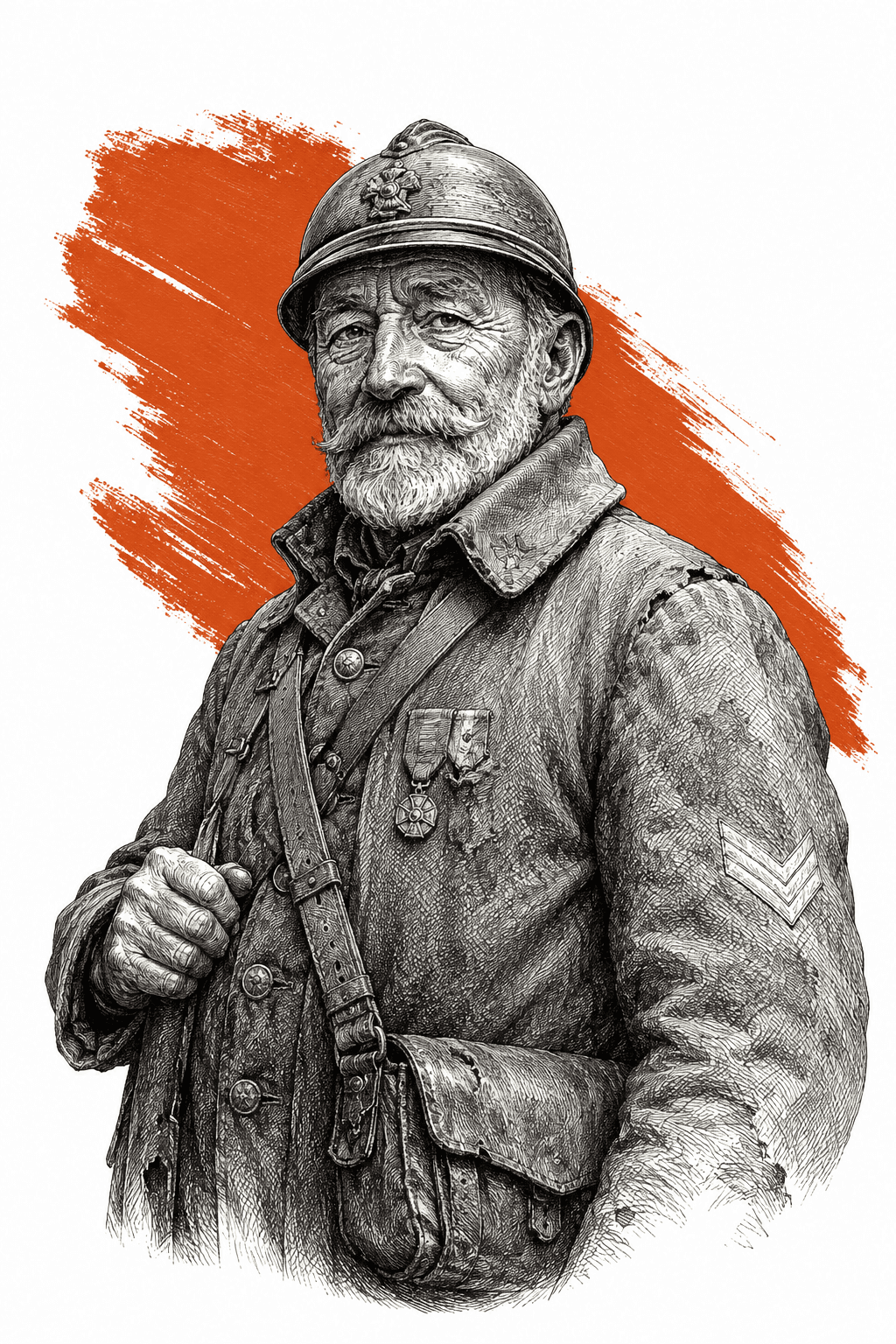
Blaire measures the ring's value by the relationship it carries, not by the quality of its finish. Explaining an earlier ring, he remembers looking at his wife's photograph and feeling that they were making it together; sending it away meant losing a companion. Set beside the squad's letters, his filing becomes another kind of correspondence. The narrator's comparison with penmanship makes that connection explicit. A durable object can hold an affection that the trench cannot otherwise accommodate, while the awkwardness of large, hardened hands working on tiny ornaments reveals tenderness within the soldiers' battered appearance.
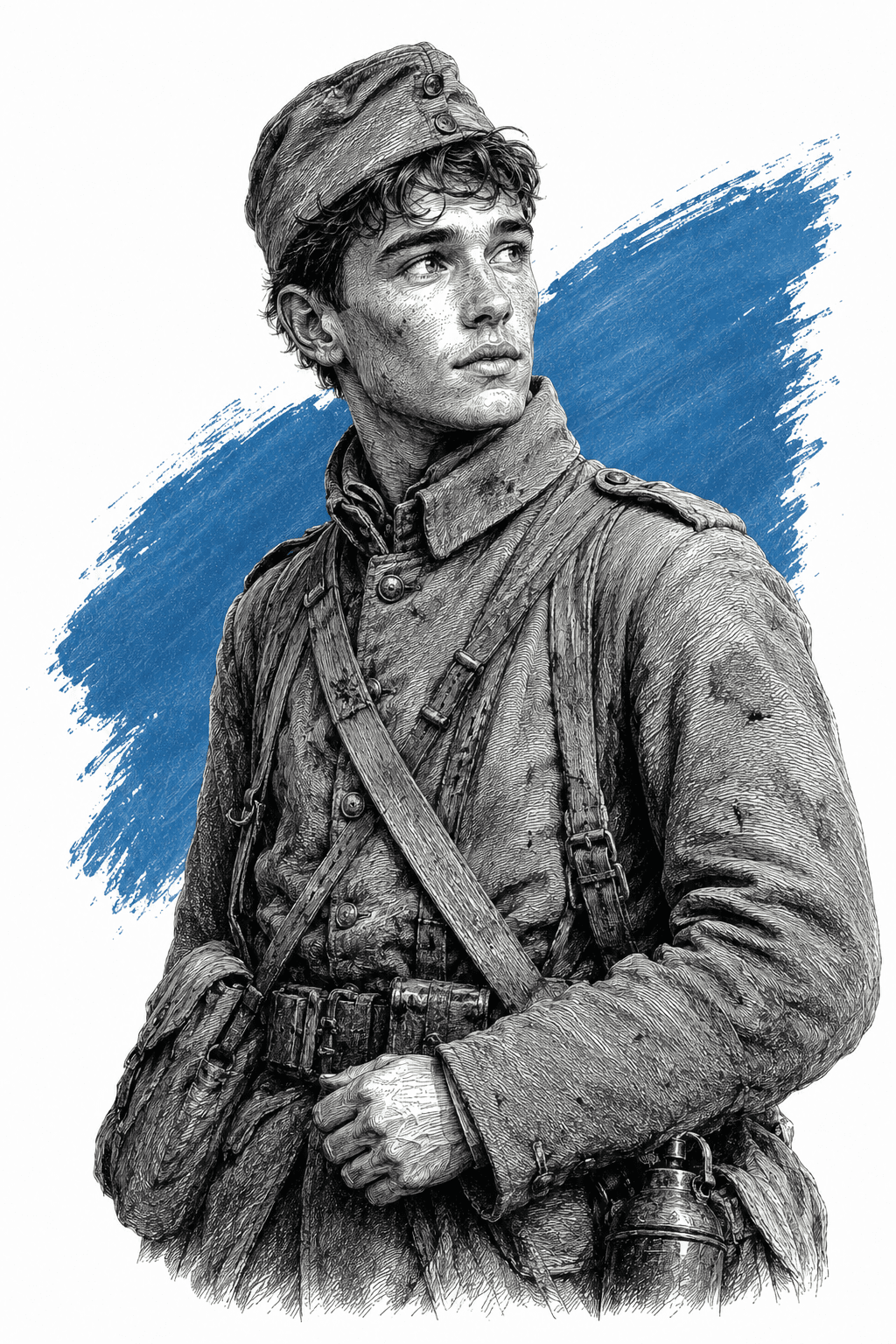
The flooded landscape unsettles the categories through which the narrator normally sees the battlefield. Mud obscures uniforms until he cannot tell whether some men are French or German, and a pair of intertwined bodies initially suggests enemies locked together in death. Looking again, he discovers two men supporting one another so that they can sleep without sinking. That correction matters: a posture first read as violence becomes an improvised act of care. The scene offers a fragile image of mutual dependence inside the catastrophe, without pretending that the fighting has permanently ended.
Céline put Barbusse on his short list of admired moderns, and Journey's opening plunge into the war reads as Le Feu's testimony pushed past despair — the trench-novel tradition's direct line.
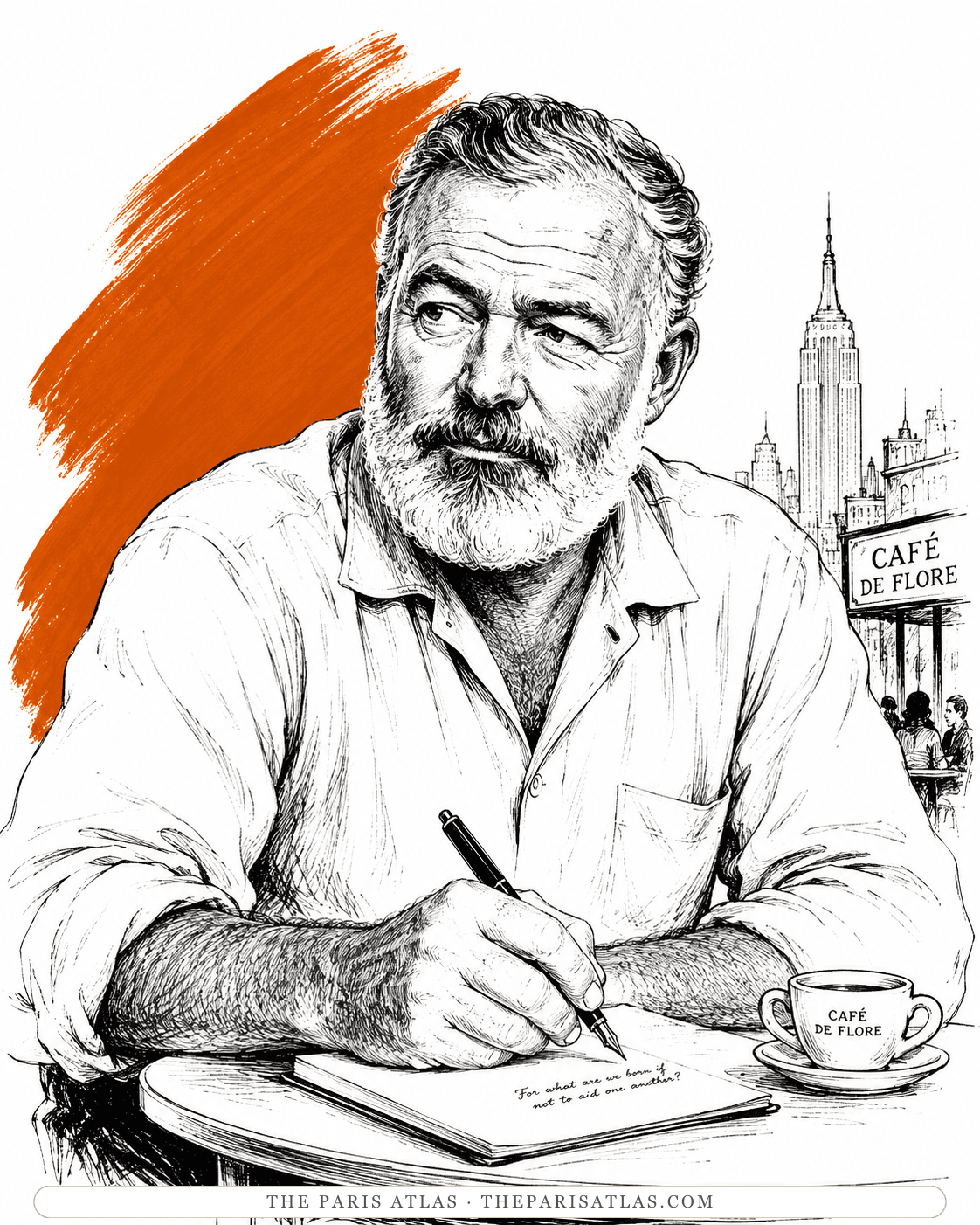
In the Men at War introduction, Hemingway named Le Feu the rare book that told the war's truth while the fighting still ran — the standard his own war prose kept.
Before Hemingway's wound and Céline's night, this: the war told from below, in the ranks' own voices, while it happened.
A collective protagonist a half-century before it became technique — France from below, one voice at a time, going silent.
The visionary ending is one of the era's great set pieces — testimony rising into argument, with the worst years still ahead of it.
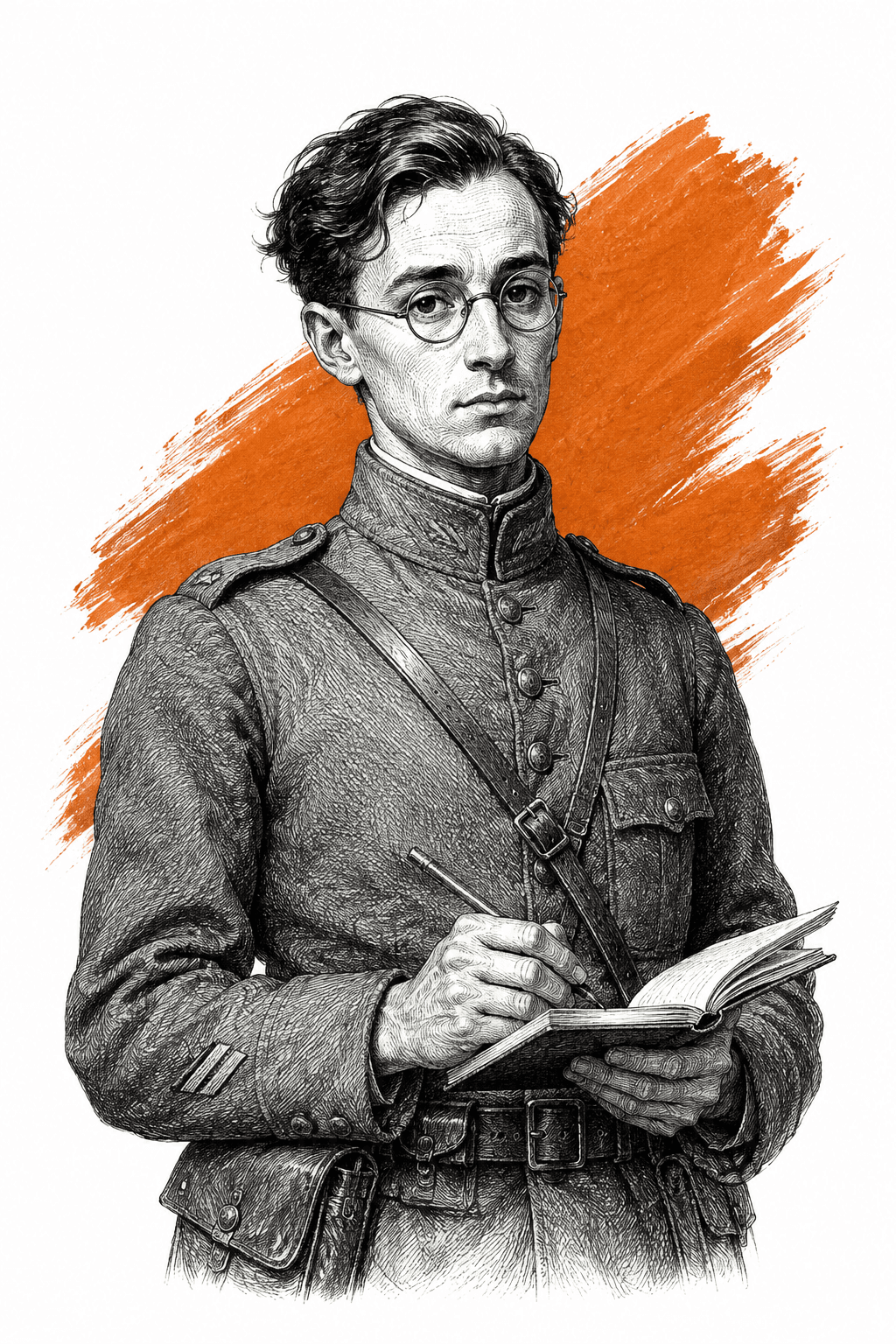
The man telling the story is a private in the squad like any other. Barbusse never gives him a name, a rank or a trade.
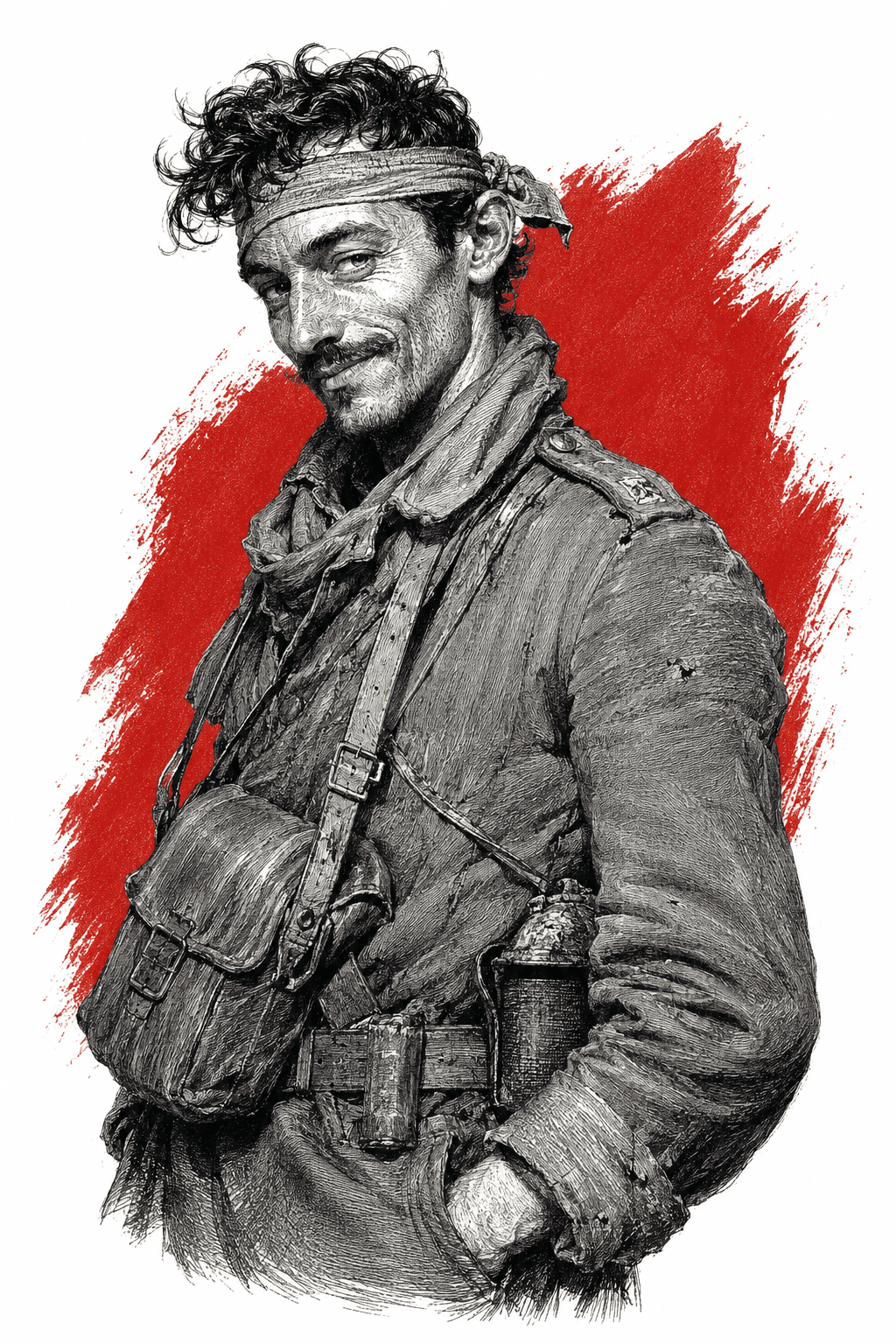
The most present man in the book after the narrator. Forgotten for four days in a shell-hole, sent back with his ears half torn off, and returned in a fury at everything he saw behind the lines.
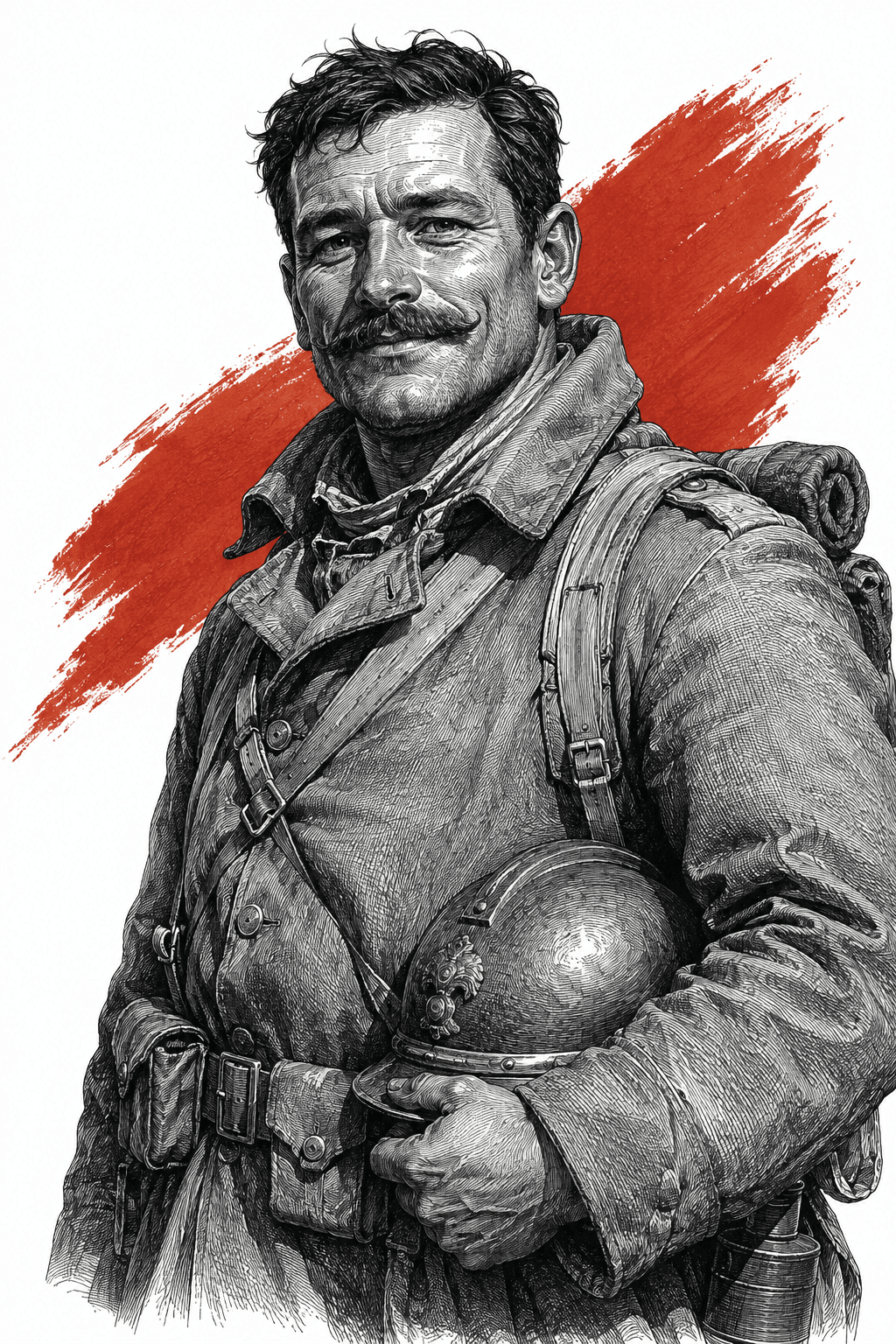
A carter from central France with a round red face, and the man the narrator stands next to in the ranks. He gets the book's last word on what the war actually was.
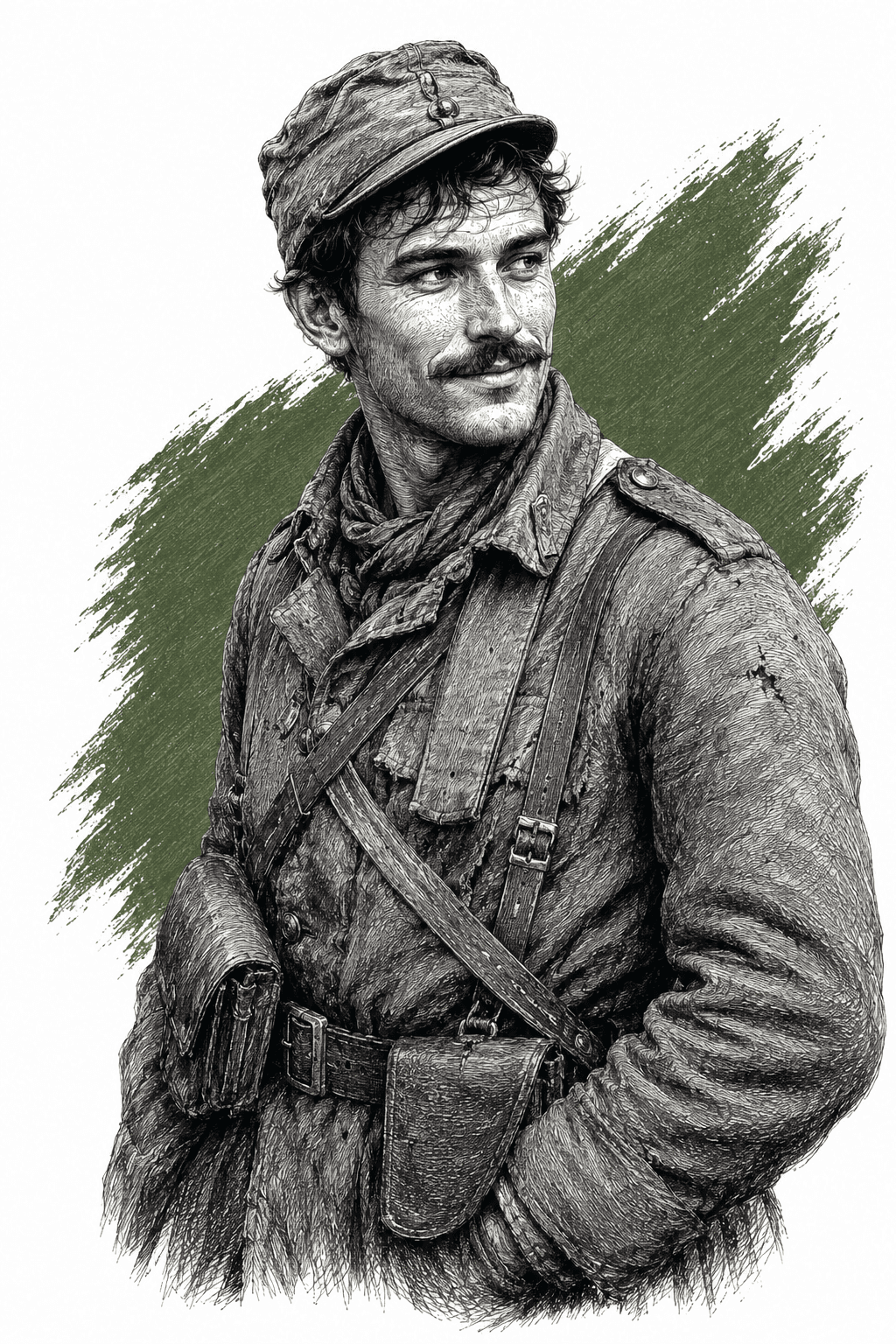
A Paris messenger who rode a delivery tricycle through the traffic, and the squad's fixer, mimic and loudest mouth.
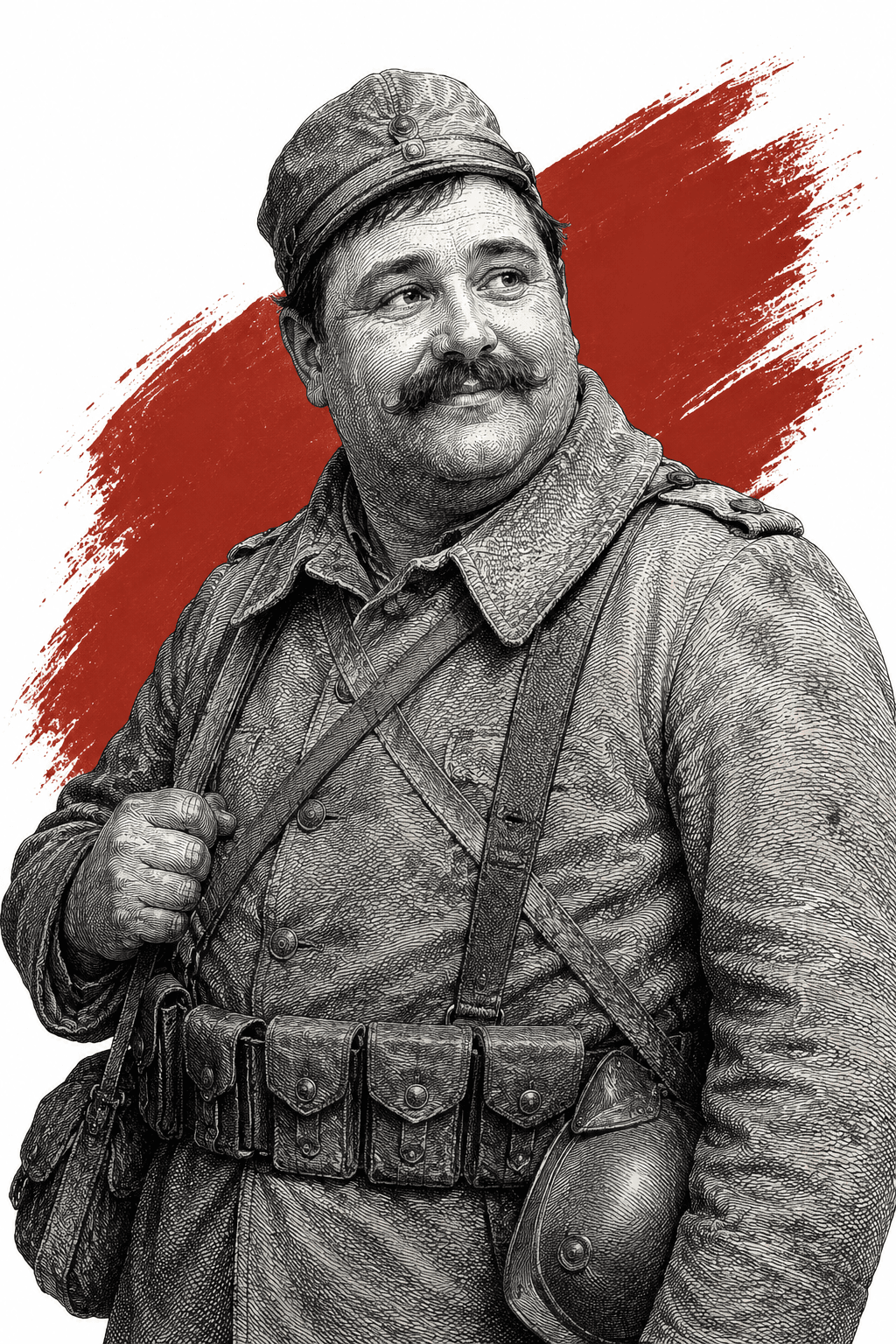
An enormous farm labourer from western France, called the ox-man. He spends the book in helpless pursuit of a refugee woman who cannot stand the sight of him.
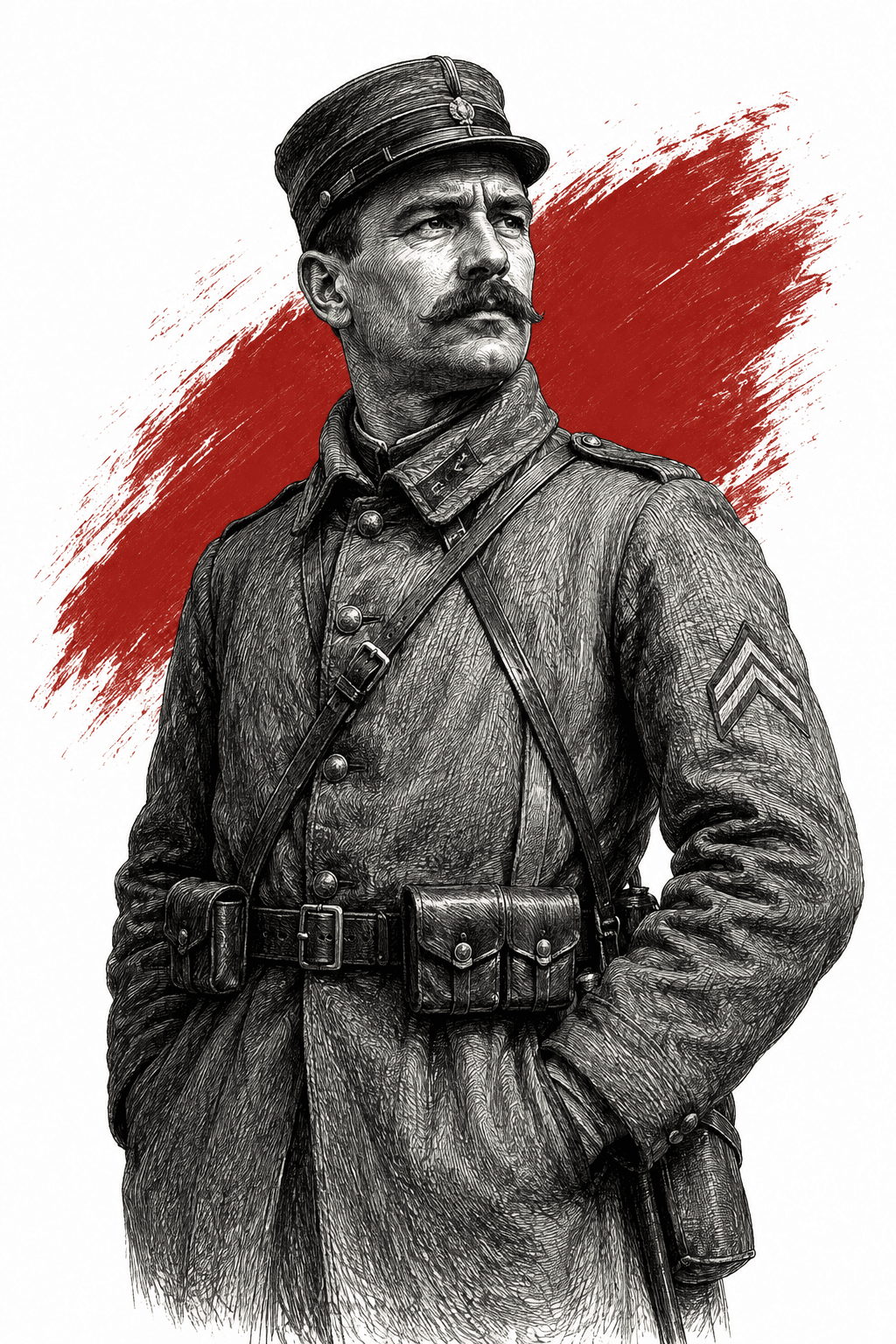
The squad's corporal: a factory foreman, sober, exact, and the only man in the book who tries to say what the war means while it is going on.
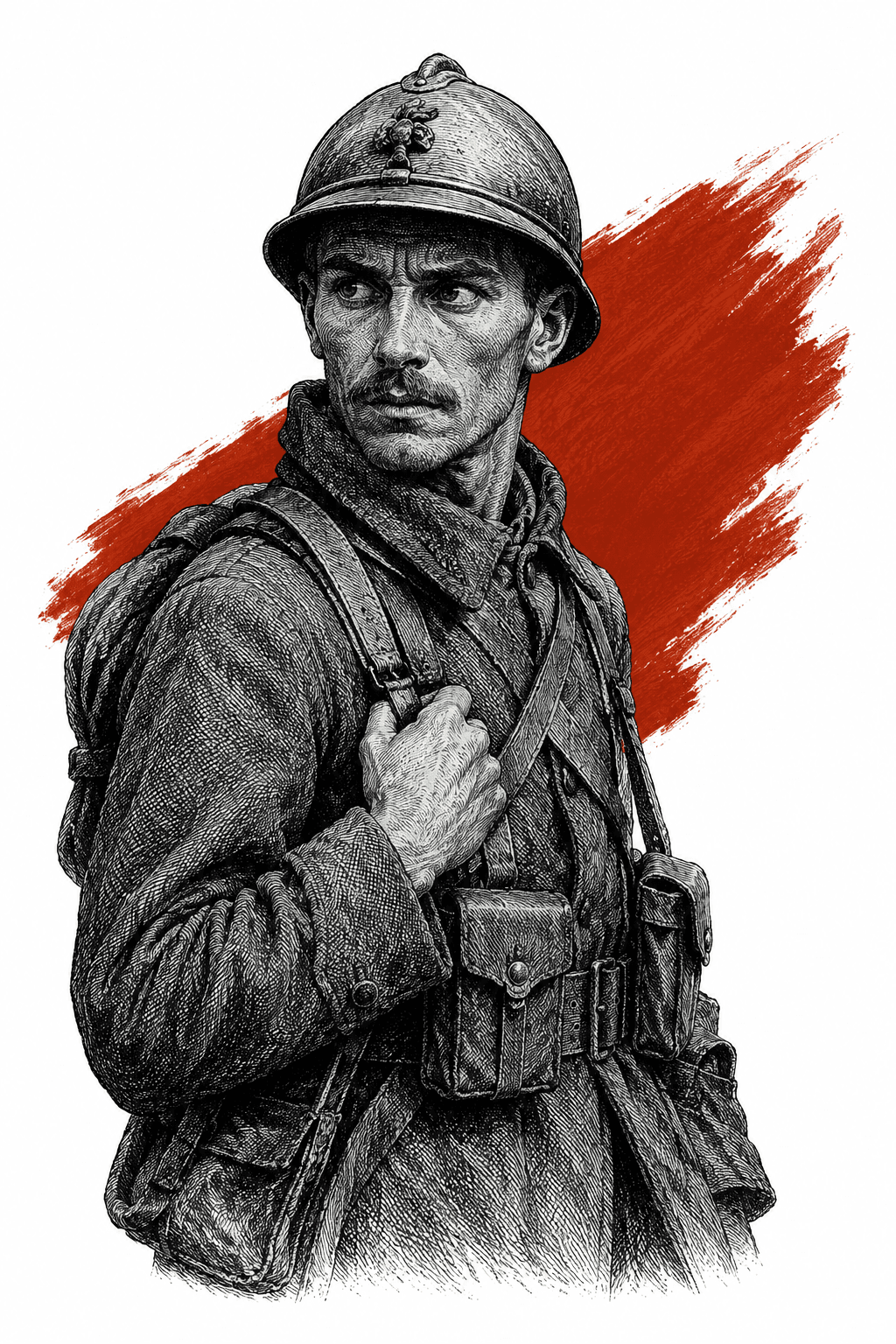
A coal miner whose village lies a few hundred yards from the trench he is holding. Le Feu takes him back into it, and then into German-occupied Lens to look at his own wife.
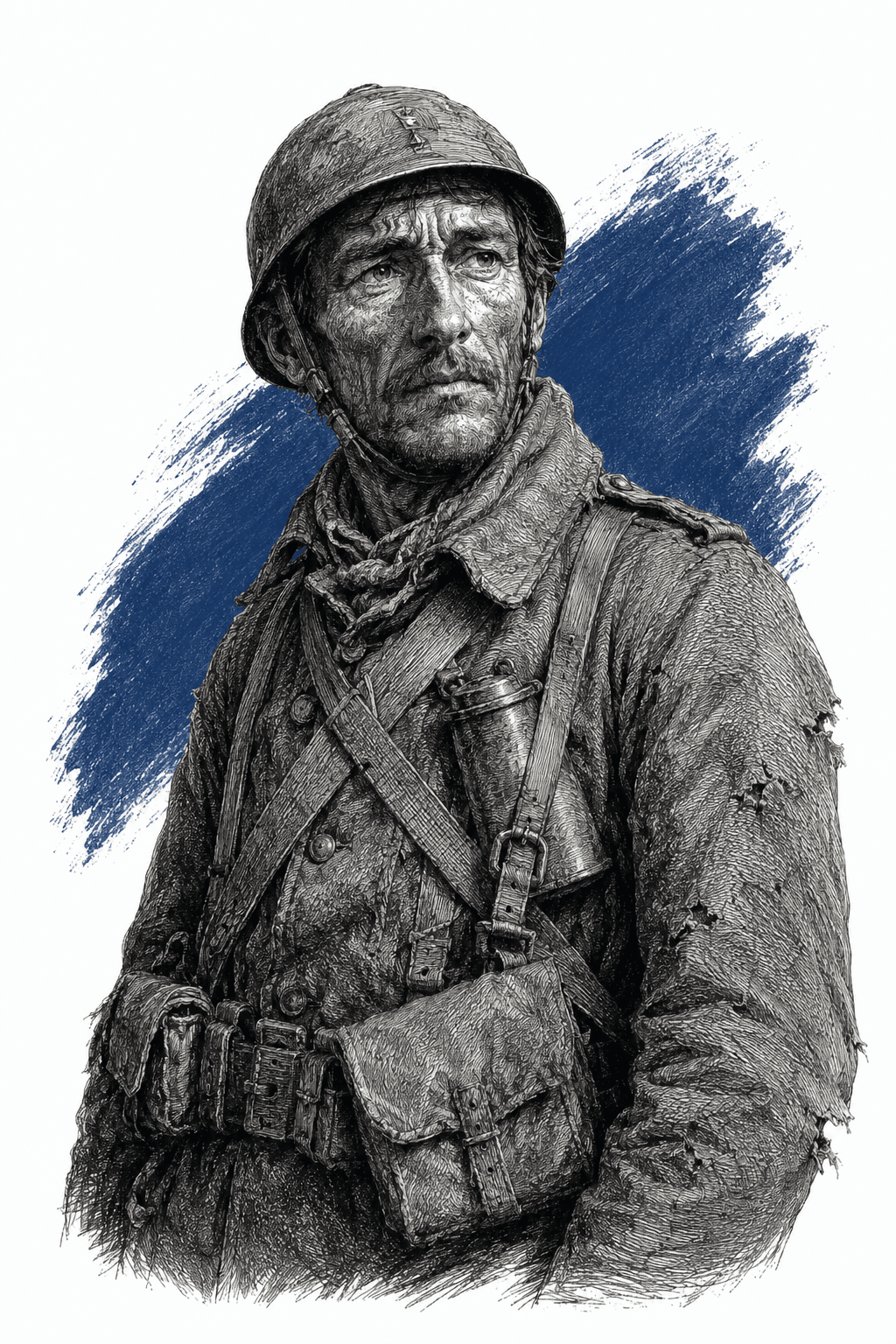
A boatman from the Mediterranean coast, forty years old and six hundred miles from home, freezing his way through a northern winter.
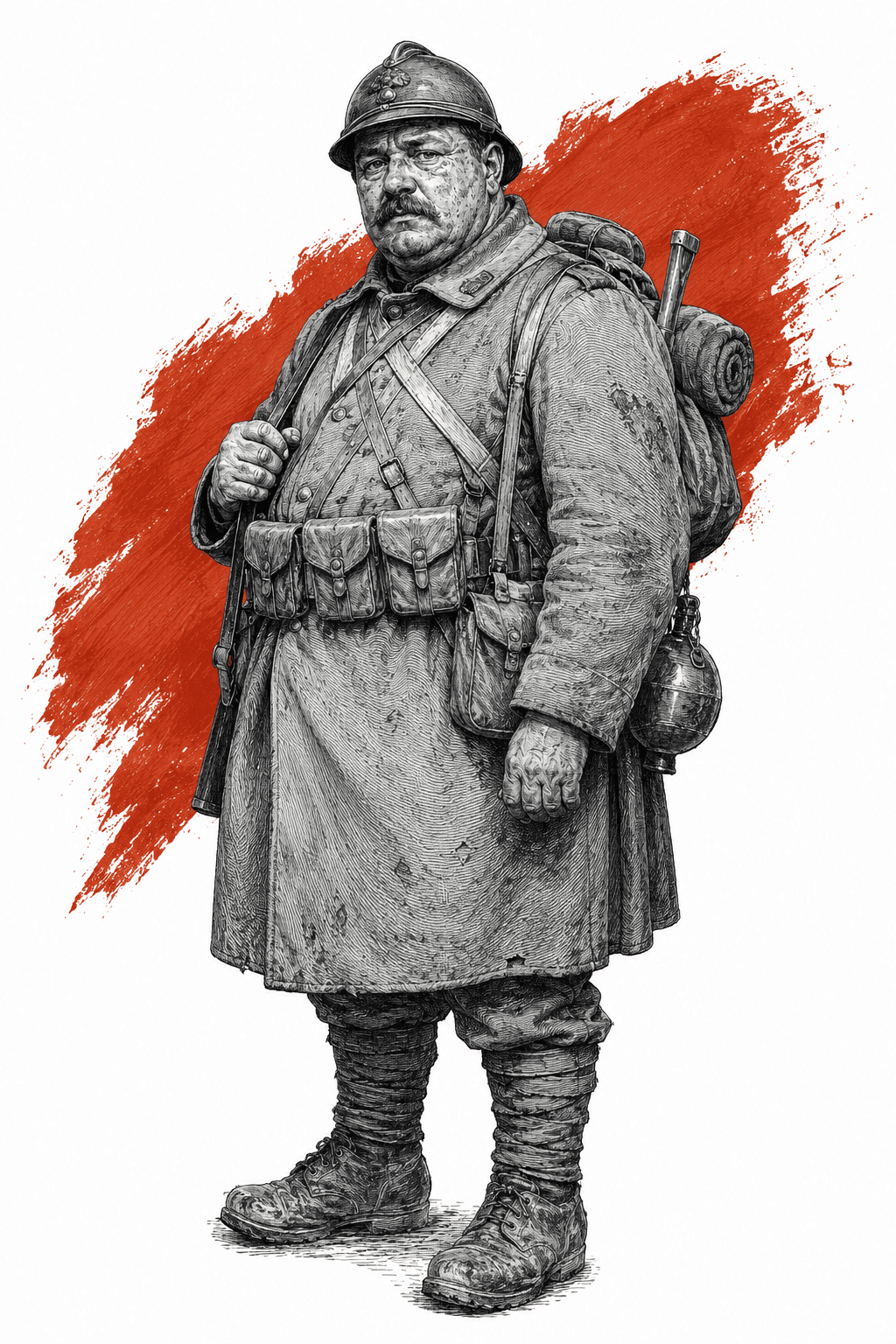
A smallholder from La Brie, the dirtiest man in the trench, who files aluminium rings for his wife and is transformed by a set of false teeth.
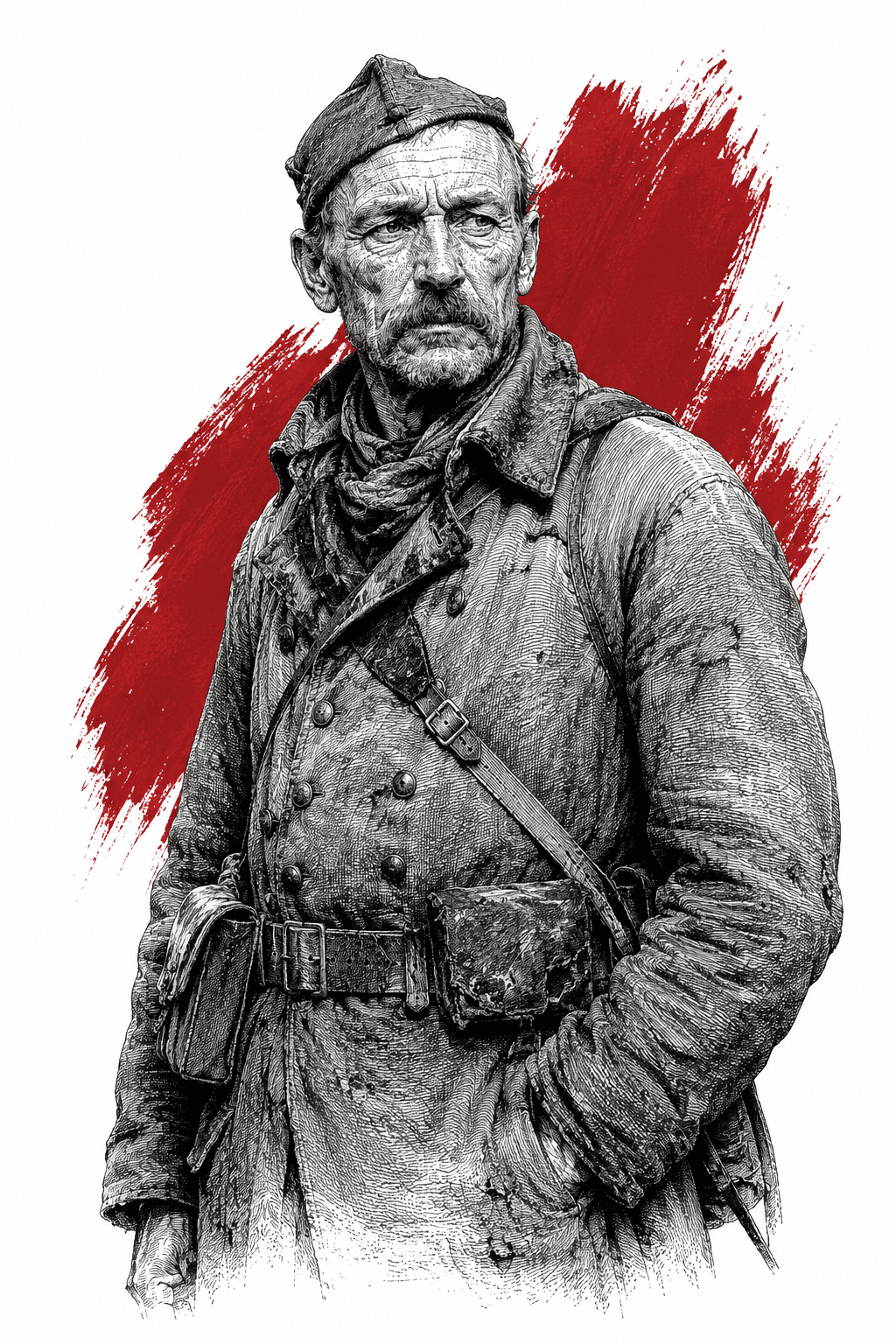
The squad's arithmetician, an ironmonger's counterman from Lyon in spectacles, who answers everything with a number.
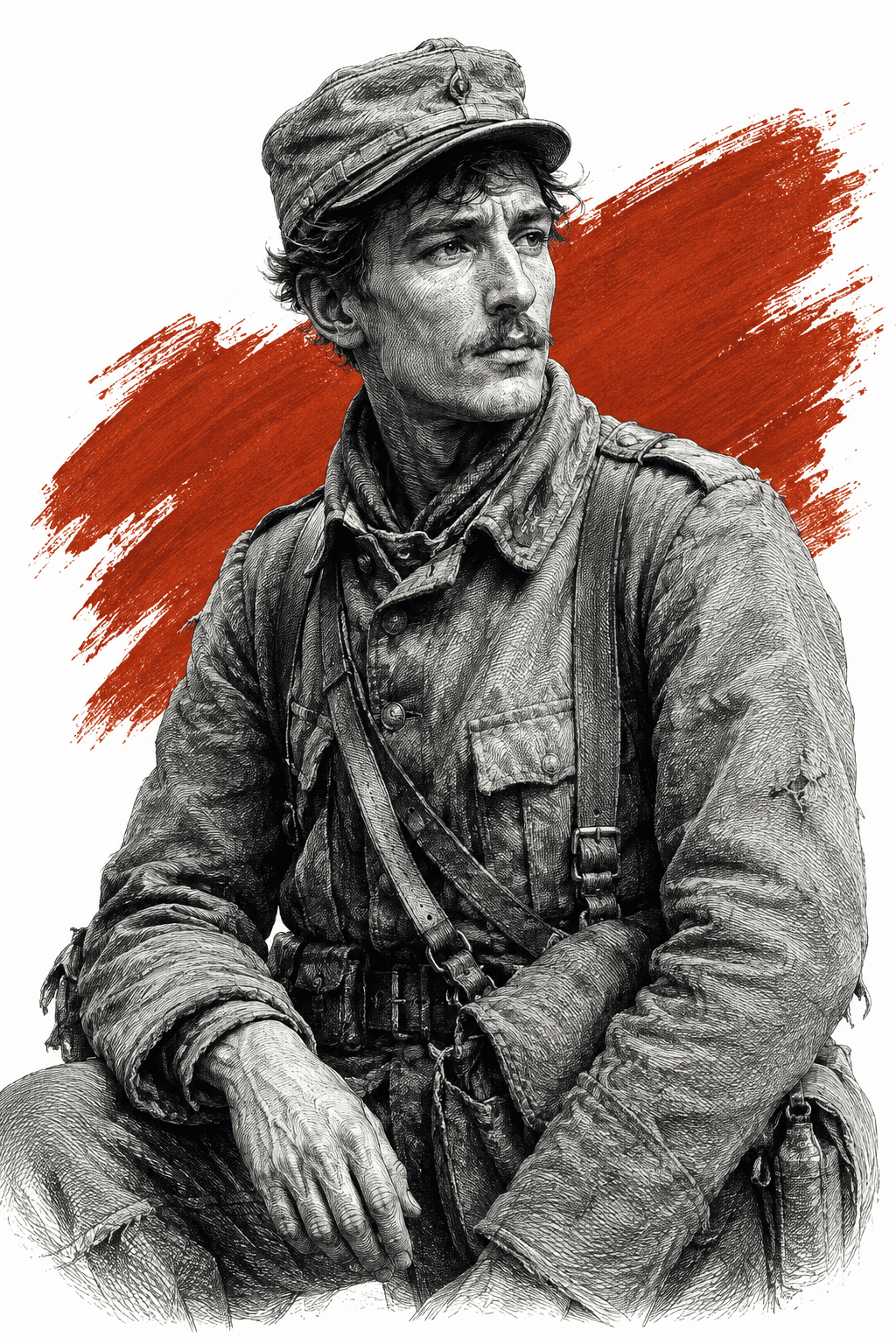
The one man in the squad whose civilian trade nobody can name. A thief, a knife-carrier, and the first over the German parapet.
1914
Barbusse enlists at forty-one and serves seventeen months in the line as a private and stretcher-bearer, taking notes the whole way.
1916
L'Œuvre serializes it against the censors, and Flammarion publishes it in time to take the Prix Goncourt that December.
1917
The English translation, Under Fire, carries it worldwide.
The direct heir — Céline rated Barbusse, and Journey's war chapters push Le Feu's truth past despair.
Read our take
The American answer, a decade on: the same refusal of the big words, carried into love and ruin.
Read our take
The compressed aftermath — Le Feu's material, distilled into vignettes and the silences between them.
Read our takeHenri Barbusse. It was published in 1916, during the First World War, and is known in English as Under Fire.
A squad of French infantrymen — cabmen, farmers, miners — enduring the true routine of the Western Front: mud, waiting, black comedy, and sudden obliteration, told at trench level in the ranks' own voices.
Yes. It was serialized while the war still ran and awarded the Prix Goncourt in December 1916.
Directly. He enlisted in 1914 at forty-one and served seventeen months in the line as a private and stretcher-bearer, taking notes the whole way.
It is where modern war writing begins — the first great novel of the trenches written from inside them. Both Louis-Ferdinand Céline and Ernest Hemingway measured war writing against it.
Explore authors with a similar voice, perspective, and influence.

The lineage runs straight downhill: Le Feu's trench-level truth-telling, pushed past despair into Journey's night.
View author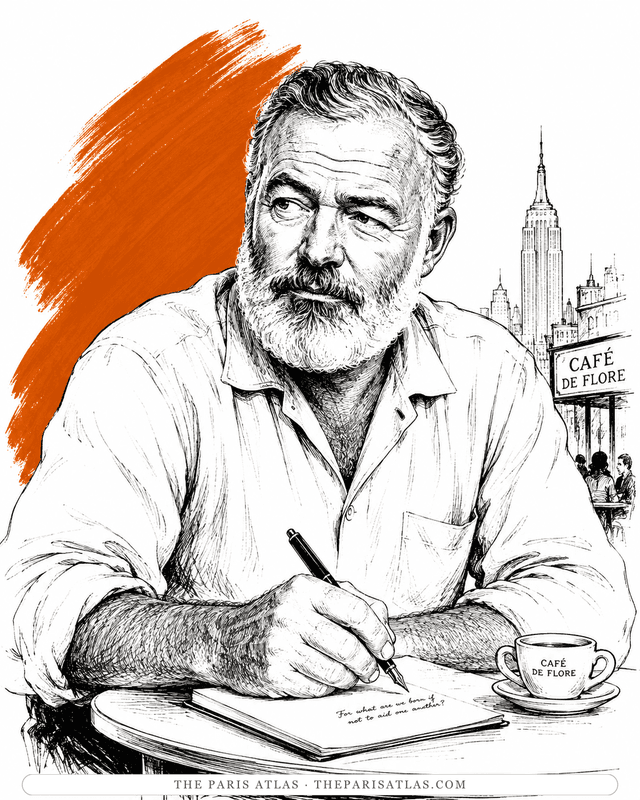
The other heir — Hemingway called Le Feu the war's one true book written in the fighting, and his own war prose kept its standard.
View author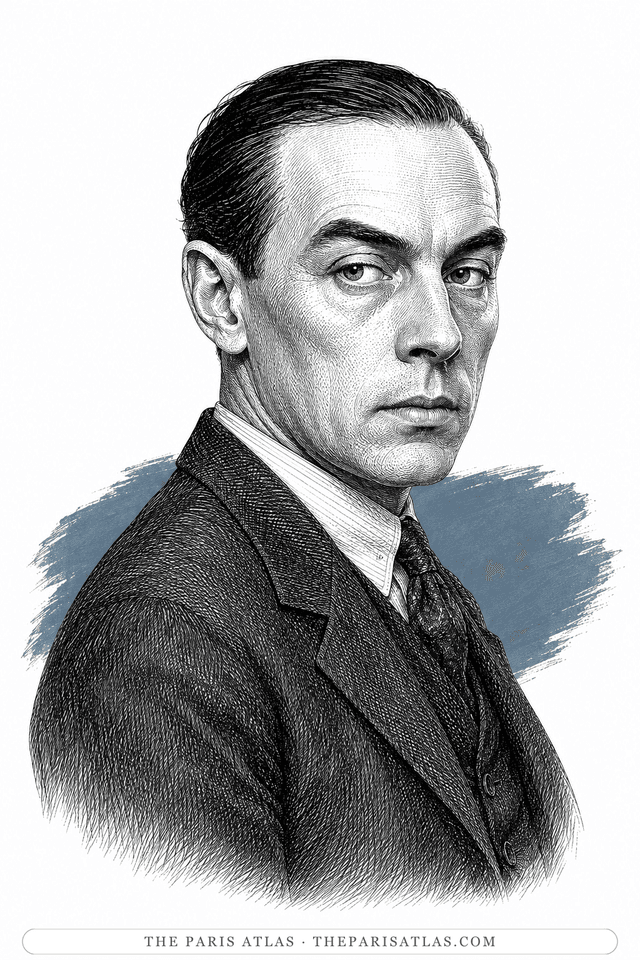
German novelist whose direct, unsentimental fiction follows soldiers and survivors marked by the First World War.
View authorThe sources below include the primary text, editions, scholarship, archival materials, and other records that informed this page. They document Le Feu, its publication, and its place in literary history.

The primary text represented by this page, used for descriptions of the work’s contents and for any quoted passages shown here.

Contemporary reporting or criticism used to document the historical reception and context of Le Feu.
Published analysis and historical context used in preparing the Le Feu page.
The Bibliothèque nationale de France's digital-literature collection identifies and provides access to the original 1916 edition.
The BnF archive record documents Barbusse's Le Feu manuscripts, wartime notebooks and the novel's 1916 Goncourt recognition.
W. Fitzwater Wray's translation, chapters II and XXIV, supplies the specific passages analyzed beside the ring and flooded-dawn illustrations; the two sleeping men's nationalities are not identified.
The corresponding French passages in chapters II and XXIV were checked against the translation. This transcription carries a 1917 Flammarion copyright notice; it is not presented as a facsimile of the 1916 first edition.
The primary text is the baseline reference for every book page. Additional references document publication history, interpretation, and historical context where that evidence is available.
 Explore more resources