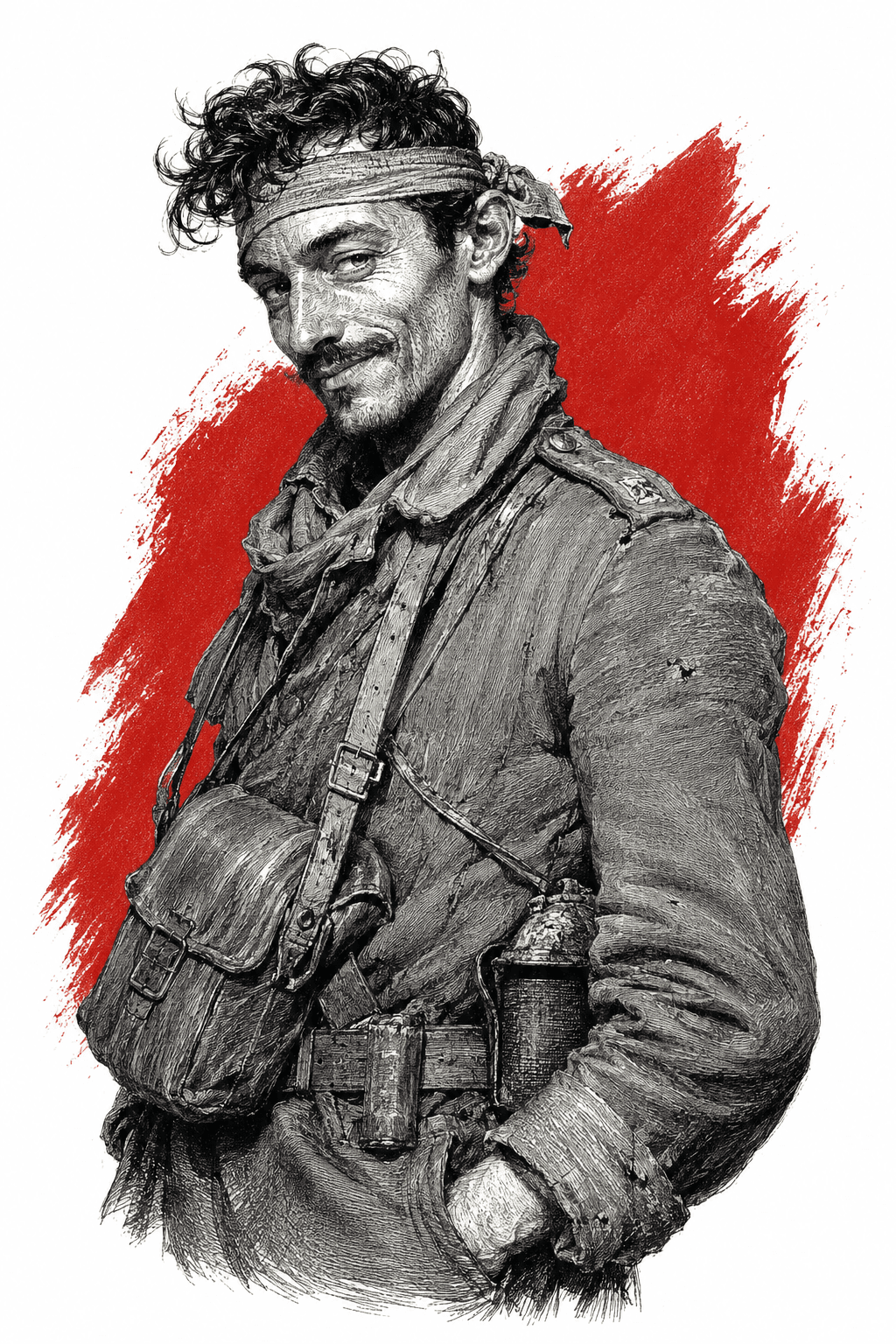
Volpatte
The most present man in the book after the narrator. Forgotten for four days in a shell-hole, sent back with his ears half torn off, and returned in a fury at everything he saw behind the lines.
A wound bad enough to get him sent to a hospital bed with white sheets, and not bad enough to keep him there.
The book

At a glance
- Private in Corporal Bertrand's squad
- Firmin
- A wife and two young sons, carried as a photograph
- The only man still in his mobilisation gaiters
- A pair of scissors found at Soissons
- More often than any other man in the book
Who they are in the book
Spoiler-freeVolpatte is named more often than anyone else in Le Feu, and he is the closest thing the squad has to a spokesman. He has a square yellow-brown face, a broken nose, small eyes and a heavy drawling voice roughened by a permanent cough. His first name is Firmin, which the others use when they are being friendly.
He is also the squad's householder. Everything he owns is on his person, and he can account for all of it. When the squad is packing to go back into the line he lays his pockets out on a folded tent-cloth like a shopkeeper checking stock, and cannot decide whether to abandon a tin stove that leaks.
How Volpatte Is Portrayed
- How you pick him outBy his kit. Every other man in the squad has scrounged replacement gear; Volpatte alone still wears the gaiters he was mobilised in, and later a blanket worn like a shawl and a Balaklava that leaves a small yellow face showing at the front.
- Four days in a shell-holeHe and Fouillade are lent to another battalion, told to sit in a hole in No Man's Land and keep firing, and then forgotten. They stay four days and nights, run out of cartridges, take two German prisoners who fall in on top of them, and walk back on their own when someone finally remembers.
- The woundTwo shells burst on either side of his head. He comes back with three packets of bandages wound round his skull and his ears hanging off, deaf enough that the others have to shout, and delighted, because it means the rear.
- What he brought back from the rearAfter two months away he returns silent and will not talk about it. What finally comes out is rage: offices, committees, departments, healthy men of his own age polishing an officer's boots, and one of them using the phrase about coming back from the war if they come back, which Volpatte says a man has to earn before he says it.
- The contents of his pocketsA pair of scissors picked up at Soissons that he never lets go of, a watch in a yellowed celluloid case, a German belt-plate stamped Gott mit uns, aspirin, opium tablets, white thread, telephone wire for buttons, a twopenny novel, and a photograph of his wife and two boys that he shows people repeatedly.
- The two countriesOn leave in a town behind the lines, watching the shops shut and couples go home, he says France is no longer one country but two foreign ones: the Front, where there are too many unhappy people, and the Rear, where there are too many happy ones.
Volpatte is one of the few still standing at the end. He goes through the attack shaking off a wounded man who clings to him, comes back to look for the dead afterwards, and does the two jobs nobody wants: he identifies a head buried upright in the mud as Cocon, by holding the handles of his scissors up in front of it like spectacles, and he takes Corporal Bertrand's pocket-book off Bertrand's body and files it with the photograph of his own wife and children.
If you like Le Feu


If you like Henri Barbusse
Explore authors with a similar voice, perspective, and influence.
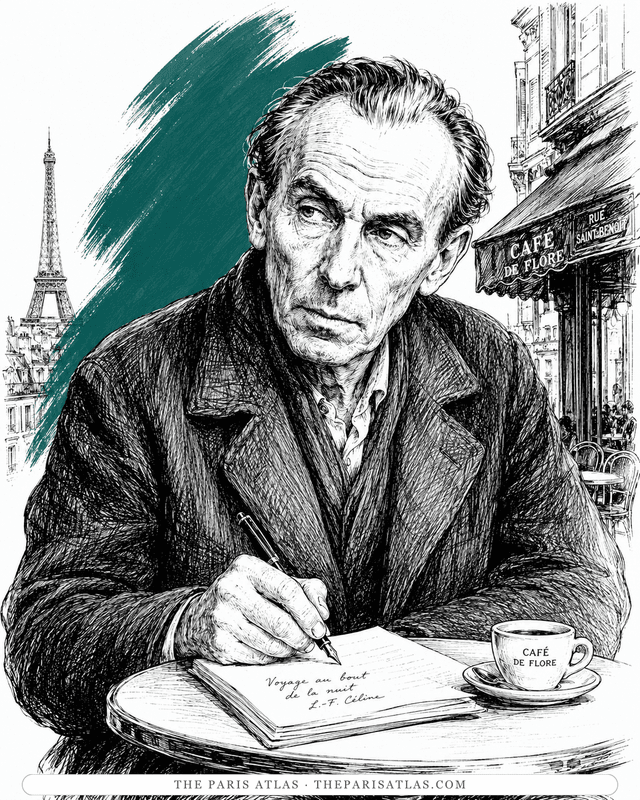
Louis-Ferdinand Céline
The lineage runs straight downhill: Le Feu's trench-level truth-telling, pushed past despair into Journey's night.
View author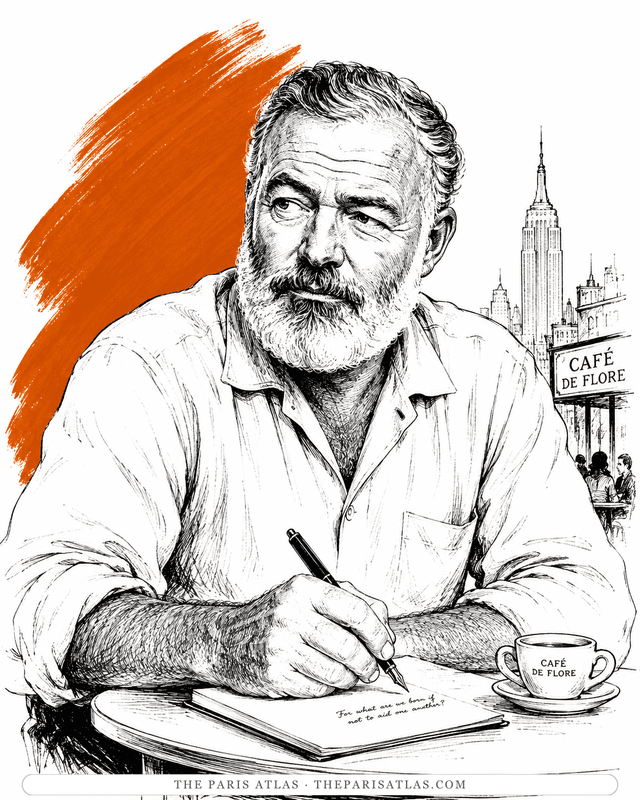
Ernest Hemingway
The other heir — Hemingway called Le Feu the war's one true book written in the fighting, and his own war prose kept its standard.
View author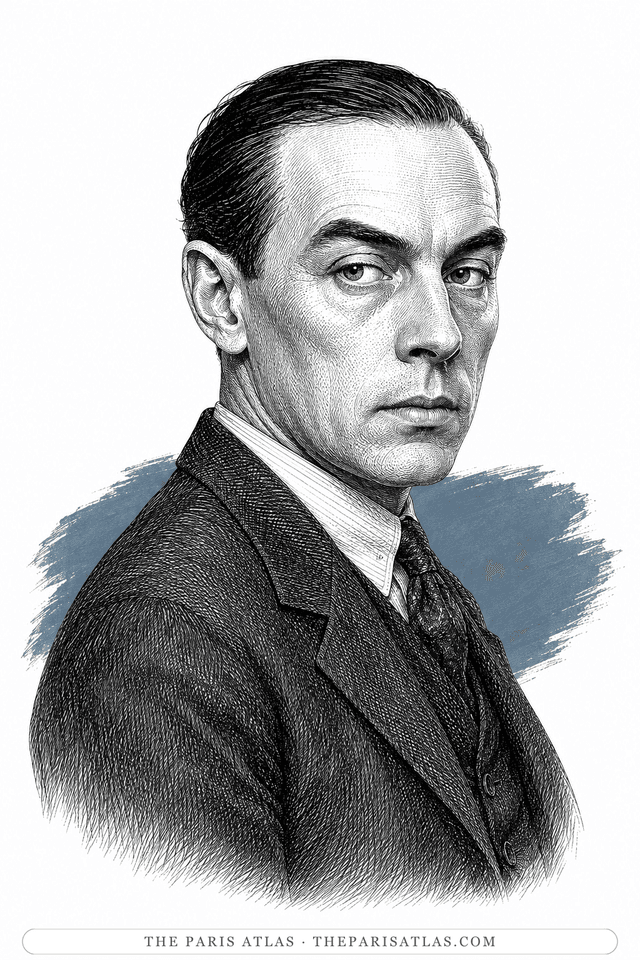
Erich Maria Remarque
German novelist whose direct, unsentimental fiction follows soldiers and survivors marked by the First World War.
View author