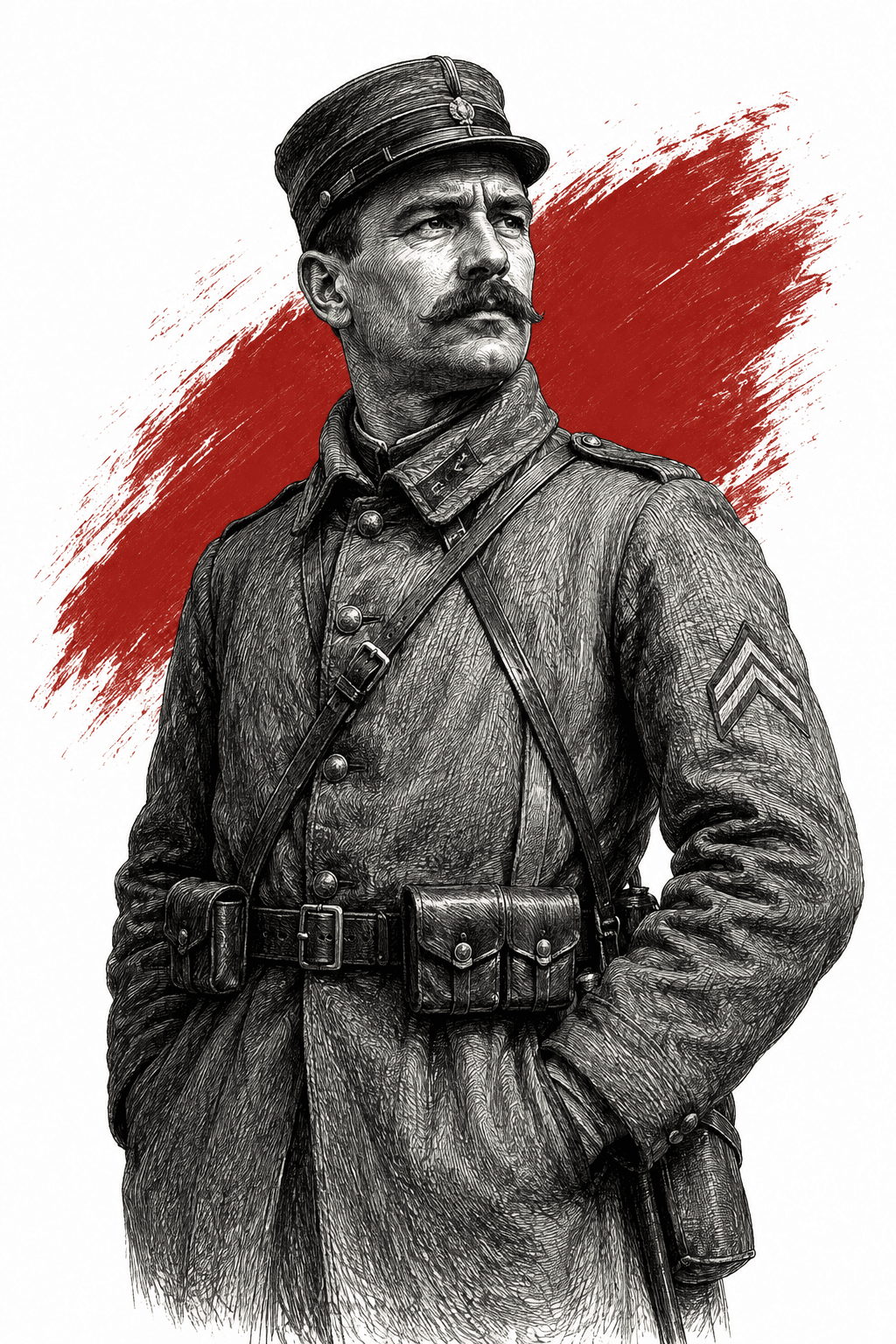
Corporal Bertrand
The squad's corporal: a factory foreman, sober, exact, and the only man in the book who tries to say what the war means while it is going on.
The book

At a glance
- Corporal, commanding the squad the novel follows
- Foreman in a packing-case factory
- Aloof, correct, silent, and reliably obeyed
- Against it, and his squad is the drier for it
- That it had to be done, and that the future will be right to be ashamed of it
- From the first trench chapter to the attack
Who they are in the book
Spoiler-freeA corporal in the French army of 1915 was a working soldier with a stripe, not an officer. Bertrand runs a squad of about fifteen men, allots their tools and their rations, wakes them for guard duty and goes over the parapet in front of them. Before the war he was a foreman in a factory that made packing cases, and he handles men the same way: quietly, with a plain answer for every question.
He keeps a little apart from the squad and speaks rarely. When he does, the others tend to stop and listen, which in a book made almost entirely of overlapping chatter is the strongest signal Barbusse can give.
How Corporal Bertrand Is Portrayed
- The mannerCorrect, upright, silent, with a strong face and a direct gaze. He is described as always doing more than is required of him, and as being the man everyone turns to for an explanation of how anything works.
- He does not drinkHe hates drunkenness, and the narrator credits him with the fact that his squad is among the least soaked in wine and brandy in the regiment. On the night before an attack, when the neighbouring barns are shouting and fighting, his men are sober.
- He turned down the wineWhen a transport officer is caught coming out of a cellar with four bottles under his arms and made to serve wine out to everybody as a forfeit, Bertrand is the only man who will not take any.
- What he says about shirkersThe squad spends a whole chapter raging about men with safe jobs behind the lines. Bertrand cuts across it by pointing out that every man is a shirker in somebody else's eyes, and adds that there are times when duty and danger are the same thing, and that you do not defend anything from under cover.
- The grenadeIn the attack, at the moment the squad reaches the German parapet, a bomb lands in front of them. Bertrand kicks it back so cleanly that it goes up and bursts over the trench instead of among his men.
- The name he givesAsked afterwards whether one figure rose above the war, he answers with a single word: Liebknecht. Karl Liebknecht was the German socialist deputy who broke with his own parliament over the war, and naming a German as the war's one admirable man was a startling thing for a French soldier to say in 1916.
The night after the attack Bertrand talks more than he has in the whole book. He admits he killed three men with his hands and that they had all become beasts to get there, says it was necessary for the sake of the future, and then predicts that the work of the future will be to wipe the present out as something shameful. He names Liebknecht as the one figure who rose above the war.
He goes out on liaison duty that same night and does not come back. Volpatte finds his body on the plateau the next morning, killed by a shell that broke his leg and left him to bleed to death; the face is swollen and set in something that looks like a laugh. The squad arranges the body and Volpatte keeps his pocket-book. Nobody replaces him, and the narrator says simply that they had needed him all along.
If you like Le Feu


If you like Henri Barbusse
Explore authors with a similar voice, perspective, and influence.

Louis-Ferdinand Céline
The lineage runs straight downhill: Le Feu's trench-level truth-telling, pushed past despair into Journey's night.
View author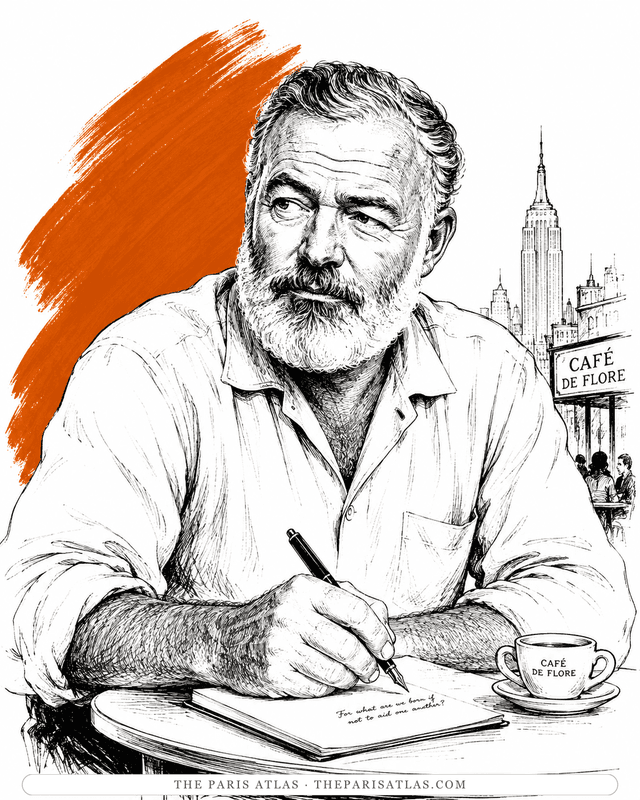
Ernest Hemingway
The other heir — Hemingway called Le Feu the war's one true book written in the fighting, and his own war prose kept its standard.
View author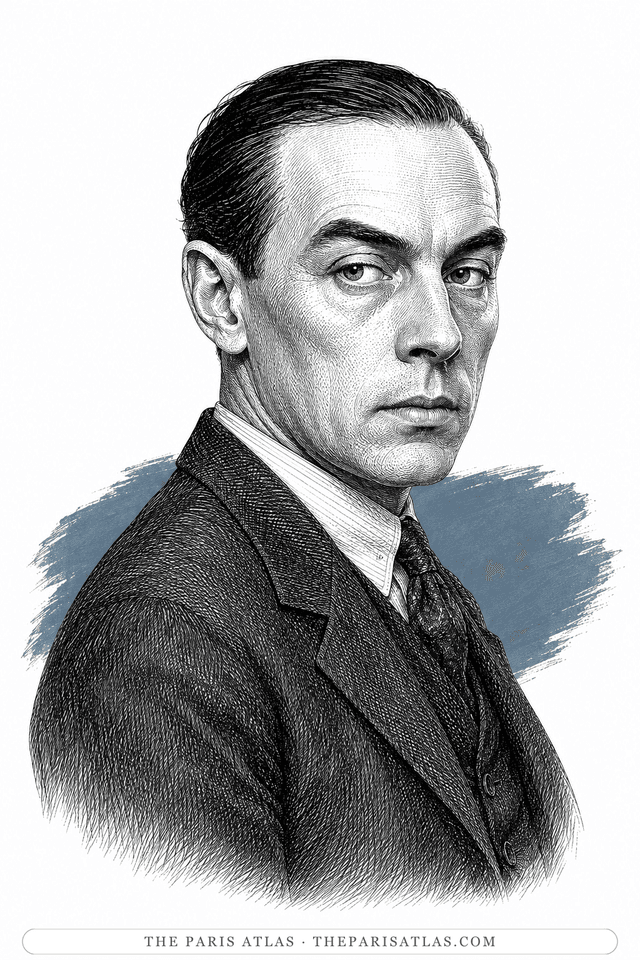
Erich Maria Remarque
German novelist whose direct, unsentimental fiction follows soldiers and survivors marked by the First World War.
View author