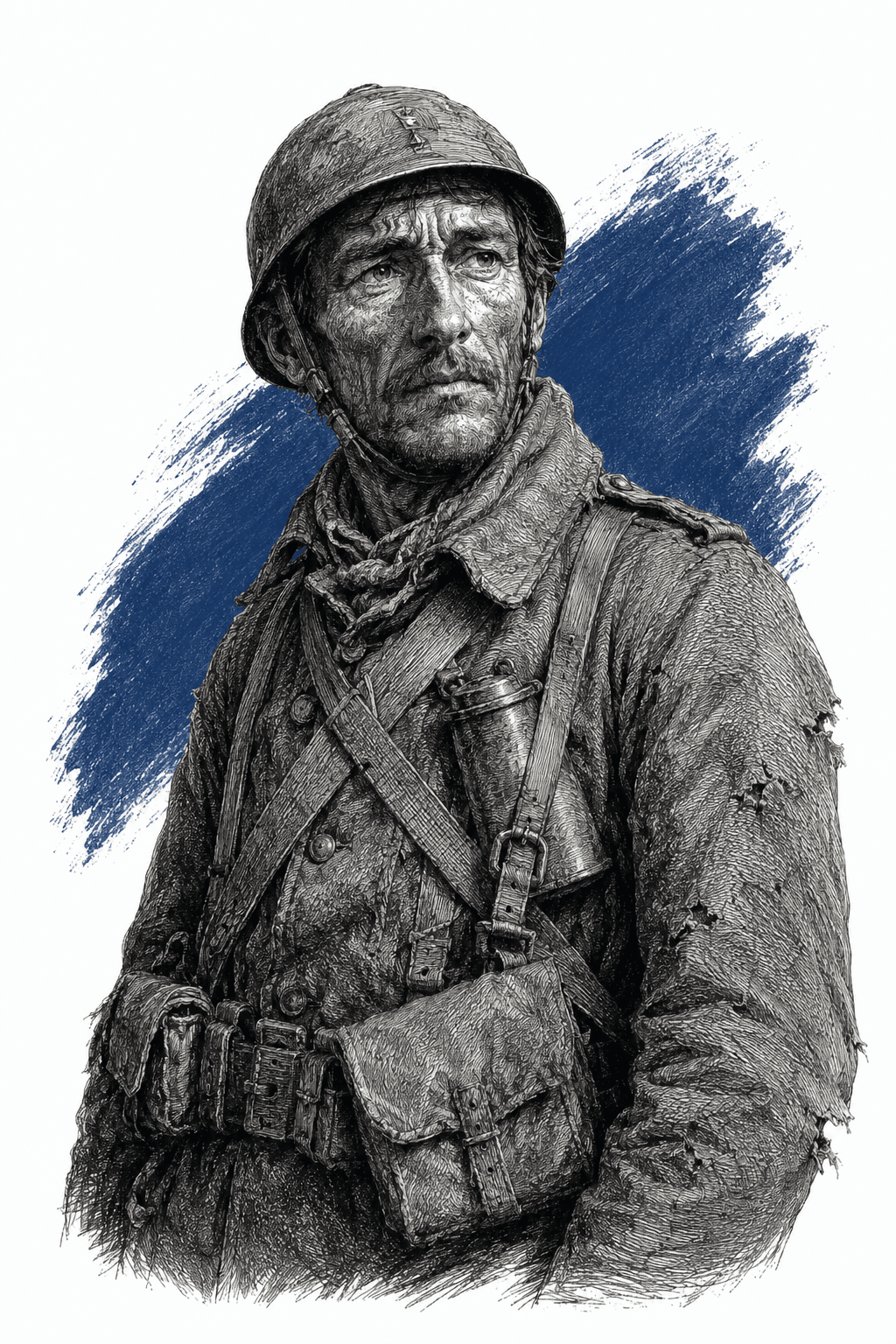
Fouillade
A boatman from the Mediterranean coast, forty years old and six hundred miles from home, freezing his way through a northern winter.
To be warm, and to drink the wine of his own region, which he talks about at length and never manages to get.
The book

At a glance
- Private in Corporal Bertrand's squad
- Boatman at Cette, now Sète, on the Mediterranean
- Forty
- Very tall, very thin; the narrator calls him a Don Quixote
- Over six hundred miles
- Thirteen sous, against a litre of ordinary wine at twenty-one
Who they are in the book
Spoiler-freeFouillade worked the barges and docks at Cette, now spelled Sète, on the Mediterranean coast. He is the squad's southerner, and Barbusse never lets you forget the distance: the wind, the mud and the grey light of the Pas-de-Calais are wrong for him in a way they are not wrong for the others. He is forty, very tall and very thin, with a long lean face, sunken cheeks and skin the colour of a violin.
He gets a chapter to himself, and almost nothing happens in it. That is the point. It is a day of rest in a leaking barn where there is nowhere to sit, nothing to do, no fire and no money, and it is one of the bleakest things in the book.
How Fouillade Is Portrayed
- Four days in a shell-holeLent out with Volpatte to another battalion, told to fire from a hole and then forgotten for four days and nights, with bullets coming down and the hole stinking. They ration a loaf, drink the wine at once, and take two German prisoners who fall in on them.
- WashingIn freezing rain he strips to the waist in the open and washes with three mess-tins of water in a village with no water, working his arms so violently that a crowd gathers to watch. Afterwards he cannot get warm again, and regrets the whole thing.
- The barnHalf of the squad's rest quarters is under water with rats swimming in it. You cannot sit down because the floor is liquid mud, you cannot lie down because the straw reeks of ammonia, and you cannot go out because the general must not see soldiers in the street. Fouillade spends the day walking three paces back and forth on the spot.
- The dogLabri belongs to another squad and is tied up all day, ill, ignored and beaten by the man responsible for him. Fouillade is the one who crouches down to him, puts a hand on his head, and later tells him quietly that it cannot be helped.
- The wine that never happensA tavern-keeper from his own region has promised him bottles from home. He waits all day for the hour when soldiers are allowed out, finds the place shut down by the authorities, discovers he has thirteen sous rather than thirty-seven, and ends up alone at the corner of a stranger's table with a small bottle of white bought for twelve.
- What he sees when he closes his eyesThe canal at Cette, the smell of thyme, the Lake of Thau meeting the sea, and the house where he grew up playing at soldiers with a wooden sabre. He opens his eyes, works out what is likely to happen to him, and gets up.
Fouillade goes through the attack and is one of the first men into the German trench, shouting, at almost the same moment as Pépin. He is still with the squad at the end of the book, shivering, hollow and dragging his rifle along like a broom.
If you like Le Feu


If you like Henri Barbusse
Explore authors with a similar voice, perspective, and influence.
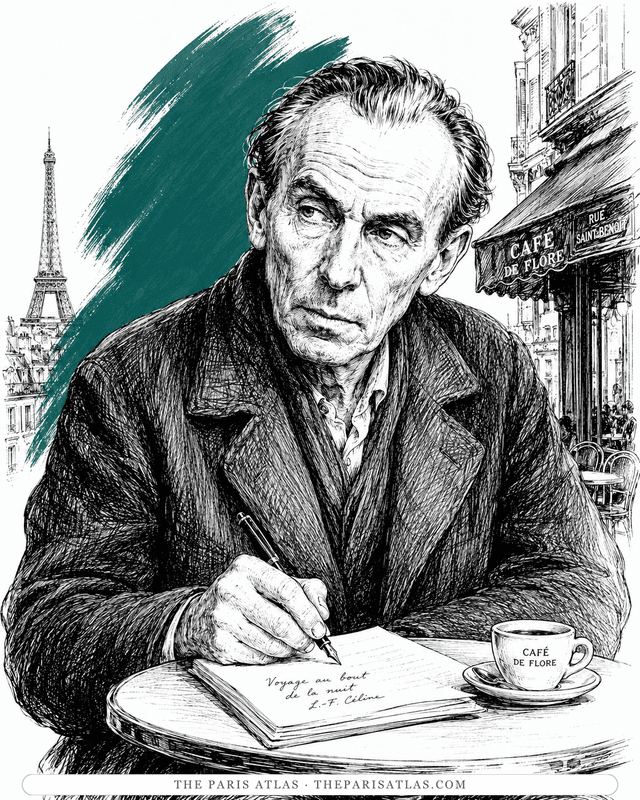
Louis-Ferdinand Céline
The lineage runs straight downhill: Le Feu's trench-level truth-telling, pushed past despair into Journey's night.
View author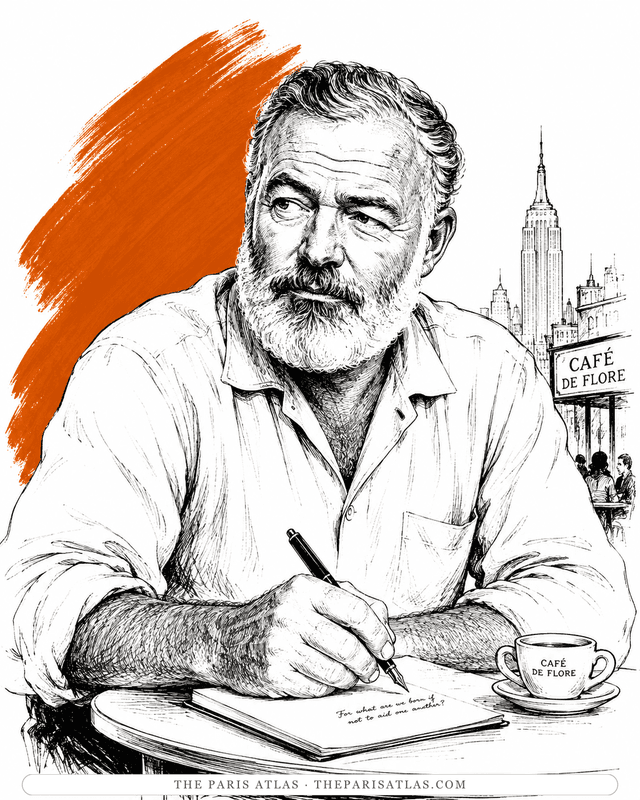
Ernest Hemingway
The other heir — Hemingway called Le Feu the war's one true book written in the fighting, and his own war prose kept its standard.
View author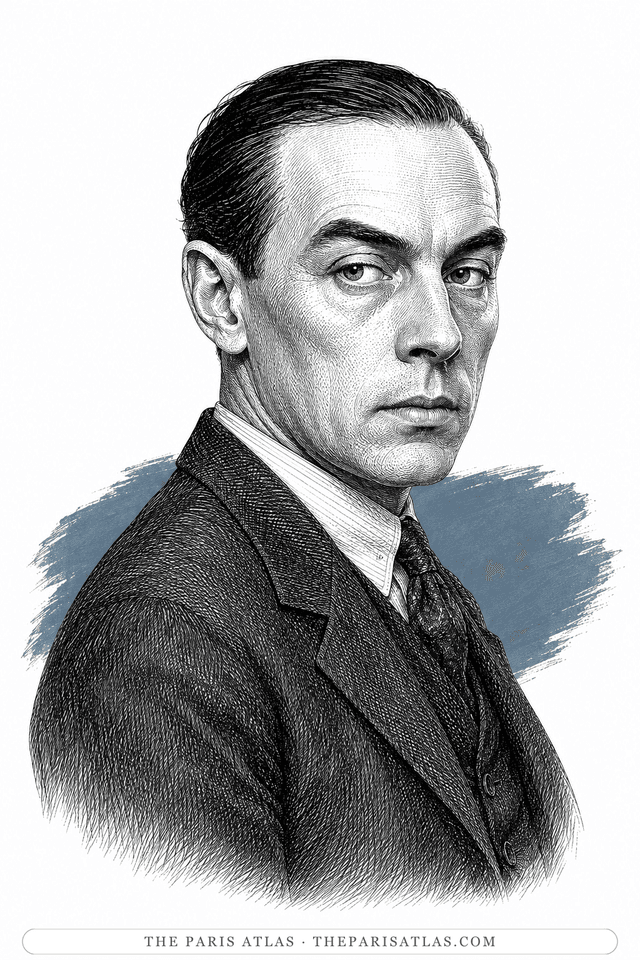
Erich Maria Remarque
German novelist whose direct, unsentimental fiction follows soldiers and survivors marked by the First World War.
View author