Barque
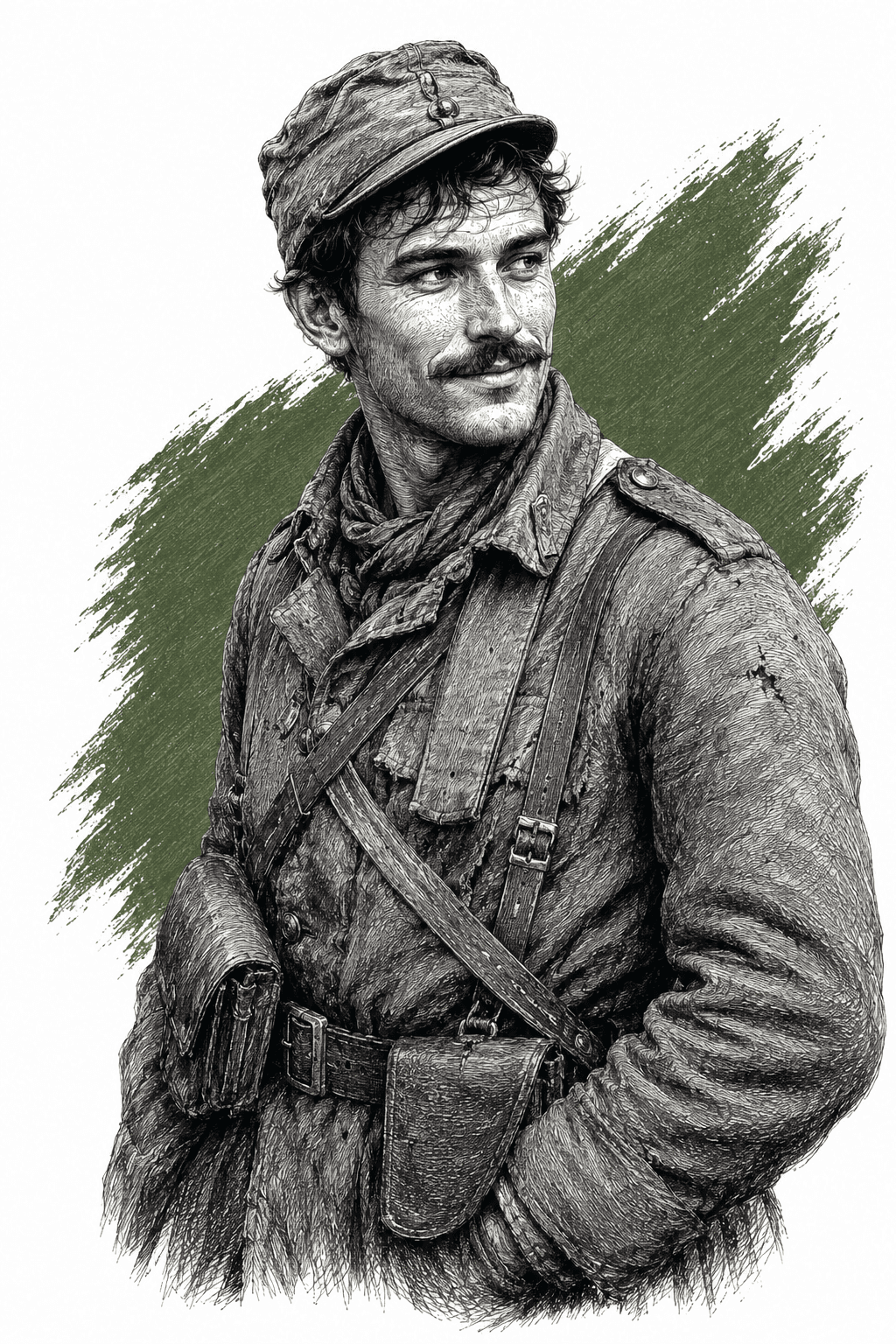
A Paris messenger who rode a delivery tricycle through the traffic, and the squad's fixer, mimic and loudest mouth.
The book

At a glance
- Private in Corporal Bertrand's squad
- Porter and messenger, on a carrier-tricycle in Paris
- The Paris suburbs, and he sounds like it
- The resourceful one, which the narrator finds wearing at times
- A water-bottle stretched from two litres to two and a half by a shot from a blank cartridge
- With Tirette, the squad's other comedian
Who they are in the book
Spoiler-freeBefore the war Barque carried parcels around Paris on a delivery tricycle, weaving between taxis and swearing at pedestrians. He is long-legged and pale with a small red goatee, and he has brought the city with him: the accent, the patter, and a professional confidence that he can get hold of anything.
He is the squad's negotiator and its performer. He also has the sharpest eyes in the book, which is not always to his credit, and one of the few conversations in Le Feu about the book itself is his.
How Barque Is Portrayed
- The lookA chest-protector cut from a pink eiderdown quilt, now bleached and mottled by rain; surgical bandages wrapped round his leg-cloths to keep them clean, which give him white calves; a cotton cap under his helmet with a red tassel hanging below the rim.
- The fixerThe squad's plan at every rest is to rent a room and a table so it can eat sitting down. Barque is the one who gets it: he talks a hostile landlady into a windowless laundry shed, makes a table out of an old door on two barrels, and gets wine out of her that she is not legally allowed to sell.
- The newspaper actHe performs the war reporting of the day out loud, holding an imaginary paper in front of his nose: the Crown Prince mad and repeatedly killed, the Germans chewing wood, the trenches so comfortable that men will be sorry to leave. Then he plays the editor telling his writers to spin it out again to fill four pages.
- The crueltyWhen a working party of elderly Territorials files past, bent under picks and shovels, Barque and Tirette lean on the trench wall and jeer at them one by one for the entertainment of the others. The narrator writes it down flatly, and says that the miserable are mocking the still more miserable.
- What he asks the narratorFinding him writing, Barque asks whether the book will make common soldiers talk the way they really talk, obscenities and all, or clean it up. He warns that leaving the swearing out would be like painting a portrait and skipping one of the colours.
- He stopped complainingHe says he spent the first months of the war furious with civilians, with the rear, with shirkers. He was young then. Now he takes things as they come, because the alternative is going mad.
Barque is killed on the night patrol into No Man's Land, along with Lamuse, Biquet and Eudore, when a German machine-gun catches the party in the open under a flare. He is shot in the belly. The bodies cannot be recovered for two nights, and are then stacked in a recess in the trench wall where the squad has to live alongside them. The narrator describes what four days have done to him without softening any of it.
If you like Le Feu


If you like Henri Barbusse
Explore authors with a similar voice, perspective, and influence.

Louis-Ferdinand Céline
The lineage runs straight downhill: Le Feu's trench-level truth-telling, pushed past despair into Journey's night.
View author
Ernest Hemingway
The other heir — Hemingway called Le Feu the war's one true book written in the fighting, and his own war prose kept its standard.
View author
Erich Maria Remarque
German novelist whose direct, unsentimental fiction follows soldiers and survivors marked by the First World War.
View author