The narrator
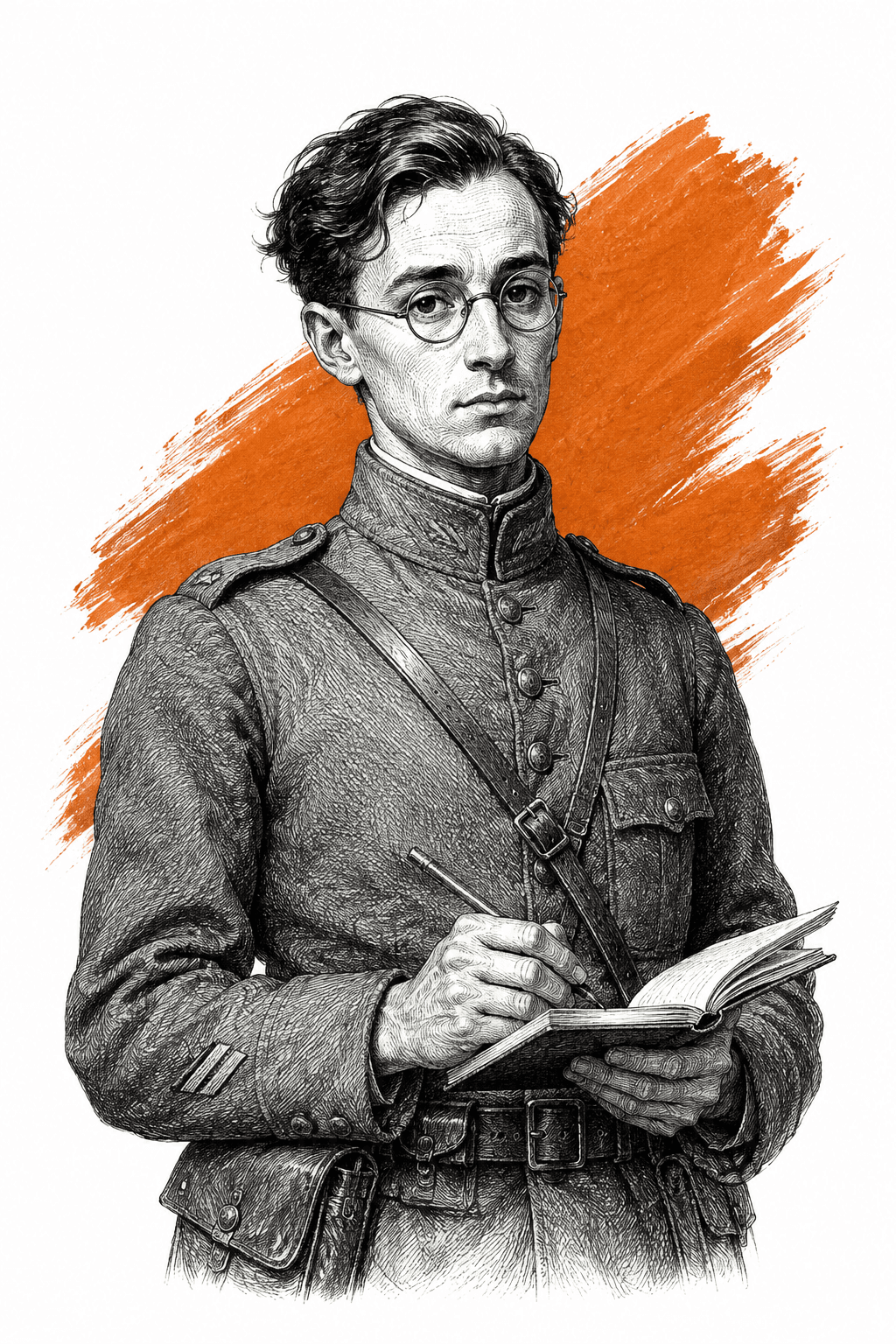
The man telling the story is a private in the squad like any other. Barbusse never gives him a name, a rank or a trade.
The book

At a glance
- Narrator, and a private in Corporal Bertrand's squad
- None given, at any point
- Second-class soldier, the lowest there is
- Never stated; he is the only man in the squad whose civilian life the book withholds
- The same load as the others, plus paper and a pencil
- Every chapter but the first
- Henri Barbusse — the author, who served in the ranks and wrote the book from his own front-line notebooks · 1873–1935 · Asnières-sur-Seine, France
Who they are in the book
Spoiler-freeAlmost every war book of 1916 was told from above, by an officer or a visitor. Le Feu is told from inside the ranks by a man who carries a rifle, digs, stands sentry at two in the morning and queues for his share of wine like everyone else. He has no name, no stripes and no stated job in civilian life, and he almost never says what he feels. What he does instead is look, and record.
The one thing that marks him out is that he is writing. He keeps notes in the trench, and the squad knows it. That is as close as the book comes to explaining itself: the man in the mud is also the man taking down what the mud is like.
How The narrator Is Portrayed
- He is one of the squad, not an observer attached to itHe shares the dug-out, the food queue, the guard roster and the lice. When he writes about the men he writes "we", and he is counted in the same tally of survivors.
- The squad knows he is taking notesBarque, the squad's Paris messenger, crawls over to ask what he is writing, and then asks whether a book about soldiers will print the way soldiers actually swear, or tidy it into polite language. The narrator says he will print it.
- The book does not open with himThe first chapter is set in an Alpine sanatorium, where patients wrapped in blankets look down on the world and foresee the war coming. The narrator's own account starts in the second chapter, at dawn, in a flooded trench.
- He goes on the patrolSent out at midnight with four others to find a German listening post, he crawls down the slope and back up it, and spends a night and a day pressed into a shell-hole while a machine-gun works over the ground above him.
- He walks into a destroyed village with the man who lived thereUnder cover of fog he goes down to Souchez with Poterloo, a miner whose home the village was, and records what is left, which is paving stones and a course of bricks.
- He carries a wounded man outHe is given charge of Mesnil Joseph, shot in the thigh, and walks him for hours down the communication trenches, the deep zigzag ditches that link the rear to the front line, to the aid post dug in at a crossing.
The narrator survives, and the last chapter gives him the closest thing the book has to a speech. Washed up on a mound with the remnants of two armies after a flood has drowned the trenches, he listens to wounded and dying men argue about what the war was for, and then sets out his own position: that liberty and fraternity are words, that equality is a fact, and that every human life is worth the same as every other. It is a political conclusion, and it is stated in his voice rather than dramatised.
Barbusse enlisted in 1914 at forty-one, when he could have stayed out, and served seventeen months in the line as a private and then as a stretcher-bearer, one of the men who carry the wounded in under fire. He took notes throughout and built the novel from them. The narrator is not signed with his name, but the service, the age of the observation and the notebook are his.
If you like Le Feu


If you like Henri Barbusse
Explore authors with a similar voice, perspective, and influence.

Louis-Ferdinand Céline
The lineage runs straight downhill: Le Feu's trench-level truth-telling, pushed past despair into Journey's night.
View author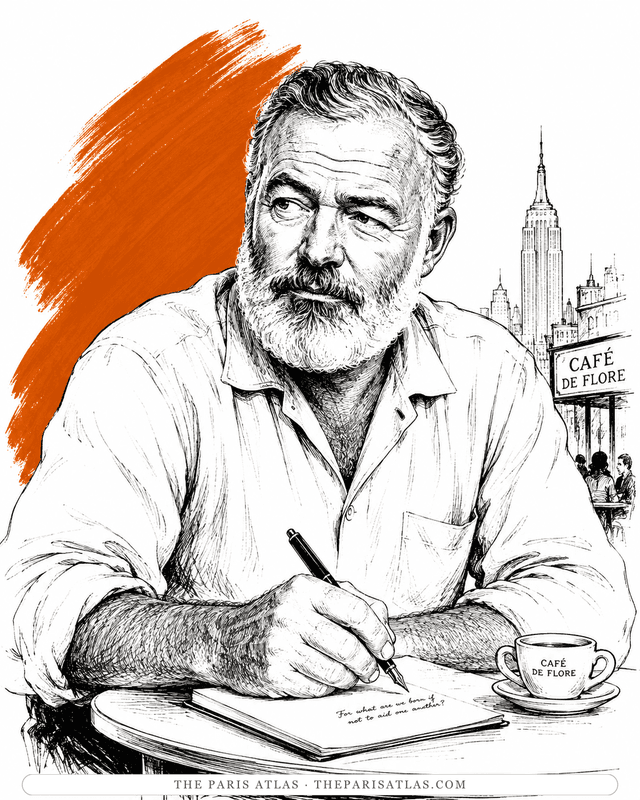
Ernest Hemingway
The other heir — Hemingway called Le Feu the war's one true book written in the fighting, and his own war prose kept its standard.
View author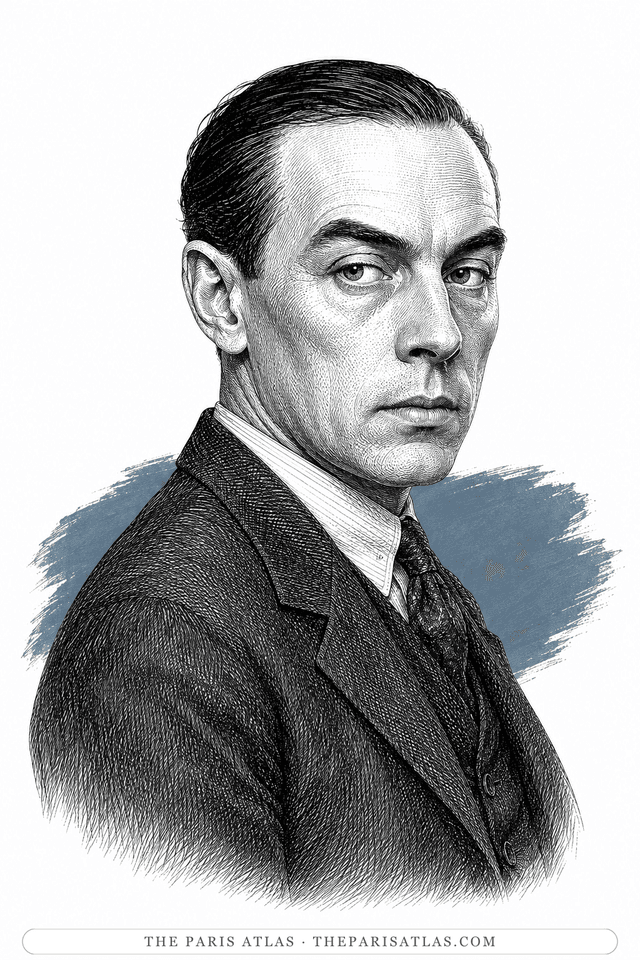
Erich Maria Remarque
German novelist whose direct, unsentimental fiction follows soldiers and survivors marked by the First World War.
View author