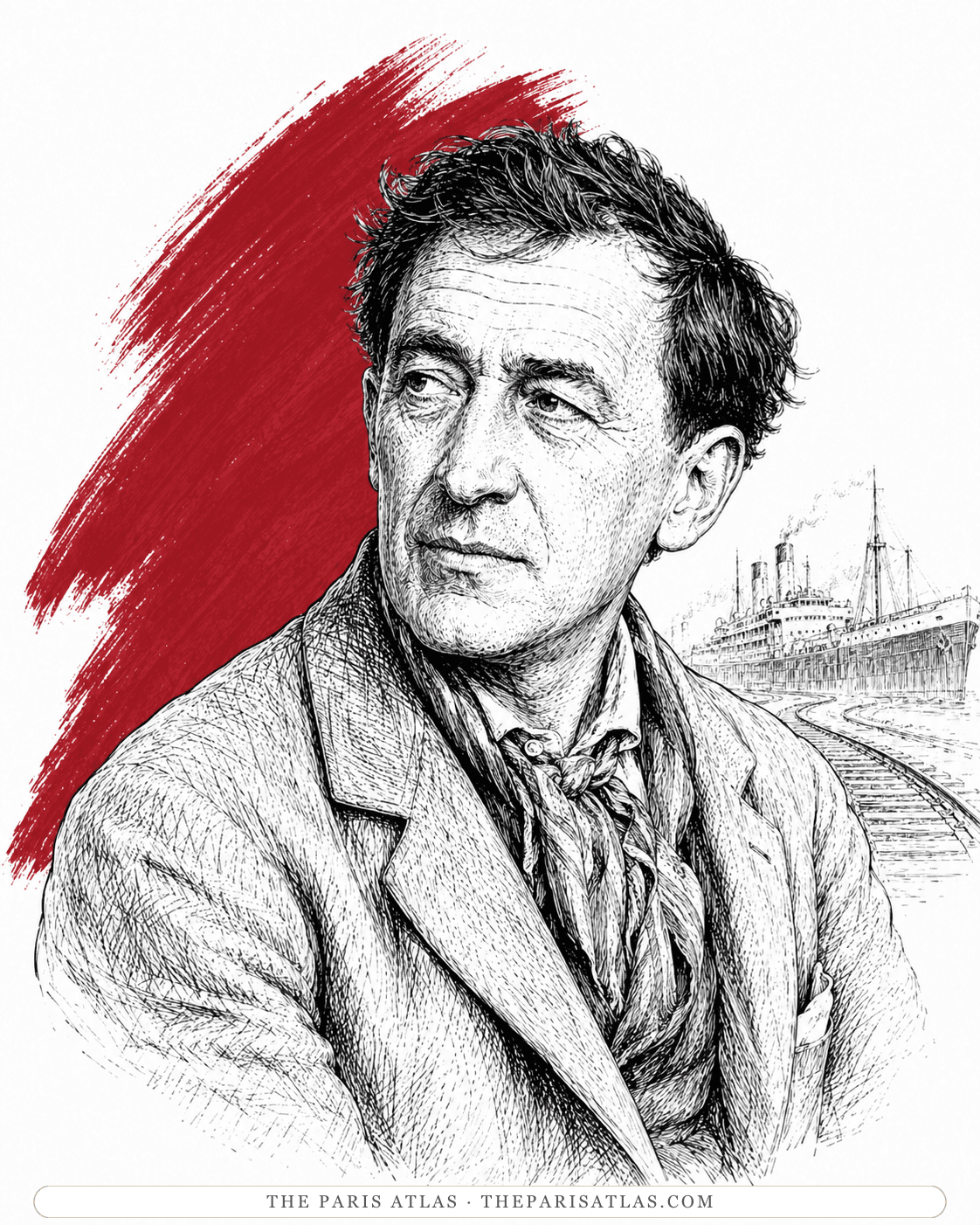

Le Feu
Barbusse's collective 'we' of the trenches — this is its terrible singular answer.
Read our take
Four pages that end the war literature of glory: the poet-legionnaire's confession, with drawings by Fernand Léger.
J'ai tué is barely a book — a few incandescent pages, published in 1918 with drawings by Fernand Léger — and it says what almost no combatant literature had dared say in the first person: I killed a man, with a knife, and here is exactly how it felt. Cendrars wrote it as a legionnaire who had left his right arm in Champagne; the prose moves like the assault it describes, from bombardment to trench to the single human act at the end of all the machinery. One of the Great War's essential documents, sized like a pamphlet and weighted like a monument. (A testimony — nothing here to spoil.)
Cendrars volunteered for France in the war's first days — a Swiss poet joining the Foreign Legion — and served until a Champagne offensive in September 1915 took his right arm. J'ai tué distills the combat experience into one accelerating movement: the industrial overture of the guns, the advance through wire and mud, and then the encounter the title promises, stripped of every cushioning abstraction. Where the era's war books mourned or glorified, Cendrars confesses — the poet as killer, refusing the alibi of the machine age he has just described: at the end of all the artillery, a man chose, and it was me.
The 1918 edition carried drawings by Fernand Léger — the war's other great machine-eye, and a fellow veteran — beginning a friendship of the avant-garde that ran for decades. The pamphlet's honesty made it a touchstone: the direct line runs to every later refusal to prettify combat, and its cold first person haunts the century's war writing well past this shelf. Read with Le Feu, it is the other pole of trench truth — Barbusse's collective 'we' answered by Cendrars' unbearable 'I.'
A single short prose movement: the modern war assembled overhead — railways, factories, the mathematics of bombardment — then the assault at ground level, and finally the title's act, one man with a knife, told without flinching or apology. The last line owns it: I have killed.
Ten minutes' reading; it does not leave when the ten minutes do.
The knife does not simply replace industrial war with a private encounter. Immediately before the killing, the narrator gathers mines, factories, transport, domestic labor and distant materials into the equipment he carries. The world seems to have worked toward this one hand. That expansive catalogue makes the abrupt first-person assertions harder to isolate: individual agency and collective preparation remain entangled. His insistence on speed, action and survival also sounds like self-justification. The ending owns violence without offering a settled moral judgment that the reader must share.
Long before the final encounter, the prose compares an artillery flash to a photographic instant: a few shapes become visible and disappear. Short fragments make perception intermittent rather than panoramic. The reader must assemble the battlefield from glimpses, just as the soldiers cannot take in its whole machinery at once. Constellation Cendrars records five Léger drawings in the 1918 edition, establishing a second medium beside this verbal construction. The imagined printing-room scene can suggest that shared problem of representation, but it is not evidence that poet and painter worked together in the depicted room.
The whole modern reckoning with combat guilt, four pages early and first person singular.
Industrial war rendered as system, then collapsed into one hand — the century's argument in miniature.
Cendrars and Léger, veterans both — the avant-garde processing the war it had marched into.
1914
Cendrars, a Swiss poet, volunteers for France in the war's first days and joins the Foreign Legion.
1915
A Champagne offensive in September takes his right arm.
1918
La Belle Édition publishes J'ai tué in Paris, with drawings by the painter and fellow veteran Fernand Léger.
Barbusse's collective 'we' of the trenches — this is its terrible singular answer.
Read our take
The same war remembered at full length thirty years on — the squad the pamphlet's 'I' fought beside.
Read our take
The war novel of the next generation — its famous plainness about violence has this pamphlet among its ancestors.
Read our takeBlaise Cendrars. Published in 1918 as J'ai tué, with drawings by the painter Fernand Léger.
A few incandescent pages in which Cendrars says what almost no combatant had said in the first person — that he killed a man, with a knife, and exactly how it felt.
Yes. Cendrars wrote it as a Foreign Legionnaire who had lost his right arm in a Champagne offensive in 1915.
Barely a book — a pamphlet-length testimony, sized small and weighted like a monument.
It is one of the Great War's essential documents, its prose moving like the assault it describes — from bombardment to trench to the single human act at the end of all the machinery.
Explore authors with a similar voice, perspective, and influence.
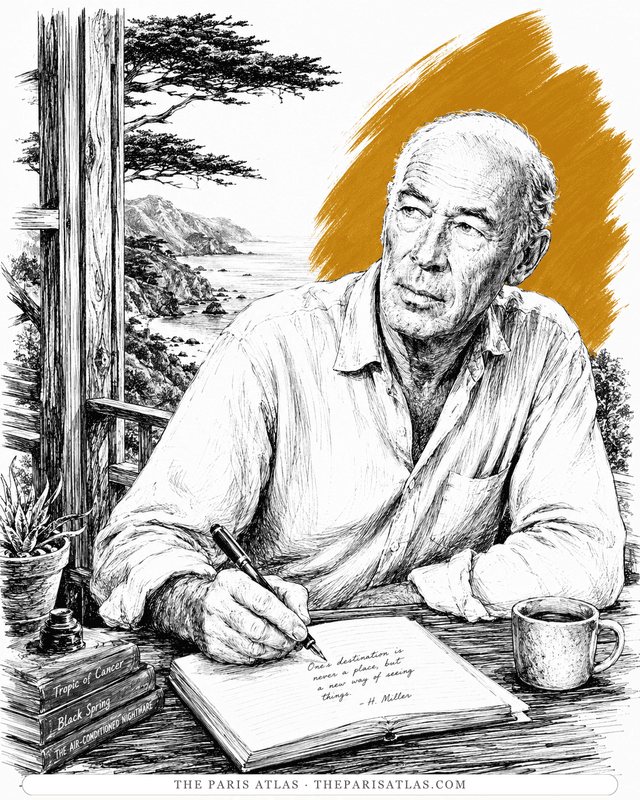
The devoted heir — Miller crowned Cendrars above every living writer, and the torrential first-person prose is the family resemblance.
View author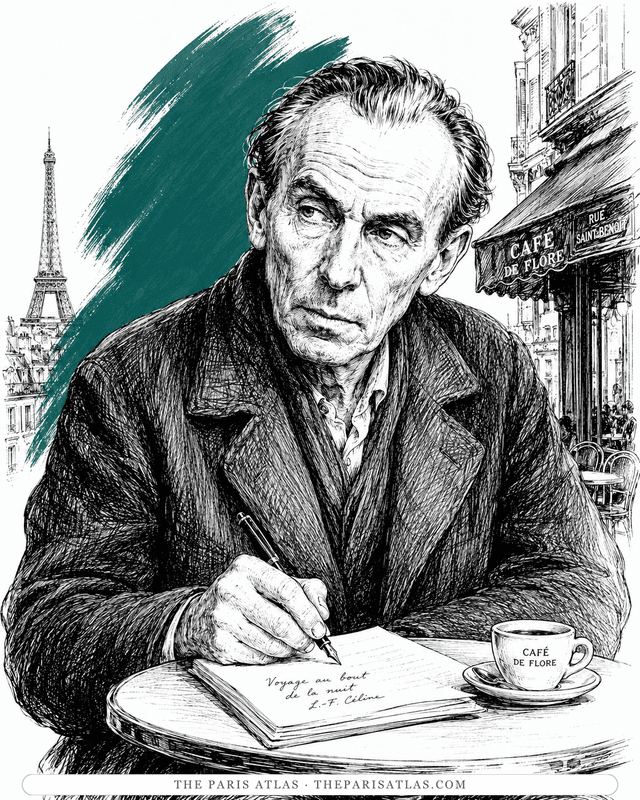
The other voyager at the end of the night — spoken rhythm, black exuberance, and a war wound at the center of everything.
View author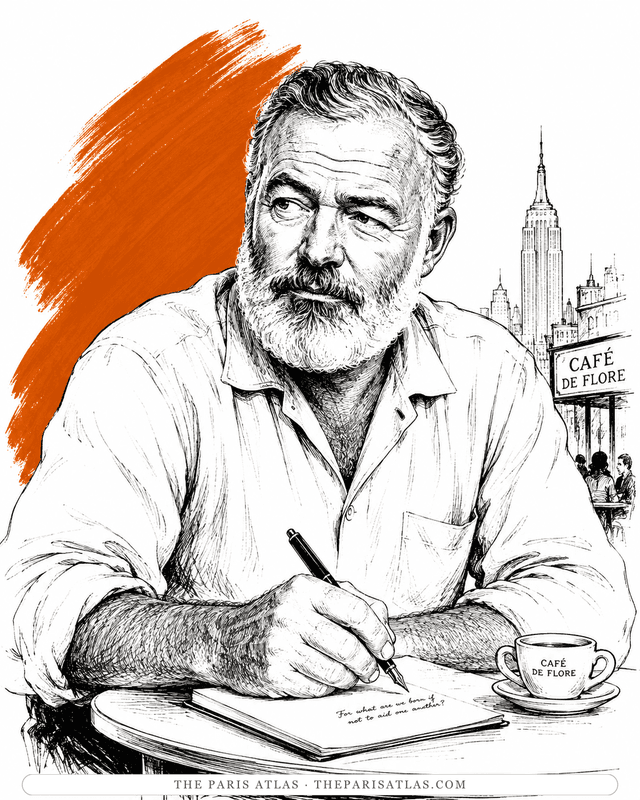
Author of The Sun Also Rises and A Moveable Feast; his pared-down style, developed in 1920s Paris, became the most imitated in American prose.
View authorThe sources below include the primary text, editions, scholarship, archival materials, and other records that informed this page. They document I Have Killed, its publication, and its place in literary history.

The primary text represented by this page, used for descriptions of the work’s contents and for any quoted passages shown here.
Complete displayed French text, attributed to Denoël's 1962 collected edition; 1918 illustration credit checked separately. No verified killing or printshop meeting claimed.
1918 edition entry and illustration credit only.
Used to verify I Have Killed's bibliographic context and its place within Blaise Cendrars's published work.
Used for independent archival, institutional, or historical context surrounding Blaise Cendrars and I Have Killed.

Used to cross-check chronology, publication history, and the circumstances in which I Have Killed appeared.
Used for an additional scholarly or biographical perspective on I Have Killed and Blaise Cendrars's wider career.
The primary text is the baseline reference for every book page. Additional references document publication history, interpretation, and historical context where that evidence is available.
 Explore more resources