

I Have Killed
Cendrars's short account of the same war, published in 1918. This book expands it.
Read our take
Blaise Cendrars's memoir of the Foreign Legion squad he led in the First World War, written thirty years after he lost his right arm in it.
In 1946, thirty years after the First World War, Blaise Cendrars published this memoir of his time as a corporal in the French Foreign Legion. Each chapter is a portrait of one man from his squad, using the man's real name. Cendrars lost his right arm in the war, and the title refers to that hand. The book was published in French as La Main coupée and in English as Lice. (It's a book of portraits — nothing to spoil.)
Cendrars joined the French Foreign Legion in 1914 and led a squad of foreign volunteers — men from Poland, Italy, and elsewhere who had chosen to fight for France. The book describes them one at a time: what they did before the war, how they talked, and what happened to them. It is not a book about battles. Most of it is the daily life of the trenches: mud, rats, wine, and patrols.[1]
In September 1915 Cendrars was wounded at Navarin and his right arm was amputated. It was his writing hand, and he later said that losing it made him the writer he became. He wrote this book thirty years later; Denoël published it in Paris in 1946, and Nina Rootes translated it into English as Lice. It is the second book of his four-volume memoir, and it expands the short account of the war he had published in 1918 as I Have Killed.[1]
Each chapter is a portrait of one man from the squad: who he was before the war, how he behaved in it, and how he died or survived. Between the portraits are chapters about daily life at the front — patrols, rumors, food. Cendrars's own wound appears several times: Navarin, the amputation, and the phantom pain that followed him afterward.[1]
The chapters stand on their own, so the book can be read a portrait at a time.[1]
Vieil's postcards do not simply comfort the men at the front. Their saturated blue scenery makes his distance from trench life almost painfully visible, and the chapter ends with the recipients feeling dispirited. Meanwhile, a second traffic runs in the opposite direction: soldiers send worked shell fragments and other objects to the doctor's collection that keeps Vieil occupied. War becomes something to arrange behind glass elsewhere. The affectionate account of this resourceful shirker therefore carries an uneasy contrast between the men enduring danger and the man finding a comfortable place beyond it.
The Coquoz portrait briefly becomes a story about the narrator's own dependence. He helps the young soldier compose letters to a bakery worker; later, after leaving hospital, that woman feeds him. The connection carries the narrative beyond the trenches without leaving its network of relationships behind. A plentiful list of pastries gains urgency beside his account of hunger and difficulty using his surviving hand. Men offer him drinks, but Sophie supplies food. The distinction makes care something practical and sustaining, measured by what a person needs rather than by a convivial gesture.
The book remembers Cendrars's squad by name, one portrait at a time.
The men's jokes and habits get as much space as their deaths. Cendrars does not write about the war with reverence.
Cendrars was there: he led these men as a corporal and lost his arm in the same war he describes.
1914–1915
Cendrars leads a squad of foreign volunteers in the French Foreign Legion in the trenches.
1915
He is wounded at Navarin in September, and his right arm is amputated.
1946
Denoël publishes La Main coupée in Paris. Nina Rootes's English translation later appears as Lice.

Cendrars's short account of the same war, published in 1918. This book expands it.
Read our take

Blaise Cendrars. Published in 1946 as La Main coupée, it is the second panel of his memoir tetralogy, and appeared in English as Lice.
His squad in the First World War. Cendrars led foreign volunteers of the French Foreign Legion in the trenches, and each chapter remembers one of the men by name. He wrote it thirty years after the war.
Cendrars's right hand. His arm was amputated after he was wounded at Navarin in 1915, and the loss runs through the book.
Funny and sad at the same time. Cendrars records the men's jokes as carefully as their deaths, and he avoids heroics.
Autobiographical memoir of Cendrars's service as a corporal in the French Foreign Legion.
Explore authors with a similar voice, perspective, and influence.
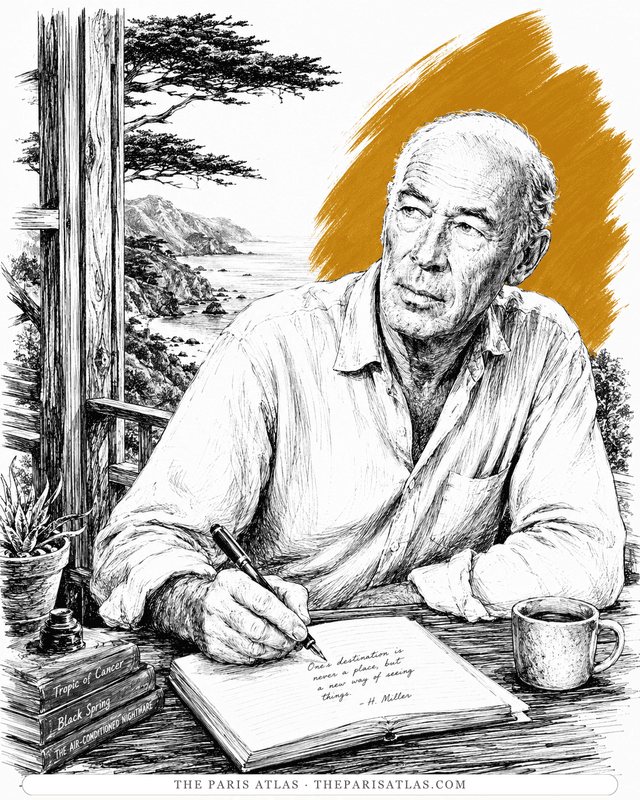
The devoted heir — Miller crowned Cendrars above every living writer, and the torrential first-person prose is the family resemblance.
View author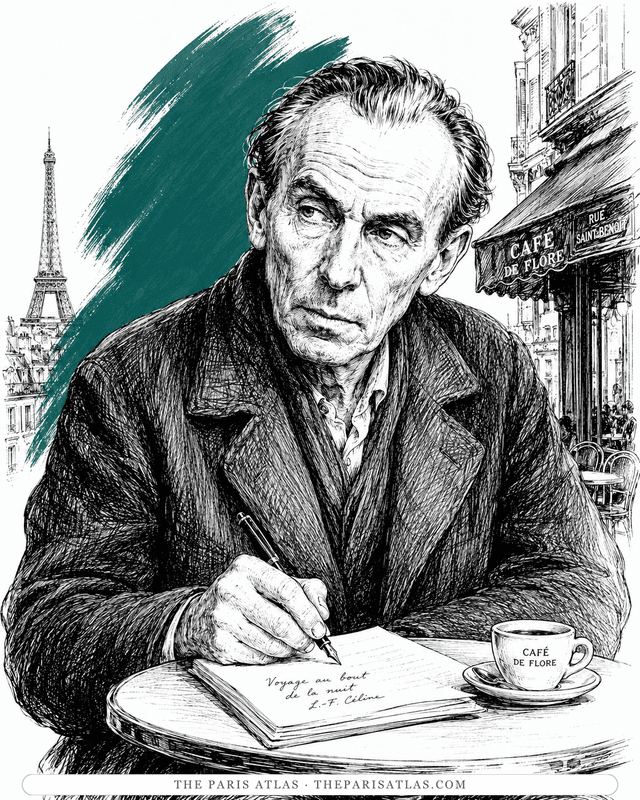
The other voyager at the end of the night — spoken rhythm, black exuberance, and a war wound at the center of everything.
View author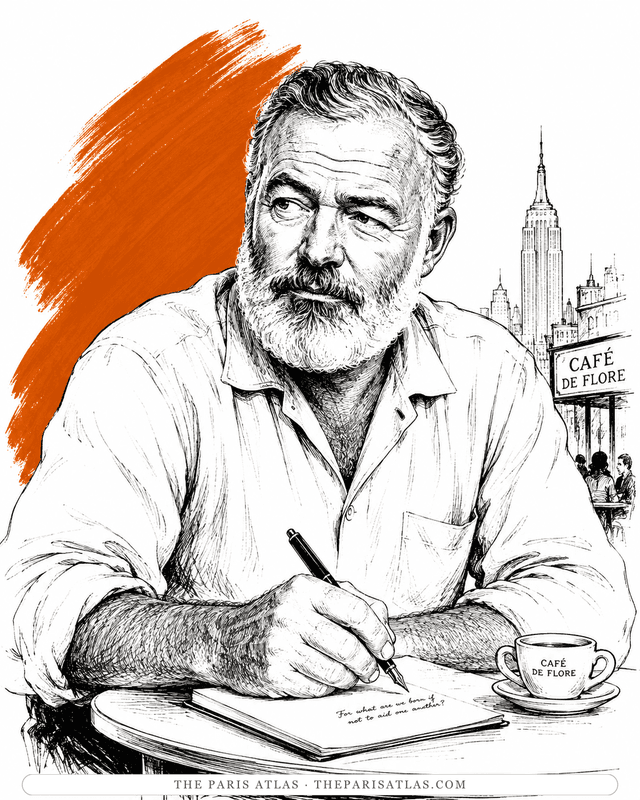
Author of The Sun Also Rises and A Moveable Feast; his pared-down style, developed in 1920s Paris, became the most imitated in American prose.
View authorThe sources below include the primary text, editions, scholarship, archival materials, and other records that informed this page. They document The Bloody Hand, its publication, and its place in literary history.


Selected French Ce loustic de Vieil and Coquoz chapters in the December 2023 Ebooks libres et gratuits transcription. Literary readings of the narrated exchanges and care, not independent biography or a full-volume/first-edition collation.

The Swiss National Library bibliography verifies Nina Rootes as the translator of Lice.
Used to verify The Bloody Hand's bibliographic context and its place within Blaise Cendrars's published work.
Used for independent archival, institutional, or historical context surrounding Blaise Cendrars and The Bloody Hand.
Used to cross-check chronology, publication history, and the circumstances in which The Bloody Hand appeared.
Used for an additional scholarly or biographical perspective on The Bloody Hand and Blaise Cendrars's wider career.
The primary text is the baseline reference for every book page. Additional references document publication history, interpretation, and historical context where that evidence is available.
 Explore more resources