
The Prose of the Trans-Siberian and of Little Jeanne of France
The long line these short ones snap back from — and Sonia Delaunay, met again at her colors.
Read our take
Poems that stretch to fit the century — nineteen dispatches from the studios of Chagall, Léger, and Delaunay, and the last verse before the novels.
Dix-neuf poèmes élastiques (1919) gathers the poems Cendrars wrote between 1913 and the end of the war — the elastic of the title being the form itself, which stretches and snaps back to whatever the modern day hands it: a painter's studio, a newspaper column, an advertisement, a street overheard entire. Several are portraits of the friends whose canvases surrounded him — Chagall, Fernand Léger, Robert Delaunay — making the book a group photograph of the avant-garde taken in words. It is also a farewell: after these, he largely put down verse and picked up the novel. (Poems — nothing here to spoil.)
The elasticity was a working method. Where the great early poems ran on one long line to one long destination, these are short, sprung, and opportunistic — built from whatever the city was saying: signage, small ads, café talk, the studio's turpentine, catalog copy. It is the same simultaneist appetite the Transsibérien had shown, now cut into nineteen quick takes, and it made Cendrars one of the poets who taught modern French verse to collage.
The company is half the book. Several poems are studio portraits — Chagall at work, Léger's machine forms, the Delaunays' color discs — written by the poet who had already made a two-meter artwork with Sonia Delaunay and who lived among painters as an equal. Au Sans Pareil published the collection in 1919, and it stands at the hinge of the career: with the war behind him, the missing arm learned, and Sutter and Moravagine waiting a few years ahead, this was the poetry the novelist walked away from — still, in Ron Padgett's English, one of the most quotable stretches on the shelf.
Nineteen short poems, six years wide: portraits of painters at work, a poem built from a newspaper, telegraphic city snapshots, the war glimpsed sideways, and the poet's own restlessness turning over between departures. No sequence to obey — the collection is designed to be opened anywhere.
An hour, or a lifetime of re-openings; Ron Padgett's Complete Poems is the standard English home.
In the first part of Portrait, Chagall paints with a church or a cow rather than simply depicting them. Objects become instruments, and the painter's body joins the materials of his work. The repeated preposition makes creation sound like an activity that can absorb anything. Then the portrait unexpectedly belongs to the reader, the speaker and people from the neighborhood. A single likeness cannot contain this shifting participation. Its exaggerations and stereotypes belong to the speaker's construction, however, not a neutral account of Chagall's community or mental state.
Contrastes opens its windows onto sounds as much as sights: cars and printing machines become musical instruments, while advertisements and newspaper cries enter the verse. Color crosses these activities, linking workers' clothing, drink and evening light without arranging them into a single orderly view. The declaration that unity has disappeared is enacted by the poem's abrupt changes of attention. Its ending also checks the exhilaration: against a sky transformed into painting, men appear as dark, sad shapes compared to factory chimneys. Modern spectacle includes the people it risks reducing to silhouettes.
The whole collage impulse of the century, demonstrated at pocket size and full speed.
Studio portraits by a poet who was there — the era's art history written in the present tense.
Read it knowing the novels are next, and the collection plays as a great writer changing instruments.
1913–1918
Between the Transsibérien and the end of the war, Cendrars writes the short, sprung poems of the collection — several of them studio portraits of Chagall, Léger, and the Delaunays.
1919
Au Sans Pareil publishes Dix-neuf poèmes élastiques; after it Cendrars largely puts down verse for the novel, with Gold and Moravagine a few years ahead.
1992
Ron Padgett's Complete Poems, from the University of California Press, gives the collection its standard English home.
The long line these short ones snap back from — and Sonia Delaunay, met again at her colors.
Read our take
The first detonation; these are the aftershocks, cut short and sharp.
Read our take
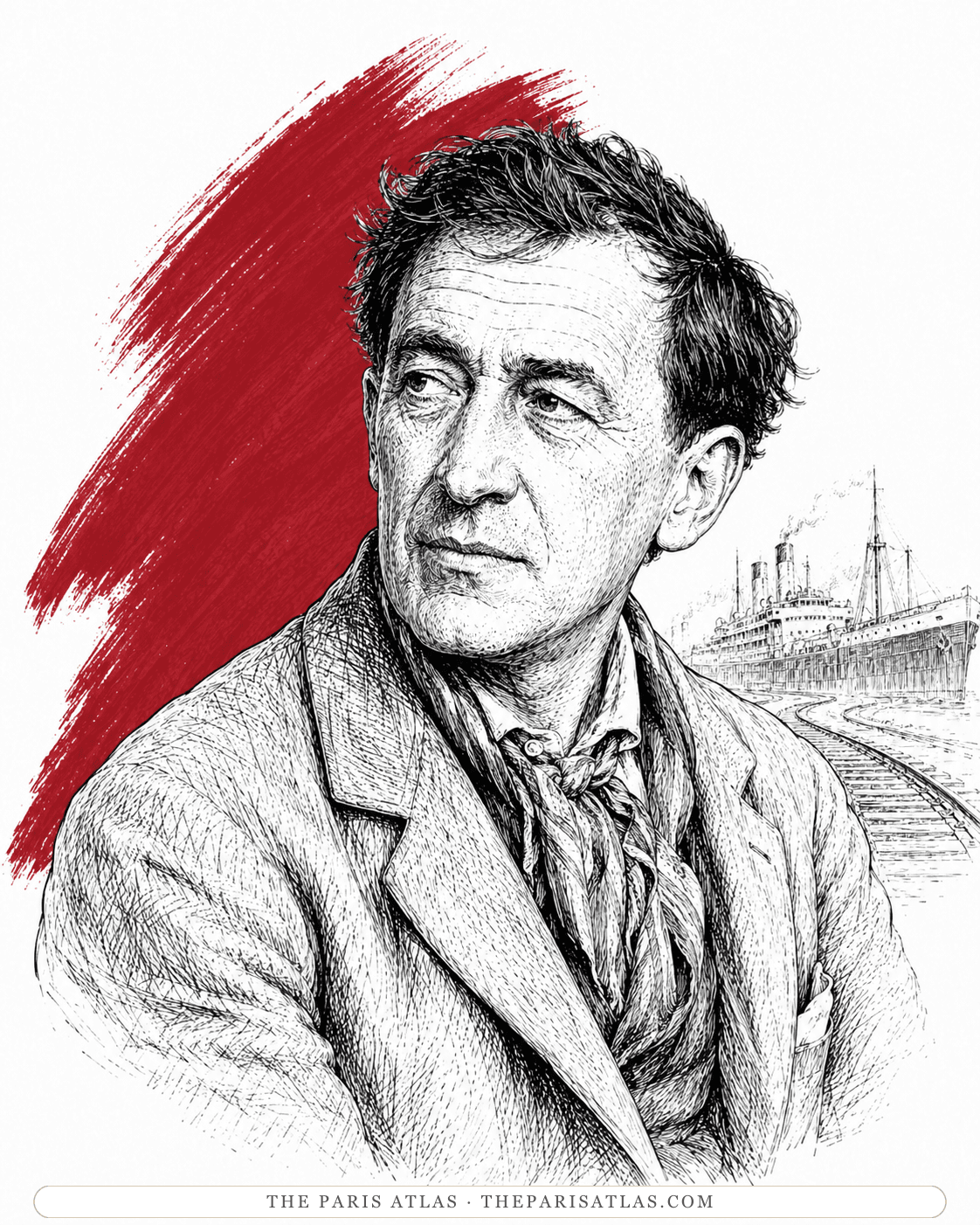
Blaise Cendrars. Dix-neuf poèmes élastiques was published in Paris in 1919.
The "elastic" is the form itself, which stretches and snaps back to whatever the modern day hands it — a painter's studio, a newspaper column, an advertisement, a street overheard entire.
Several are studio portraits of the friends whose canvases surrounded Cendrars — Chagall, Fernand Léger, and Robert Delaunay — making the book a group photograph of the avant-garde in words.
It is a farewell to verse: after these poems Cendrars largely put down poetry and picked up the novel, with Gold and Moravagine a few years ahead.
In Ron Padgett's Complete Poems, the standard English home for Cendrars's verse.
Explore authors with a similar voice, perspective, and influence.
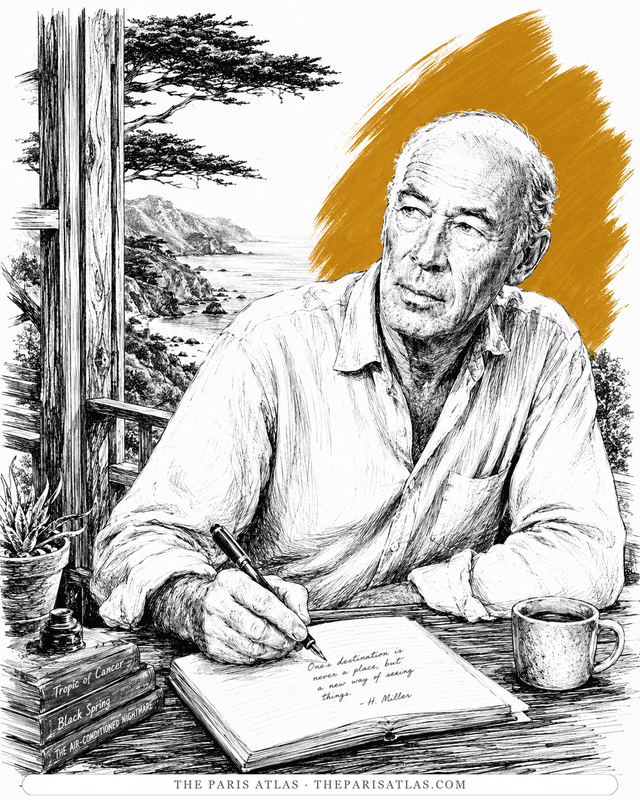
The devoted heir — Miller crowned Cendrars above every living writer, and the torrential first-person prose is the family resemblance.
View author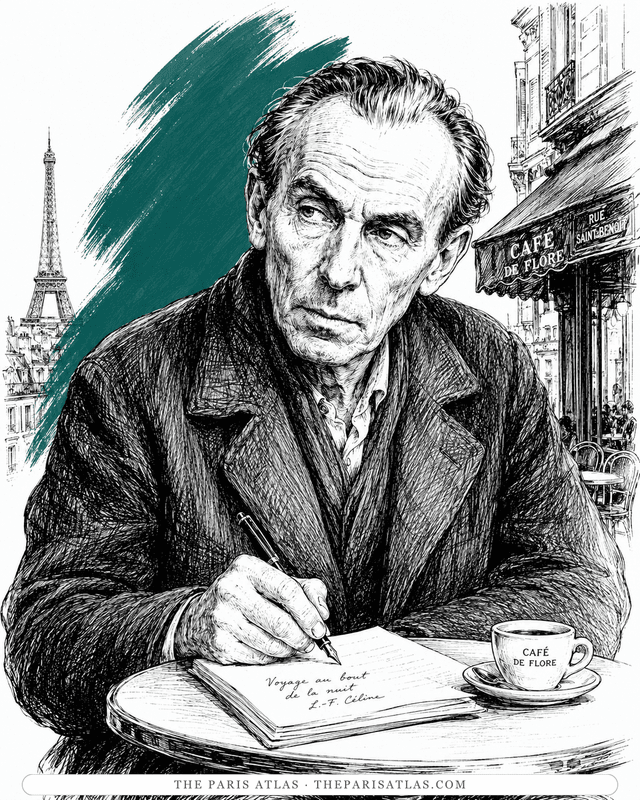
The other voyager at the end of the night — spoken rhythm, black exuberance, and a war wound at the center of everything.
View author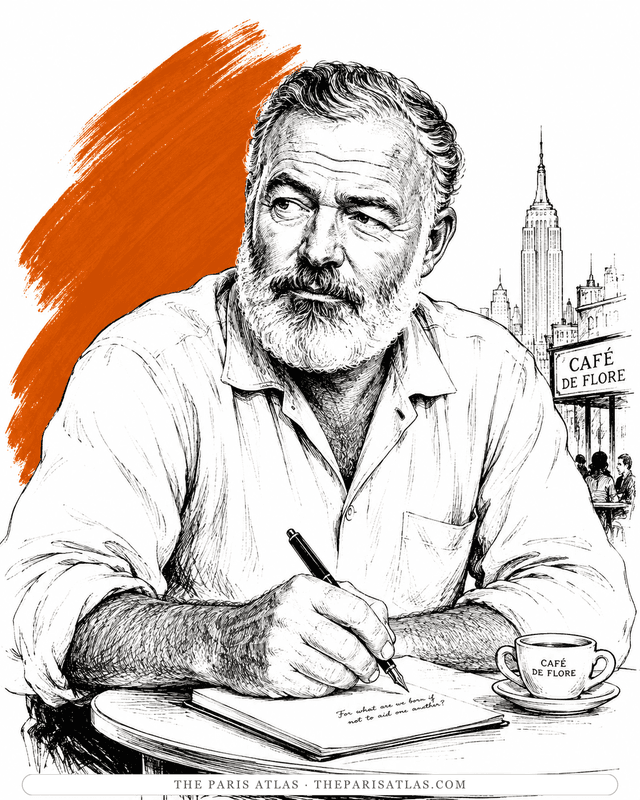
Author of The Sun Also Rises and A Moveable Feast; his pared-down style, developed in 1920s Paris, became the most imitated in American prose.
View authorThe sources below include the primary text, editions, scholarship, archival materials, and other records that informed this page. They document Nineteen Elastic Poems, its publication, and its place in literary history.


The primary text represented by this page, used for descriptions of the work’s contents and for any quoted passages shown here.
Selected French primary text in a later transcription; base edition unspecified. Literary reading, not verified artist biography.
Selected French primary text in a later transcription; base edition unspecified. Literary reading, not verified artist biography.
1919 publication entry; later 1924 collections noted separately for review of the existing farewell-to-poetry framing.
Used to place Nineteen Elastic Poems within Blaise Cendrars's published work and verify its bibliographic context.
Used for independent biographical, archival, or historical context surrounding Blaise Cendrars's career and the period in which Nineteen Elastic Poems appeared.

Used to cross-check authorship, chronology, and the work's place in Blaise Cendrars's wider catalogue.
Used to verify Blaise Cendrars's bibliography and place Nineteen Elastic Poems within the broader chronology of Blaise Cendrars's career.
The primary text is the baseline reference for every book page. Additional references document publication history, interpretation, and historical context where that evidence is available.
 Explore more resources