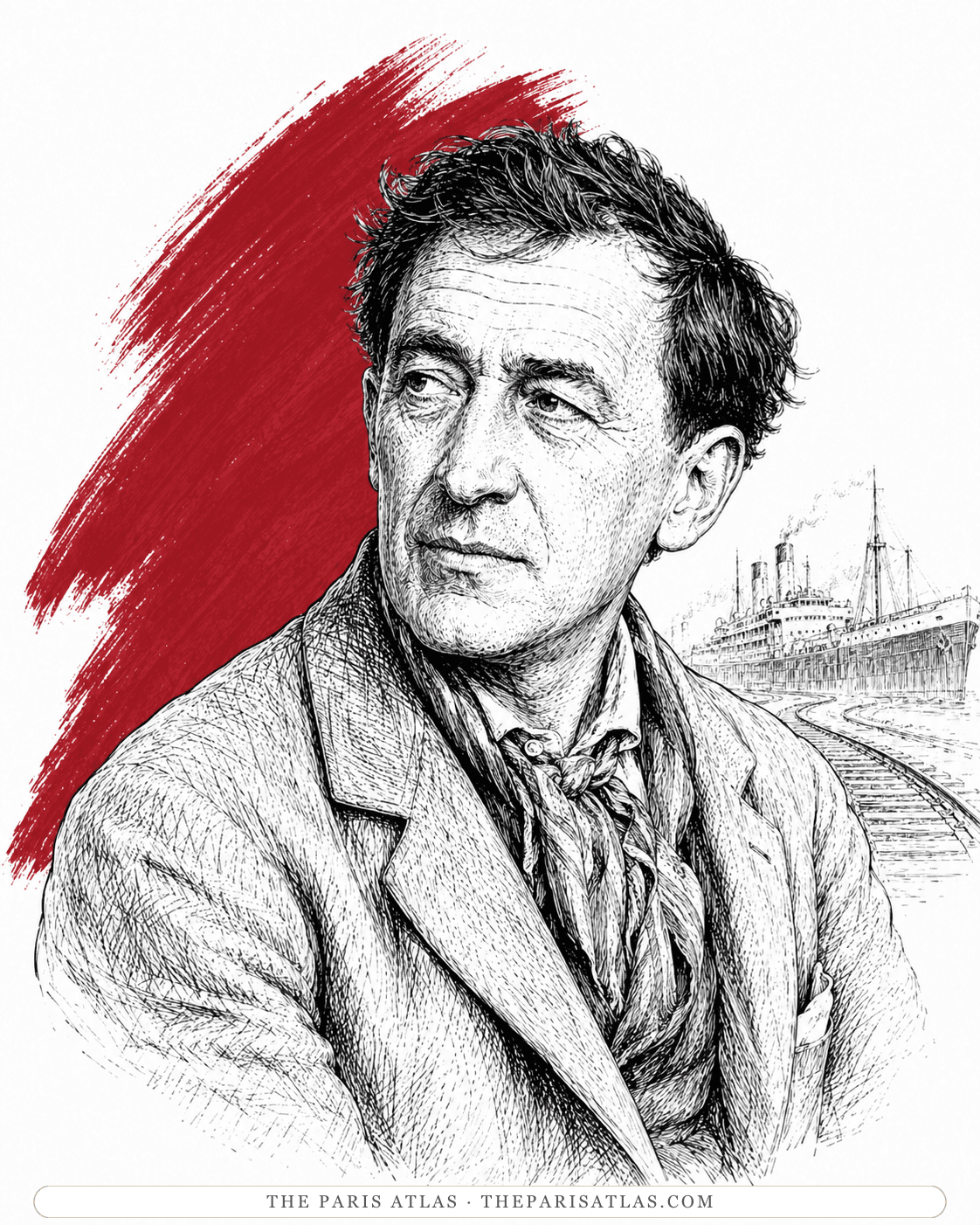

The Prose of the Trans-Siberian and of Little Jeanne of France
The next detonation — the city-poem stretched across a continent, in color.
Read our take
The poem where 'Blaise Cendrars' is born: a starving night in Manhattan, addressed to Christ — and modern French poetry changes course.
In 1912 a broke young Swiss drifter spent Easter in New York, walked the city hungry through the night, and wrote Les Pâques à New York — a long prayer-poem addressed to Christ from the gutters of the modern metropolis. He signed it with a brand-new name, Blaise Cendrars, built from embers and ashes, and printed it himself in Paris that fall. The poem's raw, pounding free verse landed in the avant-garde like news from the future — the argument over what it taught Apollinaire's 'Zone' has never fully closed. (A poem — nothing here to spoil.)
The circumstances are the poem: Sauser, twenty-four and near destitute in New York in the spring of 1912, wandering the city at Easter, ducking into churches for warmth and finding the Passion story tangled with breadlines, immigrants, and electric light. The verse he wrote runs on long, hammering couplets addressed directly to Christ — reverent and blasphemous in the same breath, medieval prayer-forms filled with subways and tenements. It was the modern city entering French poetry at street level, and he knew what he had: back in Paris he founded a tiny imprint, Les Hommes Nouveaux, to print it that autumn — the first work signed Cendrars.
Its detonation radius was immediate. Apollinaire heard the poem, and 'Zone' — written soon after, with its own godless-modern-city prayer — opened Alcools the following year; a century of scholarship has debated who lit whose fuse, which is itself the measure of the poem's arrival. It is a founding document twice over: the birth of the era's great adventurer-poet, and proof that the expatriate city-poem — the walker, the hunger, the sacred profaned and vice versa — was loose in the world before the Lost Generation ever sailed.
One long poem in driving rhymed couplets: the poet, penniless in New York at Easter, addresses Christ through a night-walk among the city's poor — immigrants, workers, thieves, the sick — asking where the Passion lives in the electric metropolis, and finding the answer in the gutter and nowhere, by dawn, in himself. The medieval hymn made modern, or the modern city made liturgy — the poem refuses to choose.
Twenty minutes' reading, best aloud — the couplets are built to pound.
The prayer keeps testing sacred promises against material need. Street musicians require coins, not merely the light falling on them, while the illuminated bank becomes an image of wealth made from Christ's suffering. Religious language does not lift the speaker out of the city; it makes its inequalities harder to ignore. Yet his appeals for strangers coexist with antisemitic and racial caricatures. The voice's compassion is therefore troubled from within: readers can recognize the demand for solidarity without accepting the prejudices through which some of its neighbors are described.
The church refuge belongs to a wish, not an arrival: the speaker lies on a café bench and longs to enter a church. The illustration gives that unfulfilled desire a setting. Dawn then brings transport and crowds rather than an unmistakable resurrection, and his room resembles a tomb. Even the final declaration that he no longer thinks of Christ remains addressed to that absent listener. The poem's withdrawal cannot quite escape the relationship sustained by its prayer; loneliness survives both the night's appeals and the coming of daylight.
Modern city poetry in French starts arguing from this poem — before the Lost Generation was even a rumor.
Hunger, faith, and blasphemy at street level — the couplets still land after a century.
Watching Sauser become Cendrars in real time is the era's best self-invention, one poem long.
1912
Cendrars composes the poem during his New York period, drawing on the city’s poverty and religious imagery.
Autumn 1912
Les Hommes Nouveaux publishes the poem in Paris under the name Blaise Cendrars.
1913
Apollinaire publishes Zone in Alcools; the relationship between the two modern city poems becomes a lasting subject of criticism.
The next detonation — the city-poem stretched across a continent, in color.
Read our take
The hungry sacred-profane city-walk, reborn in prose two decades later — Miller knew exactly whose road he was on.
Read our takeBlaise Cendrars. Published in 1912 as Les Pâques à New York, it was the first work he signed with the name Cendrars.
A long prayer-poem addressed to Christ from the gutters of modern New York, written after the young, near-destitute poet spent Easter wandering the hungry city through the night.
He built the pen name from embers and ashes — braise and cendres — and used it for the first time on this poem.
Its raw, pounding free verse landed in the Paris avant-garde like news from the future. The argument over what it taught Apollinaire's "Zone" has never fully closed.
Yes. The circumstances are the poem — Cendrars, twenty-four and broke in New York in 1912, ducking into churches for warmth and finding the Passion story waiting there.
Explore authors with a similar voice, perspective, and influence.

The devoted heir — Miller crowned Cendrars above every living writer, and the torrential first-person prose is the family resemblance.
View author
The other voyager at the end of the night — spoken rhythm, black exuberance, and a war wound at the center of everything.
View author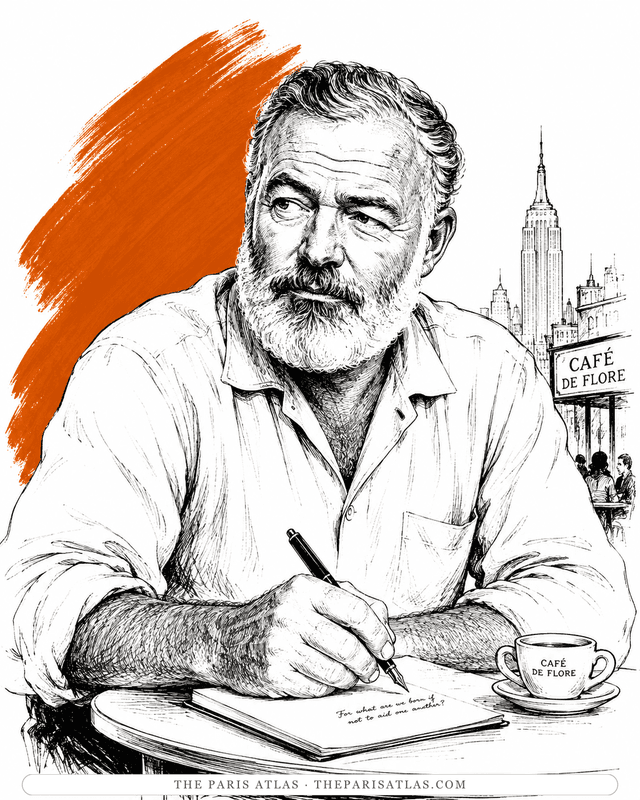
Author of The Sun Also Rises and A Moveable Feast; his pared-down style, developed in 1920s Paris, became the most imitated in American prose.
View authorThe sources below include the primary text, editions, scholarship, archival materials, and other records that informed this page. They document Easter in New York, its publication, and its place in literary history.


The primary text represented by this page, used for descriptions of the work’s contents and for any quoted passages shown here.
French primary transcription; base edition unspecified. Literary reading, not independent biography.
Used to verify Easter in New York's bibliographic context and its place within Blaise Cendrars's published work.
Used for independent archival, institutional, or historical context surrounding Blaise Cendrars and Easter in New York.

Used to cross-check chronology, publication history, and the circumstances in which Easter in New York appeared.
Used for an additional scholarly or biographical perspective on Easter in New York and Blaise Cendrars's wider career.
The primary text is the baseline reference for every book page. Additional references document publication history, interpretation, and historical context where that evidence is available.
 Explore more resources