The Paris AtlasCharting the artists, works, and places worth returning to.
  • Poet
  • Critic
· French · 1880–1918

Guillaume Apollinaire

The avant-garde's herald — champion of the Cubists, poet of Alcools, and the man whose Parade program note gave 'surrealism' its first prominent appearance in print.

In images

Details

Lived
1880–1918
Born
26 August 1880
Birthplace
Rome, Italy
Died
9 November 1918 · aged 38
Place of death
Paris
Nationality
French
Married
Jacqueline Kolb · 1918
Roles
PoetCritic
Also known as
Wilhelm Albert Włodzimierz Apolinary Kostrowicki

About Guillaume Apollinaire

Guillaume Apollinaire was the poet who explained the prewar avant-garde to itself. A member of Pablo Picasso's circle from 1905, he defended Cubism in print when the press treated it as a hoax, published Alcools, one of the landmark poetry collections of the century, in 1913, and in 1917 coined the word that became Surrealism.

He did not live to see what the word became. Wounded in the head by shrapnel in 1916, he died of Spanish influenza on 9 November 1918, two days before the Armistice, at thirty-eight.

From Rome to Paris

Apollinaire was born Wilhelm Albert Włodzimierz Apolinary Kostrowicki in Rome on 26 August 1880. His mother, Angelica Kostrowicka, was a Polish noblewoman; his father never acknowledged him, and is generally identified as Francesco Flugi d'Aspermont, a Swiss-Italian aristocrat. The boy was schooled in Monaco, Cannes, and Nice, and by 1900 was living with his mother in Paris, getting by on clerical work.

In 1901 he went to the Rhineland as a tutor and fell in love with Annie Playden, an English governess who did not return the feeling. The affair fed several of the long poems later collected in Alcools. Back in Paris, he helped found a small review, Le Festin d'Ésope, in 1903, in a circle that included the writers André Salmon, Alfred Jarry, and Max Jacob.

Picasso, Laurencin, and the Bateau-Lavoir

Henri Rousseau, The Muse Inspiring the Poet, 1909: Guillaume Apollinaire with Marie Laurencin as his muse. Second version, Kunstmuseum Basel. (Henri Rousseau (Kunstmuseum Basel), via Wikimedia Commons · Public domain)

Apollinaire met Pablo Picasso in 1905 and became a fixture of the circle around the Bateau-Lavoir, the ramshackle Montmartre studio building where Picasso then lived and worked. In 1907 Picasso introduced him to the painter Marie Laurencin, and the two were a couple until 1912. Laurencin painted him during those years; her Portrait de Guillaume Apollinaire now hangs in the Musée de l'Orangerie. The end of the affair fed "Le Pont Mirabeau," the poem in Alcools that sets lost love against the Seine flowing under the bridge.

In 1908 he presided over the banquet the Bateau-Lavoir crowd threw for the painter Henri Rousseau, a night Gertrude Stein later recounted in The Autobiography of Alice B. Toklas. Rousseau answered the tribute in paint: The Muse Inspiring the Poet, which he made in two versions in 1909, shows Apollinaire with Laurencin as his muse. Apollinaire was also a regular at Stein's salon at 27 rue de Fleurus.

From 1911 he also shaped the market for the art he championed. He took up a young enthusiast of African sculpture named Paul Guillaume, introduced him to the avant-garde, and guided his choices when Guillaume opened his first gallery in 1914.

The Mona Lisa arrest

When the Mona Lisa was stolen from the Louvre in August 1911, the police arrested Apollinaire. His former secretary, Géry Pieret, had earlier stolen ancient Iberian stone heads from the museum and sold them to Apollinaire and to Picasso, and when Pieret's thefts surfaced during the investigation, suspicion fell on the poet. He was arrested on 7 September 1911 and held for five days in the Santé prison. Picasso was questioned by the examining magistrate. Both men were cleared.

The painting had been taken by Vincenzo Peruggia, an Italian house painter who had worked at the Louvre. He was caught in 1913 when he tried to sell it in Florence.

Alcools and The Cubist Painters

1913 was his great year. Alcools collected fifteen years of his poetry, printed without punctuation — Apollinaire removed it at the proof stage — and opened with "Zone," a poem that walks modern Paris in long unrhymed lines. The same year The Cubist Painters made the case for the new painting in book form, claiming for it an art "entirely new." Among the artists it discussed was Marcel Duchamp, of whom Apollinaire predicted that he might reconcile art and the public.

He ran his side of the argument from a café table. From 1913 he effectively edited his magazine Les Soirées de Paris from the ground floor of the Café de Flore on the boulevard Saint-Germain.

The war, the wound, and a new word

When the war came, Apollinaire — still not a French citizen — volunteered. He enlisted in late 1914, reached the front as an artilleryman in March 1915, and later took an infantry commission. France granted him citizenship in March 1916. Days later, on 17 March 1916, a shell fragment pierced his helmet at the right temple while he sat in a trench reading a magazine. He was trepanned that May and returned to Paris weakened, his head bandaged.

The last two years were the most consequential of his life. For the premiere of Parade on 18 May 1917 — the ballet by Jean Cocteau, with music by Erik Satie and sets and costumes by Picasso — Apollinaire wrote a program note describing the work as a kind of "sur-réalisme." He had been trying the word out in letters that spring. On 24 June 1917 his own play Les Mamelles de Tirésias premiered carrying the subtitle "drame surréaliste." André Breton, who admired him, took up the word when he organized the Surrealist movement in 1924.

In 1918 he published Calligrammes, poems of peace and war in which the words are arranged on the page as pictures, and on 2 May married Jacqueline Kolb, who had cared for him since his injury.

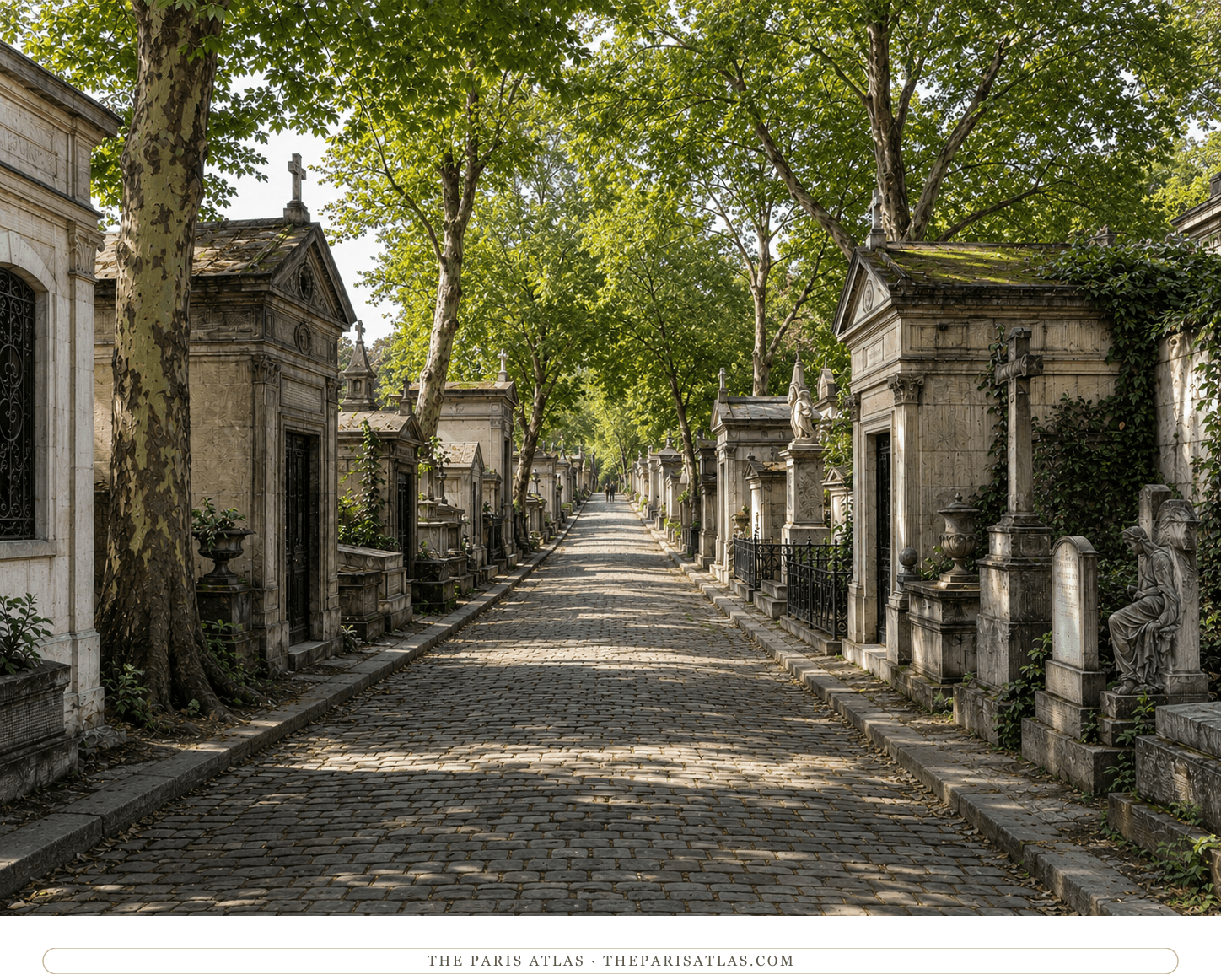
Apollinaire's menhir in division 86 — a rough granite standing stone above the calligramme-carved base, shared with Jacqueline Apollinaire. (Olivier Bruchez, Wikimedia Commons · CC BY-SA 2.0)

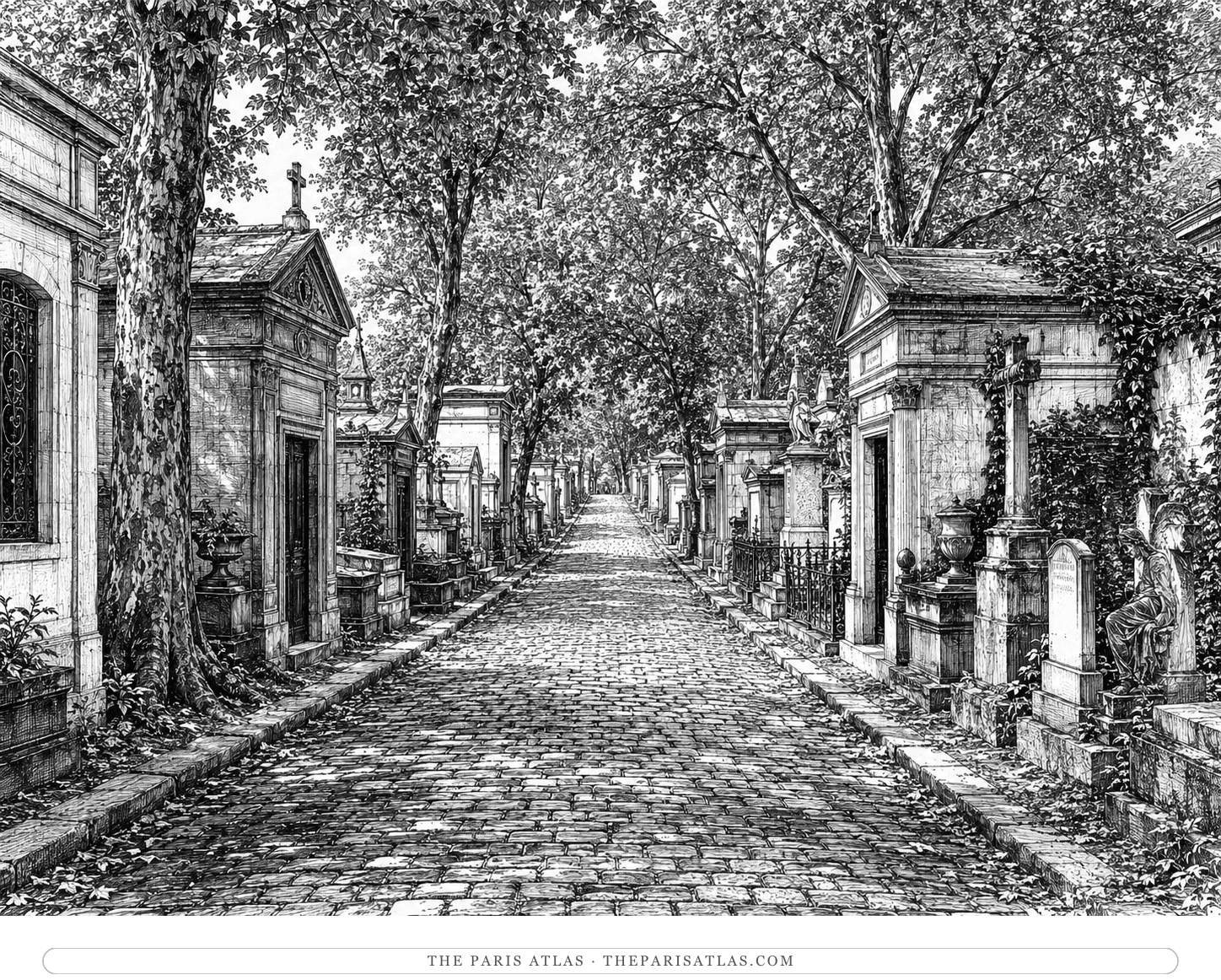
That autumn the Spanish influenza pandemic reached Paris, and Apollinaire, weakened by the head wound and its surgery, could not fight it off. He died at home on 9 November 1918, two days before the Armistice ended the war he had fought in. He was thirty-eight. He was buried on 13 November at Père Lachaise, where a rough granite menhir now stands over a base carved with one of his calligrammes.

Life events

  1. 1880

    Born in Rome on 26 August to Angelica Kostrowicka, a Polish noblewoman; his father never acknowledges him.

  2. 1900

    Settles in Paris with his mother after a schooling on the Riviera.

  3. 1901

    Goes to the Rhineland as a tutor; his unreturned love for the English governess Annie Playden feeds the long poems later collected in Alcools.

  4. 1905

    Meets Pablo Picasso and joins the circle around the Bateau-Lavoir in Montmartre.

  5. 1907

    Picasso introduces him to the painter Marie Laurencin; the two are together until 1912.

  6. 1909

    Henri Rousseau paints The Muse Inspiring the Poet, showing Apollinaire with Laurencin as his muse, the year after Apollinaire presided at the Bateau-Lavoir banquet in Rousseau's honor.

    Henri Rousseau, The Muse Inspiring the Poet, 1909: Guillaume Apollinaire with Marie Laurencin as his muse. Second version, Kunstmuseum Basel. (Henri Rousseau (Kunstmuseum Basel), via Wikimedia Commons)
  7. 1911

    Arrested on 7 September on suspicion of involvement in the theft of the Mona Lisa; he spends five days in the Santé prison and is cleared.

  8. 1913

    Publishes Alcools, printed without punctuation, and The Cubist Painters, his book-length defense of the new painting.

  9. 1916

    Granted French citizenship in March; days later, on 17 March, shrapnel pierces his helmet at the right temple, and he is trepanned in May.

  10. 1917

    His program note for the ballet Parade describes it as a kind of 'sur-réalisme' in May; on 24 June his play Les Mamelles de Tirésias premieres subtitled 'drame surréaliste.'

  11. 1918

    Marries Jacqueline Kolb on 2 May and publishes Calligrammes; on 9 November he dies of Spanish influenza, two days before the Armistice, and is buried at Père Lachaise.

    Apollinaire's menhir in division 86 — a rough granite standing stone above the calligramme-carved base, shared with Jacqueline Apollinaire. (Olivier Bruchez, Wikimedia Commons)

In art

Works in our catalog with Guillaume as their subject.

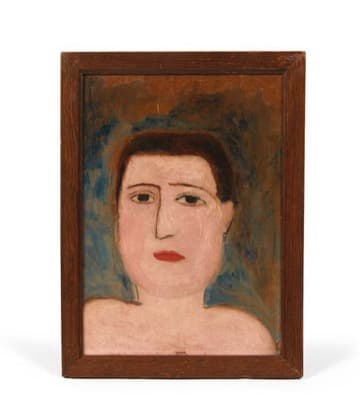
Small framed oil sketch of Apollinaire, shown frontally and bare-chested against a blue and brown ground, with dark hair and red lips

Artwork reproduction

Painting · The Bateau-Lavoir years

Portrait de Guillaume Apollinaire

Marie Laurencin · c. 1908 · Oil on cardboard

Laurencin's small, frontal portrait of Apollinaire, painted around 1908 during their relationship and bought by the Orangerie at auction in 2019 — the painter's poet, hanging in the collection her dealer built.
Musée de l'Orangerie, Paris

Marie Laurencin, Portrait de Guillaume Apollinaire, c. 1908. Musée de l'Orangerie, Paris. Image © the rights holder, shown under fair use.

In the credits

Works in our catalog that credit Guillaume.

Program noteBallet

Parade

Jean Cocteau, Erik Satie, Pablo Picasso

People they knew

Documented connections — every one carries its source.

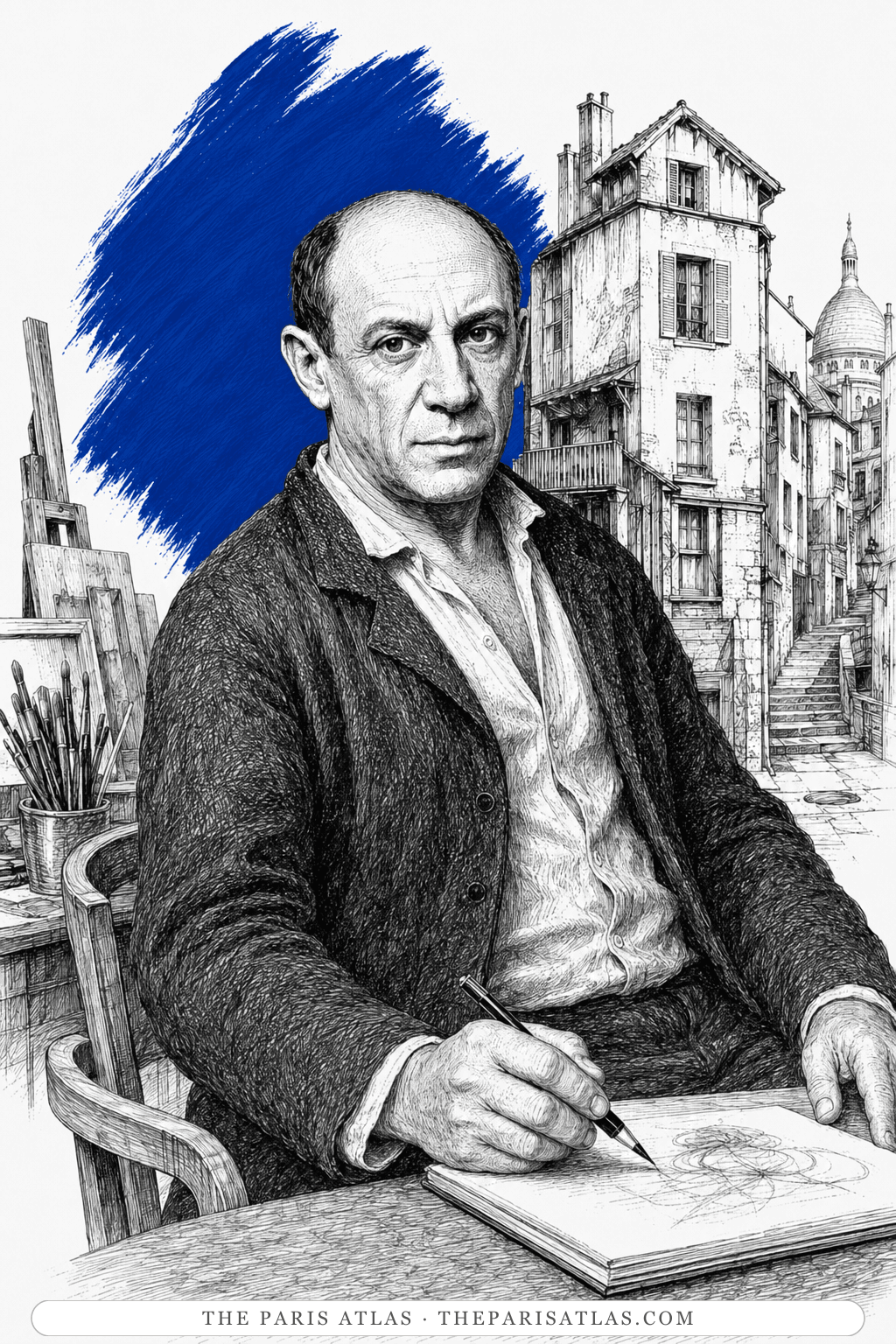
Illustrated portrait of Pablo Picasso

Pablo Picasso

  • Painter
  • Sculptor

Met · 1905

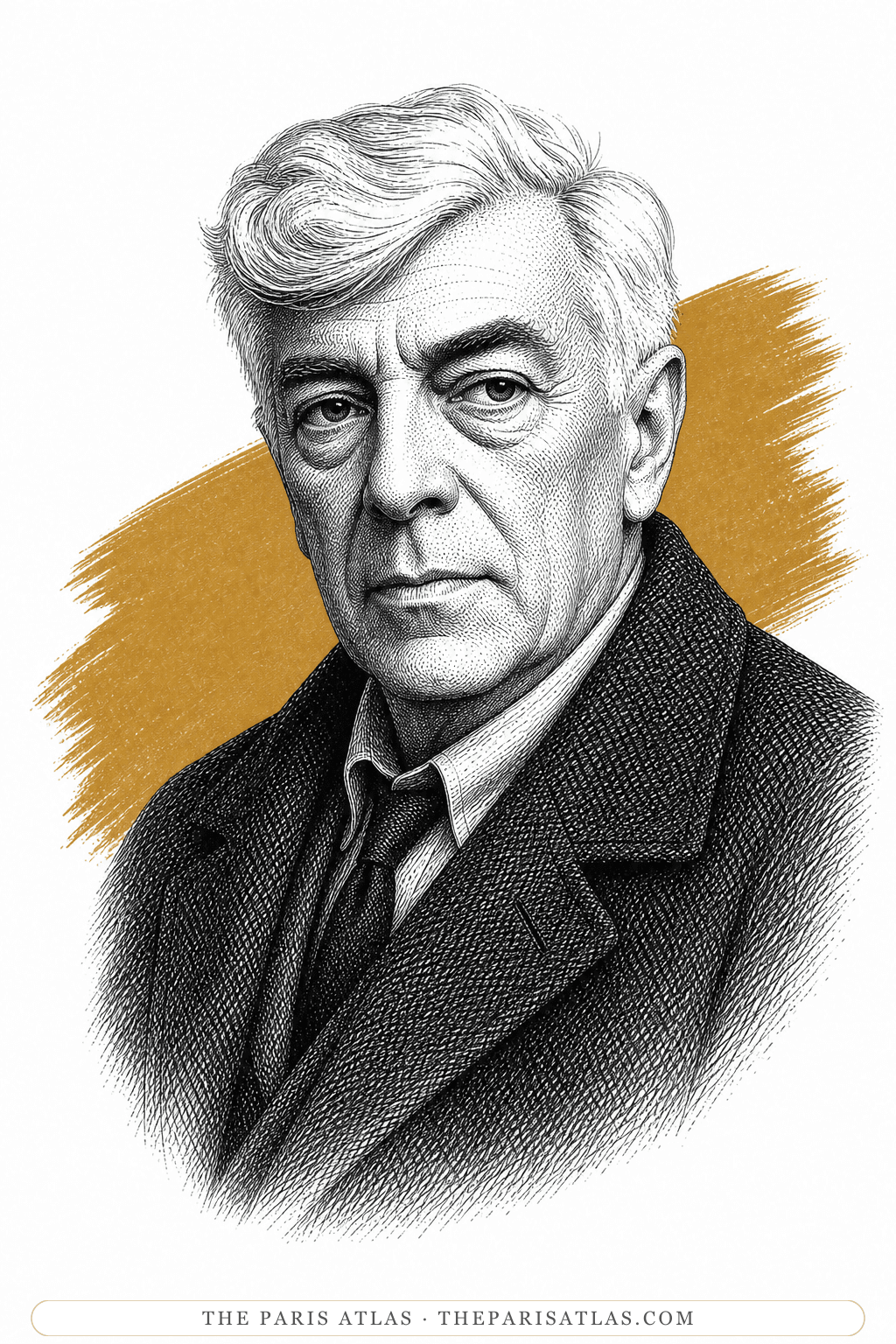
A fixture of Picasso's circle from the Bateau-Lavoir years — the Autobiography remembers him at the salon's tables and at the 1908 banquet for the Douanier Rousseau, where Apollinaire presided.

Gertrude Stein, The Autobiography of Alice B. Toklas (1933)

Illustrated portrait of Paul Guillaume

Paul Guillaume

  • Art dealer
  • Collector
  • Publisher

Mentored · 1911–1918

The Orangerie's account: Apollinaire came across the young African-art enthusiast in 1911, introduced him to the avant-garde, and guided his choices when he opened his first gallery in 1914.

History of the Collection — Musée de l'Orangerie; Paul Guillaume — Modern Art Index Project, Leonard A. Lauder Research Center

Illustrated portrait of Marcel Duchamp

Marcel Duchamp

  • Painter
  • Sculptor
  • Filmmaker

Met

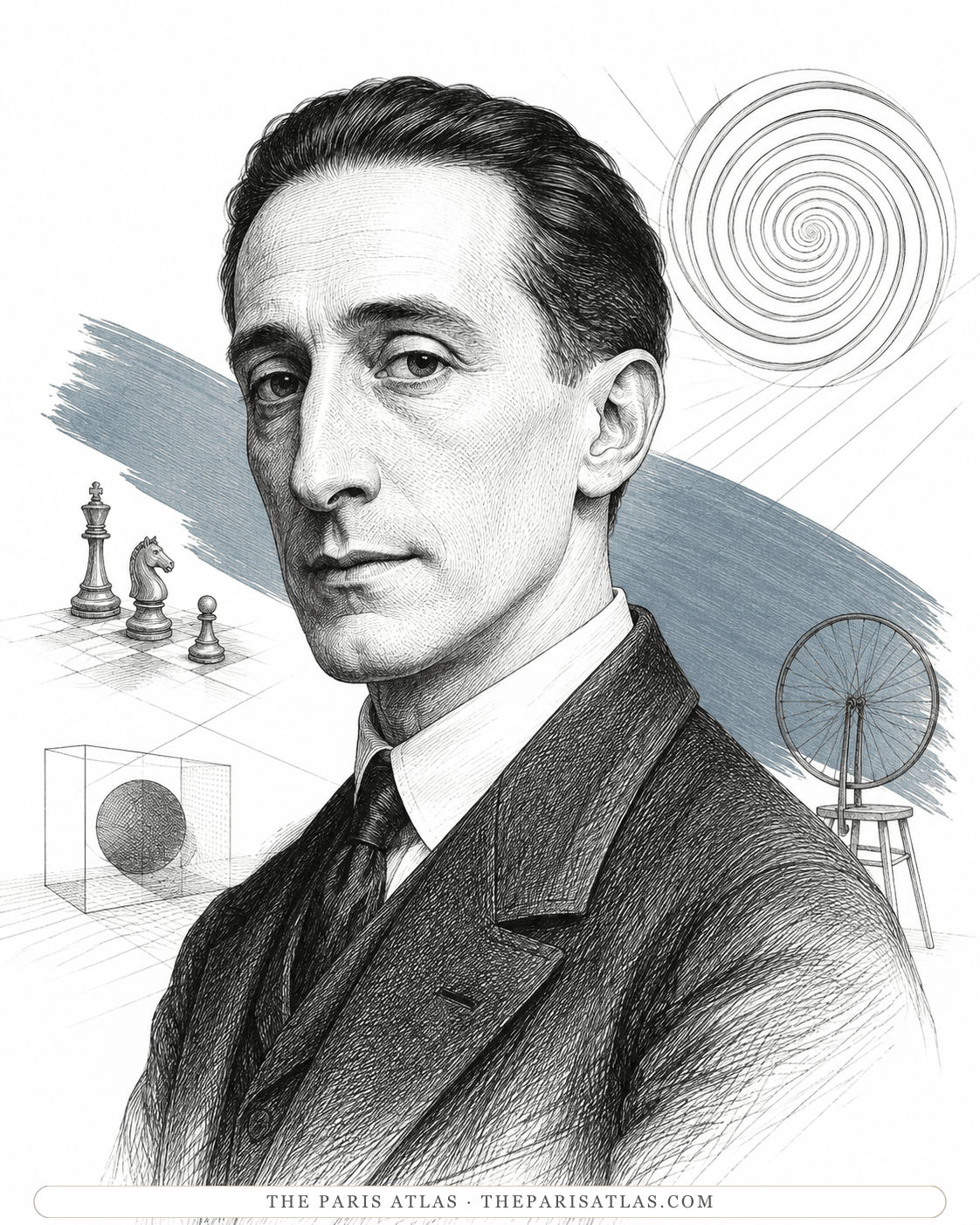
Apollinaire moved in the same Puteaux and Section d'Or circle and wrote about Duchamp in Les Peintres cubistes (1913), predicting that he might reconcile art and the public.

Calvin Tomkins, Duchamp: A Biography (1996); Encyclopaedia Britannica — Marcel Duchamp

Illustrated portrait of Marie Laurencin

Marie Laurencin

  • Painter
  • Illustrator

Met · 1907–1912

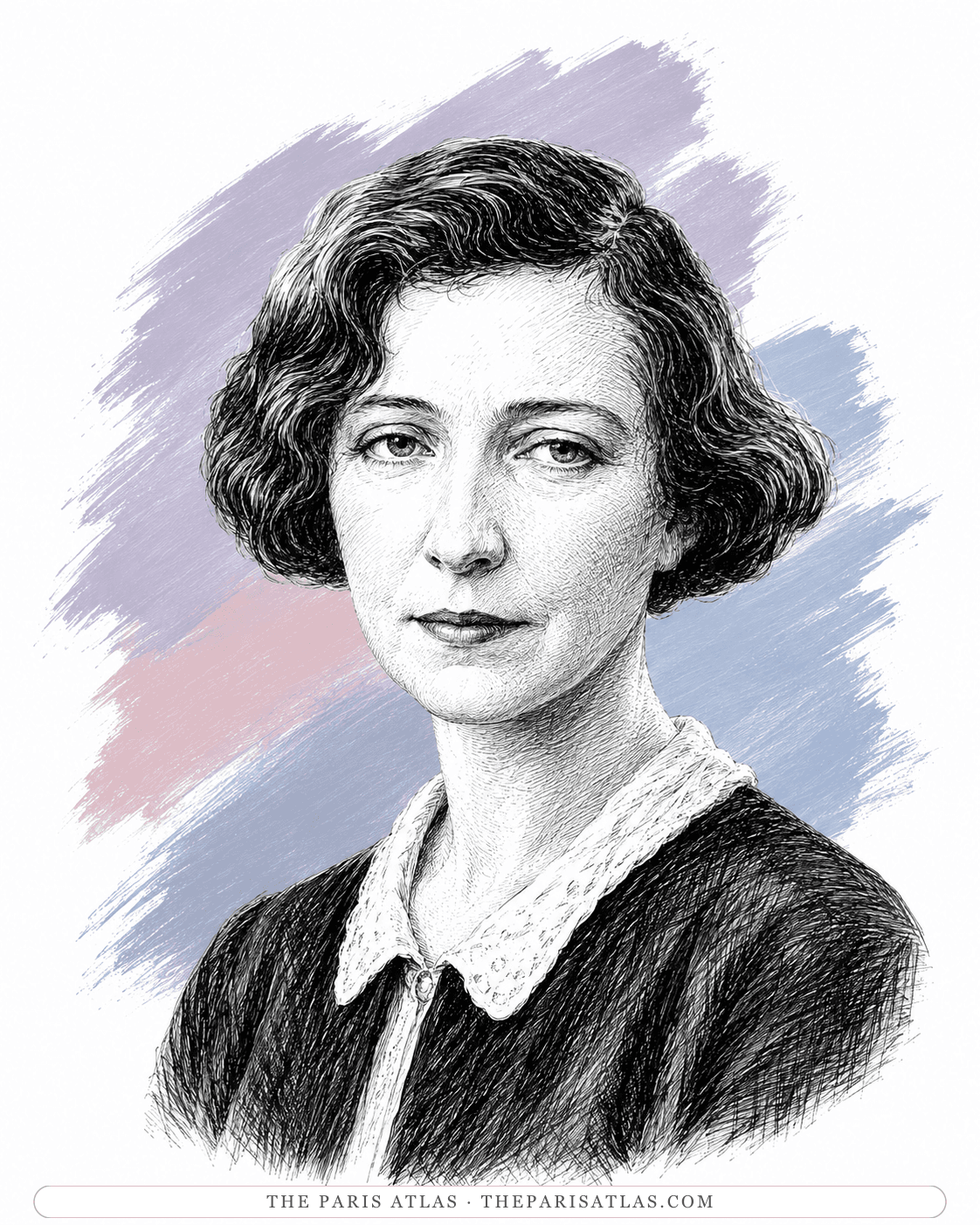
Picasso introduced them in 1907, and they were together until 1912; the Barnes Foundation puts the break at 1913. Henri Rousseau painted the couple twice as The Muse Inspiring the Poet.

The Barnes Foundation Presents Marie Laurencin: Sapphic Paris (2023); Marie Laurencin — AWARE: Archives of Women Artists, Research and Exhibitions

Illustrated portrait of Henri Rousseau

Henri Rousseau

  • Painter

Met · 1908

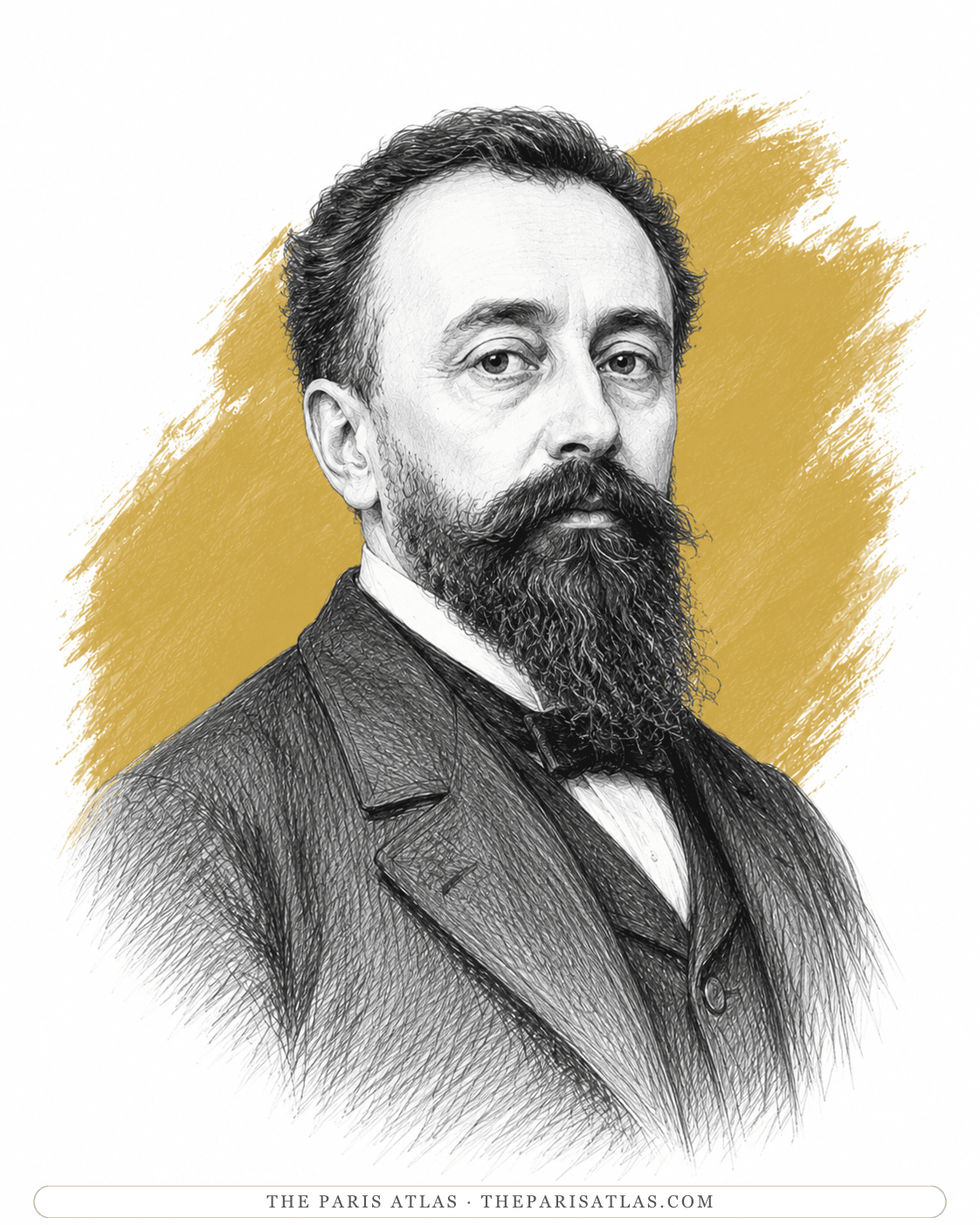
Apollinaire presided at the 1908 Bateau-Lavoir banquet for Rousseau, and the painter answered in kind: The Muse Inspiring the Poet, painted twice in 1909, shows Apollinaire with Marie Laurencin as his muse.

Gertrude Stein, The Autobiography of Alice B. Toklas (1933); Marie Laurencin — AWARE: Archives of Women Artists, Research and Exhibitions

Movements

The artistic and literary currents this life ran through.

Sunlight through a railing breaking into diagonal planes of shadow across bare concrete

Art movement · 1907–1914

Cubism

The movement's first great advocate in print: he defended the painters against a hostile press and consolidated the case in The Cubist Painters (1913), claiming an art 'entirely new.'

Cubism — The Metropolitan Museum of Art, essays

Guillaume Apollinaire’s Places

The cataloged places connected to Guillaume Apollinaire — through the books, and through the documented record.

Places you can enter today appear first, followed by addresses to see from outside and sites that have vanished.

Questions about Guillaume Apollinaire

How did Guillaume Apollinaire die?

He died of Spanish influenza in Paris on 9 November 1918, two days before the Armistice, at thirty-eight. He had been weakened by a war wound: on 17 March 1916 a shell fragment pierced his helmet at the right temple, and he underwent a trepanation that May. When the influenza pandemic reached Paris in the autumn of 1918, he could not fight it off. He is buried at Père Lachaise cemetery.

Did Apollinaire invent the word surrealism?

Yes. He used 'sur-réalisme' in his program note for Parade, the ballet by Jean Cocteau, Erik Satie, and Pablo Picasso that premiered on 18 May 1917, and he subtitled his own play Les Mamelles de Tirésias, first performed on 24 June 1917, a 'drame surréaliste.' He had tried the word out in letters that spring. André Breton adopted it in 1924 as the name of the Surrealist movement, six years after Apollinaire's death.

Was Apollinaire arrested for stealing the Mona Lisa?

He was arrested on suspicion of it, but he did not steal the painting. After the Mona Lisa disappeared from the Louvre in August 1911, police learned that Apollinaire's former secretary, Géry Pieret, had stolen Iberian statuettes from the museum and sold them to Apollinaire and Picasso. Apollinaire spent five days in the Santé prison in September 1911, Picasso was questioned, and both were cleared. The real thief, Vincenzo Peruggia, was caught in 1913.

What is Guillaume Apollinaire's most famous work?

Alcools (1913), his collection of poems printed without punctuation, including 'Zone' and 'Le Pont Mirabeau.' Calligrammes (1918) collected his picture-poems and war poetry, and The Cubist Painters (1913) is his best-known criticism, the book that made the public case for Cubism.

Was Apollinaire French?

By choice, and only from 1916. He was born in Rome to a Polish mother, and his father, who never acknowledged him, is generally identified as a Swiss-Italian aristocrat. He settled in Paris around 1900, volunteered for the French army in 1914, and was granted French citizenship in March 1916, days before he was wounded at the front.

Who was Marie Laurencin to Apollinaire?

The painter Marie Laurencin was his companion from 1907, when Picasso introduced them, until 1912. Henri Rousseau painted the couple twice as The Muse Inspiring the Poet, and Laurencin's portrait of Apollinaire hangs in the Musée de l'Orangerie. The end of the affair is linked to 'Le Pont Mirabeau,' his poem of love passing like the river. In May 1918 he married Jacqueline Kolb, who had nursed him after his war wound.

Sourced claims

Every connection the graph holds for Guillaume, with the evidence behind it.

Met · 1905

Pablo Picasso

A fixture of Picasso's circle from the Bateau-Lavoir years — the Autobiography remembers him at the salon's tables and at the 1908 banquet for the Douanier Rousseau, where Apollinaire presided.

Gertrude Stein, The Autobiography of Alice B. Toklas (1933)

Associated with · 1908–1914

Cubism

The movement's first great advocate in print: he defended the painters against a hostile press and consolidated the case in The Cubist Painters (1913), claiming an art 'entirely new.'

Cubism — The Metropolitan Museum of Art, essays

Buried at · 1918

Père-Lachaise Cemetery

Buried in division 86 in November 1918, dead of influenza in the war's last days — the first of the people in these pages to reach the hill.

Paris Discovery Guide — 101 Famous Graves in Père Lachaise Cemetery

Mentored · 1911–1918

Paul Guillaume

The Orangerie's account: Apollinaire came across the young African-art enthusiast in 1911, introduced him to the avant-garde, and guided his choices when he opened his first gallery in 1914.

History of the Collection — Musée de l'Orangerie; Paul Guillaume — Modern Art Index Project, Leonard A. Lauder Research Center

Met

Marcel Duchamp

Apollinaire moved in the same Puteaux and Section d'Or circle and wrote about Duchamp in Les Peintres cubistes (1913), predicting that he might reconcile art and the public.

Calvin Tomkins, Duchamp: A Biography (1996); Encyclopaedia Britannica — Marcel Duchamp

Met · 1907–1912

Marie Laurencin

Picasso introduced them in 1907, and they were together until 1912; the Barnes Foundation puts the break at 1913. Henri Rousseau painted the couple twice as The Muse Inspiring the Poet.

The Barnes Foundation Presents Marie Laurencin: Sapphic Paris (2023); Marie Laurencin — AWARE: Archives of Women Artists, Research and Exhibitions

Depicted in

Portrait de Guillaume Apollinaire

The poet shown frontally and bare-chested, without details, in the manner Laurencin reached around 1908 — painted during their relationship.

Portrait de Guillaume Apollinaire — Musée de l'Orangerie

Met · 1908

Henri Rousseau

Apollinaire presided at the 1908 Bateau-Lavoir banquet for Rousseau, and the painter answered in kind: The Muse Inspiring the Poet, painted twice in 1909, shows Apollinaire with Marie Laurencin as his muse.

Gertrude Stein, The Autobiography of Alice B. Toklas (1933); Marie Laurencin — AWARE: Archives of Women Artists, Research and Exhibitions