The Paris AtlasCharting the artists, works, and places worth returning to.
  • Musician
· French · 1866–1925

Erik Satie

The composer of Parade — furniture music, typewriters in the orchestra, and the driest wit in French music; Cocteau's accomplice in dragging the avant-garde onto the stage.

In images

Details

Lived
1866–1925
Born
17 May 1866
Birthplace
Honfleur, France
Died
1 July 1925 · aged 59
Place of death
Paris
Nationality
French
Roles
Musician
Also known as
Éric Alfred Leslie Satie

About Erik Satie

Erik Satie was a French composer, born in Honfleur in 1866, who wrote the three Gymnopédies and the score for Parade, the 1917 ballet made with Jean Cocteau and Pablo Picasso that put the Paris avant-garde on a popular stage. He earned his living for years as a cabaret pianist in Montmartre, founded a church with a membership of one, owned seven identical suits, and spent his last twenty-seven years in a room in the suburb of Arcueil that no visitor ever entered. After Parade, the young composers of postwar Paris claimed him as their model.

His importance runs past the eccentricities. At a time when prestigious European music aspired to Wagnerian scale and intensity, Satie repeatedly moved the other way — toward brevity, repetition, understatement, popular tunes, dry humor, and finally music the listener was not supposed to listen to. What looked like simplicity or incompetence was usually a deliberate refusal of the musical values around him, and later generations kept discovering that he had arrived somewhere first: composers from Les Six to John Cage treated him as an ancestor, and he is now routinely discussed as a precursor of minimalism and ambient music.

Honfleur

Satie was born Éric Alfred Leslie Satie on 17 May 1866 in Honfleur, on the Normandy coast, to a French father and a British mother of Scottish background, and was baptized in the Anglican church. The childhood was marked by loss. His mother died in 1872, when he was six, and Erik and his younger brother Conrad were sent back to Honfleur to be raised Catholic by their paternal grandparents. Music arrived there through the local organist Gustave Vinot, who had been trained in early sacred music; the Gregorian chant and church modes Satie absorbed as a boy stayed in his harmony for good, and the archaic, suspended atmosphere of the Ogives, Gymnopédies, and Gnossiennes did not come from nowhere.

His grandmother died in 1878 and the twelve-year-old returned to Paris to live with his father, who the next year married a piano teacher, Eugénie Barnetche. She arranged for her stepson to enter the Paris Conservatoire. It went badly. His teachers found some ability and no diligence, dismissed him for poor progress, readmitted him, and were unimpressed a second time; he left without a diploma. In 1886 he escaped in the most drastic direction available and volunteered for the 33rd Infantry Regiment, discovered he disliked military discipline as much as the academic kind, and — by the standard biographical account — stood bare-chested in winter weather until bronchitis got him discharged. Around this time Éric began signing himself Erik.

Montmartre

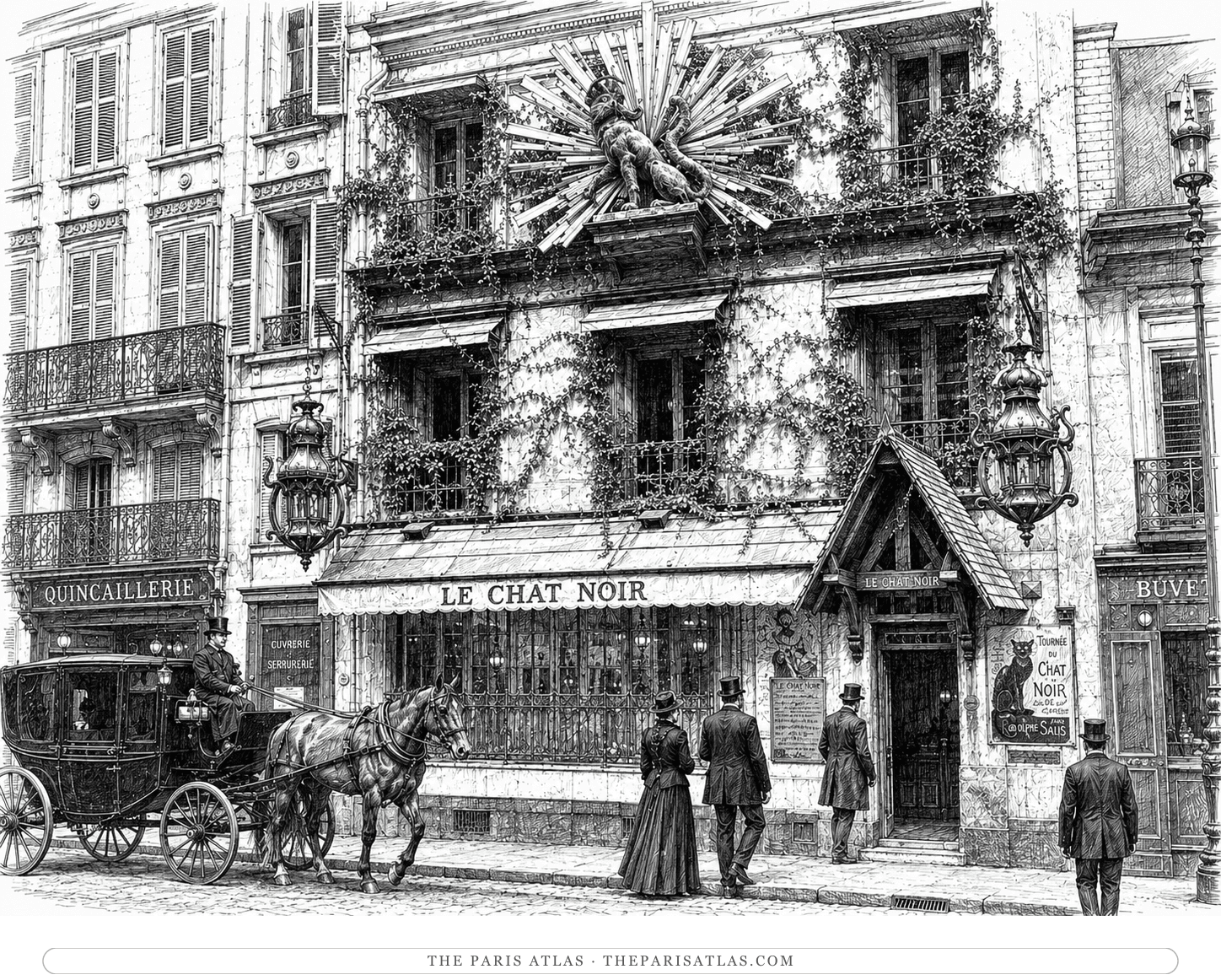
By 1887 he was living in Montmartre and working as second pianist at the Chat Noir cabaret. The three Gymnopédies, slow and spare piano pieces, followed in 1888; they are now his most familiar music, and Claude Debussy orchestrated two of them in 1897. The Gnossiennes, begun around the turn of the 1890s, pushed further — some dispense with bar lines and time signatures entirely, their harmonies circling rather than progressing. The materials were simple; the organization was radical. Long before anyone had the words for it, Satie was writing music that established an atmosphere and let the listener stay inside it, rather than driving toward a climax.

The cabarets were his income for years — he accompanied singers and wrote for the commercial stage, including the songs Je te veux, La Diva de l'Empire, and Le Piccadilly. He was later dismissive of the material, but the music hall taught him economy, timing, parody, and a durable disrespect for the wall between serious art and popular entertainment. All of it resurfaced in Parade.

The Montmartre years produced the eccentricities he is still known for. In the early 1890s he wrote ceremonial music for the mystic Joséphin Péladan's Rosicrucian circle, then broke away and, in the mid-1890s, founded his own church, the Église Métropolitaine d'Art de Jésus Conducteur, served as its only member, and issued attacks on his critics from its headquarters, which was his room on the rue Cortot. In 1895 he spent a small legacy on seven identical chestnut-coloured corduroy suits with matching hats, and wore little else for years. Montmartre called him the Velvet Gentleman.

Suzanne Valadon

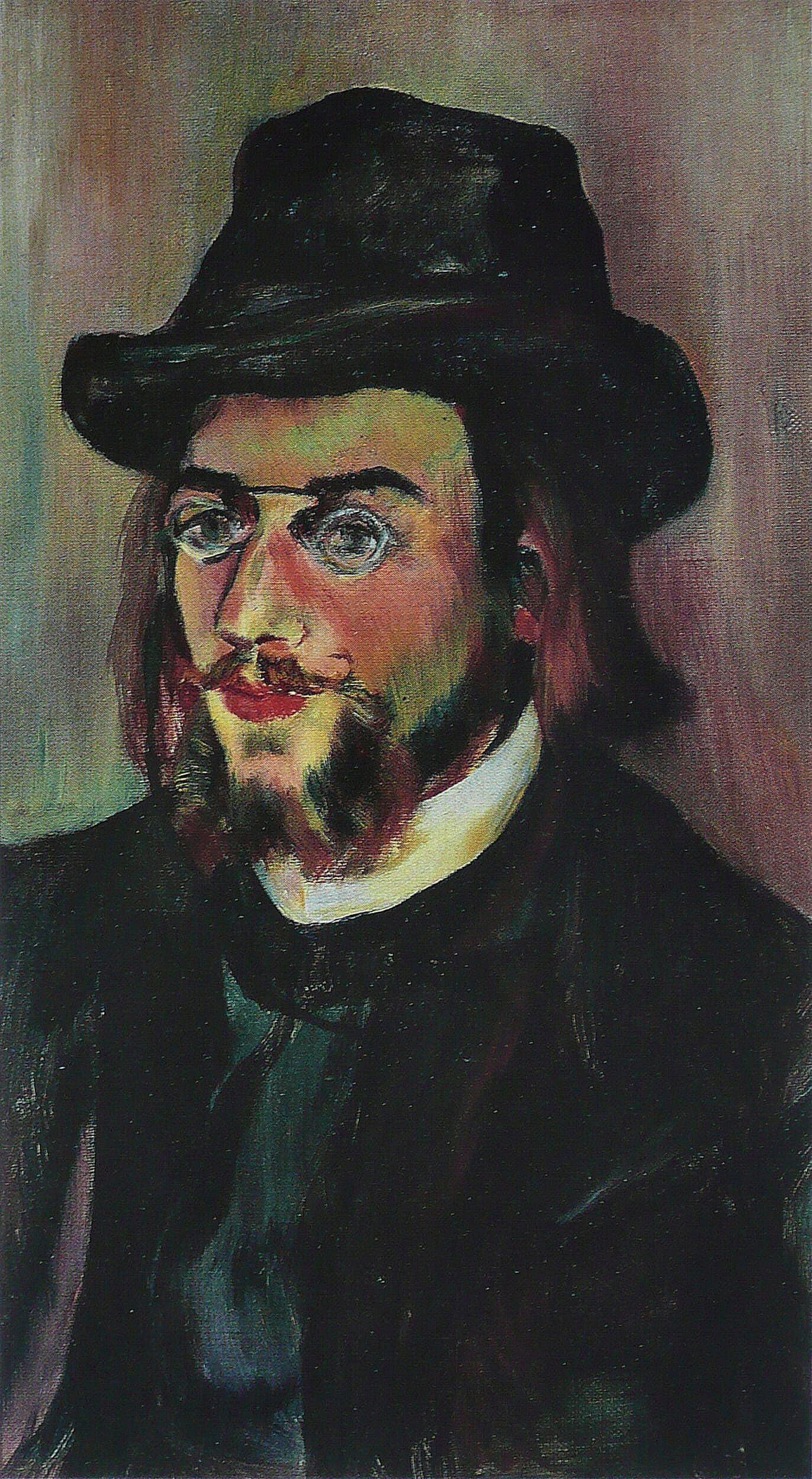
Erik Satie at twenty-six, painted by Suzanne Valadon during their 1893 affair — the only documented romance of his life. (Suzanne Valadon, via Wikimedia Commons · Public domain)

In January 1893 Satie began an affair with the painter Suzanne Valadon, a former artists' model who had taught herself to paint between sittings. She took the room next to his on the rue Cortot and painted his portrait that year; in April he wrote her a four-bar song, Bonjour Biqui, Bonjour!, on the pet name he had given her.

After about six months she left, and he was devastated. It is the only love affair of his that is documented; as far as the record shows, he never had another. One object survives in the Bibliothèque nationale de France: a lock of Valadon's hair that Satie kept, mounted on card, with the beginning and end of the relationship recorded in his own hand.

Vexations

Around the same period Satie wrote one of the strangest pieces in the history of music. Vexations is a short, harmonically unmoored motif for piano, and above it Satie left an instruction suggesting that anyone wishing to play it 840 times in succession should prepare beforehand, in profound silence and serious immobility. Played literally, it lasts many hours. He never mounted a performance, and the piece stayed unknown in his lifetime.

It became famous through John Cage, who organized the first complete public performance in New York in 1963 with a relay of pianists; it ran more than eighteen hours. For the experimental composers of that generation, the obscure manuscript posed exactly their questions — what repetition does to perception, where a concert ends and a ritual begins — and its recovery turned Satie from a charming miniaturist into an ancestor of the avant-garde.

Arcueil

Erik Satie around 1914, in the bourgeois uniform of his Arcueil years — bowler, pince-nez, and umbrella. Photograph by Studio Hamelle, Paris. (Studio Hamelle, Paris, via Wikimedia Commons (CC0) · Public domain)

In 1898 Satie moved to a single room in Arcueil, a suburb south of Paris, and kept it until his death. Most days he walked the ten kilometres into the city, umbrella under his arm, stopping at cafés along the way, and often walked back late at night. In the twenty-seven years he lived there, no visitor entered the room.

The jokes moved into the titles. Trois morceaux en forme de poire — Three Pieces in the Shape of a Pear, 1903, containing more than three pieces — is the most famous; the often-repeated story that it answered Debussy's advice to pay more attention to form is questioned by scholars, which is itself a warning about Satie, who was very good at turning himself into a story. The humorous piano collections of the 1910s — Desiccated Embryos, True Flabby Preludes (for a Dog), Sports et divertissements with its drawings and prose — read like absurdist literature and are controlled with complete precision. Some of the instructions written between the staves were never meant to be read aloud: a private channel between composer and performer.

In 1905, at thirty-nine, he enrolled at the Schola Cantorum to study counterpoint and composition under Vincent d'Indy and Albert Roussel — the lifelong enemy of academies going conscientiously back to school, because if he was going to refuse the rules he wanted to know exactly what they were. His mature simplicity was a choice, not a limitation. Recognition came slowly and from other composers first. In January 1911 Maurice Ravel played Satie's early piano pieces at a concert of the Société musicale indépendante in Paris, presenting the forgotten cabaret pianist as a pioneer who had written the music of tomorrow a quarter-century early.

What Satie's music sounds like

There is no single Satie style — the music kept changing — but several qualities recur across forty years:

  • Simplicity: a melody, a repeating accompaniment, a small set of chords — the sparseness that later drew the minimalists
  • Repetition that simply remains, instead of building toward a climax; the music does not always seem to be going anywhere, on purpose
  • Unresolved harmony: chords moving in parallel or arriving unprepared, beautiful precisely because nothing forces them to explain themselves
  • Modes and archaic sound, from the Gregorian chant of his Honfleur childhood — the ancient atmosphere of the Ogives and early piano pieces
  • Flat emotional delivery: a tragic melody that declines to erupt, a beautiful chord not driven to release — the composer refuses to tell the listener how intensely to react
  • Humor, in the titles, in the performance directions, and in the notes

Traditional tonal music creates tension by making listeners expect resolution. Satie weakened that expectation deliberately, and the weakening is why the Gymnopédies can sound more recent than their date. It is also why the pretty piano pieces can mislead: someone who meets them as background music imagines a dreamy miniaturist, and is then surprised by the insults, the typewriter, the 840 repetitions, and the cannon. The peaceful music and the provocations are the same artist — both refuse the demand that music behave conventionally.

The score as an object

A traditional score is a set of instructions for making sounds. Satie made the page itself part of the work. He wrote music in a striking calligraphic hand — the Centre Pompidou describes him writing 'like a calligrapher poet,' drawing his staves by hand and swapping standard terminology for deliberately impish expressions. He dropped bar lines from some pieces, inserted prose between the staves, and addressed performers in instructions the audience would never hear — a private channel between composer and player. Some directions were expressly not to be read aloud.

A Satie score can therefore exist three ways at once: as sound, as writing, and as a visual object. His prose ran on the same voice — polite, bureaucratic, mystical, deadpan, and absurd by turns, delivering jokes without signaling them. Later experimental composers explored graphic notation far more systematically; Satie was there extraordinarily early.

Parade

Jean Cocteau brought Satie the scenario for a ballet during the war, and over the next two years the two built Parade with Pablo Picasso for Serge Diaghilev's Ballets Russes. Satie's score called for a typewriter and a siren alongside the orchestra; Picasso supplied a Cubist drop curtain, sets, and costumes; Léonide Massine choreographed. The premiere at the Théâtre du Châtelet on 18 May 1917 scandalized the house. In the program note, Guillaume Apollinaire called the result 'a kind of surrealism', the word's first prominent appearance in print.

Satie's temper survives in the court record. When the critic Jean Poueigh published a hostile review, Satie answered with insulting postcards; Poueigh sued for libel, and Satie was convicted and sentenced to a week in jail, a punishment ultimately headed off through his friends' intervention. The gentle eccentric with the umbrella could hold a grudge and turn a disagreement into a crisis.

Parade made Satie the presiding figure of postwar French music. Cocteau's 1918 pamphlet Le Coq et l'Arlequin held him up as the model for a plain, French music stripped of prewar orchestral fog, an argument later collected in Le rappel à l'ordre and attached to the Return to Order. The six young composers soon grouped as Les Six — Georges Auric, Louis Durey, Arthur Honegger, Darius Milhaud, Francis Poulenc, and Germaine Tailleferre — proclaimed themselves his heirs.

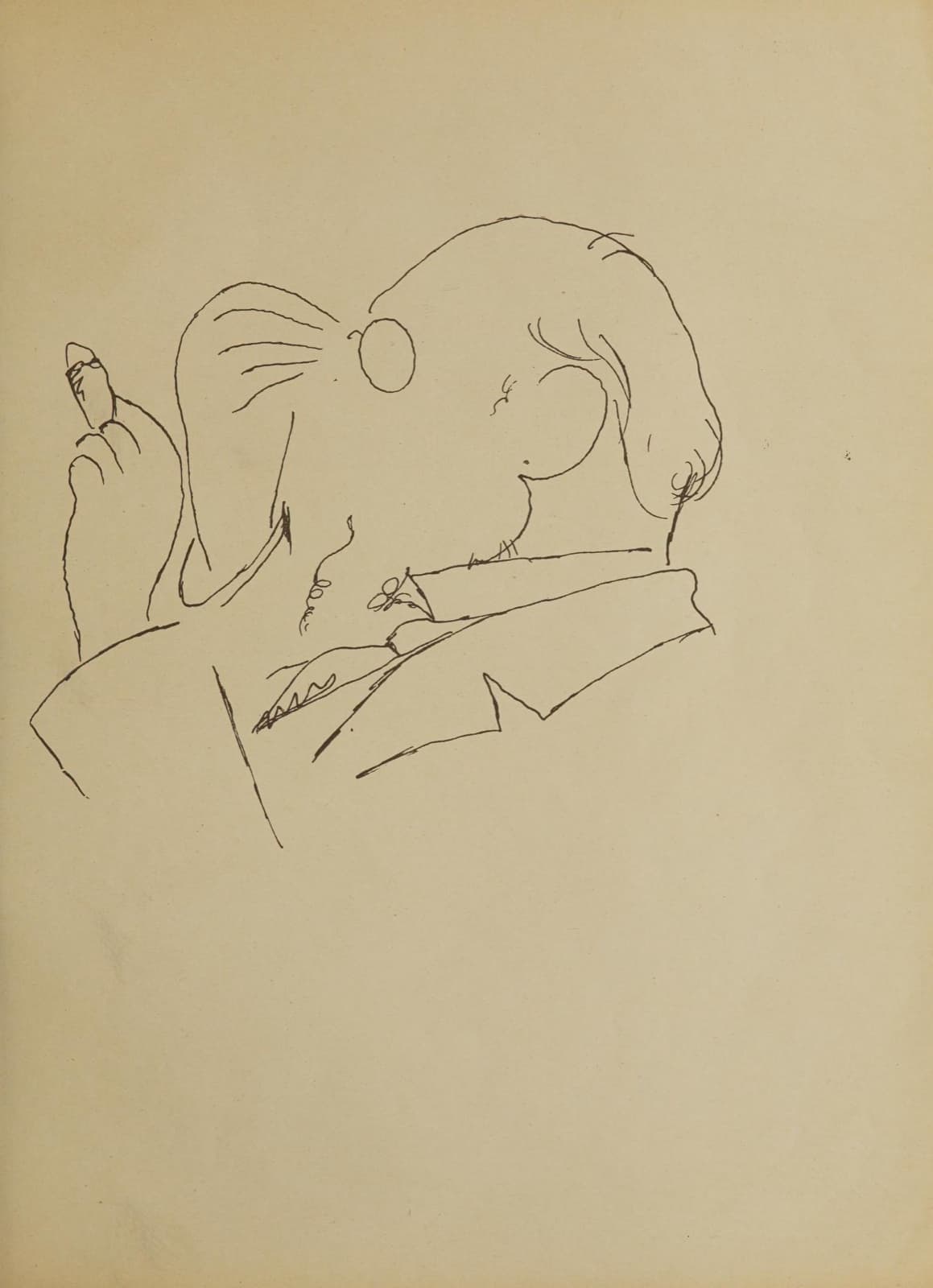
Cocteau also drew him. The line portrait Erik Satie was published as a plate in his 1923 album Dessins.

Socrate

The most surprising work of his later career contains no jokes at all. Socrate (1917–18) sets passages of Plato in French translation with unusual restraint and purity — even the death of Socrates passes without an operatic climax. Scholars connect it to what Satie called his style dépouillé, the stripped-down manner: he had come to trust emotional restraint over emotional display.

The immaculate bourgeois costume concealed left politics. After the assassination of the socialist leader Jean Jaurès in 1914 Satie joined the Socialist Party, and after the split of Tours he was associated with the young French Communist Party — the avant-garde provocateur dressed like a civil servant, voting with the Arcueil working class he lived among. He resisted being reduced to a single identity from every direction at once.

The larger battle of his generation was with Richard Wagner, whose scale, chromatic intensity, and mythic ambition dominated European music. Satie became almost the exact inverse — short instead of enormous, dry instead of intoxicated, everyday instead of mythic, static instead of relentlessly developmental, funny instead of reverential — and that inversion is why younger French musicians eventually found him so useful: he was an escape route. His years in commercial entertainment made the escape possible. Satie knew popular songs from the piano bench, not the folklorist's notebook, and he never accepted a permanent wall between fine art and popular culture — the refusal that reaches full scale in Parade.

Furniture music, Relâche, and the end

Erik Satie photographed by Henri Manuel around 1920, seated with an open score. The print carries Manuel's studio signature and a dedication in Satie's hand to Valentine Gross, with his looping ES monogram. (Henri Manuel — via Wikimedia Commons · Public domain)

In March 1920, during the intermissions of a comedy by Max Jacob at the Galerie Barbazanges, Satie presented what he called musique d'ameublement — furniture music, written to be ignored. The audience was invited to walk about and look at an exhibition of children's drawings while it played. When people sat down and listened instead, Satie was annoyed. The experiment failed in the room and succeeded everywhere since: music designed as an environment rather than an event is now an entire genre, and its later practitioners, John Cage first among them, named Satie as the source.

His last stage work was Relâche (1924), commissioned by Rolf de Maré for the Ballets Suédois, the company's final production, with a scenario by Francis Picabia — the title is the word a French theater posts when it is closed. For its cinema interlude, René Clair's short film Entr'acte, Satie wrote a bar-by-bar score and appeared on screen with Picabia in the cannon prologue. It premiered at the Théâtre des Champs-Élysées on 4 December 1924.

Satie had been a heavy drinker for most of his adult life, and his health failed that winter. He was admitted to the Hôpital Saint-Joseph in February 1925 and died there of cirrhosis of the liver on 1 July 1925, at fifty-nine. He was buried in the cemetery at Arcueil on 6 July. His friends then entered the Arcueil room for the first time. Clearing it took two cartloads, and what they found included:

  • Manuscripts believed lost, among them Vexations, Geneviève de Brabant, and Jack in the Box, recovered from behind the piano and from the pockets of his suits
  • Two pianos, one stacked on the other
  • A wardrobe of near-identical corduroy suits, some of them scarcely worn
  • Umbrellas, walking sticks, old hats, and piles of old newspapers

Several of the recovered scores were published and performed after his death. The secrecy of the room had, without anyone intending it, created an archive.

Life events

  1. 1866

    Born Éric Alfred Leslie Satie in Honfleur, on the Normandy coast, on 17 May.

    Satie, Erik

  2. 1872

    His mother dies; Erik and his brother are sent back to Honfleur to be raised by their grandparents. The organist Gustave Vinot gives him his first lessons and an ear for Gregorian chant.

  3. 1879

    Enters the Paris Conservatoire at thirteen, at his stepmother's urging. His teachers call him idle; he is dismissed, readmitted, and leaves without a diploma.

    Satie, Erik

  4. 1886

    Volunteers for the 33rd Infantry Regiment, dislikes it, and gets himself discharged by standing bare-chested in winter until he catches bronchitis.

  5. 1887

    Working as second pianist at the Chat Noir cabaret in Montmartre.

  6. 1888

    Composes the three Gymnopédies, his most familiar music.

  7. c. 1890

    Begins the Gnossiennes, some written without bar lines or time signatures; writes ceremonial music for Joséphin Péladan's Rosicrucian circle before breaking away.

  8. 1893

    Six-month affair with the painter Suzanne Valadon, his only documented romance; she paints his portrait, and he keeps a lock of her hair for the rest of his life. Writes Vexations, with its instruction contemplating 840 repetitions.

    Erik Satie at twenty-six, painted by Suzanne Valadon during their 1893 affair — the only documented romance of his life. (Suzanne Valadon, via Wikimedia Commons)

    [Cheveux de Suzanne Valadon] — notice bibliographique

  9. 1895

    Spends a small legacy on seven identical corduroy suits; Montmartre names him the Velvet Gentleman.

  10. 1897

    Claude Debussy orchestrates two of the three Gymnopédies.

  11. 1898

    Moves to a single room in Arcueil, south of Paris, and keeps it for the rest of his life; no visitor enters it. Most days he walks the ten kilometres into Paris, umbrella in hand.

    Satie, Erik

  12. 1903

    Composes Trois morceaux en forme de poire — Three Pieces in the Shape of a Pear, which contains more than three pieces.

  13. 1905

    Enrolls at the Schola Cantorum, at thirty-nine, under Vincent d'Indy and Albert Roussel, and studies conscientiously.

    Satie, Erik

  14. 1911

    Maurice Ravel plays his early piano pieces at a Société musicale indépendante concert in Paris, presenting him as a pioneer; recognition begins.

    Between distance and admiration — Satie and Ravel

  15. 1917

    Parade, with Jean Cocteau, Pablo Picasso, and Diaghilev's Ballets Russes, premieres at the Théâtre du Châtelet on 18 May. Sued for libel by the critic Jean Poueigh over insulting postcards, and convicted.

    Parades

  16. 1918

    Completes Socrate, the austere Plato setting of his stripped-down late manner. Cocteau's Le Coq et l'Arlequin makes him the model for postwar French music.

    Erik Satie's Socrate (1918), Myths of Marsyas, and un style dépouillé

  17. 1920

    Presents musique d'ameublement — furniture music — at the Galerie Barbazanges in March; the audience is asked not to listen.

    Erik Satie photographed by Henri Manuel around 1920, seated with an open score. The print carries Manuel's studio signature and a dedication in Satie's hand to Valentine Gross, with his looping ES monogram. (Henri Manuel — via Wikimedia Commons)

    Erik Satie's musique d'ameublement and Max Jacob's Ruffian toujours, truand jamais, by Caroline Potter

  18. 1924

    Relâche, with Francis Picabia and the Ballets Suédois, premieres on 4 December with René Clair's film Entr'acte as its interlude; Satie appears on screen in the cannon prologue.

    Relâche

  19. 1925

    Dies of cirrhosis of the liver at the Hôpital Saint-Joseph in Paris on 1 July; buried at Arcueil on 6 July. His room, sealed to visitors for twenty-seven years, is opened — two cartloads are cleared, and lost manuscripts surface.

    Satie, Erik

  20. 1963

    John Cage organizes the first complete performance of Vexations in New York — a relay of pianists, more than eighteen hours — and remakes Satie as an ancestor of experimental music.

    A Dangerous and Evil Piano Piece

In art

Works in our catalog with Erik as their subject.

Cocteau's line drawing of Erik Satie in profile — pince-nez, beard, one finger raised as if mid-aphorism

Artwork reproduction

Drawing

Erik Satie

Jean Cocteau · published 1923 · Pen-and-ink line drawing — plate 10 of Dessins (Librairie Stock, 1923)

Cocteau's Satie in a handful of lines: pince-nez, beard, and one finger raised as if delivering an aphorism — the composer of Parade drawn by its librettist, from the album Cocteau dedicated to Picasso.

Published in Dessins (Librairie Stock, 1923)

Jean Cocteau, Erik Satie, published 1923. Published in Dessins (Librairie Stock, 1923). Image: public domain (US).

Selected works

Cataloged from the holding institutions' records. Reproductions appear only where the rights are verified.

Stage

Title page of Erik Satie's autograph manuscript of Parade, crediting Cocteau's scenario, Picasso's curtain, sets and costumes, and Massine's choreography

Artwork reproduction

Ballet

Parade

1917 · Ballet réaliste in one scene

The one-act ballet that dragged the avant-garde onto the popular stage: Cocteau's scenario, Satie's score with its typewriter and siren, and Picasso's Cubist curtain, sets, and costumes for Diaghilev's Ballets Russes — premiered in Paris in May 1917 to a scandalized house. In his program note, Guillaume Apollinaire described it as 'a kind of surrealism' — the word's first prominent appearance in print, and the name André Breton's movement later adopted. The Rome working trip also gave Picasso his first long look at the antique, helping initiate the classical turn that became the Return to Order.

Bibliothèque nationale de France (autograph manuscript)

Jean Cocteau, Erik Satie, Pablo Picasso, Parade, 1917. Bibliothèque nationale de France (autograph manuscript). Image: public domain.

People they knew

Documented connections — every one carries its source.

Illustrated portrait of Jean Cocteau

Jean Cocteau

  • Poet
  • Playwright
  • Illustrator
  • +1

Met · 1915–1917

The Parade partnership: Cocteau brought Satie the scenario and the two built the ballet with Picasso for Diaghilev — the collaboration credited in Satie's own hand on the manuscript's title page.

Erik Satie, Parade — autograph manuscript (BnF Gallica, btv1b10462747r), title page

Illustrated portrait of Rolf de Maré

Rolf de Maré

  • Patron
  • Archivist

Supported by · 1924

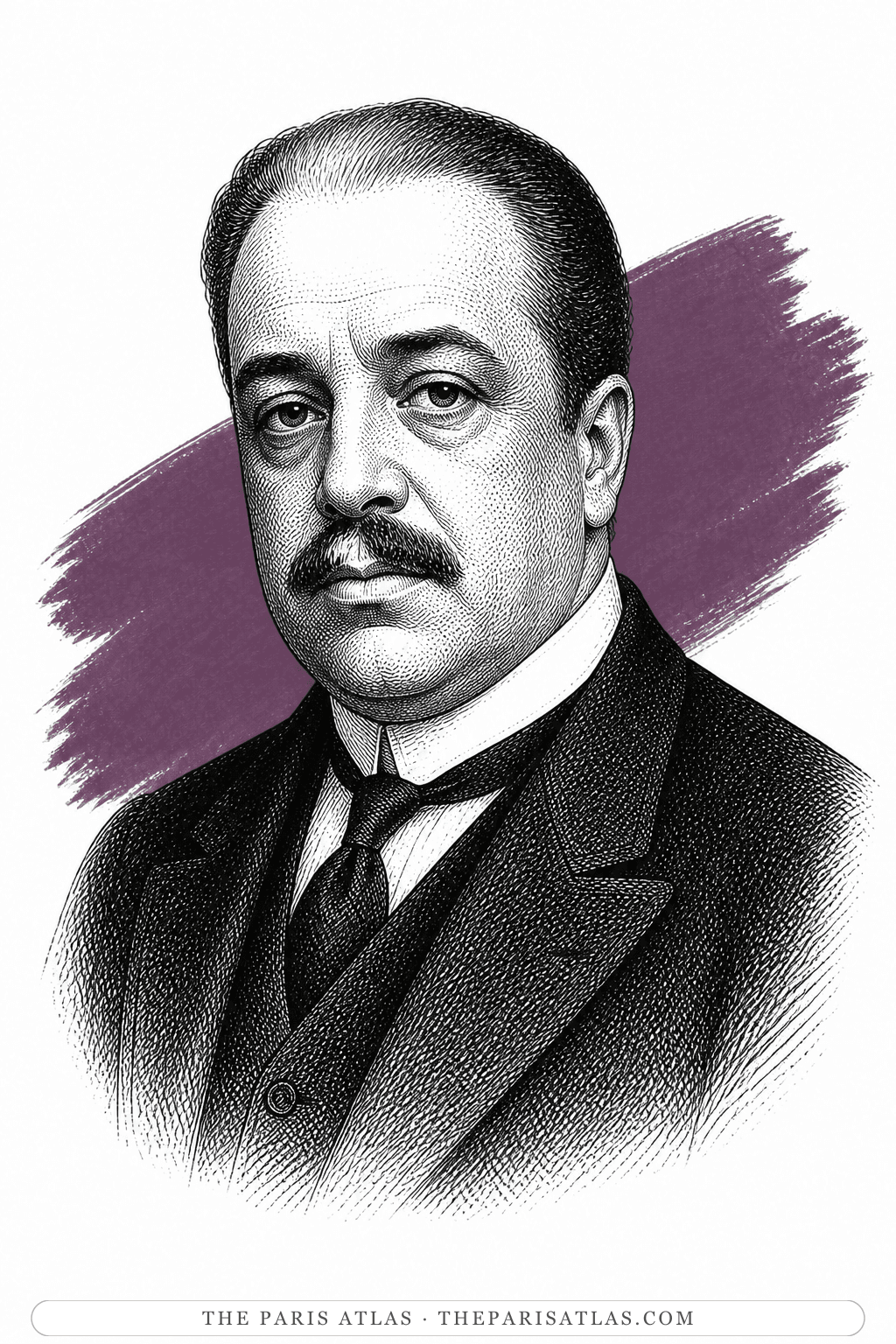
De Maré commissioned Relâche in 1924, the Ballets Suédois's final production, for which Satie wrote a bar-by-bar score. It was the last gasp of the Dada spirit in Paris.

The Metropolitan Museum of Art, Leonard A. Lauder Research Center — Rolf de Maré, Modern Art Index Project

Illustrated portrait of Claude Debussy

Claude Debussy

  • Musician
  • Critic

Met · 1891

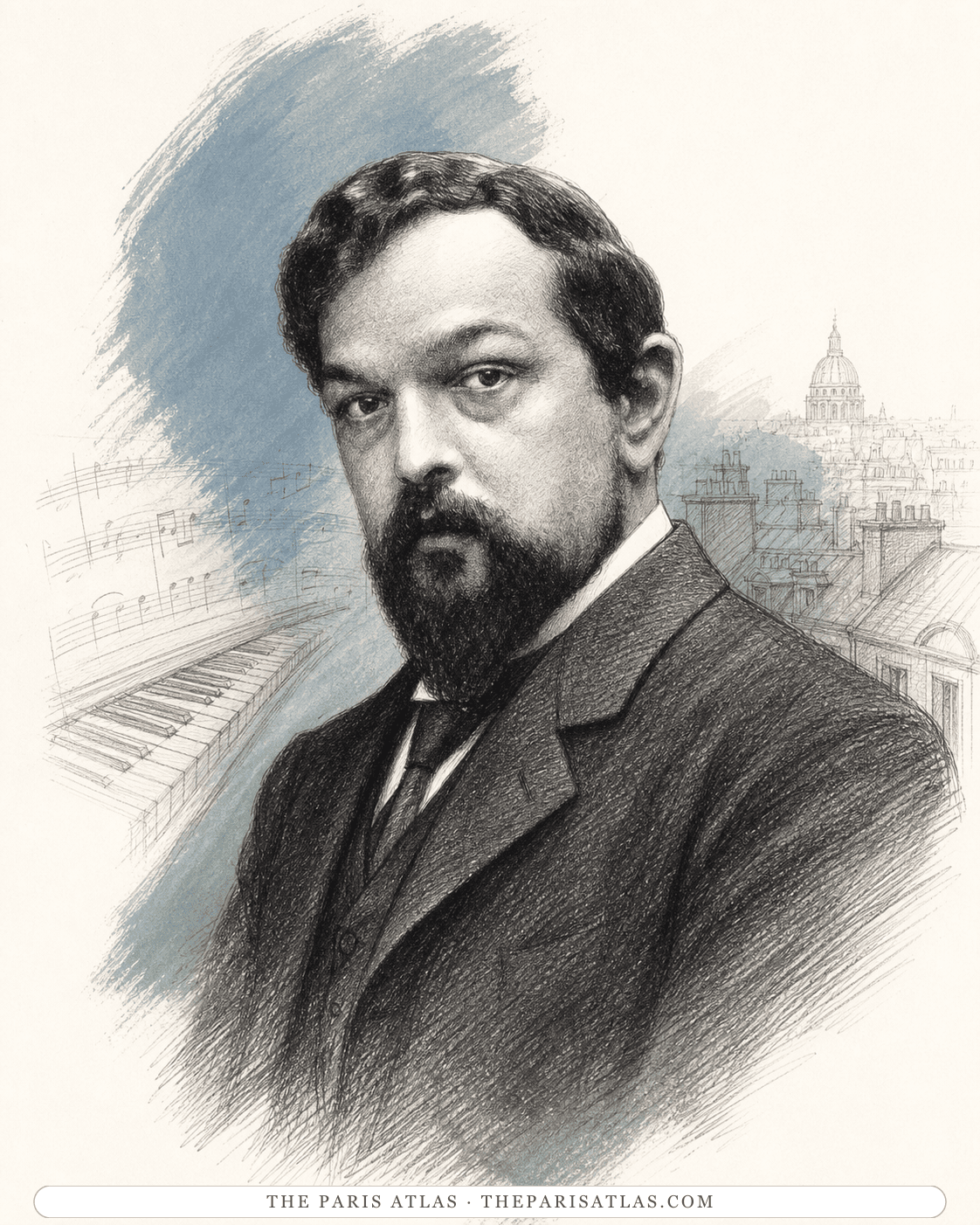
Debussy and Satie met in the Montmartre orbit of the Auberge du Clou and remained close until a rupture in 1916. Debussy later orchestrated two of Satie's Gymnopédies.

Corinne Amar, Erik Satie, portrait

Who drew from them

Influence running outward — the writers and artists who built on their work.

Illustrated portrait of Claude Debussy

Claude Debussy

Satie's early modal harmonies, repetition and refusal of grand Romantic rhetoric offered Debussy an important Parisian example of music that could be modern by becoming simpler rather than larger.

Corinne Amar, Erik Satie, portrait

Movements

The artistic and literary currents this life ran through.

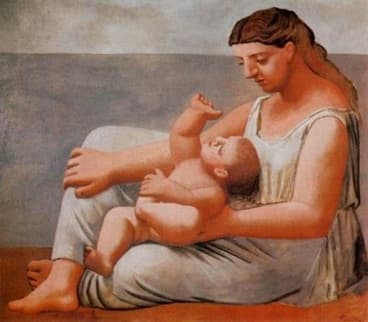
Picasso's Mother and Child: a monumental woman in a white tunic seated by a gray sea, holding an infant who reaches up toward her face

Art movement · c. 1918–1930

Return to Order

The tendency's model in music, by Cocteau's own program: Le Coq et l'Arlequin (1918), later collected in Le rappel à l'ordre, held up the composer of Parade as the postwar ideal — plain, French, cleansed of prewar orchestral fog.

Jean Cocteau, Le rappel à l'ordre (1926), Le Coq et l'Arlequin (1918)

Erik Satie’s Places

The cataloged places connected to Erik Satie — through the books, and through the documented record.

Places you can enter today appear first, followed by addresses to see from outside and sites that have vanished.

Questions about Erik Satie

Who was Erik Satie?

A French composer, born in Honfleur in 1866, who wrote the Gymnopédies, invented furniture music, and composed the score for the 1917 ballet Parade with Jean Cocteau and Pablo Picasso. He worked as a cabaret pianist in Montmartre, lived alone in the suburb of Arcueil for his last twenty-seven years, and died in Paris in 1925.

What are the Gymnopédies?

Three slow, spare piano pieces Erik Satie composed in 1888, now his most familiar music. Claude Debussy orchestrated two of them in 1897, and Maurice Ravel's performance of Satie's early pieces at a 1911 Paris concert helped bring them a wider audience. They sound modern because they remove what nineteenth-century music was built on — development, climax, resolution — and settle for atmosphere instead.

What is furniture music?

Background music written to be ignored — musique d'ameublement, Erik Satie's own term. At its public presentation in March 1920, played during the intermissions of a comedy by the poet Max Jacob at the Galerie Barbazanges in Paris, the audience was invited to walk around rather than listen; when people listened anyway, Satie was annoyed. The idea — music as an environment rather than an event — made him an ancestor of ambient music.

What is Vexations?

A very short piano piece Satie wrote around 1893, carrying an instruction that contemplates playing it 840 times in succession, prepared for by profound silence and serious immobility. Taken literally, a performance lasts many hours; Satie never mounted one, and the piece was unknown in his lifetime. John Cage organized the first complete performance in New York in 1963 with a relay of pianists — it ran more than eighteen hours.

What was Parade?

A one-act ballet premiered at the Théâtre du Châtelet in Paris on 18 May 1917, with a scenario by Jean Cocteau, music by Erik Satie, and curtain, sets, and costumes by Pablo Picasso, produced by Serge Diaghilev's Ballets Russes. Satie's score included a typewriter and a siren, and the poet Guillaume Apollinaire's program note called the work 'a kind of surrealism' — the word's first prominent appearance in print.

Why did Satie go back to music school at thirty-nine?

Because he had decided his technique needed it. After years of being mocked as an amateur, Satie enrolled at the Schola Cantorum in 1905 to study counterpoint under Albert Roussel and composition under Vincent d'Indy, and worked conscientiously. The point matters for hearing his music: the mature simplicity was a choice made with full command of the rules it refused, not a limitation.

How did Erik Satie die?

Of cirrhosis of the liver, at the Hôpital Saint-Joseph in Paris on 1 July 1925, after decades of heavy drinking. He was fifty-nine. He was buried in the cemetery at Arcueil, and only after his death did friends enter his room there, where they found unpublished manuscripts behind the piano and in the pockets of his suits.

What did Satie's friends find in his room after he died?

A room no one had entered in twenty-seven years, holding two pianos, near-identical corduroy suits, umbrellas, old newspapers — two cartloads had to be cleared before his papers could be sorted — and manuscripts believed lost, among them Vexations, Geneviève de Brabant, and Jack in the Box. Several were published and performed after his death.

Was Erik Satie ever married?

No. His only documented romance was a roughly six-month affair in 1893 with the painter Suzanne Valadon, who took the room next to his on the rue Cortot in Montmartre and painted his portrait. After she left, no other relationship of his is recorded. The Bibliothèque nationale de France preserves a lock of her hair that he kept, annotated in his own hand.

Who did Erik Satie influence?

First the composers around Jean Cocteau — Les Six, with Georges Auric, Darius Milhaud, and Francis Poulenc among them, treated him as their elder. Later and more broadly, John Cage and the postwar experimental composers took up his repetition, his indifference to concert etiquette, and his furniture music, and he is now standard reading in the prehistory of minimalism and ambient music.

Was Erik Satie his real name?

He was born Éric Alfred Leslie Satie — the Leslie from his British mother's Scottish family. As a young composer he began signing himself Erik, and the spelling became his professional name.

Did Satie study at the Paris Conservatoire?

Yes, from 1879, at thirteen — and badly. His teachers found some talent and no diligence, dismissed him for poor progress, readmitted him, and were unimpressed a second time; he left without a diploma. The serious schooling came much later, by his own choice, at the Schola Cantorum in 1905.

Why do the Gymnopédies sound so modern?

Because they remove what nineteenth-century music ran on: development, climax, and the drive toward resolution. Slow melodies float over repeating chords whose dissonances are left unresolved, creating an atmosphere rather than an argument — the approach minimal and ambient music arrived at decades later.

Did Debussy know Satie?

They were friends for roughly three decades, from the Montmartre years on, though the friendship had its frictions. Claude Debussy admired the early pieces enough to orchestrate two of the three Gymnopédies in 1897 — an important act of advocacy that helped move Satie's music from the cabaret into the concert hall.

Why did Satie found his own church?

The Église Métropolitaine d'Art de Jésus Conducteur grew out of a genuine fascination with ritual, medieval art, and mysticism — he had written ceremonial music for Joséphin Péladan's Rosicrucian circle before breaking away — and out of a need for an institution entirely under his own control. He was its founder, propagandist, and only member, and from its headquarters, his room, he excommunicated his critics in print.

Did Satie really own seven identical suits?

Yes. In 1895 he spent a small legacy on seven nearly identical chestnut-colored corduroy suits with matching hats and wore little else for years — Montmartre named him the Velvet Gentleman for it. Some of the suits were found scarcely worn in his room after his death.

Who was Biqui?

Satie's pet name for Suzanne Valadon. In April 1893, during their affair, he set it to music in a four-bar song, Bonjour Biqui, Bonjour! — a love token the size of a postage stamp, which was entirely in character.

Did Satie really intend Vexations to be played 840 times?

The score's instruction contemplates exactly that, prepared for by 'profound silence and serious immobility' — but how literally he meant it is uncertain, and he never mounted a performance. John Cage's 1963 relay realization in New York established the literal 840-repetition tradition, and performances since have followed it.

Why did Satie live in Arcueil?

It was cheap. He took the single room in the suburb south of Paris in 1898 and kept it for twenty-seven years, walking the ten kilometres into the city most days, umbrella in hand, and often walking back late at night. Living outside Paris never meant leaving Parisian life — only his room stayed private.

What was Socrate?

His austere setting of Plato in French translation, composed in 1917–18 — music of deliberate restraint in which even the death of Socrates passes without an operatic climax. It is the clearest example of his stripped-down late manner, the style dépouillé, and the proof that the humorist could be perfectly serious when he chose.

Is Satie actually in the film Entr'acte?

Yes. In the prologue of René Clair's 1924 film he appears beside Francis Picabia, firing a cannon toward the audience — the composer as Dada performer, in bowler hat and beard, a few months before his final illness.

Was Satie a serious composer, or was it all a joke?

Entirely serious, by the evidence: the voluntary counterpoint studies at the Schola Cantorum, the austerity of Socrate, and the precision of the piano writing. He rejected the idea that seriousness required solemnity — the humor was an artistic tool, not an admission that the art was unserious.

Sourced claims

Every connection the graph holds for Erik, with the evidence behind it.

Met · 1915–1917

Jean Cocteau

The Parade partnership: Cocteau brought Satie the scenario and the two built the ballet with Picasso for Diaghilev — the collaboration credited in Satie's own hand on the manuscript's title page.

Erik Satie, Parade — autograph manuscript (BnF Gallica, btv1b10462747r), title page

Associated with · 1917–1925

Return to Order

The tendency's model in music, by Cocteau's own program: Le Coq et l'Arlequin (1918), later collected in Le rappel à l'ordre, held up the composer of Parade as the postwar ideal — plain, French, cleansed of prewar orchestral fog.

Jean Cocteau, Le rappel à l'ordre (1926), Le Coq et l'Arlequin (1918)

Frequented · 1886–1891

Le Chat Noir

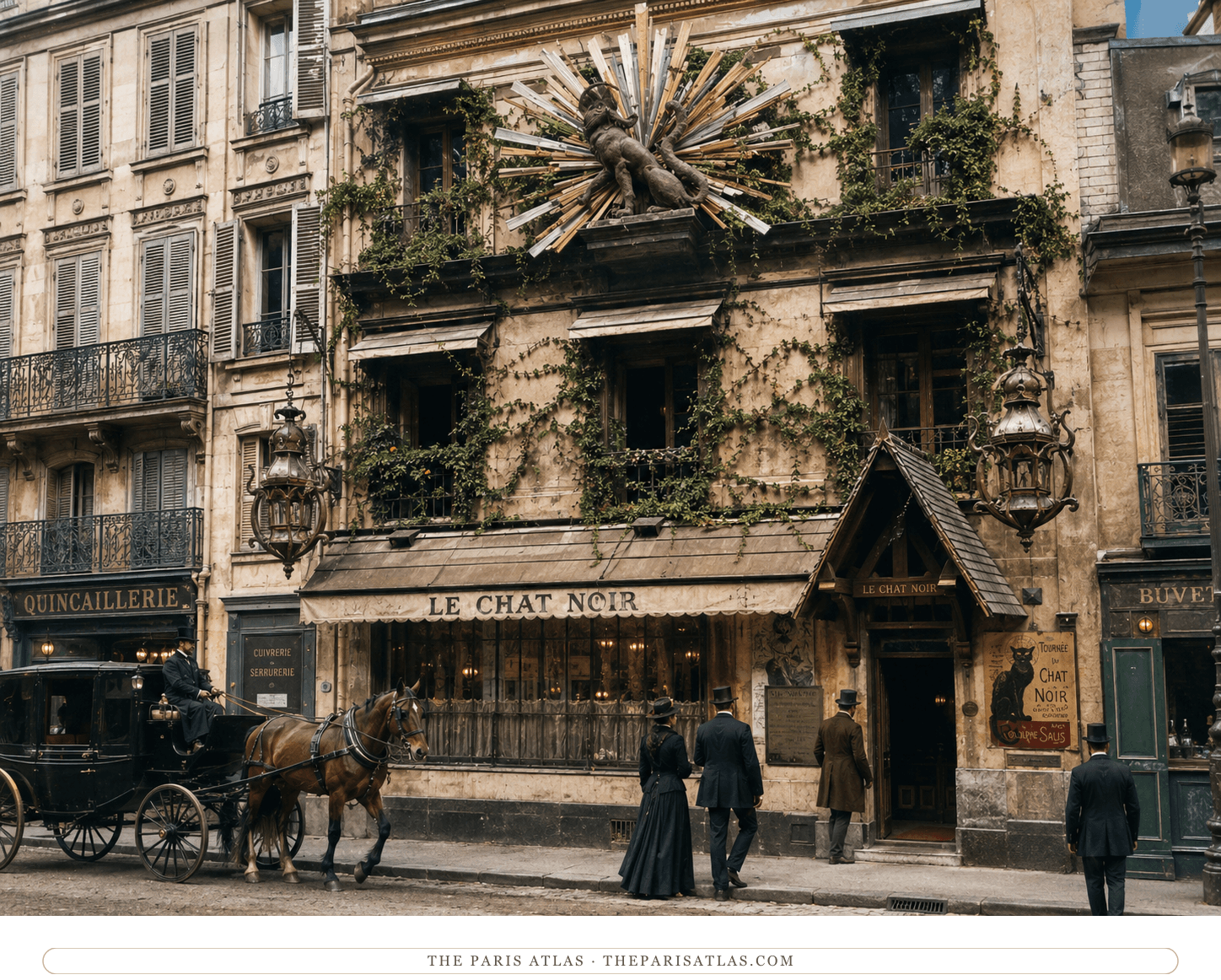
Satie belonged to Le Chat Noir's musical orbit and played at the cabaret's piano before moving to the Auberge du Clou in the early 1890s.

Musée de Montmartre, The reconstruction of the cabaret Le Chat Noir

Influenced

Claude Debussy

Satie's early modal harmonies, repetition and refusal of grand Romantic rhetoric offered Debussy an important Parisian example of music that could be modern by becoming simpler rather than larger.

Corinne Amar, Erik Satie, portrait

Depicted in · 1923

Erik Satie

Captioned 'Erik Satie' in the album itself — Parade's composer drawn by its librettist.

Jean Cocteau, Dessins (Paris: Librairie Stock, 1923) — Internet Archive scan, plate 10

Supported by · 1924

Rolf de Maré

De Maré commissioned Relâche in 1924, the Ballets Suédois's final production, for which Satie wrote a bar-by-bar score. It was the last gasp of the Dada spirit in Paris.

The Metropolitan Museum of Art, Leonard A. Lauder Research Center — Rolf de Maré, Modern Art Index Project

Met · 1891

Claude Debussy

Debussy and Satie met in the Montmartre orbit of the Auberge du Clou and remained close until a rupture in 1916. Debussy later orchestrated two of Satie's Gymnopédies.

Corinne Amar, Erik Satie, portrait

Sources and further reading

  • Satie, Erik
  • Tout le monde vous dira que je ne suis pas musicien — Erik Satie
  • Between distance and admiration — Satie and Ravel
  • [Cheveux de Suzanne Valadon] — notice bibliographique
  • Presenting Erik Satie's 18-Hour Piece Vexations at the Guggenheim
  • A Dangerous and Evil Piano Piece
  • Erik Satie — Documents concerning Parade
  • Parades
  • Parcours histoire des arts dans « Modernités » — Apollinaire and Parade
  • 'Les Six' and Jean Cocteau
  • Erik Satie's Socrate (1918), Myths of Marsyas, and un style dépouillé
  • Erik Satie's musique d'ameublement and Max Jacob's Ruffian toujours, truand jamais, by Caroline Potter
  • Relâche
  • Entr'acte, René Clair
  • L'oeil écoute — Erik Satie
  • Repetition and Furniture Music, by Caroline Potter (Erik Satie: A Parisian Composer and His World)