Depicts · 1923
Erik Satie
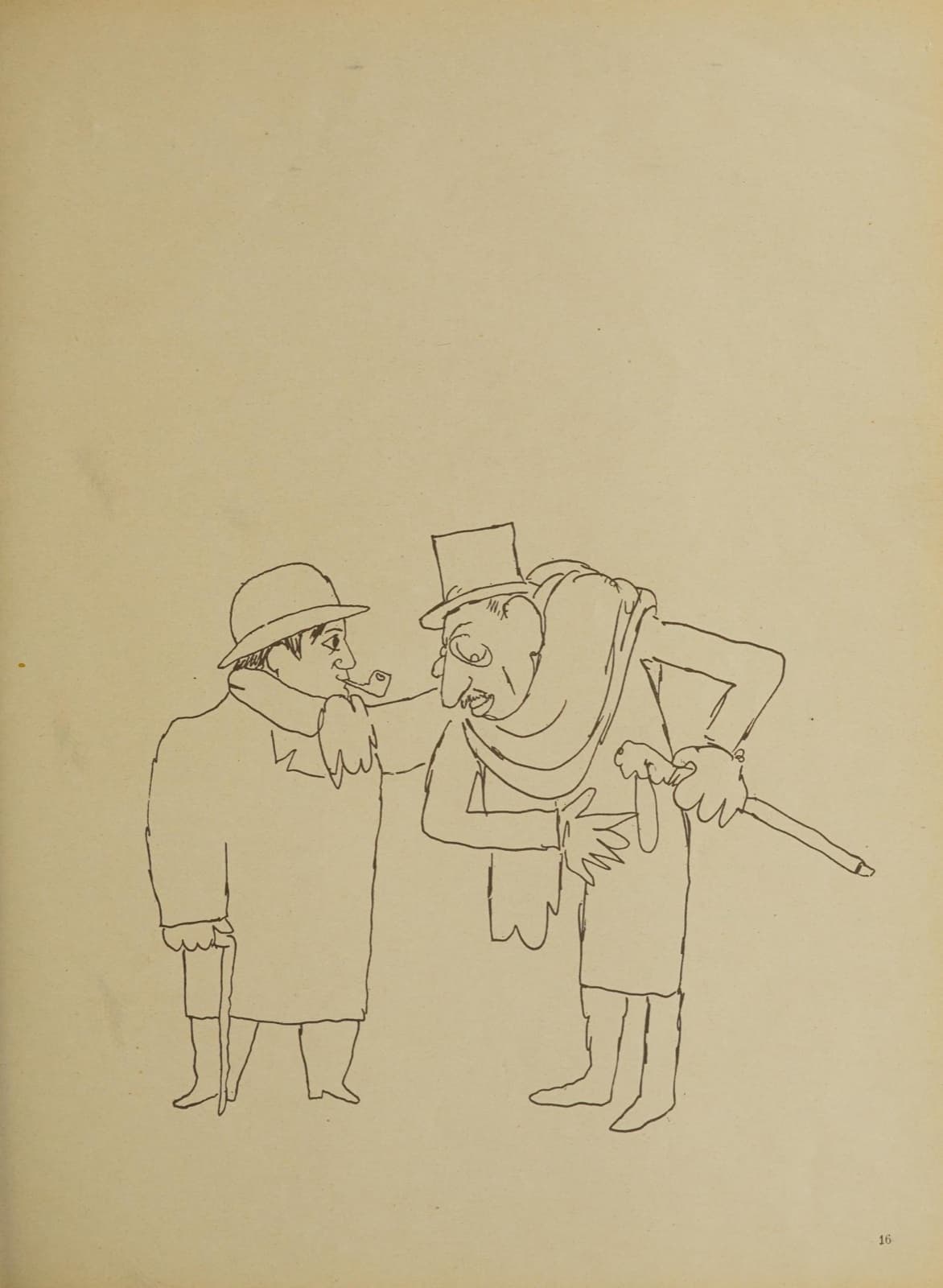
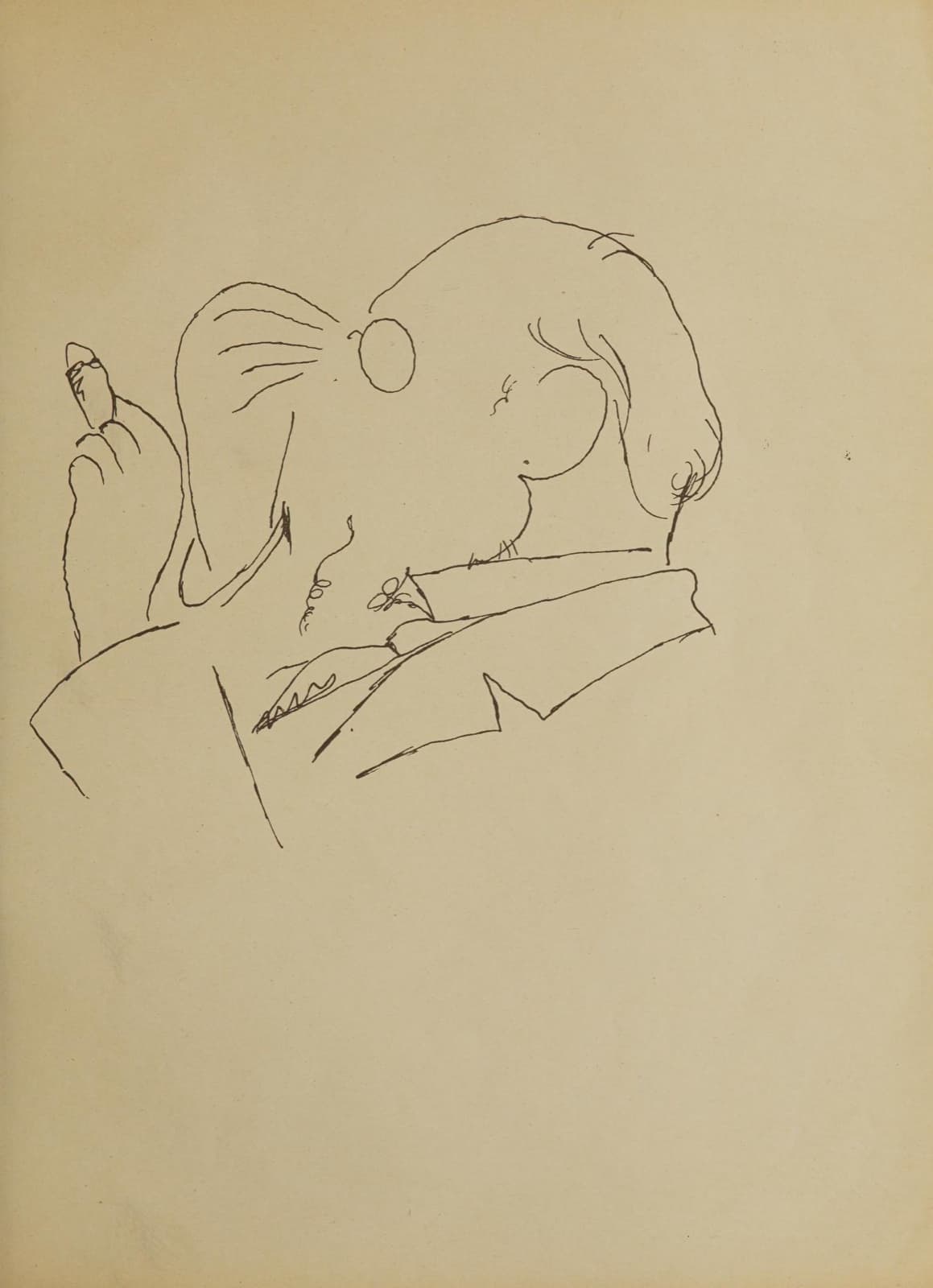
Captioned 'Erik Satie' in the album itself — Parade's composer drawn by its librettist.
by Jean Cocteau
Cocteau's Satie in a handful of lines: pince-nez, beard, and one finger raised as if delivering an aphorism — the composer of Parade drawn by its librettist, from the album Cocteau dedicated to Picasso.
Erik Satie in a handful of lines: bearded, pince-nez on the nose, one finger raised as if mid-remark. Cocteau draws him almost without lifting the pen, catching a likeness and a manner at once — the precise, teasing composer who signed himself a phonometrician rather than a musician.
It is a caricature in the good sense: not a joke at the sitter, but a portrait reduced to the few marks that carry him.
Cocteau appears in these pages as a poet, playwright and film-maker, but he drew constantly, and the line drawing was his most characteristic hand: continuous, economical, closer to handwriting than to shading. These portraits of his friends are the graphic equivalent of the company he kept.
The drawing is plate 10 of Dessins, the album of Cocteau's drawings published by Librairie Stock in Paris in 1923 and dedicated to Picasso. Satie earns his place twice over: he and Cocteau had made Parade together in 1917, Satie writing the score to Cocteau's scenario. The librettist drawing the composer.
The book was published before 1930, which puts the plate in the United States public domain and lets us show it in full. Cocteau died in 1963, so it remains under copyright in Europe until 2033.
Close reading
Cocteau reduces Erik Satie to a few mobile lines, but the likeness depends on exact choices. Close views show pince-nez, beard, and a raised finger turning graphic economy into personality.
1.Pince-nez and beard make the likeness immediate
A small number of marks fixes the eyes behind the glasses and the pointed beard below. Cocteau does not model volume; recognition arrives through selected edges.
2.One raised finger turns portrait into conversation
The lifted finger suggests a correction, instruction, or dry aside without specifying which. Gesture supplies the animation that shading and setting have been asked to surrender.
3.Empty paper does most of the modeling
The line travels, pauses, and changes direction while most of the page remains untouched. Negative space keeps the portrait light enough to read like handwriting made public.
4.The uninterrupted contour makes the head instantly legible
A spare curved line describes the bald skull without shading it into volume. Cocteau trusts contour and the viewer's recognition to complete what the drawing leaves blank.
5.A few marks establish Satie's sideways attention
The tiny eyes shift away from the direction of the raised finger. That slight disagreement makes the likeness feel observant and conversational rather than posed like an official portrait.
6.The inscription identifies an image made from very little
Writing below the figure anchors the airy drawing to a specific sitter and publication context. The label is useful because the image deliberately avoids descriptive detail.
1923
Published in the album of drawings Cocteau dedicated to Picasso — his line portrait of Erik Satie, the composer of Parade.
Published in Dessins (Librairie Stock, 1923)
This is a published reproduction, not a confirmed museum display. A public viewing address for the original has not been listed.
Jean Cocteau drew the composer Erik Satie — pince-nez, beard, a raised finger — in his characteristic continuous line. It is plate 10 of Cocteau's 1923 album Dessins.
They were collaborators. Satie wrote the score for Parade in 1917 to Cocteau's scenario, and Cocteau drew his circle constantly. This is the librettist portraying the composer.
An album of Cocteau's drawings published by Librairie Stock in Paris in 1923 and dedicated to Picasso. Cocteau drew as fluently as he wrote, and the book gathers his portraits of the people around him.
Dessins was published in 1923, which puts it in the United States public domain. Cocteau died in 1963, so the drawing remains under copyright in the European Union until 2033.
The Internet Archive holds a scan of the 1923 Librairie Stock edition, which is the source of this reproduction.
Depicts · 1923
Captioned 'Erik Satie' in the album itself — Parade's composer drawn by its librettist.
Explore painters from the same movements and circles.
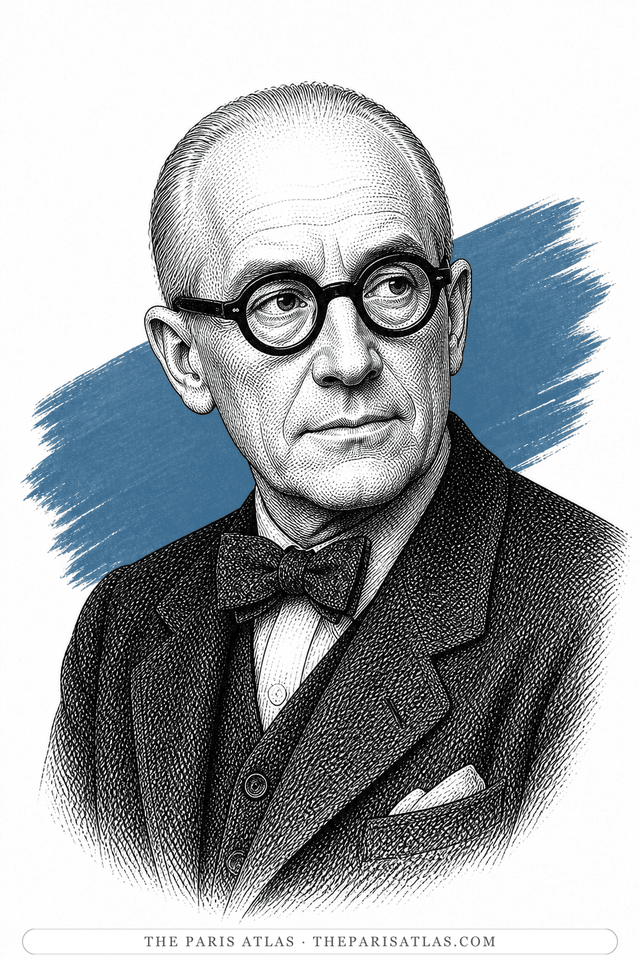
Swiss-born architect who arrived in Paris in 1917 as the painter Charles-Édouard Jeanneret, took the name Le Corbusier in 1920, and ran one atelier — his studio — at 35 rue de Sèvres for four decades. In 1925 he proposed demolishing much of the Right Bank of central Paris and replacing it with sixty-storey towers. Paris refused; the rest of the world adopted the idea after 1945.
View artist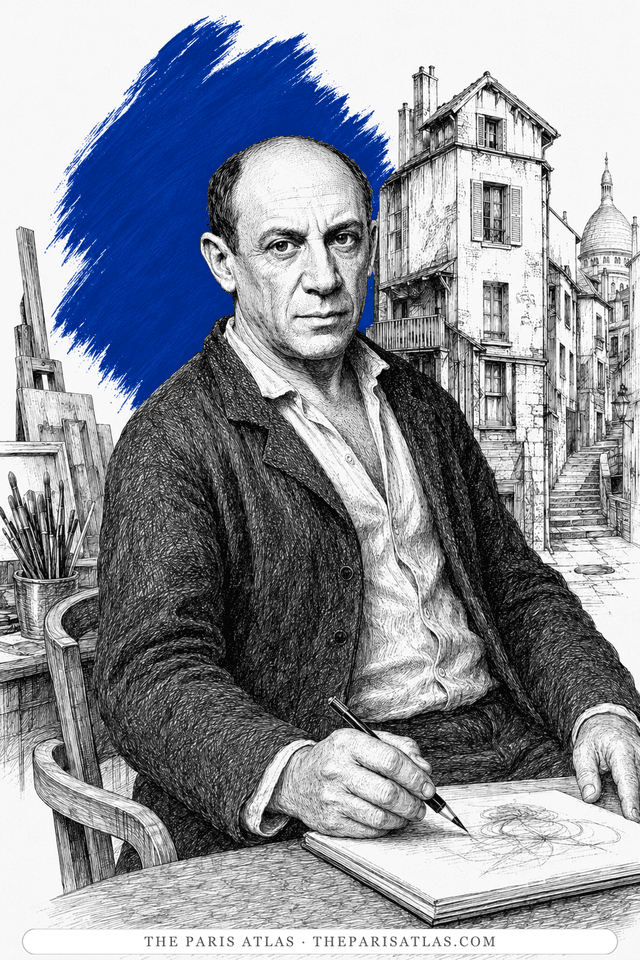
The painter whose canvases papered the walls of 27 rue de Fleurus before the writers arrived — the salon's resident modern master.
View artist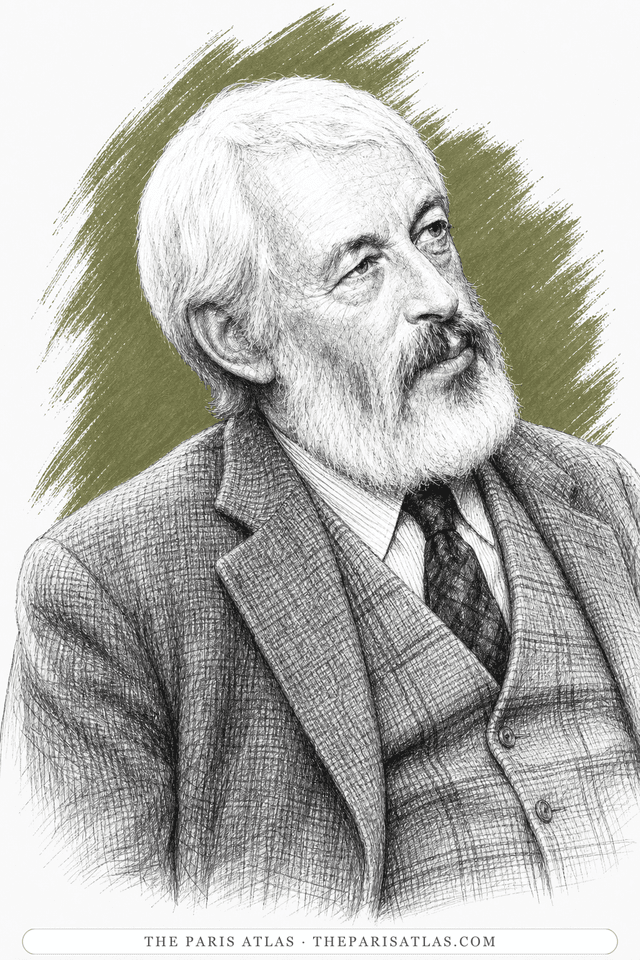
American-born Irish novelist, playwright and painter whose scandalous comic debut The Ginger Man was first published by Olympia Press in Paris after repeated rejection in Britain and America.
View artistThe sources below include collection records, catalogues, scholarly research, and primary materials that informed this page. They document Erik Satie, its making, and its place in cultural history.


Archival evidence used to document the historical record connected to Erik Satie.
Used to place Erik Satie within Jean Cocteau's documented oeuvre and verify its period, medium, or institutional context.

Used to cross-check artist chronology and the work's relationship to Jean Cocteau's wider practice.
Used for an additional museum or scholarly perspective on Erik Satie's history and interpretation.
These references provide the documented foundation for this work's history and interpretation. Claim-level citations remain attached to the specific claims they support.
 Explore more resources