Le Bel Indifférent
by Jean Cocteau
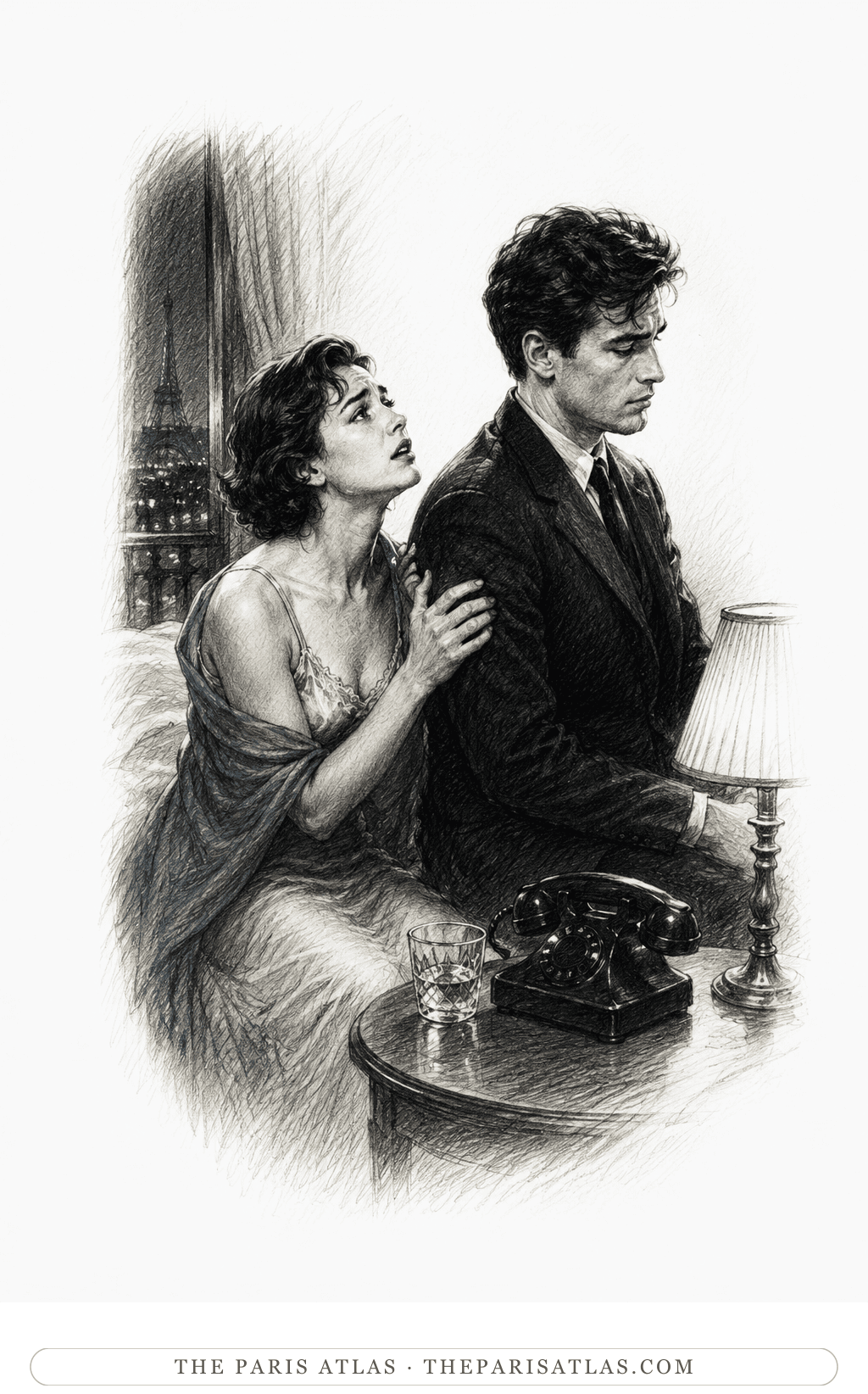
A woman talks through the night while the man she loves refuses to answer. Cocteau wrote the one-act for Piaf after meeting her in February 1940, recognizing that her power was the ability to make emotional exposure feel dangerous — one room, one wounded voice, an audience forced to listen. The play ties Cocteau to the history of French song: his theater and her chanson were the same instrument.
- 1940
- One-act play
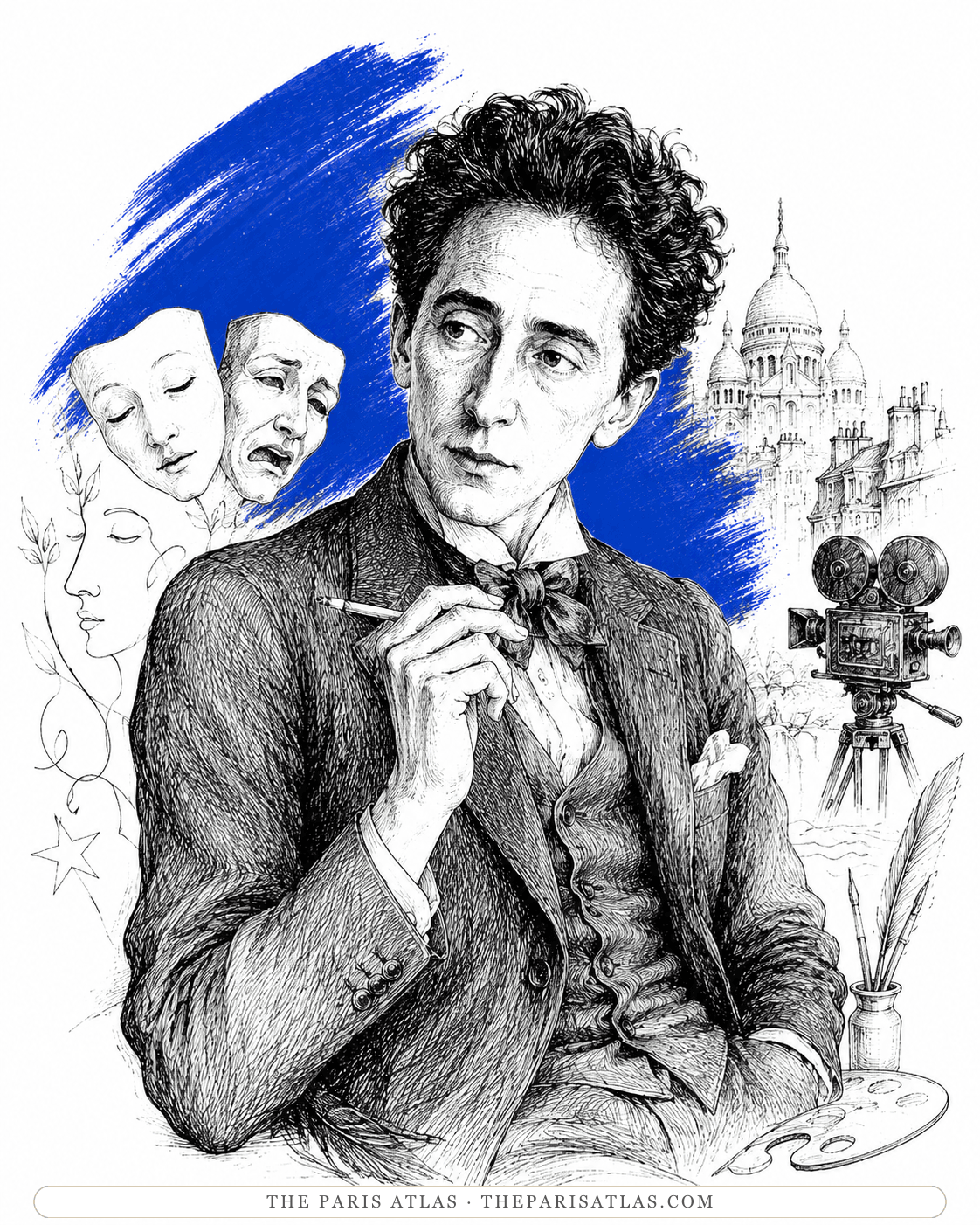
About Jean Cocteau
What the play is
A woman comes back to a hotel room after a performance and waits for the young man she loves. When he finally arrives, he will not speak. She talks for the length of the play — pleading, accusing, forgiving, starting again — and he sits in beautiful silence and answers nothing. Cocteau called it a monologue with two characters.
It is a companion piece to his earlier one-woman play La Voix humaine, where a woman speaks to a lover only down a telephone. Here the lover is in the room, which is worse.
Written for Piaf
Cocteau met Édith Piaf early in 1940 and was fascinated by her, and he wrote the part for her — by several accounts quickly, close to a single sitting. Piaf was a singer, not a trained stage actress, and the play is built for exactly what she could do: hold a room alone with a wounded voice. The silent young man was played by Paul Meurisse, then at the very start of his career.
The premiere, on the edge of the war
It opened on 19 April 1940 at the Théâtre des Bouffes-Parisiens, as a curtain-raiser, staged by André Brûlé with a set by Christian Bérard. The timing was cruel: four days before the dress rehearsal, Meurisse received his call-up papers, and within weeks France was at war on its own soil. The play belongs to the last ordinary Paris season before the Occupation.
Its afterlife on film
The one-act outlived its premiere. Jacques Demy filmed it in 1957, keeping Cocteau's text, which is part of why the piece is remembered as writing rather than only as a Piaf occasion. It is the hinge between Cocteau's theatre and the history of French song: he wrote a play that only a chanson singer could carry.
Timeline
February 1940
Cocteau met Piaf and wrote the one-act play for her, recognizing her power to make emotional exposure feel dangerous.
1940
Premiered at the Théâtre des Bouffes-Parisiens in Paris, with Piaf and Paul Meurisse as the silent lover.
1957
Jacques Demy filmed it as a short — the play's best-known afterlife on screen.
Frequently asked questions
What is Le Bel Indifférent about?
A woman returns to a hotel room and waits for the young man she loves; when he comes, he refuses to speak, and she talks for the whole play. Cocteau described it as a monologue with two characters — one voice, one silence.
Did Cocteau write it for Édith Piaf?
Yes. He met Piaf early in 1940, was fascinated by her, and wrote the part for her, reportedly very fast. It is built for a singer rather than a trained actress: one woman holding a room with her voice.
Who played the silent young man?
Paul Meurisse, at the start of his career. Four days before the dress rehearsal he was called up to his regiment; France went to war within weeks.
When and where did it premiere?
19 April 1940, at the Théâtre des Bouffes-Parisiens in Paris, staged by André Brûlé with a set by Christian Bérard, as a curtain-raiser to Les Monstres sacrés.
How does it relate to La Voix humaine?
It is a companion to Cocteau's earlier one-woman play, in which a woman speaks to a lover only by telephone. Le Bel Indifférent puts the lover in the room and keeps him silent, which sharpens the same idea.
Was it ever filmed?
Yes, by Jacques Demy in 1957, keeping Cocteau's text — one reason the piece survives as writing and not only as a Piaf occasion.
More by Jean Cocteau
If you like Jean Cocteau
Explore playwrights from the same movements and circles.

James Baldwin
American novelist and essayist who left Harlem for Paris at twenty-four with forty dollars, and wrote the books that made him the most quoted witness to race, sex and belonging in twentieth-century America.
View artist
Djuna Barnes
American writer and illustrator (1892–1982). She was a New York newspaper reporter for eight years before she was a novelist, spent the 1920s and 1930s in Paris, and wrote Nightwood, the 1936 novel T. S. Eliot took to Faber and introduced.
View artist
Samuel Beckett
The Dublin-born writer who settled in Paris in 1937, was stabbed in the street by a stranger a few months later, translated and typed intelligence reports for a Resistance cell during the German occupation of the city, and then did the strangest thing of all — began writing in French, a language not his own, and produced Waiting for Godot, which opened at a small Left Bank theatre in January 1953 and changed what a play could be.
View artist
References
The sources below include collection records, catalogues, scholarly research, and primary materials that informed this page. They document Le Bel Indifférent, its making, and its place in cultural history.


1BnF Chroniques no. 73 — Cocteau writes Le Bel Indifférent for Piaf
ArchiveUsed forArchival evidence used to document the historical record connected to Le Bel Indifférent.

2Encyclopaedia Britannica — Jean Cocteau
WebsiteUsed forWeb source consulted for documented facts and historical context presented on the Le Bel Indifférent page.
3Le Bel indifférent — Enregistrement sonore
Official recordBibliothèque nationale de France, 1953Used forOfficial record used to verify names, dates, institutional details, or other factual information on this page.
4Jean Cocteau — Les immortels, fauteuil 31
Official recordAcadémie françaiseUsed forOfficial record used to verify names, dates, institutional details, or other factual information on this page.
These references provide the documented foundation for this work's history and interpretation. Claim-level citations remain attached to the specific claims they support.
 Explore more resources