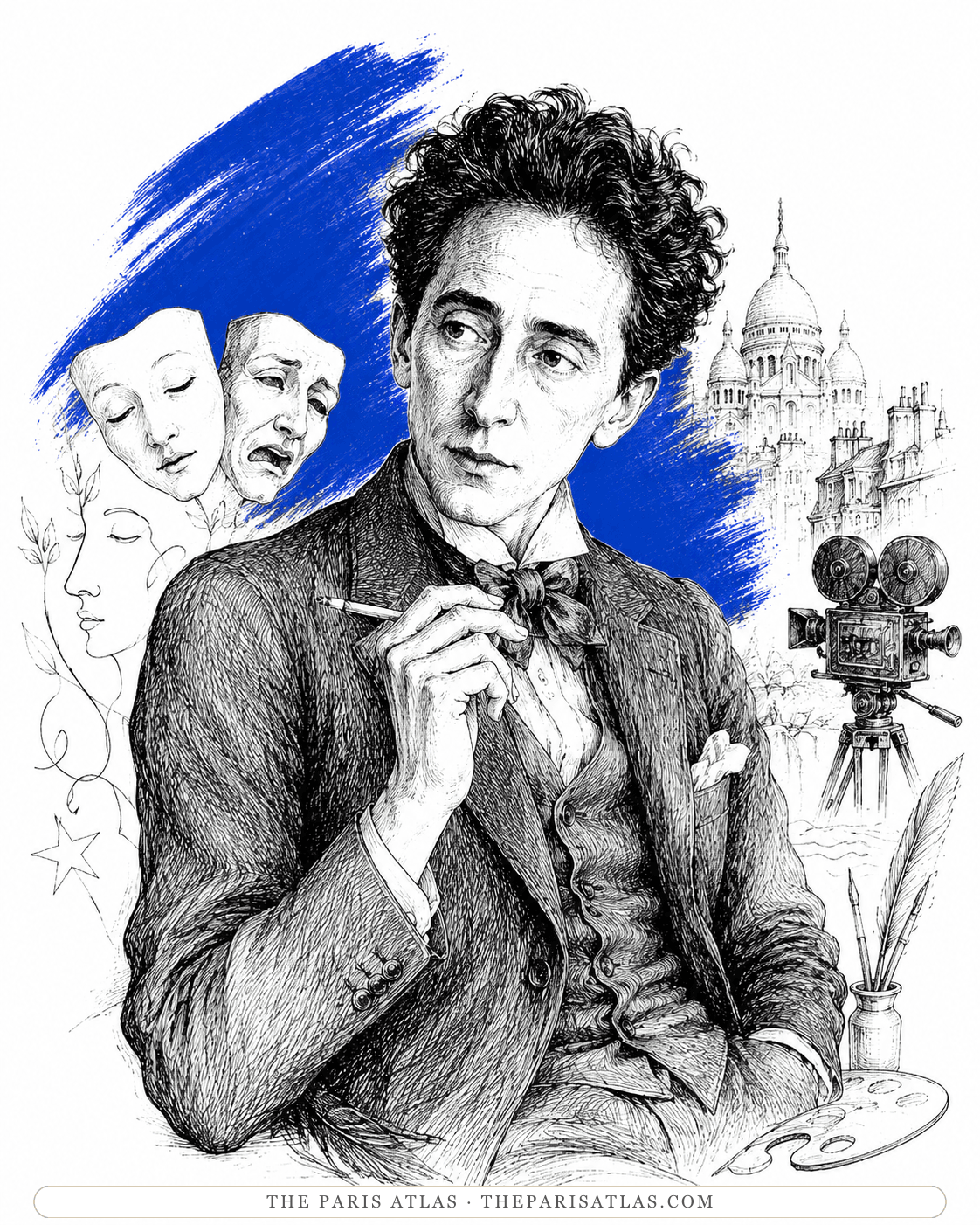
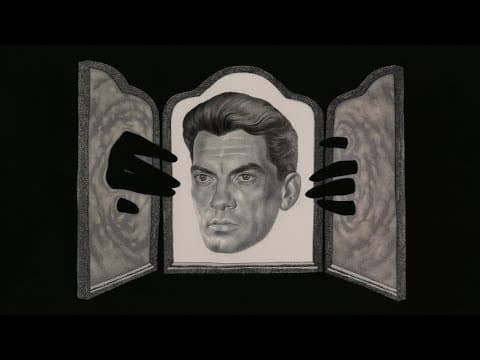
Answered by · 1950
Orphée
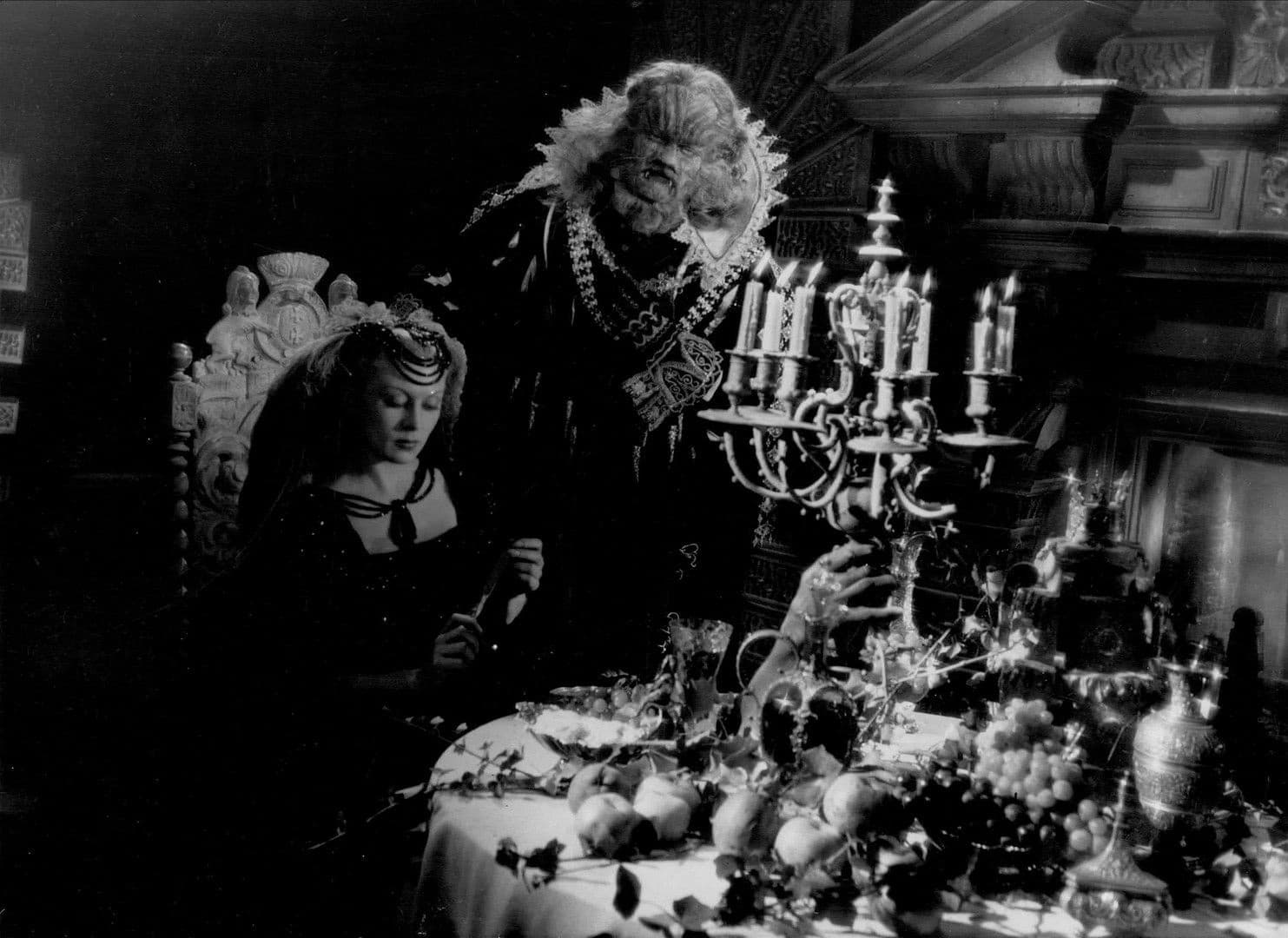
The middle film of Cocteau's Orphic cycle returns to the earlier film's mirror, threshold, repeated death, and poet under trial, then gives those private images a narrative engine.
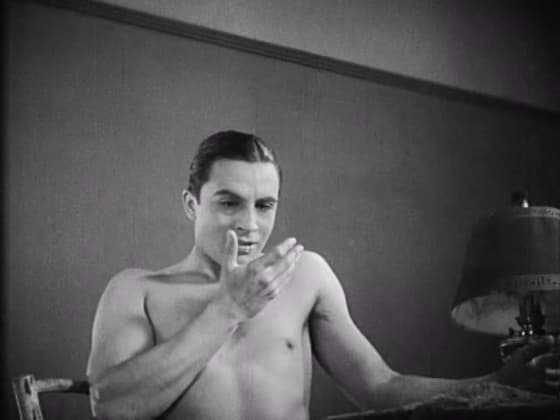
by Jean Cocteau
A drawing opens its mouth. The mouth slips into the artist's palm. A statue sends him through a mirror, where hotel rooms, a pistol, a snowball, an angel, and a card game turn art into bodily trouble. Cocteau's first film keeps slipping away from any single solution. It is a machine for making images think.
The Blood of a Poet begins with a collapsing chimney and takes the length of the film to let it fall. Inside that suspended second, Cocteau opens a private theater: a mouth leaves a drawing, a hand becomes a wound, a mirror becomes water, and a schoolyard game ends in death.
Made in 1930 and released in 1932, it was Cocteau's first film as director and later became the opening panel of his Orphic trilogy, followed by Orphée in 1950 and Testament of Orpheus in 1960. Enrique Rivero plays the Poet. Lee Miller plays the Statue. Féral Benga arrives near the end as the Black Angel, brief but decisive.
Content note: stylized suicide, a child's death, guns, opium imagery, corporal punishment, and unsettling body imagery.
The film arrived just as sound was changing cinema's grammar. Cocteau did not use sound to make the screen more natural. He made the new voice strange: commentary floats loose, effects arrive from doubtful sources, and the most famous mouth in the film has no body at all.
Dreams had appeared onscreen before. Méliès, Dulac, Epstein, Buñuel, Man Ray, and others had already taught film to ignore ordinary reality. Cocteau's move is more intimate. He makes metaphor happen to bodies. A thought wounds a hand. A mirror can be entered. A wall becomes a floor if the set turns far enough.
Cocteau keeps returning to that handmade magic. The mirror comes back in Orphée. Statues and living fixtures come back in Beauty and the Beast. Reverse motion, slow motion, visible stagecraft, and ordinary materials become the way he thinks on film.
“A realistic documentary composed of unreal happenings.”
It is a good description because the film is tactile. Plaster, water, cloth, skin, snow, and painted sets are all plainly there. The impossible part is how they behave.
Cocteau announces four episodes, but the borders leak. Images pass between them like thoughts returning with a new disguise.
This is the plot, if plot is the word for it.
The living mouth is the film's most intimate shock. The Poet tries to erase it from the drawing, and the act of suppression simply moves it into his body. His palm becomes a second face.
He hides it when another man enters. He sleeps with it pressed against him. He caresses it. Then he transfers it to a classical female statue, hoping perhaps to put the problem back outside himself.
It does not work. The new artwork opens its eyes and starts giving orders.
This is why the image lasts. It can be artistic speech, sexual embarrassment, self-absorption, a wound, a parasite, or a creation that has learned how to use its maker. None of those readings cancels the others.
For Cocteau, mirrors are working doors more than vanity props.
To get the Poet through one, the production used a reflective liquid surface, editing, and sets arranged to let gravity misbehave. The important thing is the splash. The passage feels less like a dissolve than like a body entering cold water.
The hotel beyond the mirror is part mind, part cinema. A corridor, a row of doors, a set of keyholes. The Poet peers into rooms where opium, punishment, ambiguity, and escape appear without becoming a normal story. For a few minutes he occupies the same position as the viewer: watching private scenes from a safe distance.
Then a voice hands him a pistol and explains suicide as if explaining a household task. He obeys. The death does not hold. He returns through the mirror and smashes the Statue.
“Those who smash statues should beware of becoming one.”
The snowball fight is small and pitiless. Boys play. An older boy throws. The snowball hits like stone, and a child collapses in the courtyard.
Then the film does something worse than mourn. It builds a card table over the body.
The title of the fourth episode, The Profanation of the Host, loads the game with sacramental danger, but Cocteau does not reduce it to a single church allegory. The point is simpler and colder: adult ritual feeds on the child's body and calls it play.
Lee Miller's role as the Statue was her only film acting part. At the time she was already known as a model, photographer, and collaborator of Man Ray. She would later become a formidable photographer in her own right and a war correspondent in the Second World War.
The later biography should not be shoved backward onto the film as prophecy. Still, the casting has bite. Miller first appears as a classical object made and handled by a male artist. Then she opens her eyes, speaks, commands the mirror passage, and returns to preside over the Poet's final defeat.
The muse becomes an agent.
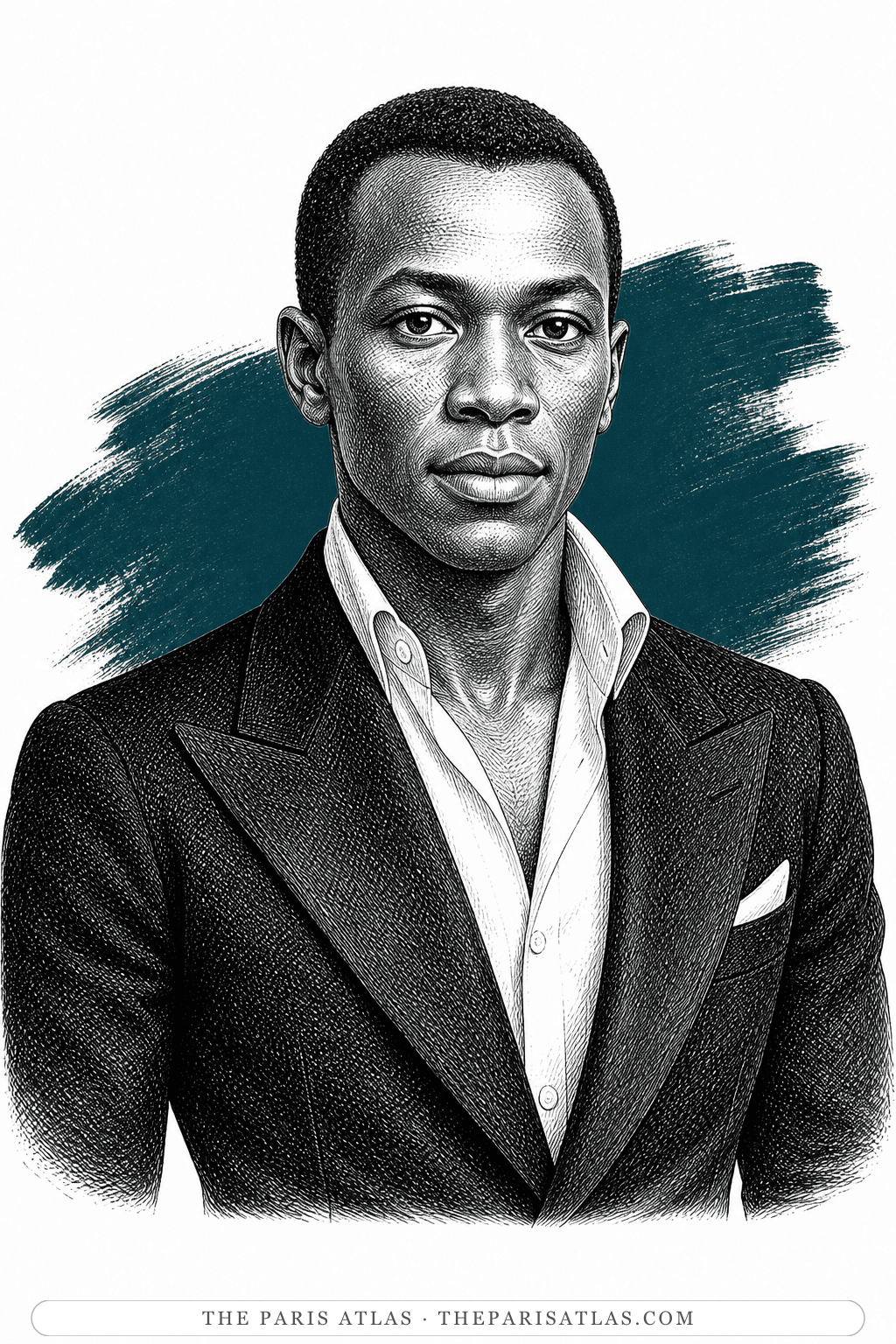
Féral Benga was a Senegalese dancer active in Paris and later New York, including in the orbit of Josephine Baker, the Folies Bergère, Black modernist circles, and queer performance networks. Cocteau gives him very little screen time, but he gets the scene's turning point.
The role needs care. European modernism often treated Black performers as erotic or exotic signs for white artists, and the film is not innocent of that gaze. Benga's near-nudity and the name Black Angel make race part of the image's charge.
He does more than decorate the scene. He acts. He crosses the set with authority, lifts the child, retrieves the ace, and leaves the Poet without the card that would have saved him.
The film was commissioned by Charles de Noailles, whose money also backed Buñuel's L'Âge d'Or. That second film detonated first: right-wing groups attacked Studio 28 in December 1930, the police banned the film, and the Noailles family paid socially for the adventure.
The trouble spilled onto Cocteau's film. Rumors cast it as sacrilegious, and its release was delayed until 1932.
That story is almost too perfect. Patronage made the experiment possible, but montage made the patrons perform a meaning they had not agreed to perform. The checkbook could buy the film. It could not govern the cut.
In broad film history, yes. The Blood of a Poet is usually shelved with French Surrealist and avant-garde cinema. It shares the movement's taste for irrational collision, erotic displacement, anti-naturalist performance, and attacks on tidy cause and effect.
In the strict Breton-group sense, the answer is messier. Cocteau stood outside André Breton's circle and resisted being claimed by it. He wanted images with physical clarity, not a doctrinal demonstration of automatic thought.
“The Blood of a Poet draws nothing from either dreams or symbols.”
That sounds impossible until you watch the film carefully. Cocteau is not saying the images cannot be interpreted. He is saying they were not built as a code with one key. The acts come first; viewers make symbols afterward.
Cocteau did not shoot The Blood of a Poet as part one of a planned trilogy. The grouping came later. Still, the three films plainly speak to one another.
Across thirty years, the artist moves from anonymous figure, to mythic poet, to Cocteau's own aging body. Mirrors, gloves, statues, wounds, angels, and resurrections keep returning, but they do not mean exactly the same thing twice.[1]
Choose an authorized restoration with the original French soundtrack and reliable subtitles. Criterion lists the film through its Cocteau and Orphic trilogy editions, and Kino Lorber has promoted 4K restorations of The Blood of a Poet and Testament of Orpheus. Availability changes, so check the current distributor page before publishing a where-to-watch note.[2]
Do not embed a full-film upload just because it ranks in search. A YouTube upload is not proof that the uploader controls the motion-picture rights, music, subtitles, or restoration.
“Every poem is a coat of arms. It must be deciphered.”
“Documentary scenes of another kingdom.”
Keep the quotations short. Cocteau's essay is still copyrighted, and the film works better when the page lets the images do their share of the talking.[3]
1924
André Breton publishes the first Surrealist Manifesto; Cocteau remains outside the official group.
1929
Cocteau publishes Les Enfants terribles, whose fatal snowball returns in the film.
1930
Charles de Noailles commissions the film; Cocteau shoots with Georges Périnal, Georges Auric, Enrique Rivero, Lee Miller, and Féral Benga.
December 1930
The scandal around Buñuel's Noailles-funded L'Âge d'Or affects the fate of Cocteau's film.
1932
The Blood of a Poet receives its public release after delay.
1950
Orphée turns the mirror passage into a full modern myth of death, fame, and poetic vocation.
1960
Testament of Orpheus completes the retrospective trilogy with Cocteau himself as the Poet.
It follows an artist whose drawing comes alive, leaving a mouth in his hand. After transferring the mouth to a statue, he is sent through a mirror into a strange hotel. Later episodes show a fatal snowball fight and a card game played over a dead child. The film explores creation, desire, childhood, fame, and death through linked visual acts rather than a normal plot.
Both dates appear because they refer to different moments. Cocteau made the film in 1930, but its public release was delayed until 1932.
No. It uses French commentary, Georges Auric's music, and deliberately displaced sound effects, though its intertitles and performance style keep traces of silent avant-garde cinema.
It is often classified as Surrealist, but Cocteau was not part of Breton's official group and resisted the label. French avant-garde visual poem with strong Surrealist affinities is more precise.
Lee Miller plays the Statue. It was her only acting role in a film; she became far better known as a photographer and war correspondent.
The Black Angel is played by Féral Benga, a Senegalese dancer active in Paris and New York. The Angel removes the dead child and takes back the card the Poet has stolen, deciding the final game.
There is no single authorized answer. It can be read as artistic speech becoming a wound, a creator's intimacy with his own work, or creation taking control of the body that produced it.
The production combined a reflective liquid surface, careful camera orientation, editing, and rotated sets. The effect works because the performer appears to press into and splash through a real substance.
The snowball episode turns childhood play into fatal violence when soft snow becomes marble. It echoes Cocteau's novel Les Enfants terribles, which also begins with a devastating snowball.
Do not assume so. The film, Georges Auric's music, subtitles, and modern restorations have separate rights histories across jurisdictions. This page uses a small set of reduced stills under a documented fair-use rationale for criticism.
Studiocanal — 4K restoration trailer (Testament of Orpheus and The Blood of a Poet)
Answered by · 1950
The middle film of Cocteau's Orphic cycle returns to the earlier film's mirror, threshold, repeated death, and poet under trial, then gives those private images a narrative engine.
Cast · 1930
Féral Benga plays the Black Angel.
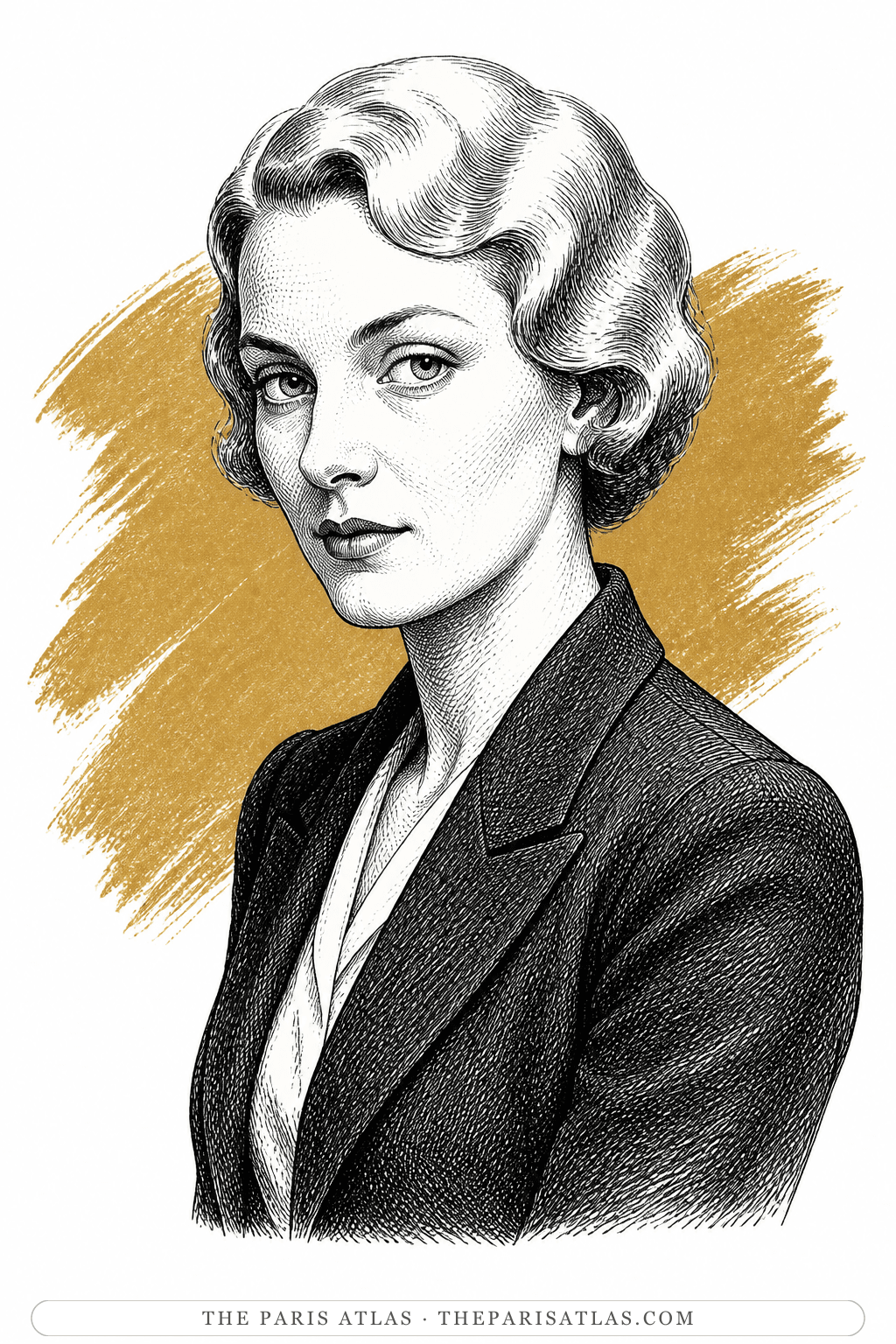
Explore directors from the same movements and circles.
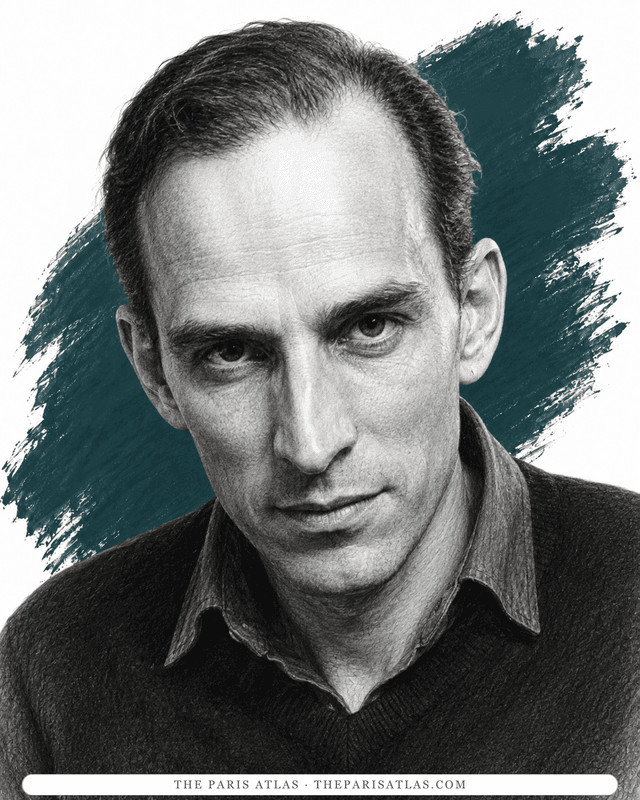
Swedish director of The Seventh Seal, Persona and Fanny and Alexander, whose sixty films put questions of faith, death and marriage on screen. James Baldwin profiled him in Nobody Knows My Name.
View artist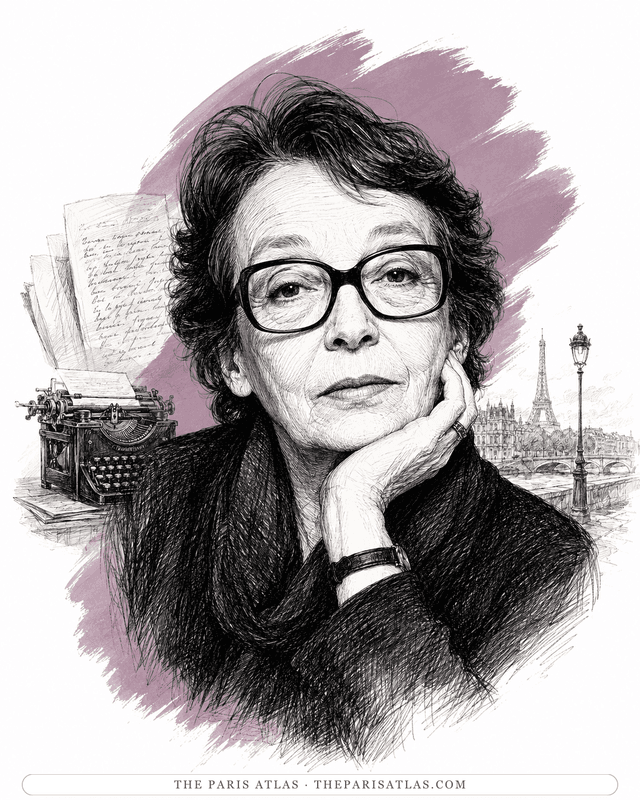
French novelist and screenwriter, later a director in her own right; her screenplay for Alain Resnais's Hiroshima mon amour (1959) carried the New Wave into literature and earned an Academy Award nomination.
View artist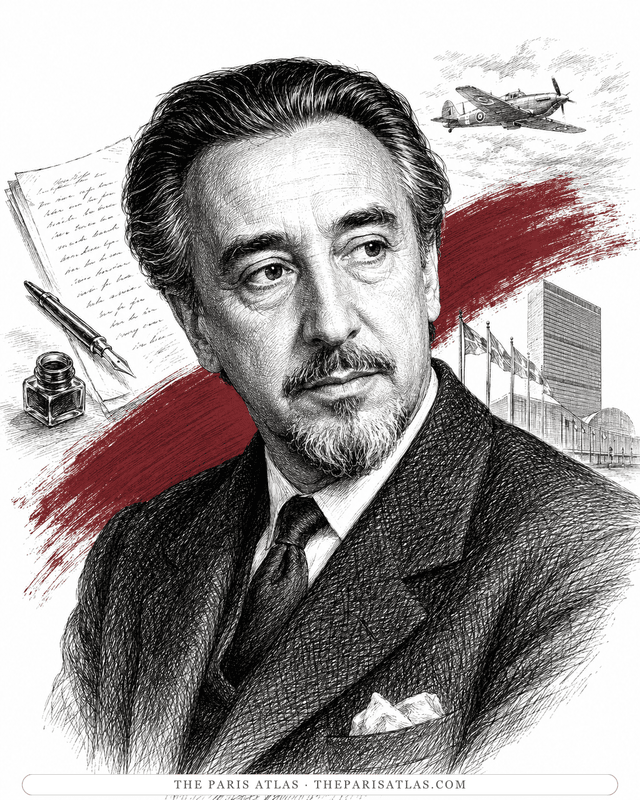
Novelist, diplomat, and the only writer to win the Prix Goncourt twice — once under his own name and once under a pseudonym. Jean Seberg's husband from 1962 to 1970.
View artistThe sources below include collection records, catalogues, scholarly research, and primary materials that informed this page. They document The Blood of a Poet, its making, and its place in cultural history.


Web source consulted for documented facts and historical context presented on the The Blood of a Poet page.
Web source consulted for documented facts and historical context presented on the The Blood of a Poet page.

Published analysis and historical context used in preparing the The Blood of a Poet page.
Web source consulted for documented facts and historical context presented on the The Blood of a Poet page.
Archival evidence used to document the historical record connected to The Blood of a Poet.
These references provide the documented foundation for this work's history and interpretation. Claim-level citations remain attached to the specific claims they support.
 Explore more resources