The Paris AtlasCharting the artists, works, and places worth returning to.
  • Photographer
  • Artists' model
  • Actor
· American · 1907–1977

Lee Miller

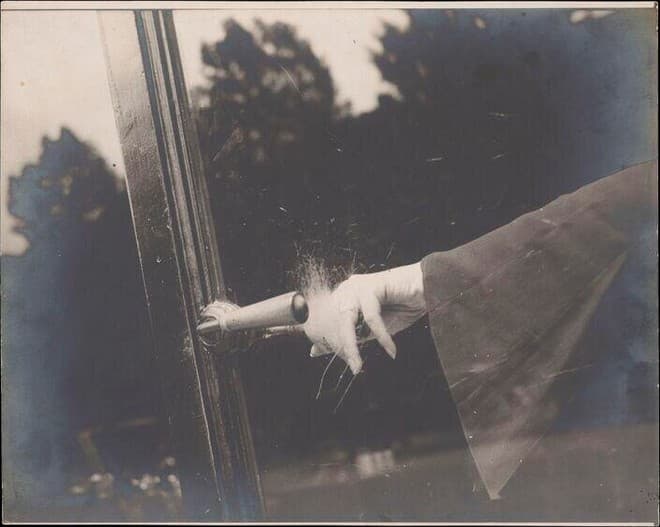
American photographer who began as a fashion model, went to Paris in 1929 to become Man Ray's student and collaborator, made Surrealist photographs of her own, and then covered the Second World War for Vogue — the siege of St Malo, the Liberation of Paris, the camp at Dachau. She also took her single film role, as the statue that comes to life in Jean Cocteau's The Blood of a Poet.

In images

Details

Lived
1907–1977
Born
1907
Birthplace
Poughkeepsie, New York
Died
1977
Place of death
Farleys House, East Sussex
Nationality
American
Profession
Photographer and war correspondent
Partner
Man Ray · 1929–1932
Roles
PhotographerArtists' modelActor

About Lee Miller

Lee Miller moved from in front of the camera to behind it. She began as one of the most photographed faces in America — the March 1927 cover of American Vogue, drawn by the French illustrator Georges Lepape — and by 1929 she was in Paris knocking on the door of Man Ray, the American photographer at the centre of Surrealism, the movement that made art out of dreams, chance and the unconscious, to ask to be his student. She stayed three years as his pupil, collaborator and partner, opened her own studio in Montparnasse, and left with solarisation, a darkroom technique the two of them worked out together, and a body of work that was hers.

Then came the second life. Accredited as a war correspondent in December 1942, she photographed the siege of St Malo, the Liberation of Paris in August 1944, the fighting in the Ardennes and the liberation of Dachau, the Nazi concentration camp outside Munich, for Vogue — the fashion magazine she had modelled for, now running her dispatches from the front. When it was over she stopped. The pictures went into boxes in the attic of a Sussex farmhouse, and her son found them there after she died.

The face, and the darkroom behind it

Elizabeth 'Lee' Miller was born on 23 April 1907 in Poughkeepsie, in New York State, into a household where the camera was already domestic equipment: her father Theodore, an engineer and keen amateur photographer, installed a darkroom at the family's Cedar Hill Farm in 1912 and photographed his daughter throughout her childhood. In 1927 she became a professional model, appearing on the cover of American Vogue — the New York fashion monthly — as a drawing by the French illustrator Georges Lepape.

The modelling career ended in an early lesson about who controls an image. In 1928 a fashion photograph of her by Edward Steichen, the most celebrated American fashion photographer of the day, was used, without her expecting it, in advertisements for Kotex sanitary products — an unheard-of context for a society face, and enough of a humiliation to push her towards the other side of the lens. She sailed for France.

Montparnasse, 1929–1932

In 1929 Miller moved to Paris and became Man Ray's student, model and partner — three roles the Lee Miller Archives names in that order, and the order matters: she is usually remembered as his model and his lover, which has buried the fact that she went to him to be trained, and was. Man Ray was then the presiding photographer of Montparnasse, the Left Bank quarter where the foreign artists of Paris lived, and his studio was where fashion work, portrait commissions and Surrealist experiment all happened in the same rooms.

Their best-known technique came out of an accident of hers. Working in the darkroom, Miller re-discovered the Sabatier effect — light striking a print or negative mid-development, so that tones reverse and a dark line rims every figure — and Man Ray named the result solarisation. The Victoria and Albert Museum in London states it plainly as joint work: 'Together, they discovered the "solarisation" photographic technique, in which the image recorded is wholly or partially reversed in tone.' Both used it for the rest of their careers.

In 1930 she asserted her independence and opened her own studio at 12 rue Victor Considerant, near the Denfert-Rochereau end of Montparnasse — the square on the southern edge of the quarter, in the 14th arrondissement. From September that year her photographs ran in French Vogue and her first self-portrait appeared in American Vogue; she took a part-time job photographing operations for a Paris surgeon; and she acted in The Blood of a Poet, the first film by the poet and film-maker Jean Cocteau, playing the armless classical statue that comes to life and sends the poet through a mirror. It was her only film role. In 1932 she closed the Paris studio, left for New York, opened Lee Miller Studios Inc. at 8 East 48th Street, and showed her work at the Julien Levy Gallery, the New York room that introduced Surrealist photography to America; Levy himself had bought her prints on a visit to Man Ray's studio the year before.

Cairo, London, and the way back to Paris

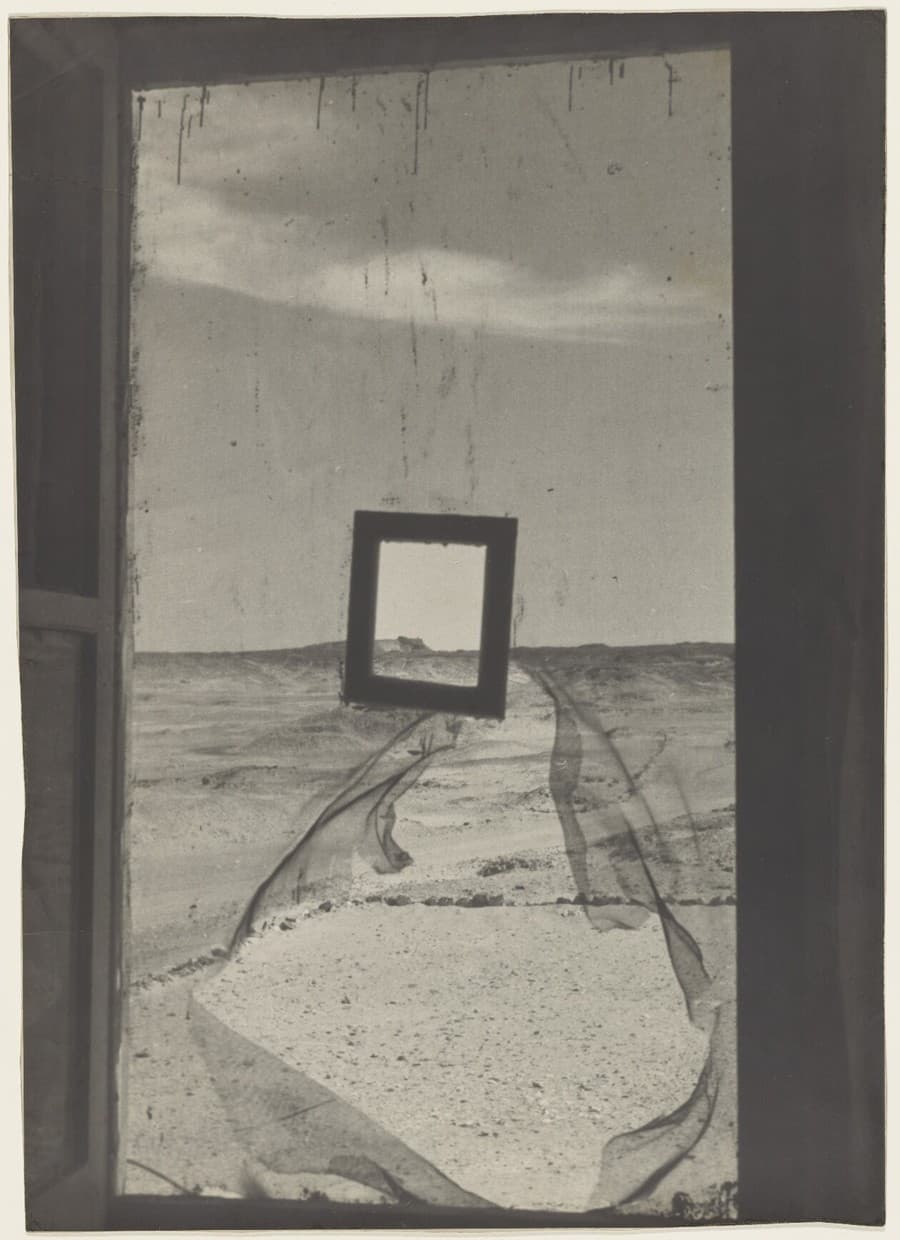
In 1934 she married the Egyptian businessman Aziz Eloui Bey and moved to Cairo, where the pictures she took in the desert — the shadow of a broken wall, a wire-mesh screen over infinite sand — are among the strongest Surrealist photographs of the period, though she never presented them under that label. Bored with expatriate society, she came back to Paris in 1937 to see friends and, at a Surrealist fancy-dress party, met the British painter, collector and writer Roland Penrose, whom she later married. She was living in London when the Blitz began — the German bombing campaign against British cities that ran from September 1940 into the following spring.

The war, and the return to Paris in uniform

In December 1942, encouraged by the Life magazine photographer David E. Scherman, Miller was accredited to the United States armed forces as an official war correspondent — one of very few women who covered the European front line. Her employer was Vogue: the magazine that had put her on its cover as a model in 1927 now printed her photographs of field hospitals, ruined towns and dead soldiers.

From July 1944 she was in Europe. She came under fire at St Malo, the walled Breton port, as it was taken from the German garrison; she photographed the Liberation of Paris in August and then the liberation of Luxembourg; she covered the Battle of the Bulge, the German counter-offensive in the Ardennes that winter; and she was a central figure in getting French Vogue back into print after four years of German occupation had stopped it. Paris in August 1944 was, for her, both a war story and a homecoming to a city she had worked in as a young woman.

In 1945 she was among the first journalists to enter Dachau, the concentration camp outside Munich, and photographed what she found there. In Munich itself she and Scherman went into Adolf Hitler's requisitioned apartment, and Scherman — in the V&A's words — 'helped her capture the now iconic picture of Miller bathing in Hitler's bathtub'. The photograph is often reproduced as a joke and is not one: it is a staged image, made by two correspondents who had just come from the camps, of an American woman washing in the private bathroom of a man who had killed millions and who, that same week, killed himself in Berlin.

Farleys, and the attic

In 1949 Miller and Penrose bought Farleys House in East Sussex, and she largely stopped photographing. She drank; she suffered long depressions; and she became, in the words her own Archives use, a gourmet cook — a competitive, inventive one, feeding a farmhouse full of artist friends. She spoke very little about the war. She died at Farleys on 21 July 1977.

Her son Antony Penrose knew his mother as the cook and not the correspondent. After her death he and his wife found the other life in the attic: tens of thousands of negatives, prints, manuscripts and dispatches, the whole record of the Paris studio and the war, boxed and unmentioned. He published The Lives of Lee Miller in 1985, and the Lee Miller Archives at Farleys have been putting the work back into circulation ever since. The V&A marked her centenary in 2007 with the exhibition The Art of Lee Miller and took six prints into its permanent photography collection.

Life events

  1. 1907

    Born on 23 April in Poughkeepsie, New York; her father Theodore installs a darkroom at the family farm in 1912.

    Lee Miller (1907–1977) — biography and chronology

  2. 1927

    Her modelling career begins on the cover of American Vogue, where she appears as a drawing by Georges Lepape.

    Everything you need to know about Lee Miller

  3. 1928

    Edward Steichen's fashion photograph of her is used in advertisements for Kotex sanitary products — the scandal that turns her towards taking pictures herself.

    Lee Miller (1907–1977) — biography and chronology

  4. 1929

    Moves to Paris and becomes Man Ray's student, model and partner; a darkroom accident re-discovers the Sabatier effect, which Man Ray names solarisation.

    Lee Miller (1907–1977) — biography and chronology; Everything you need to know about Lee Miller

  5. 1930

    Opens her own Paris studio at 12 rue Victor Considerant; her photographs begin appearing in French Vogue and her first self-portrait in American Vogue.

    Lee Miller (1907–1977) — biography and chronology

  6. 1930

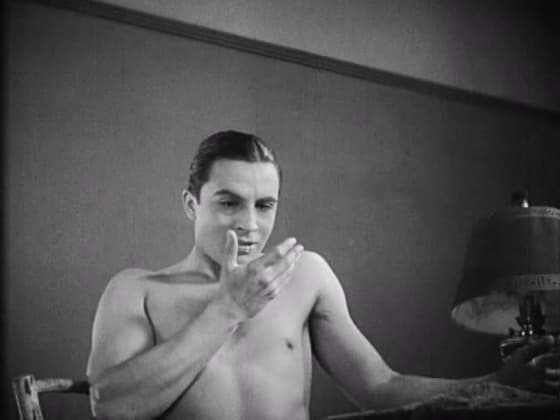
    Plays the Statue in Jean Cocteau's The Blood of a Poet, her only film role.

    The Poet staring at a living mouth in his palm in Jean Cocteau's The Blood of a PoetFilm · in the catalogThe Blood of a Poetmade 1930; released 1932 · Black-and-white French sound film — about 50–55 minutes, 1.33:1

    The Criterion Collection — The Blood of a Poet (film record); Everything you need to know about Lee Miller

  7. 1932

    Leaves Paris for New York, opens Lee Miller Studios Inc. at 8 East 48th Street, and exhibits at the Julien Levy Gallery.

    Lee Miller (1907–1977) — biography and chronology

  8. 1934

    Marries Aziz Eloui Bey and moves to Cairo, where she photographs the desert.

    Lee Miller (1907–1977) — biography and chronology

  9. 1937

    Back in Paris on a visit, meets the British artist Roland Penrose at a Surrealist fancy-dress party; she settles in London before the war.

    Lee Miller (1907–1977) — biography and chronology

  10. 1942

    Accredited in December to the US armed forces as an official war correspondent, encouraged by the Life photographer David E. Scherman; she reports for Vogue.

    Lee Miller (1907–1977) — biography and chronology

  11. 1944

    In Europe from July: front-line combat at St Malo, the Liberation of Paris and of Luxembourg, the Battle of the Bulge — and a central part in relaunching French Vogue.

    Lee Miller (1907–1977) — biography and chronology; Everything you need to know about Lee Miller

  12. 1945

    Among the first journalists into Dachau; in Munich, David E. Scherman photographs her in the bathtub of Hitler's requisitioned apartment.

    Lee Miller (1907–1977) — biography and chronology; Everything you need to know about Lee Miller

  13. 1949

    Moves to Farleys House in East Sussex, photographs little, and becomes a celebrated cook.

    Lee Miller (1907–1977) — biography and chronology

  14. 1977

    Dies at Farleys House on 21 July; her son Antony Penrose afterwards finds her negatives, prints and war dispatches in the attic.

    Lee Miller (1907–1977) — biography and chronology; Antony Penrose, The Lives of Lee Miller (1985)

In the credits

Works that credit Lee.

People they knew

Documented connections — every one carries its source.

Illustrated portrait of Man Ray

Man Ray

  • Photographer
  • Painter
  • Filmmaker

Partner of · 1929–1932

Miller arrived in Paris in 1929 and became, in the Lee Miller Archives' words, Man Ray's 'student, model and partner'; they worked together in his Montparnasse studio until she left Paris for New York in 1932. The V&A credits the solarisation technique to the two of them jointly.

Lee Miller (1907–1977) — biography and chronology; Everything you need to know about Lee Miller

Studied under · 1929–1932

Miller went to Paris in 1929 specifically to learn photography from Man Ray, and the Lee Miller Archives list 'student' first among her three roles in the studio. The training was practical and mutual: it was her darkroom accident that recovered the Sabatier effect, which Man Ray named solarisation and both used for the rest of their careers.

Lee Miller (1907–1977) — biography and chronology; Everything you need to know about Lee Miller

Movements

The artistic and literary currents this life ran through.

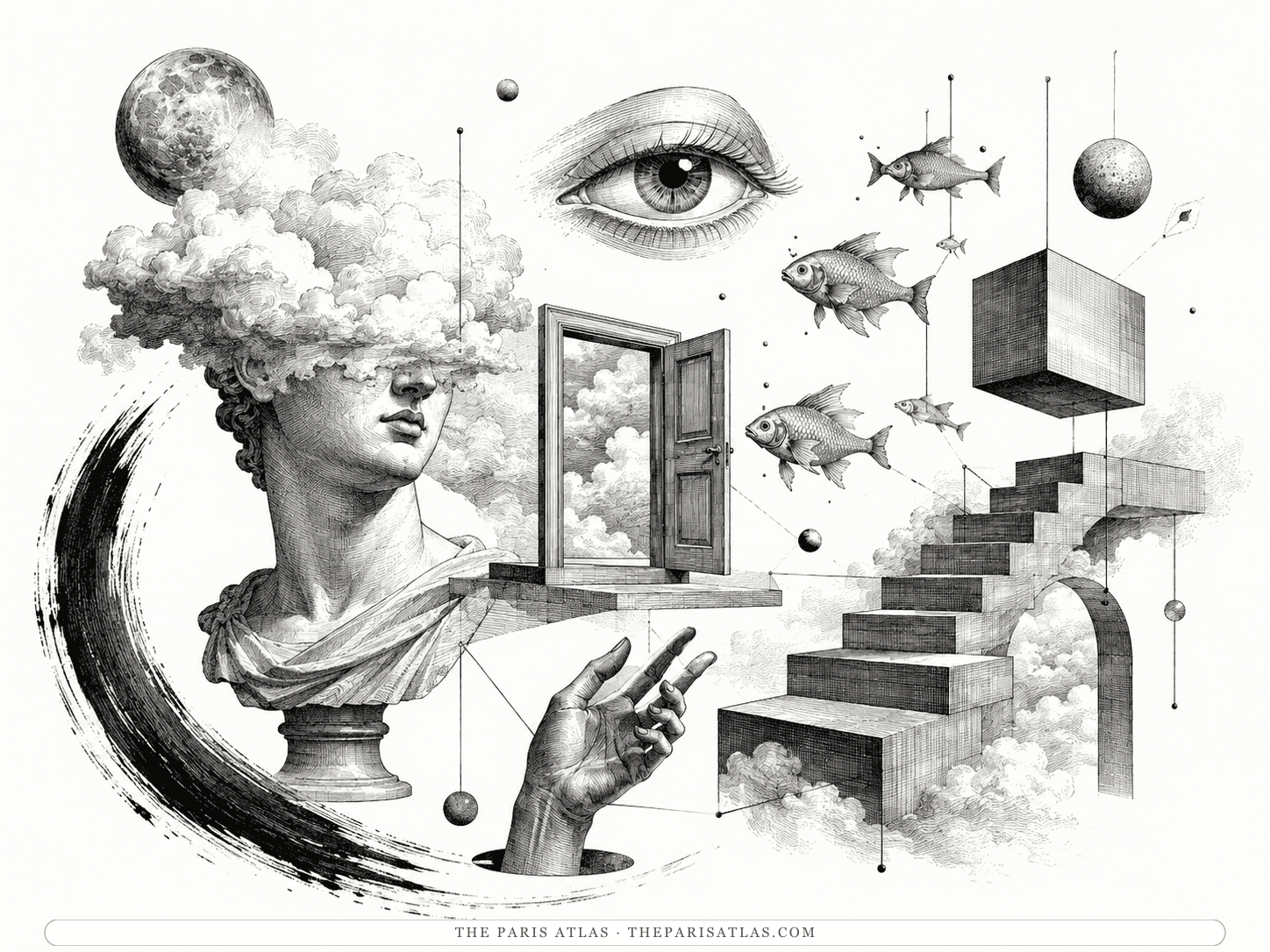
Pen-and-ink dream collage — a classical bust with clouds for eyes, a floating eye, a door opening onto sky, fish swimming through air, and an impossible staircase

Art & literary movement · 1924–1966

Surrealism

The V&A calls Miller 'a respected member of the Surrealist art movement'. She worked in Man Ray's studio from 1929, acted the Statue in Jean Cocteau's The Blood of a Poet, met Roland Penrose at a Surrealist party in Paris in 1937, and made in Egypt the desert photographs that are her most purely Surrealist pictures.

Lee Miller — collection highlights and The Art of Lee Miller portfolio; Lee Miller (1907–1977) — biography and chronology

Questions about Lee Miller

Who was Lee Miller?

An American photographer (1907–1977) who was first a Vogue model, then the student and collaborator of Man Ray, the American photographer at the centre of Paris Surrealism, from 1929 to 1932, then a Surrealist photographer with her own Paris and New York studios, and finally one of the very few women to report the European front line of the Second World War, photographing St Malo, the Liberation of Paris and the Nazi concentration camp at Dachau for Vogue.

What was Lee Miller's relationship with Man Ray?

She arrived in Paris in 1929 and became his student, model and partner — the Lee Miller Archives use all three words — and they were together until she left Paris in 1932. It was a working partnership as much as a love affair: they shared a darkroom, she printed and shot for the studio, and the solarisation technique both of them became known for came out of an accident of hers that Man Ray named.

Did Lee Miller invent solarisation?

She re-discovered the effect, and Man Ray named and developed it with her. The Lee Miller Archives describe her finding the Sabatier effect — light hitting a photograph mid-development, reversing its tones and outlining the figure with a dark line — through an accident in the darkroom, after which Man Ray called it solarisation. The V&A credits the pair jointly: 'Together, they discovered the "solarisation" photographic technique.' The effect itself had been described in the nineteenth century; what the two of them did was make it a deliberate tool.

What did Lee Miller do in the Second World War?

She was accredited to the US armed forces as an official war correspondent in December 1942 and reported for Vogue. From July 1944 she was in Europe: under fire at St Malo, the walled Breton port; at the Liberation of Paris in August 1944 and of Luxembourg; at the Battle of the Bulge, the German counter-offensive through the Ardennes forest that winter; and in 1945 among the first journalists to enter Dachau, the Nazi concentration camp outside Munich. She also helped get French Vogue back into print after four years of German occupation.

What is the story behind the photograph of Lee Miller in Hitler's bathtub?

In 1945 Miller and the Life photographer David E. Scherman entered Adolf Hitler's requisitioned apartment in Munich, and Scherman — as the V&A puts it — 'helped her capture the now iconic picture of Miller bathing in Hitler's bathtub'. It is a deliberate, composed photograph, not a snapshot: two correspondents who had been photographing the liberated camps staged an ordinary act of washing in the most private room of the man responsible for them. It is usually reproduced as a piece of wit, which flattens what it is doing.

Why is Lee Miller's work only now well known?

Because she put it away. After the war she moved to Farleys House in Sussex in 1949, photographed little, drank, suffered long depressions and rarely spoke about what she had seen. Her son Antony Penrose grew up not knowing his mother had been a war correspondent, and found the negatives, prints and dispatches in the attic after her death in 1977. His book The Lives of Lee Miller (1985) and the Lee Miller Archives he runs at Farleys are why the work is visible at all.

Where did Lee Miller live in Paris?

In and around Montparnasse, the Left Bank quarter that was the centre of artistic Paris between the wars. She worked out of Man Ray's studio from 1929, and in 1930 opened her own at 12 rue Victor Considerant, a short street near Denfert-Rochereau, where she photographed fashion for French Vogue and, part-time, surgical operations for a Paris surgeon.

Was Lee Miller a Surrealist?

Yes, on the movement's own terms and the museums'. The V&A calls her 'a respected member of the Surrealist art movement'. She worked with Man Ray, acted the Statue in Cocteau's The Blood of a Poet, married the Surrealist painter and collector Roland Penrose, and made photographs — the Cairo desert pictures above all — that do what Surrealist art sets out to do: turn an ordinary scene into something that reads like a dream.

Sourced claims

Every connection the graph holds for Lee, with the evidence behind it.

Performed in · 1930

The Blood of a Poet

Lee Miller plays the Statue.

The Criterion Collection — The Blood of a Poet (film record)

Associated with · 1929

Surrealism

The V&A calls Miller 'a respected member of the Surrealist art movement'. She worked in Man Ray's studio from 1929, acted the Statue in Jean Cocteau's The Blood of a Poet, met Roland Penrose at a Surrealist party in Paris in 1937, and made in Egypt the desert photographs that are her most purely Surrealist pictures.

Lee Miller — collection highlights and The Art of Lee Miller portfolio; Lee Miller (1907–1977) — biography and chronology

Partner of · 1929–1932

Man Ray

Miller arrived in Paris in 1929 and became, in the Lee Miller Archives' words, Man Ray's 'student, model and partner'; they worked together in his Montparnasse studio until she left Paris for New York in 1932. The V&A credits the solarisation technique to the two of them jointly.

Lee Miller (1907–1977) — biography and chronology; Everything you need to know about Lee Miller

Studied under · 1929–1932

Man Ray

Miller went to Paris in 1929 specifically to learn photography from Man Ray, and the Lee Miller Archives list 'student' first among her three roles in the studio. The training was practical and mutual: it was her darkroom accident that recovered the Sabatier effect, which Man Ray named solarisation and both used for the rest of their careers.

Lee Miller (1907–1977) — biography and chronology; Everything you need to know about Lee Miller

References

References

The sources below include biographies, scholarly essays, interviews, and primary materials that informed this page. They reflect both the historical record and ongoing critical conversations about Lee Miller and their work.

  1. 1Lee Miller (1907–1977) — biography and chronology

    Lee Miller Archives, Farleys House, East Sussex

    The Archives' year-by-year chronology of her life and work.

    View source
  2. 2Everything you need to know about Lee Miller

    Victoria and Albert Museum, London

    The V&A's introduction: Vogue, Man Ray, solarisation, the war, the Munich photograph.

    View source
  3. 3Lee Miller — collection highlights and The Art of Lee Miller portfolio

    Victoria and Albert Museum, London

    Her standing as a Surrealist photographer and the V&A's 2007 centenary portfolio.

    View source
  1. 4The Lives of Lee Miller

    Thames & Hudson, 1985

    Her son's biography, written from the archive he found at Farleys after her death.

  2. 5The Criterion Collection — The Blood of a Poet (film record)

    Her single film role, as the Statue in Cocteau's film.

    View source
i
Why these sources are here

These references anchor the page in the documented record and in the scholarly conversations around Lee Miller. Every claim on this page traces back to one or more of the works listed here.

Explore more resources