
Setting of the story
Giovanni's Room
Where David goes when he is avoiding something. He thinks of crossing over instead of staying at Guillaume's bar, and after Hella's letter he walks over the river and down Raspail towards its cafés.
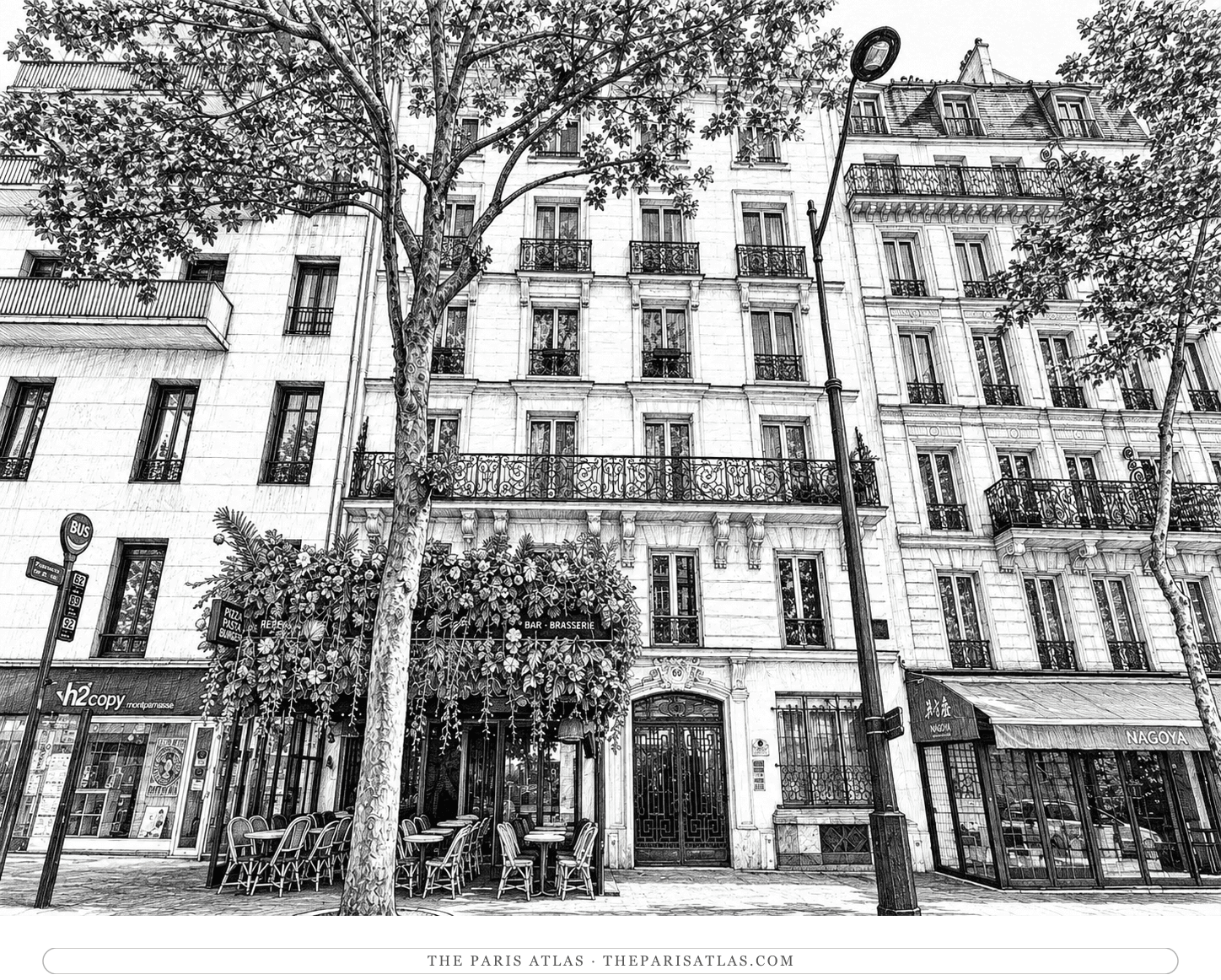
The quarter that took the painters from Montmartre around 1910 and the American writers a decade later, built around four cafés on one crossroads.
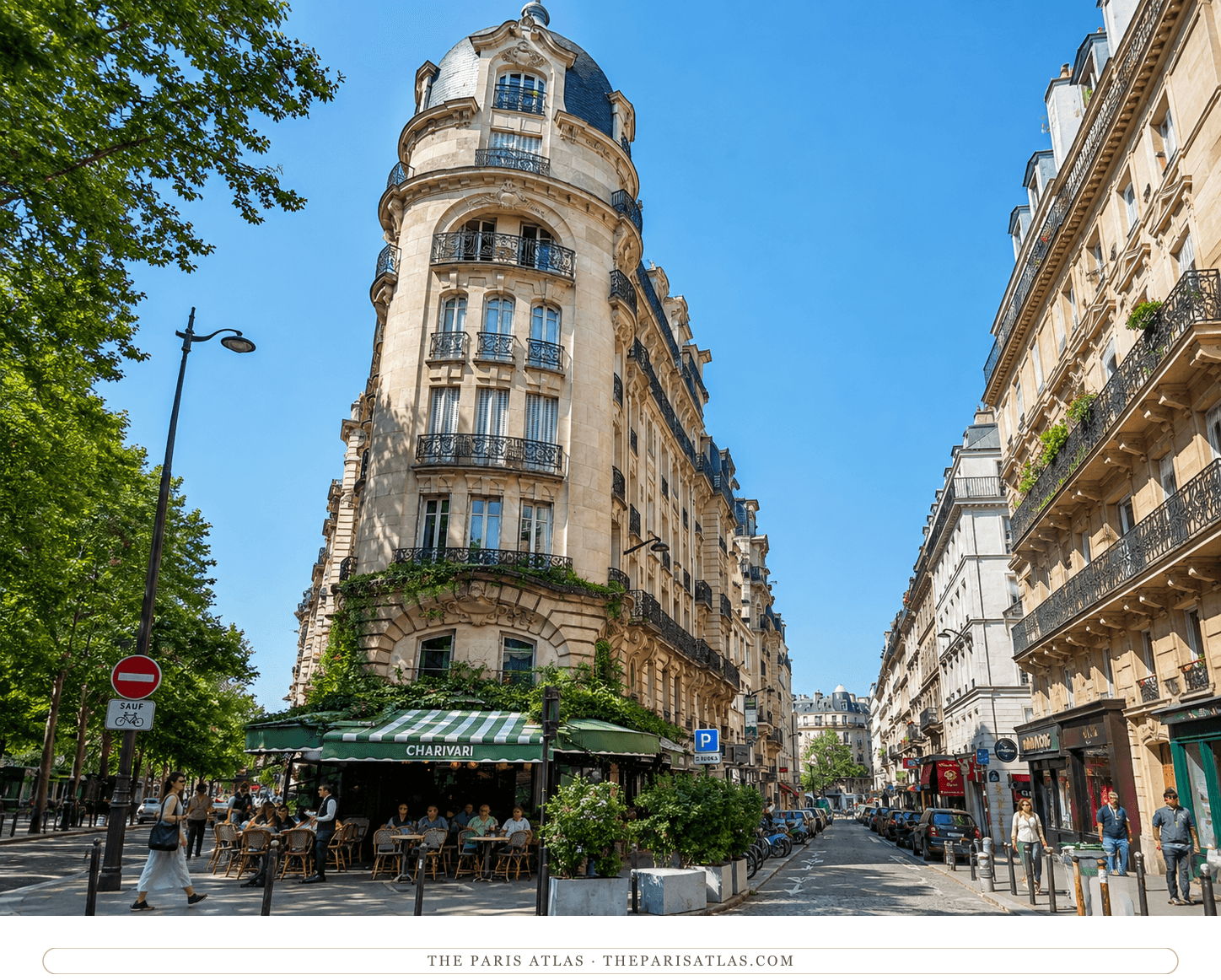
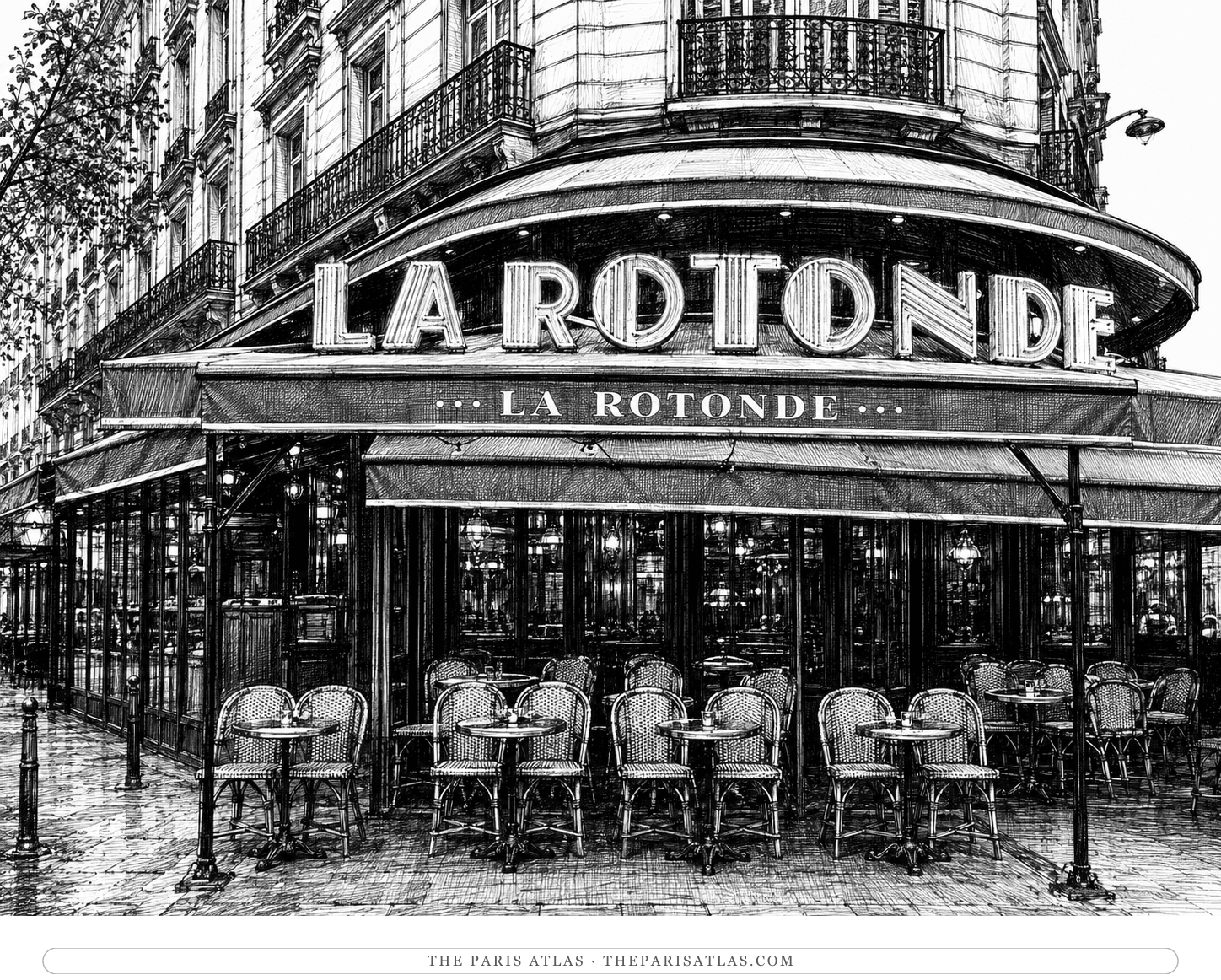
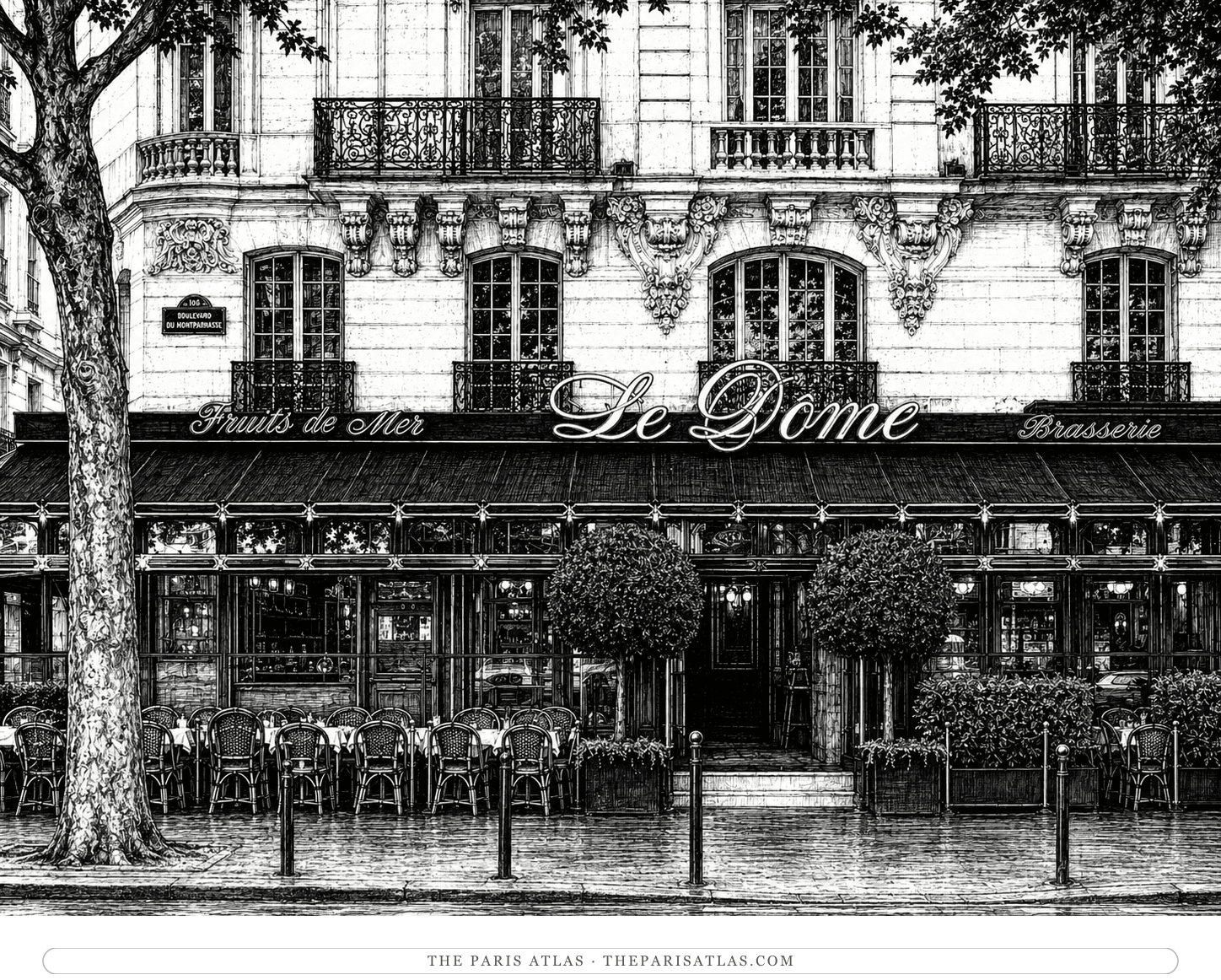
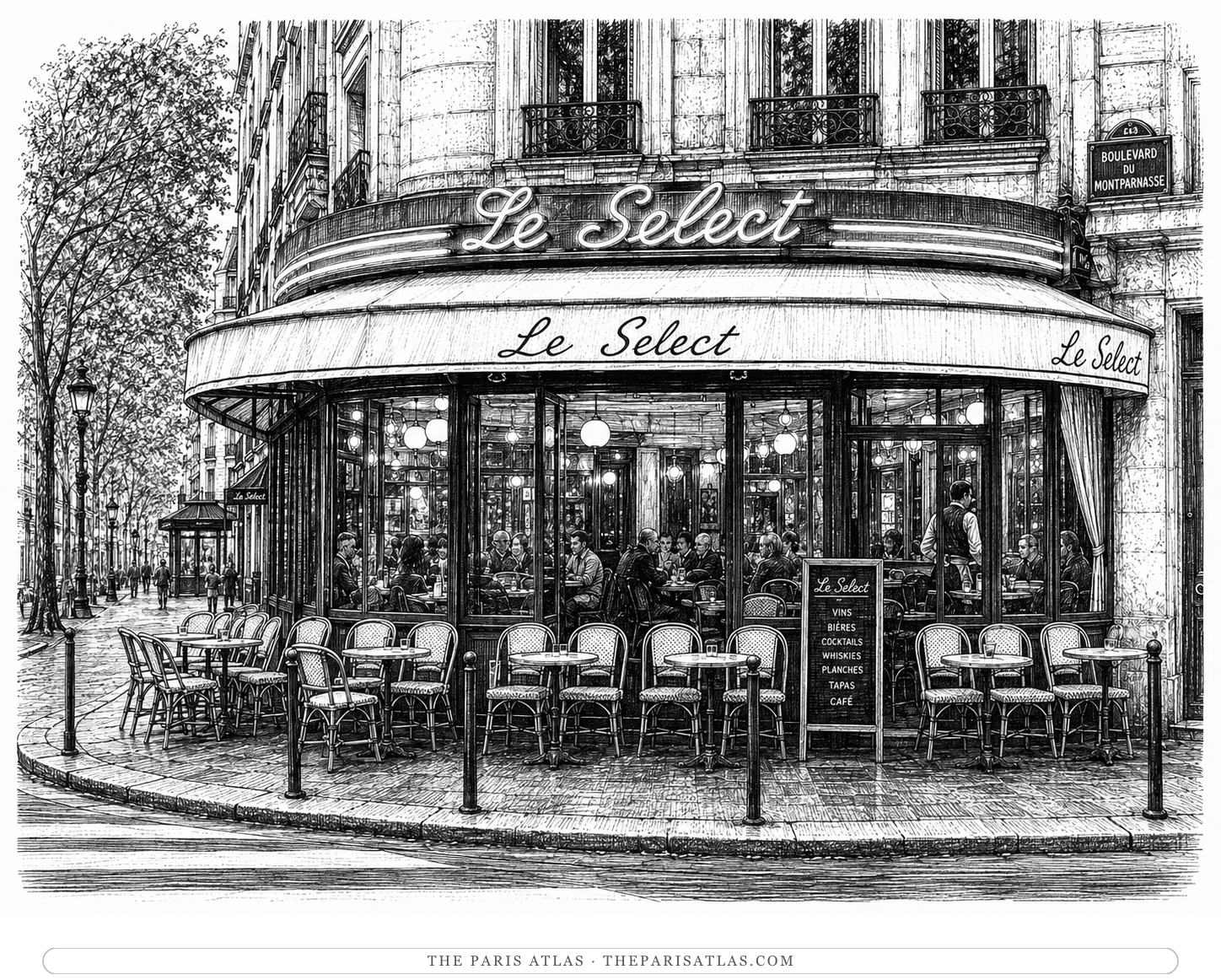
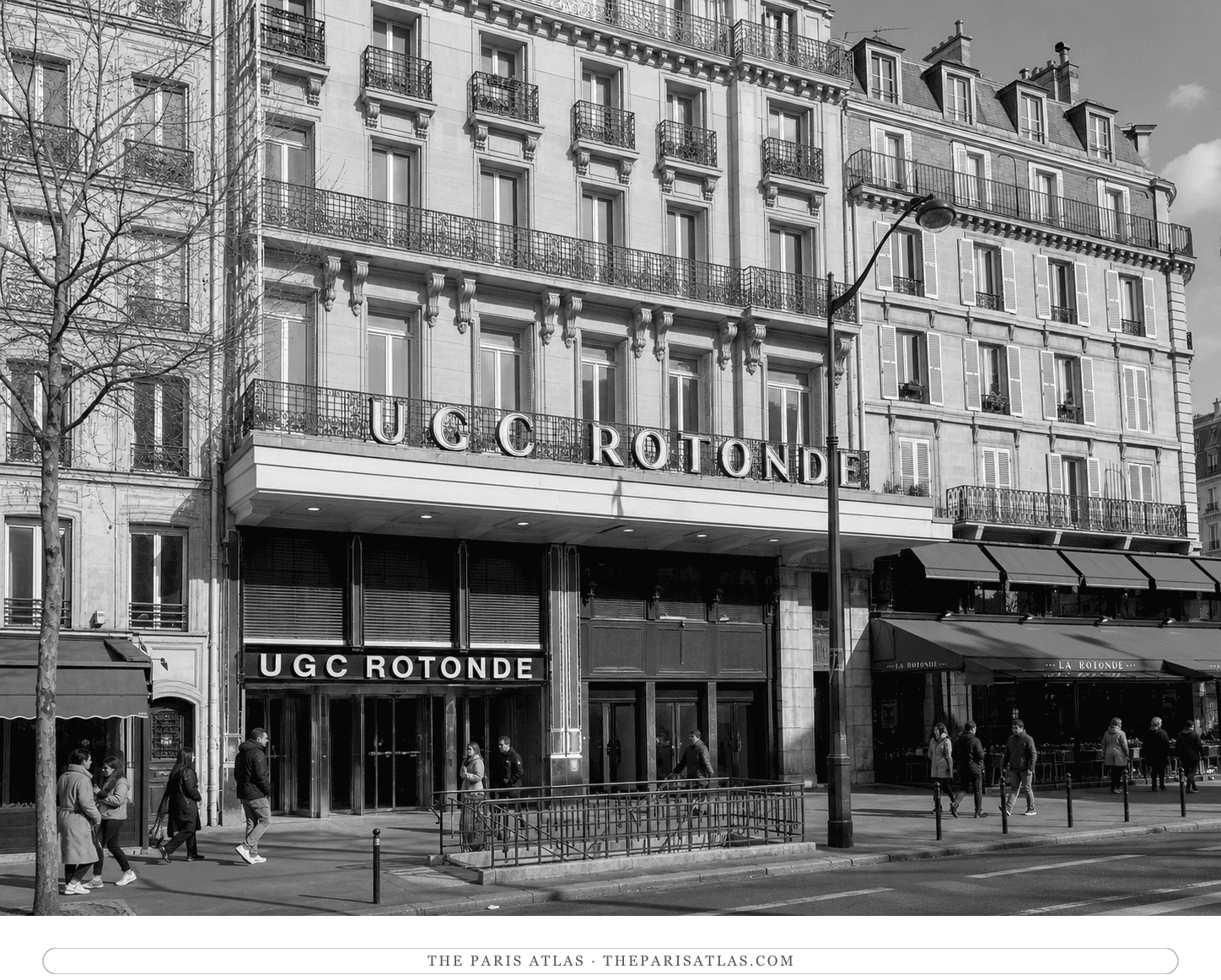
Montparnasse became the centre of artistic Paris because Montmartre got expensive. Around 1910 the painters started crossing the river for cheaper studios, and within fifteen years the crossroads at Vavin held four cafés — the Dôme, the Rotonde, the Select and the Coupole — that between them functioned as a labour exchange, a poste restante and a bank for anyone in Europe trying to make art without money.
The economics were specific. A studio in the Villa Seurat or the rue Notre-Dame-des-Champs cost a fraction of Montmartre. The cafés extended credit. Models, dealers and rivals could all be found at the same tables within an hour, which mattered enormously before telephones were common in cheap flats. Modigliani, Soutine, Chagall, Foujita and Zadkine worked here. So, later, did most of the Americans.
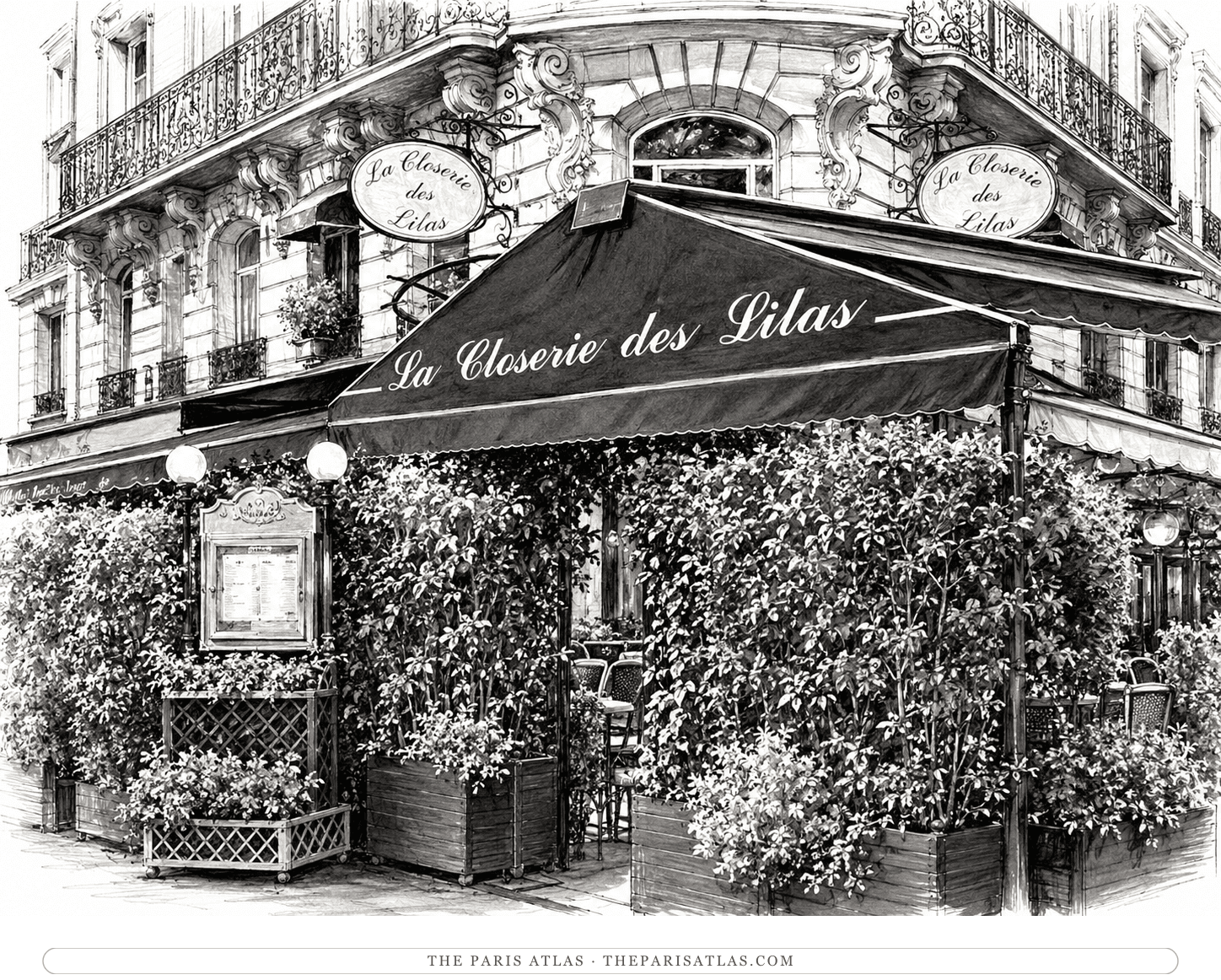
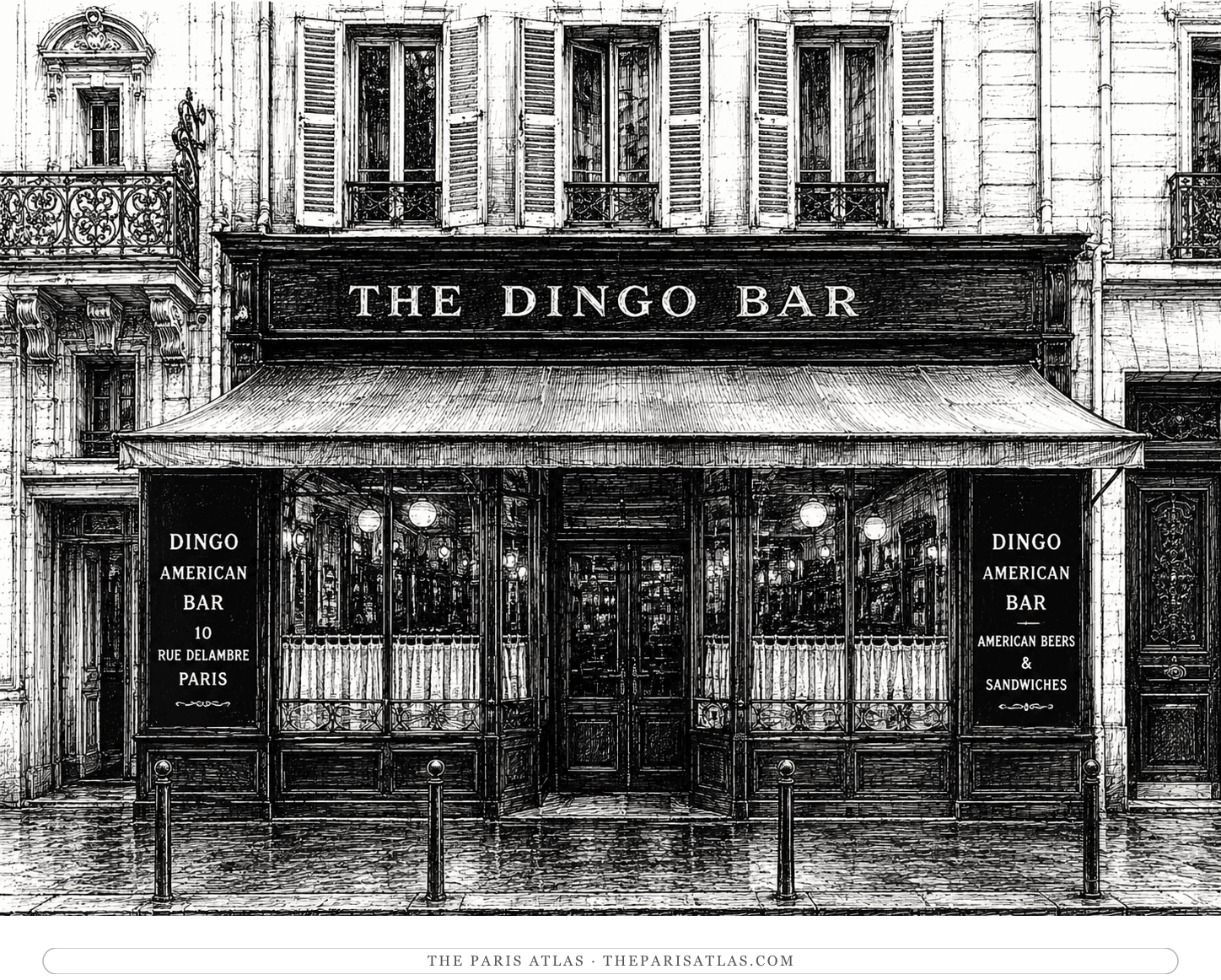
Ernest Hemingway's second Paris flat was above a sawmill at 113 rue Notre-Dame-des-Champs. He drafted much of The Sun Also Rises at the Closerie des Lilas in a six-week burst in the autumn of 1925, and set a good deal of the novel in the cafés a few streets away. F. Scott Fitzgerald introduced himself to him at the Dingo Bar on the rue Delambre, two weeks after The Great Gatsby was published.[1]
By the time James Baldwin arrived in 1948 the artistic capital had shifted again, back across the river towards Saint-Germain, and Montparnasse had become somewhere you went rather than somewhere you were. That is roughly how Giovanni's Room uses it. David walks there. Early in the book, standing at Guillaume's bar and wishing he had the nerve to leave, he thinks about going over to Montparnasse instead. Later, having read the letter that tells him Hella is coming back to Paris, he pays for his drink and walks across the river to Montparnasse, then down Raspail towards its cafés, remembering that he and Hella had walked there together. It is where he goes when he is trying not to be where he was.[2]
What he goes there to do is the part usually left out. Baldwin states it without softening: his real fear was buried and was driving him to Montparnasse, and he wanted to find a girl, any girl at all. The terraces are oddly deserted that evening. He walks both sides of the street looking at the tables, recognises nobody, gets as far as the Closerie des Lilas for one solitary drink, and comes back up the boulevard past two French prostitutes he decides he can do better than. At the Select he finds Sue, an American girl he hardly knows, and goes back with her to her flat on the rue de Sèvres. Lying there afterwards he works out that what he did with Giovanni could not possibly have been more immoral than what he has just done here.[3]
So the quarter that spent thirty years advertising itself as the place where anything was permitted is, in this book, where a man goes to arrange something he intends to use against himself. The cafés are the same ones Hemingway seats his cast in. The errand is not.
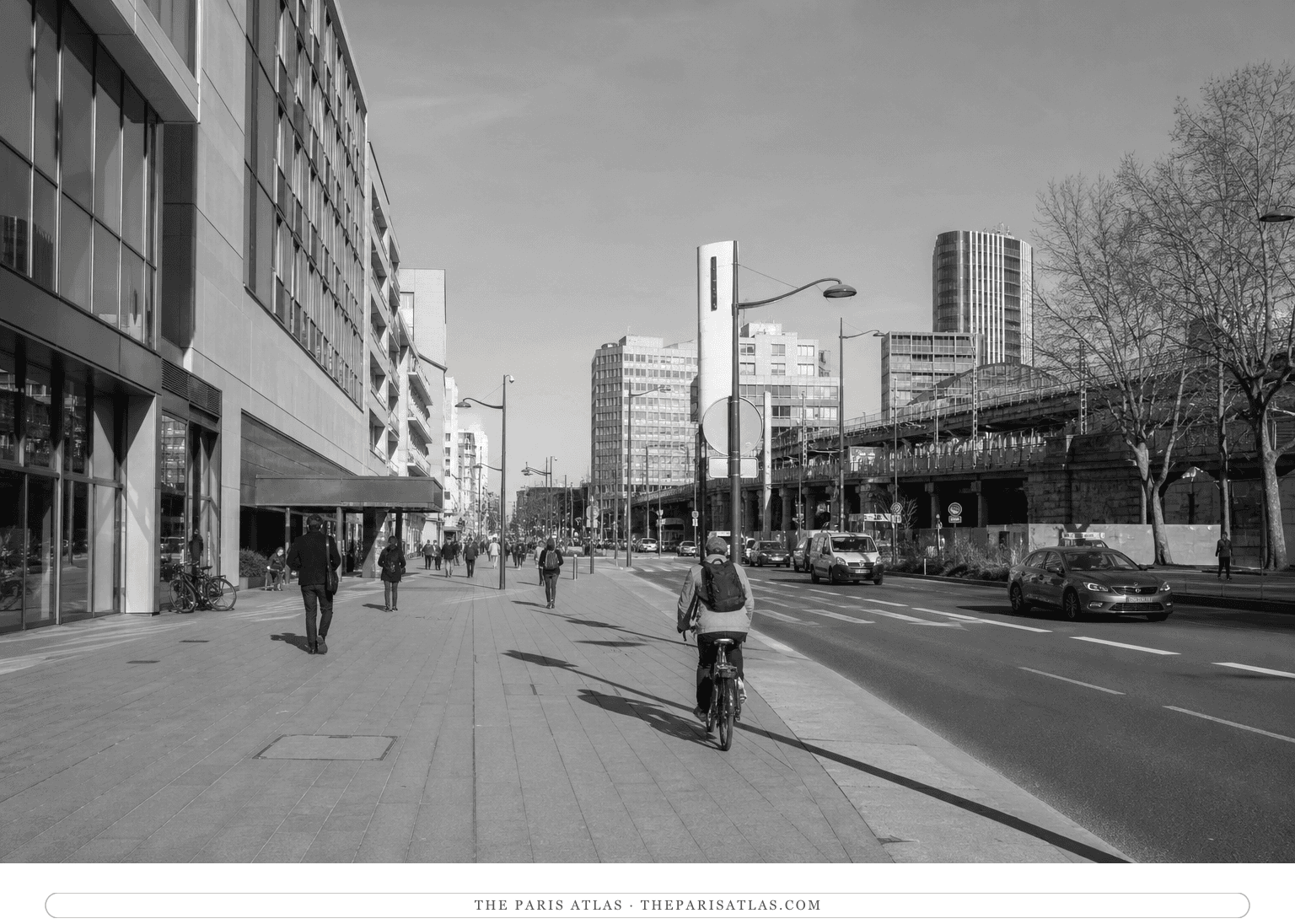
The quarter's own decline is easy to date and hard to mourn, because it was replaced by something worse. The Tour Montparnasse went up in 1973, fifty-nine floors of dark glass over a quarter of five-storey stone, and the city banned buildings over seven storeys in the centre shortly afterwards. The tower is generally agreed to have been a mistake, which is why the joke about it has survived sixty years: the view from the top is the best in Paris, because it is the only one without the tower in it.[1]
The four cafés at Vavin are all still open, all expensive, and all trading partly on the names of people who could not have afforded them. That is not hypocrisy so much as arithmetic. What is genuinely gone is the cheap studio, which is what the quarter actually ran on.
Painters begin leaving Montmartre for cheaper studios south of the river.
The four cafés at Vavin become the working centre of expatriate Paris.
Hemingway drafts most of The Sun Also Rises at the Closerie des Lilas; Fitzgerald introduces himself at the Dingo Bar.
Giovanni's Room is published. David crosses the river to Montparnasse after reading Hella's letter.
The Tour Montparnasse opens; height limits follow in central Paris.
Setting of the story
Where David goes when he is avoiding something. He thinks of crossing over instead of staying at Guillaume's bar, and after Hella's letter he walks over the river and down Raspail towards its cafés.

Recalled in the memoir
Glassco's literary memoir reconstructs his late-1920s youth among Montparnasse rooms, cafés, writers, and artists.
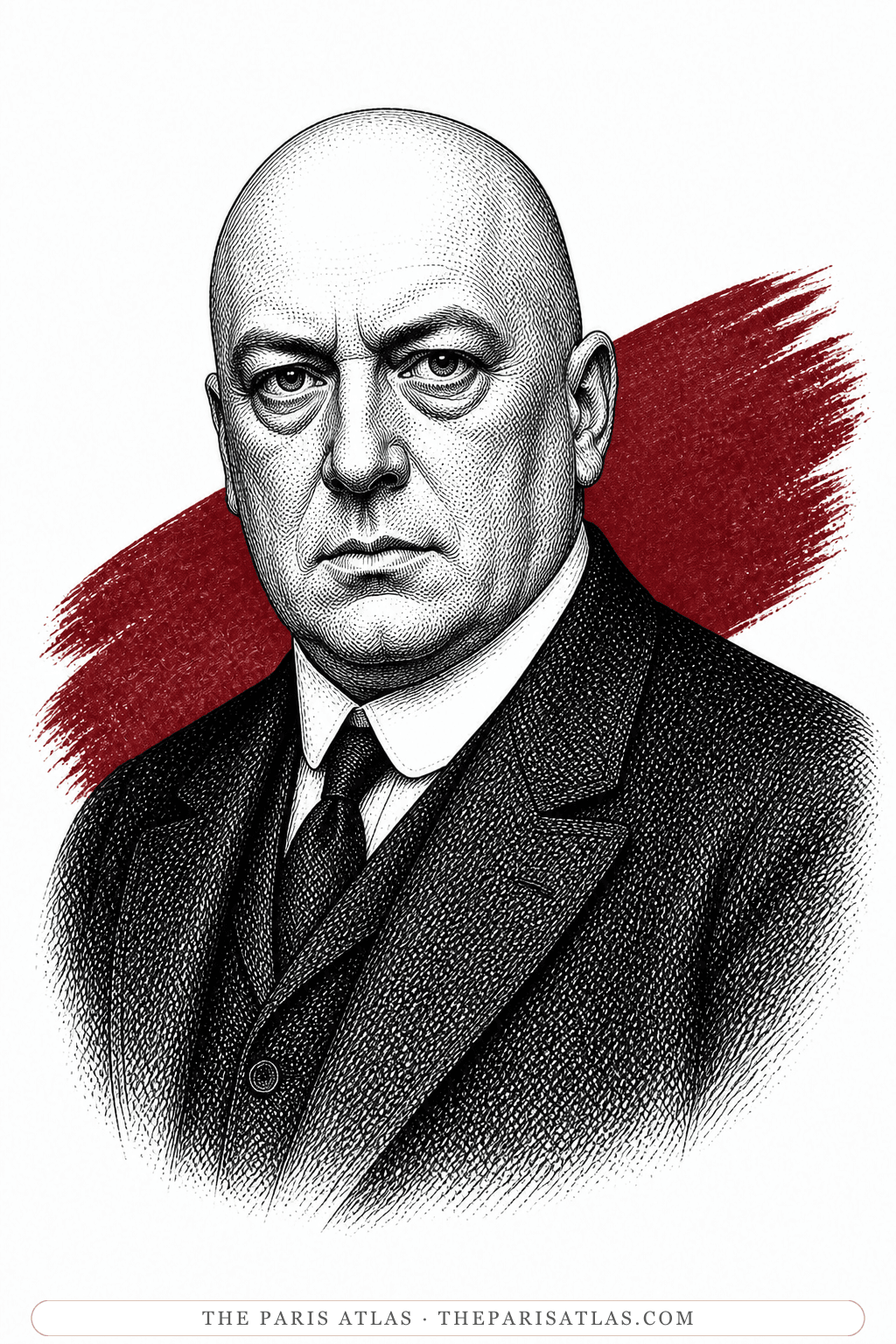
Frequented by · 1924–1929
Paris was Crowley's home from 1924 until his expulsion in 1929, and Tobias Churton's study of those years places his circle substantially among the artists, writers and photographers of Montparnasse rather than only in occult company.
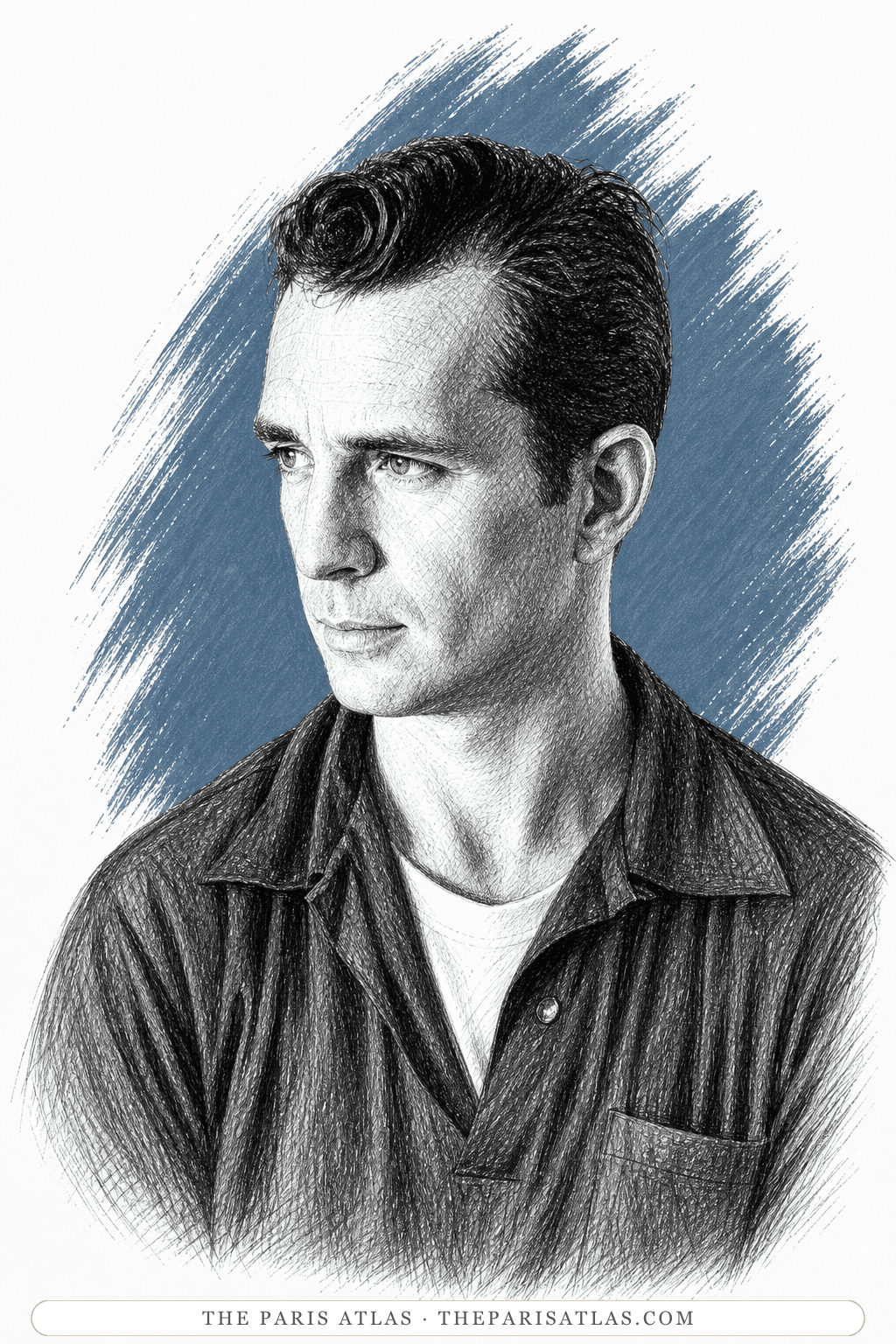
Visited by · 1965
Kerouac moved through Montparnasse, drank in its bars and departed from Gare Montparnasse for Brittany during the June 1965 journey behind Satori in Paris.
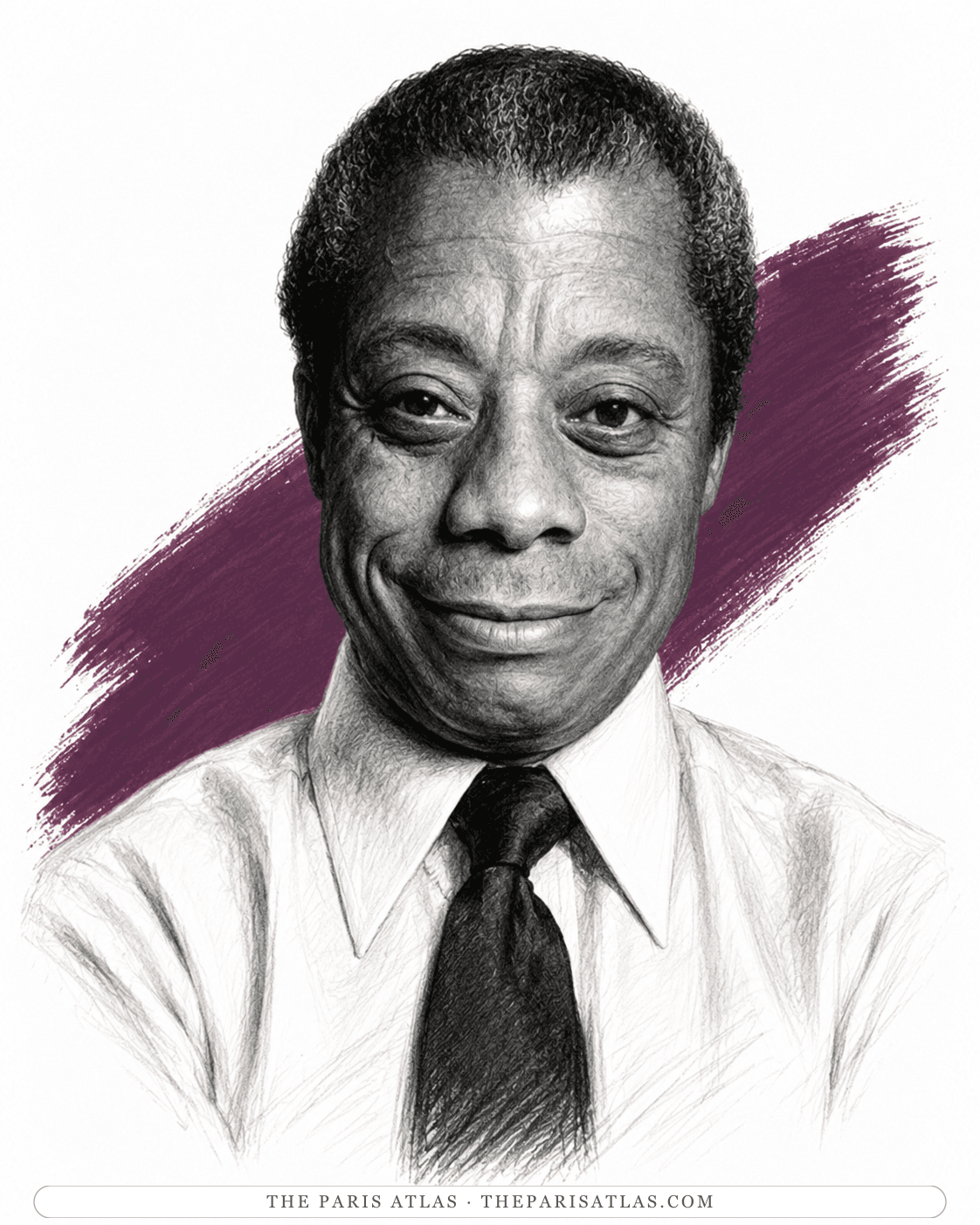
James Baldwin wrote about Montparnasse in Giovanni's Room.
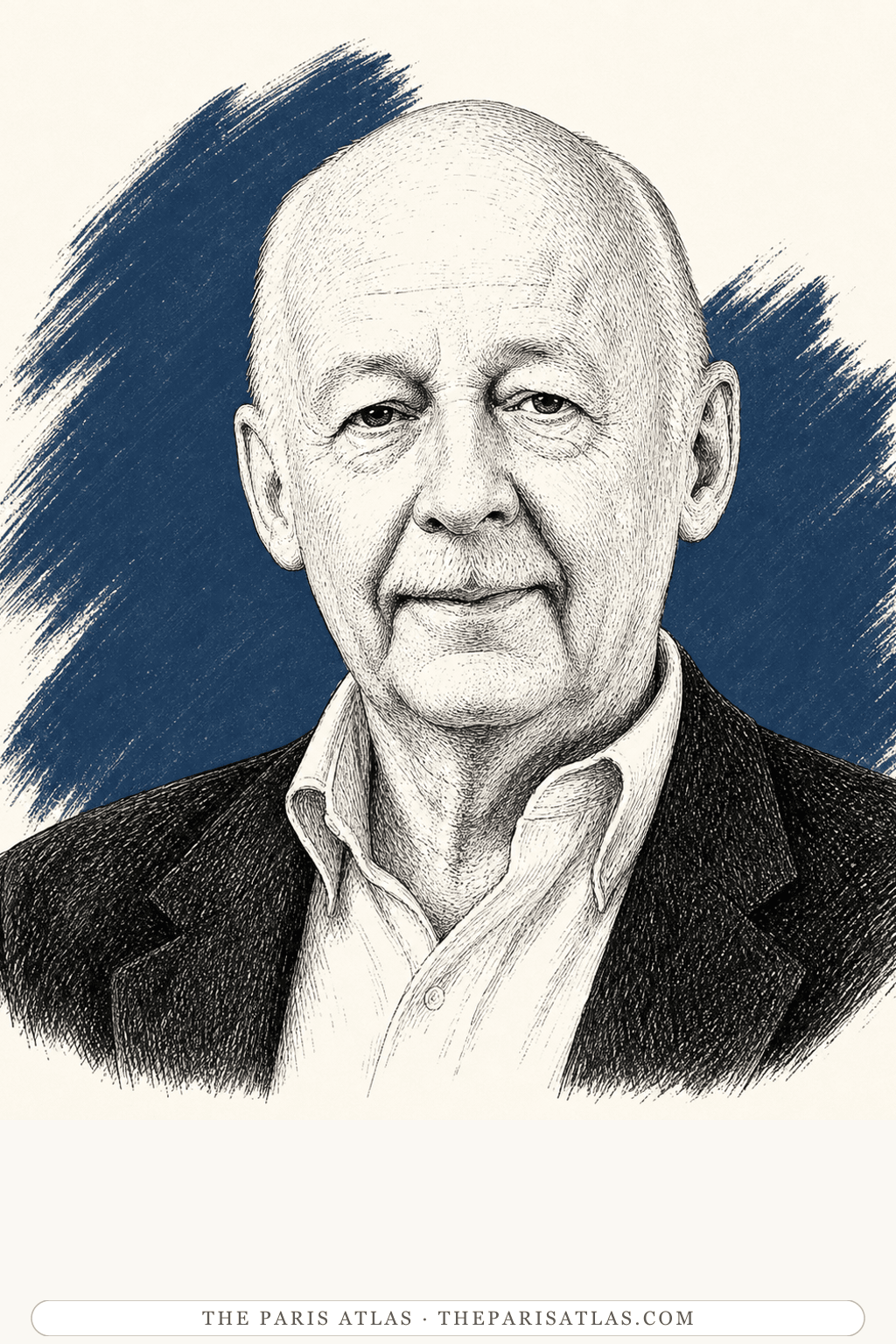
John Glassco wrote about Montparnasse in Memoirs of Montparnasse.
12 places in the Atlas sit here.
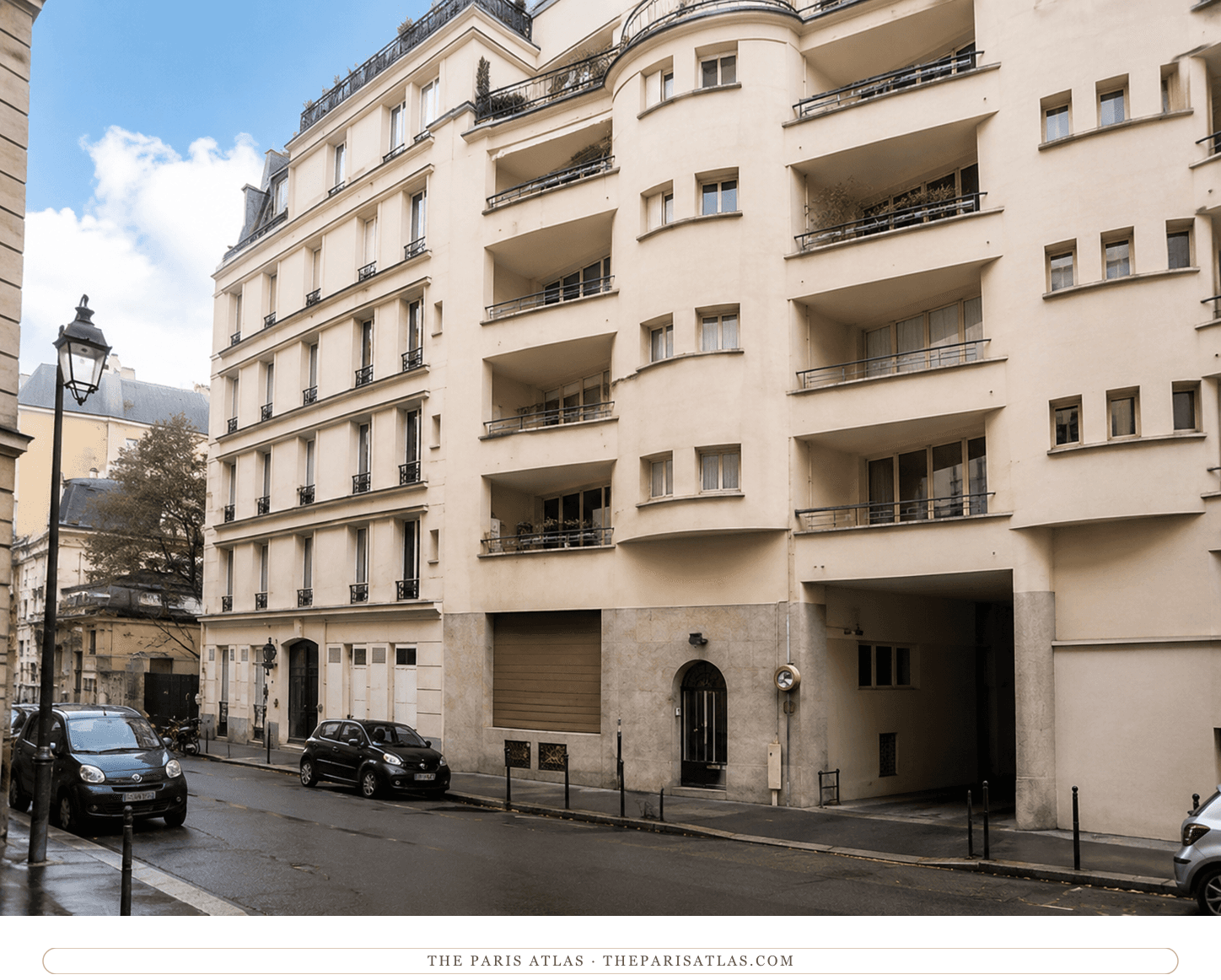
Ernest Hemingway's second flat, above a working sawmill — where the journalism stopped, The Sun Also Rises was finished, and the first marriage ended.
Visit the place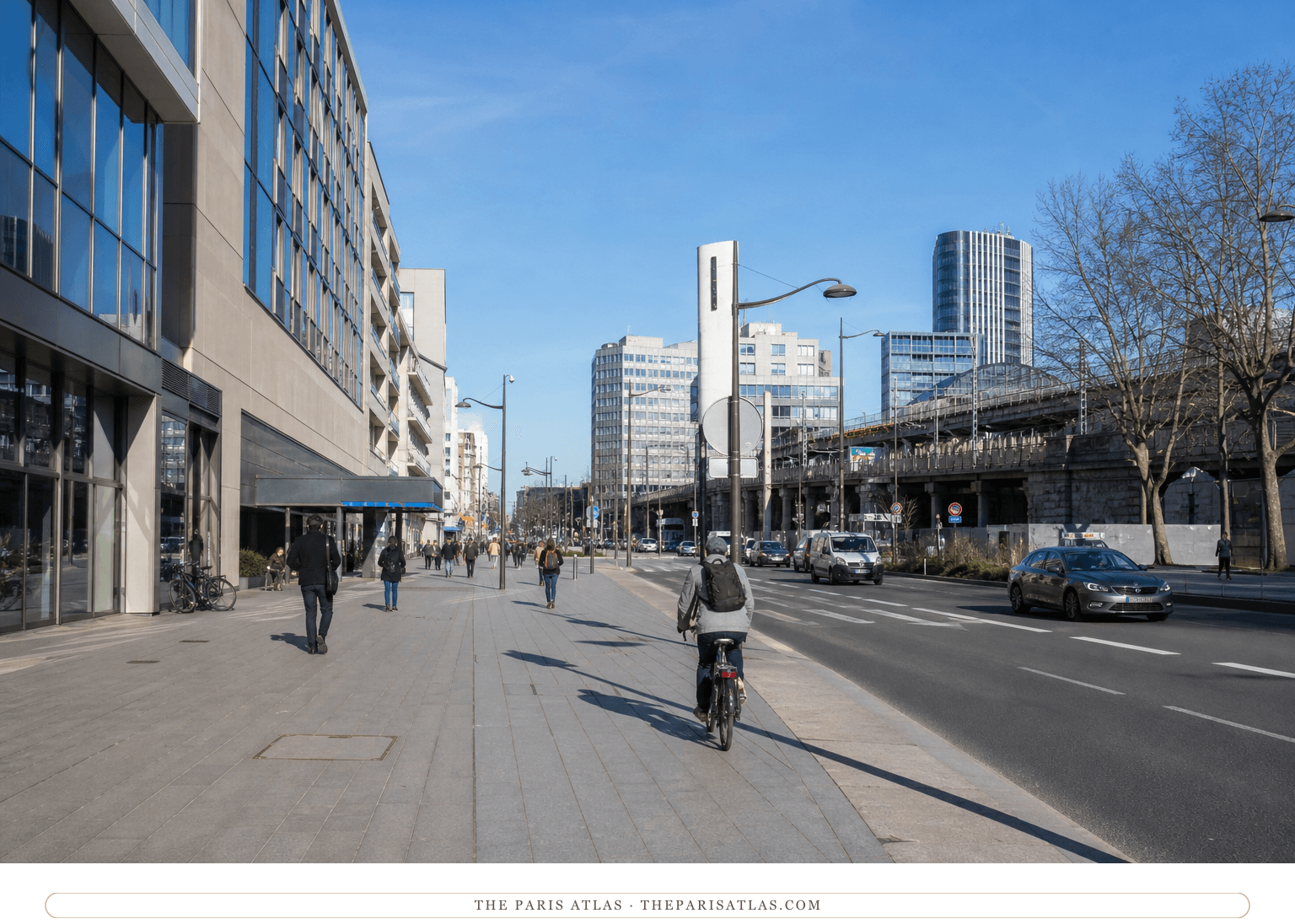
The demolished Montparnasse studio building where Diego Rivera and Angelina Beloff lived from 1912 to 1919 and Piet Mondrian worked before and after the First World War.
Visit the place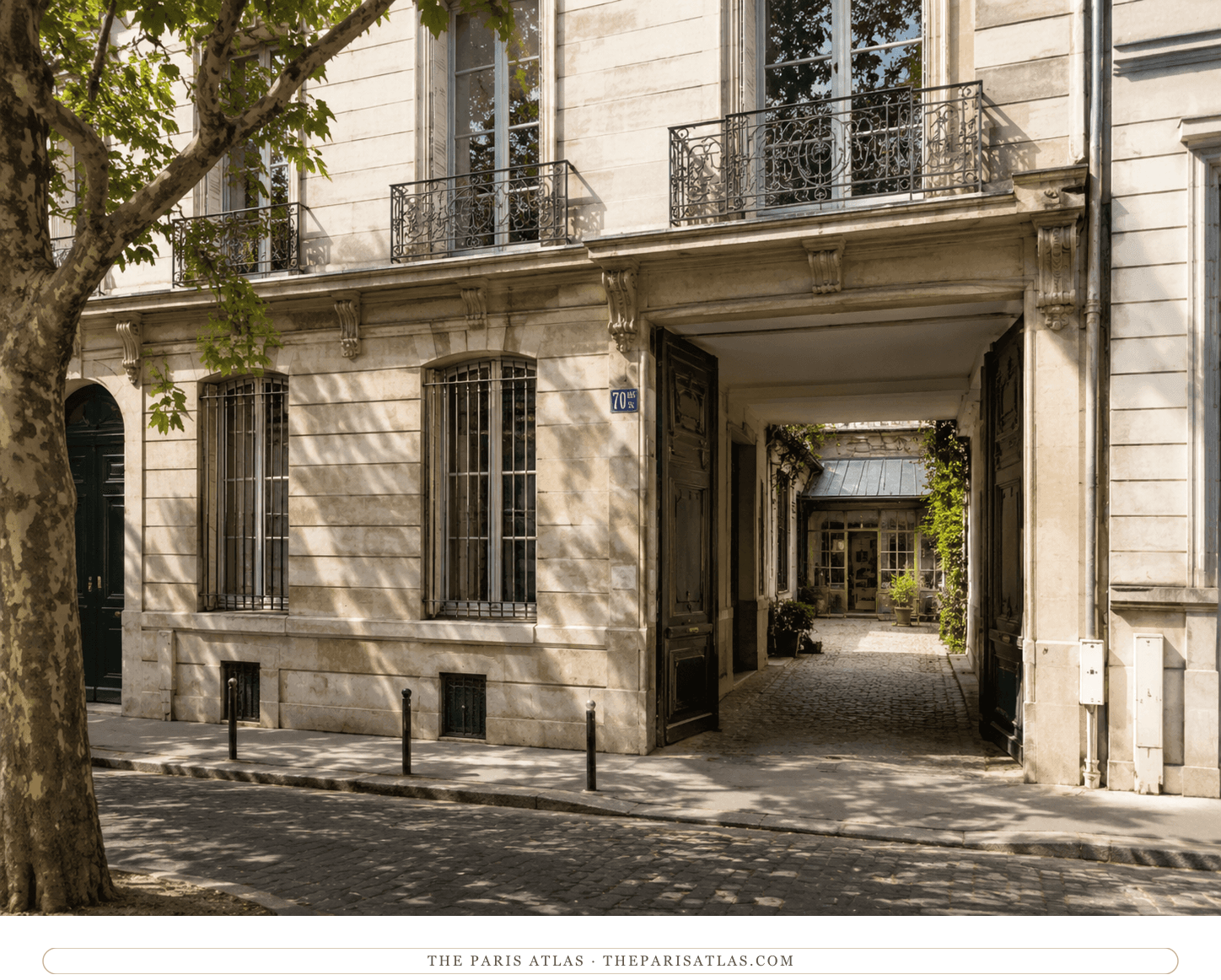
Ezra Pound's courtyard studio — the workshop of modernism's impresario during his Paris years, a few doors down the street from Ernest Hemingway's later flat above the sawmill.
Visit the place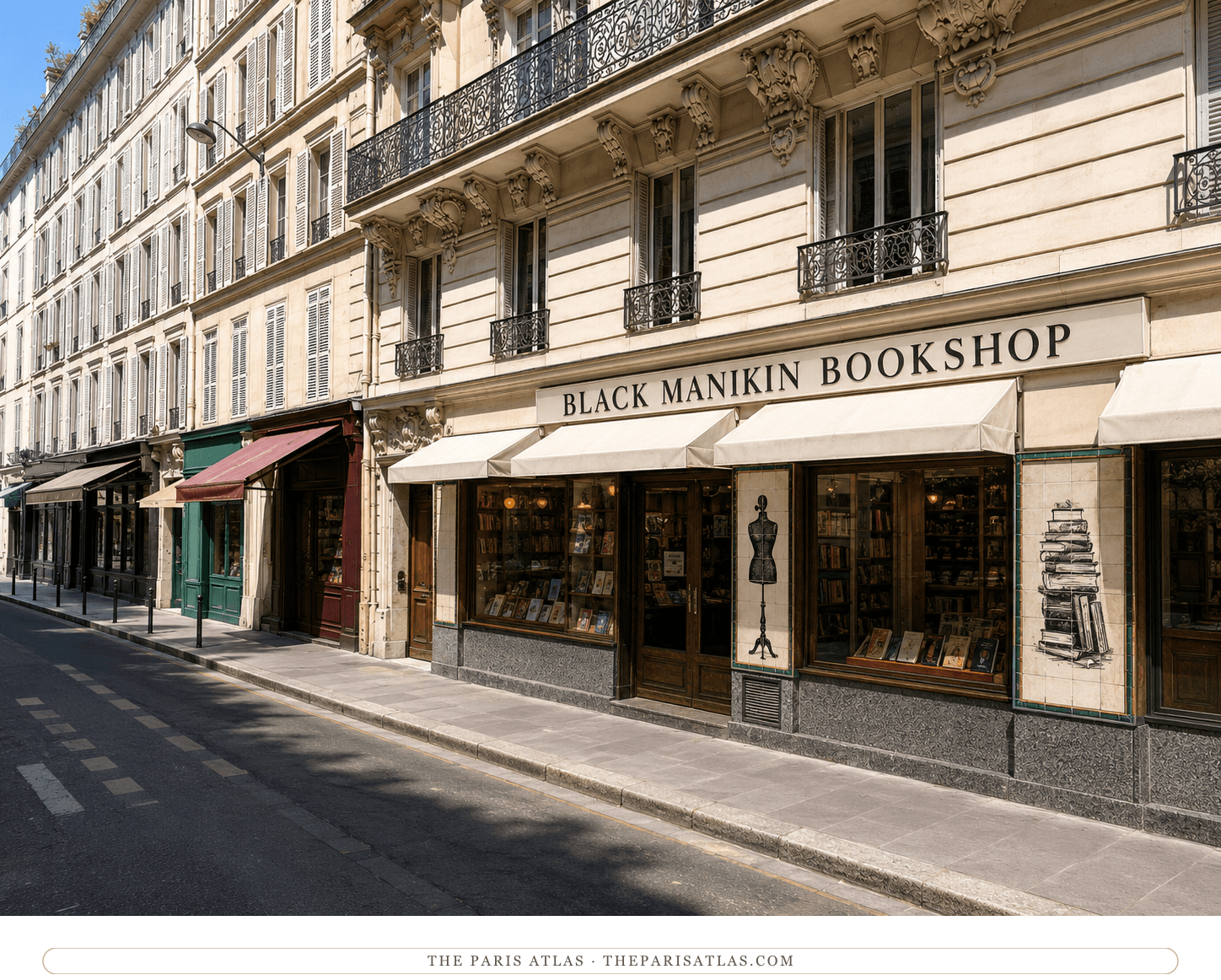
Edward Titus's Montparnasse bookshop and small press, where D. H. Lawrence settled terms on 5 April 1929 for the cheap Paris edition of Lady Chatterley's Lover that finally undercut the pirates.
Visit the place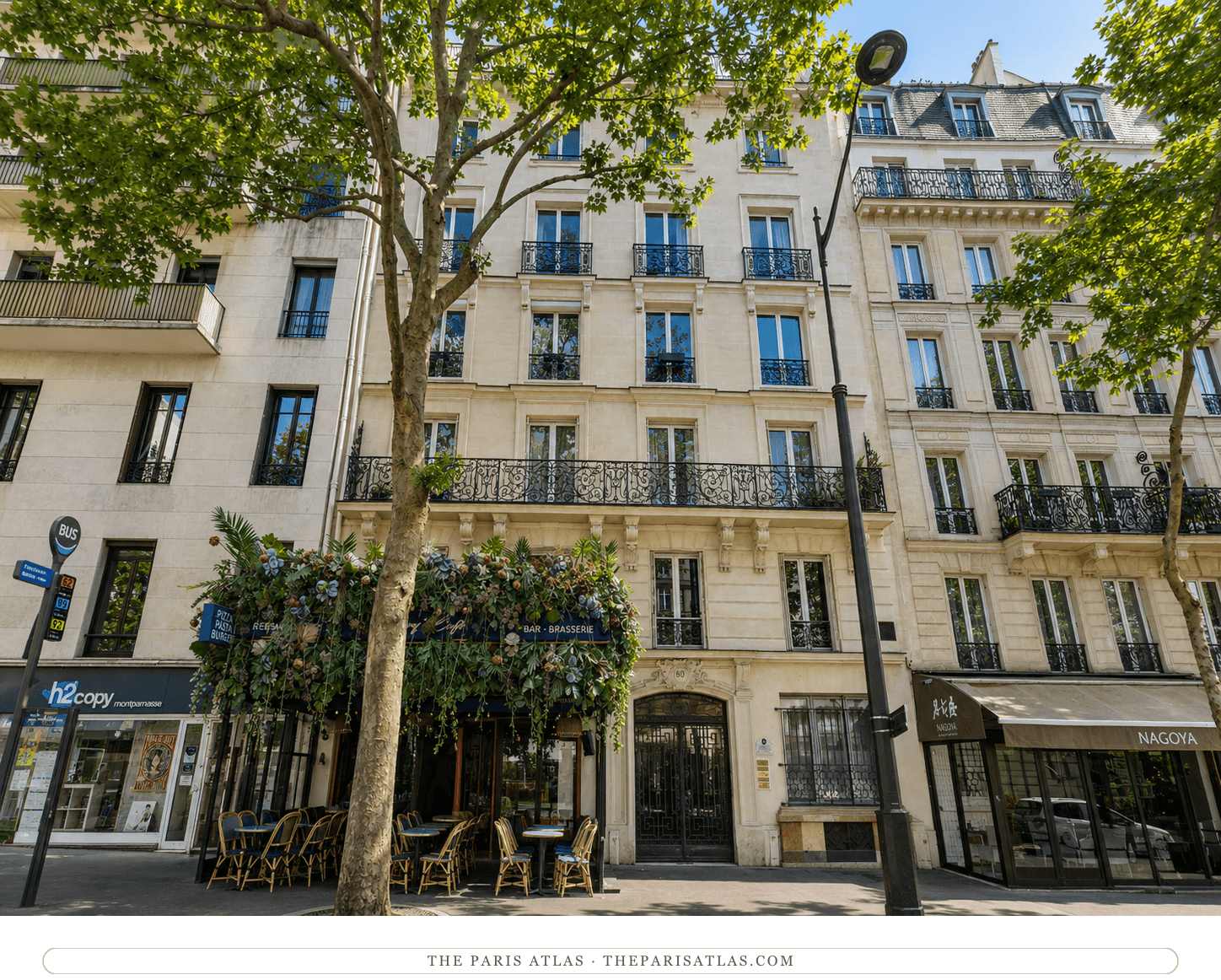
The Montparnasse hotel where D. H. Lawrence lived from 12 March to 7 April 1929 while he looked for a publisher willing to print Lady Chatterley's Lover cheaply enough to undercut the pirates. It is the only address in Paris that carries a plaque to him.
Visit the place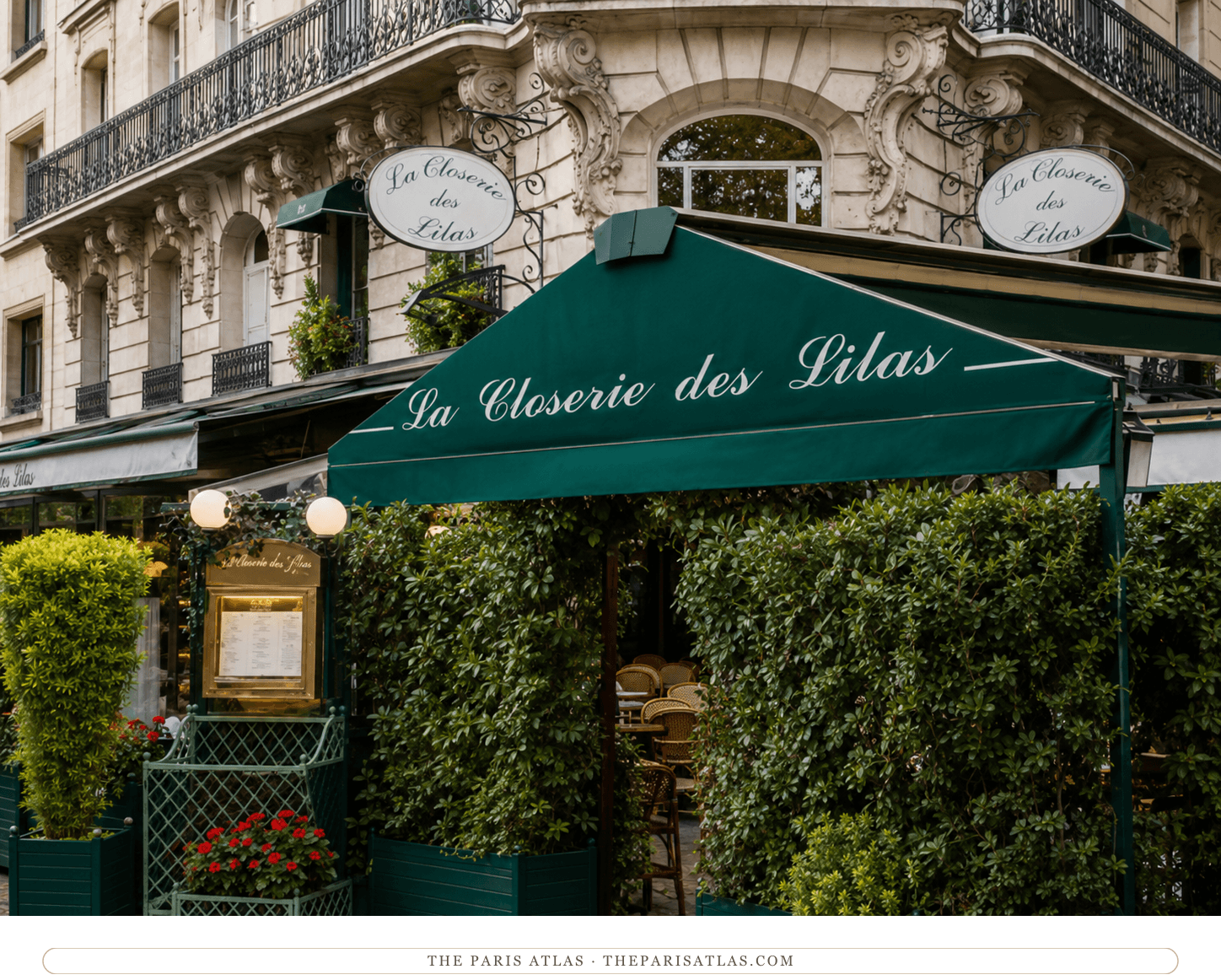
Ernest Hemingway's favorite writing spot, where he drafted much of The Sun Also Rises. Quieter than the other cafés, which was the point.
Visit the place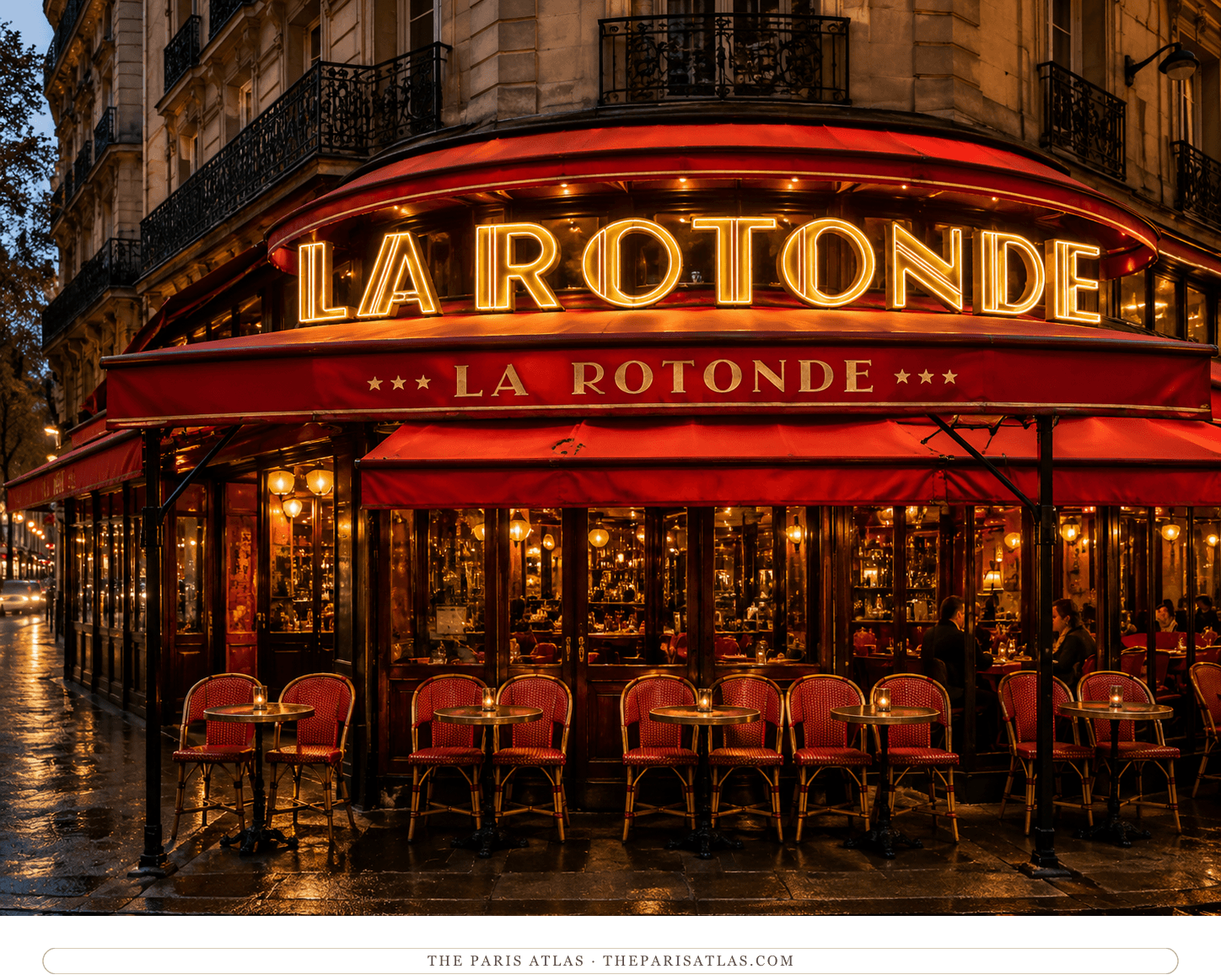
The café every taxi driver delivered Americans to — the novel's driest Montparnasse joke, and before that the painters' living room, where the patron took drawings for drinks.
Visit the place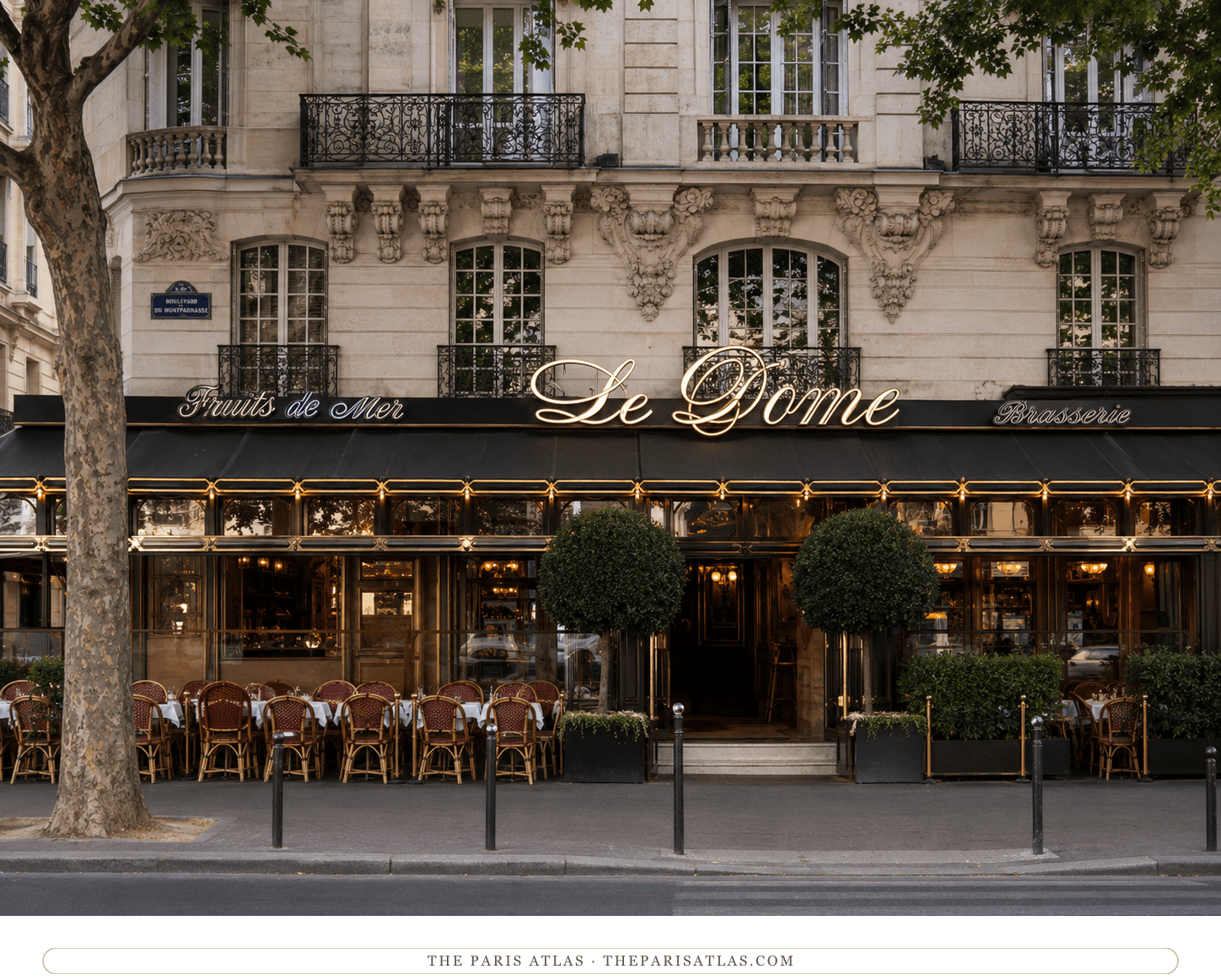
The noisy common room of Montparnasse and the setting of 'With Pascin at the Dôme' — the café for watching the show, not for working.
Visit the place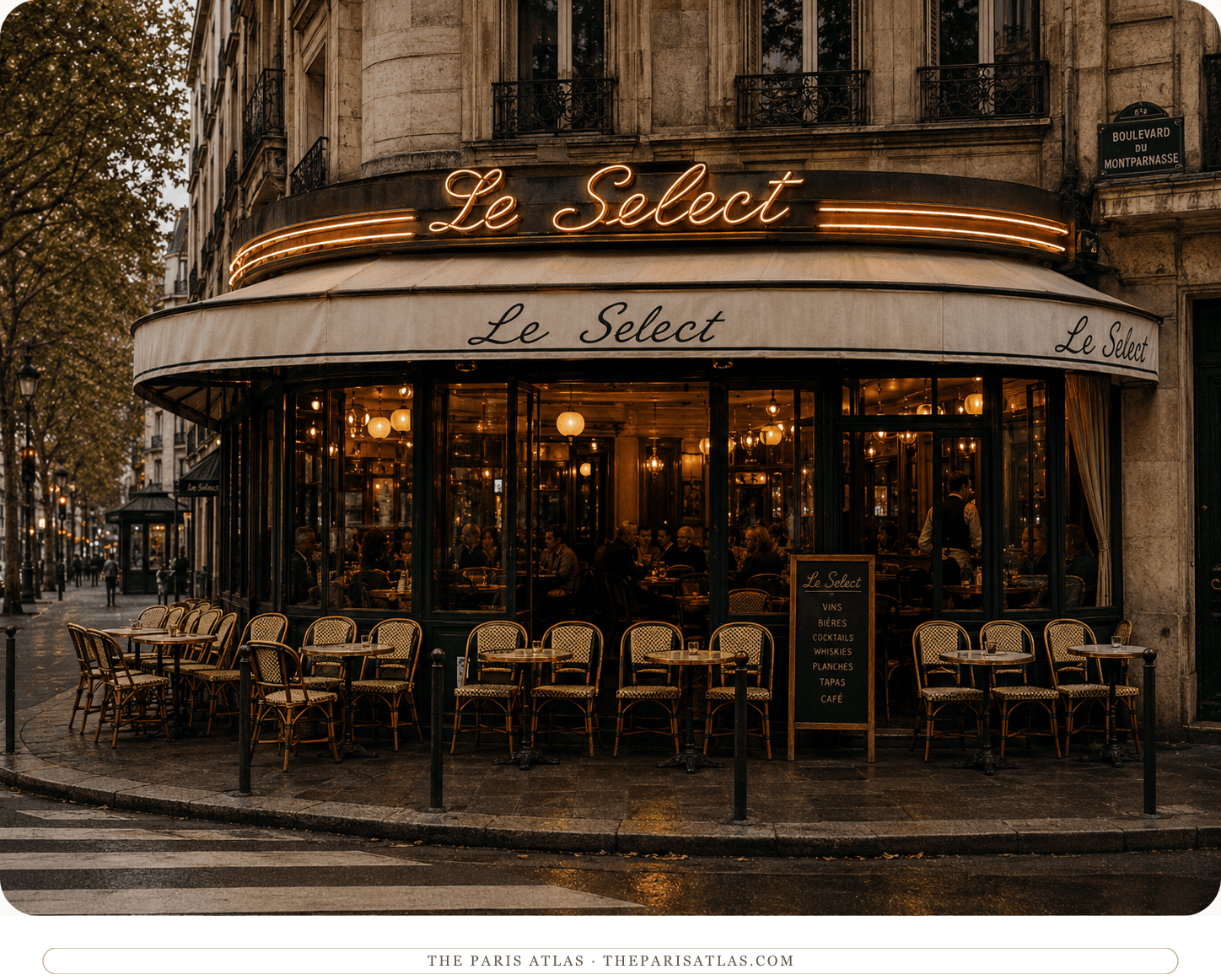
The all-night café of the Vavin crossroads and the closest thing Ernest Hemingway's The Sun Also Rises has to a home address — the crowd always ends up at the Select.
Visit the place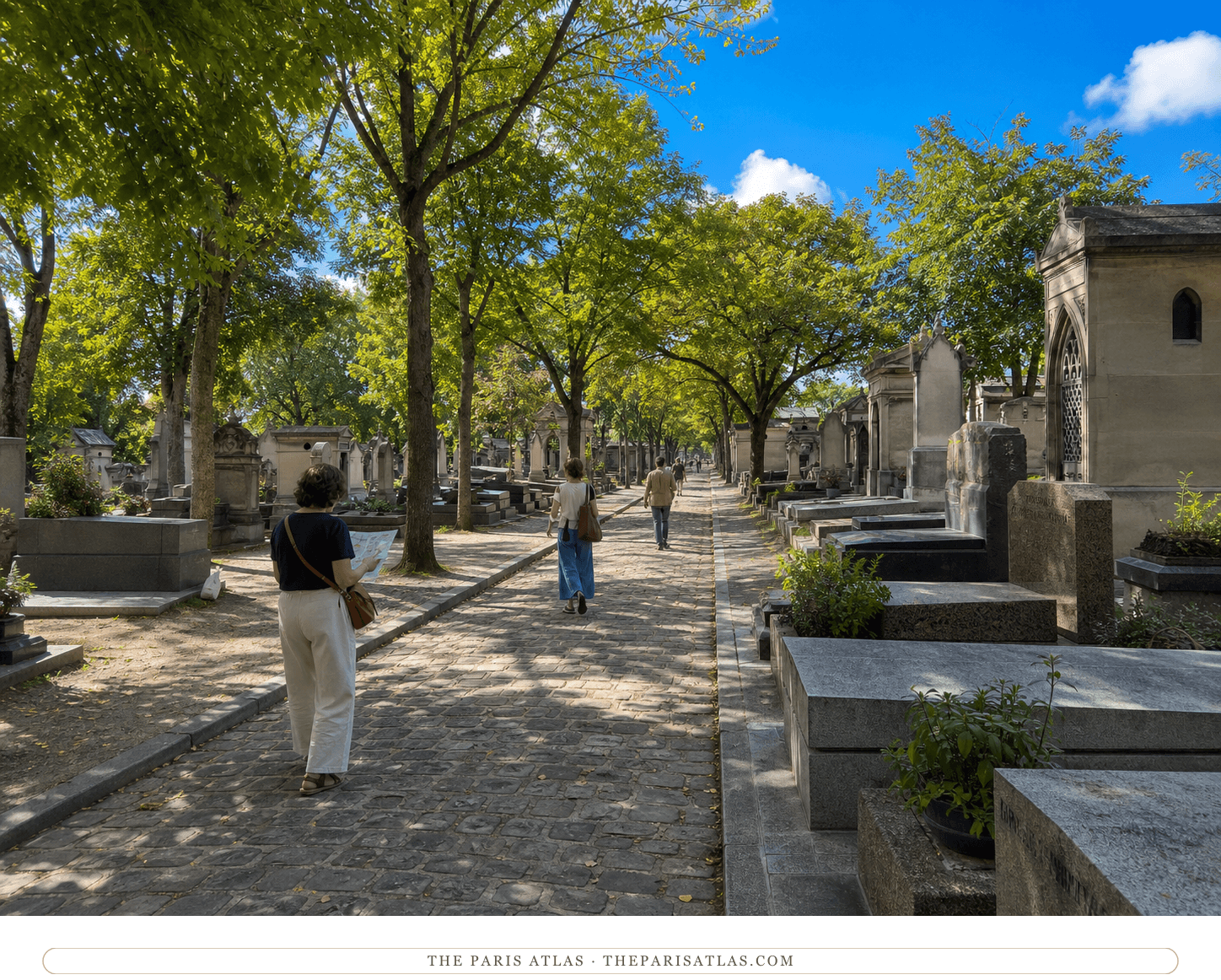
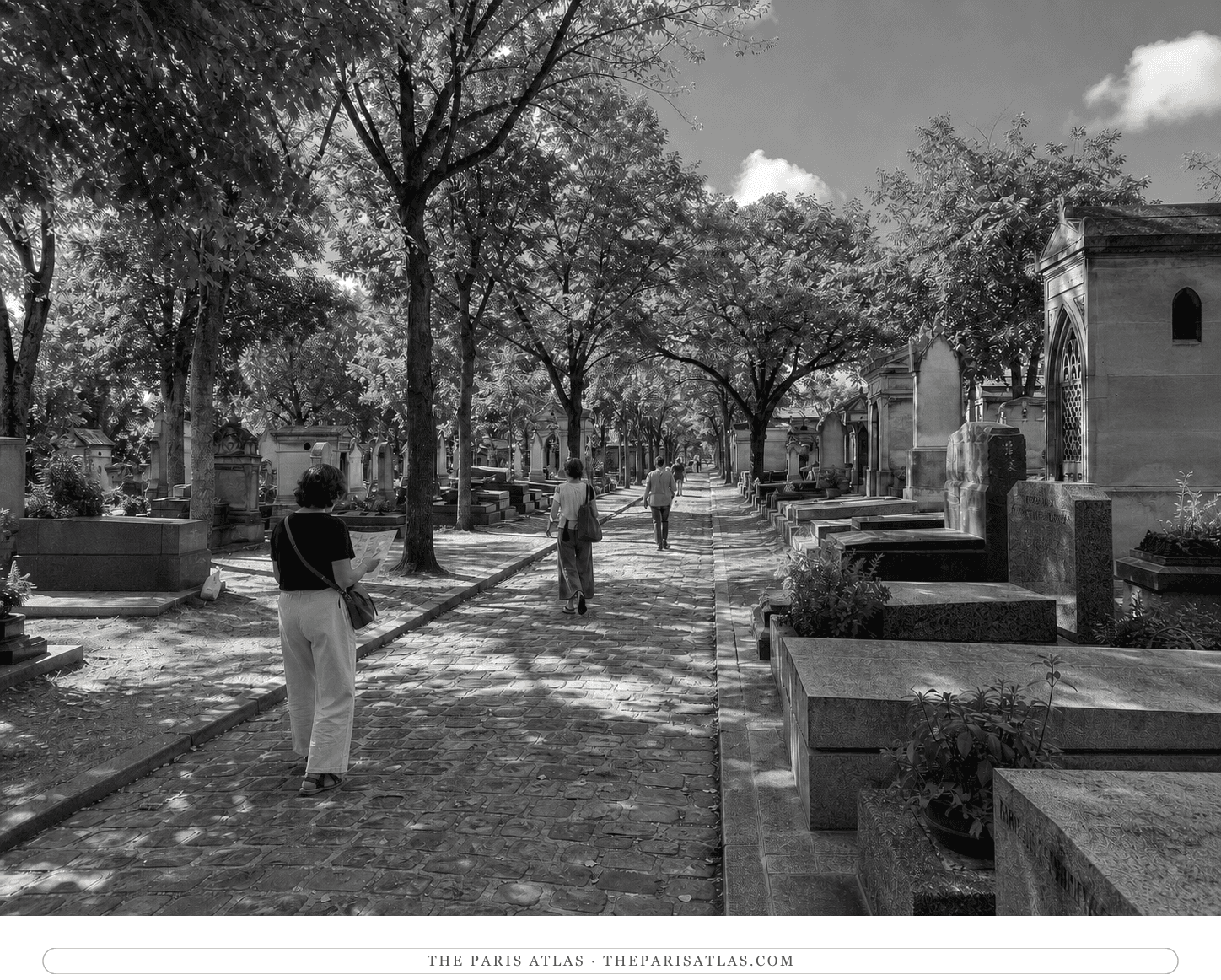
The second-largest cemetery inside Paris — nineteen flat, gridded hectares south of the boulevard du Montparnasse, holding the graves of Charles Baudelaire, Samuel Beckett, Jean-Paul Sartre and Simone de Beauvoir, Serge Gainsbourg, Man Ray, Guy de Maupassant, Constantin Brancusi and Marguerite Duras.
Visit the place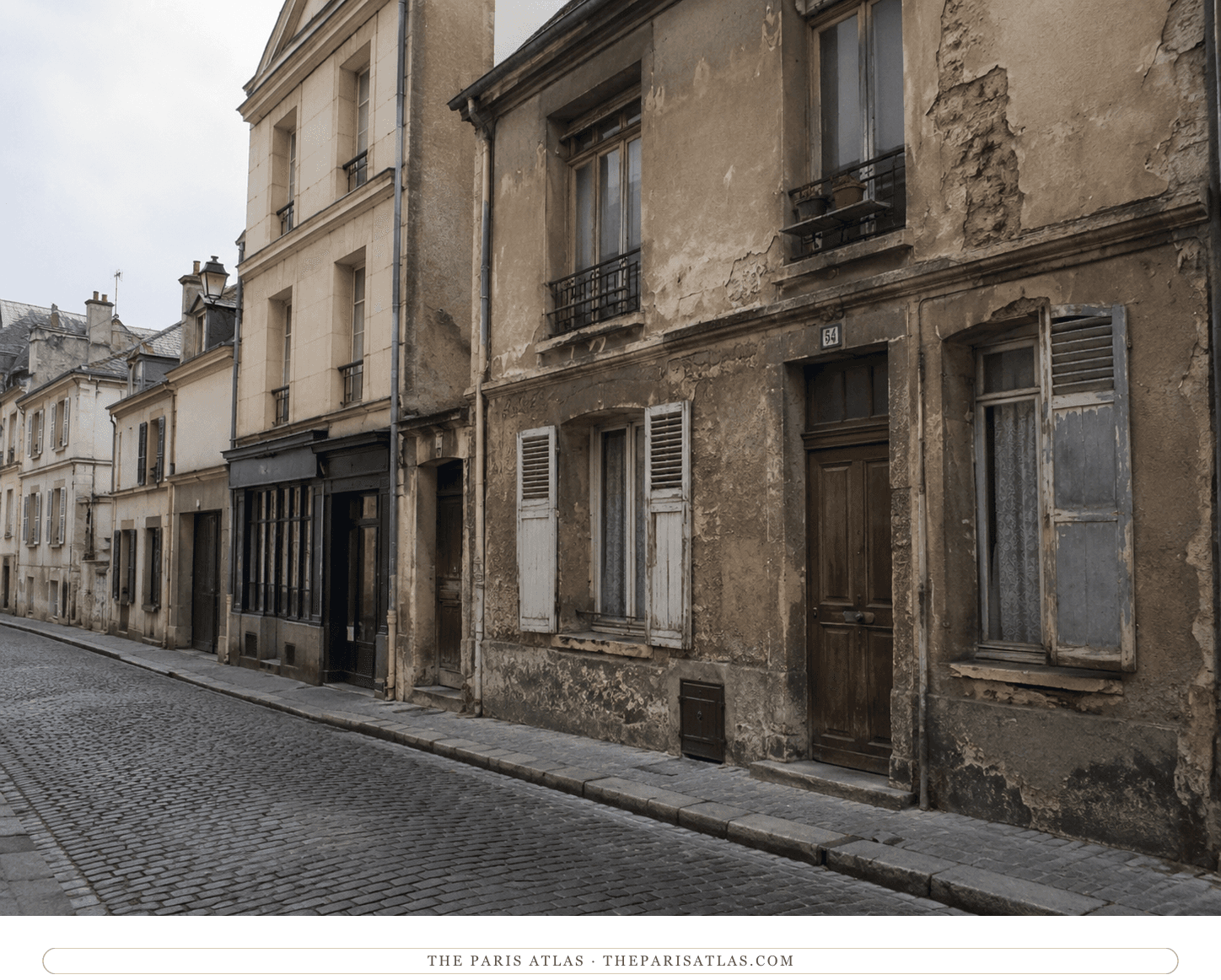
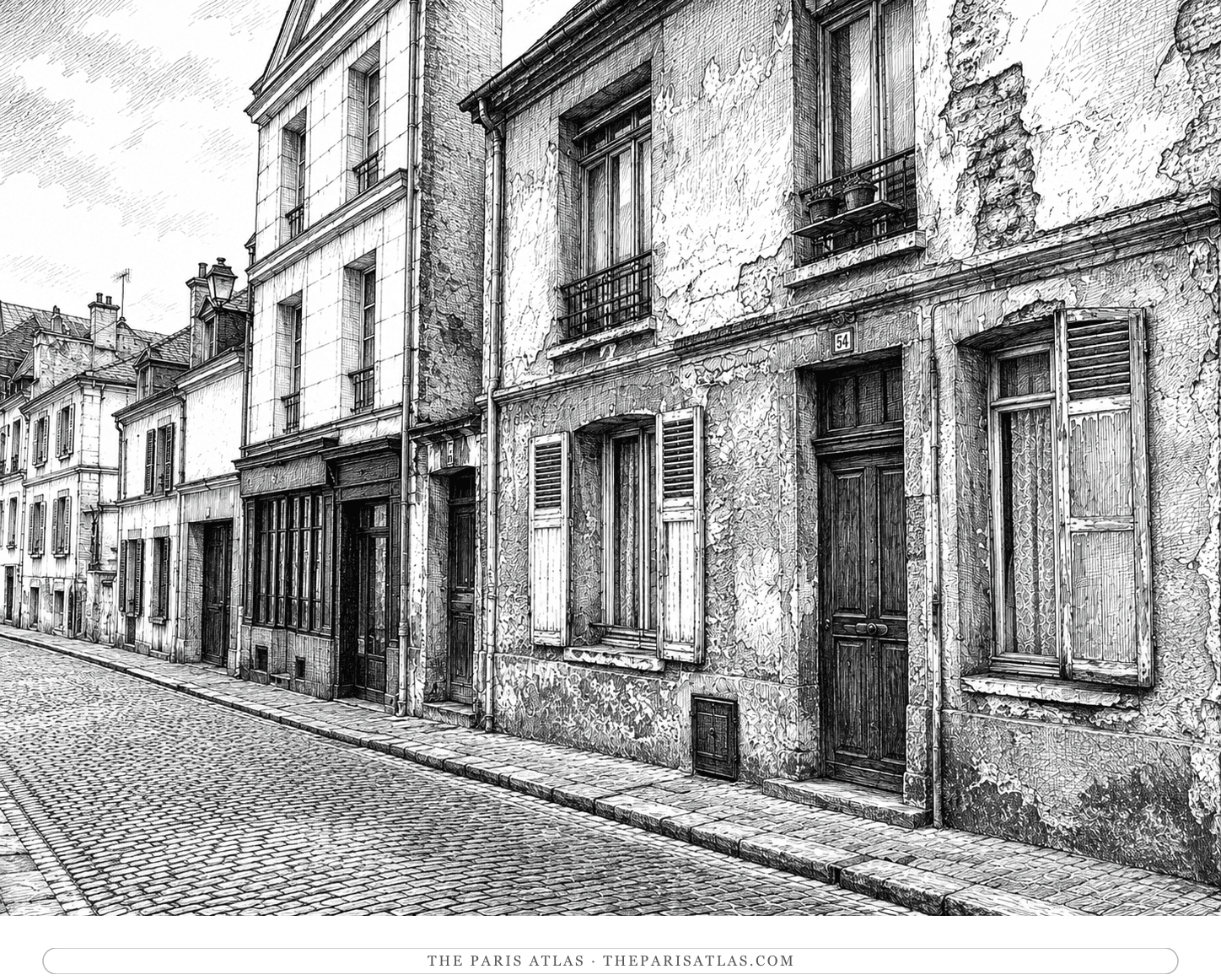
A workers' street behind the Montparnasse yards with two literary lives — the surrealists' communal house at No. 54, and Henry Miller's broke wanderings looking for a friend and a meal.
Visit the place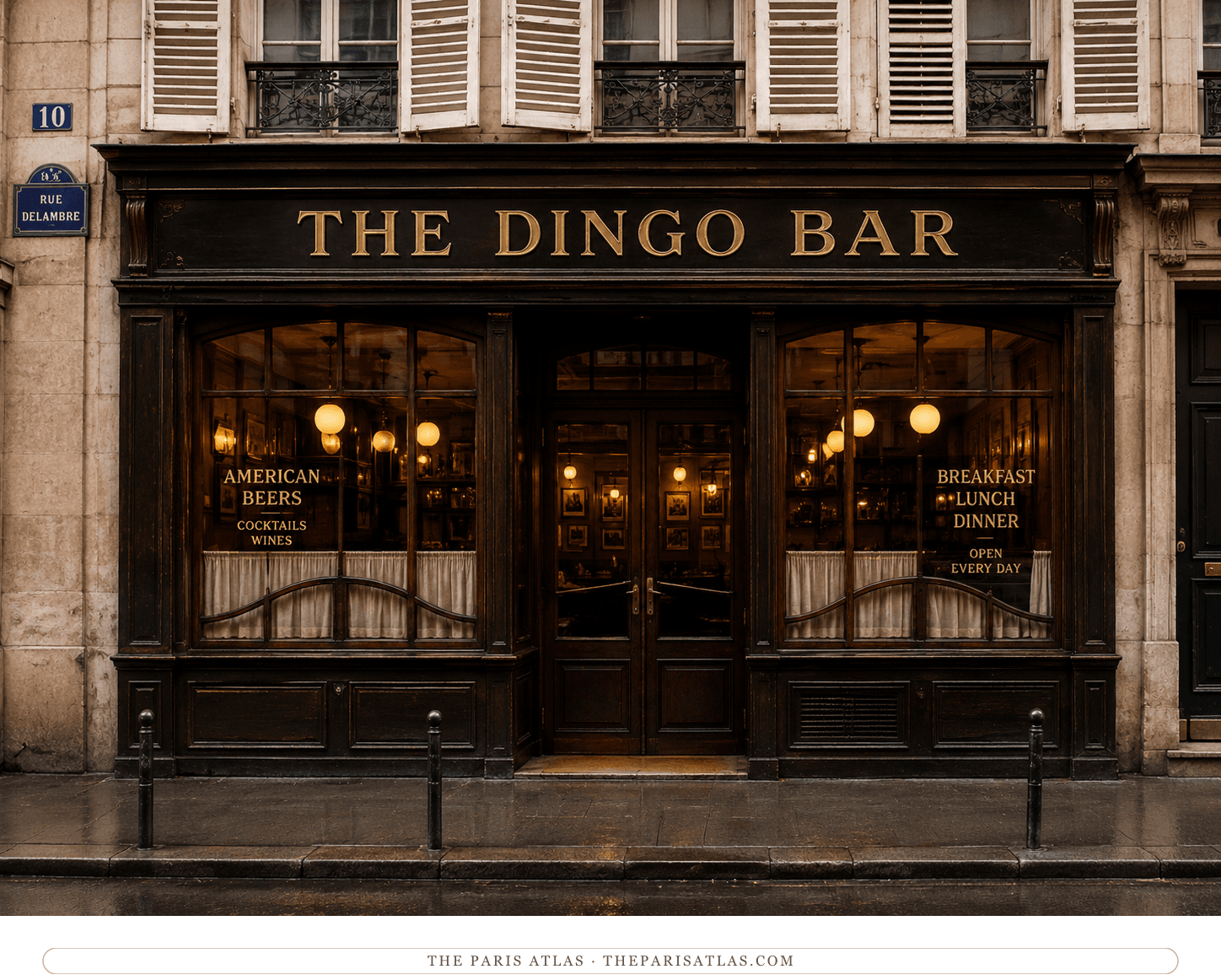
The American bar where Ernest Hemingway met F. Scott Fitzgerald in late April 1925 — two weeks after The Great Gatsby was published.
Visit the placeThe all-night café of the Vavin crossroads and the closest thing Ernest Hemingway's The Sun Also Rises has to a home address — the crowd always ends up at the Select.
Visit the place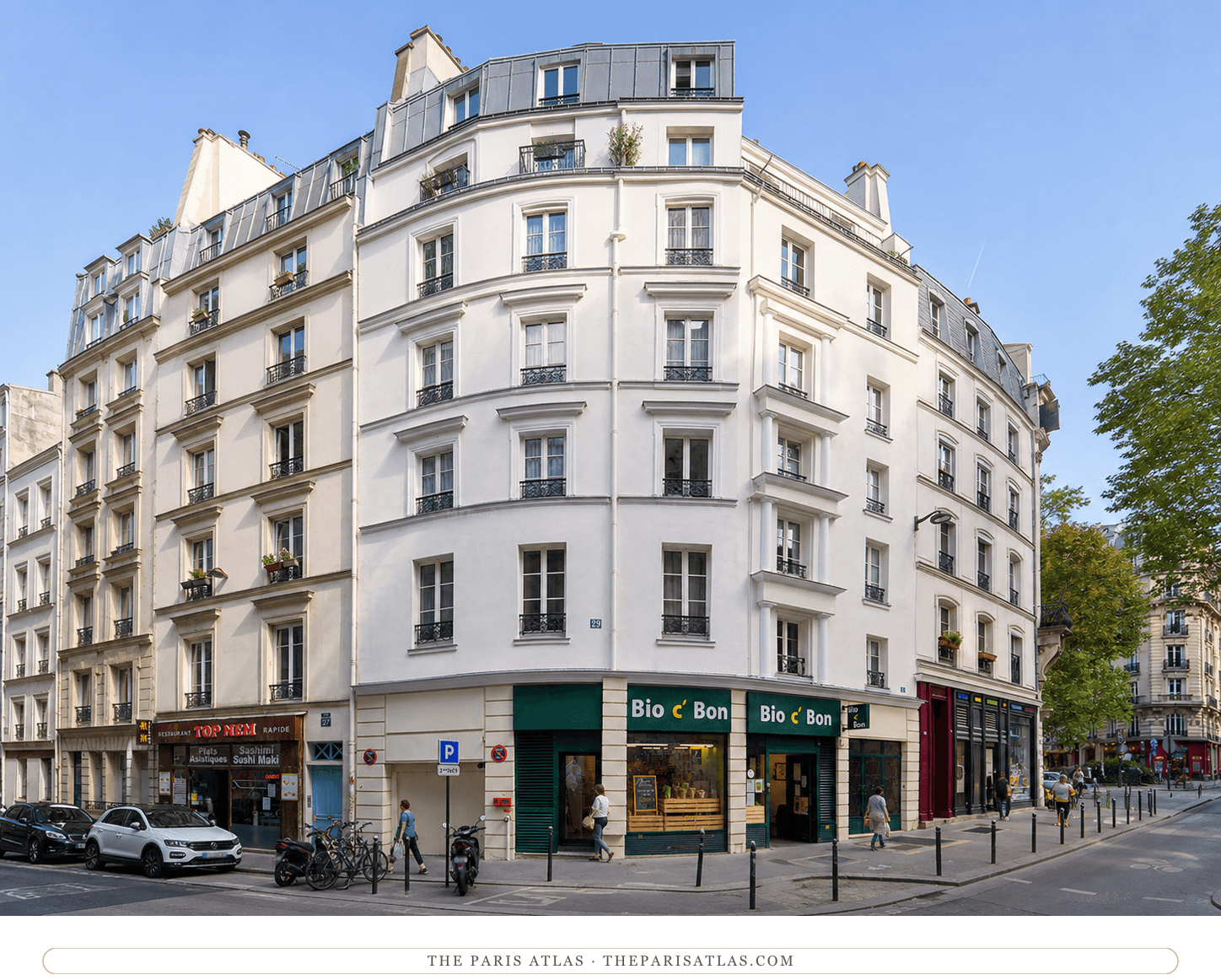
The address of Chez les Vikings, a Scandinavian tavern in Montparnasse where Henry Miller and Anaïs Nin met regularly in the early 1930s. Miller headed a letter of 4 March 1932 from its tables. The café is gone; the buildings remain.
Visit the place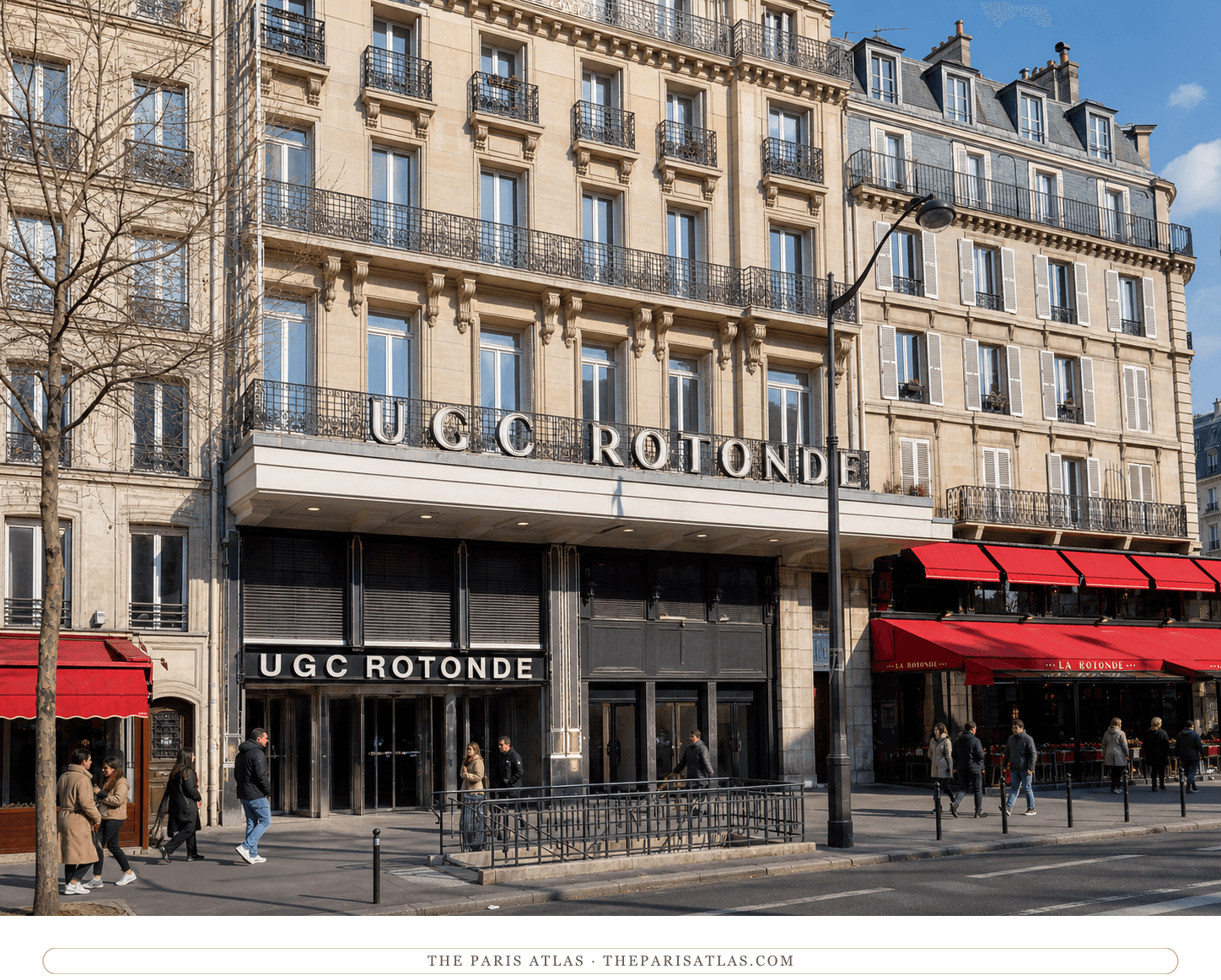
Where Simone de Beauvoir was born in 1908 and grew up with her sister Hélène — in the middle of Montparnasse, the quarter she would spend most of her life within a few streets of.
Visit the place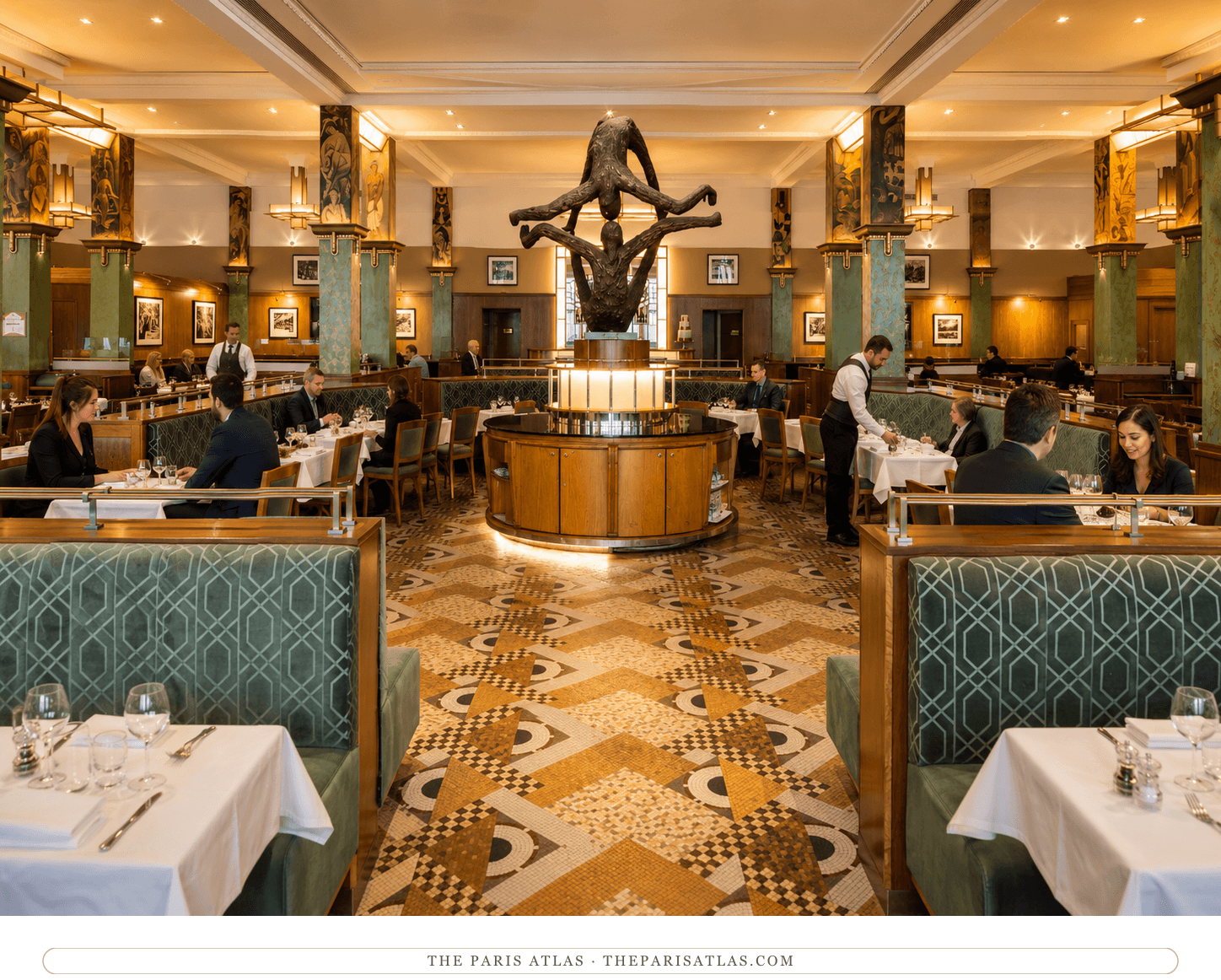
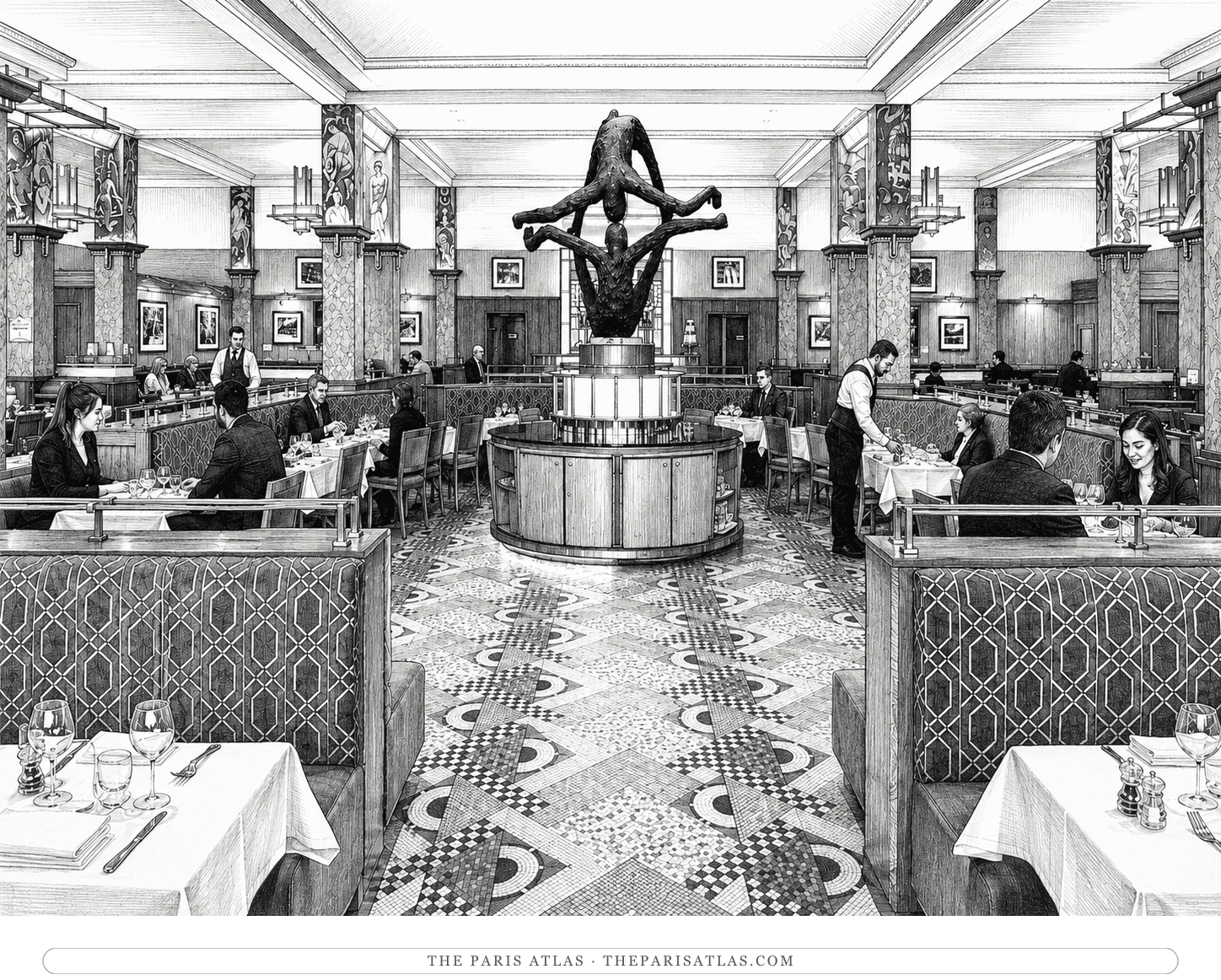
The giant brasserie of the Boulevard du Montparnasse, opened in December 1927 with a party the quarter never forgot — Blaise Cendrars was in the opening-night crowd.
Visit the placeThe sources below include histories, archival materials, scholarly research, and official records that informed this page. They document Montparnasse, the people connected to it, and its place in Paris.

Web source consulted for documented facts and historical context presented on the Montparnasse page.
Primary text included as part of the documented record for Montparnasse.
Primary text included as part of the documented record for Montparnasse.

Published analysis and historical context used in preparing the Montparnasse page.
These references provide the documented foundation for this page's history and context. Claim-level citations remain attached to the specific claims they support.
 Explore more resources
Newsletter
The cafés, studios, and walk-up flats where the work was made — one story from the map in every letter.