The Paris AtlasCharting the artists, works, and places worth returning to.

Hotel · Montparnasse · 15e arrondissement

Grand Hôtel de Versailles (60 Boulevard du Montparnasse)

The buildingStill standing
Getting inOutside only
What's there nowFlats, with a bar-brasserie below

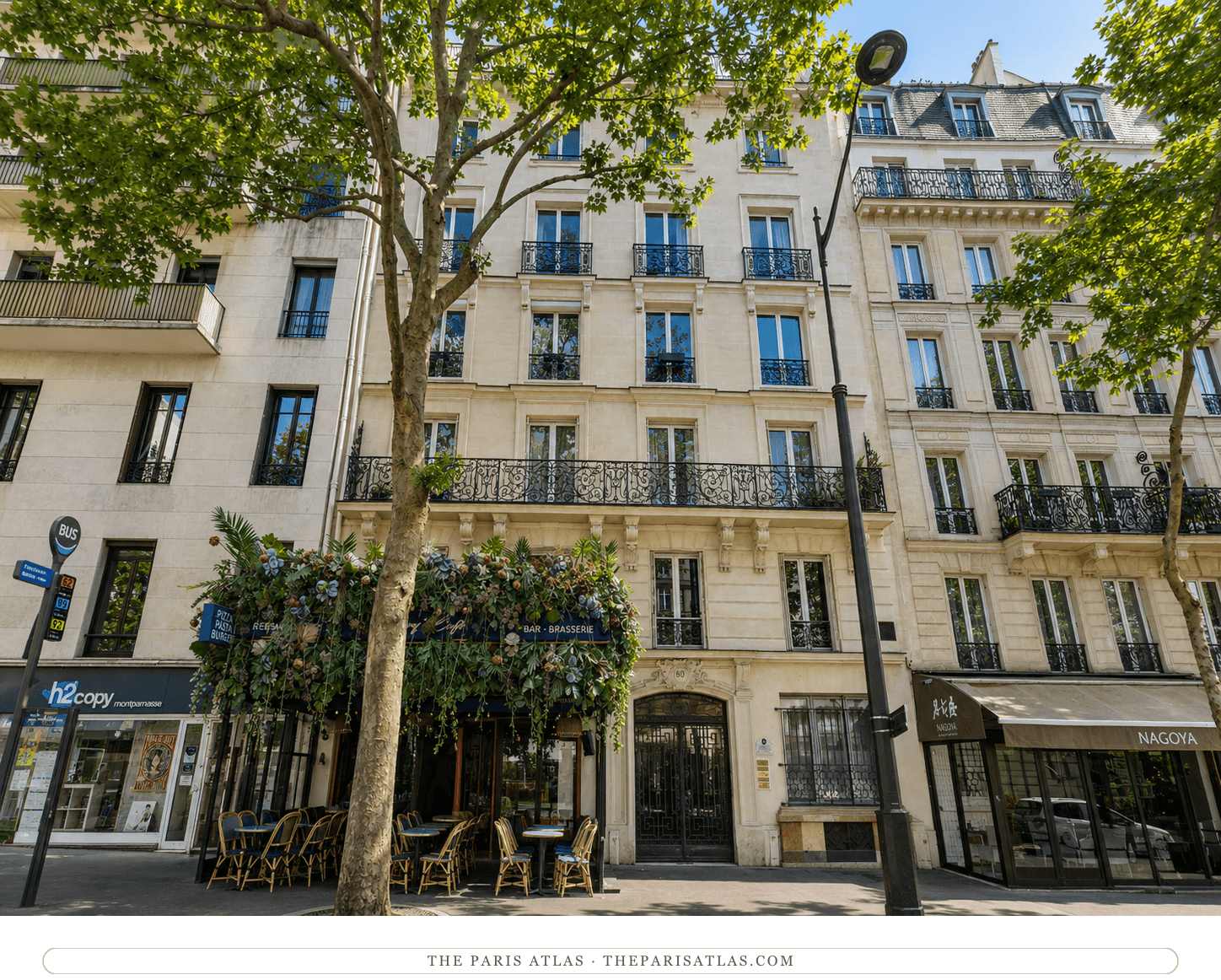
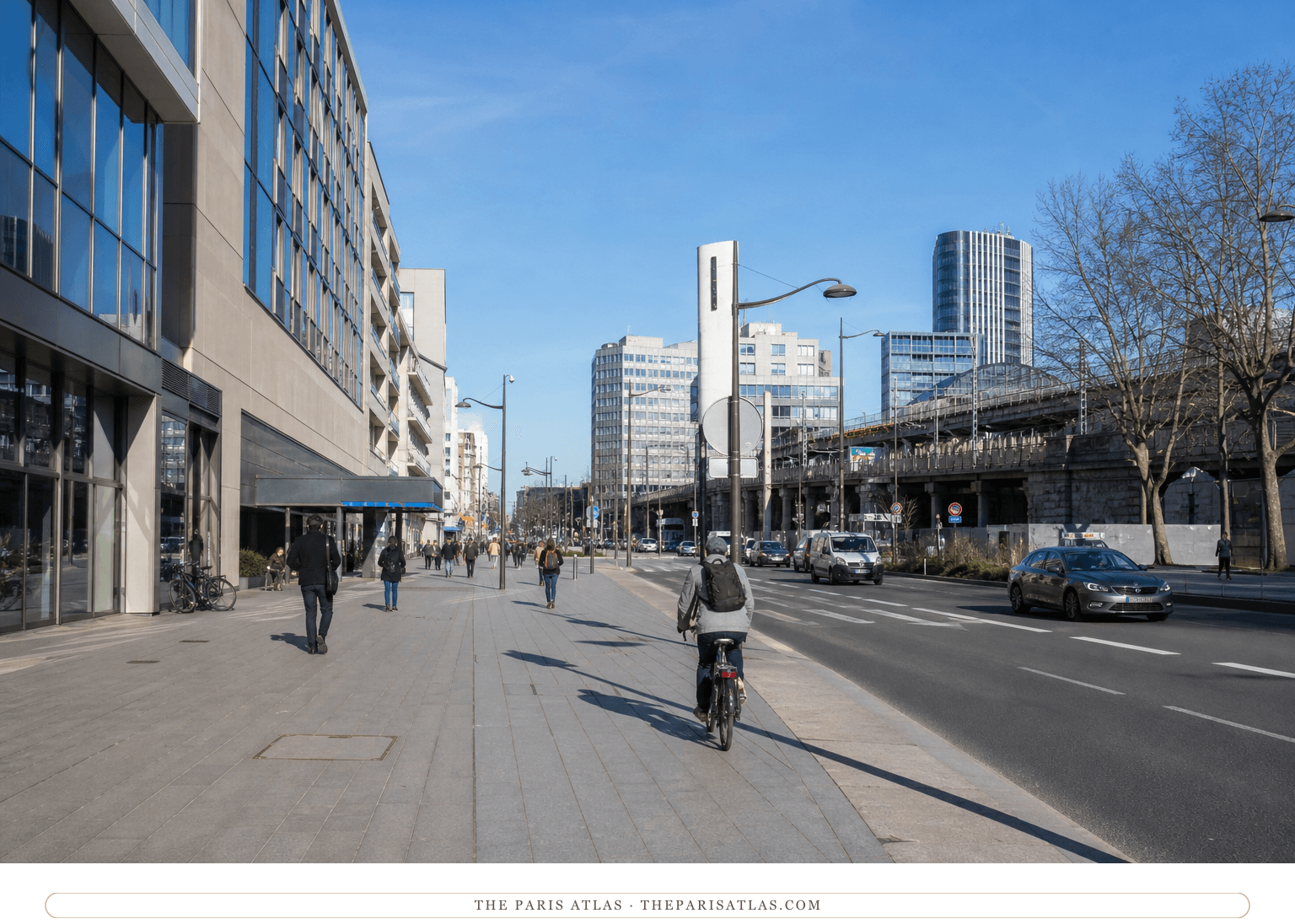
No hotel trades here now, which is why a search for the name returns nothing. The plaque puts it in the past tense: Lawrence stayed in this building, alors le Grand Hôtel de Versailles. The six-storey Haussmann block stands, with apartments above and a bar-brasserie under the ground floor on the left. The plaque is on the stone to the right of the arched carriage entrance, at head height.

The Montparnasse hotel where D. H. Lawrence lived from 12 March to 7 April 1929 while he looked for a publisher willing to print Lady Chatterley's Lover cheaply enough to undercut the pirates. It is the only address in Paris that carries a plaque to him.

Address
60 Boulevard du Montparnasse, 75015 Paris
Years
Lawrence stayed 12 March – 7 April 1929
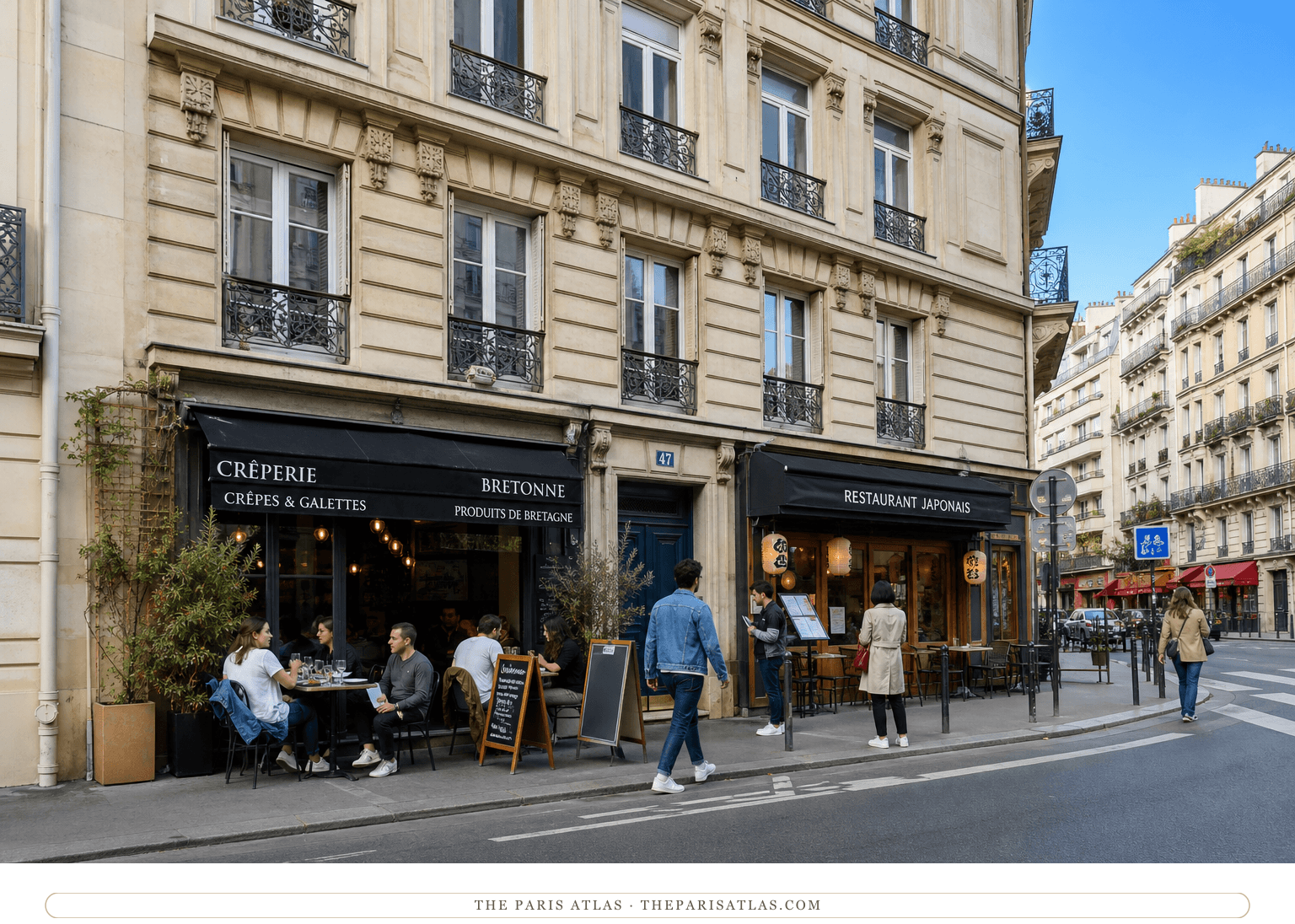
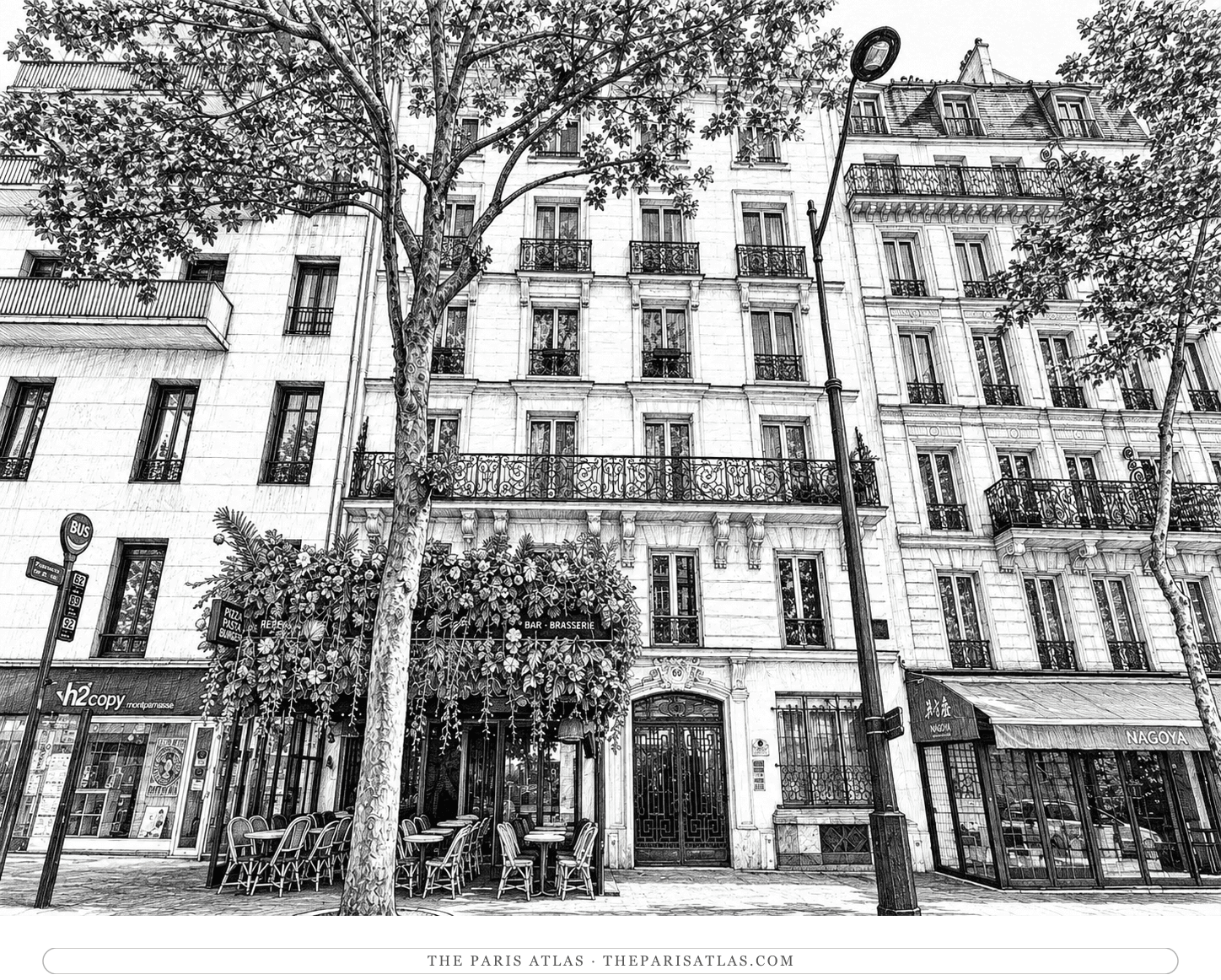
IllustrationThe same building at 60 boulevard du Montparnasse in colour, its brasserie terrace and pavement tables under the plane trees of the boulevard

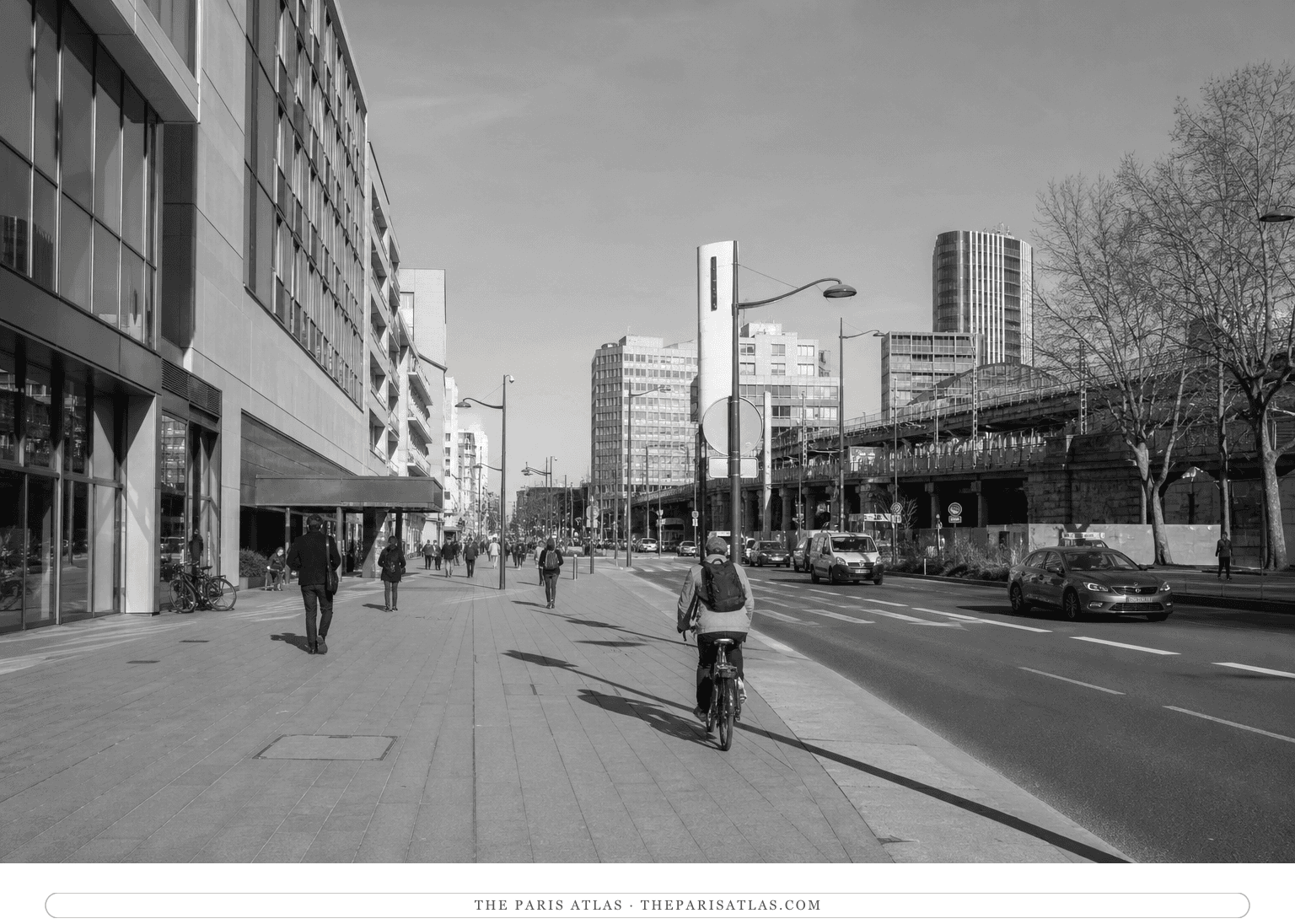
The same frontage in colour, from the boulevard.

Editorial illustration

The story

The errand

Lady Chatterley's Lover was published in Florence in July 1928 in an edition of a thousand copies, printed by a jobbing Italian printer who spoke no English and set the type without knowing what the book said. Lawrence sold it by subscription, direct to readers, because no established house would touch it. Within months it was being pirated on both sides of the Atlantic.

Piracy was not a marginal irritation. An unauthorised edition could ask three hundred francs or more precisely because the book was hard to get, and every copy sold was money the author never saw. Lawrence's answer was to flood the market himself: a plain, cheap Paris edition at a price the pirates could not undercut, sold openly enough to make their editions pointless. It was a commercial decision taken by a dying man who wanted the income while he could still use it.

The Huxleys pointed him at Paris. French law did not police foreign-language books the way British and American law did, and the city already carried a set of small English-language presses that existed for exactly this reason. He arrived from Bandol on the Mediterranean coast on 12 March.

Four weeks in March

The month did not begin well. On 15 March he learned that Frank Groves, who had offered to help him produce a Paris edition, had instead published a pirated one, printed in Germany. The man he had been talking to about beating the pirates turned out to be one of them.

He went to Sylvia Beach at Shakespeare and Company on rue de l'Odéon. She had published James Joyce's Ulysses in 1922 and was the obvious person to ask. She declined. By her own account she had had enough of controversy and did not want a reputation as a publisher of erotic literature. She appears to have sent him on to Titus.

Between the negotiations he did the things a visitor does. He went to Le Dôme on the same boulevard as his hotel. He spent a week at the Huxleys' house in Suresnes, which he found sleepy and dull, and let them take him to their doctor. He went once to Daniel Halévy's literary tea on the quai de l'Horloge and met François Mauriac there, an evening that produced the only line about Paris anyone quotes him on. He and Frieda spent the Easter weekend at Le Moulin du Soleil, the mill outside the city where Harry and Caresse Crosby ran the Black Sun Press.

I went to a French literary tea yesterday – with Mauriac and a few more – ye gods, how literary – the Lord made Adam out of printer's ink, in Paris.

D. H. Lawrence, letter to his agent Laurence Pollinger, 24 March 1929

Terms with Titus were settled on 5 April: three thousand copies at sixty francs. Lawrence left Paris on 7 April and went south to the sun, this time to Spain. The edition appeared in May, reprinted in August, and a third printing was authorised in February 1930, three weeks before he died.

The plaque

A marble plaque went up on the building on 22 May 2019, ninety years after the stay, placed by the D. H. Lawrence Society with a reception hosted by the British Council in Paris. It gives the dates and the reason: that he lived here from 12 March to 7 April 1929, and that he came to find a publisher for Lady Chatterley's Lover.

The plaque, unveiled 22 May 2019. It is the only permanent memorial to Lawrence anywhere in Paris. (Photograph by Polymagou, via Wikimedia Commons · CC BY-SA 4.0)

The 2019 reception is worth separating from the 1929 visit, because the two are often run together. The British Council was founded in 1934, four years after Lawrence died. It hosted the ninetieth-anniversary event; he never set foot in it.

Visiting today

  • Address: 60 boulevard du Montparnasse, 15th arrondissement
  • Métro: Montparnasse-Bienvenüe, about 230 metres away
  • The hotel is gone. The building stands and is in ordinary commercial and residential use, so there is no interior to see
  • The plaque is on the street front and readable from the pavement at any hour
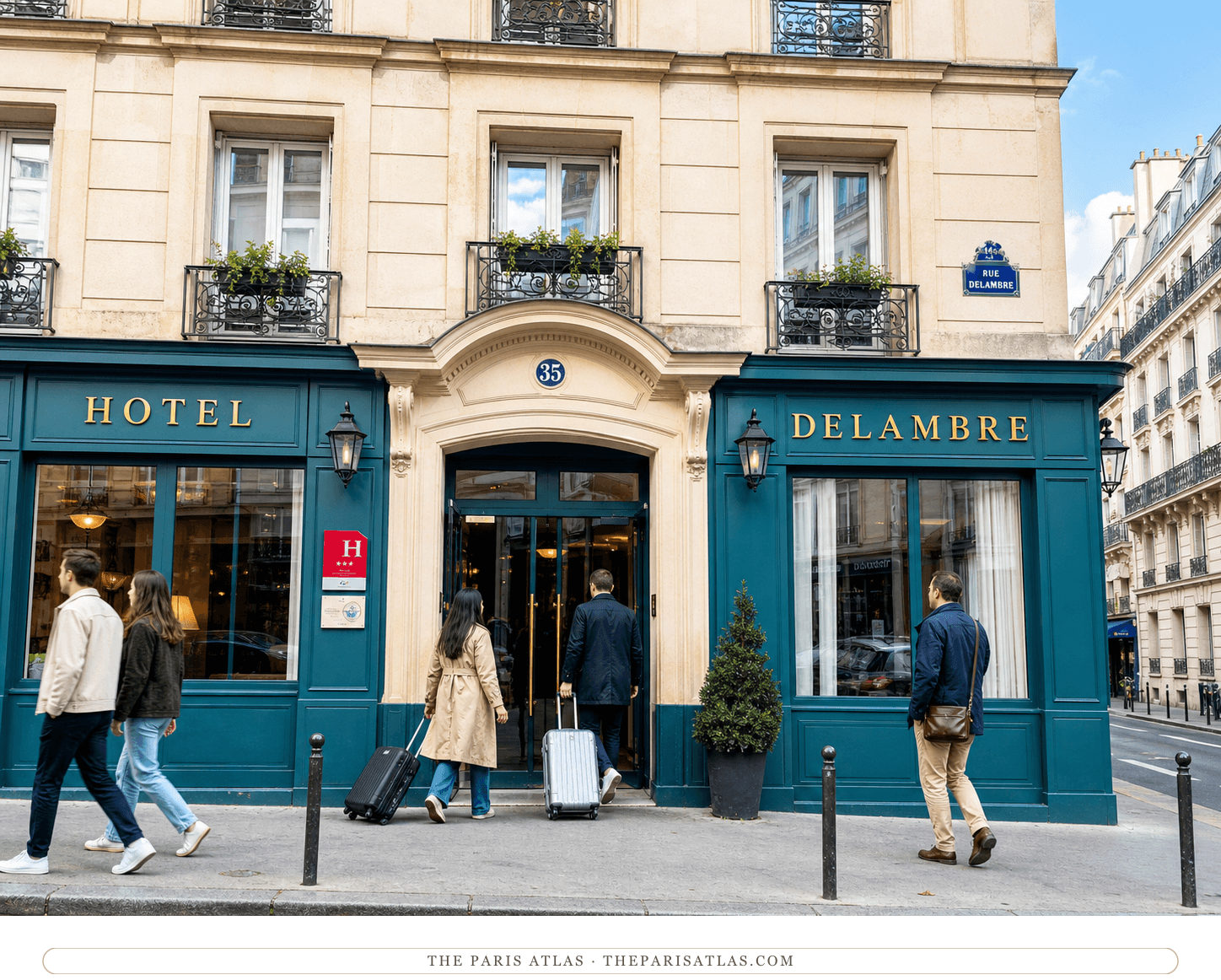
  • Worth the trip? Only as part of a Montparnasse walk. It is five minutes from Le Dôme and about the same from rue Delambre, which makes the three of them one short circuit

Last verified: August 2026.

Key facts

Address
60 boulevard du Montparnasse, 15th arrondissement
Lawrence's stay
12 March – 7 April 1929
Why Lawrence came
To find a publisher for a cheap Lady Chatterley's Lover
Result
Contract with Edward Titus, 5 April 1929
Plaque
Unveiled 22 May 2019

Documentary photographs

Archival and present-day photographs, reproduced with rights verified.

The plaque at 60 boulevard du Montparnasse, unveiled on 22 May 2019 by the D. H. Lawrence Society and the British Council. It records the dates of his Paris stay — 12 March to 7 April 1929 — and why he came: to find a publisher for Lady Chatterley's Lover. The building was then the Grand Hôtel de Versailles.2021 · Photograph by Polymagou, via Wikimedia Commons · CC BY-SA 4.0
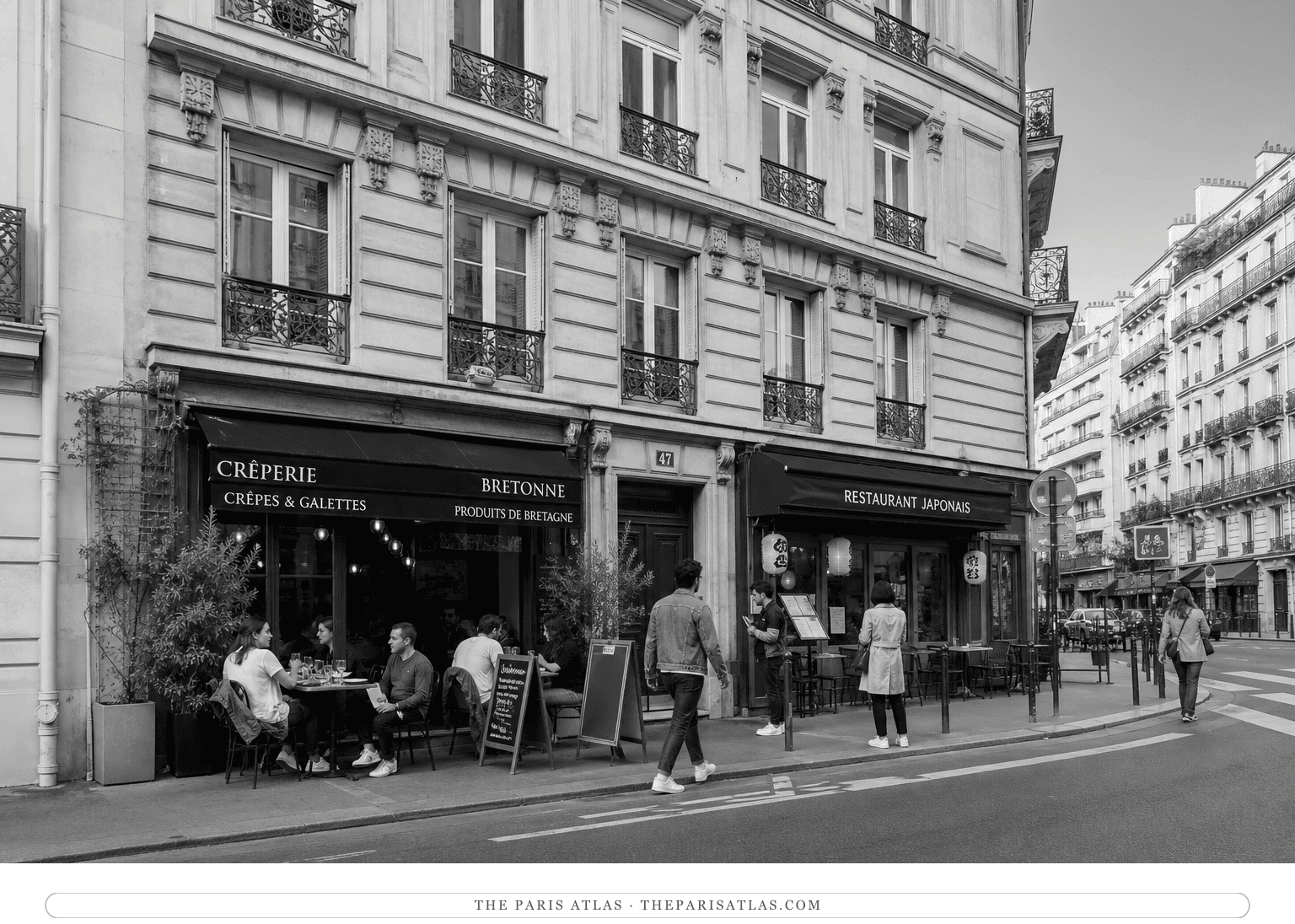
60 boulevard du Montparnasse as it stands. The building D. H. Lawrence lived in is still here; the hotel is not. There are apartments above and a bar-brasserie at street level. The plaque recording his stay is on the stone to the right of the carriage entrance.Editorial illustration
The same frontage in colour, from the boulevard.Editorial illustration

Timeline

  1. 1928

    Lady Chatterley's Lover is printed privately in Florence and pirated within months.

  2. 1929

    Lawrence stays here from 12 March to 7 April, hunting a publisher for a cheap edition.

  3. 1929

    He learns on 15 March that Frank Groves has pirated the novel in Germany.

  4. 1929

    Sylvia Beach declines the book; Edward Titus signs on 5 April for 3,000 copies at 60 francs.

  5. 1930

    Lawrence dies at Vence on 2 March, weeks after authorising a third printing.

  6. 2019

    A plaque is unveiled on the building on 22 May, the only memorial to Lawrence in Paris.

On the map

Questions before you go

Where did D. H. Lawrence stay in Paris?

At the Grand Hôtel de Versailles, 60 boulevard du Montparnasse, from 12 March to 7 April 1929. It was a modest hotel rather than a grand one, and it no longer operates; the building stands and carries a plaque recording the stay.

Why did D. H. Lawrence come to Paris in 1929?

To arrange a cheap edition of Lady Chatterley's Lover. The novel had been printed privately in Florence in 1928 and immediately pirated, with unauthorised copies selling at three hundred francs and more while he earned nothing. Paris had permissive publication law and a set of English-language presses, and Aldous and Maria Huxley told him it was the place to go.

Did Sylvia Beach publish Lady Chatterley's Lover?

No. Lawrence asked her in mid-March 1929 and she refused, saying she had had enough of controversy and did not want a name for publishing erotic literature. She had published Joyce's Ulysses in 1922 and knew what the aftermath cost. She appears to have suggested Edward Titus instead.

Who published the Paris edition in the end?

Edward Titus, an American bookseller who ran At the Sign of the Black Manikin at 4 rue Delambre. Terms were settled on 5 April 1929 for three thousand copies at sixty francs, against the three hundred francs and more the pirates were asking. It reprinted twice and earned Lawrence over a thousand pounds before his death.

Is there a plaque to D. H. Lawrence in Paris?

Yes, one. A marble plaque was unveiled at 60 boulevard du Montparnasse on 22 May 2019 by the D. H. Lawrence Society, with a reception hosted by the British Council. It records the dates of the stay and why he came. It is the only permanent memorial to him in the city.

Can you go inside?

No. The hotel is gone and the building is in ordinary commercial and residential use. The plaque is on the street front and can be read from the pavement.

Writers who knew this place

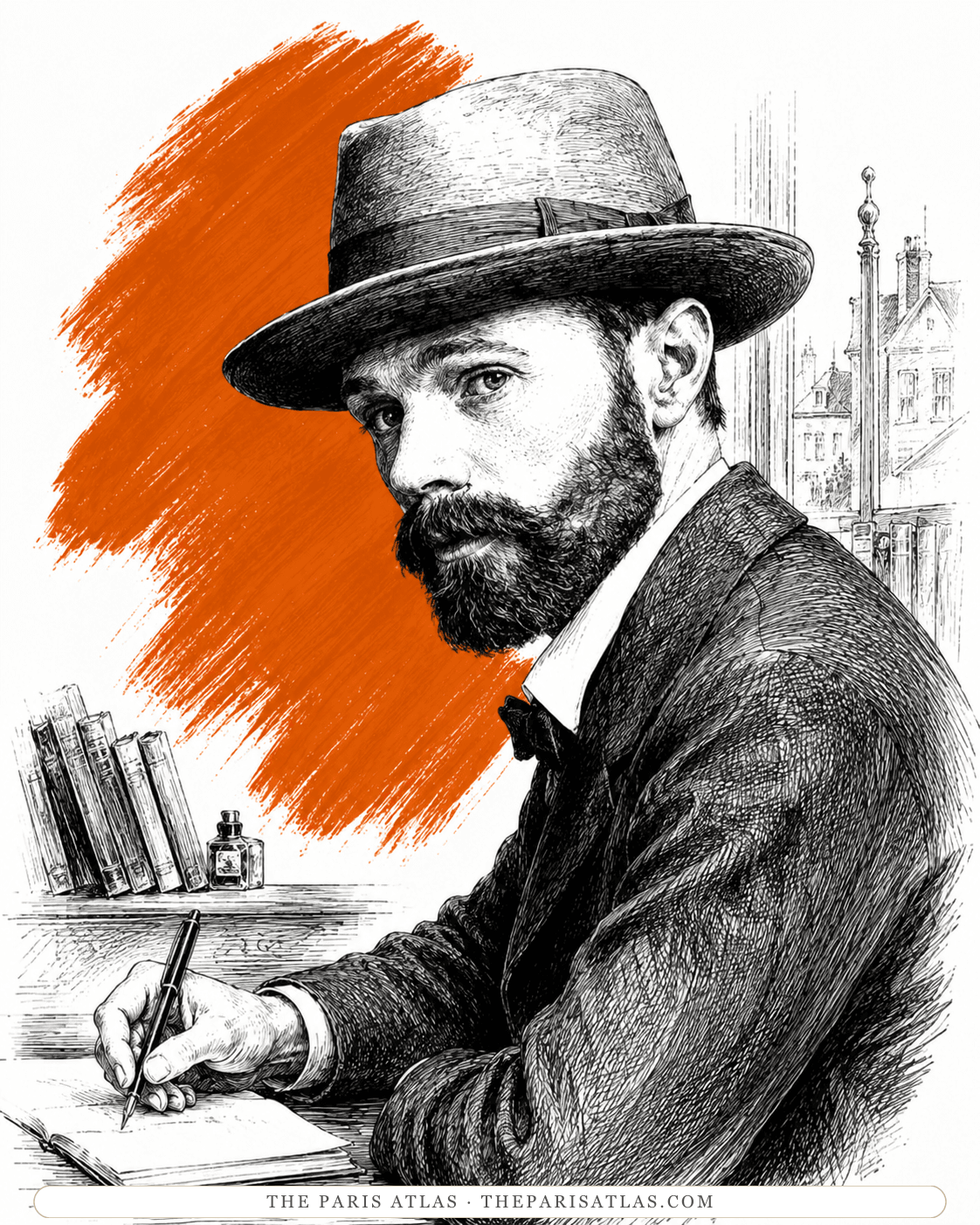
Illustrated portrait of D. H. Lawrence

D. H. Lawrence

English · English novelist and poet out of a Nottinghamshire coalfield. A court destroyed The Rainbow in 1915, the police took his paintings off a London wall in 1929, and he came to Paris that March to get Lady Chatterley's Lover cheaply into print.

Commemorates · 2019

A marble plaque was unveiled on the façade on 22 May 2019, ninety years after the stay, giving the dates and the errand. It is the only permanent memorial to Lawrence in Paris.

Commemorative plaque, 60 boulevard du Montparnasse — D. H. Lawrence at the Grand Hôtel de Versailles, 12 March to 7 April 1929 (2019); Catherine Brown, D. H. Lawrence in Paris in 1929

Lived here · 1929

His address from 12 March to 7 April 1929, the four weeks he spent finding someone to print Lady Chatterley's Lover cheaply. The dates are on the plaque the building carries.
Commemorative plaque, 60 boulevard du Montparnasse — D. H. Lawrence at the Grand Hôtel de Versailles, 12 March to 7 April 1929 (2019); Catherine Brown, D. H. Lawrence in Paris in 1929

Within walking distance

The Friday Letter

Paris, one address at a time.

The cafés, studios, and walk-up flats where the work was made — one story from the map in every letter.

One email a week. No spam, no selling your address. Unsubscribe anytime.