The Paris AtlasCharting the artists, works, and places worth returning to.

Restaurant · Montparnasse · 14e arrondissement

La Coupole

The buildingStill standing
Getting inIn, as a customer
What's there nowLa Coupole

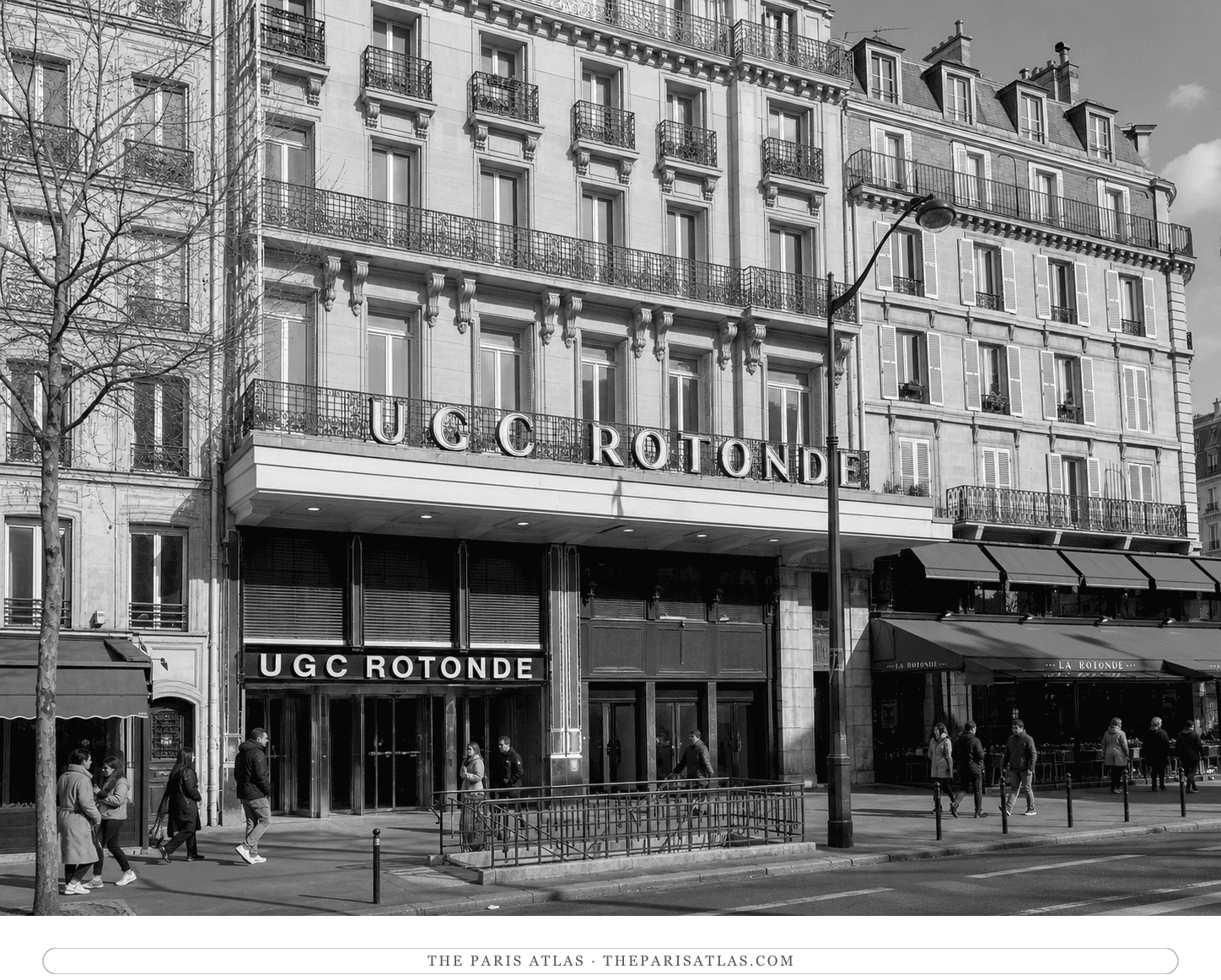
La Coupole still serves customers in its listed Art Deco dining room at 102 boulevard du Montparnasse. It is a working brasserie rather than a museum; reserve or check the official hours before a special trip.

The giant brasserie of the Boulevard du Montparnasse, opened in December 1927 with a party the quarter never forgot — Blaise Cendrars was in the opening-night crowd.

Address
102 Bd du Montparnasse, 75014 Paris
Years
1927–present
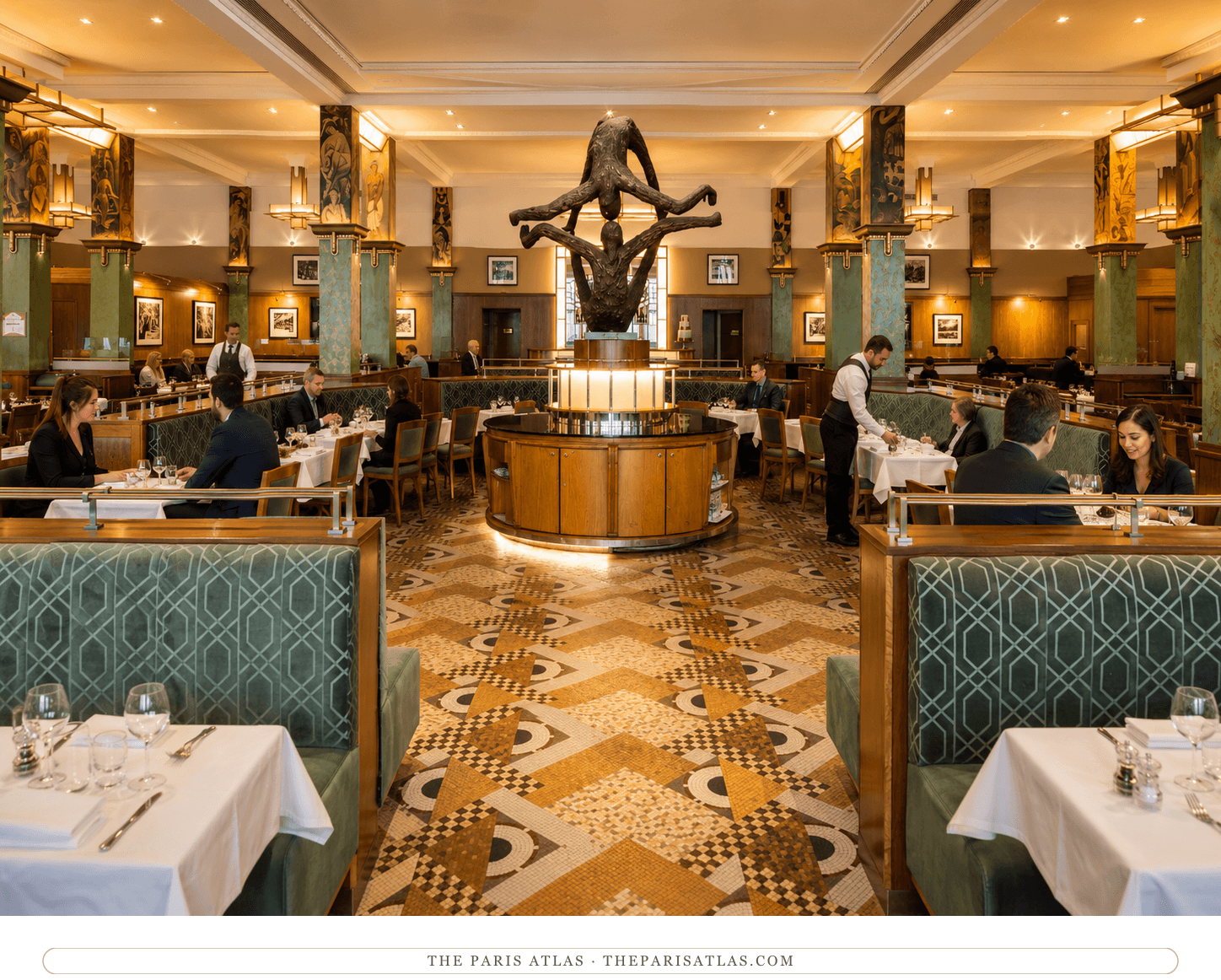
IllustrationLa Coupole's dining room today, green velvet booths and gilded painted pillars under the Art Deco ceiling

The same room today, its 1927 pillars still doing the decorating.

Editorial illustration

The place, briefly

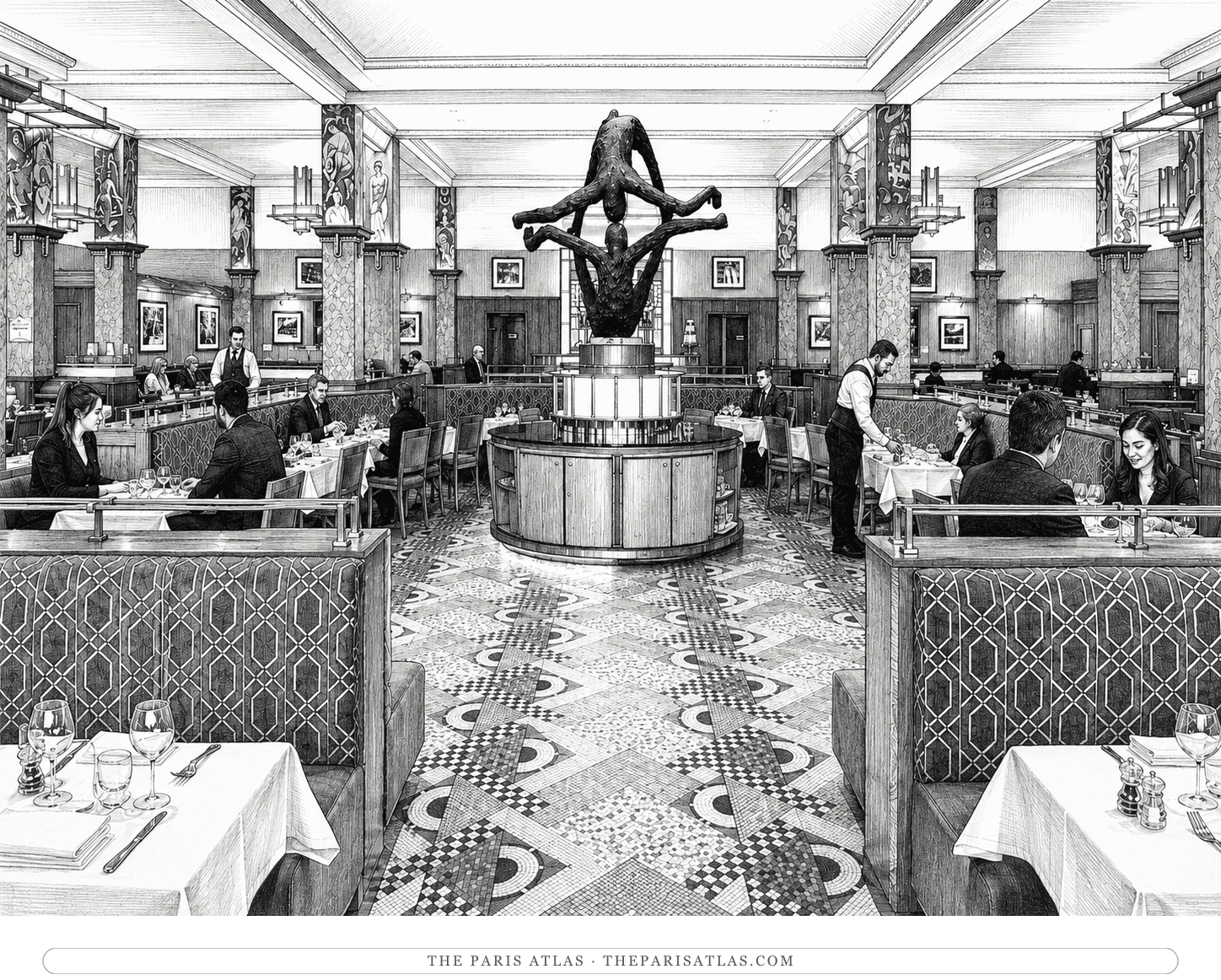
La Coupole opened on 20 December 1927 at 102 boulevard du Montparnasse, a few doors down from the Dôme, whose former managers Ernest Fraux and René Lafon built it. It was conceived at a scale Montparnasse had not seen: a vast Art Deco dining hall on the site of a former coal yard, its rows of pillars painted by artists of the quarter, Fernand Léger among them.

The opening party became legend on its own — the crowd overwhelmed the room and the champagne reportedly ran out before the night did. Blaise Cendrars attended the opening celebration, and the room stayed in his repertoire: in his memoir L'Homme foudroyé he writes of passing the night at La Coupole and leaving at dawn.

La Coupole arrived just as the golden decade of Montparnasse was ending, and it outlived the era it was built to serve. The interior was listed as a historic monument in 1988, and the brasserie still operates at full scale on the original site — the last of the great Vavin rooms where the size of the twenties is still measurable in floor space.

Key facts

Opened
20 December 1927, by Ernest Fraux and René Lafon, former managers of the Dôme
What it is
Art Deco brasserie — the largest of the Montparnasse cafés, pillars painted by artists of the quarter
Neighborhood
Carrefour Vavin, Boulevard du Montparnasse
Cendrars connection
Attended the December 1927 opening; recalls a night at La Coupole in L'Homme foudroyé
The great hall — painted pillars, mosaic floor, and the central rotunda.Editorial illustration
The same room today, its 1927 pillars still doing the decorating.Editorial illustration

Timeline

  1. 1927

    Opens on 20 December with an enormous party; Blaise Cendrars is among the opening-night guests.

  2. 1988

    The Art Deco interior is listed as a historic monument.

On the map

Writers who knew this place

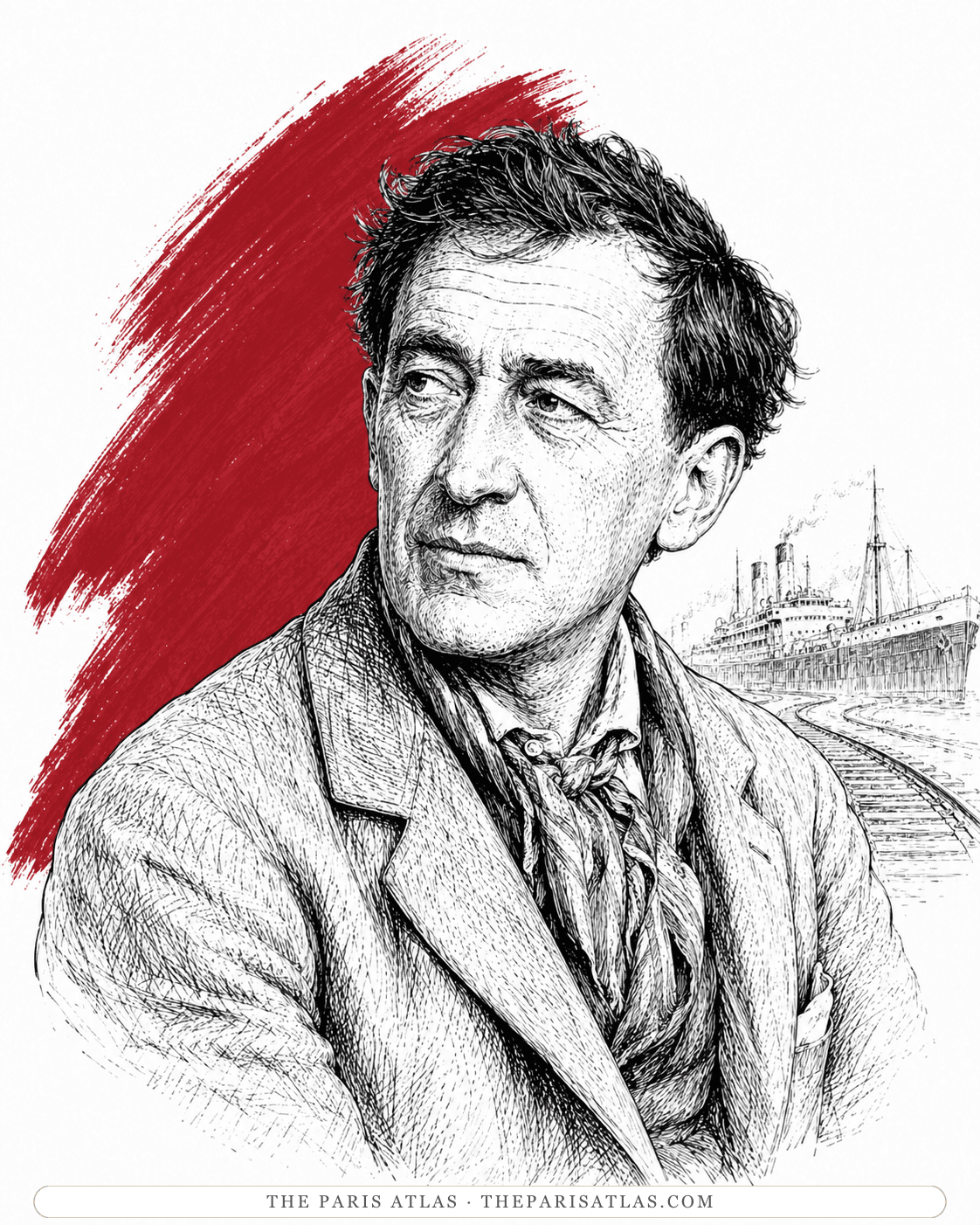
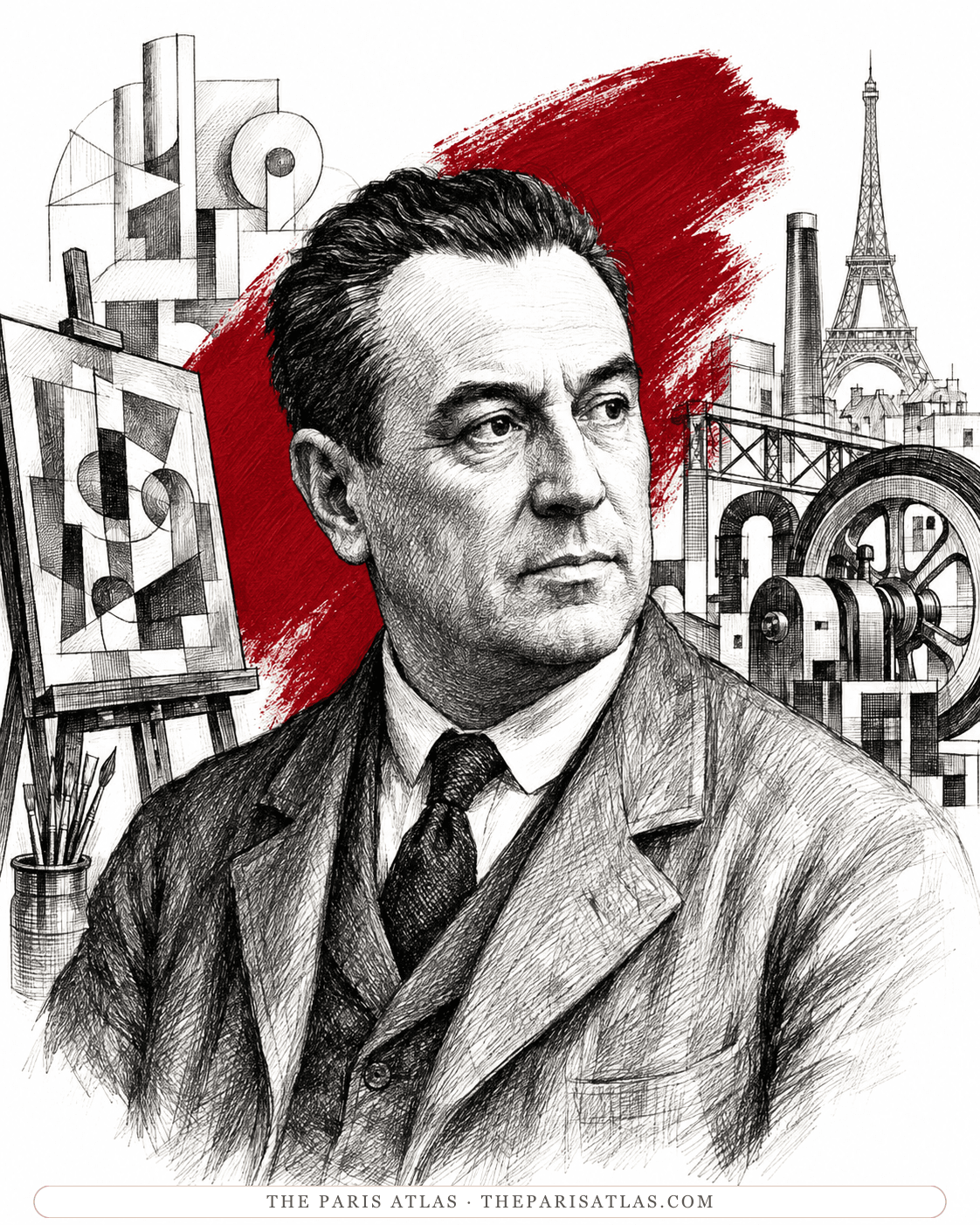
Illustrated portrait of Blaise Cendrars

Blaise Cendrars

Swiss-born; naturalized French in 1916 · The one-armed adventurer-poet of the Paris avant-garde — La Prose du Transsibérien, Moravagine, the memoir tetralogy — and the living writer Henry Miller ranked above all others.

Frequented by · 1927

Cendrars was in the crowd at La Coupole's opening celebration on 20 December 1927, and in L'Homme foudroyé he writes of passing the night at La Coupole before leaving at dawn — his own record of time spent in the room, beyond the opening itself.
— Blaise Cendrars, L'Homme foudroyé (The Astonished Man) (1945); Sortiraparis — La Coupole, symbol of the Roaring Twenties

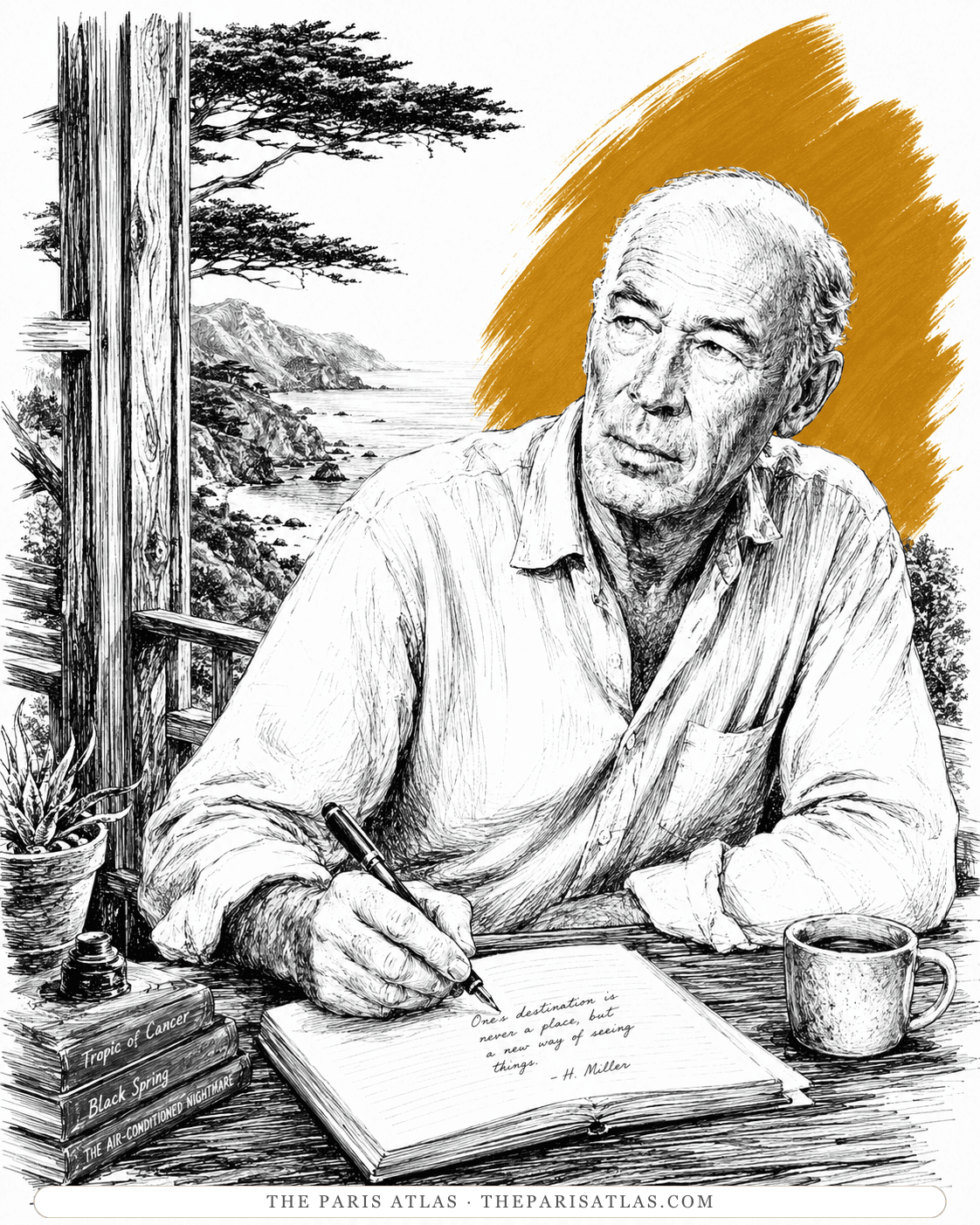
Illustrated portrait of Henry Miller

Henry Miller

American · The Brooklyn dropout who arrived in Paris broke at thirty-eight and wrote the exuberant, banned books that ended American censorship.

Frequented by

One of the Montparnasse cafés Miller used through his Paris years — the vast Art Deco brasserie that is still trading on the boulevard.

— Henry Miller: New Perspectives

People who knew this place

Illustrated portrait of Fernand Léger

Fernand Léger

French · Painter, Filmmaker

Léger was among the artists of the quarter — 33 by the standard count — who painted the pillars of the new brasserie for its December 1927 opening.

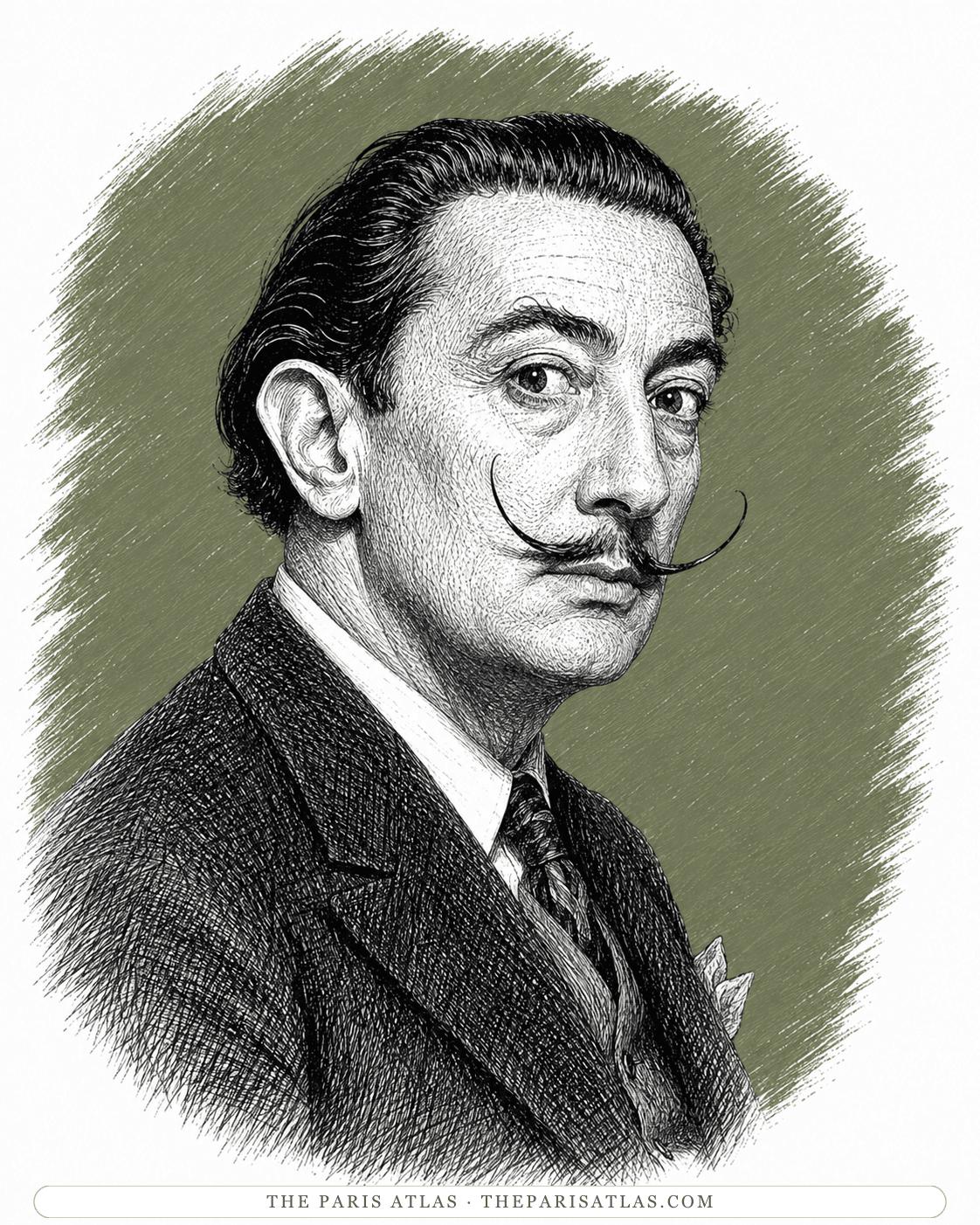
Illustrated portrait of Salvador Dalí

Salvador Dalí

Spanish · Painter, Filmmaker, Sculptor

The Dalí Foundation names the Coupole bar among the fashionable Paris places Dalí used and cited — part of the Montparnasse circuit that ran alongside his Surrealist years in the city.

Art & design movement · circa 1910–1939

Art Deco was seen here first

The international design style of geometric pattern, rich surfaces and modern life, named after the 1925 Paris decorative arts exhibition and built into everything from Ruhlmann's cabinets to the Chrysler Building.

Enter the movement

Within walking distance

References

References

The sources below include histories, archival materials, scholarly research, and official records that informed this page. They document La Coupole, the people connected to it, and its place in Paris.

  1. 1La Coupole — official information and contact

    Website
    Used for

    Web source consulted for documented facts and historical context presented on the La Coupole page.

    View source
  2. 2Sortiraparis — La Coupole, symbol of the Roaring Twenties

    Website
    Used for

    Web source consulted for documented facts and historical context presented on the La Coupole page.

    View source
  3. 3OpenStreetMap

    Map data
    Used for

    Map data used to verify addresses, geographic coordinates, and the placement associated with La Coupole.

    View source
  1. 4La Coupole — visitor and historical record

    Official record
    Choose Paris Region
    Used for

    Official record used to verify names, dates, institutional details, or other factual information on this page.

    View source
  2. 5Restaurant La Coupole, Dining-Room Decoration

    Website
    Ministère de la Culture
    Used for

    Web source consulted for documented facts and historical context presented on the La Coupole page.

    View source
i
Why these sources are here

These references provide the documented foundation for this page's history and context. Claim-level citations remain attached to the specific claims they support.

Explore more resources

Newsletter

Paris, one address at a time.

The cafés, studios, and walk-up flats where the work was made — one story from the map in every letter.

Unsubscribe anytime.