
Discussed in
Critical Essays
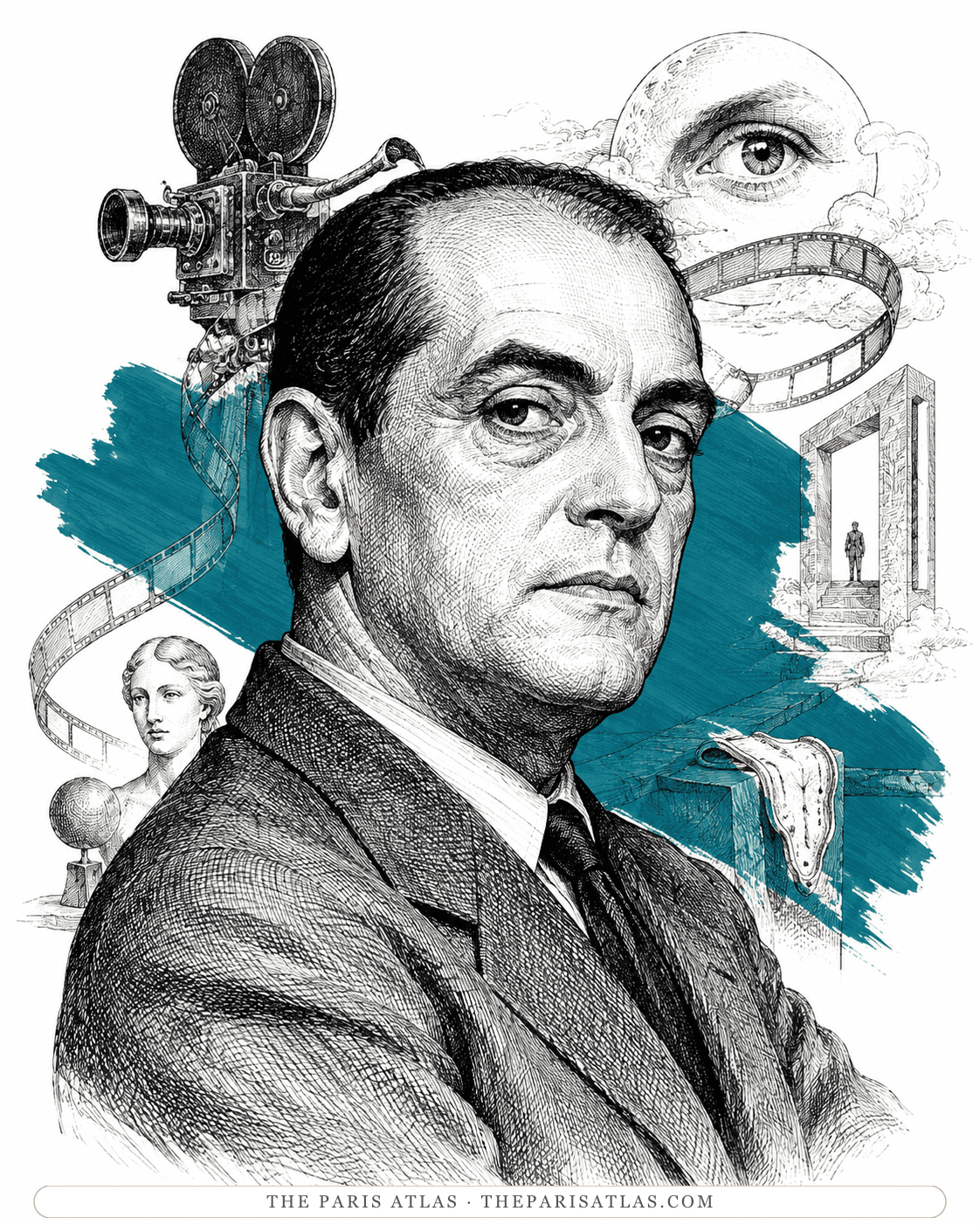
Orwell's Dalí essay identifies L'Âge d'Or in a footnote and brings in Henry Miller's account of the film as evidence for the work's deliberately shocking imagery.
by Luis Buñuel
Two lovers repeatedly torn apart by family, church, and state — l'amour fou against the entire social order, escalating from documentary scorpions to a final blasphemy borrowed from Sade. Buñuel's first sound film, financed by the vicomte Charles de Noailles; a right-wing mob wrecked the cinema in December 1930, the police banned it, and it stayed effectively invisible for fifty years.
L'Âge d'Or was made one year before The Persistence of Memory. Reading the film beside the painting shows Dalí moving from collaborative Surrealist cinema into the small, meticulously painted image that made him famous in New York.
After Un Chien Andalou, the vicomte Charles de Noailles — who commissioned an avant-garde film each year as a birthday gift for his wife, Marie-Laure — gave Buñuel a budget and, remarkably, freedom. The planned second collaboration with Dalí collapsed almost at once (Dalí's new devotion to Gala, formerly Éluard's wife, did not help), and the film became Buñuel's own, though Dalí's name stayed on the credits. The same patronage year paid for Jean Cocteau's The Blood of a Poet — one aristocratic chequebook underwriting both of the avant-garde's 1930 masterpieces.
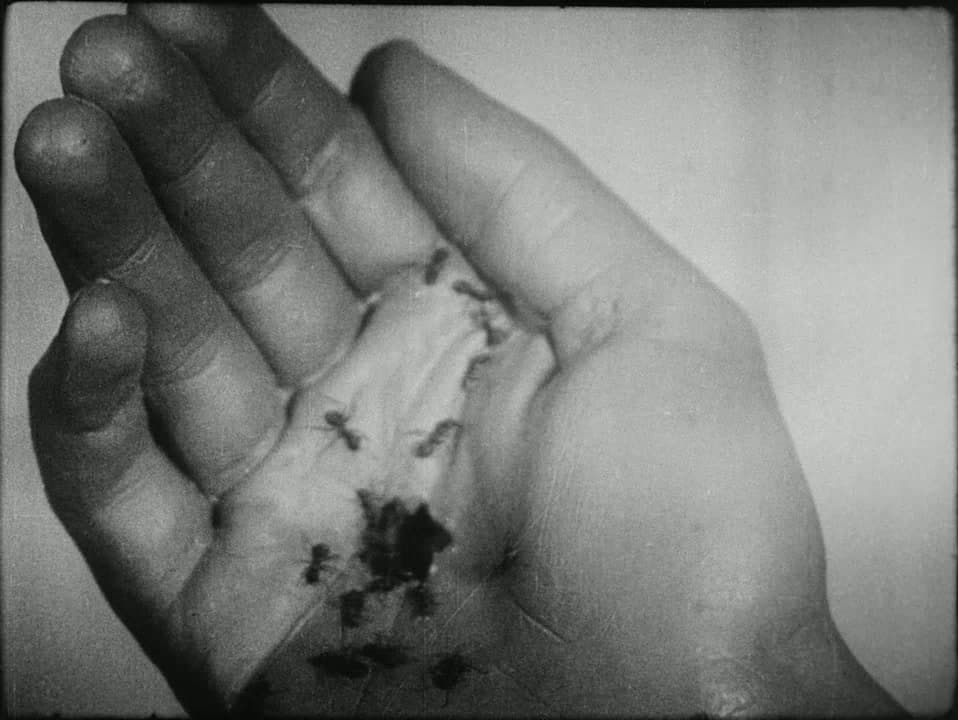
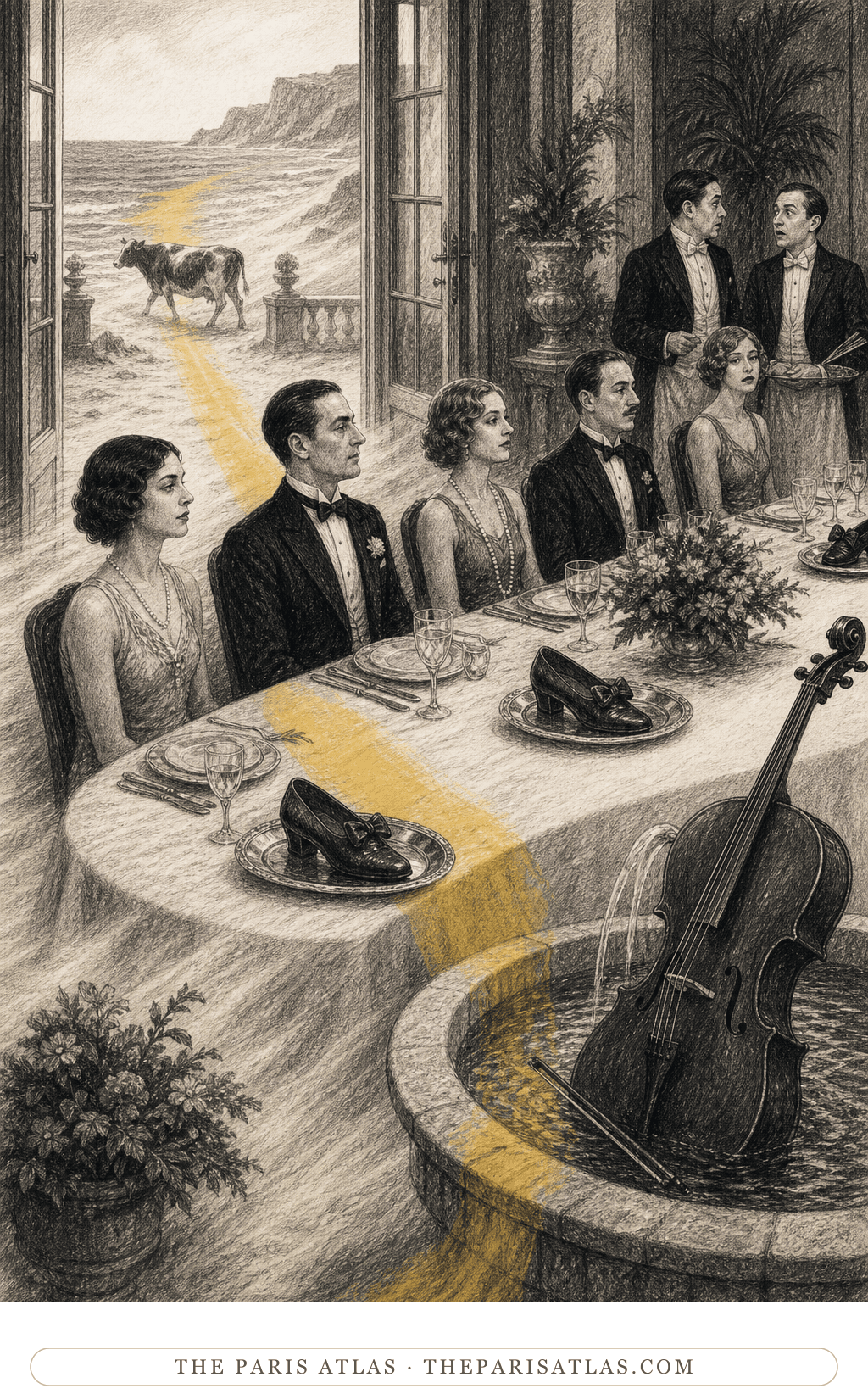
The film runs on a single spring wound tighter and tighter: Gaston Modot and Lya Lys as lovers whom every institution — a Majorcan founding ceremony, a society concert, the Church itself — exists to interrupt. Its method is escalation by non sequitur: documentary scorpions, bishops reduced to skeletons on the rocks, a cow on the marchioness's bed, a father shooting his son for a trifle, love in the garden gravel while the orchestra plays Tristan.
It opened at Studio 28 in Montmartre at the end of November 1930. On the night of 3 December, members of the League of Patriots and allied far-right leagues attacked the cinema mid-screening — ink hurled at the screen, seats slashed, smoke bombs, and the lobby's surrealist exhibition destroyed, works by Dalí, Max Ernst, Man Ray, and Joan Miró among the casualties. Within the week the Paris police prefecture banned the film outright; the right-wing press congratulated itself, and the Noailles were threatened with excommunication and resigned from their clubs.
The vicomte withdrew the film from circulation rather than feed the scandal — which is why The Blood of a Poet, its stablemate, also waited two years for release. L'Âge d'Or went underground for half a century, legend outrunning print, until authorized screenings resumed at the end of the 1970s. Time has not blunted it: of all the works on this shelf, it is the one that still means the insult it offers.
L'Âge d'Or is the closing bracket of the decade the cinema shelf documents: the avant-garde that began by firing a toy cannon at its audience in Entr'acte ends by drawing real mobs and real bans. Buñuel left for Hollywood, then Spain, then decades of exile and mastery in Mexico and France; Dalí ascended into celebrity; the surrealist moment in cinema was over in eighteen months. What survives is the century's clearest demonstration that a film could be treated as a genuine act of war — by both sides.
1930
Financed by the vicomte Charles de Noailles as a commission and made as Buñuel's first sound film, from a scenario he had written with Salvador Dalí, whose involvement largely fell away.
November 1930
Premiered at Studio 28 in Montmartre.
3 December 1930
Right-wing nationalist leagues attacked the cinema mid-screening — ink hurled at the screen, seats slashed, and Surrealist works in the lobby wrecked.
December 1930
The Paris police banned the film; Noailles withdrew it from circulation rather than prolong the scandal.
c. 1980
Returned to public screening after roughly fifty years out of circulation, its legend having long outrun the print.
Luis Buñuel directed it in 1930 from a scenario written with Salvador Dalí, though Dalí's involvement largely fell away. It was Buñuel's first sound film and the follow-up to Un Chien Andalou.
The vicomte Charles de Noailles, who commissioned an avant-garde film each year as a birthday gift for his wife, Marie-Laure. He gave Buñuel a budget and unusual freedom.
Two lovers repeatedly torn apart by family, church and state — l'amour fou set against the whole social order, escalating to a closing blasphemy borrowed from the Marquis de Sade.
On 3 December 1930 right-wing nationalist leagues wrecked the cinema during a screening. The Paris police then banned the film, and Noailles withdrew it rather than feed the scandal.
About fifty years. It stayed effectively invisible until it returned to public screening around 1980.
It closes the 1920s cinema chapter: the avant-garde that opened the decade by firing a toy cannon at its audience in Entr'acte ends it by drawing real mobs and a real ban.
Discussed in
Orwell's Dalí essay identifies L'Âge d'Or in a footnote and brings in Henry Miller's account of the film as evidence for the work's deliberately shocking imagery.
Explore directors from the same movements and circles.
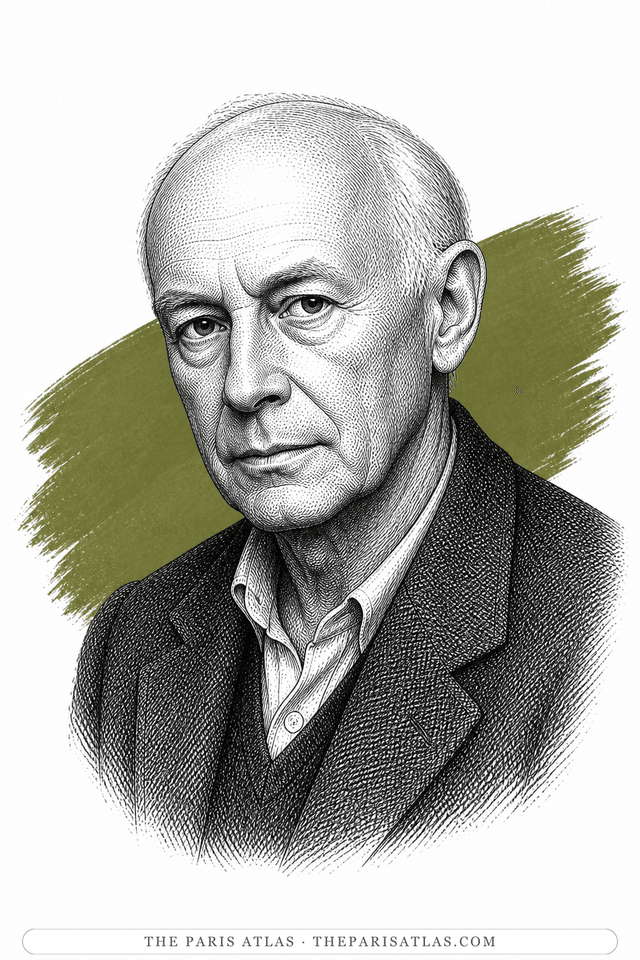
French photographer who turned a pocket-sized 35mm camera into an instrument of split-second composition — the idea the world knows as 'the decisive moment'. He trained as a painter, was taken prisoner in 1940 and escaped on his third try, photographed the Liberation of Paris in August 1944, co-founded the photographer-owned agency Magnum Photos in 1947, gave up reporting for drawing in the 1970s, and left Paris a foundation in the Marais that deliberately hangs no permanent display of his own pictures.
View artist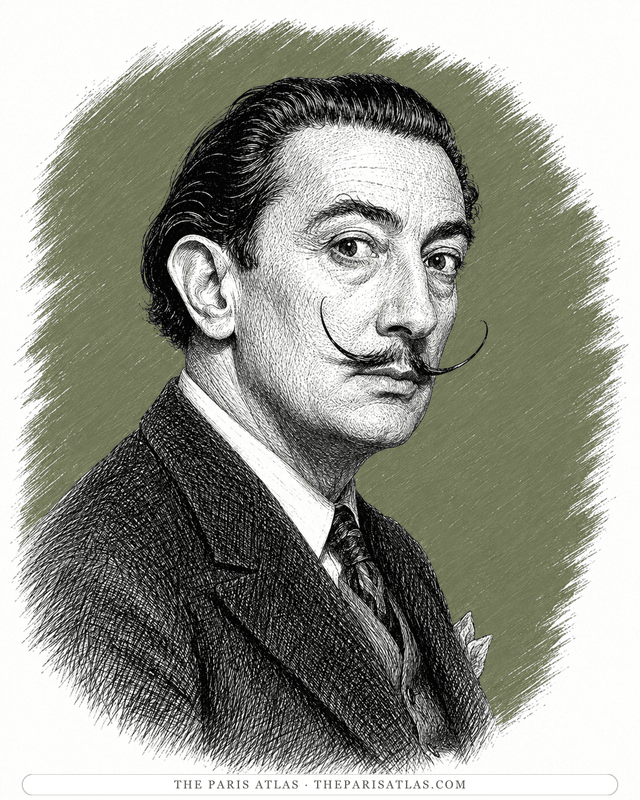
The self-made icon of Surrealism — melting watches and manicured scandal — who arrived in Paris by way of two films written with Buñuel, dreamed together before the movement claimed them.
View artist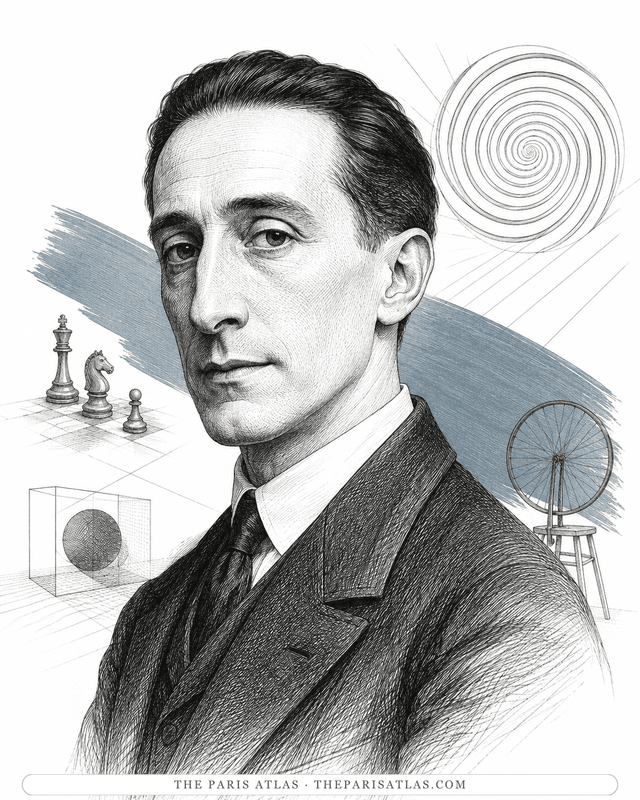
The century's quietest revolutionary — readymades, the abandonment of painting, chess on a Paris rooftop in Entr'acte, and one anemic film of spinning puns signed Rrose Sélavy.
View artistThe sources below include collection records, catalogues, scholarly research, and primary materials that informed this page. They document L'Âge d'Or, its making, and its place in cultural history.


Web source consulted for documented facts and historical context presented on the L'Âge d'Or page.
Web source consulted for documented facts and historical context presented on the L'Âge d'Or page.
Web source consulted for documented facts and historical context presented on the L'Âge d'Or page.

Official record used to verify names, dates, institutional details, or other factual information on this page.
These references provide the documented foundation for this work's history and interpretation. Claim-level citations remain attached to the specific claims they support.
 Explore more resources