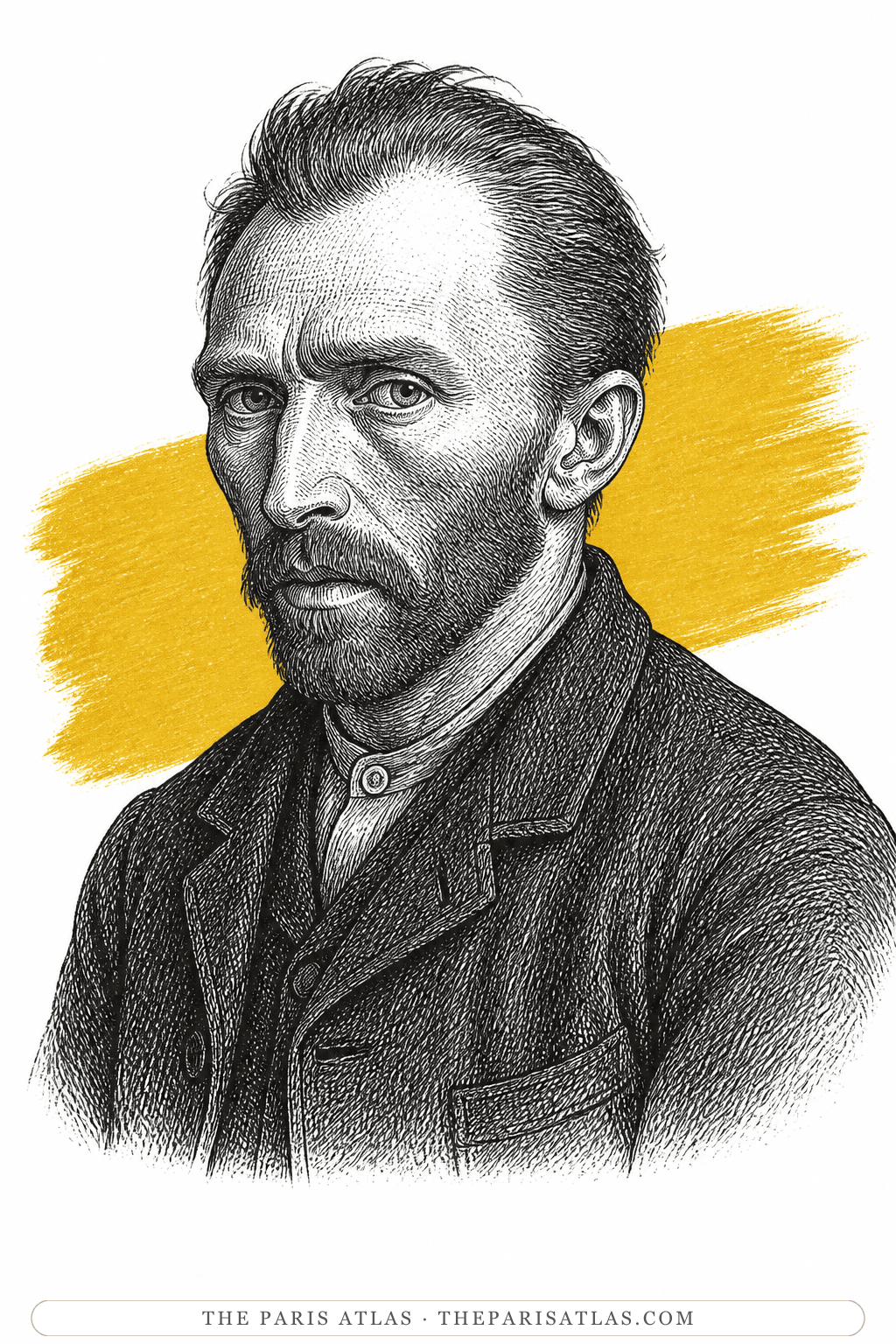
Vincent van Gogh
Van Gogh's whole Paris period was spent on and around the butte - Theo's flat below it, the rue Lepic apartment on its slope, Cormon's studio on the boulevard de Clichy, and the windmills at the top.
The hill north of Paris that was a separate village until 1860 and an artists' quarter until the First World War — the district of Van Gogh's two Paris years, Toulouse-Lautrec's posters, the Bateau-Lavoir and the Moulin Rouge.
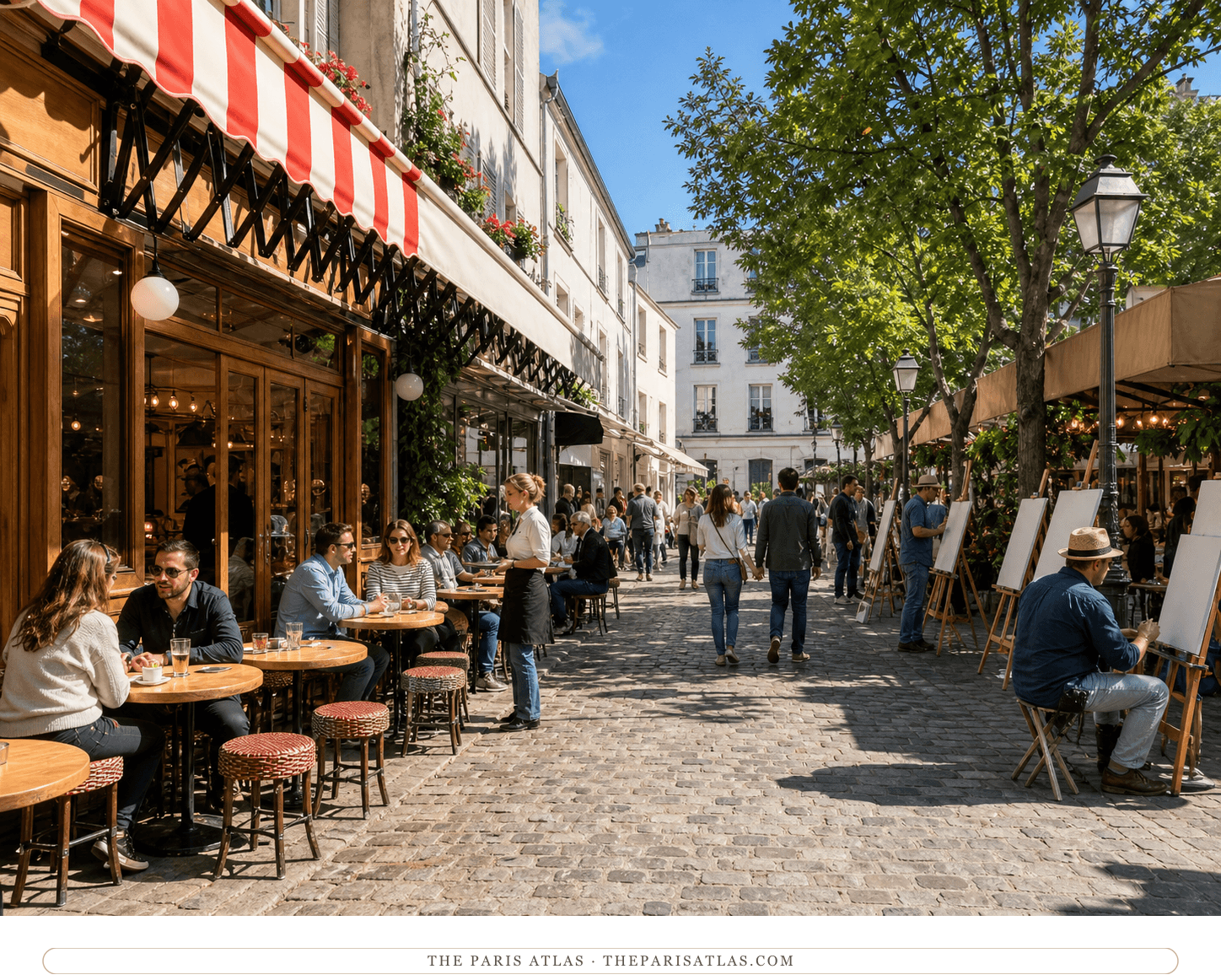
Montmartre is a hill, and nearly everything about its history follows from that. It is the highest ground in Paris, it was quarried for gypsum — the plaster of Paris — for centuries, and its slope was covered in windmills that ground grain for the city below. Until 1860 it was not part of Paris at all but a separate commune outside the tax wall, which made wine and food cheaper up the hill than down it. That single fact created the drinking culture the quarter is still living off.[1]
Annexation in 1860 brought it into the 18th arrondissement, and the artists arrived over the following two decades because it was still cheap and still half-rural. What they found was a working village of quarrymen, laundresses and market gardeners with a view over the whole city — not a bohemian theme park, which is what a century of success has since turned parts of it into.[1]
The roll-call of who worked here is close to a syllabus of modern painting. Vincent van Gogh lived on the rue Lepic with his brother Theo from 1886 to 1888 and turned from Dutch brown to colour while he was here. Henri de Toulouse-Lautrec made the quarter's dance halls into the modern poster. Pablo Picasso painted the Demoiselles d'Avignon at the Bateau-Lavoir. Renoir, Modigliani, Utrillo, Suzanne Valadon and Steinlen all worked within a few streets of one another.[2]
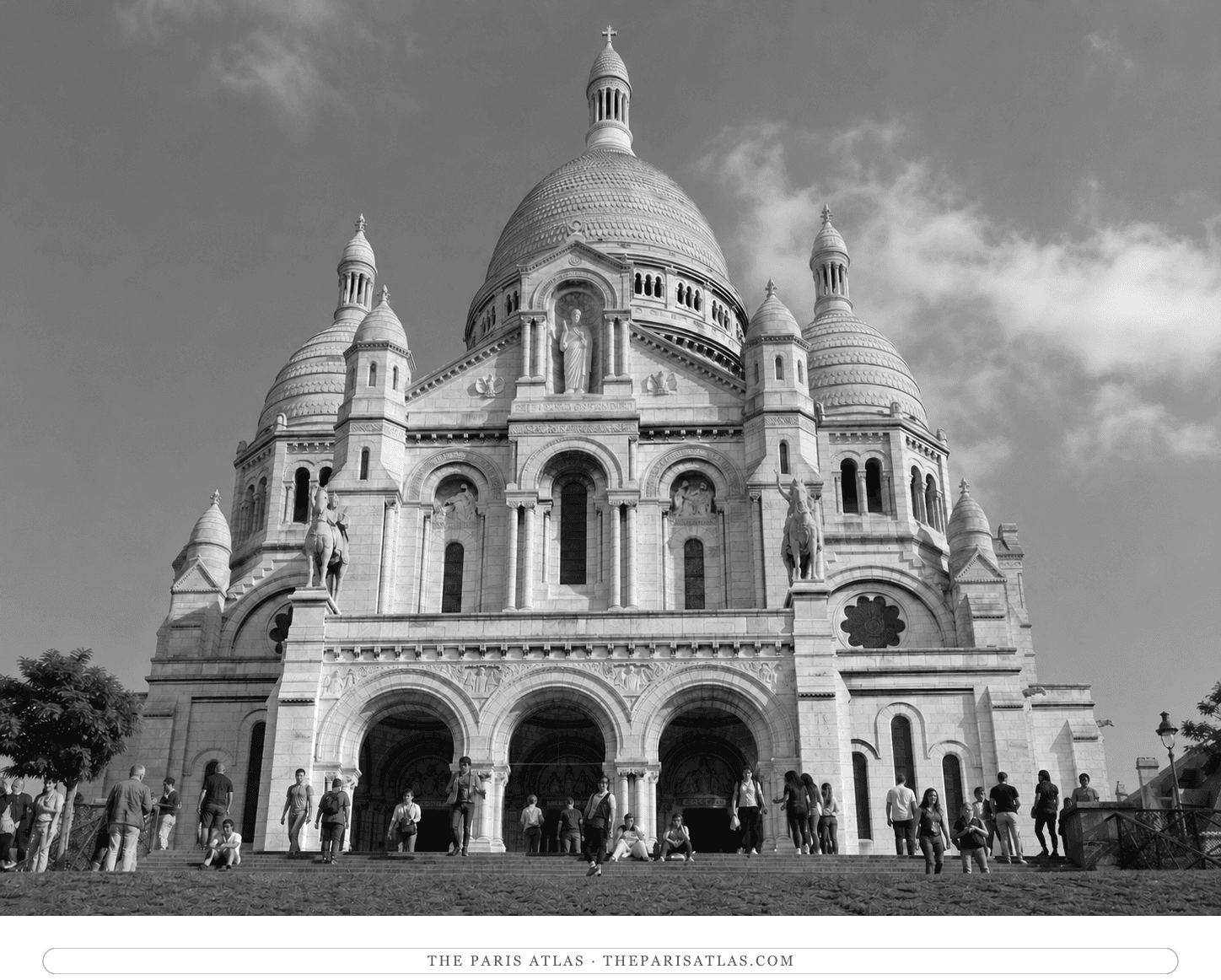
The nightlife was the other half of it. Le Chat Noir opened on the boulevard de Rochechouart in 1881 and invented the modern cabaret; the Moulin Rouge followed in 1889 at the foot of the hill. Sacré-Cœur, begun in 1875 and not finished until the First World War, went up on the summit above all of it — a basilica built in expiation for the Commune, looking down on the least penitent quarter in France.[3]
The quarter worked because these uses overlapped rather than occupying separate cultural zones. A windmill could become a Sunday dance garden; a cheap restaurant could lend its walls to an exhibition; a colour shop could double as a gallery; a former industrial building could be divided into studios. Painters did not merely represent Montmartre's entertainment economy from outside. They rented inside the same low-cost fabric and depended on its suppliers, models and public rooms.
The artists left after 1914, mostly for Montparnasse, where the studios were newer and the light was better. What remains is the shape of the place: the stairs, the vineyard, two surviving windmills, and a street plan that still belongs to a village rather than to Haussmann.[4]
A present-day visit requires separating the preserved geography from the manufactured image. The lanes and abrupt changes in level are real, and several addresses and fragments of working fabric survive. Around Sacré-Cœur and place du Tertre, however, the density of visitors and souvenir businesses can hide the residential quarter. The lower slopes toward Pigalle and the side streets around rue Lepic preserve the more useful sense of distance between homes, studios and evening venues.
The hill also carried the memory of the Commune. In March 1871, an attempt to seize National Guard cannon at Montmartre helped trigger the uprising, and the quarter became inseparable from the revolutionary geography of Paris. Sacré-Cœur was promoted in the political and religious aftermath. For artists arriving in the following decades, the white basilica rising over inexpensive studios was not a neutral skyline ornament; it belonged to a contested account of order, punishment and national recovery.[1]
Housing and work were often the same problem. Buildings such as the Bateau-Lavoir divided former industrial space into small studios with poor heat and limited water. That discomfort was not a romantic accessory to creativity: it constrained health, materials and scale. At the same time, proximity allowed models, poets and painters to move between rooms, borrow equipment and see unfinished work. The celebrated community arose from material scarcity as well as shared ambition.
Women were central to the quarter but are easily reduced to dancers and models in later mythology. Suzanne Valadon moved from modelling for Renoir and Toulouse-Lautrec to a major painting career of her own; laundresses, café workers, performers and landlords sustained the local economy represented in the pictures. Reading Montmartre only through male studio biographies repeats the hierarchy that the art itself often recorded.
Modern redevelopment did not erase the hill evenly. Some entertainment venues became global brands, some studios acquired plaques, and many ordinary interiors changed use without memorials. The surviving vineyard and windmills are protected exceptions rather than evidence that the nineteenth-century village remains intact. A responsible map distinguishes the structure that can still be seen from the historical activity known only through documents and works.
The most revealing route is consequently connective rather than monumental. Following rue Lepic between the brothers' apartment and the mills, then descending toward the colour shops, studios and outer boulevards, shows how domestic life, supplies, work and leisure fitted together. Montmartre's importance lies in that lived system, not in any single postcard view.
Montmartre is annexed to Paris and becomes part of the 18th arrondissement.
Construction begins on Sacré-Cœur at the summit.
Le Chat Noir opens and invents the modern cabaret.
Vincent van Gogh moves to the rue Lepic with his brother Theo.
The Moulin Rouge opens at the foot of the hill.
Picasso paints Les Demoiselles d'Avignon at the Bateau-Lavoir.
The artists move on, largely to Montparnasse.
Rent and drink were cheap. Until 1860 it was a separate commune outside the city's tax wall, and even after annexation it stayed inexpensive and half-rural for decades — which suited painters with no money.
Roughly 1880 to 1914. After the First World War the centre of gravity shifted to Montparnasse.
Two survive of the many that once ground grain on the hill — the Blute-Fin and the Radet, both part of what became the Moulin de la Galette. Van Gogh painted them repeatedly.
Mostly. The hill and its summit are in the 18th; the foot of the slope runs down into the 9th around Pigalle.
Van Gogh's whole Paris period was spent on and around the butte - Theo's flat below it, the rue Lepic apartment on its slope, Cormon's studio on the boulevard de Clichy, and the windmills at the top.
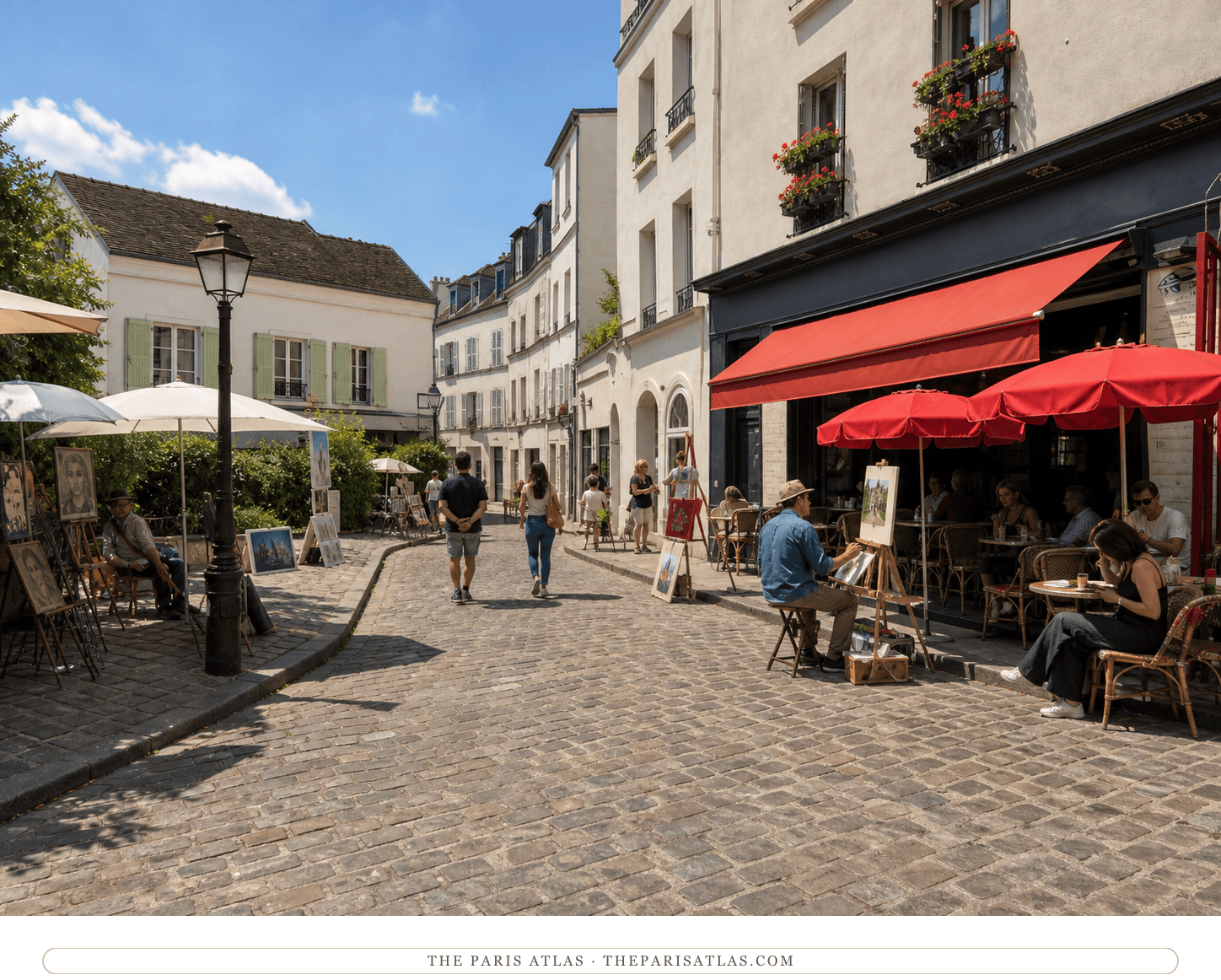
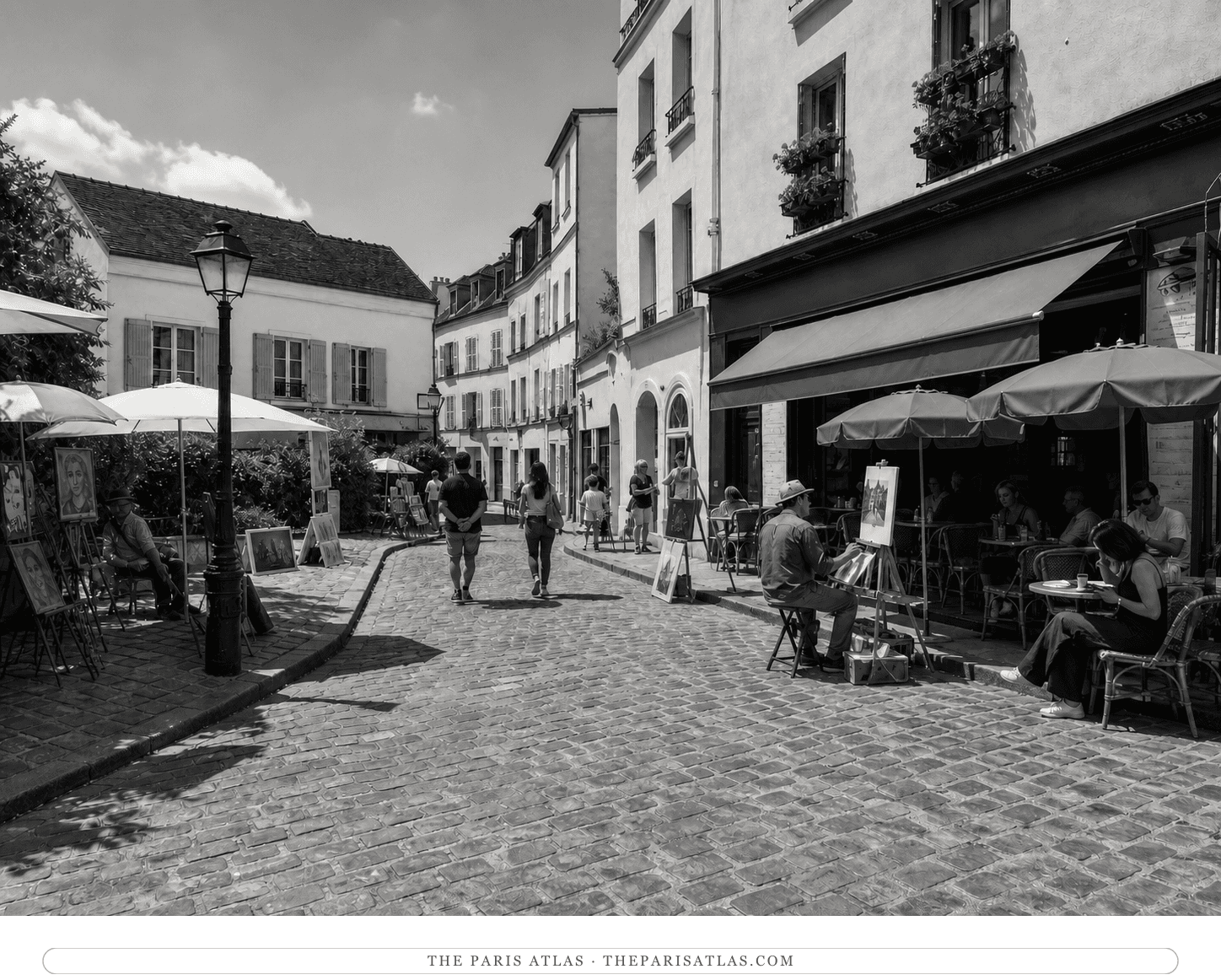
Montmartre's historic hilltop square, now shared by restaurant terraces and licensed artists—and the setting of Langston Hughes and Anne Marie Coussey's last Paris dinner together in 1924.
Visit the place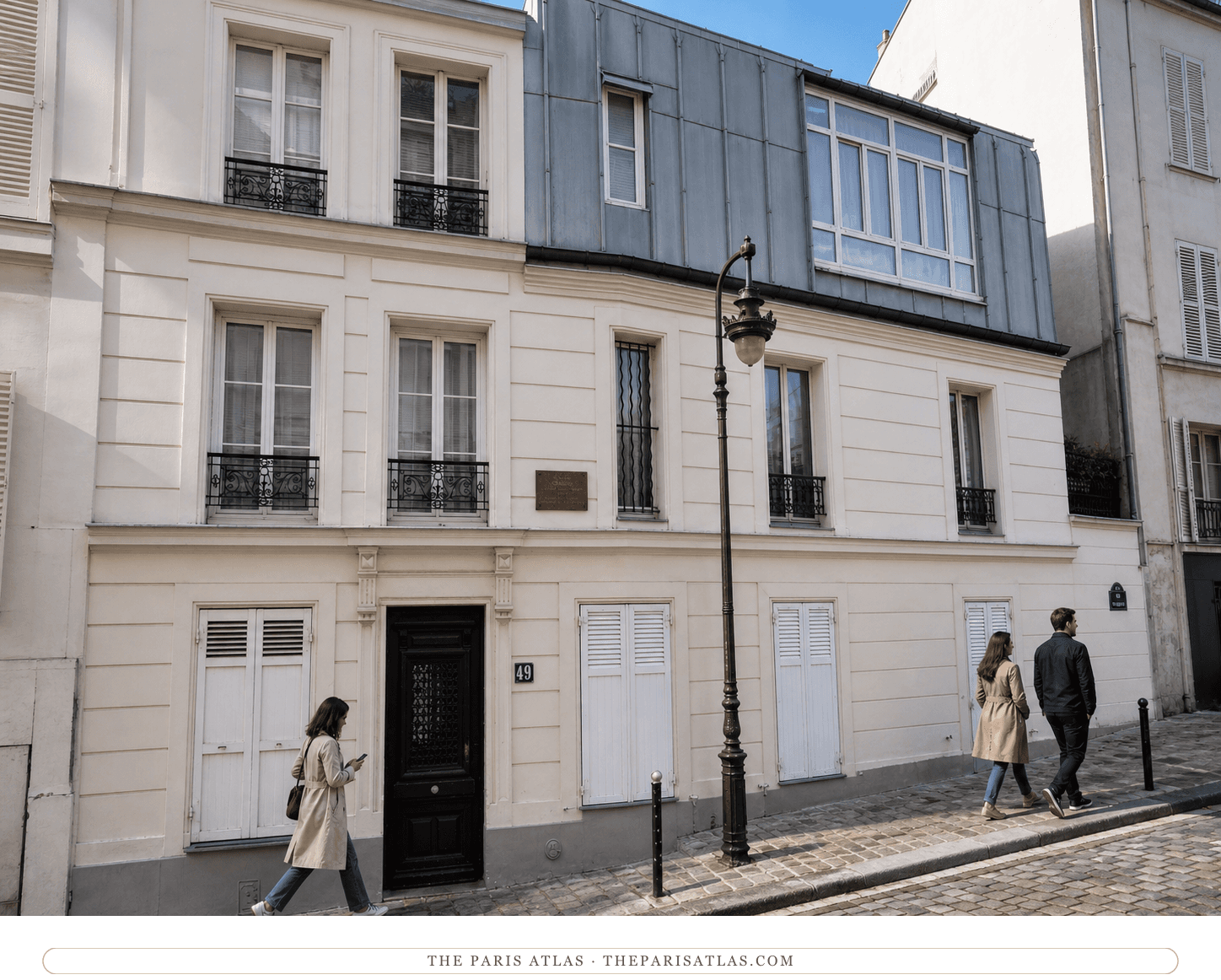
Where Pablo Picasso set up his first studio in Paris, in 1900, at the age of eighteen — four years before the Bateau-Lavoir and seven before Les Demoiselles d'Avignon.
Visit the place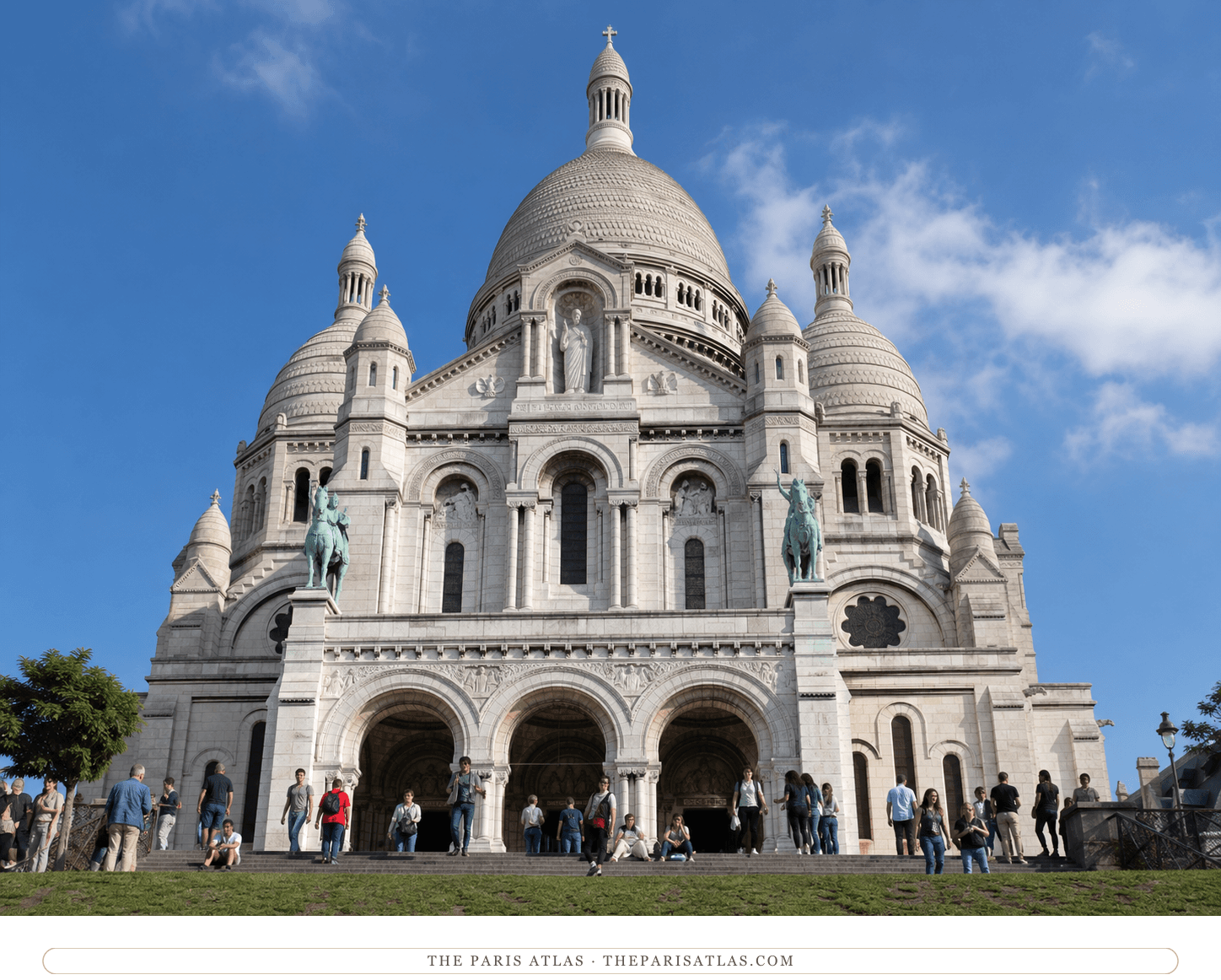
The white basilica on the summit of Montmartre, built by public subscription after France's defeat in 1870 and consecrated in 1919 after nearly forty years of work. Entry is free, every day 6.30 a.m. to 10.30 p.m. The dome — 280 steps, no lift — costs €8 and gives a 360-degree view over Paris.
Visit the place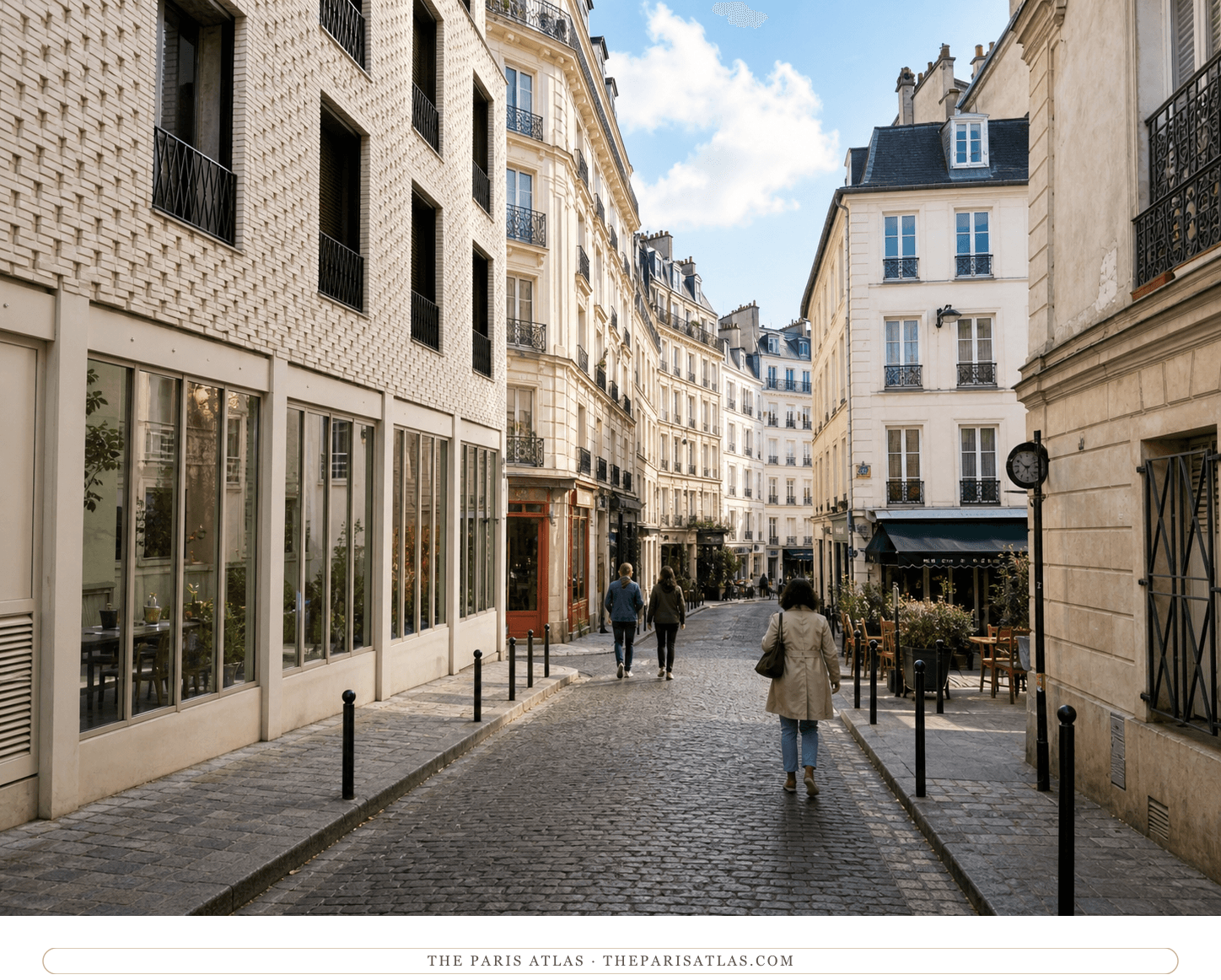
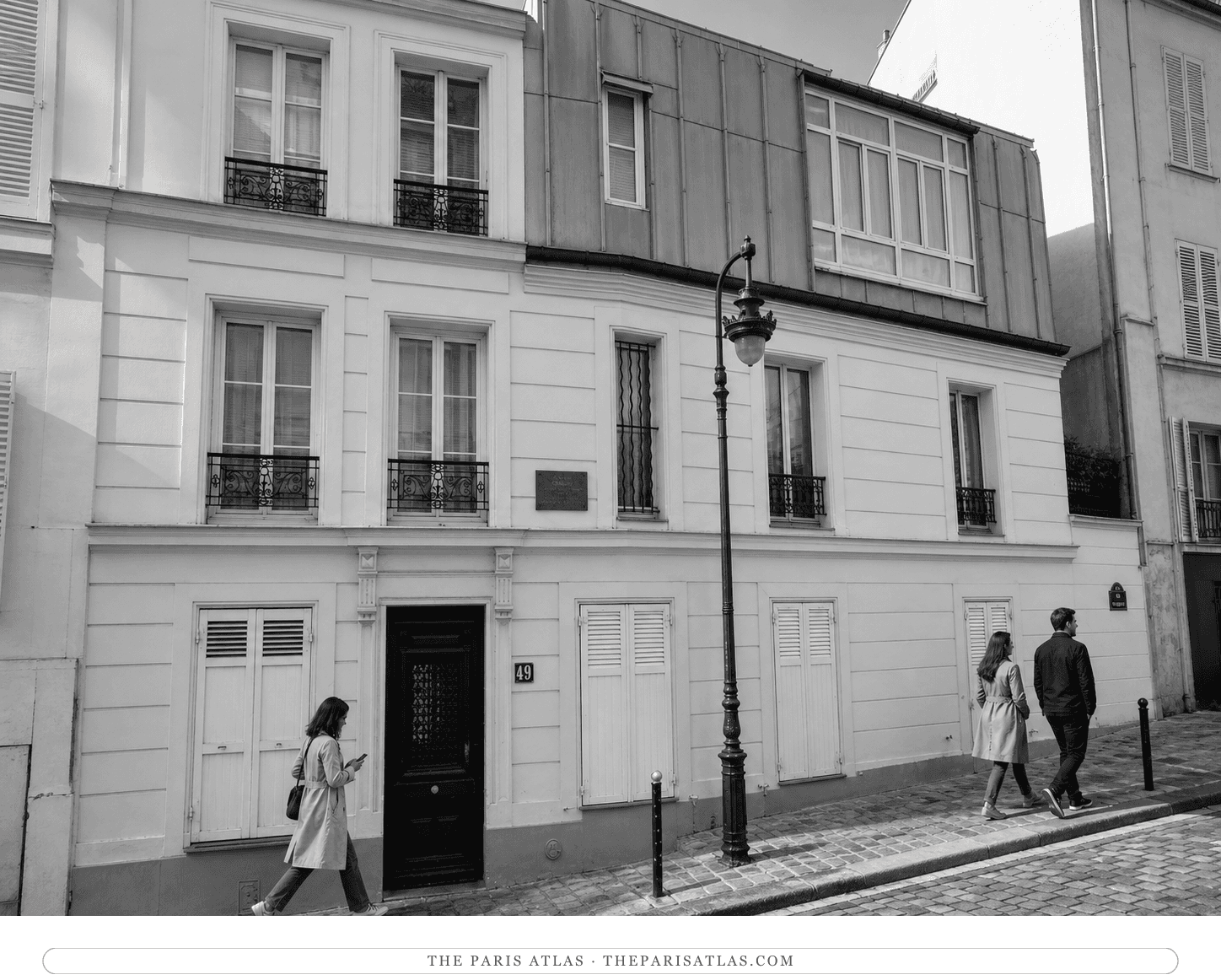
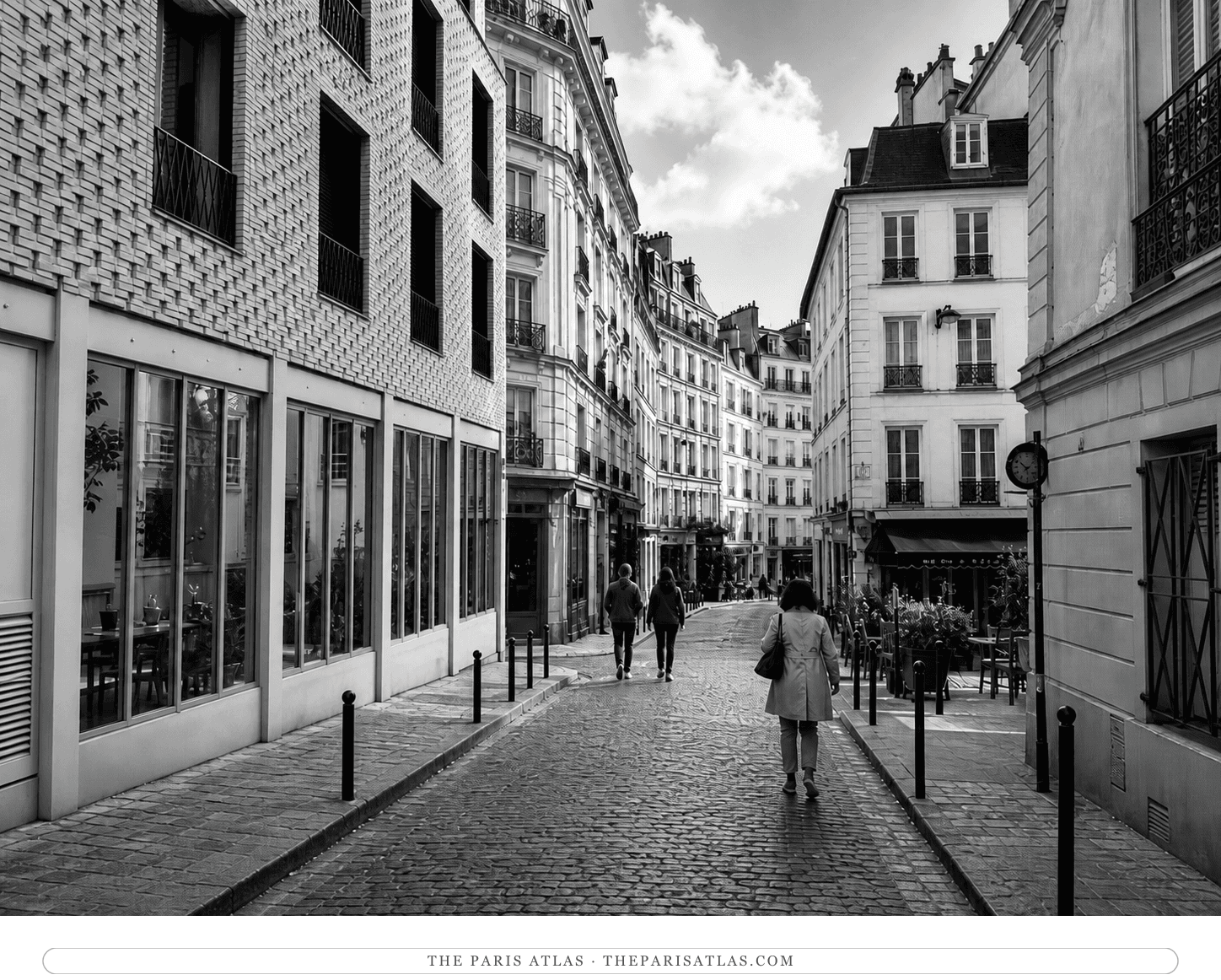
A freely walkable nineteenth-century Montmartre street of slopes, cobbles and apartment façades, and the deliberately imprecise location of Langston Hughes's second Paris attic in 1924.
Visit the placeThe sources below include histories, archival materials, scholarly research, and official records that informed this page. They document Montmartre, the people connected to it, and its place in Paris.


Web source consulted for documented facts and historical context presented on the Montmartre page.

Published analysis and historical context used in preparing the Montmartre page.
Web source consulted for documented facts and historical context presented on the Montmartre page.
These references provide the documented foundation for this page's history and context. Claim-level citations remain attached to the specific claims they support.
 Explore more resources
Newsletter
The cafés, studios, and walk-up flats where the work was made — one story from the map in every letter.