The Sacré-Cœur
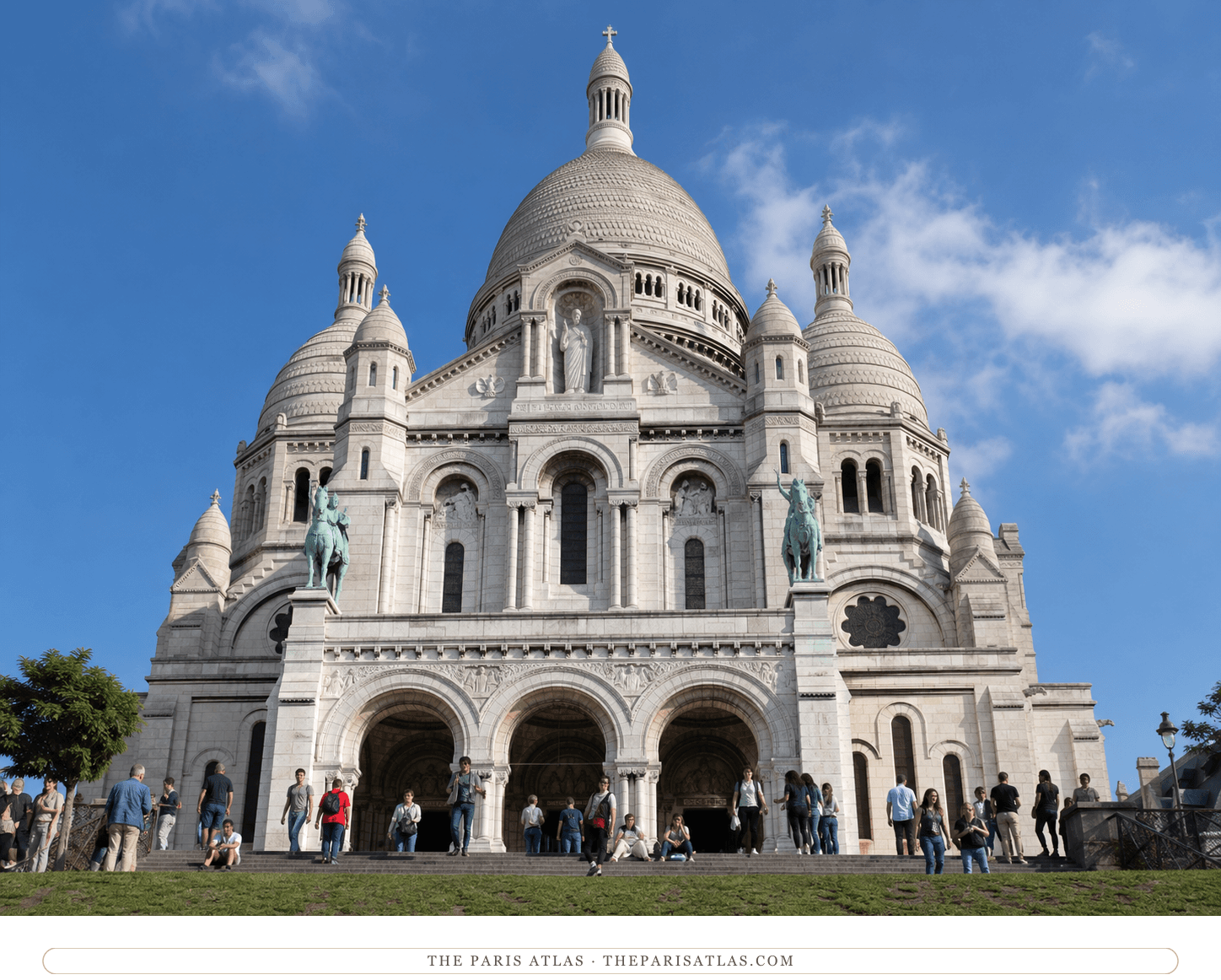
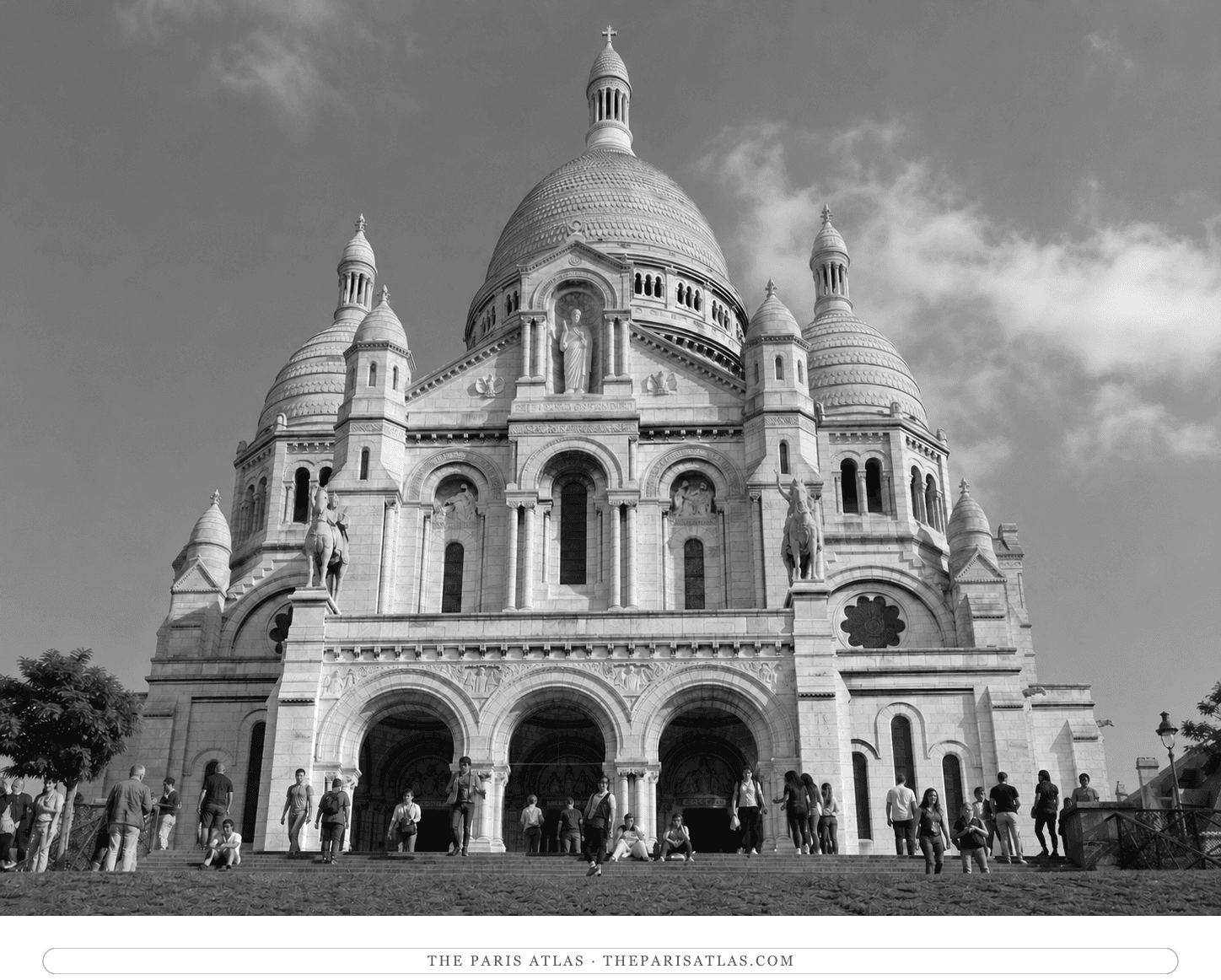
The white basilica on the summit of Montmartre, built by public subscription after France's defeat in 1870 and consecrated in 1919 after nearly forty years of work. Entry is free, every day 6.30 a.m. to 10.30 p.m. The dome — 280 steps, no lift — costs €8 and gives a 360-degree view over Paris.
- 35 rue du Chevalier-de-la-Barre, 75018 Paris
- Built 1875–1914; consecrated 1919
The place, briefly
The Sacré-Cœur was a promise before it was a building. In 1871, in the wreckage of France's defeat by Prussia and the siege of Paris, a Paris businessman named Alexandre Legentil drafted the text of what became known as the Vœu national — the national vow — with his brother-in-law Hubert Rohaut de Fleury. The proposal was to build a church dedicated to the Sacred Heart as an act of penance for what its authors believed had brought the catastrophe on the country. The Archbishop of Paris approved it in 1872 and the National Assembly voted it through in 1873.[1]
The site chosen was the summit of Montmartre, which was not a neutral choice and has never been read as one. Montmartre is where the Paris Commune began in March 1871, when crowds stopped the army removing the National Guard's cannon from the hill. Building a monument of expiation on that exact hilltop was understood by many at the time — and has been argued over by historians ever since — as a statement about the Commune as much as about the Prussians. The basilica's own history keeps to the vow and the defeat; the location supplies the rest of the argument.[1]
An architects' competition was held in 1874 and won by Paul Abadie, who gave the basilica the style it is known for: Romano-Byzantine, which is to say domes and rounded arches borrowed from Byzantium rather than the pointed Gothic of Notre-Dame. He laid it out as a Greek cross — four arms of equal length — and turned it on a north-south axis so that the building faces the city below rather than east as churches conventionally do. The first stone was laid in 1875. Abadie died in 1884 with almost nothing standing.[2]
It took until 1914 to finish and until 16 October 1919 to consecrate, the First World War having intervened. The whole of it was paid for by donations from the faithful, given over nearly four decades — hundreds of thousands of small subscriptions rather than a state budget, which is why the interior carries so many donor inscriptions.[1]
The white is deliberate and it is not paint. The basilica is faced in a limestone that gives off calcite in contact with rainwater, so every downpour bleaches the surface again. In a city where everything else has gone grey with two centuries of coal and traffic, the Sacré-Cœur is the one large building that keeps cleaning itself.[3]
Since 1885 the basilica has kept up continuous Eucharistic adoration — prayer maintained without interruption, through every night, by relays of people. It has now run unbroken for well over a century, and the community counts it in nights: more than fifty-one thousand of them. Whatever you make of the politics of its founding, that is what the building is actually for, and it is worth knowing before you walk in with a camera.[4]
Key facts
- The Vœu national, drafted in 1871 by Alexandre Legentil and Hubert Rohaut de Fleury after the defeat of 1870
- By the Archbishop of Paris in 1872; by the National Assembly in 1873
- Paul Abadie, winner of the 1874 competition; died 1884
- Romano-Byzantine — a Greek cross turned north-south to face Paris
- 1875
- 16 October 1919, after nearly forty years
- Public subscription — donations from the faithful, not the state
- 1885, unbroken day and night
- Every day without exception, 6.30 a.m.–10.30 p.m.
- Free
- 10.30 a.m.–9.30 p.m., last admission 9 p.m.; closes briefly at midday; seasonal and weather-dependent
- €8 for ages 16 and over, €5 up to 15 — bought on site only
- 280 steps up a narrow staircase; no lift
In images
Timeline
Alexandre Legentil and Hubert Rohaut de Fleury draft the text of the Vœu national in the aftermath of the defeat by Prussia.
The Paris Commune begins on the hill of Montmartre, the site later chosen for the basilica.
The Archbishop of Paris approves the project.
The National Assembly votes the project through.
Paul Abadie wins the architects' competition.
The first stone is laid on the summit of Montmartre.
Abadie dies with the building barely begun.
Continuous Eucharistic adoration begins and has never stopped.
The building is completed; the First World War delays its consecration.
The basilica is consecrated.
On the map
Questions before you go
Is the Sacré-Cœur free to enter?
Yes. Entry to the basilica is free, every day without exception from 6.30 a.m. to 10.30 p.m. Only the dome climb is ticketed — €8 for visitors aged 16 and over, €5 for children up to 15, bought at the ticket office on site.
Why was the Sacré-Cœur built?
As an act of penance. In 1871, after France's defeat by Prussia and the siege of Paris, Alexandre Legentil and his brother-in-law Hubert Rohaut de Fleury drafted the Vœu national — a vow to build a church dedicated to the Sacred Heart. The Archbishop of Paris approved it in 1872 and the National Assembly in 1873, and it was funded entirely by public donations.
Was the Sacré-Cœur built to punish the Paris Commune?
It is genuinely argued over. The basilica's own account frames the vow around the 1870 defeat by Prussia. But the site chosen was the summit of Montmartre, where the Commune had begun in March 1871, and many at the time — and many historians since — have read a monument of expiation placed on that particular hill as a statement about the Commune. Both things are true: the stated reason is the war, and the location is not an accident anyone has ever fully explained away.
Why is the Sacré-Cœur so white?
Because of the stone. The basilica is faced in a limestone that releases calcite when rain runs over it, so each downpour bleaches the surface again. It is the reason the building stays bright while the rest of Paris has darkened with two centuries of soot.
How many steps to the dome of Sacré-Cœur?
280, up a narrow spiral staircase, with no lift. The basilica advises against it for anyone with mobility difficulties, for pregnant women, for very young children and for anyone uncomfortable in confined spaces. The reward is a 360-degree view over Paris.
What are the Sacré-Cœur's opening hours?
The basilica is open every day without exception from 6.30 a.m. to 10.30 p.m. The dome opens 10.30 a.m. to 9.30 p.m. with last admission at 9 p.m., closes briefly at midday, and varies with the season and the weather. Verified against the official site on 24 August 2026.
How long did the Sacré-Cœur take to build?
Nearly forty years. The first stone was laid in 1875, the building was finished in 1914, and the First World War delayed the consecration until 16 October 1919. The architect who won the competition, Paul Abadie, died in 1884 with almost nothing standing.
What is the perpetual adoration at Sacré-Cœur?
Continuous prayer before the Blessed Sacrament, kept up in relays without interruption day and night since 1885. The community counts it in nights — more than fifty-one thousand of them so far. It is the basilica's stated reason for existing, and visitors are asked to keep quiet inside.
How do you get to the Sacré-Cœur?
It stands at 35 rue du Chevalier-de-la-Barre on the summit of Montmartre in the 18th arrondissement. The nearest métro stops are Anvers and Abbesses; from Anvers a funicular runs up the hill and takes an ordinary métro ticket, which saves the long stair climb from the square below.
Can you visit the Sacré-Cœur and Montmartre in one trip?
Easily — the basilica sits at the top of the quarter, so most people take it together with the Place du Tertre, the vineyard and the streets where the Montmartre painters lived and worked. Allow half a day if you want the dome as well as the walk.
Within walking distance
Place du Tertre
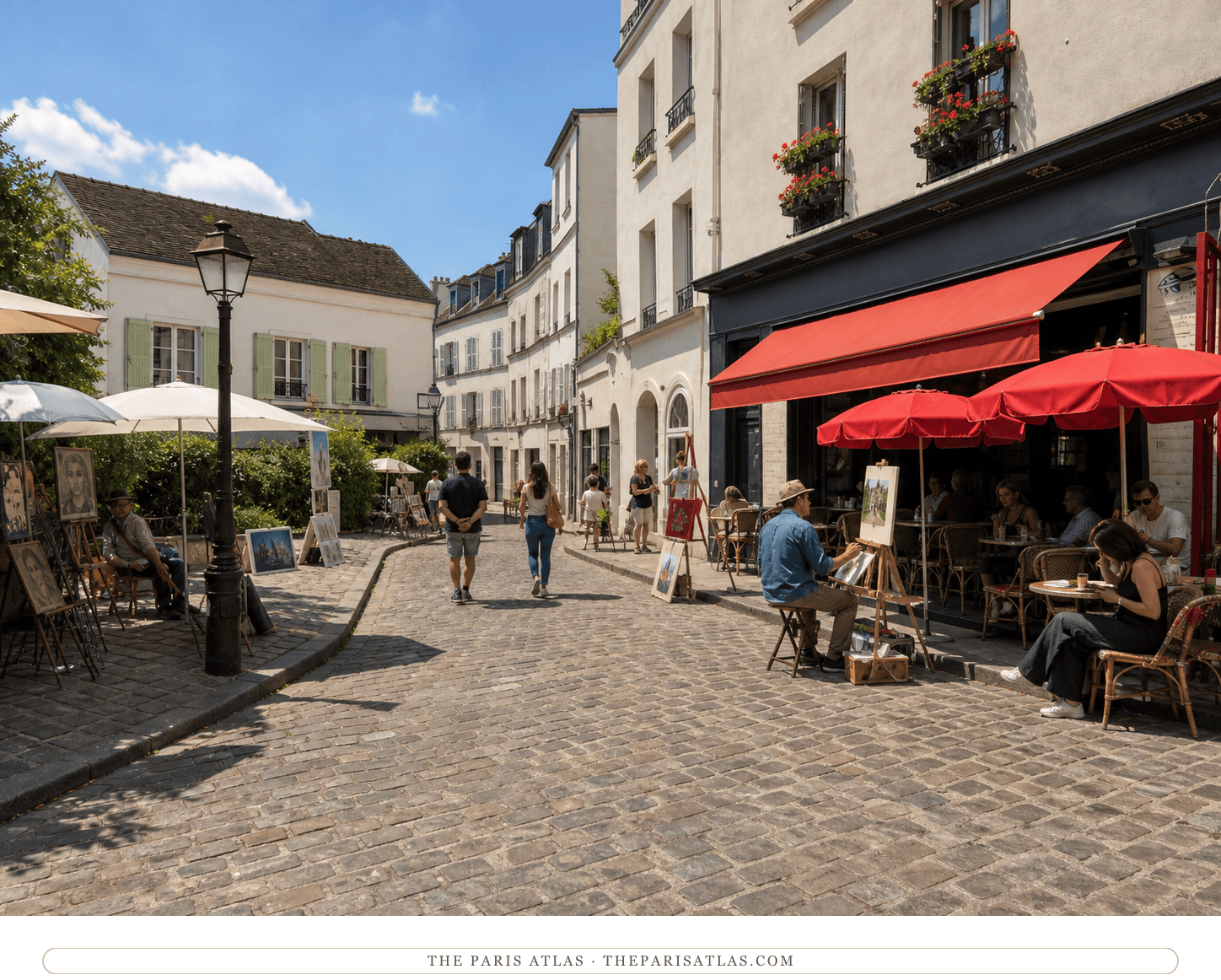
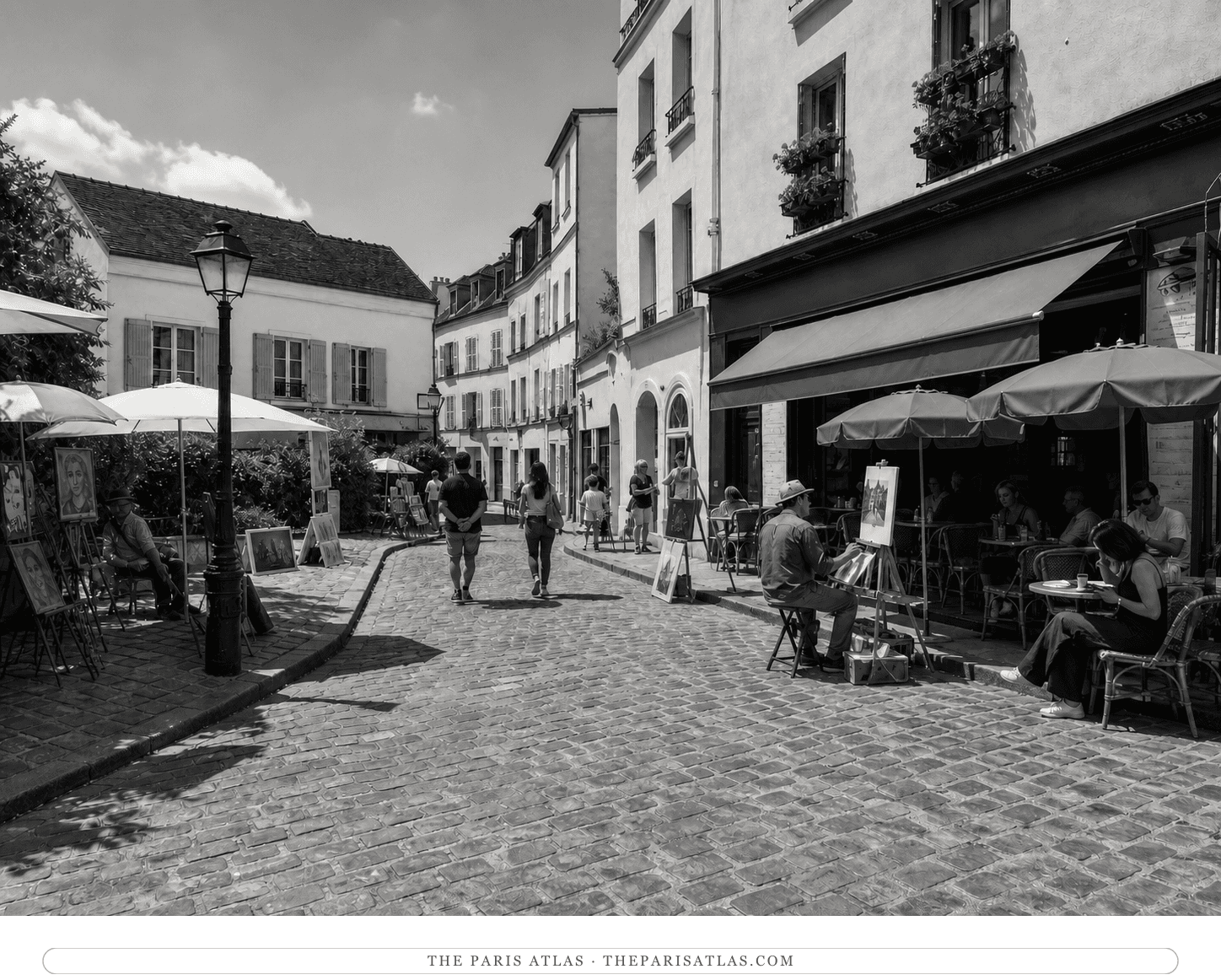
Montmartre's historic hilltop square, now shared by restaurant terraces and licensed artists—and the setting of Langston Hughes and Anne Marie Coussey's last Paris dinner together in 1924.
Visit the place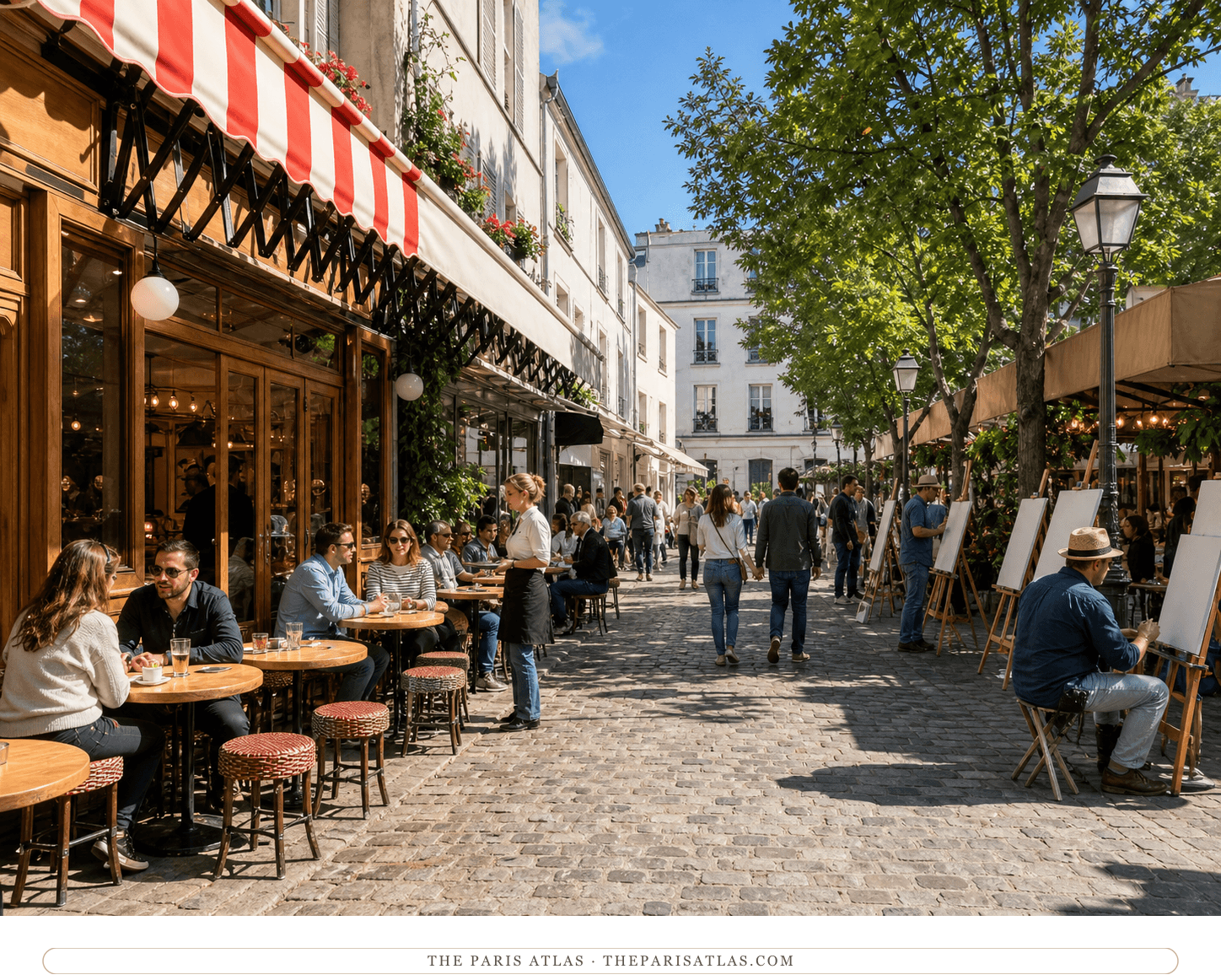
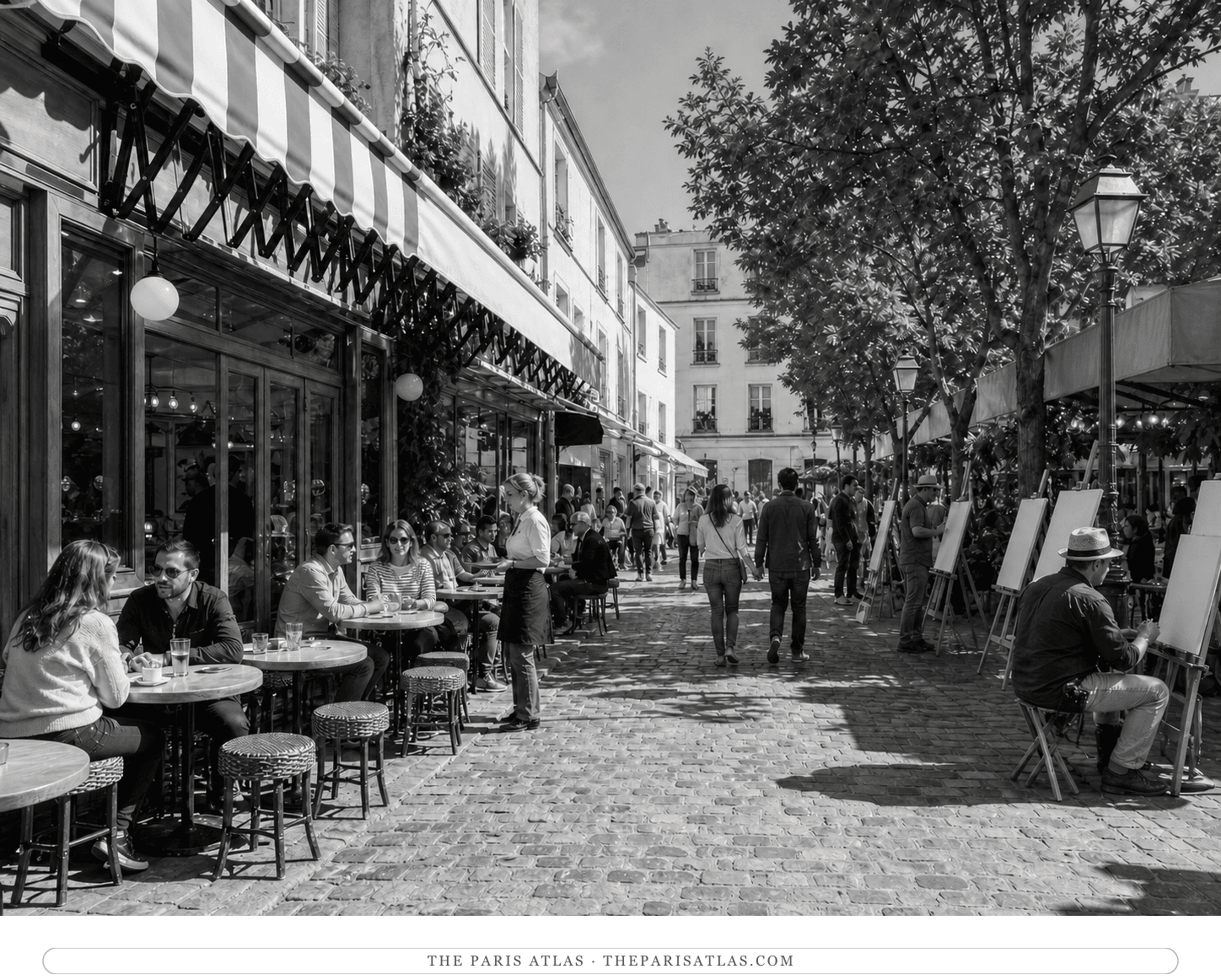
Montmartre
The hill north of Paris that was a separate village until 1860 and an artists' quarter until the First World War — the district of Van Gogh's two Paris years, Toulouse-Lautrec's posters, the Bateau-Lavoir and the Moulin Rouge.
Visit the place
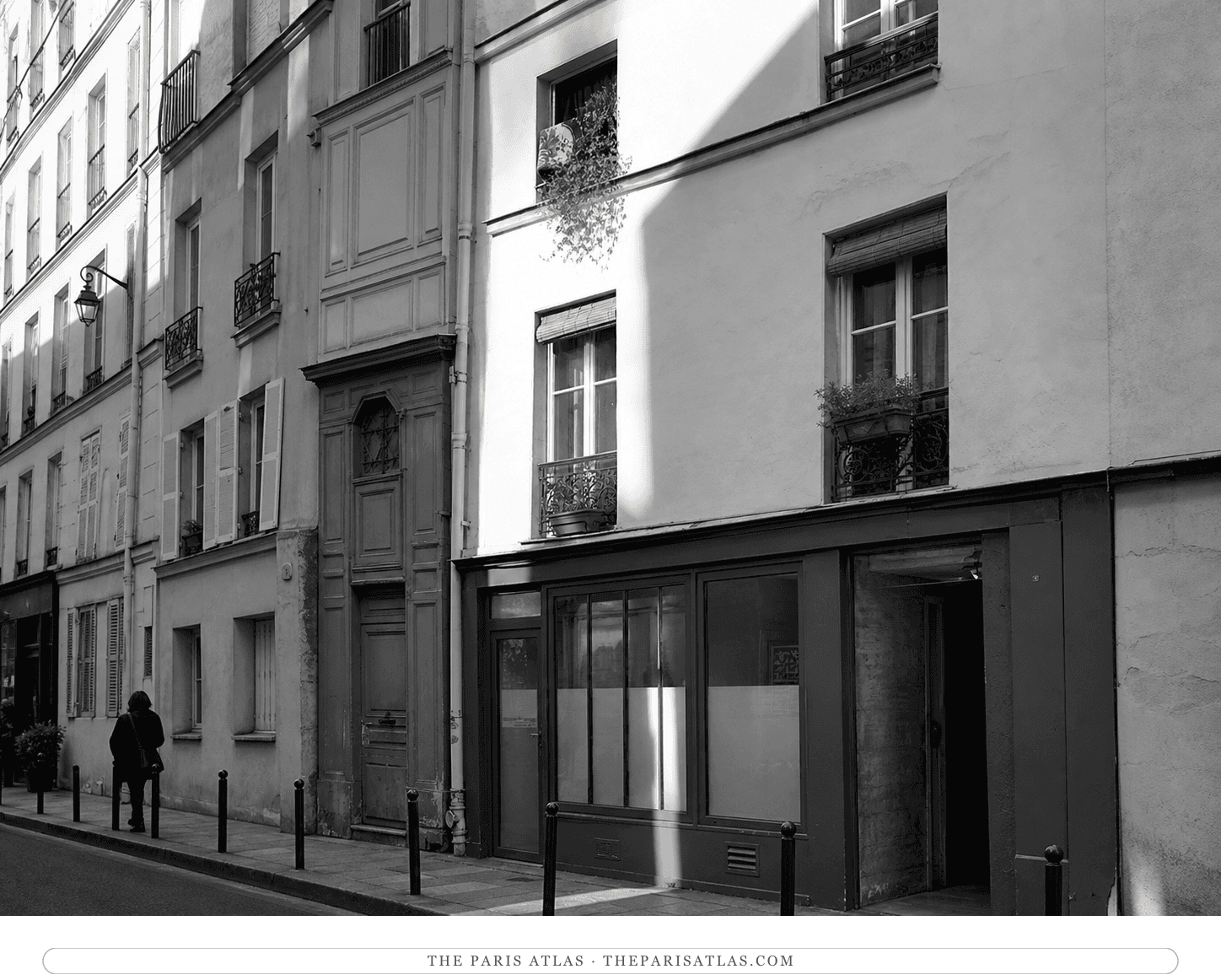
18 rue des Trois-Frères
The Montmartre address where the Pissarro family lodged in November 1878, and where Julie Pissarro gave birth — the subject of the pastel At the Window, rue des Trois-Frères.
Visit the place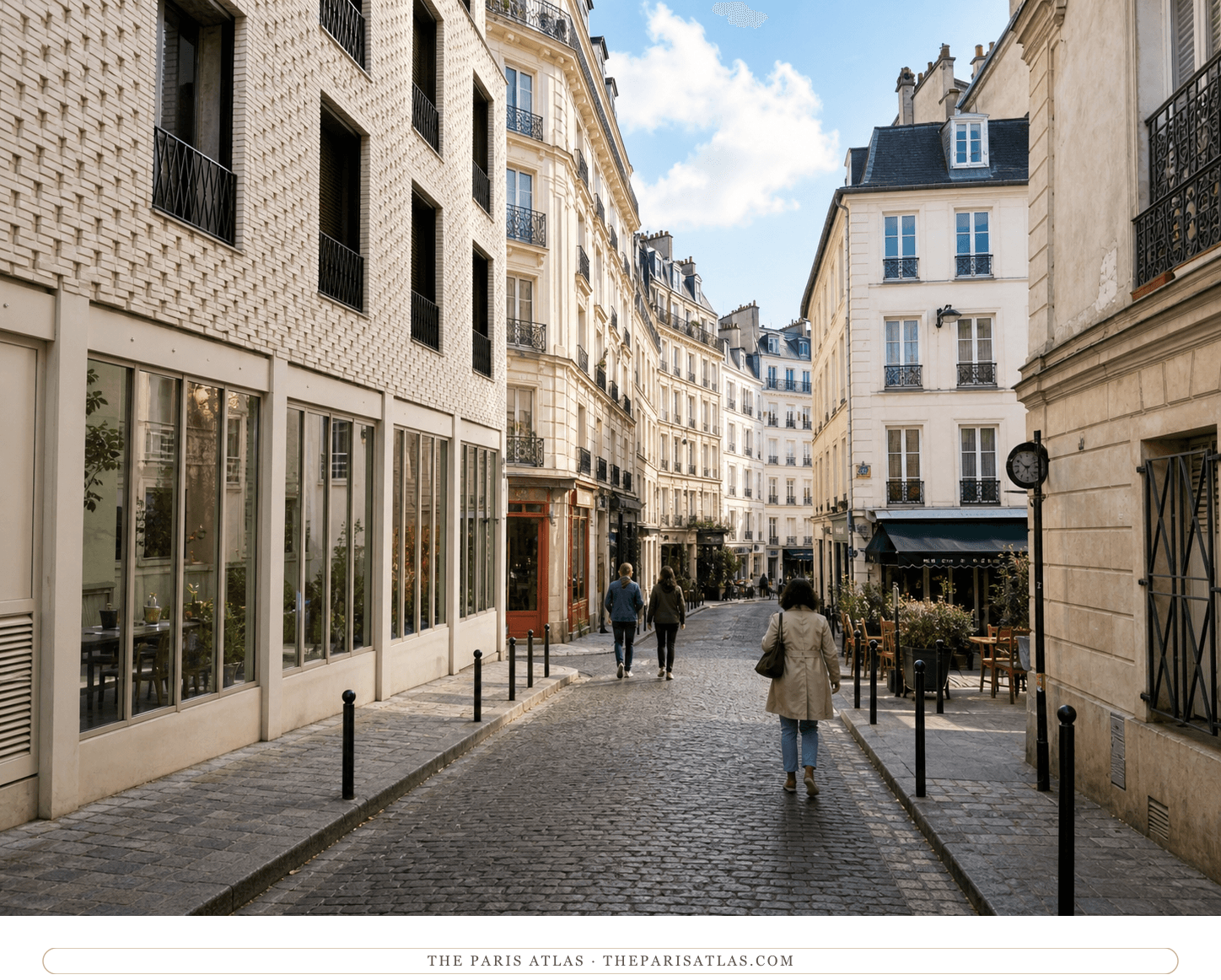
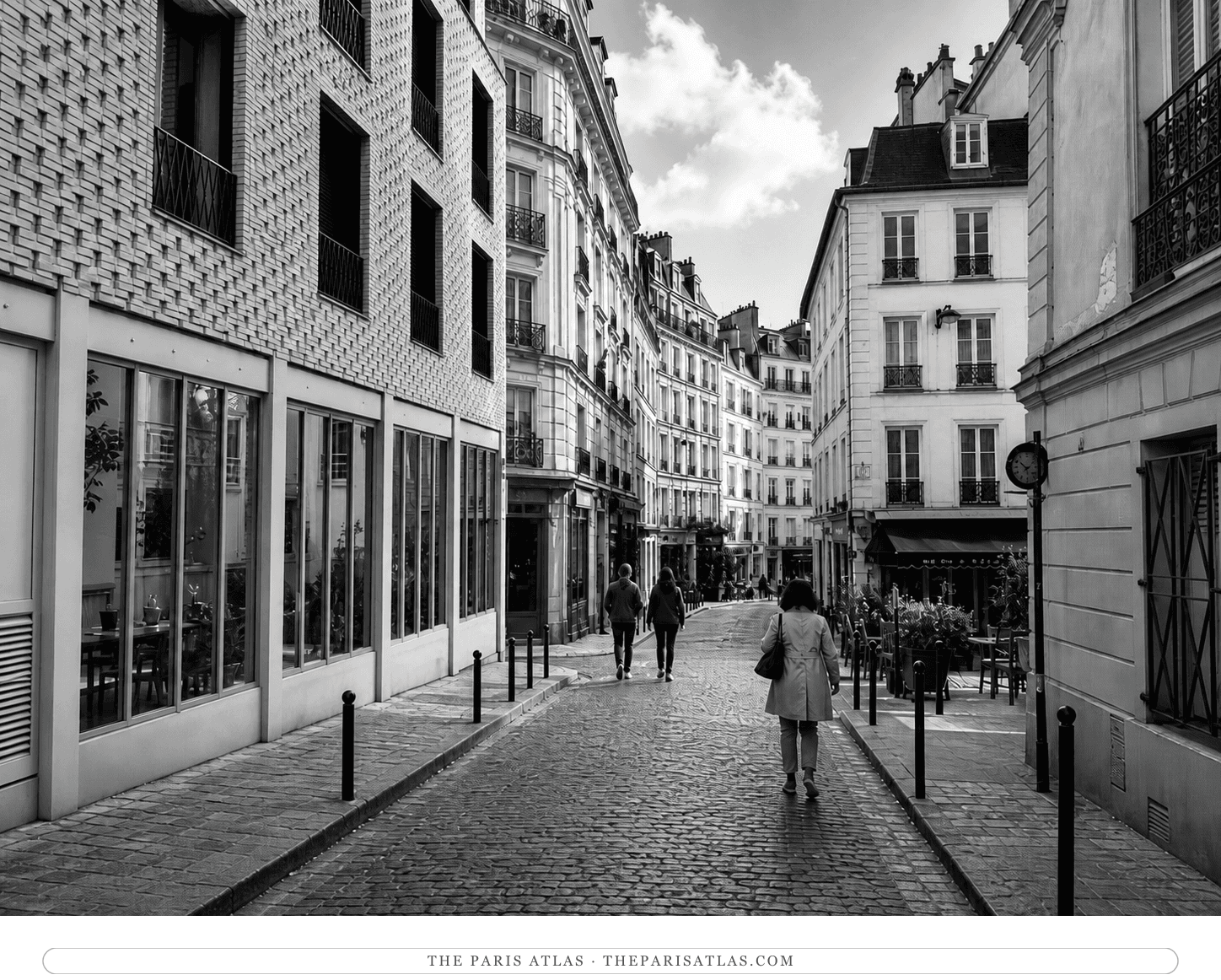
Rue des Trois Frères
A freely walkable nineteenth-century Montmartre street of slopes, cobbles and apartment façades, and the deliberately imprecise location of Langston Hughes's second Paris attic in 1924.
Visit the placeReferences
The sources below include histories, archival materials, scholarly research, and official records that informed this page. They document The Sacré-Cœur, the people connected to it, and its place in Paris.


1abcNotre histoire — Basilique du Sacré-Cœur de Montmartre
WebsiteBasilique du Sacré-Cœur de MontmartreUsed forThe basilica's own history: Legentil's 1871 drafting of the Vœu national, the 1872 and 1873 approvals, Abadie's 1874 competition win, the 1875 first stone, the start of continuous adoration in 1885, and the consecration of 16 October 1919.
2↑Personnalité du mois : Paul Abadie (1812–1884)
WebsiteMédiathèque du patrimoine et de la photographie, Ministère de la CultureUsed forThe Ministry of Culture's biographical note on Abadie.
3↑The dome tour — Basilique du Sacré-Cœur de Montmartre
WebsiteBasilique du Sacré-Cœur de MontmartreUsed forDome hours, the €8 and €5 rates, the 280 steps, the absence of a lift and the access warnings. Checked 24 August 2026.
4↑Basilique du Sacré-Cœur de Montmartre — official site
WebsiteBasilique du Sacré-Cœur de MontmartreUsed forOpening hours, free admission, and the basilica's own count of the nights of unbroken adoration. Checked 24 August 2026.

5OpenStreetMap
Map dataUsed forMap data used to verify addresses, geographic coordinates, and the placement associated with The Sacré-Cœur.
These references provide the documented foundation for this page's history and context. Claim-level citations remain attached to the specific claims they support.
 Explore more resources
Newsletter
Paris, one address at a time.
The cafés, studios, and walk-up flats where the work was made — one story from the map in every letter.