
Recalled in the memoir
The Big Sea
The memoir recalls Hughes and Mary's last dinner in an unnamed restaurant on the square, including its wine, veal shoulder, salad and cœur à la crème.
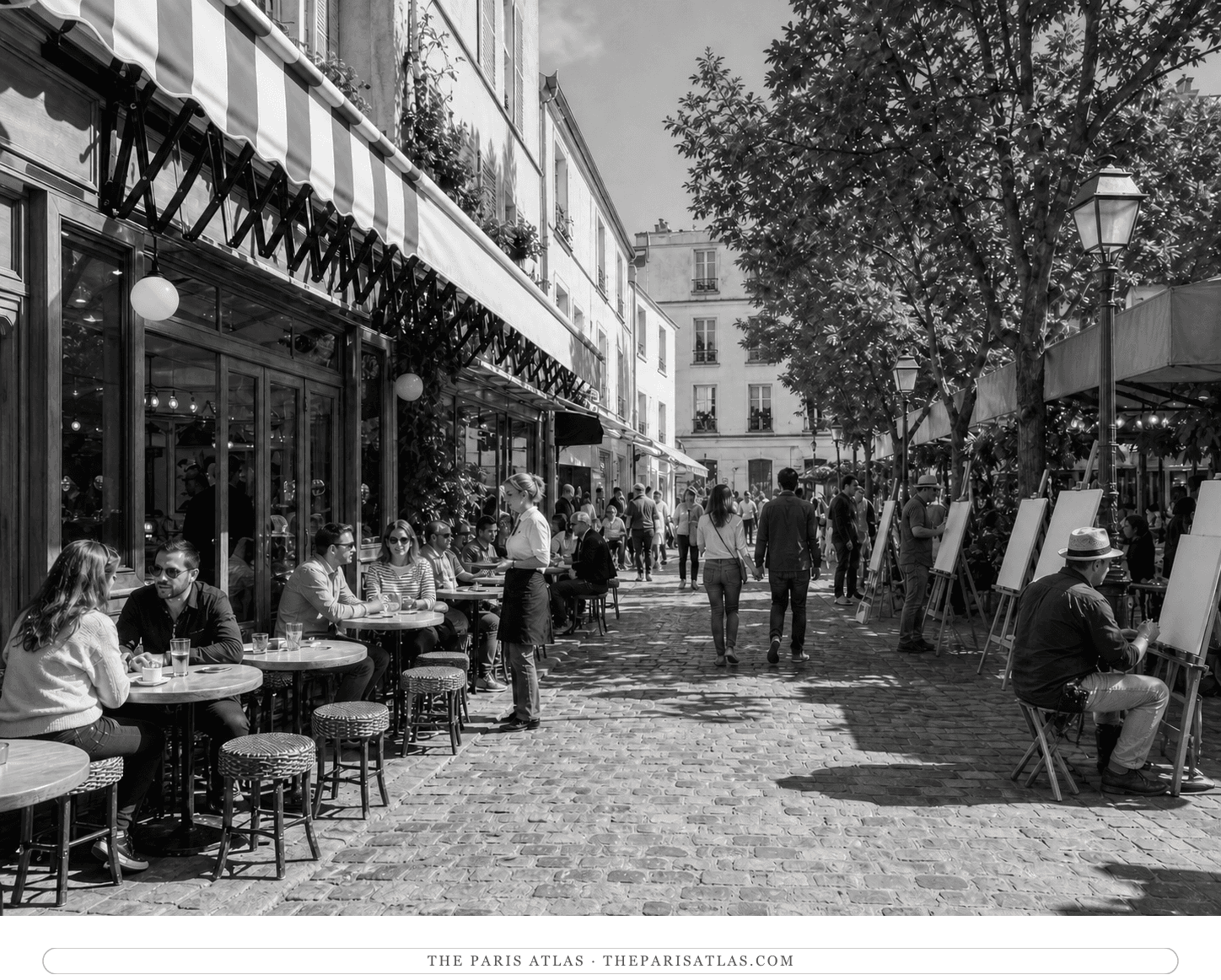
Montmartre's historic hilltop square, now shared by restaurant terraces and licensed artists—and the setting of Langston Hughes and Anne Marie Coussey's last Paris dinner together in 1924.
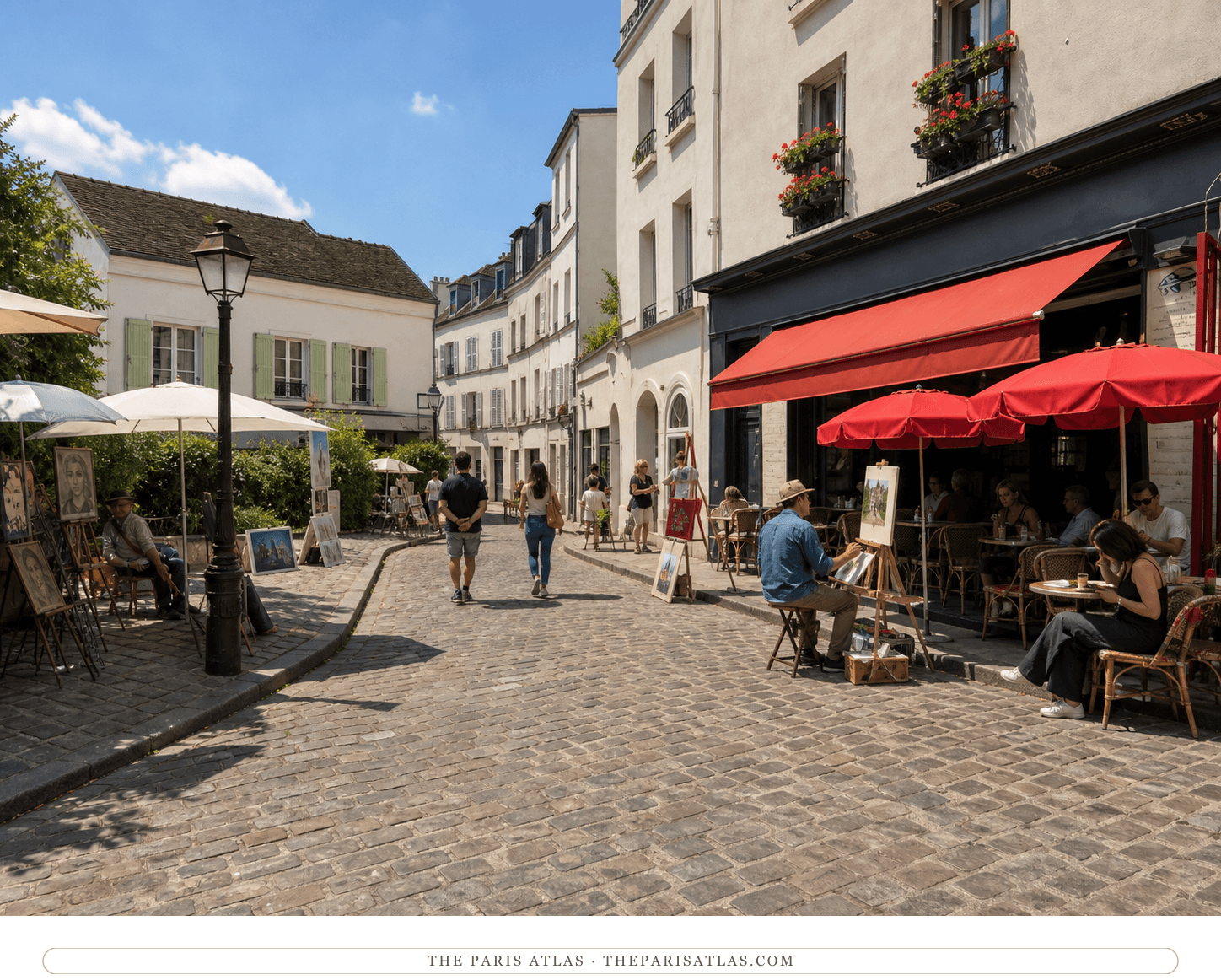
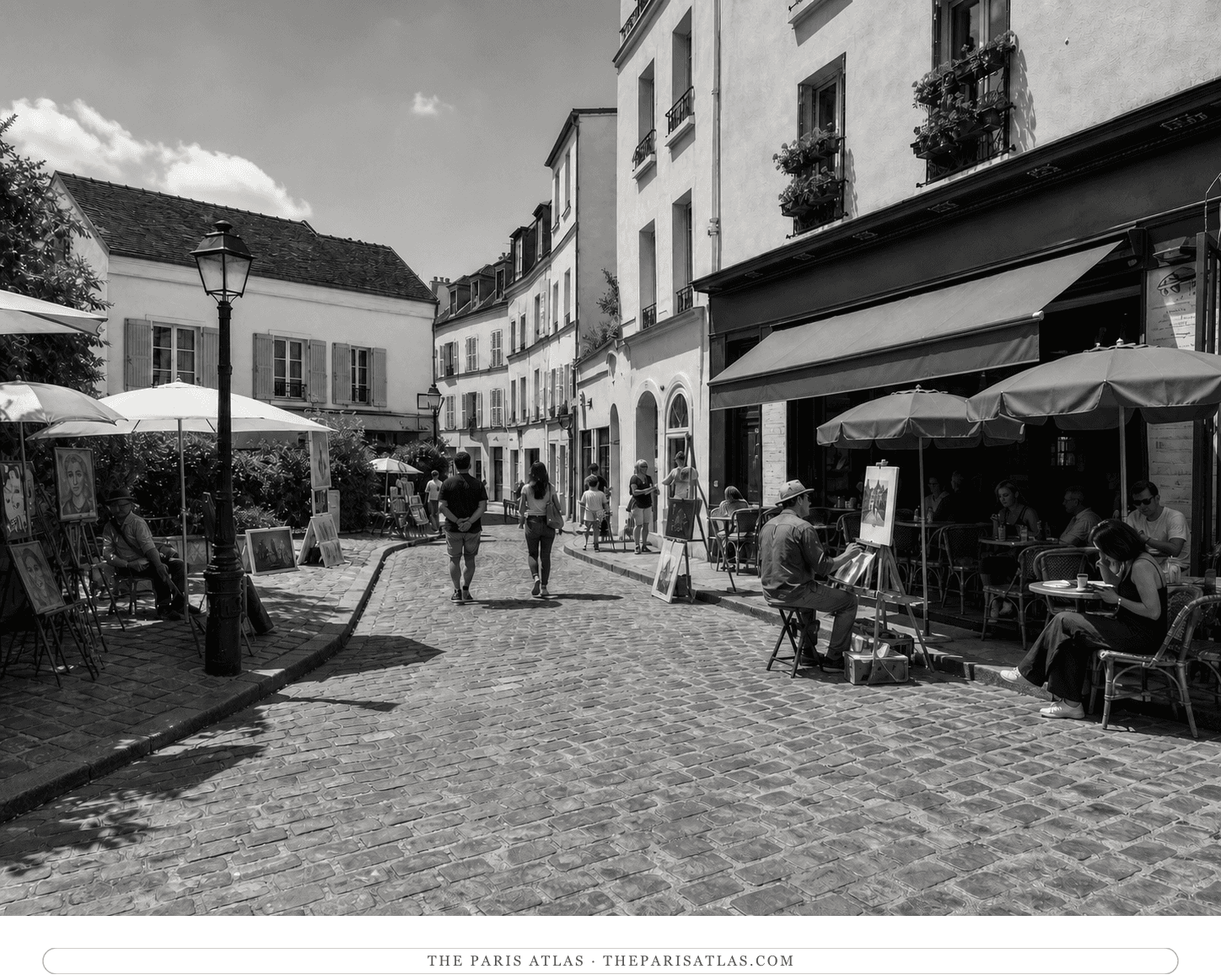
Place du Tertre is the compact historic square near the summit of Montmartre, just west of Saint-Pierre de Montmartre and a short walk from Sacré-Cœur. It is public and freely walkable. Restaurant terraces fill much of its perimeter, while the City of Paris assigns regulated spaces in the center to painters, portraitists, caricaturists and silhouette artists. The square is heavily visited; early morning gives the clearest view of its shape, while later hours show the artists at work.
Formed in the fifteenth century, the square takes its name from its position on the hill—tertre means a small rise or mound. Montmartre's town hall occupied number 3 from 1790. The artists now associated with the square are managed through a municipal authorization system rather than an informal free-for-all: painters share small allocated pitches and alternate their use.[1]
The documentary photographer Eugène Atget photographed Place du Tertre in 1924. That makes his image an unusually direct comparison with the year Langston Hughes came here. Hughes was a young American poet who would become a central voice of the Harlem Renaissance. Anne Marie Coussey, whom he called Mary, was an English-Nigerian student he met in Paris through the historian Rayford Logan. They fell in love during the spring.[2]
When a representative of Coussey's father came to return her to England, the couple arranged one last dinner far from the Latin Quarter, in a little restaurant somewhere on this square. Hughes never gave its name. No present-day restaurant can therefore be advertised as the room where they ate, and the honest landmark is the square itself.[3]
Hughes remembered the menu: wine, veal shoulder, a seasonal salad and cœur à la crème. Afterwards they walked down the winding streets of the hill and across the boulevard de Clichy, bought wild strawberries and little jars of cream, and returned to Hughes's attic at 15 rue Nollet to watch the sun set over the chimney pots.[3]
Hughes later recorded the evening in The Big Sea, his 1940 autobiography. The compact geography of their walk remains legible: from the hilltop square down Montmartre, across boulevard de Clichy and west toward rue Nollet. The romance belongs to Hughes and Coussey; the address belongs to a public square that has accumulated many other lives before and since.[3]
The square is formed near the summit of Montmartre.
The new commune of Montmartre establishes its town hall at number 3.
Eugène Atget photographs the square for his Vieux Paris series.
Langston Hughes and Mary eat their last dinner together in an unnamed restaurant here.
The public square remains active with regulated artists and restaurant terraces.
Recalled in the memoir
The memoir recalls Hughes and Mary's last dinner in an unnamed restaurant on the square, including its wine, veal shoulder, salad and cœur à la crème.
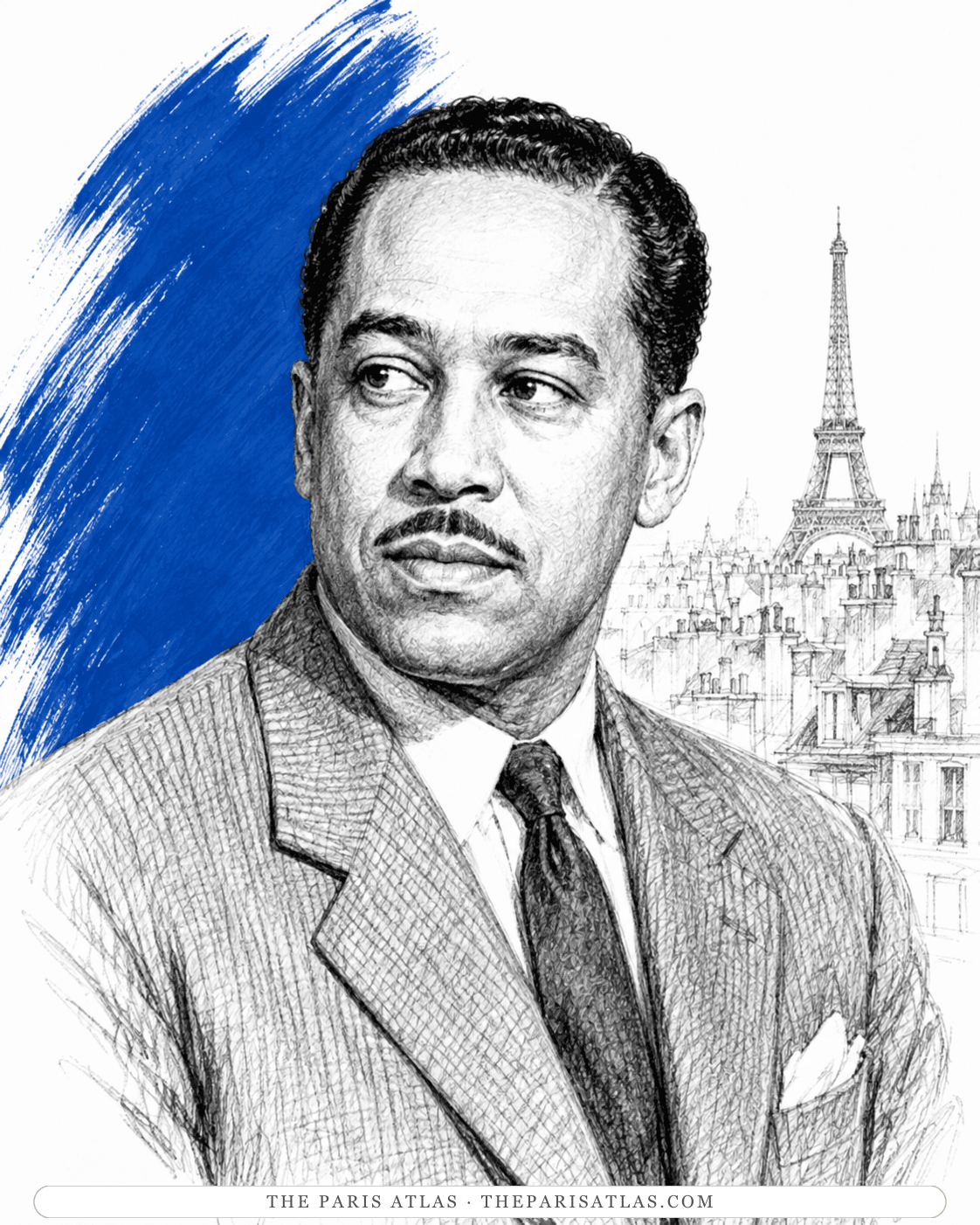
Visited by · 1924
Hughes and Mary ate their last dinner together at an unnamed small restaurant on the square, then walked down through Montmartre toward his rue Nollet attic.
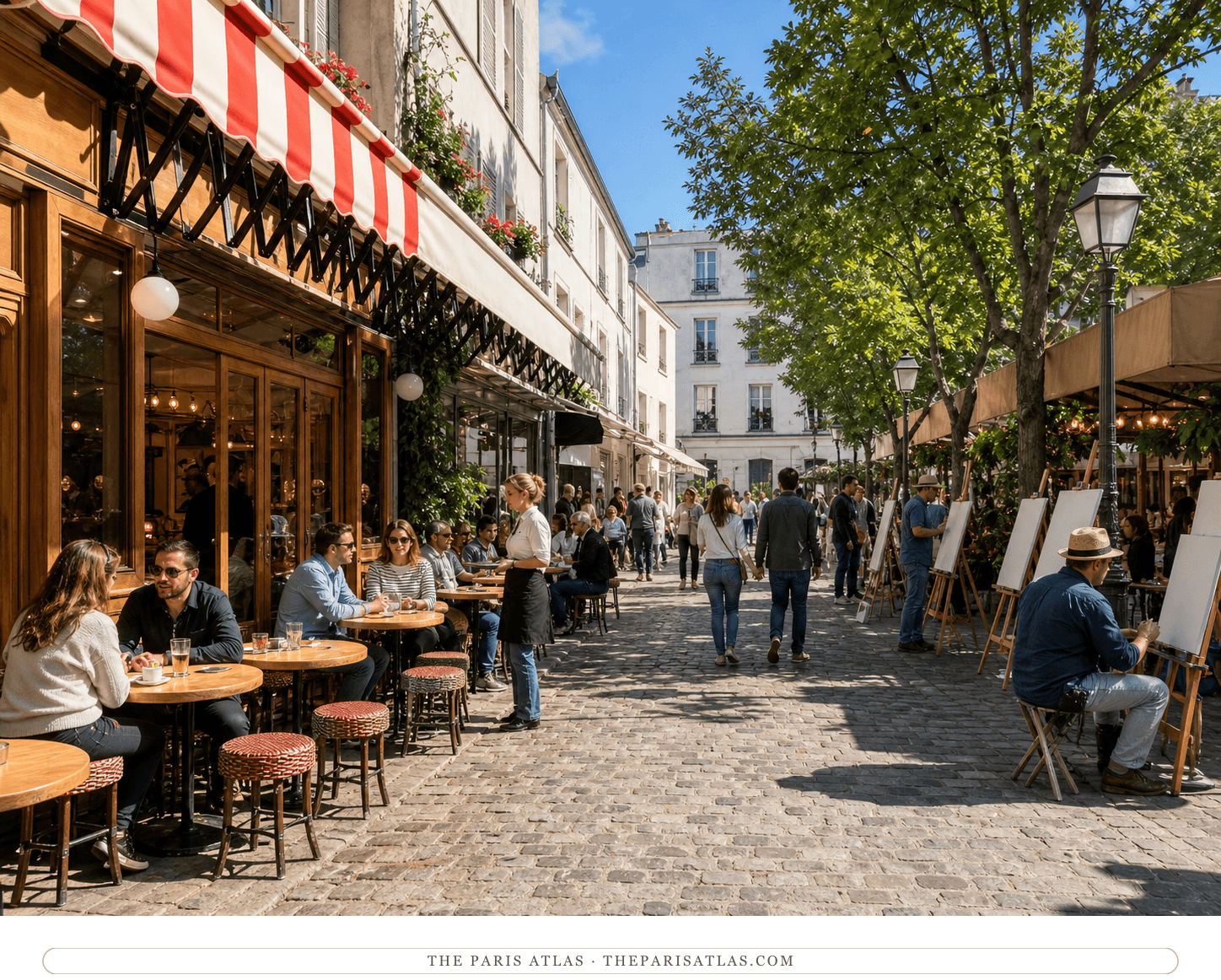
The hill north of Paris that was a separate village until 1860 and an artists' quarter until the First World War — the district of Van Gogh's two Paris years, Toulouse-Lautrec's posters, the Bateau-Lavoir and the Moulin Rouge.
Visit the place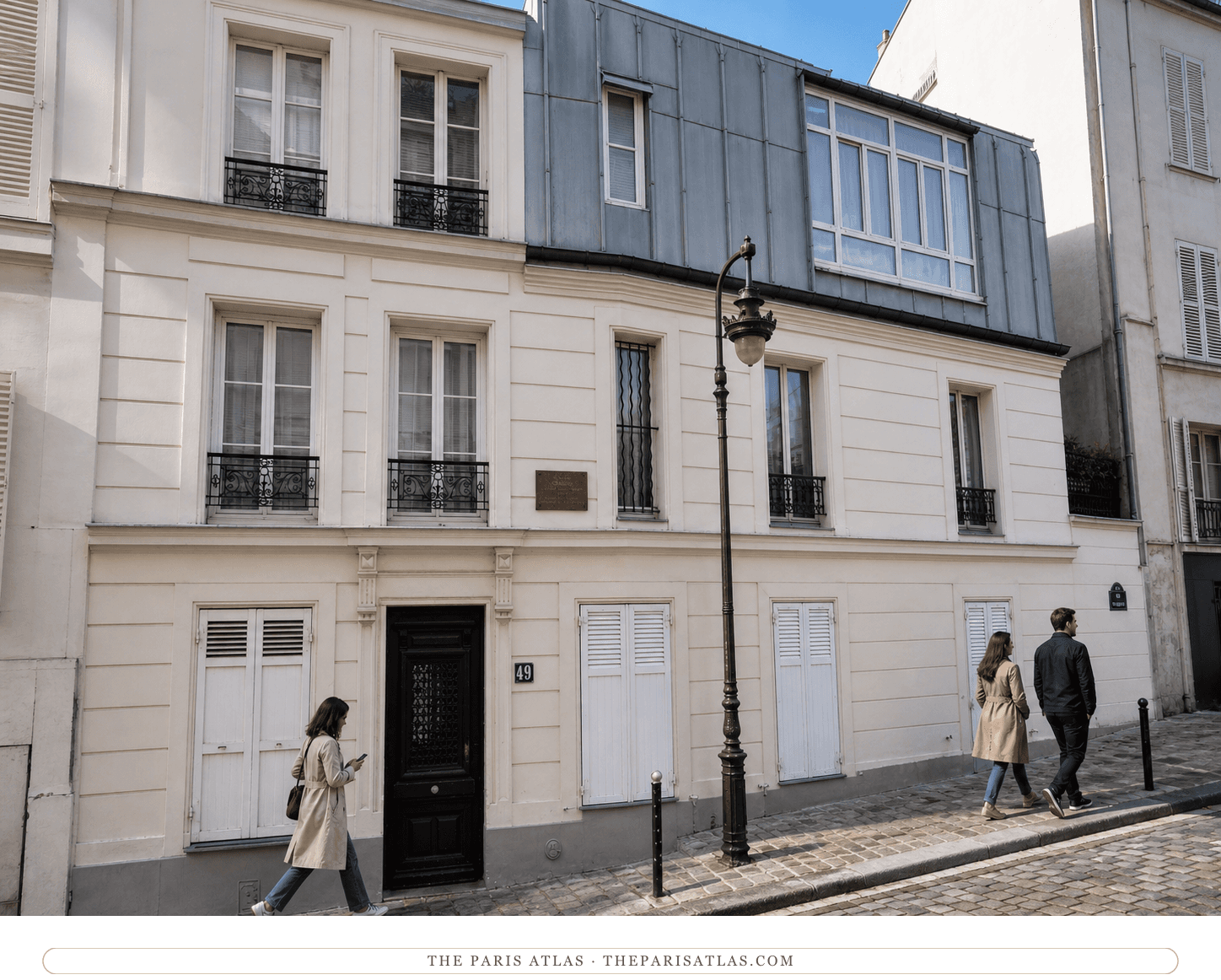
Where Pablo Picasso set up his first studio in Paris, in 1900, at the age of eighteen — four years before the Bateau-Lavoir and seven before Les Demoiselles d'Avignon.
Visit the place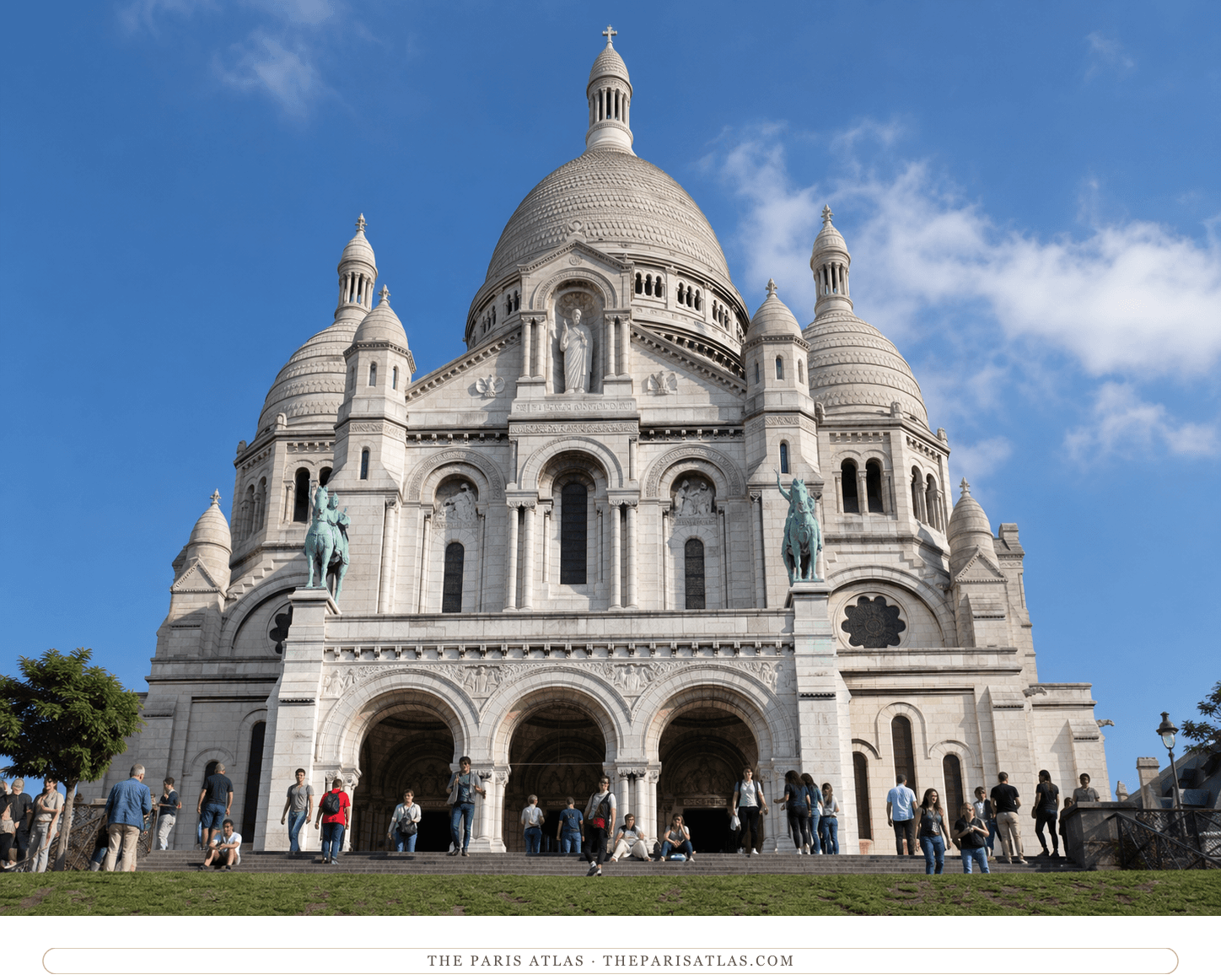
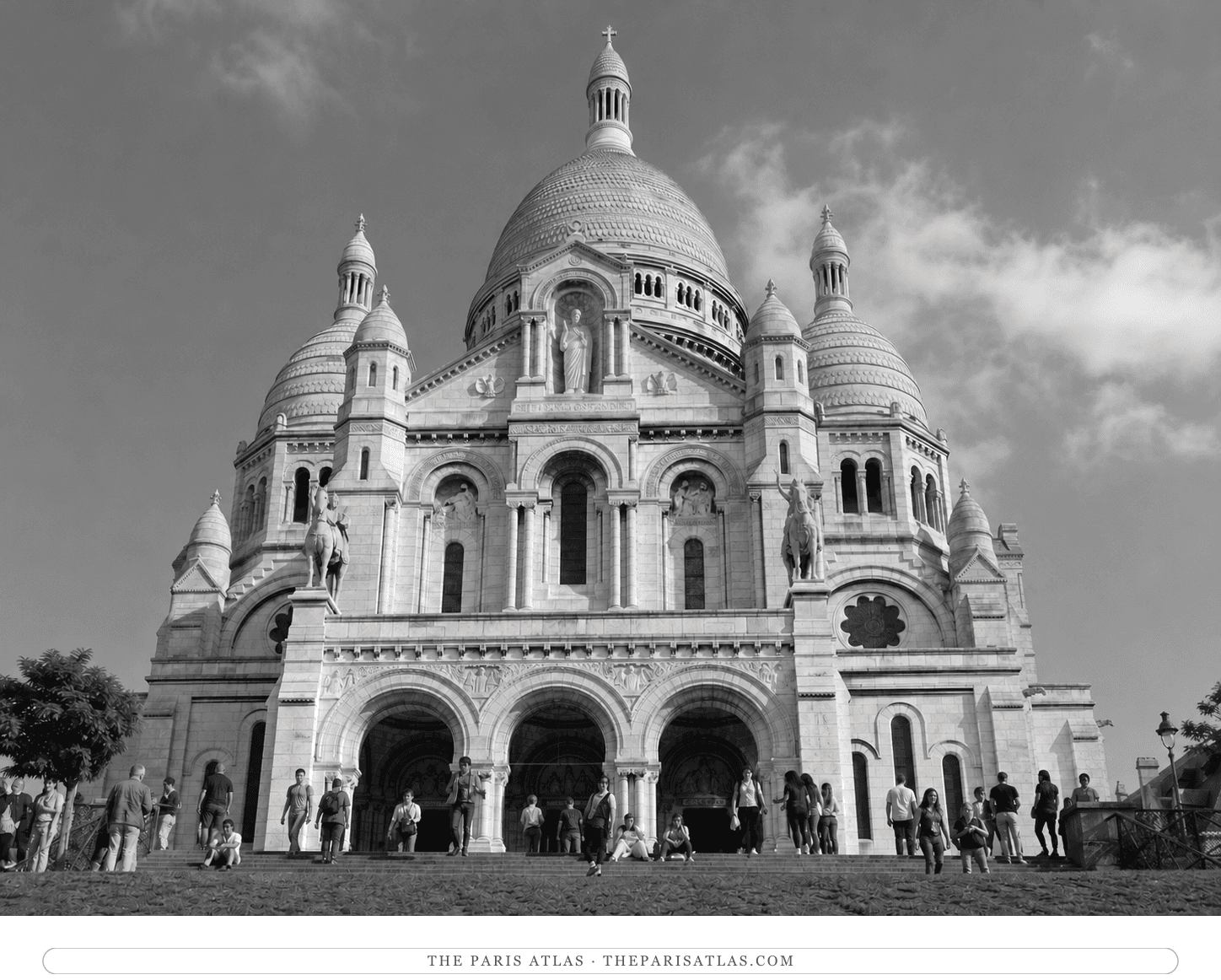
The white basilica on the summit of Montmartre, built by public subscription after France's defeat in 1870 and consecrated in 1919 after nearly forty years of work. Entry is free, every day 6.30 a.m. to 10.30 p.m. The dome — 280 steps, no lift — costs €8 and gives a 360-degree view over Paris.
Visit the place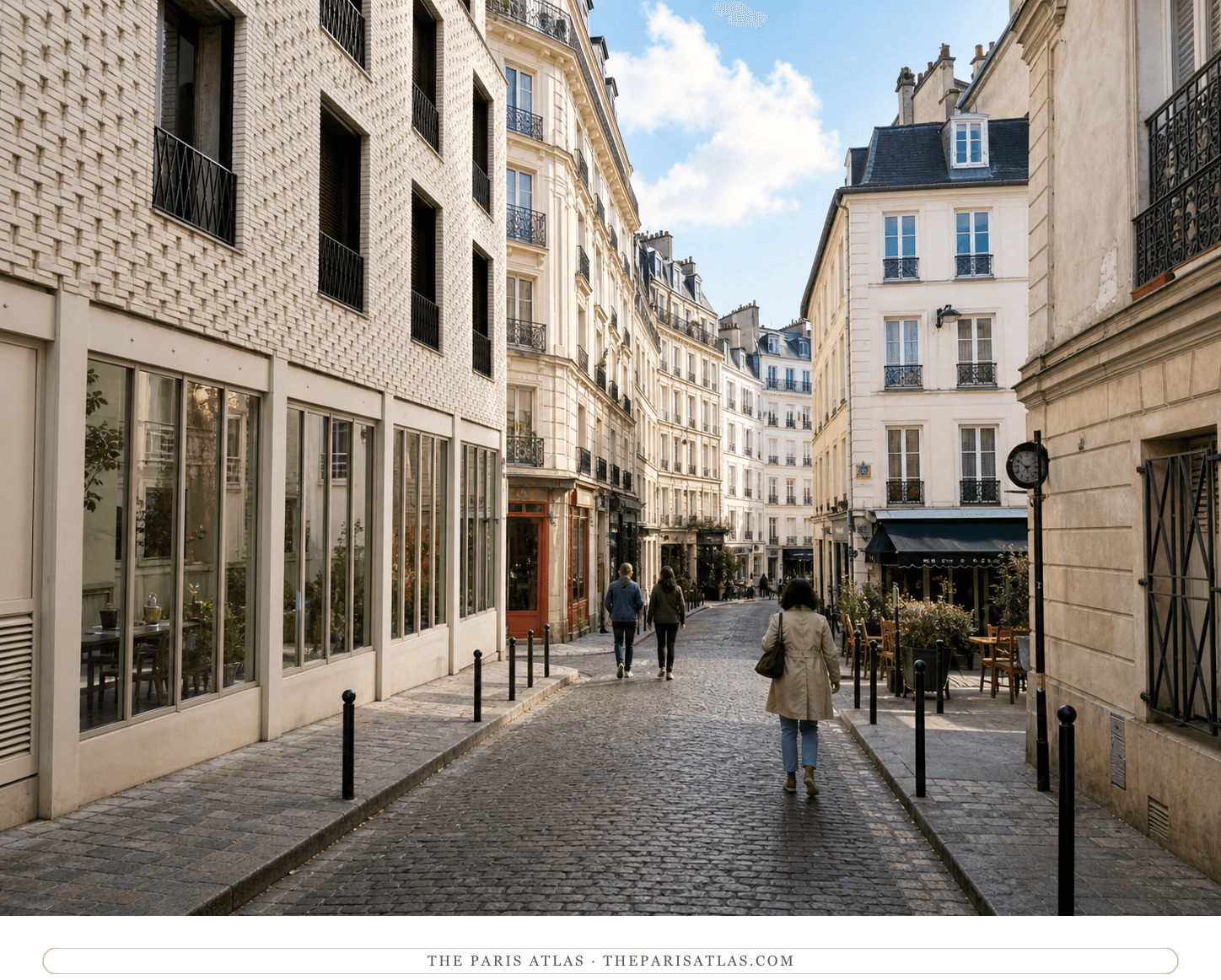
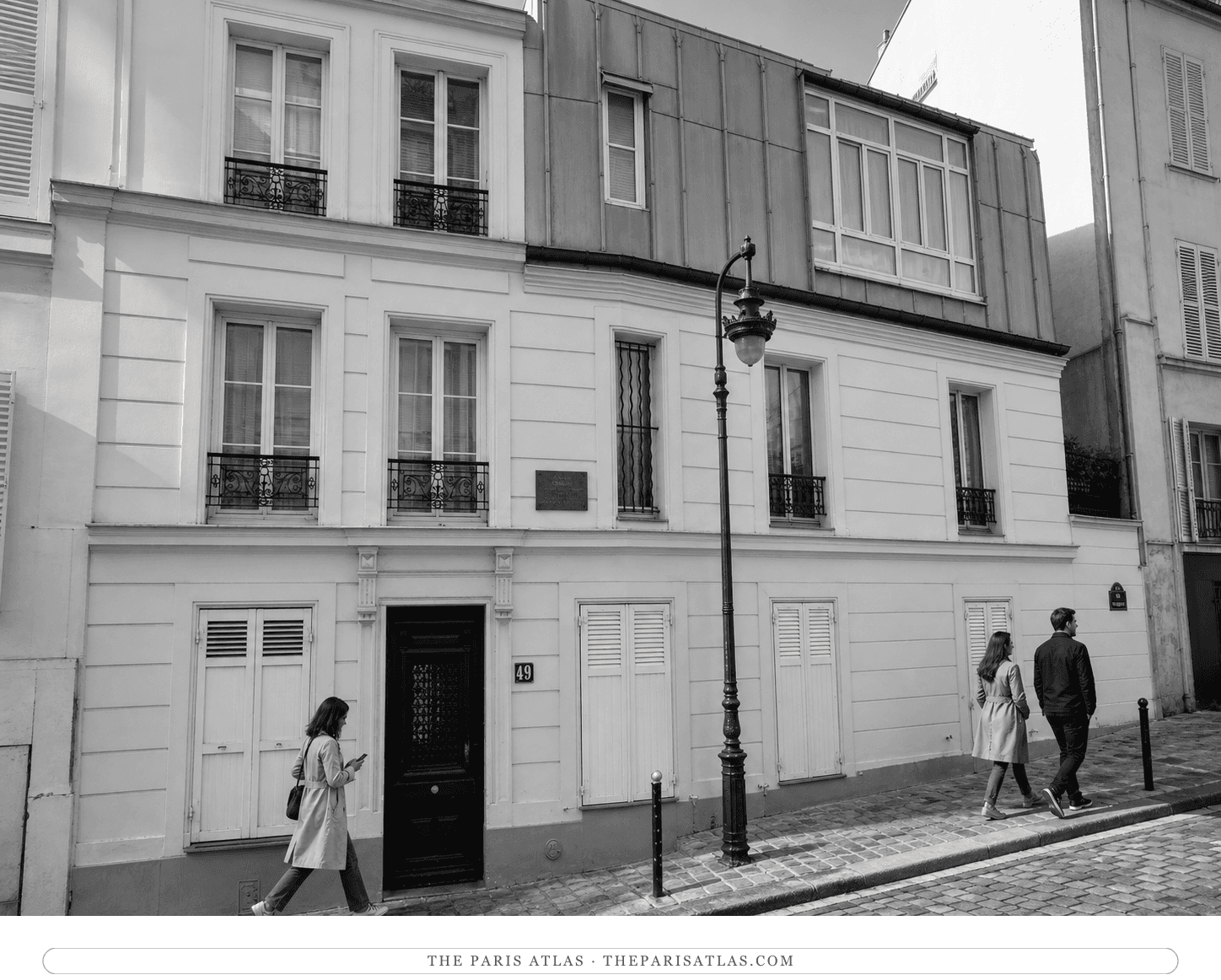
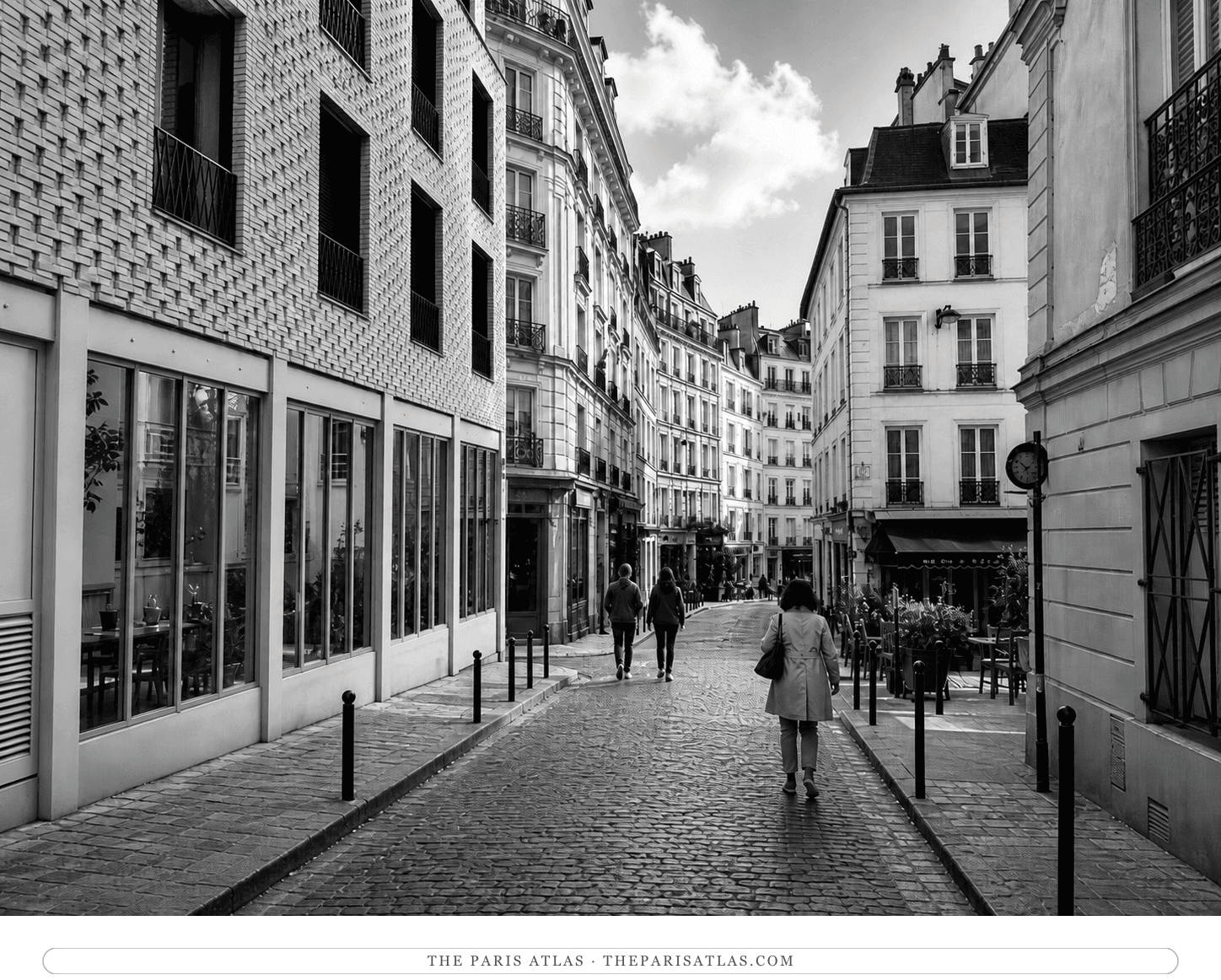
A freely walkable nineteenth-century Montmartre street of slopes, cobbles and apartment façades, and the deliberately imprecise location of Langston Hughes's second Paris attic in 1924.
Visit the placeThe sources below include histories, archival materials, scholarly research, and official records that informed this page. They document Place du Tertre, the people connected to it, and its place in Paris.

Web source consulted for documented facts and historical context presented on the Place du Tertre page.
Web source consulted for documented facts and historical context presented on the Place du Tertre page.
Web source consulted for documented facts and historical context presented on the Place du Tertre page.

Map data used to verify addresses, geographic coordinates, and the placement associated with Place du Tertre.
These references provide the documented foundation for this page's history and context. Claim-level citations remain attached to the specific claims they support.
 Explore more resources
Newsletter
The cafés, studios, and walk-up flats where the work was made — one story from the map in every letter.