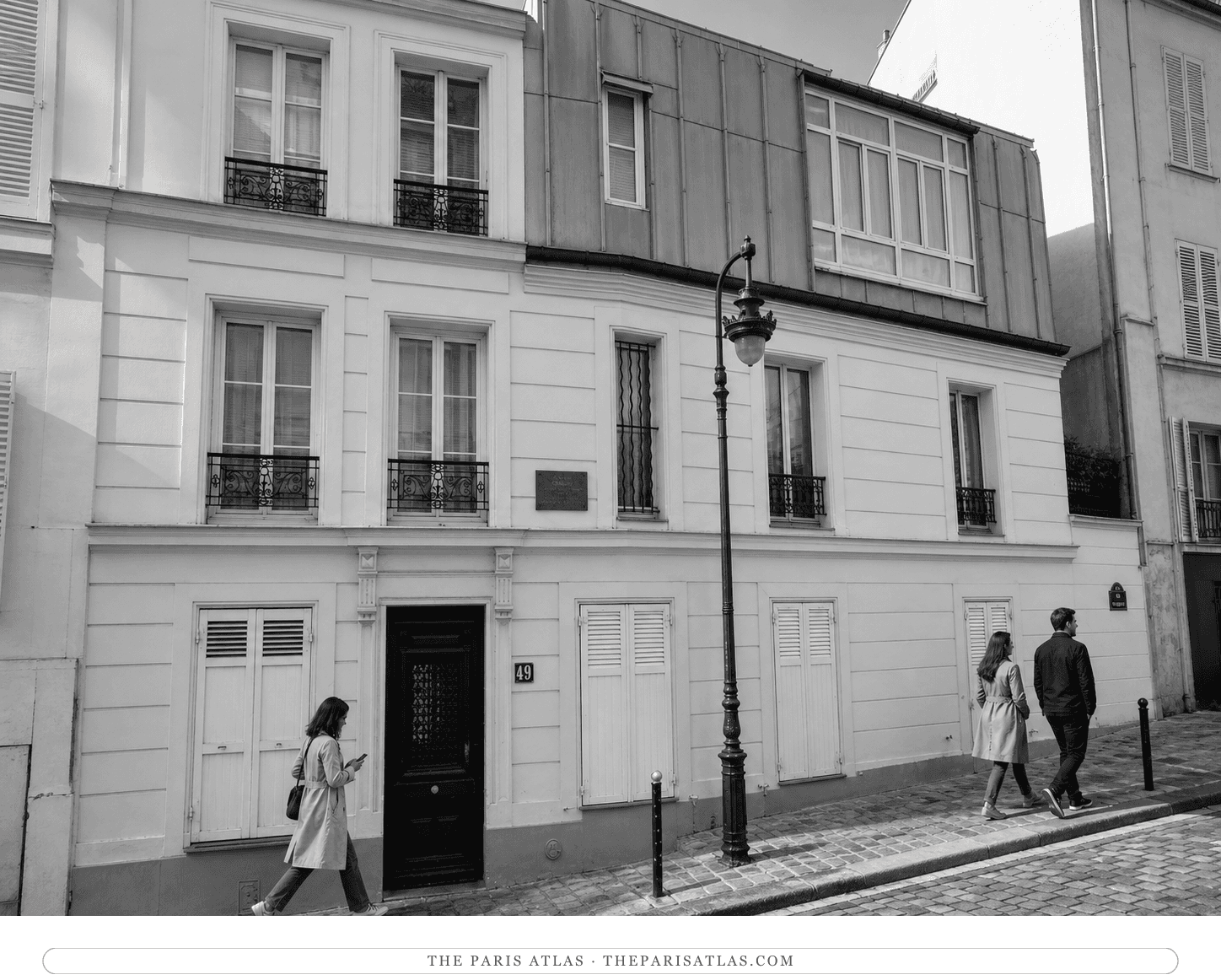
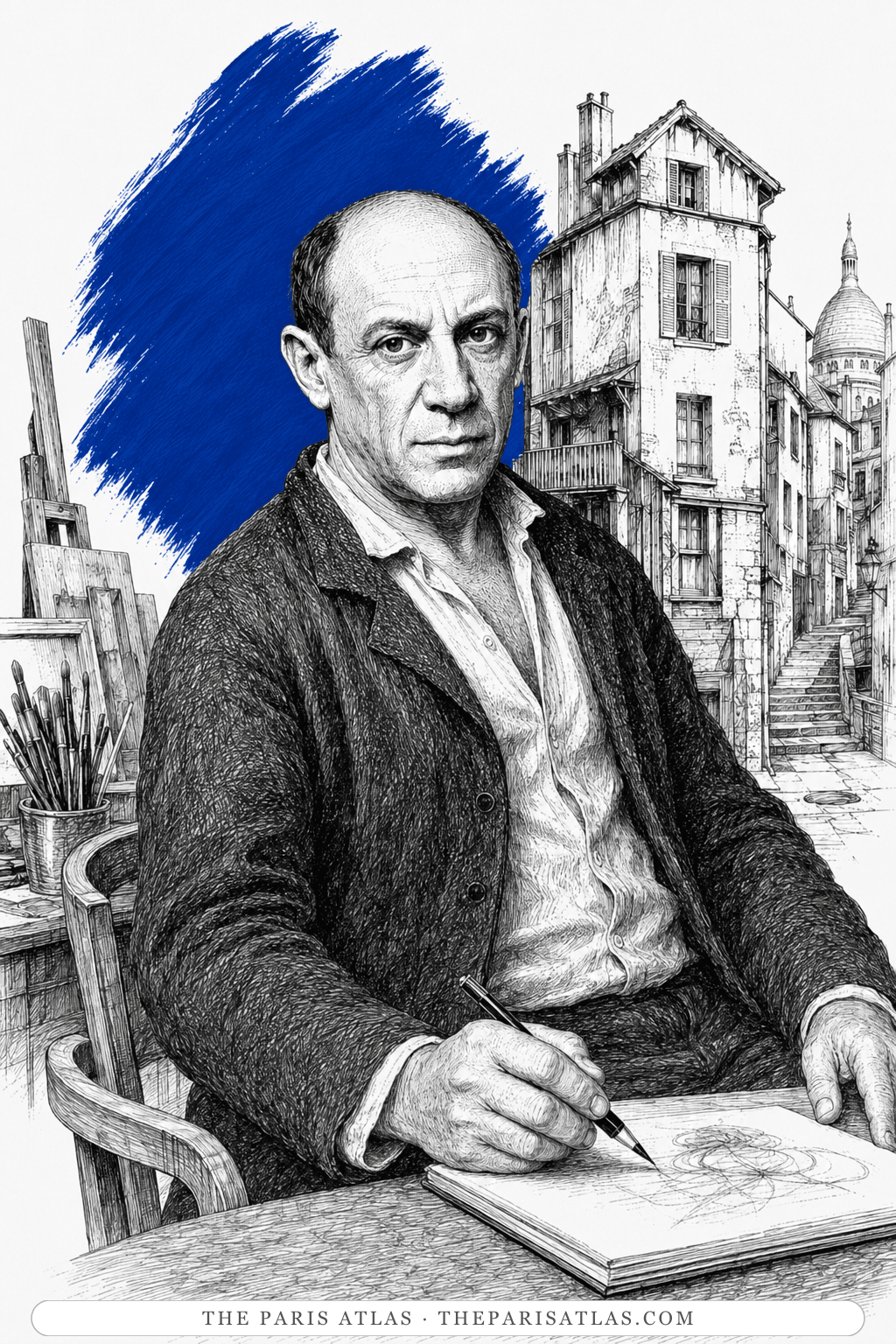
Pablo Picasso
Picasso installed his first Paris studio here in 1900, aged eighteen, having come for the Exposition Universelle where one of his paintings hung in the Spanish section. The work of this period is the beginning of the Blue Period.
Where Pablo Picasso set up his first studio in Paris, in 1900, at the age of eighteen — four years before the Bateau-Lavoir and seven before Les Demoiselles d'Avignon.
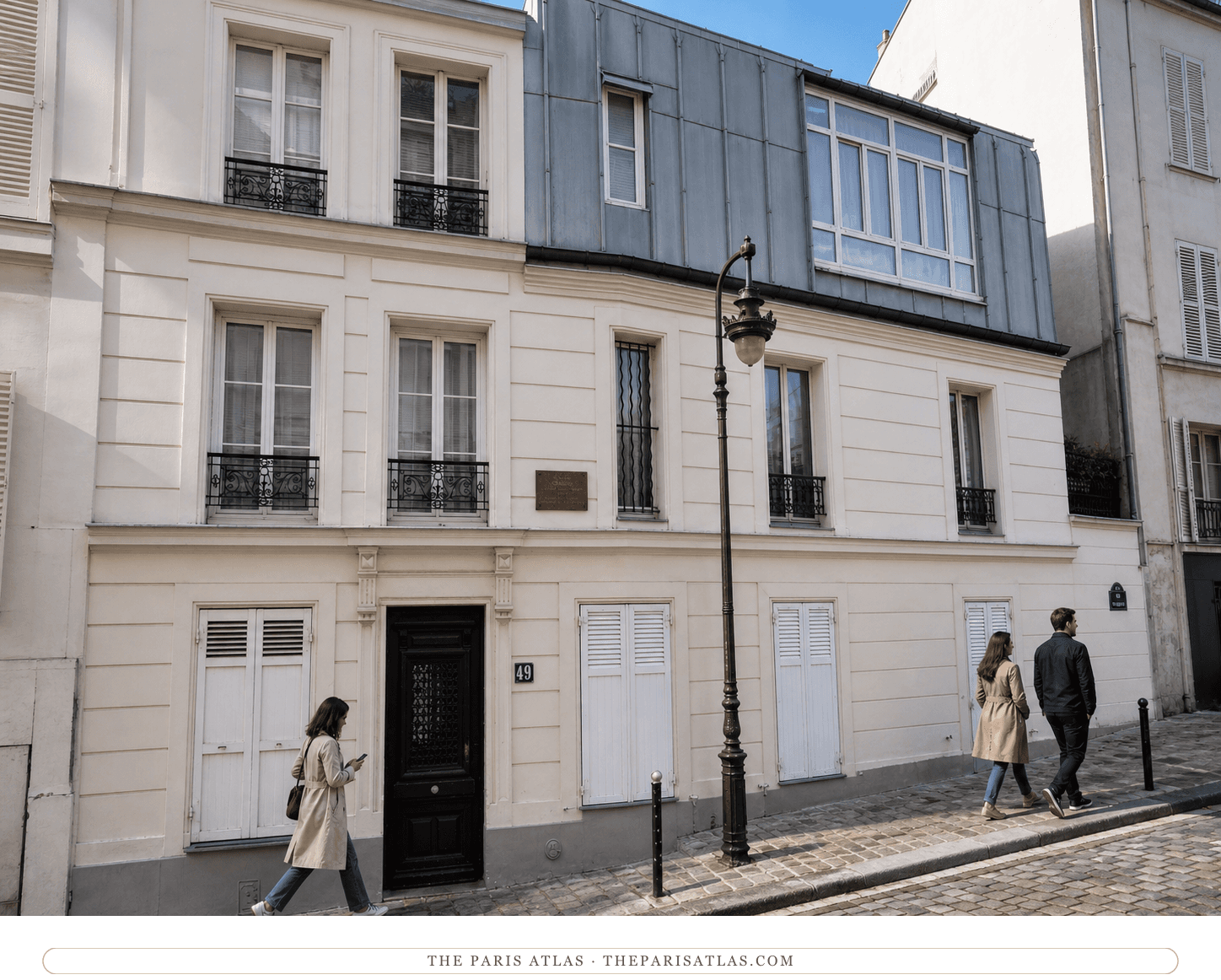
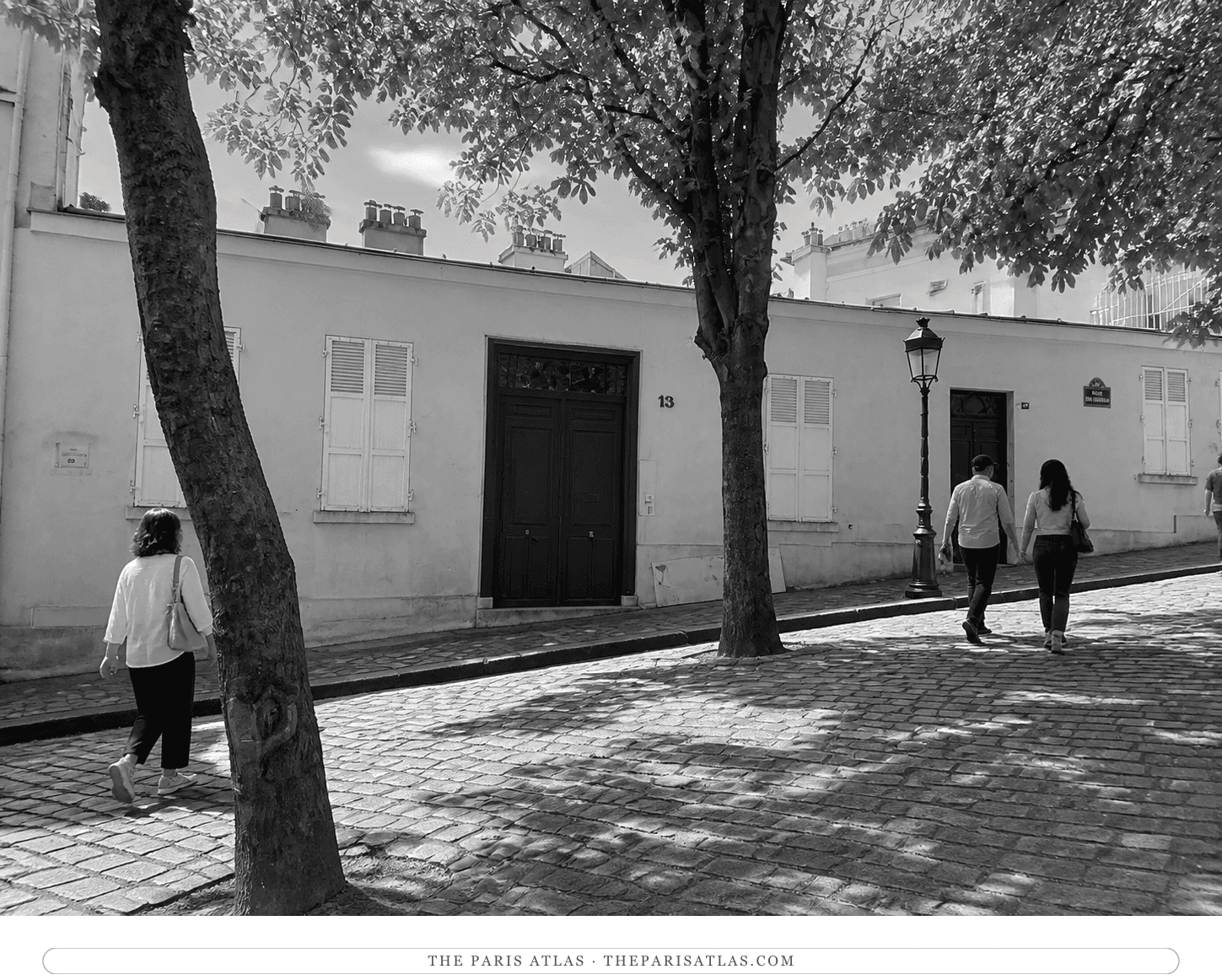
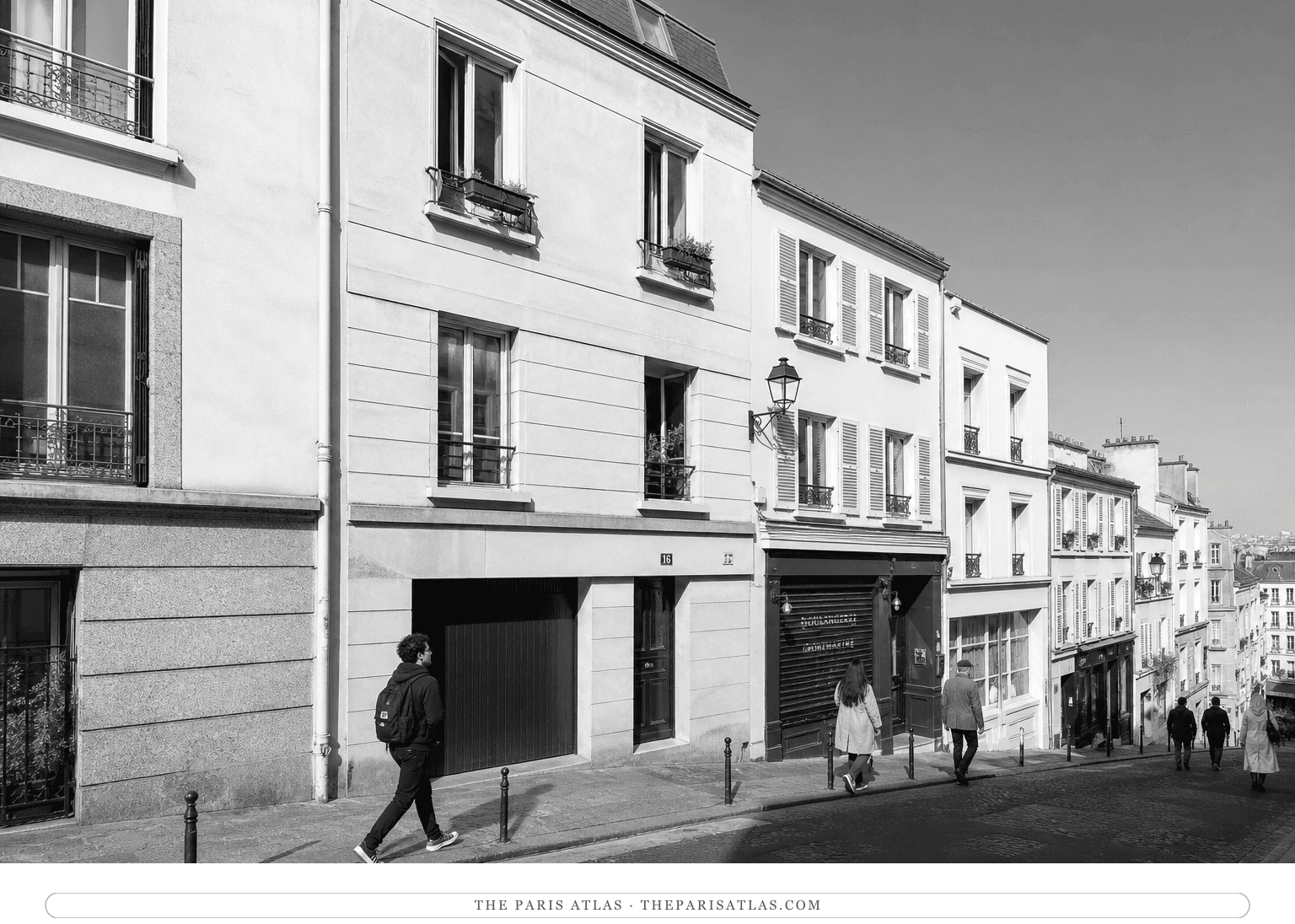
Pablo Picasso came to Paris for the first time in 1900, at eighteen, for the Exposition Universelle, where one of his paintings was hanging in the Spanish section. He installed his first Paris studio at 49 rue Gabrielle, on the Montmartre hillside.
It is worth pausing on the age. The Picasso of this address is a teenager who has just arrived from Barcelona, speaks little French, and is four years away from the Bateau-Lavoir and seven from Les Demoiselles d'Avignon. The work he was doing here belongs to the beginning of the Blue Period — the pictures of the destitute and the isolated that came out of his own first experience of the city.
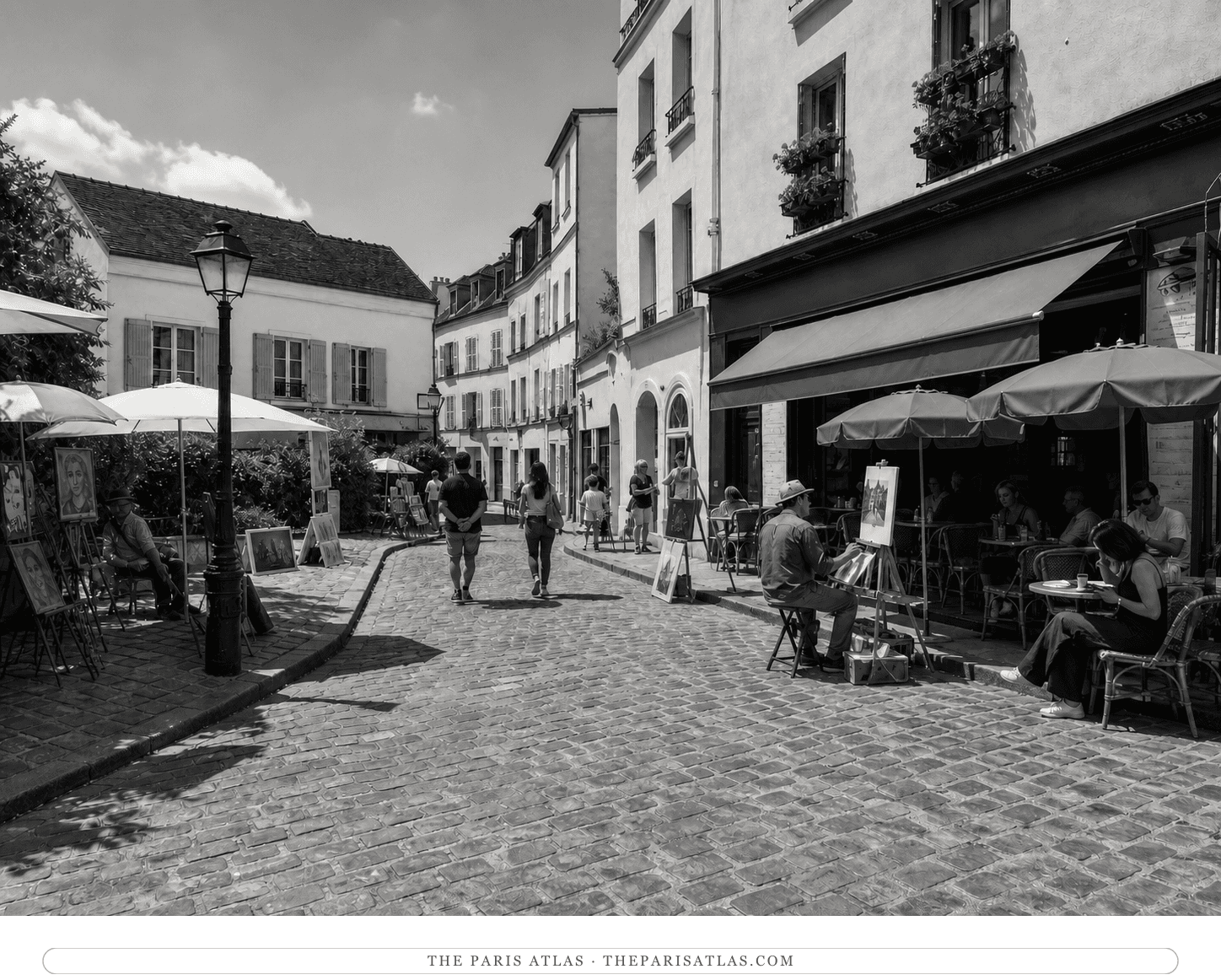
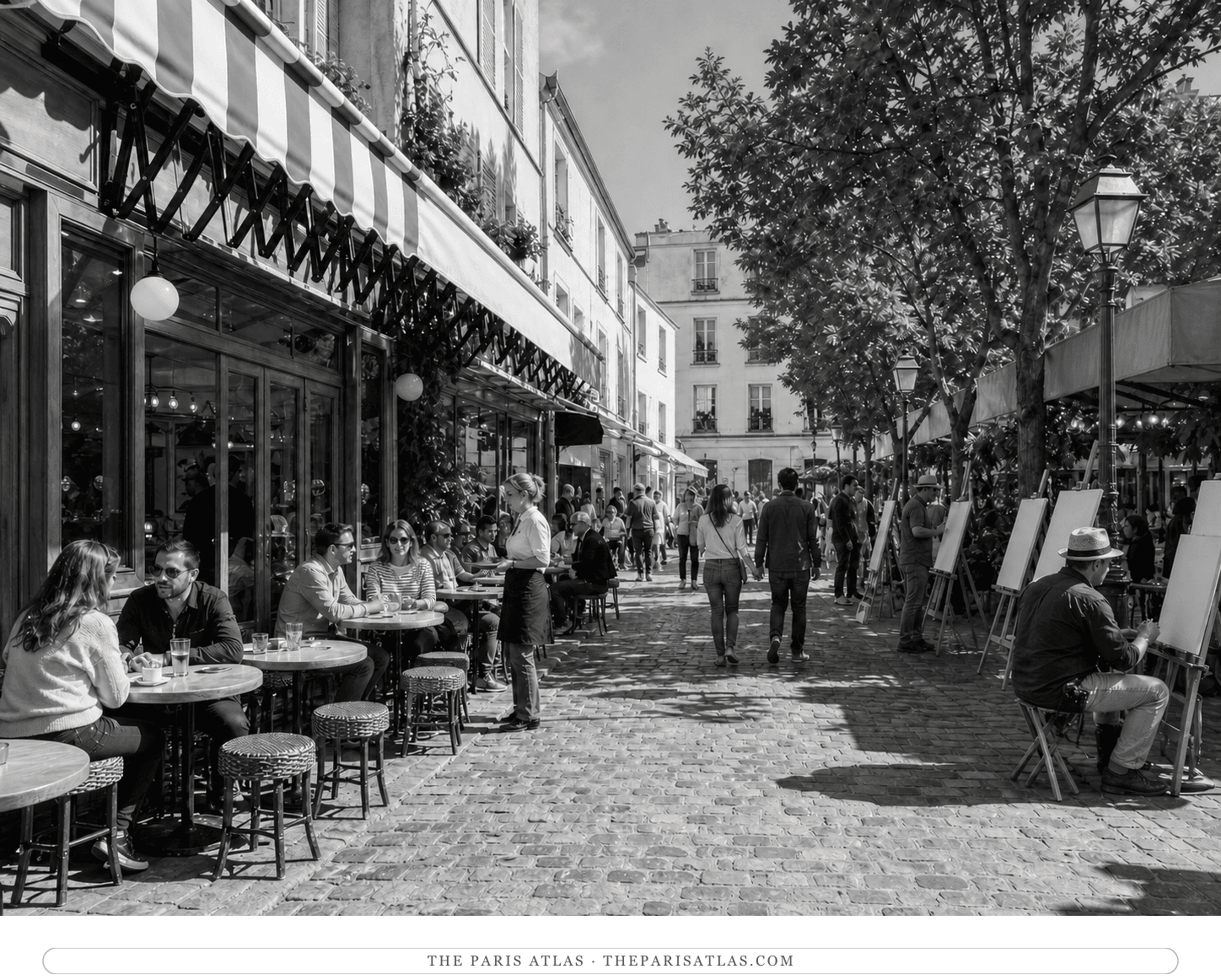
The rue Gabrielle runs across the slope below the Sacré-Cœur, a few minutes from the place Émile-Goudeau where he would move in 1904. Almost everything that matters in Picasso's first Paris decade happens inside those few streets: this studio, the Bateau-Lavoir, the cabarets on the rue des Saules and the rue Lepic, and eventually the more comfortable flat on the boulevard de Clichy.
The building is private and unmarked. What it gives you is the first point on a very short walk — and the sense of how small the ground was on which modern painting got made.
Picasso arrives in Paris at eighteen and installs his first studio at 49 rue Gabrielle.
The Blue Period.
He moves to the Bateau-Lavoir on the place Émile-Goudeau.
At 49 rue Gabrielle in Montmartre, in 1900, when he was eighteen. He had come for the Exposition Universelle, where one of his paintings was hanging in the Spanish section, and stayed. The work of this period is the start of the Blue Period.
A few minutes' walk. The rue Gabrielle runs across the Montmartre slope just below the place Émile-Goudeau, where he moved in 1904. Picasso's whole first Paris decade fits into a very small patch of the 18th.
No — it is a private building with nothing marking it. It is the first stop on a short Montmartre Picasso walk that runs on to the Bateau-Lavoir, the cabarets and the boulevard de Clichy.
Picasso installed his first Paris studio here in 1900, aged eighteen, having come for the Exposition Universelle where one of his paintings hung in the Spanish section. The work of this period is the beginning of the Blue Period.

A ramshackle Montmartre building of cheap artists' studios, where Pablo Picasso lived and worked from 1904 and painted Les Demoiselles d'Avignon in 1907 — the picture that broke the rules of European painting. The original burned down in 1970; the rebuilt version still holds studios.
Visit the place
The site of the Hôtel du Poirier in Montmartre, where Albert Camus finished writing L'Étranger in early May 1940 — in a hotel room, at twenty-six, in the weeks before the German army reached Paris. The hotel is gone.
Visit the place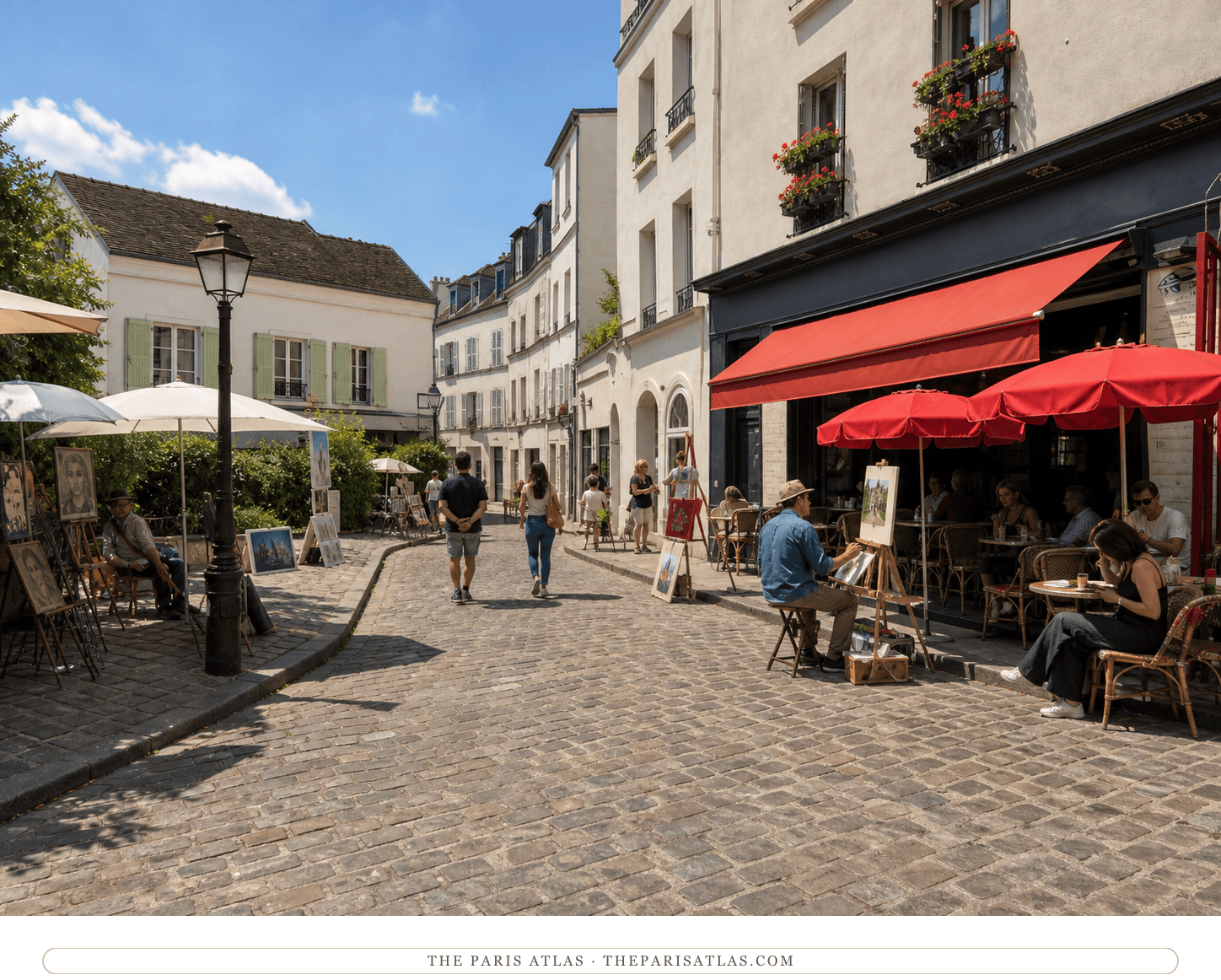
Montmartre's historic hilltop square, now shared by restaurant terraces and licensed artists—and the setting of Langston Hughes and Anne Marie Coussey's last Paris dinner together in 1924.
Visit the place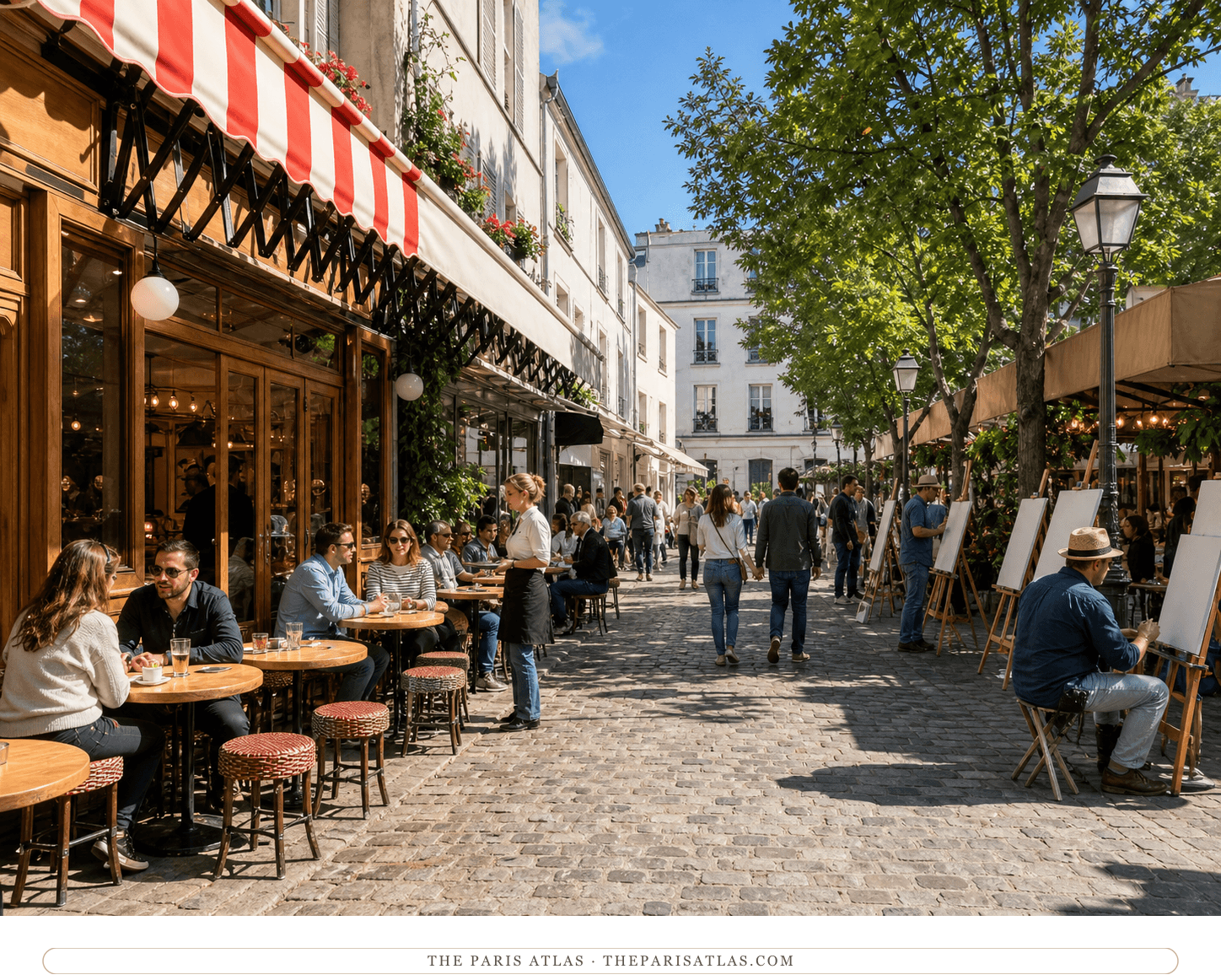
The hill north of Paris that was a separate village until 1860 and an artists' quarter until the First World War — the district of Van Gogh's two Paris years, Toulouse-Lautrec's posters, the Bateau-Lavoir and the Moulin Rouge.
Visit the placeThe sources below include histories, archival materials, scholarly research, and official records that informed this page. They document 49 rue Gabrielle, the people connected to it, and its place in Paris.


The city's Montmartre Picasso walk records 49 rue Gabrielle as the site of his first Paris studio, installed in 1900.

Map data used to verify addresses, geographic coordinates, and the placement associated with 49 rue Gabrielle.
Web source consulted for documented facts and historical context presented on the 49 rue Gabrielle page.
Web source consulted for documented facts and historical context presented on the 49 rue Gabrielle page.
These references provide the documented foundation for this page's history and context. Claim-level citations remain attached to the specific claims they support.
 Explore more resources
Newsletter
The cafés, studios, and walk-up flats where the work was made — one story from the map in every letter.