Albert Camus
Lived here · 1940
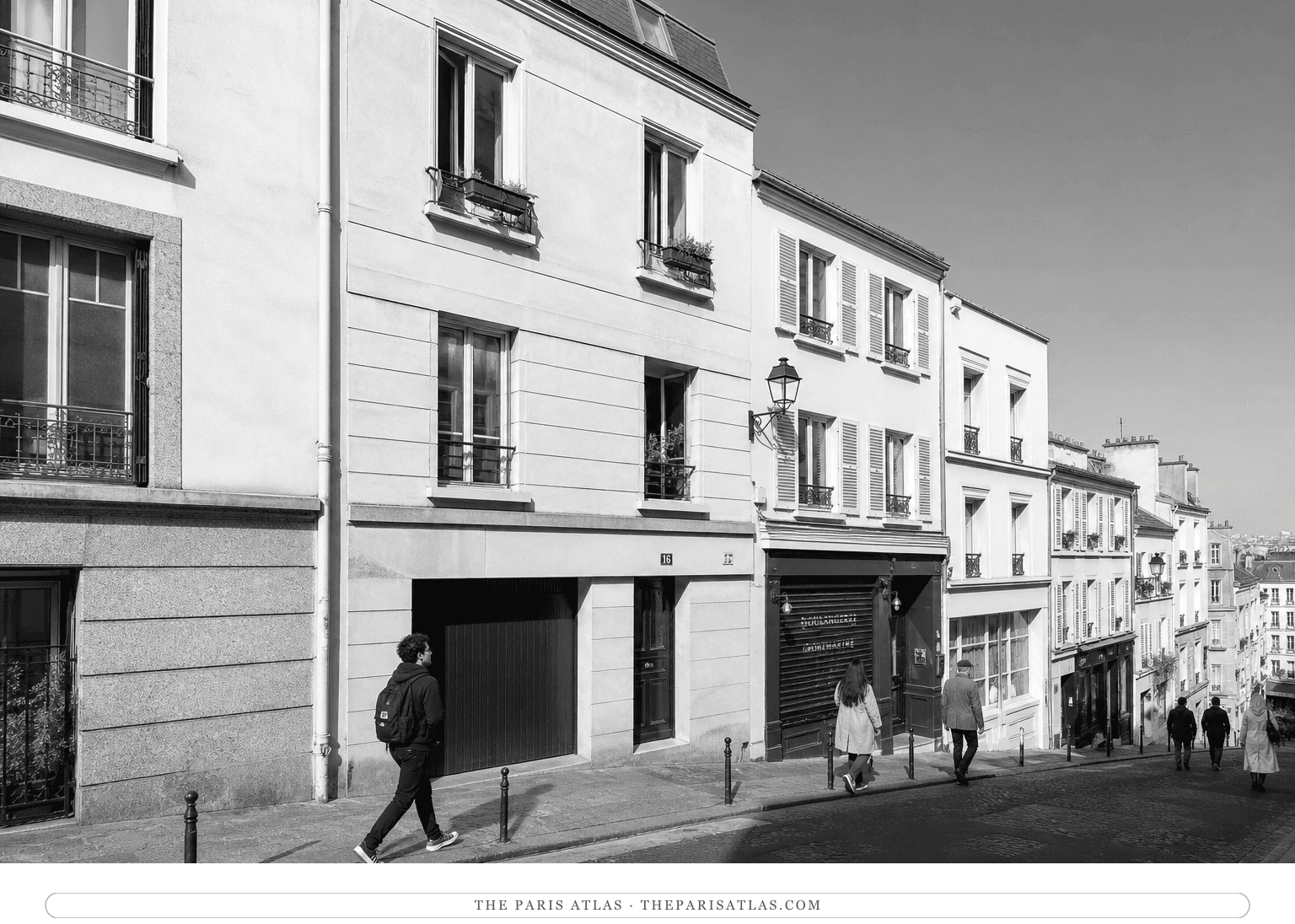
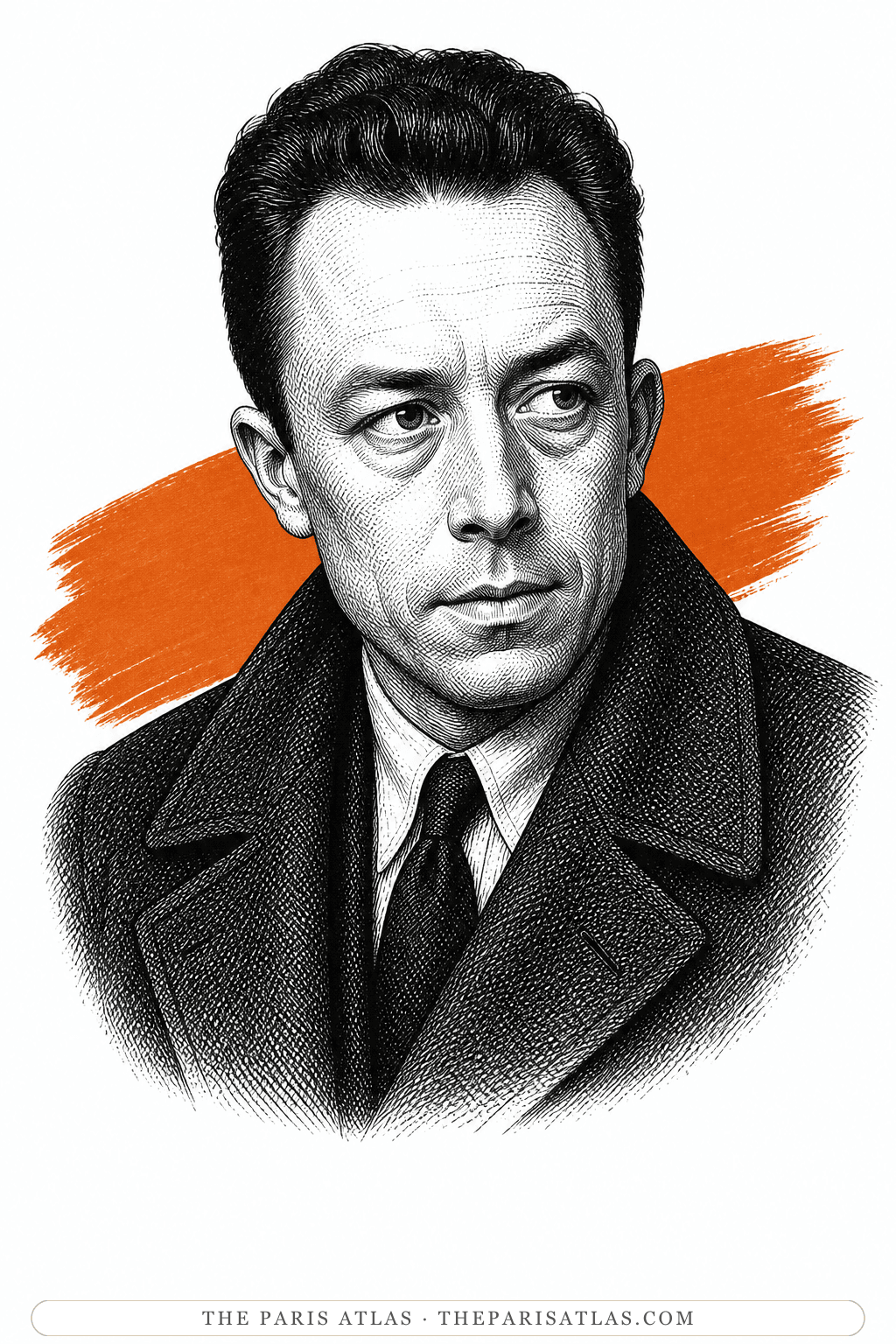
Camus finished L'Étranger in a room at the Hôtel du Poirier, 16 rue Ravignan, in early May 1940 — aged twenty-six, largely unknown, and weeks before Paris fell. The hotel has since been demolished.
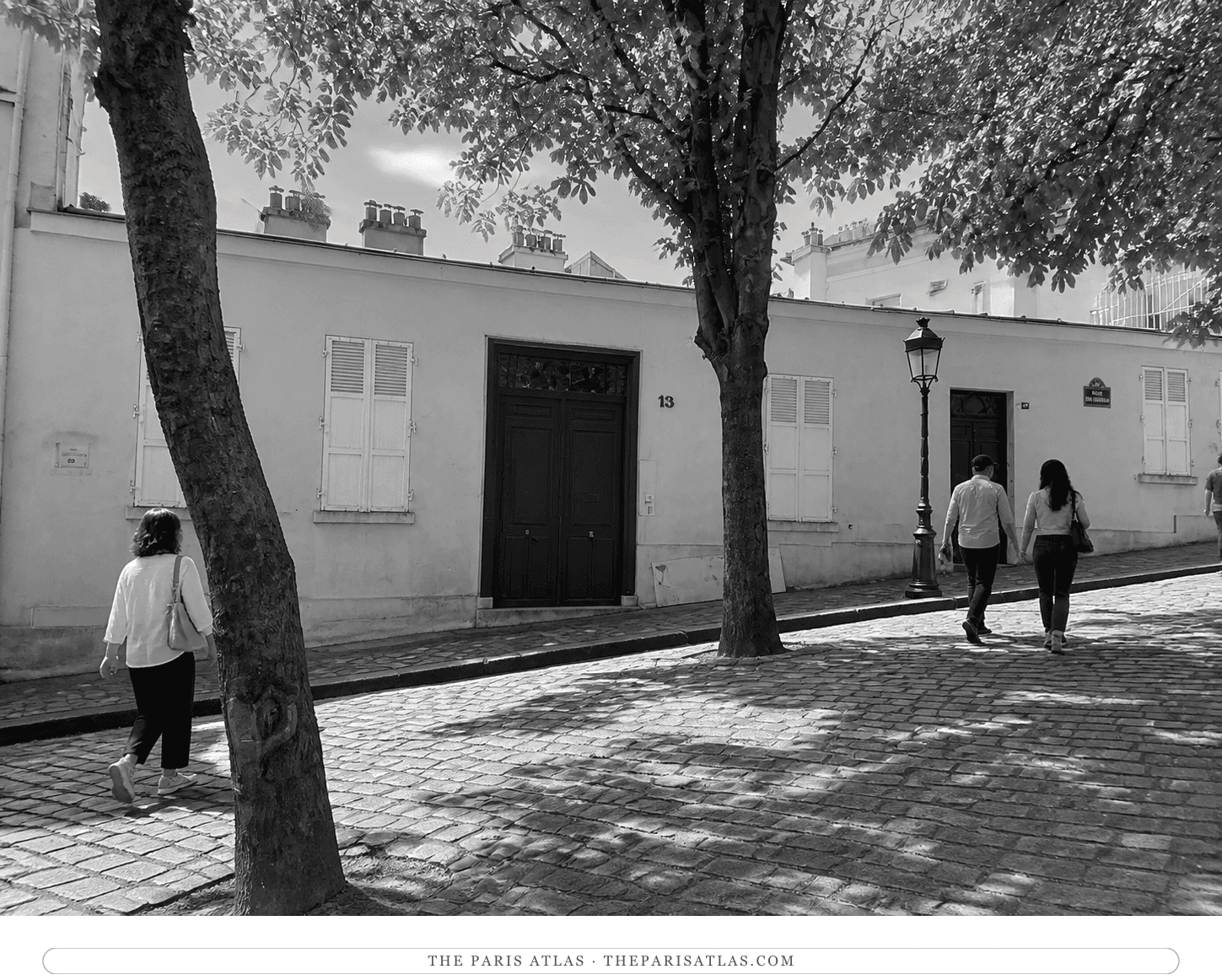
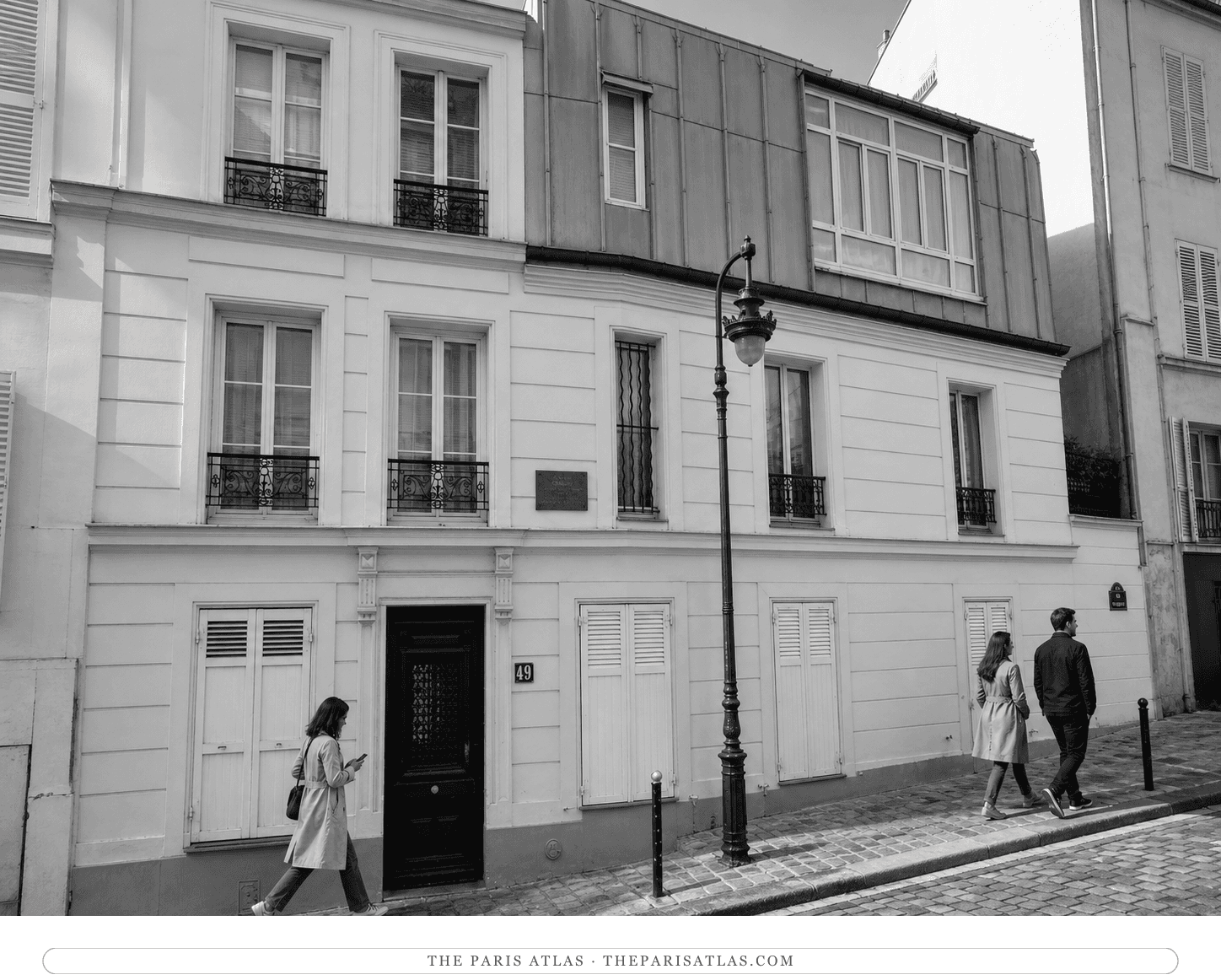
The site of the Hôtel du Poirier in Montmartre, where Albert Camus finished writing L'Étranger in early May 1940 — in a hotel room, at twenty-six, in the weeks before the German army reached Paris. The hotel is gone.

Albert Camus came to Paris in 1940 and took a room at the Hôtel du Poirier, 16 rue Ravignan, on the Montmartre hillside. In early May of that year he finished L'Étranger there.
The timing is the thing. May 1940 is the month the German offensive broke through in the Ardennes. Camus completed a novel about a man who feels nothing at his mother's funeral, and is condemned less for a killing than for that absence of feeling, in the weeks before Paris fell. He was twenty-six and largely unknown.
The street is the same one as the Bateau-Lavoir, at number 13 — Picasso's studio, where Les Demoiselles d'Avignon was painted in 1907. Two of the defining works of twentieth-century European art were made about thirty metres apart, three decades apart, by men who were both broke at the time and neither of whom was French.
The hotel has been demolished. There is nothing at the address, which is worth saying plainly rather than sending anyone to look for a plaque.
Camus takes a room at the Hôtel du Poirier, 16 rue Ravignan.
He finishes L'Étranger there.
He moves to the Hôtel Madison on the boulevard Saint-Germain; Paris falls to the German army.
L'Étranger is published by Gallimard.
He finished it in a room at the Hôtel du Poirier, 16 rue Ravignan in Montmartre, in early May 1940. He was twenty-six and largely unknown, and Paris fell to the German army the following month.
No — the Hôtel du Poirier has been demolished. The address is on the record but there is no building and no plaque, so this is a site to know about rather than visit.
The Bateau-Lavoir, at number 13 — Picasso's studio, where he painted Les Demoiselles d'Avignon in 1907. Two defining works of twentieth-century European art were made about thirty metres apart, three decades apart, by men who were both broke and neither of whom was French.
Lived here · 1940
Camus finished L'Étranger in a room at the Hôtel du Poirier, 16 rue Ravignan, in early May 1940 — aged twenty-six, largely unknown, and weeks before Paris fell. The hotel has since been demolished.

A ramshackle Montmartre building of cheap artists' studios, where Pablo Picasso lived and worked from 1904 and painted Les Demoiselles d'Avignon in 1907 — the picture that broke the rules of European painting. The original burned down in 1970; the rebuilt version still holds studios.
Visit the place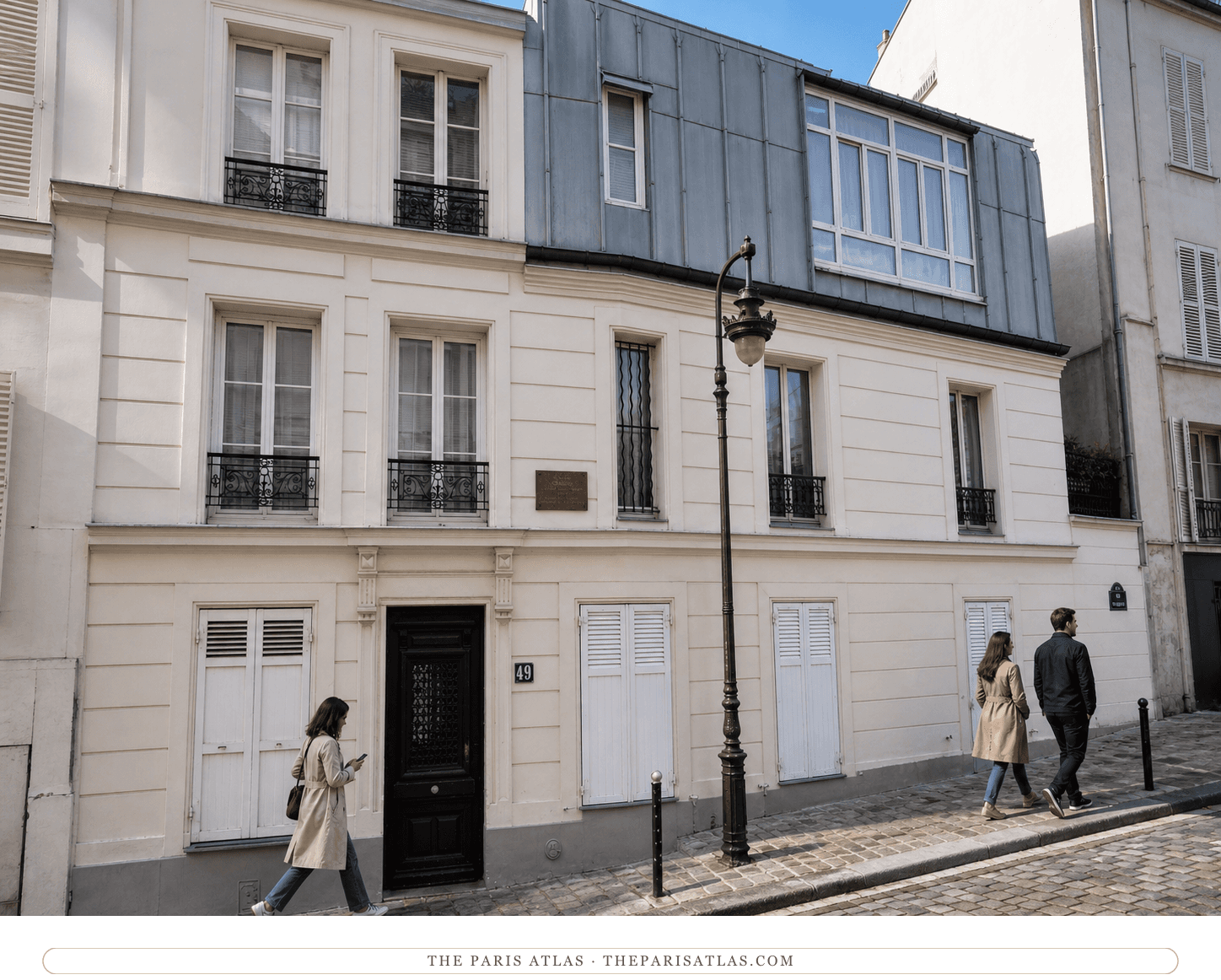
Where Pablo Picasso set up his first studio in Paris, in 1900, at the age of eighteen — four years before the Bateau-Lavoir and seven before Les Demoiselles d'Avignon.
Visit the place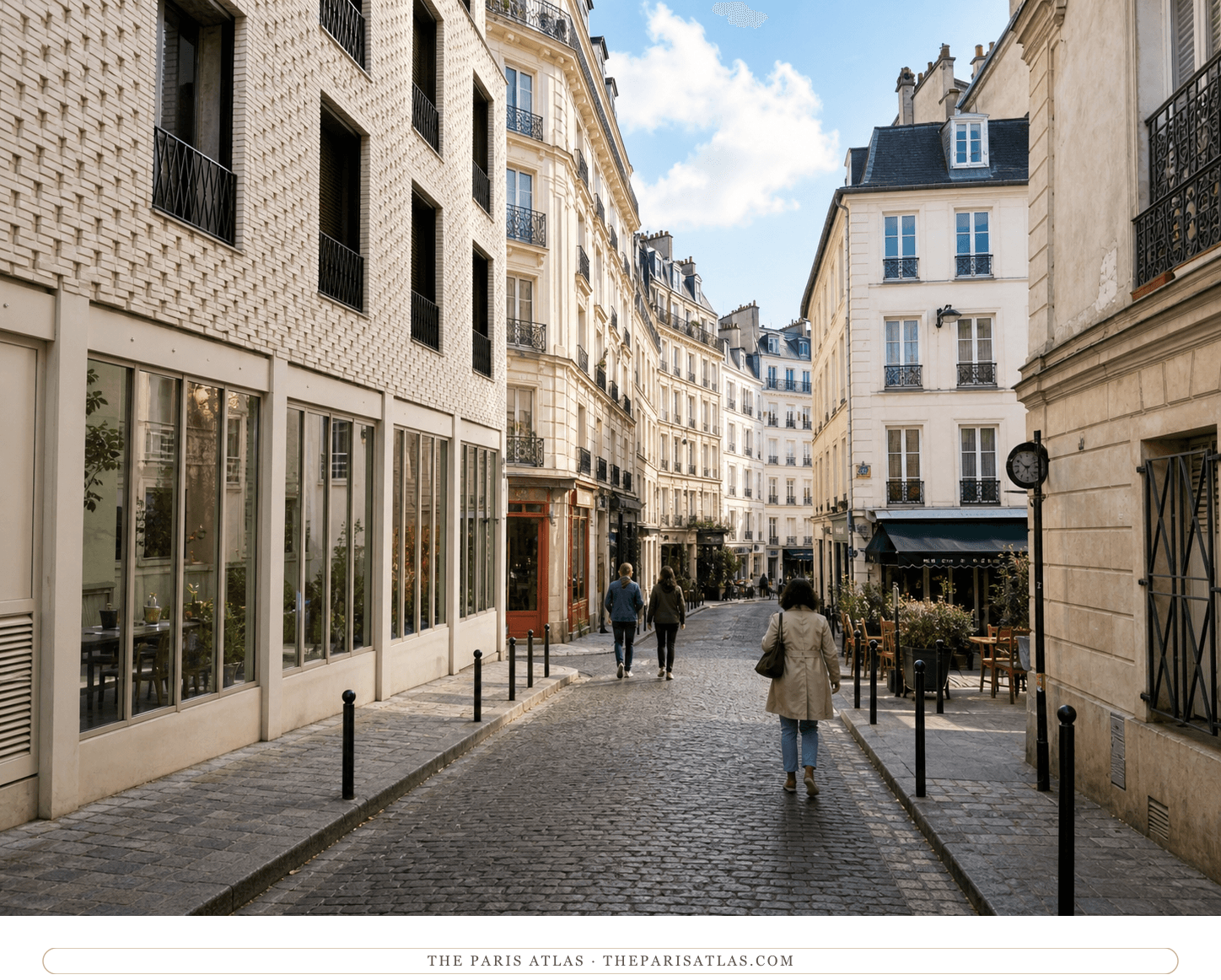
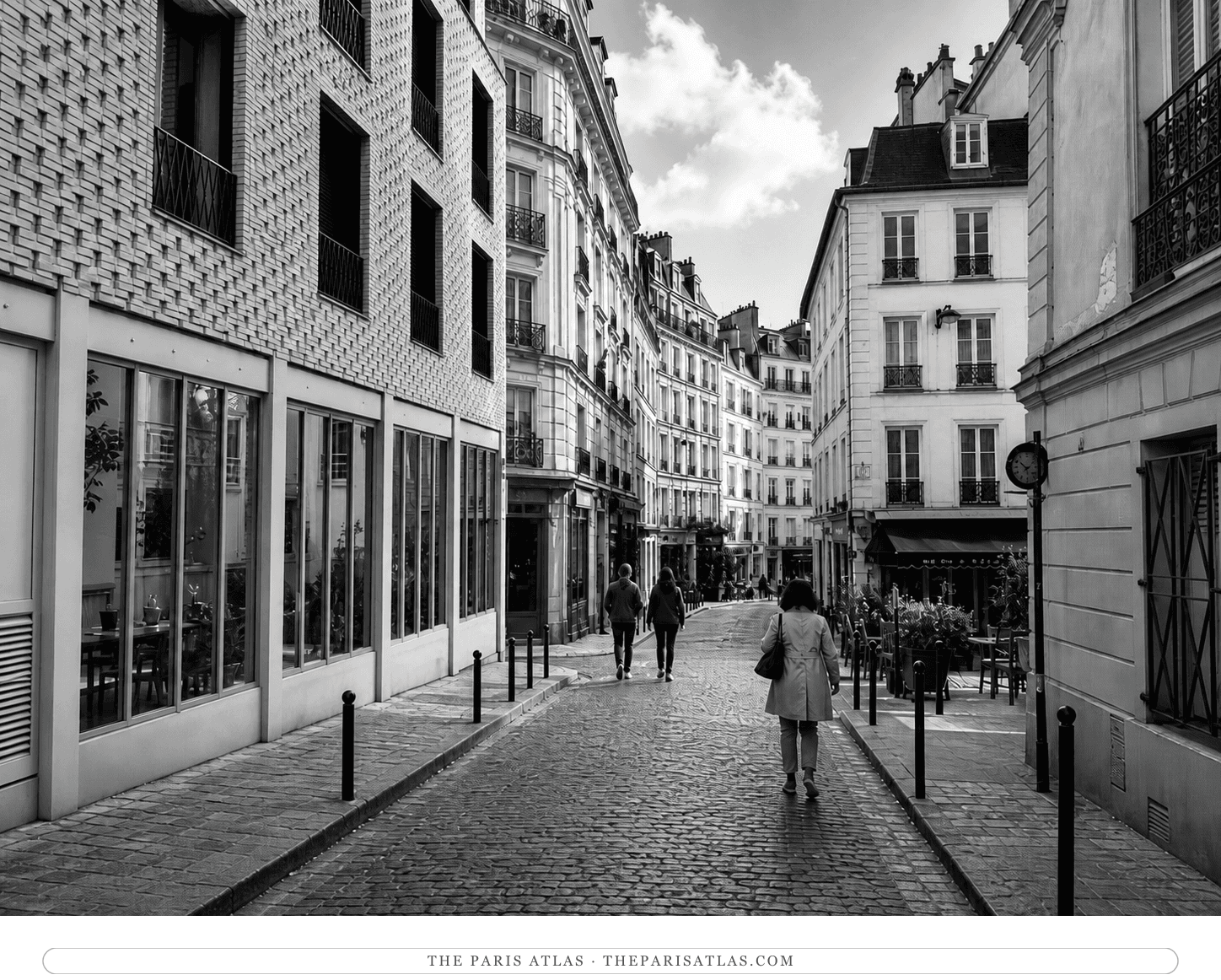
A freely walkable nineteenth-century Montmartre street of slopes, cobbles and apartment façades, and the deliberately imprecise location of Langston Hughes's second Paris attic in 1924.
Visit the place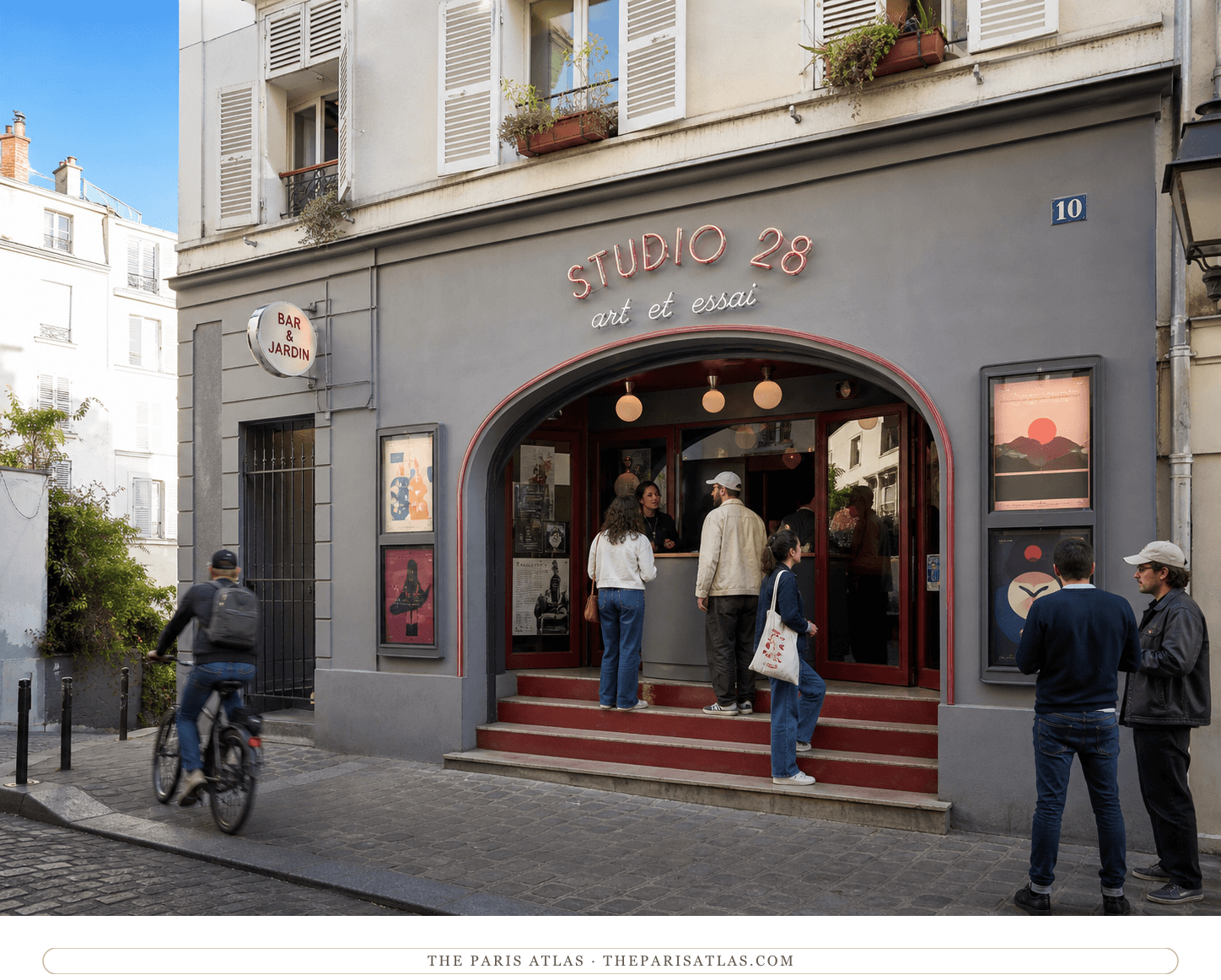
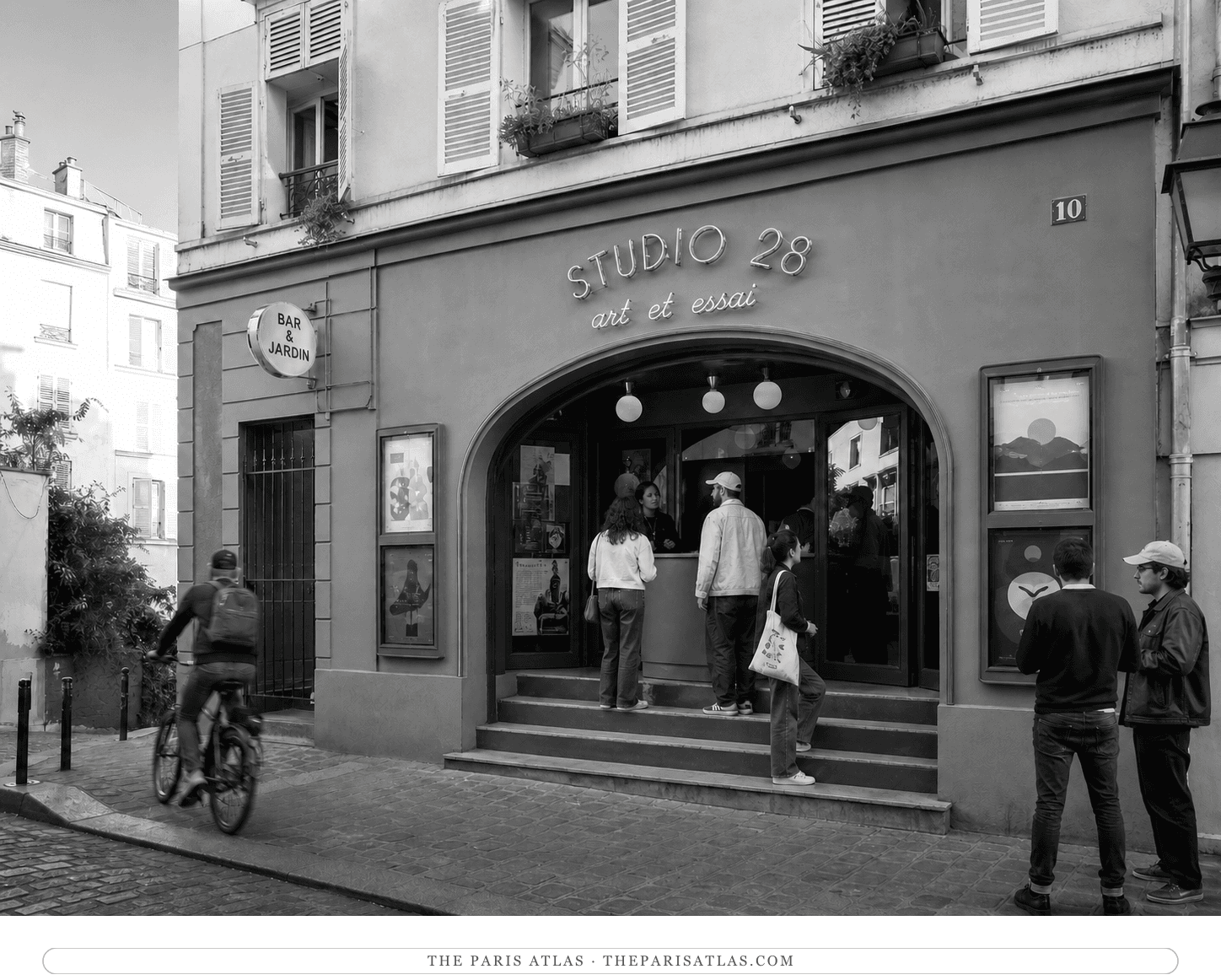
A small Montmartre cinema, opened in 1928 and still running. It gave Un Chien andalou an eight-month run from October 1929, and in December 1930 its screening of Buñuel and Dalí's L'Âge d'or ended with far-right groups attacking the auditorium and slashing the paintings hanging in the foyer.
Visit the placeThe sources below include histories, archival materials, scholarly research, and official records that informed this page. They document 16 rue Ravignan, the people connected to it, and its place in Paris.


The city's Camus walk: the Hôtel du Poirier at 16 rue Ravignan, now demolished, where he completed L'Étranger in early May 1940.

Map data used to verify addresses, geographic coordinates, and the placement associated with 16 rue Ravignan.
Biographical evidence used to verify chronology, relationships, and historical context connected to 16 rue Ravignan.
Web source consulted for documented facts and historical context presented on the 16 rue Ravignan page.
These references provide the documented foundation for this page's history and context. Claim-level citations remain attached to the specific claims they support.
 Explore more resources
Newsletter
The cafés, studios, and walk-up flats where the work was made — one story from the map in every letter.