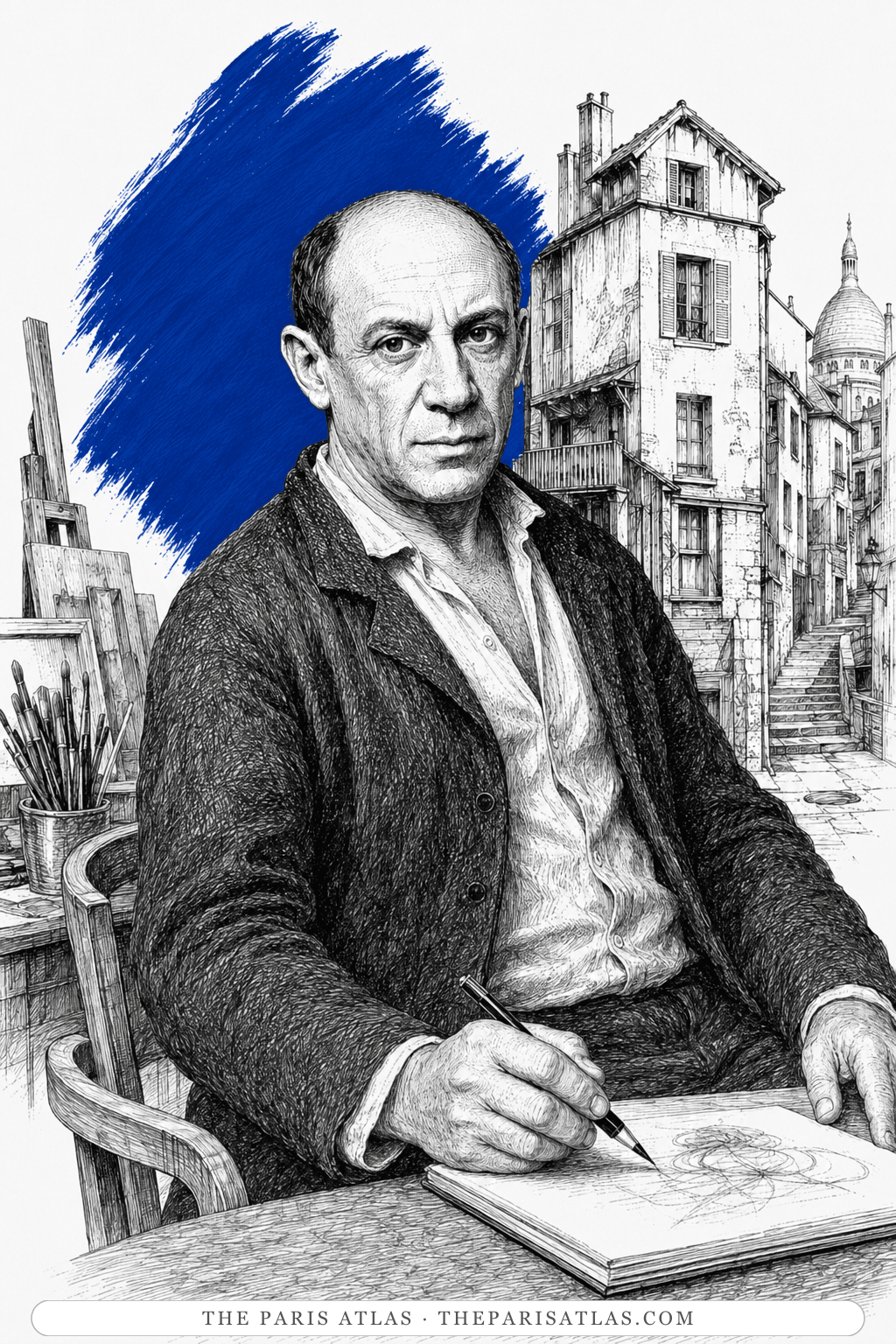
Pablo Picasso
Picasso moved into the Bateau-Lavoir in 1904, aged twenty-two, and stayed until 1909, living there with Fernande Olivier. He painted Les Demoiselles d'Avignon in the building in 1907 and kept it turned to the wall.
A ramshackle Montmartre building of cheap artists' studios, where Pablo Picasso lived and worked from 1904 and painted Les Demoiselles d'Avignon in 1907 — the picture that broke the rules of European painting. The original burned down in 1970; the rebuilt version still holds studios.

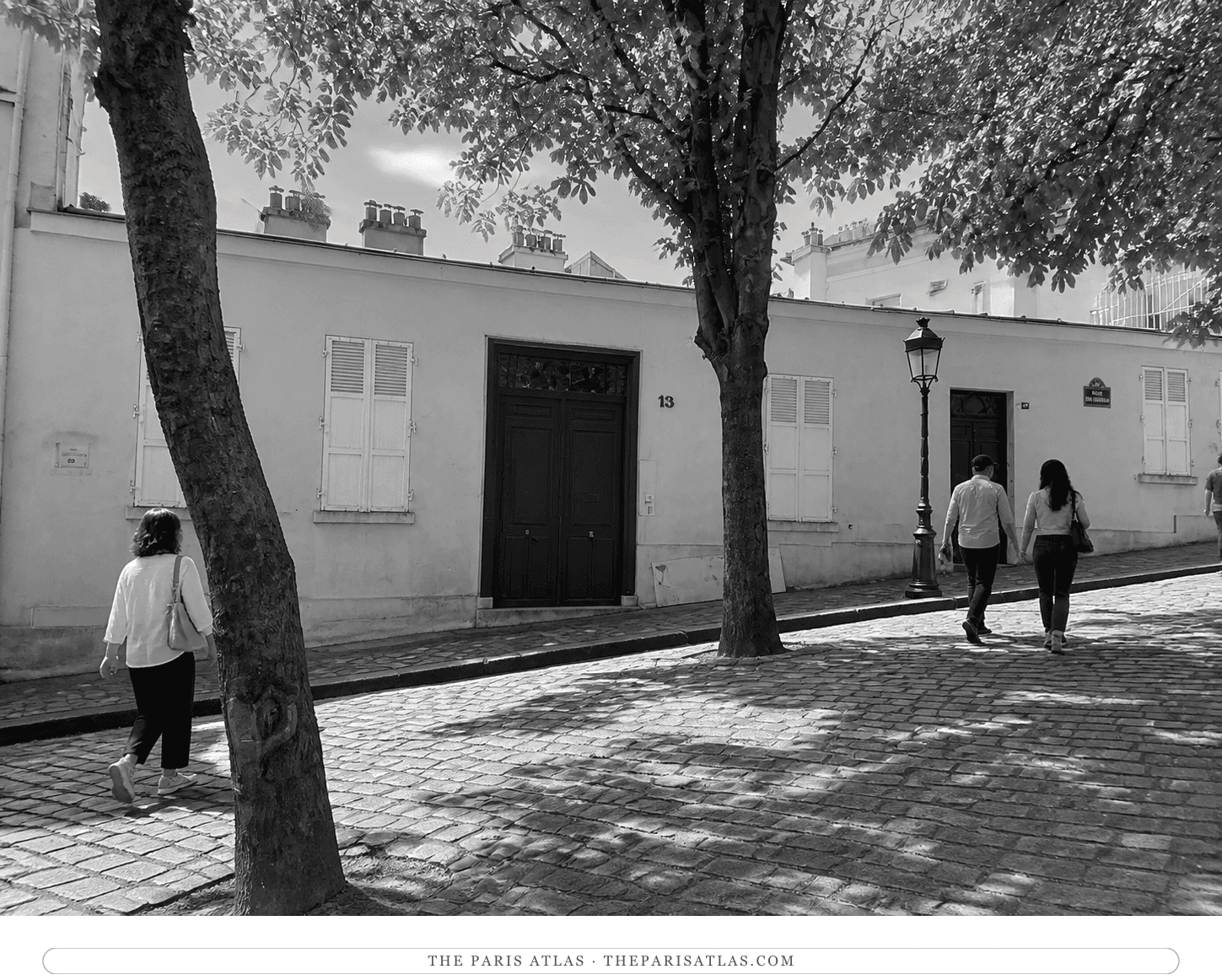
The Bateau-Lavoir was a wreck. It stood on the steep slope of Montmartre at 13 rue Ravignan — now the place Émile-Goudeau — a wooden building of cheap studios with one tap, no gas, freezing in winter and unbearable in summer. The name is a joke about it: it was said to look like the laundry boats moored on the Seine.
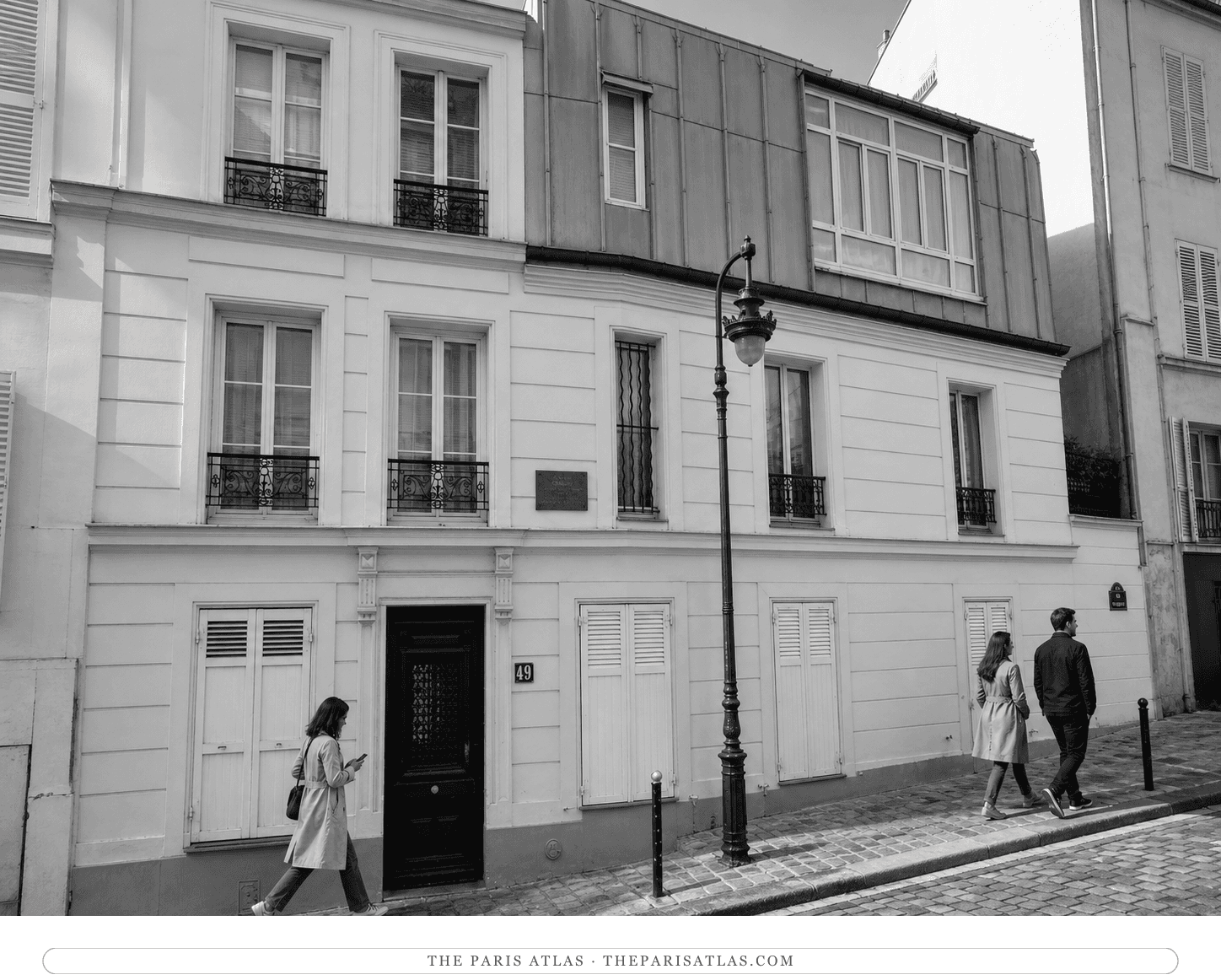
Pablo Picasso moved in in 1904, aged twenty-two, having spent his first Paris years at 49 rue Gabrielle a few streets away. He lived there with Fernande Olivier, and the years cover his move out of the Blue Period into the Rose Period and then out of both into something with no name yet. He left the living quarters in 1909 for a comfortable flat on the boulevard de Clichy once the work began to sell, but kept the studio here for a few years more — which is why sources give his Bateau-Lavoir years as ending variously in 1909 or 1912.
In 1907, in that building, he painted Les Demoiselles d'Avignon: five women, faces borrowed from Iberian sculpture and African masks, bodies broken into planes that refuse a single viewpoint. He kept it turned to the wall. Even the painters who saw it were disturbed by it, and it was not publicly exhibited for years. It is the picture from which Cubism proceeds, and it was made in an unheated Montmartre shack.
The building was a scene as much as an address. Max Jacob, Guillaume Apollinaire, Georges Braque, Amedeo Modigliani, Juan Gris and Gertrude Stein all passed through it. The poverty was real and so was the concentration: it is one of the few places where you can say a whole direction in art was worked out in one set of rooms over five years.
The original building burned down in 1970. What stands on the square now is a rebuild, still used as artists' studios and still closed to visitors. So there is nothing to go inside — but the square, the slope and the view are the ones Picasso walked up, and there is a plaque.
Picasso moves into the Bateau-Lavoir at 13 rue Ravignan, aged twenty-two.
The Blue Period gives way to the Rose Period.
He paints Les Demoiselles d'Avignon in the building, and keeps it turned to the wall.
Picasso moves his living quarters to 11 boulevard de Clichy, keeping the studio here.
He gives up the Bateau-Lavoir studio.
The original building is destroyed by fire.
Rebuilt, and returned to use as artists' studios.
A building of cheap artists' studios on Montmartre, at 13 rue Ravignan — now 13 place Émile-Goudeau. It was notoriously squalid: wooden, with one tap and no gas. Picasso lived and worked there from 1904 to 1909, and it became the meeting place of the circle around him.
Here, in 1907. The painting — five women with faces drawn from Iberian sculpture and African masks, bodies broken into planes — is the picture Cubism proceeds from, and it was made in an unheated Montmartre studio. Picasso kept it turned to the wall, and it was not publicly exhibited for years.
It is a joke about how it looked. The building was said to resemble the bateaux-lavoirs — the laundry boats moored on the Seine where washerwomen worked. The name stuck.
No. The original burned down in 1970, and the rebuilt building is in use as artists' studios and closed to the public. What you can see is the façade on the place Émile-Goudeau, the plaque, and the square itself, which is on the standard Montmartre walk.
Picasso moved into the Bateau-Lavoir in 1904, aged twenty-two, and stayed until 1909, living there with Fernande Olivier. He painted Les Demoiselles d'Avignon in the building in 1907 and kept it turned to the wall.

The site of the Hôtel du Poirier in Montmartre, where Albert Camus finished writing L'Étranger in early May 1940 — in a hotel room, at twenty-six, in the weeks before the German army reached Paris. The hotel is gone.
Visit the place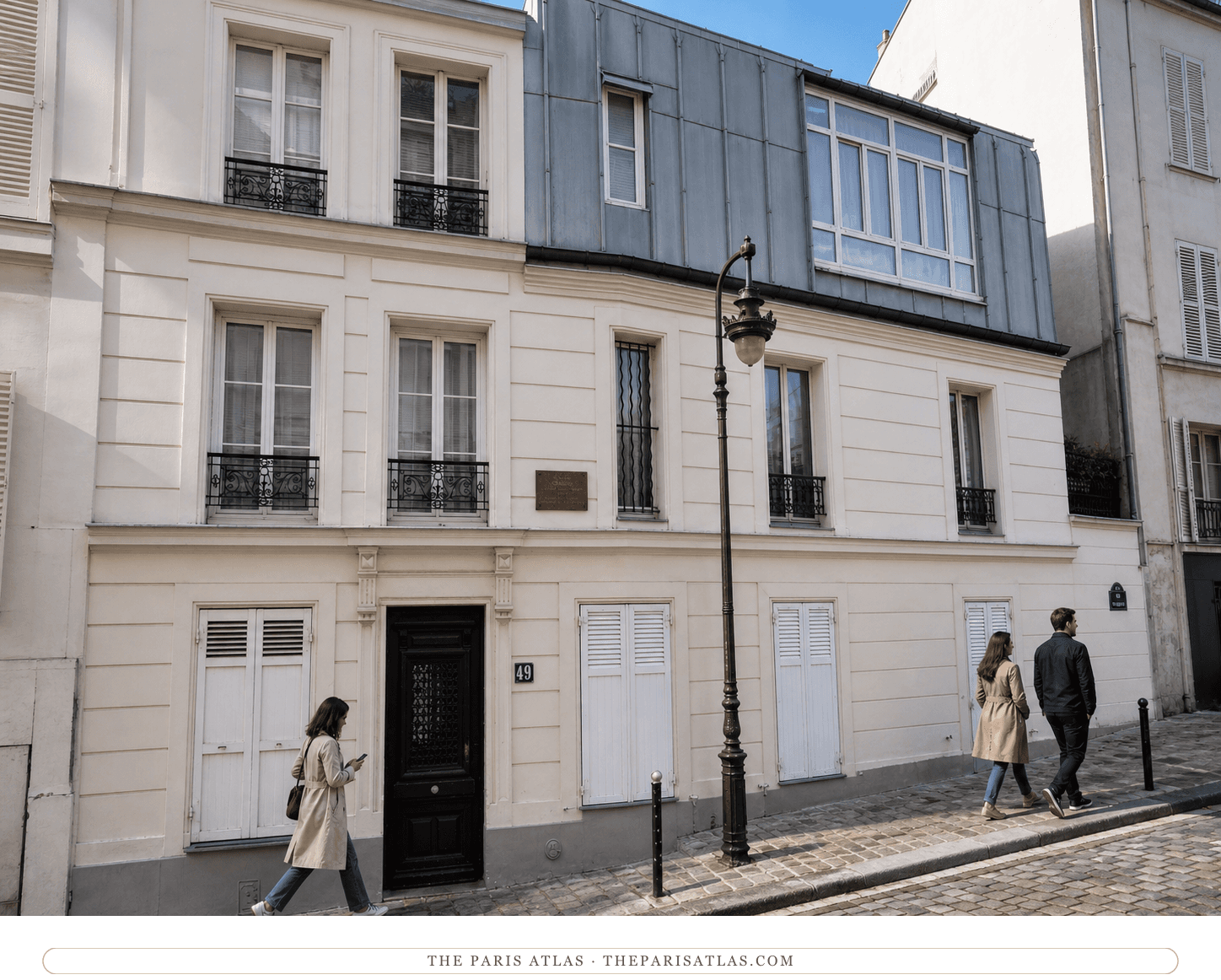
Where Pablo Picasso set up his first studio in Paris, in 1900, at the age of eighteen — four years before the Bateau-Lavoir and seven before Les Demoiselles d'Avignon.
Visit the place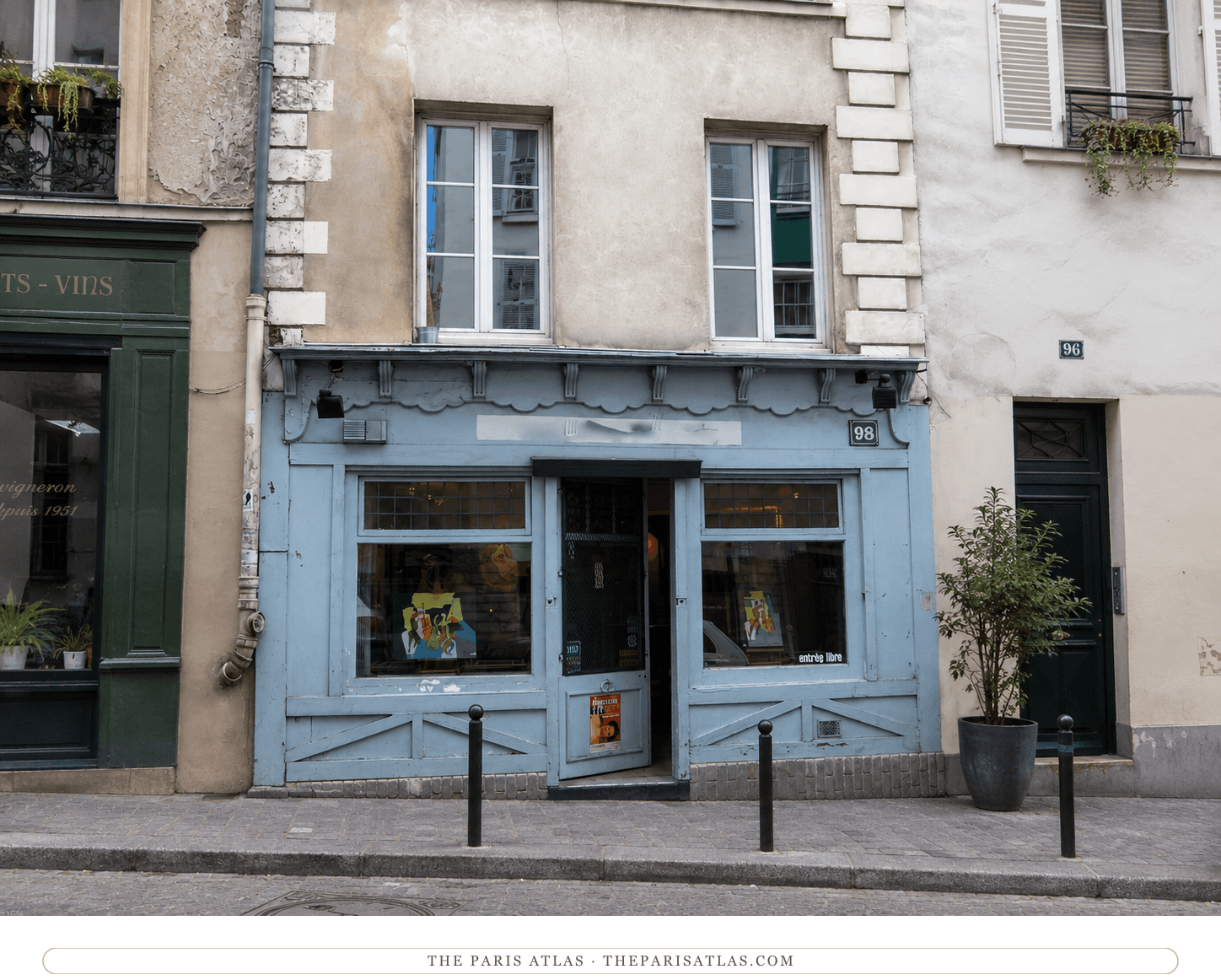
The Montmartre flat Louis-Ferdinand Céline kept for twelve years, and the desk behind both of his novels — Journey to the End of the Night and Death on the Installment Plan were written at this address.
Visit the place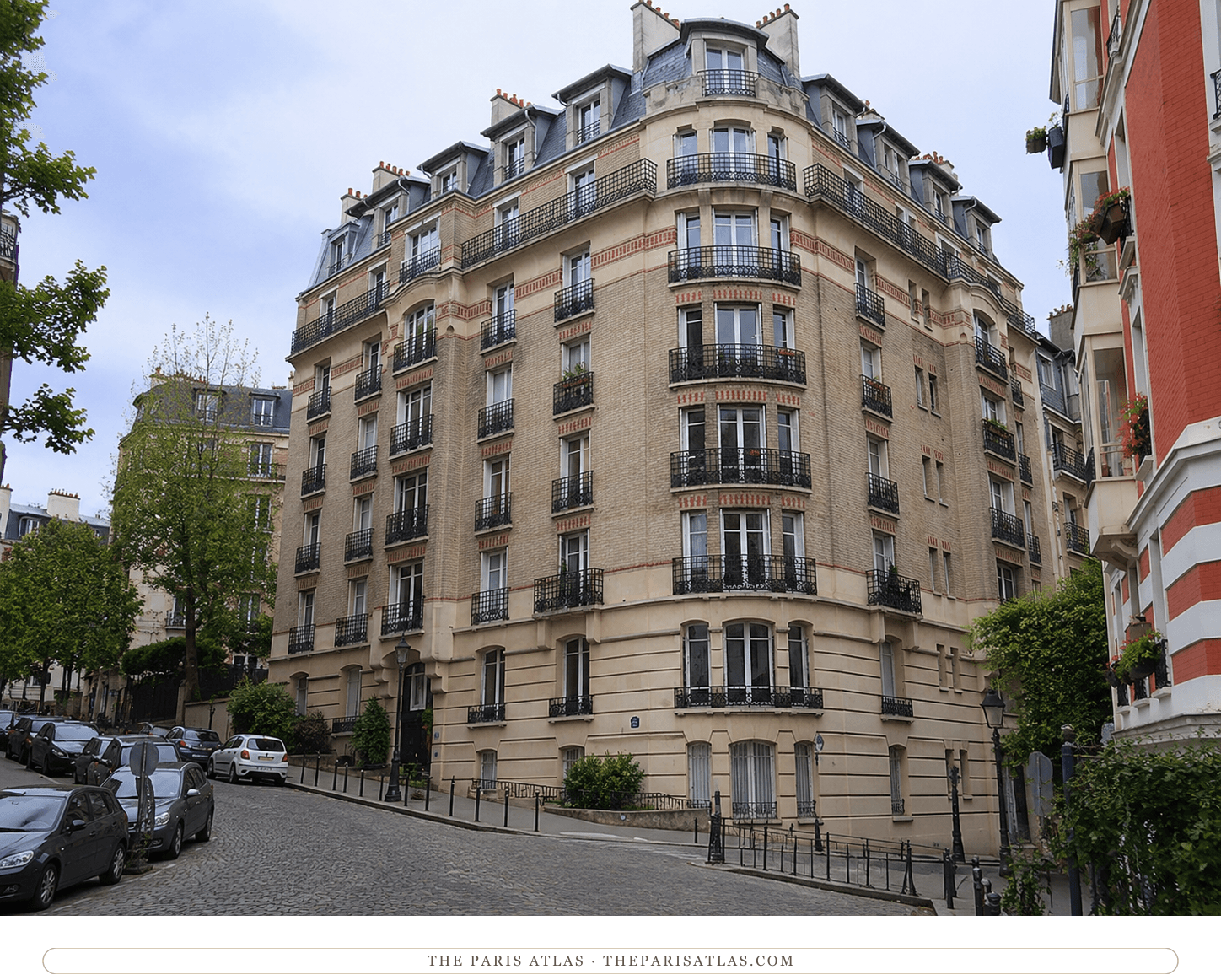
Louis-Ferdinand Céline's Montmartre apartment during the Occupation — where Gen Paul came up from his studio a few doors away, and where the manuscripts later famous as 'the lost trove' were left behind in June 1944.
Visit the placeThe sources below include histories, archival materials, scholarly research, and official records that informed this page. They document Le Bateau-Lavoir, the people connected to it, and its place in Paris.


The city's Montmartre Picasso walk: the Bateau-Lavoir at 13 rue Ravignan, now the place Émile-Goudeau, and the years he lived there with Fernande Olivier.

Map data used to verify addresses, geographic coordinates, and the placement associated with Le Bateau-Lavoir.
Web source consulted for documented facts and historical context presented on the Le Bateau-Lavoir page.
Web source consulted for documented facts and historical context presented on the Le Bateau-Lavoir page.
Web source consulted for documented facts and historical context presented on the Le Bateau-Lavoir page.
Web source consulted for documented facts and historical context presented on the Le Bateau-Lavoir page.
These references provide the documented foundation for this page's history and context. Claim-level citations remain attached to the specific claims they support.
 Explore more resources
Newsletter
The cafés, studios, and walk-up flats where the work was made — one story from the map in every letter.