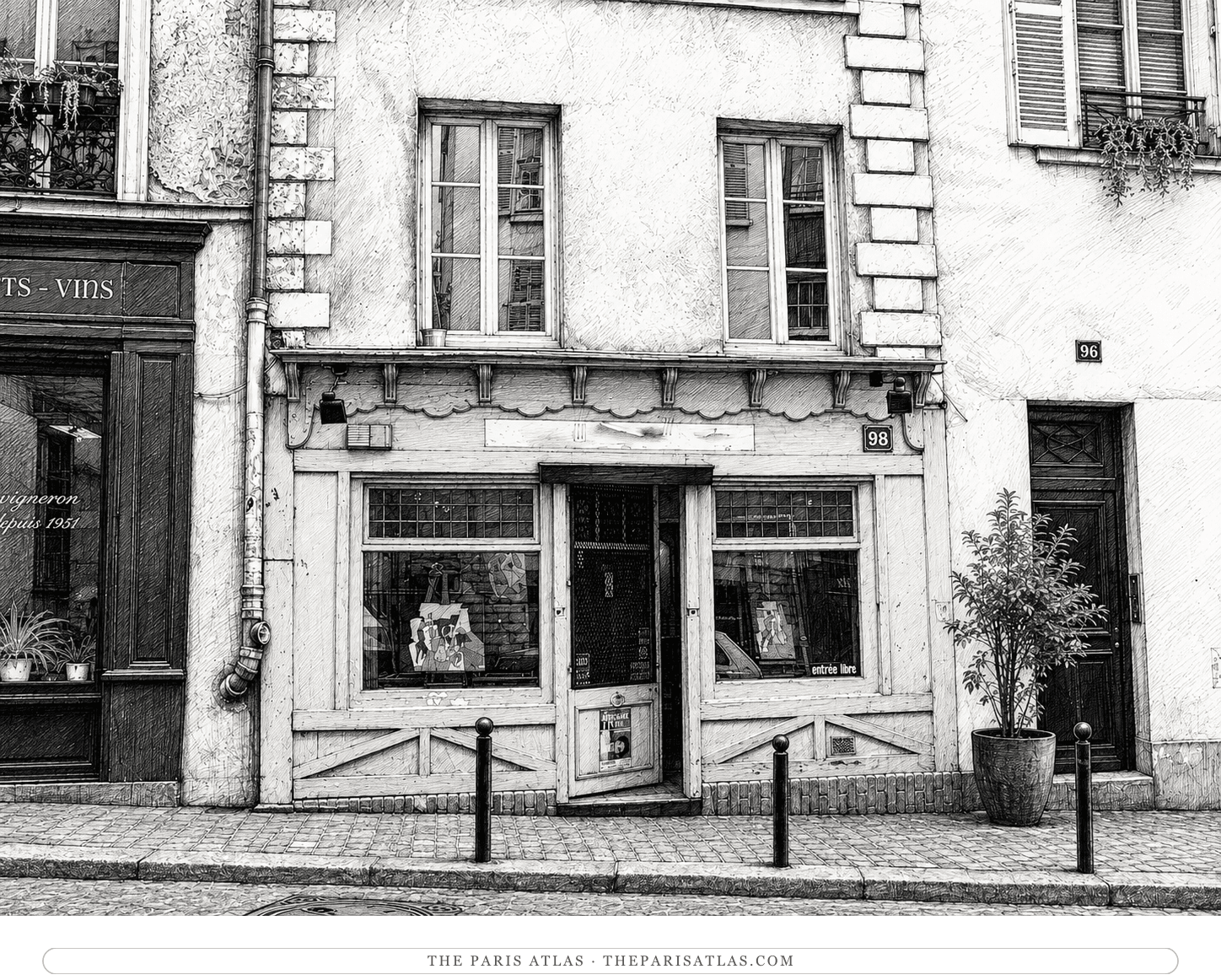

Written here
Death on the Installment Plan
Céline wrote the novel in his rue Lepic flat, returning from that Montmartre desk to the Passage Choiseul childhood transformed in its pages.
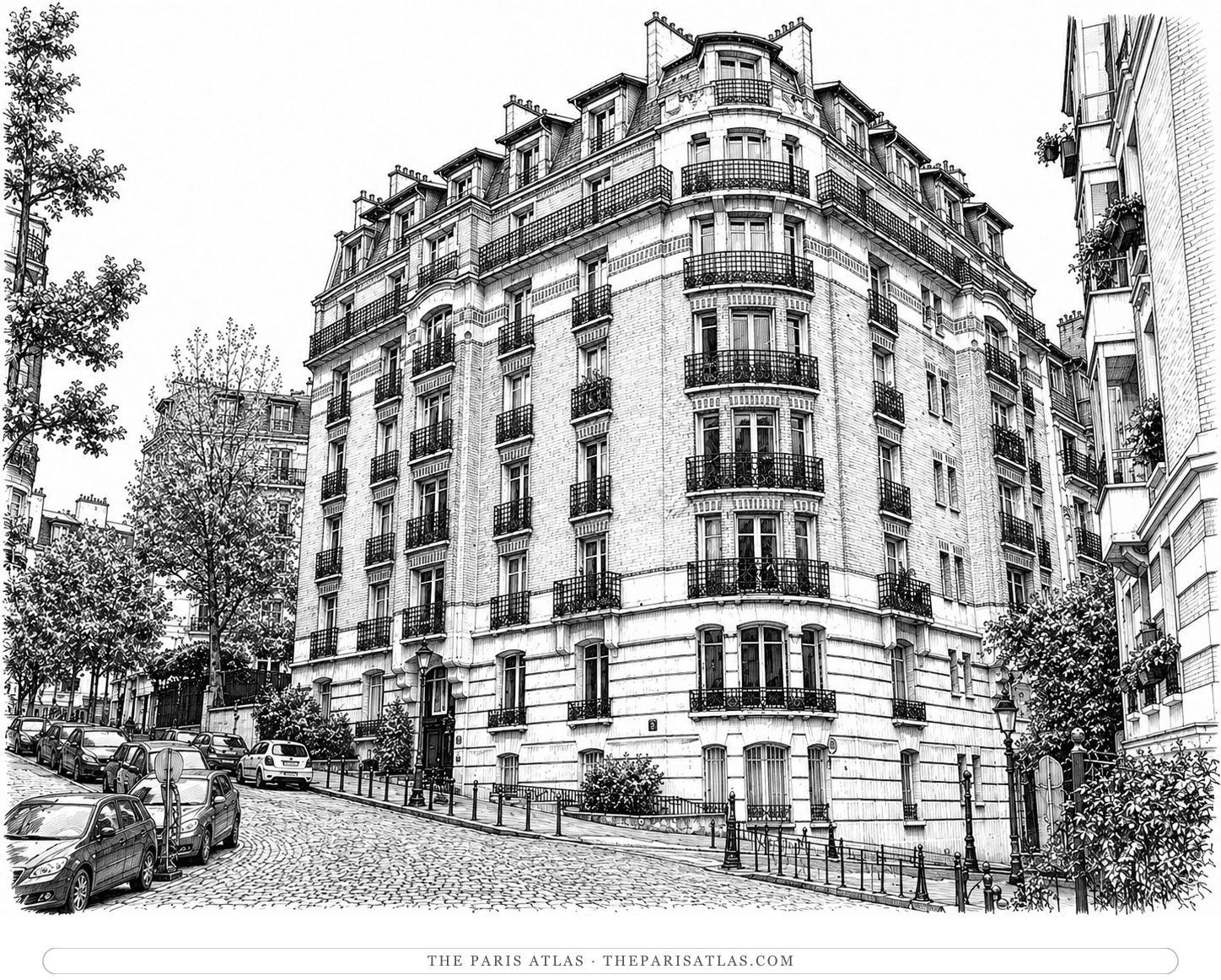
The Montmartre flat Louis-Ferdinand Céline kept for twelve years, and the desk behind both of his novels — Journey to the End of the Night and Death on the Installment Plan were written at this address.
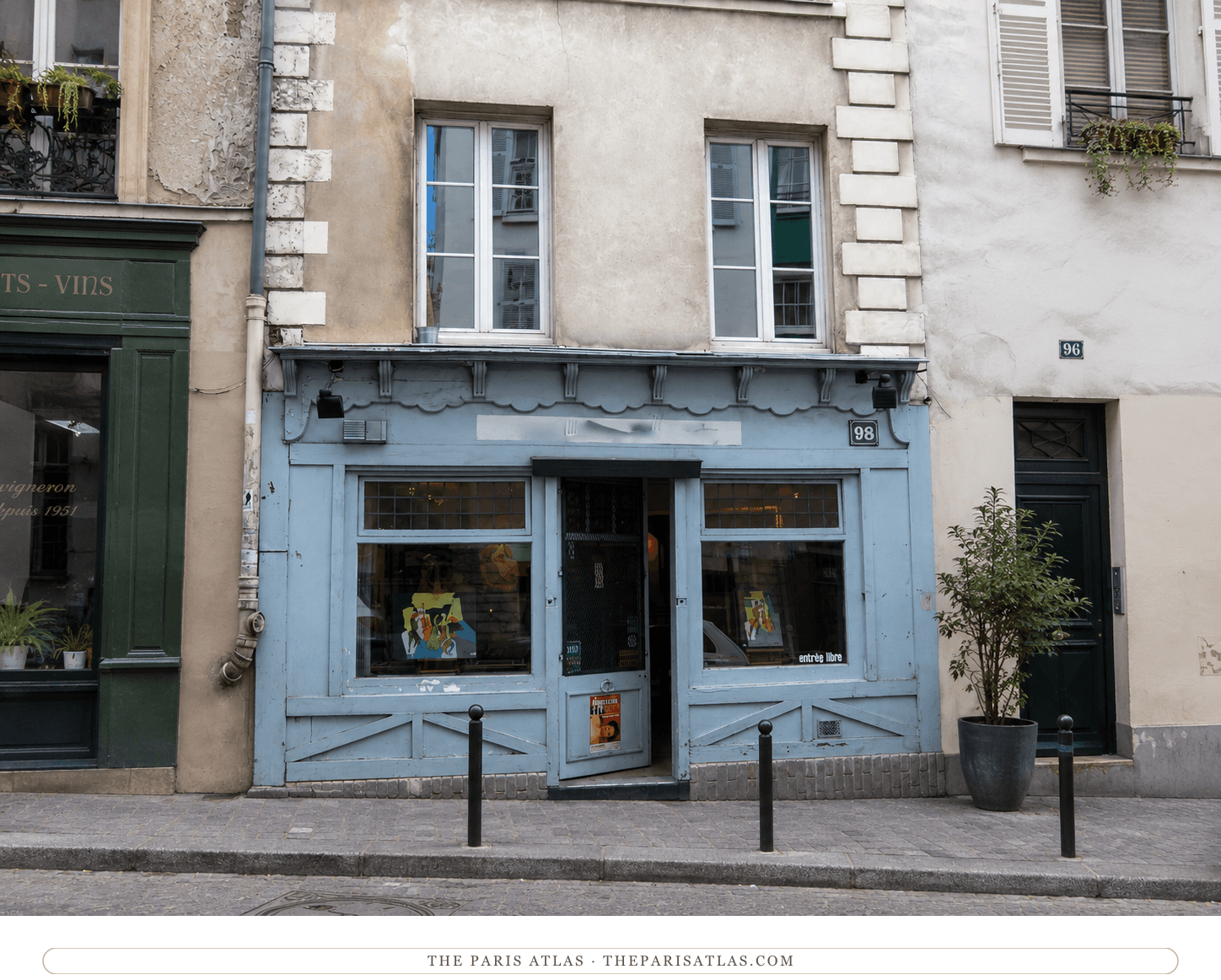
Louis-Ferdinand Céline took the flat at 98 rue Lepic in 1929, the year Dr Louis Destouches joined the founding team of the new municipal dispensary at Clichy. He kept it for twelve years, longer than any other address in his life. The arrangement that produced the books was set here and did not change: the surgery in the day, the writing at night, under his grandmother's name.
Journey to the End of the Night was published in 1932 and is the reason the address matters. Céline wrote it in a register borrowed from speech rather than from literary French — slang, interruption, the suspension points that became his signature — and ran the whole book through a single narrating voice until the voice, not the plot, was carrying it. Readers argued about the manner immediately, which is a fair measure of how far it sat from what a French novel was expected to sound like.
Death on the Installment Plan followed in 1936 and went back to the childhood in the Passage Choiseul. The style went further than the first book had: sentences broken into fragments, the ellipsis doing work that grammar normally does, the pitch held high for six hundred pages. It is the more extreme of the two, and the one later writers tended to name when they were describing what they had taken from him.
He left in March 1941 for a fifth-floor flat at 4 rue Girardon, a few streets across the Butte. The building on rue Lepic stands, its ground floor now a gallery with the door open to the street.
Takes the flat, the same year he joins the new dispensary at Clichy.
Journey to the End of the Night is published, written at this address.
Death on the Installment Plan follows, returning to the passage Choiseul childhood.
Leaves in March for 4 rue Girardon, a few streets away on the Butte.
The building stands, its ground floor trading as a gallery.
Written here
Céline wrote the novel in his rue Lepic flat, returning from that Montmartre desk to the Passage Choiseul childhood transformed in its pages.

Written here
Céline wrote his first novel at night in the Montmartre flat he kept while practicing medicine at the municipal dispensary in Clichy.

Lived here · 1929–1941
The longest tenancy of his life and the desk behind both novels — Journey to the End of the Night in 1932 and Death on the Installment Plan in 1936 were written here, in the years he was practising at the Clichy dispensary.
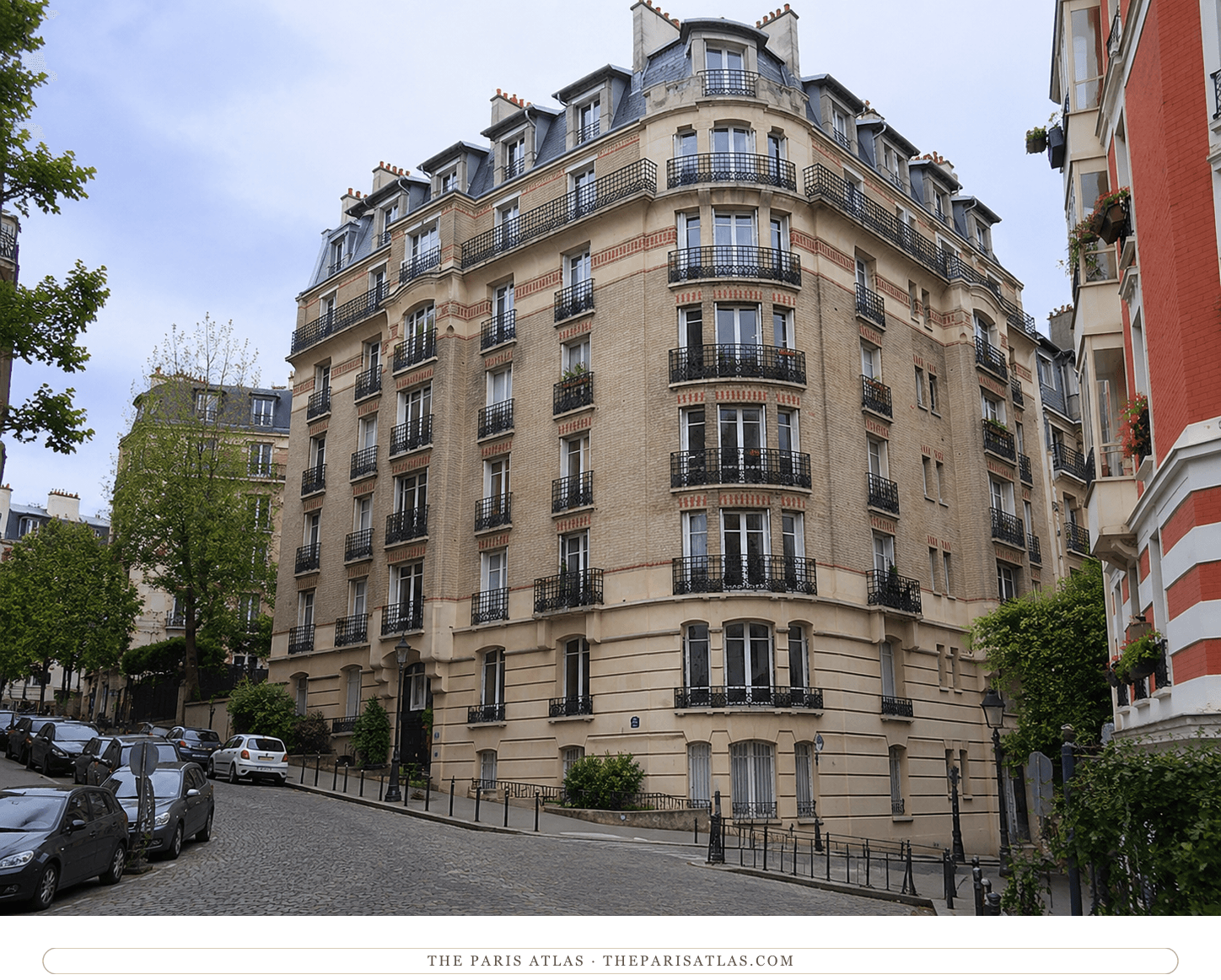
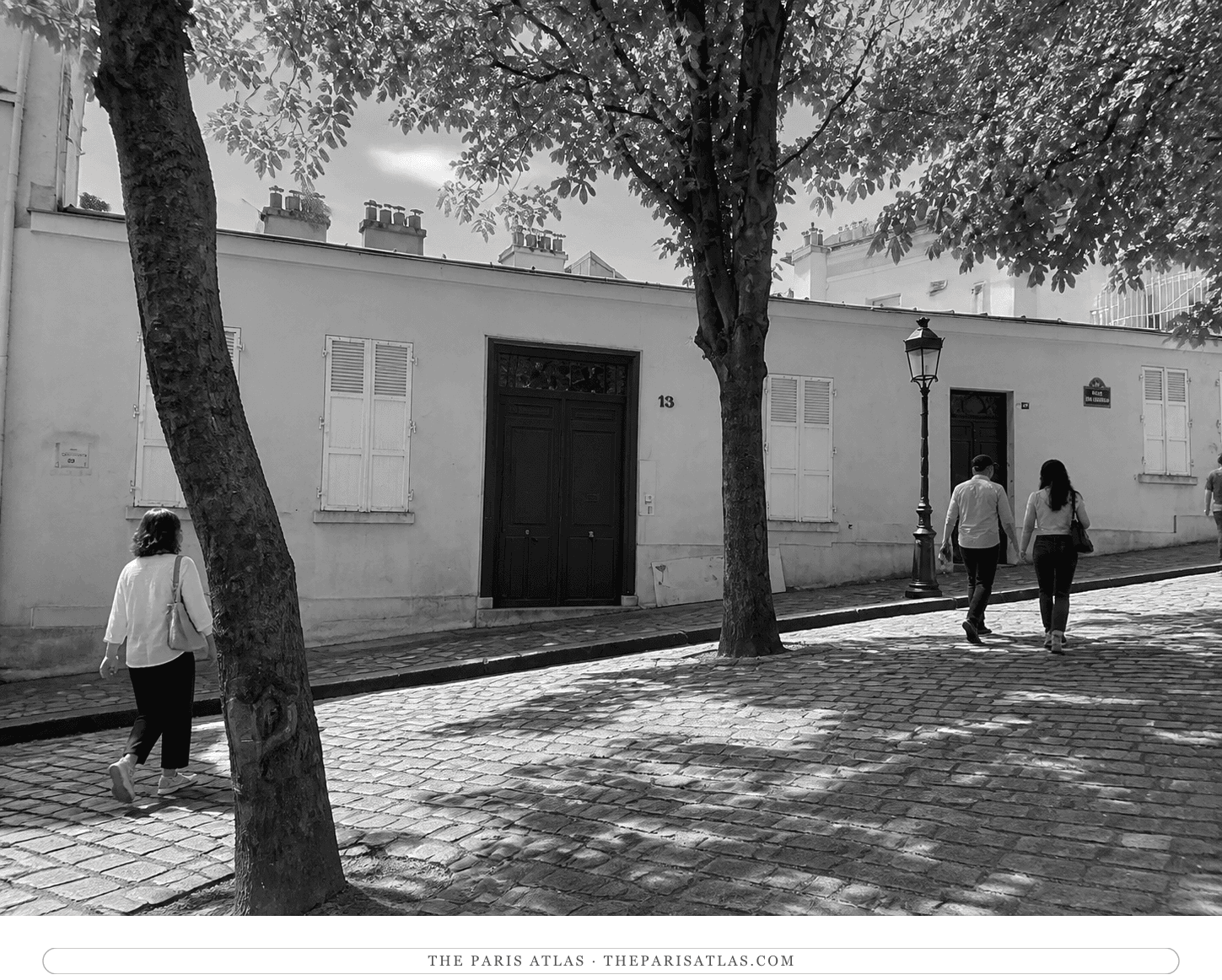
Louis-Ferdinand Céline's Montmartre apartment during the Occupation — where Gen Paul came up from his studio a few doors away, and where the manuscripts later famous as 'the lost trove' were left behind in June 1944.
Visit the place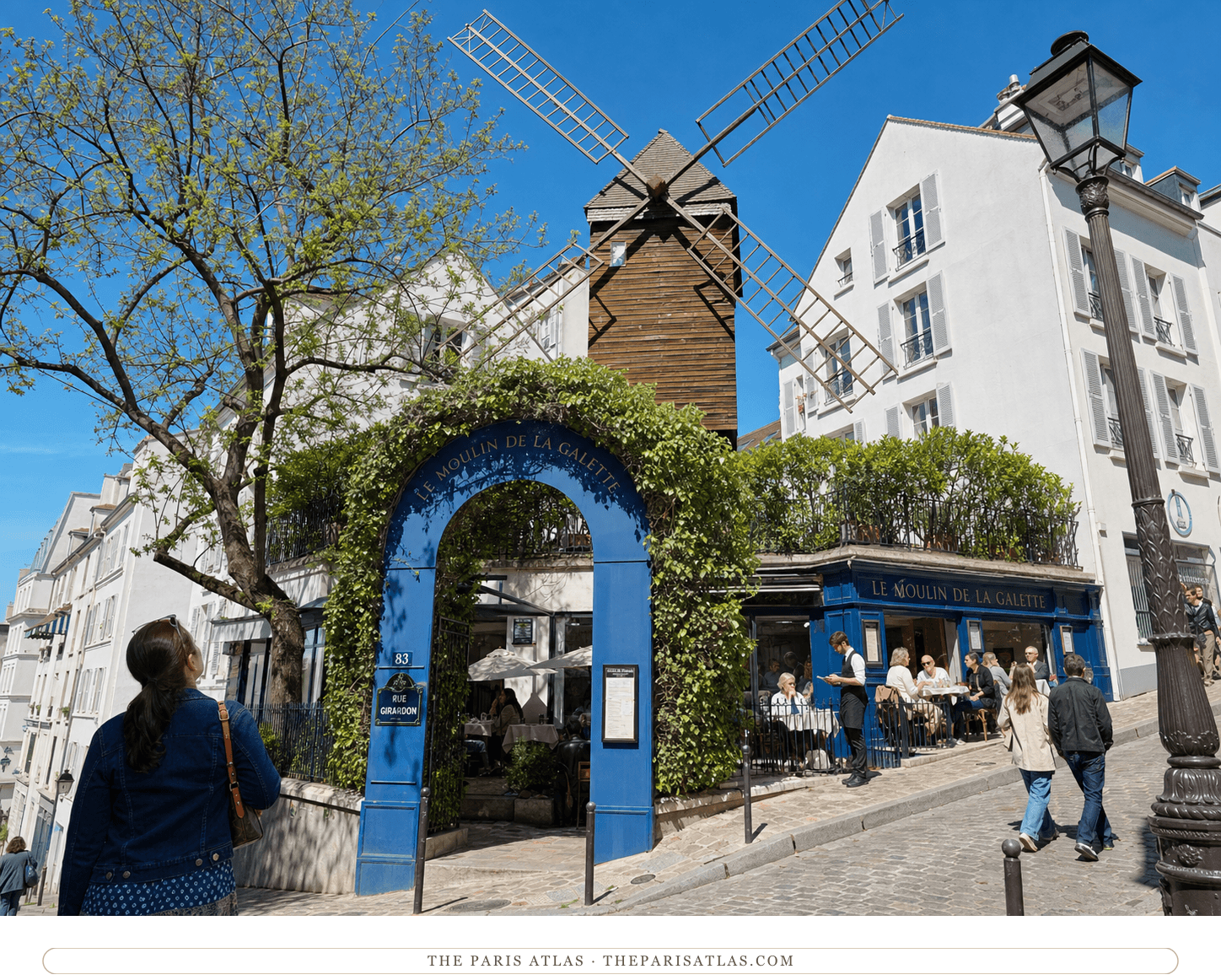
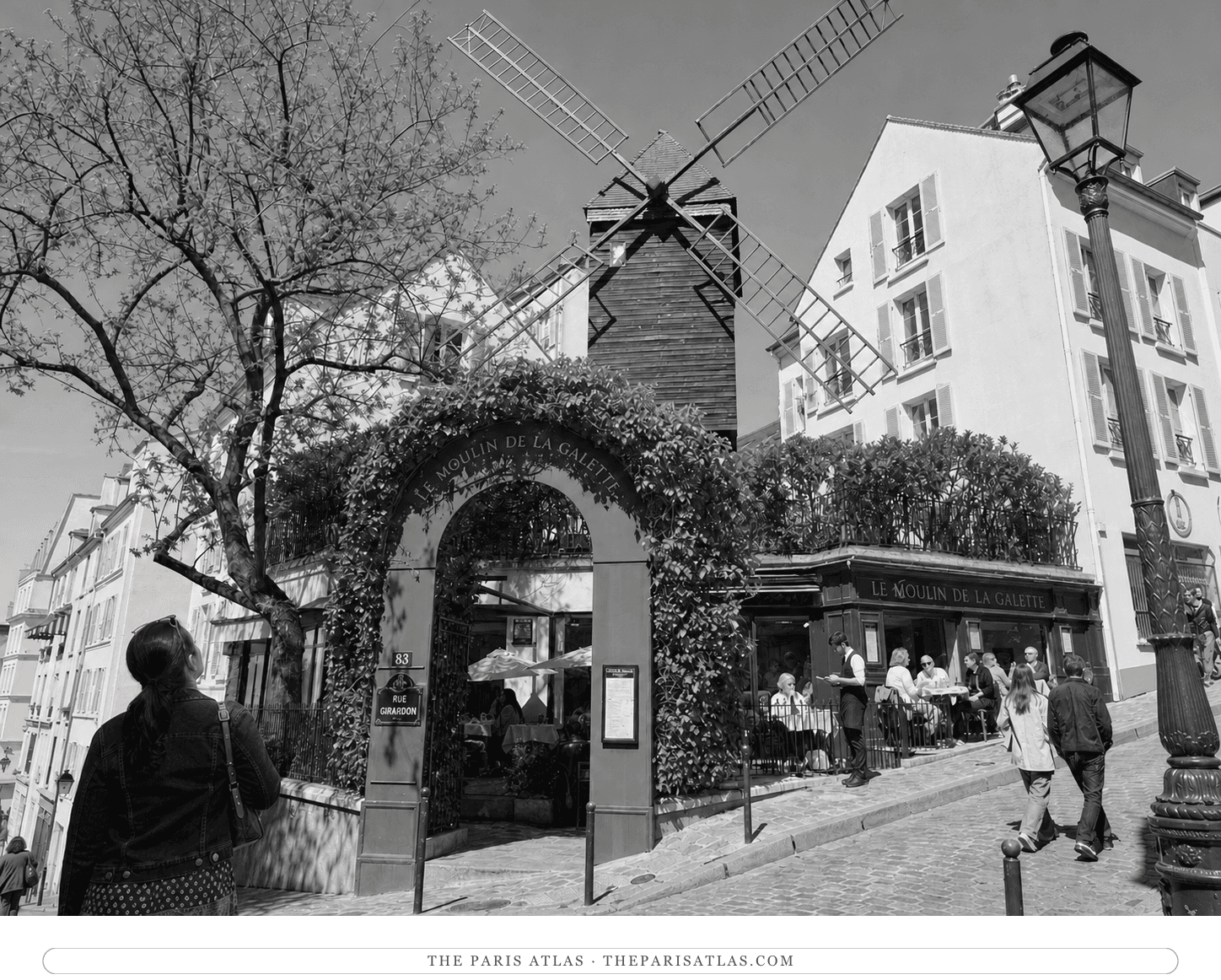
The last working windmills on the butte, turned into an open-air dance hall — painted by Renoir in 1876 and by Van Gogh repeatedly in 1886, a few minutes up the hill from his flat.
Visit the place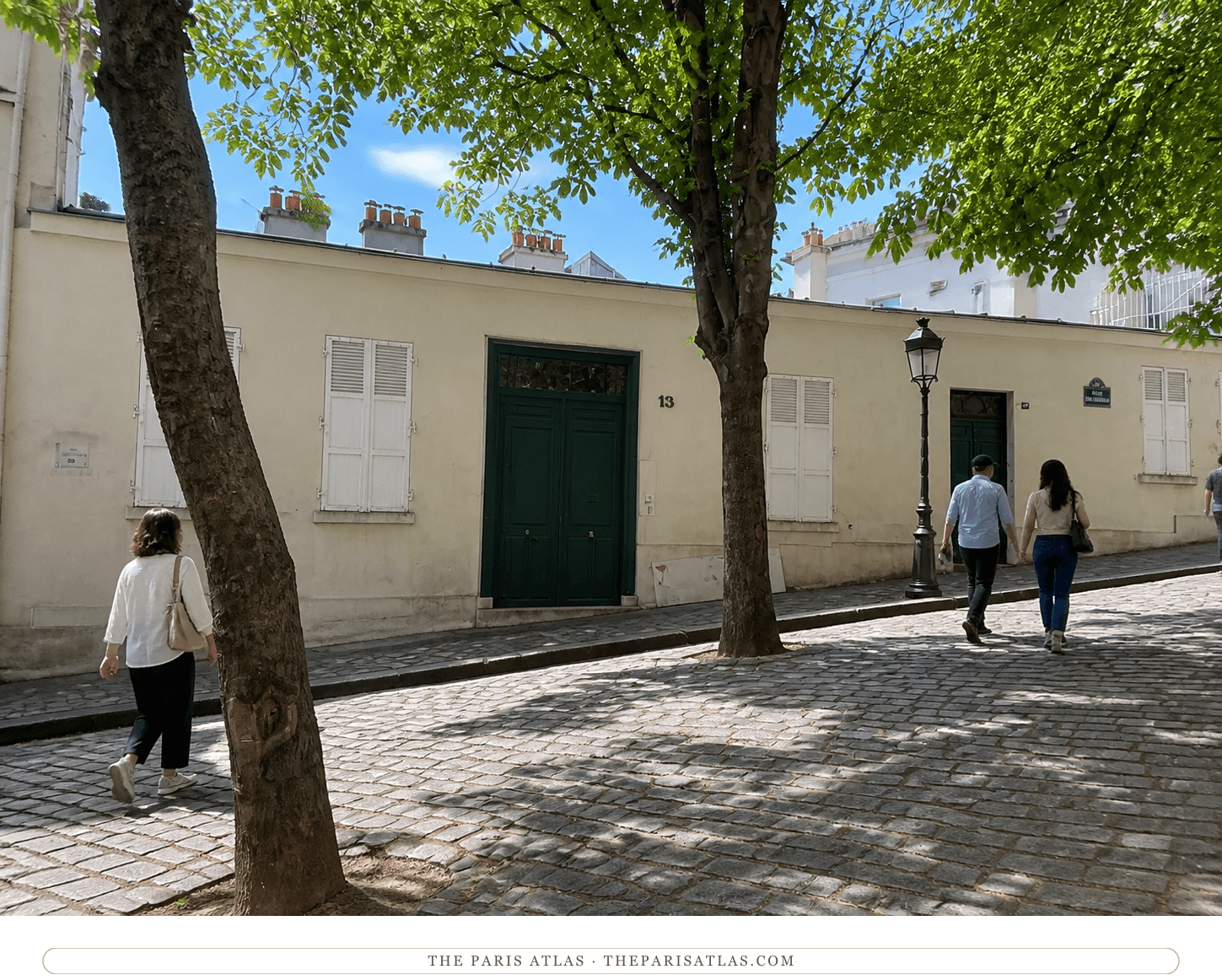
A ramshackle Montmartre building of cheap artists' studios, where Pablo Picasso lived and worked from 1904 and painted Les Demoiselles d'Avignon in 1907 — the picture that broke the rules of European painting. The original burned down in 1970; the rebuilt version still holds studios.
Visit the place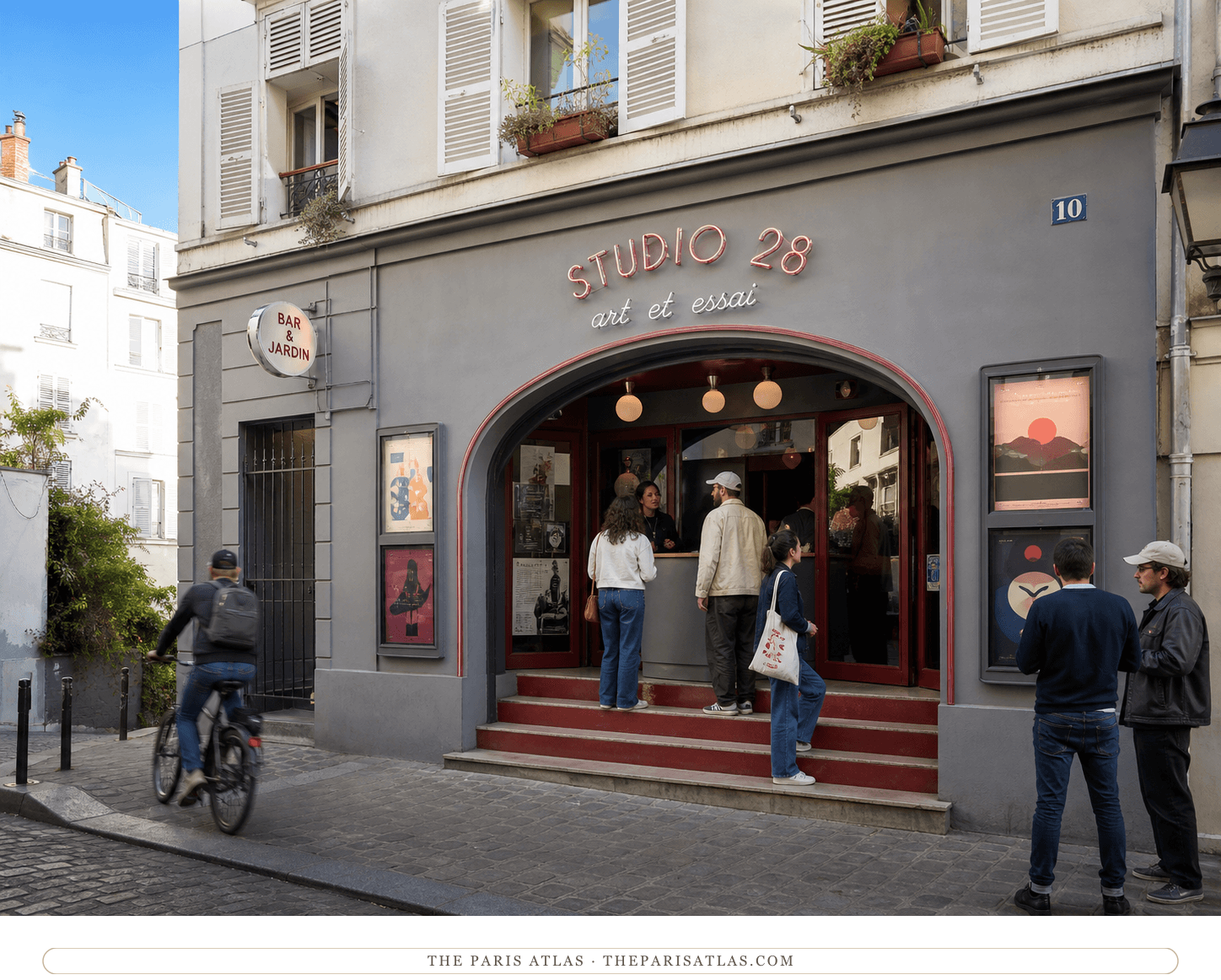
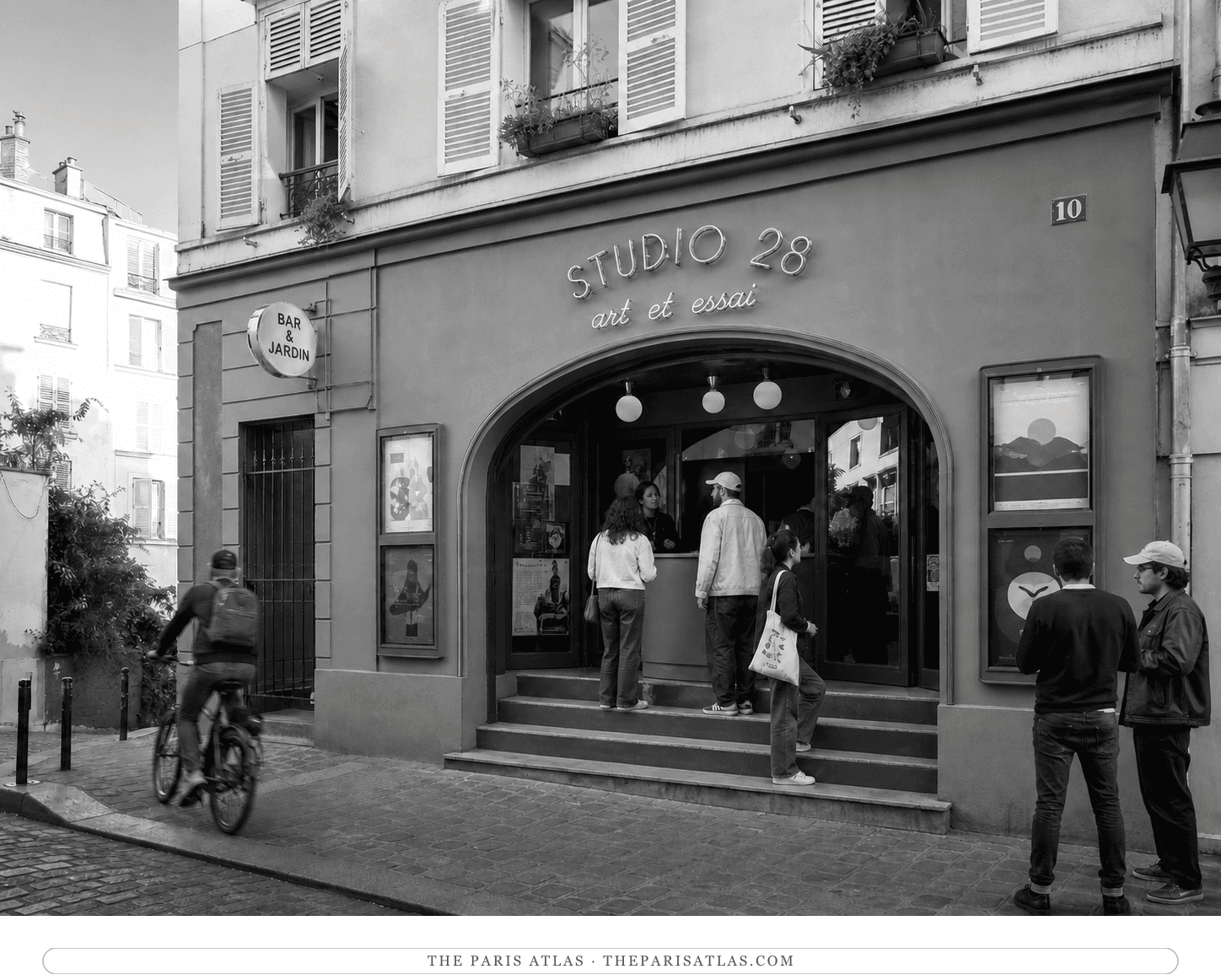
A small Montmartre cinema, opened in 1928 and still running. It gave Un Chien andalou an eight-month run from October 1929, and in December 1930 its screening of Buñuel and Dalí's L'Âge d'or ended with far-right groups attacking the auditorium and slashing the paintings hanging in the foyer.
Visit the placeThe sources below include histories, archival materials, scholarly research, and official records that informed this page. They document 98 Rue Lepic, the people connected to it, and its place in Paris.


Biographical evidence used to verify chronology, relationships, and historical context connected to 98 Rue Lepic.
Primary text included as part of the documented record for 98 Rue Lepic.
Primary text included as part of the documented record for 98 Rue Lepic.

Map data used to verify addresses, geographic coordinates, and the placement associated with 98 Rue Lepic.
These references provide the documented foundation for this page's history and context. Claim-level citations remain attached to the specific claims they support.
 Explore more resources
Newsletter
The cafés, studios, and walk-up flats where the work was made — one story from the map in every letter.