
Painting · Arles
Café Terrace at Night
Vincent van Gogh painted this café terrace on the Place du Forum in Arles in September 1888. Yellow lamplight spreads across the outdoor tables beneath a blue, star-filled night.
Dutch painter who lived in Montmartre with his brother Theo from March 1886 to February 1888 — the two years in which his dark Dutch palette turned into colour. He painted more than 200 pictures in Paris and died at Auvers-sur-Oise, north of the city, in 1890.
Vincent van Gogh spent two years in Paris, from March 1886 to February 1888, living with his brother Theo in Montmartre.[1] Most accounts of his life hurry through them on the way from the dark Dutch pictures to the sunflowers of Arles. But Paris is where the change happened: he arrived painting in browns and left painting in colour.
He met Henri de Toulouse-Lautrec and Émile Bernard in Fernand Cormon's studio, met Paul Gauguin in 1887, saw the Impressionists whose work he had only read about, and painted more than 200 pictures — self-portraits, the view from his window, and the woman who ran the café where he hung his Japanese prints.[1]
Vincent van Gogh was born on 30 March 1853 in Groot-Zundert, in the southern Netherlands. Before painting he had failed at art dealing, teaching, and evangelism; he took up drawing seriously around 1880, and everything he painted in the Netherlands — peasant heads, weavers, The Potato Eaters — was built on brown and grey.
In late February or early March 1886 he sent his brother Theo, an art dealer with the firm Boussod, Valadon & Cie, a note announcing that he was already in Paris and would meet him in the Louvre's Salon Carré. Theo had not invited him. The two moved into Theo's small apartment on the rue Laval in lower Montmartre, where there was not even room to set up an easel, and in June 1886 they took a larger third-floor flat at 54 rue Lepic, on the hill itself.[2]
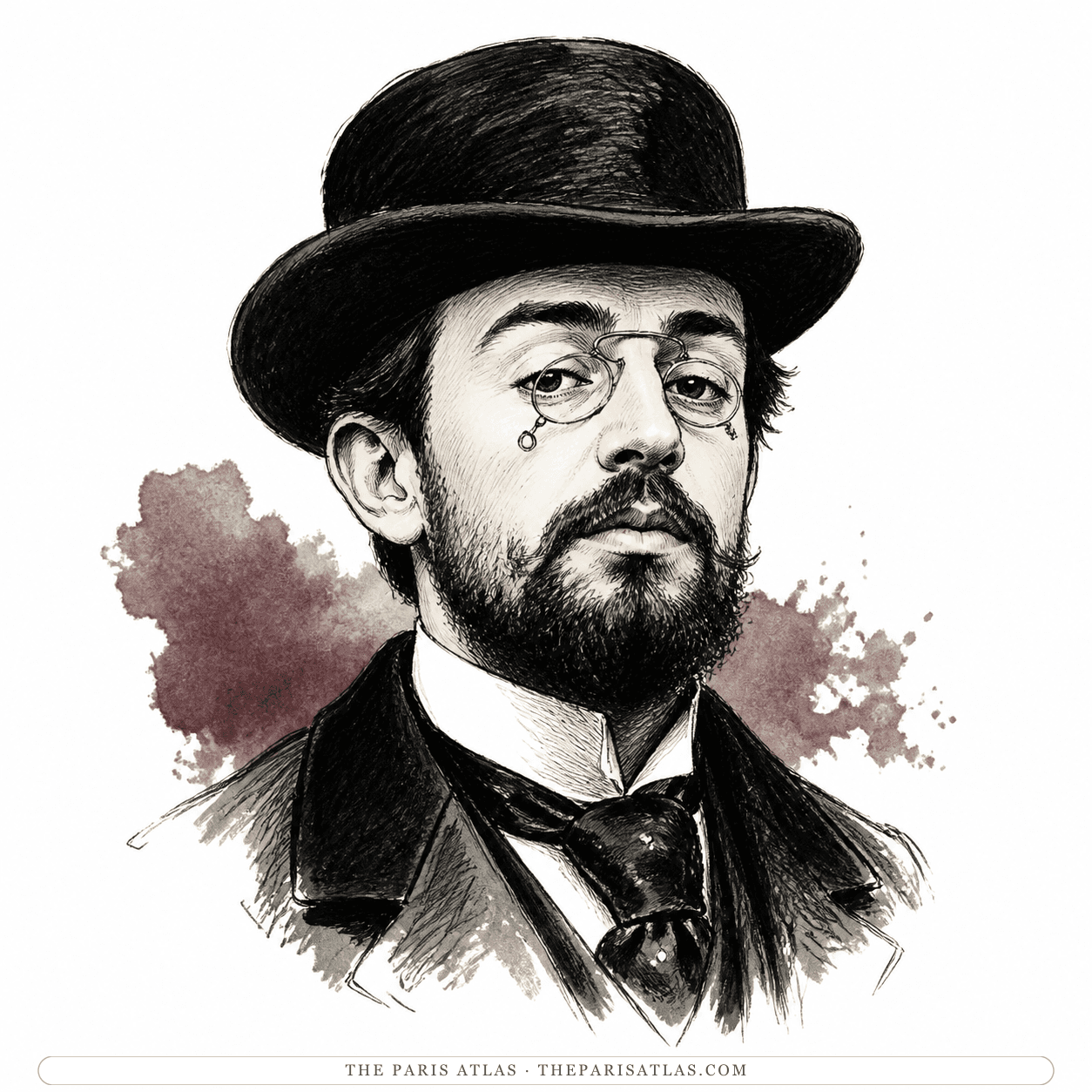
In April and May 1886 he worked in the teaching studio of Fernand Cormon, a history painter whose atelier on the boulevard de Clichy took in students for drawing from casts and models. The teaching mattered less than the neighbours at the easels: Henri de Toulouse-Lautrec, then twenty-one, Émile Bernard, then eighteen, and the Australian painter John Russell, who painted Van Gogh's portrait that year.
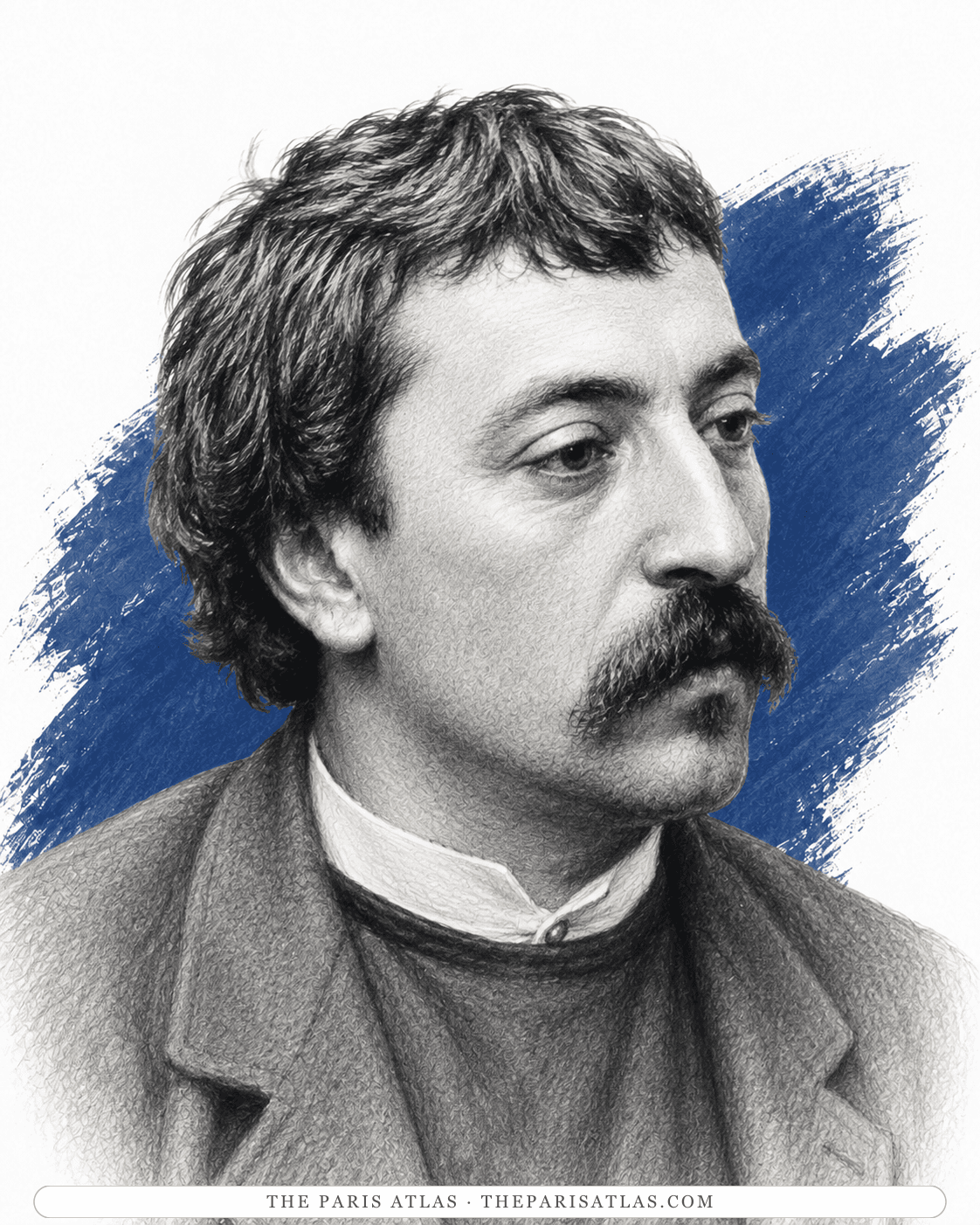
Toulouse-Lautrec's 1887 pastel of Van Gogh leaning over a café glass is one of the few portraits of him by another artist's hand. Through Theo, whose gallery handled the Impressionists, Vincent also met Camille Pissarro, who explained broken colour to him — building a picture from small, separate strokes of pure colour rather than blended tones — and in the autumn of 1887 Paul Gauguin, newly back from Martinique. The two exchanged pictures. Their friendship would end violently in Arles two years later — the story is told below — but it began as an ordinary Paris acquaintance.[1]
Paris gave him three things at once: the Impressionists in the flesh, the pointillism of Georges Seurat and Paul Signac, and Japanese woodblock prints, which he bought by the hundred from the dealer Siegfried Bing and pinned to his walls. His answer to all three was painted across some two dozen self-portraits, because models cost money and his own face was free.
Set the winter 1887–88 Self-Portrait with Grey Felt Hat beside The Potato Eaters of 1885 and the two years explain themselves: the strokes have become short, separate and directional, and the colour has gone from earth to orange against blue. He painted more than 200 pictures in Paris — a fifth of everything he ever made — and almost none of them were for sale.[1] Theo's apartment filled with canvases.
On the boulevard de Clichy stood Le Tambourin, a café whose tables were shaped like tambourines, run by Agostina Segatori, an Italian former artists' model who had sat for Corot and Manet. In 1887 Van Gogh and Segatori had an affair, documented in his own letters to Theo.[2] He ate there, paid in paintings, hung an exhibition of his Japanese prints on its walls, and painted Segatori at one of her own tambourine tables with the prints visible behind her.
The affair ended badly, the café went bankrupt, and the pictures he had left there were sold off in a bundle. Later tellings improved the story in every direction; what the letters actually establish is the relationship, the exhibition, and the loss of the paintings.[2]
City life and drink wore him down, and in February 1888 he left for Arles, in Provence, looking for the stronger light and colour the Paris pictures had been reaching toward. The sunflowers, the Yellow House, and the bedroom all followed within the year. In October 1888 Paul Gauguin came to live and work with him — the arrangement the brothers had planned in Paris — and after nine weeks it collapsed: on 23 December 1888, following a quarrel with Gauguin, Van Gogh cut off part of his own left ear.
He committed himself to the asylum at Saint-Rémy-de-Provence in May 1889 and painted through the year he spent there, The Starry Night among the pictures. In early 1890 his The Red Vineyard sold in Brussels for 400 francs to the Belgian painter Anna Boch — one of the few sales of his life.[3][4]
In May 1890 he moved to Auvers-sur-Oise, a village north-west of Paris, to be near Dr Paul Gachet, a physician and collector recommended by Pissarro. He painted roughly a canvas a day there for seventy days.[5] On 27 July 1890 he shot himself in the chest in a field outside the village; he died two days later, on 29 July, with Theo beside him, aged thirty-seven. The money, work and worry of those years had run through Theo too: he outlived his brother by six months. The two are buried side by side in the cemetery at Auvers.[5]
Van Gogh painted thickly and fast. He pushed paint onto the canvas straight from the tube and worked it wet into wet, often finishing a picture in a single sitting rather than building it up in layers over weeks. The ridges the brush and the tube left behind hold the light, which is why his surfaces look different in a gallery from the way they look in reproduction, where they flatten out.
The colour was deliberate rather than instinctive. He had read the colour theory of Charles Blanc and studied Eugène Delacroix, and his letters to Theo work through the pairings again and again: blue against orange, red against green, yellow against violet. Setting two complementary colours side by side makes each look stronger, and much of what people describe as the intensity of his late pictures is that principle applied at full strength.[2]
He also drew constantly, and at Arles he took up the reed pen, cut from riverbank reeds and dipped in ink. It gave a stroke that broke and thickened as the nib wore down. He used it to make drawings after his own paintings, partly so he could send Theo a record of what he had done without shipping the canvas.[2]
Almost all of it was made in front of the subject rather than in a studio. In Provence he pegged his easel into the ground against the mistral, the wind that comes down the Rhône valley for days at a time, and went on painting in it.
Van Gogh was almost unknown when he died in 1890. His brother Theo had supported him for a decade and was the one person placing his work, and Theo died six months later, on 25 January 1891, of the late effects of syphilis. The estate — hundreds of paintings and the whole correspondence between the brothers — passed to Theo's widow.
Johanna van Gogh-Bonger had married Theo on 17 April 1889 and was widowed at twenty-eight with a baby son, Vincent Willem, born in Paris on 31 January 1890. She had known Vincent slightly and had no standing in the art trade. She spent the rest of her life on his reputation.
She lent to exhibitions rather than dumping the estate on the market, and sold slowly and selectively so that the work spread instead of flooding. In 1905 she assembled 484 of his works at the Stedelijk Museum in Amsterdam, the show that established him in his own country. In 1914 she published the letters between Vincent and Theo in three volumes, which gave readers the painter's own account of what he was attempting and did as much for his standing as any exhibition.
That same year she had Theo's remains moved from Utrecht to Auvers-sur-Oise and reburied beside his brother, so that the two graves stand together under ivy in the village cemetery. Johanna van Gogh-Bonger died in 1925. Her son kept the collection together, and it became the Van Gogh Museum in Amsterdam, which opened in 1973.
Born on 30 March in Groot-Zundert, in the southern Netherlands.
Paints The Potato Eaters in Nuenen — the summit of the dark Dutch palette he is about to abandon.
Arrives in Paris unannounced in early March and moves in with Theo; in June the brothers take the third floor at 54 rue Lepic in Montmartre. Works in Fernand Cormon's studio in April and May, beside Henri de Toulouse-Lautrec and Émile Bernard.
The Paris palette arrives: self-portraits in broken colour, the affair with Agostina Segatori and the Japanese print exhibition at Le Tambourin, and a first meeting with Paul Gauguin.
Leaves Paris for Arles in February, after two years and more than 200 paintings. Gauguin joins him at the Yellow House in October; on 23 December, after a quarrel, Van Gogh cuts off part of his left ear.
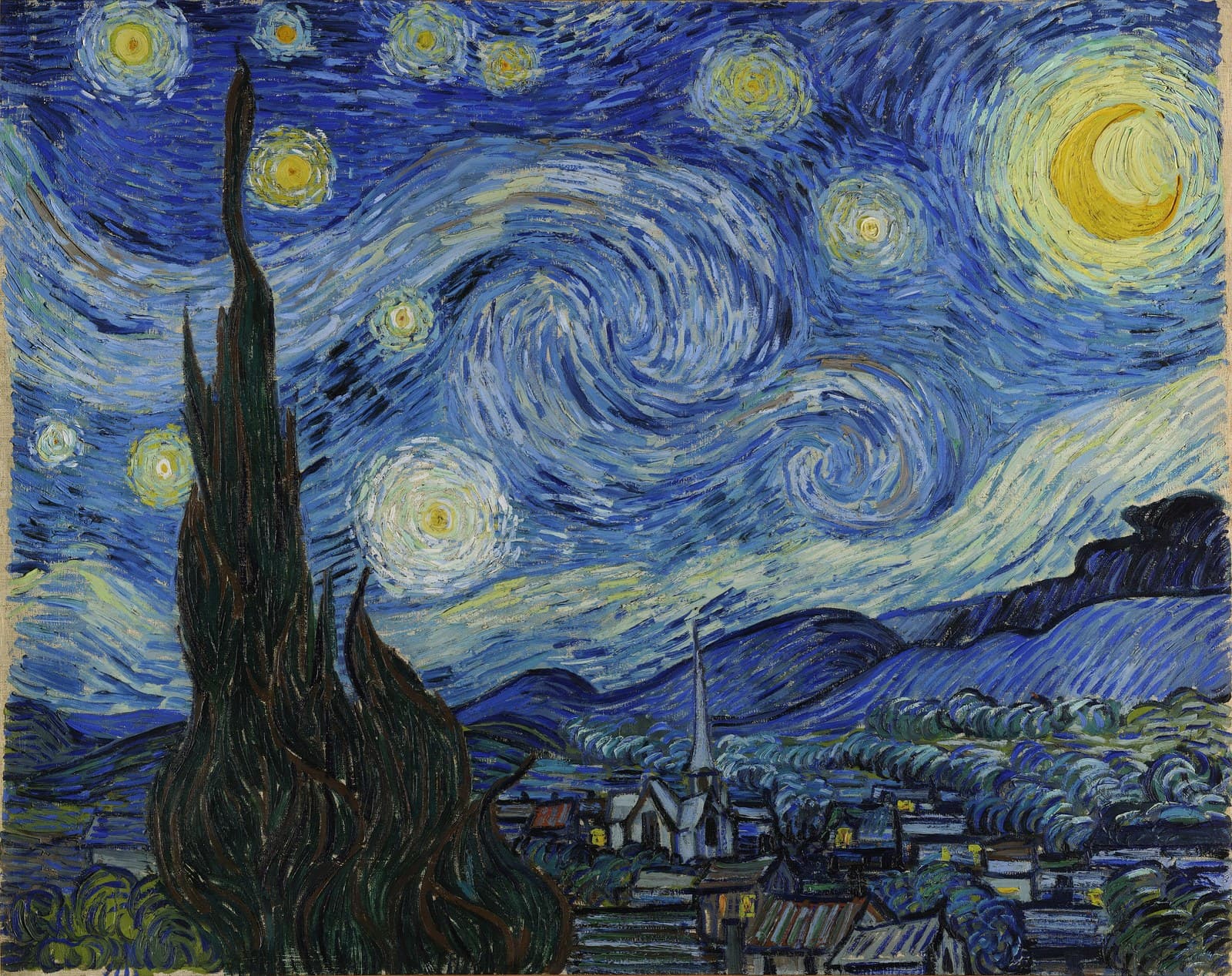
Enters the asylum at Saint-Rémy-de-Provence in May; paints The Starry Night there in June.
The Red Vineyard sells in Brussels for 400 francs in early 1890. He moves to Auvers-sur-Oise in May; on 27 July he shoots himself in the chest in a field outside the village and dies two days later, aged thirty-seven.
The best way of knowing God is to love many things.
I am seeking, I am striving, I am in it with all my heart.
Great things are not done by impulse, but by a series of small things brought together.
Painting · Arles
Vincent van Gogh painted this café terrace on the Place du Forum in Arles in September 1888. Yellow lamplight spreads across the outdoor tables beneath a blue, star-filled night.

Painting · Saint-Rémy-de-Provence
Vincent van Gogh painted these growing irises in the garden of Saint-Paul-de-Mausole in May 1889. The Getty canvas brings the viewer close to the flowers, with no distant horizon.

Painting · Arles
Vincent van Gogh's National Gallery Sunflowers shows fifteen flowers in a vase against a yellow wall. Painted in Arles in August 1888, it was part of his preparations to welcome Paul Gauguin to the Yellow House.

Painting · Arles
Vincent van Gogh painted his room in the Yellow House in Arles in October 1888. This first version belongs to the Van Gogh Museum in Amsterdam; the Chicago and Paris paintings are later repetitions.

Painting · Saint-Rémy-de-Provence
Vincent van Gogh painted The Starry Night while living at Saint-Paul-de-Mausole in southern France. Its bright stars, dark cypress, and small village combine observed features with changes made in the studio.

Met · 1886
Met in Paris through Theo van Gogh's gallery; Pissarro explained the Impressionists' broken colour to him. In 1890 Pissarro recommended Dr Paul Gachet at Auvers-sur-Oise, which is how Van Gogh came to spend his last seventy days there.
Met · 1886
Fellow students in Fernand Cormon's Paris studio in 1886. Toulouse-Lautrec drew Van Gogh in pastel in 1887, in profile at a café table; the portrait is in the Van Gogh Museum, Amsterdam.
Sat for a portrait by · 1887
Pastel on cardboard, 1887: Van Gogh in profile at a café table with a glass in front of him. The Van Gogh Museum, Amsterdam holds it.
Met · 1887
Met in Paris in late 1887, through Theo van Gogh's gallery, after Gauguin returned from Martinique; the two exchanged paintings. Gauguin's nine weeks at the Yellow House in Arles in 1888 grew out of this Paris acquaintance and ended with the quarrel of 23 December 1888.

Met · 1886–1889
They met in Paris in 1886, and through 1887 painted together along the Seine at Asnières, river landscapes and cafés. Van Gogh at first chiefly admired Signac's loose technique. In March 1889 Signac visited Van Gogh at Arles, and at the 1890 XX banquet in Brussels he declared he would carry on Toulouse-Lautrec's defence of Van Gogh's honour if a duel over the paintings went ahead.

Influence on
Joan Mitchell knew Vincent van Gogh's paintings from childhood visits to the Art Institute of Chicago and spoke of him with particular admiration. Her Sunflower paintings, begun at Vétheuil in 1969, return to his subject, and she was especially moved by sunflowers as they aged.
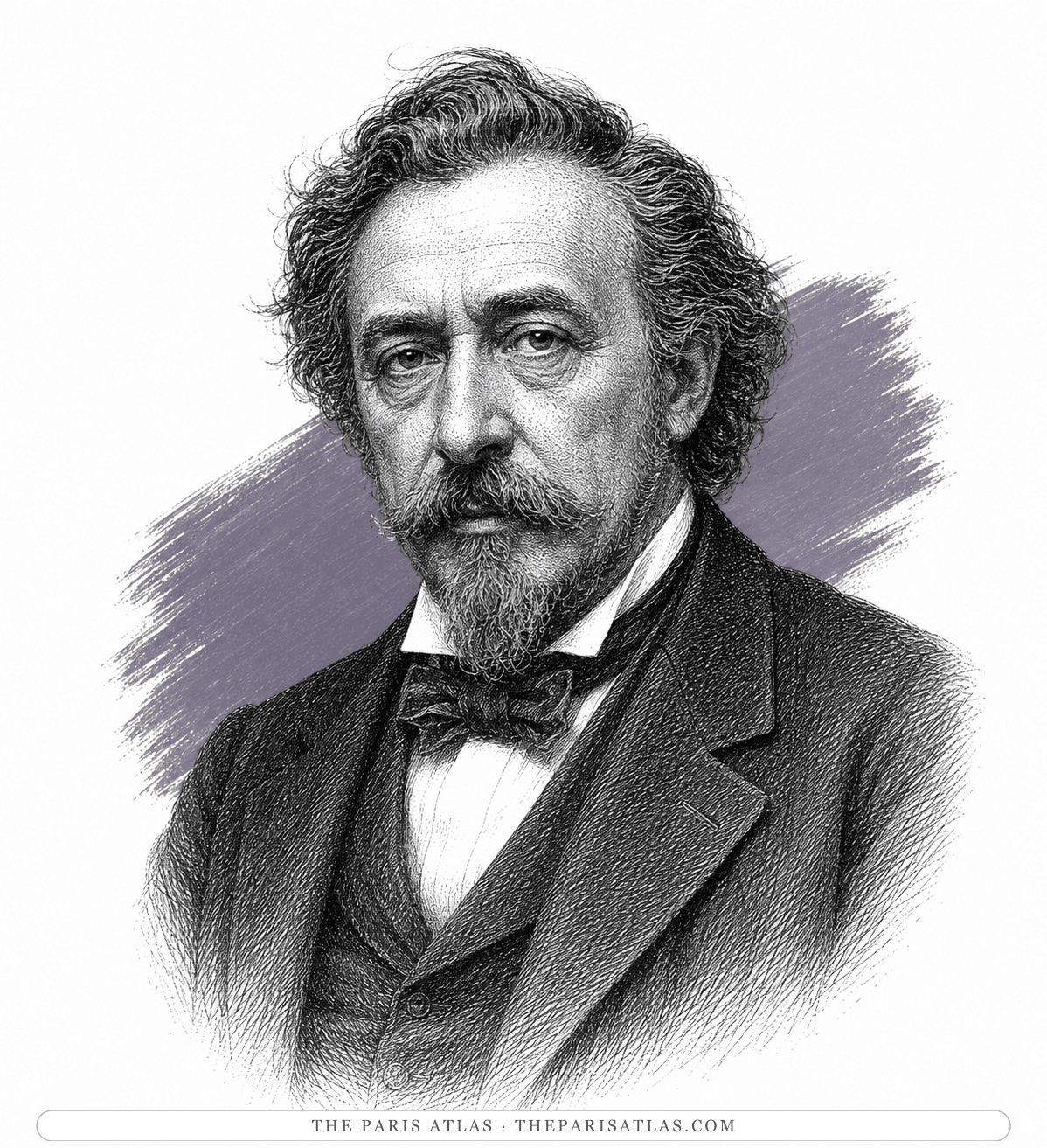
Van Gogh painted The Prisoners' Round (1890) directly from Doré's plate of the Newgate prison exercise yard in London: A Pilgrimage (1872), one of several English graphic sources he collected and copied.

Writing to Émile Bernard from Arles on 29 July 1888, Vincent van Gogh asked whether he knew a painter called Vermeer who had painted a very beautiful pregnant Dutch lady. He described this strange painter's palette as blue, lemon yellow, pearl gray, black and white, and said that the arrangement of lemon yellow, pale blue and pearl gray was as characteristic of Vermeer as black, white, gray and pink were of Velázquez. The editors of the letters identify the painting as Woman Reading a Letter in the Rijksmuseum.
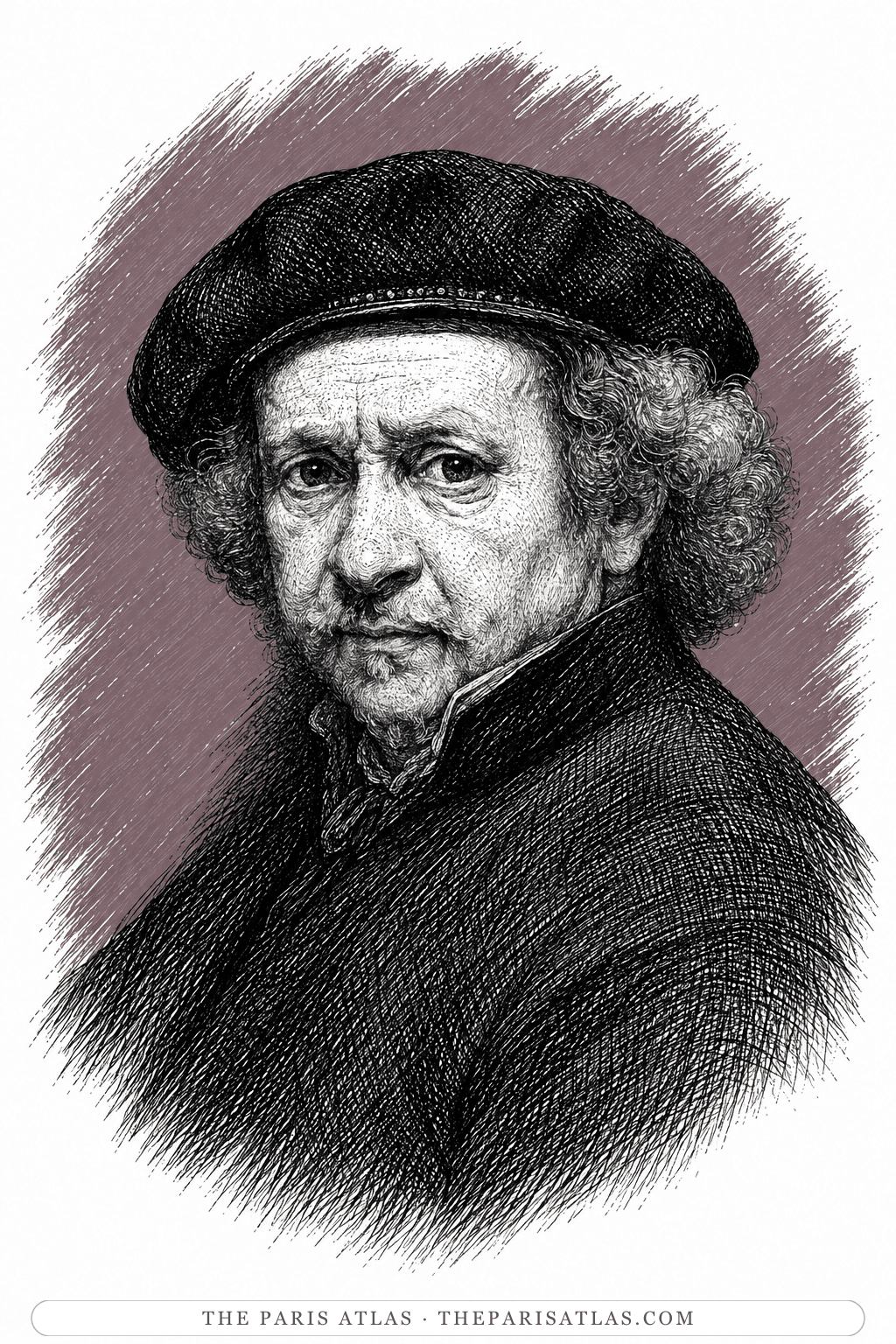
Vincent van Gogh saw the Rembrandts at the newly opened Rijksmuseum in Amsterdam in October 1885 and wrote to his brother Theo about them from Nuenen on or about 10 October. He called The Syndics “perfect” and “the finest Rembrandt”, and of Isaac and Rebecca, then known as The Jewish Bride, he wrote: “What an intimate, what an infinitely sympathetic painting, painted — with a glowing hand.” In the same letter he wrote that Rembrandt “goes so deep into the mysterious that he says things for which there are no words in any language”.
Historical period and art category · circa 1860s–1970s
The Starry Night of 1889 keeps the subject of a landscape while turning observation into construction: swirling marks, luminous circles and rhythmic movement make the sky an image rather than a record of the weather.
Art movement · circa 1886–1905
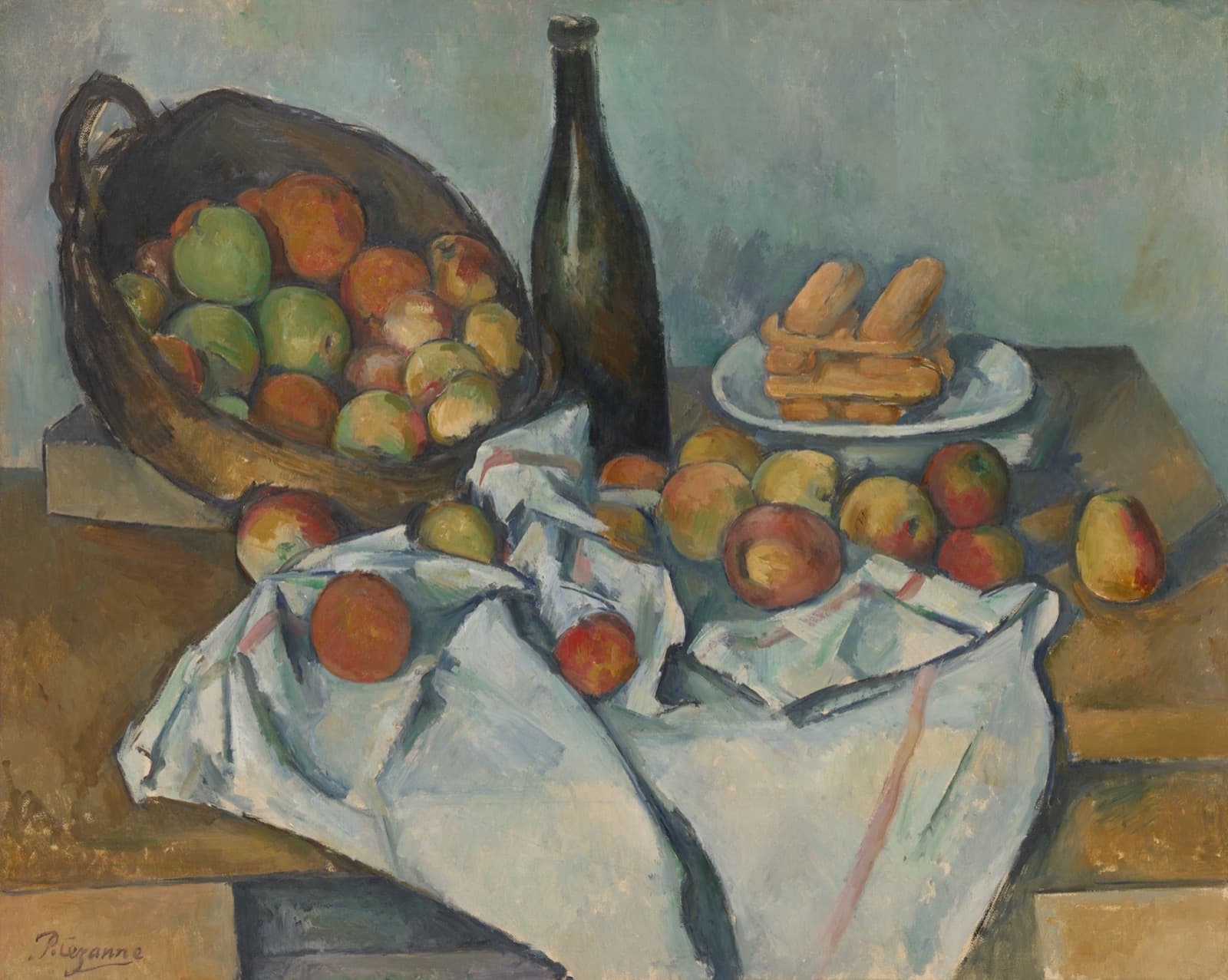
One of the four painters Tate names as Post-Impressionist. He went on painting from nature while developing a use of colour and brushwork personal enough to carry his response to the subject.
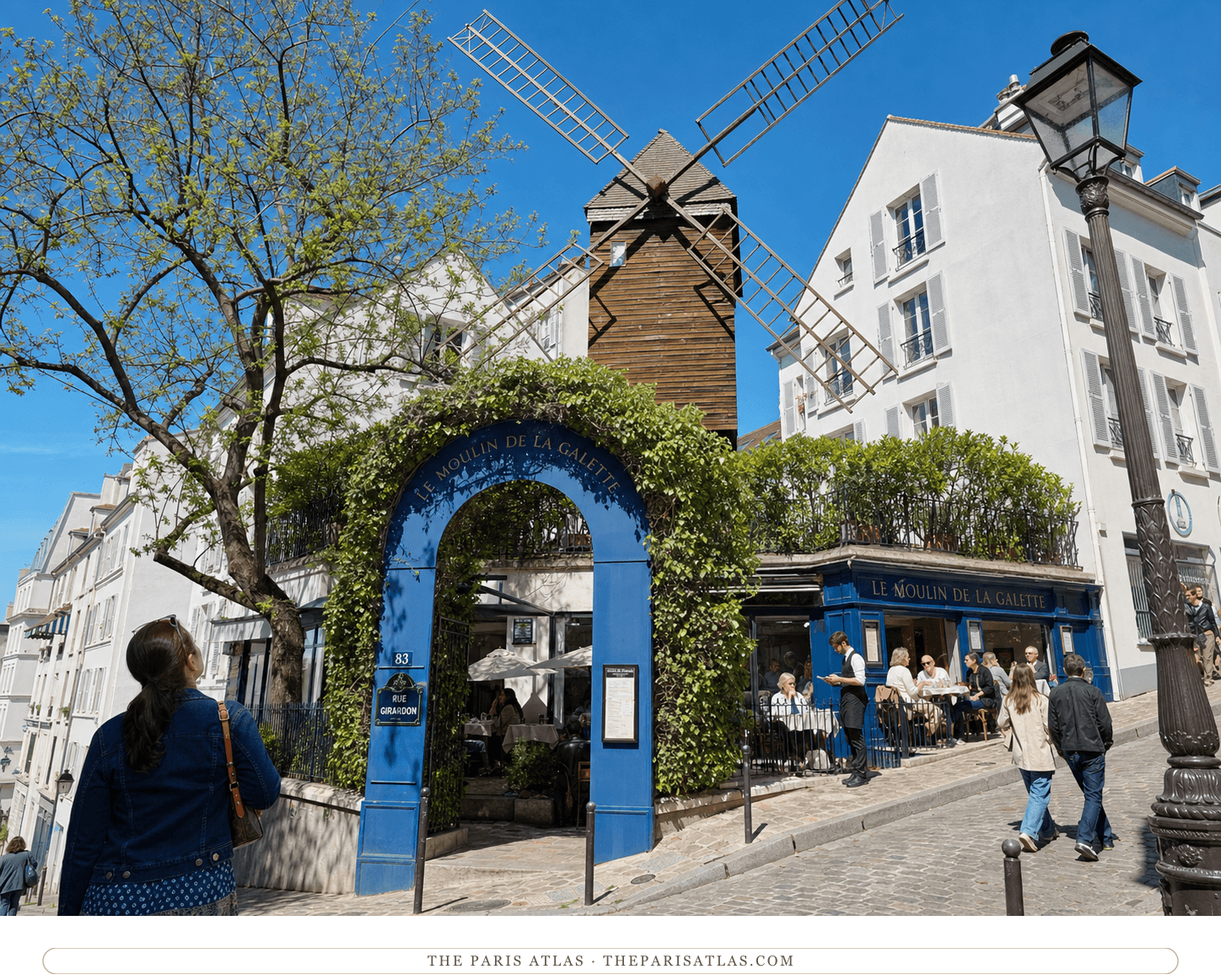
Van Gogh painted the surviving Montmartre windmills repeatedly through 1886, from ground a few minutes uphill of his apartment on the rue Lepic.
Visit the place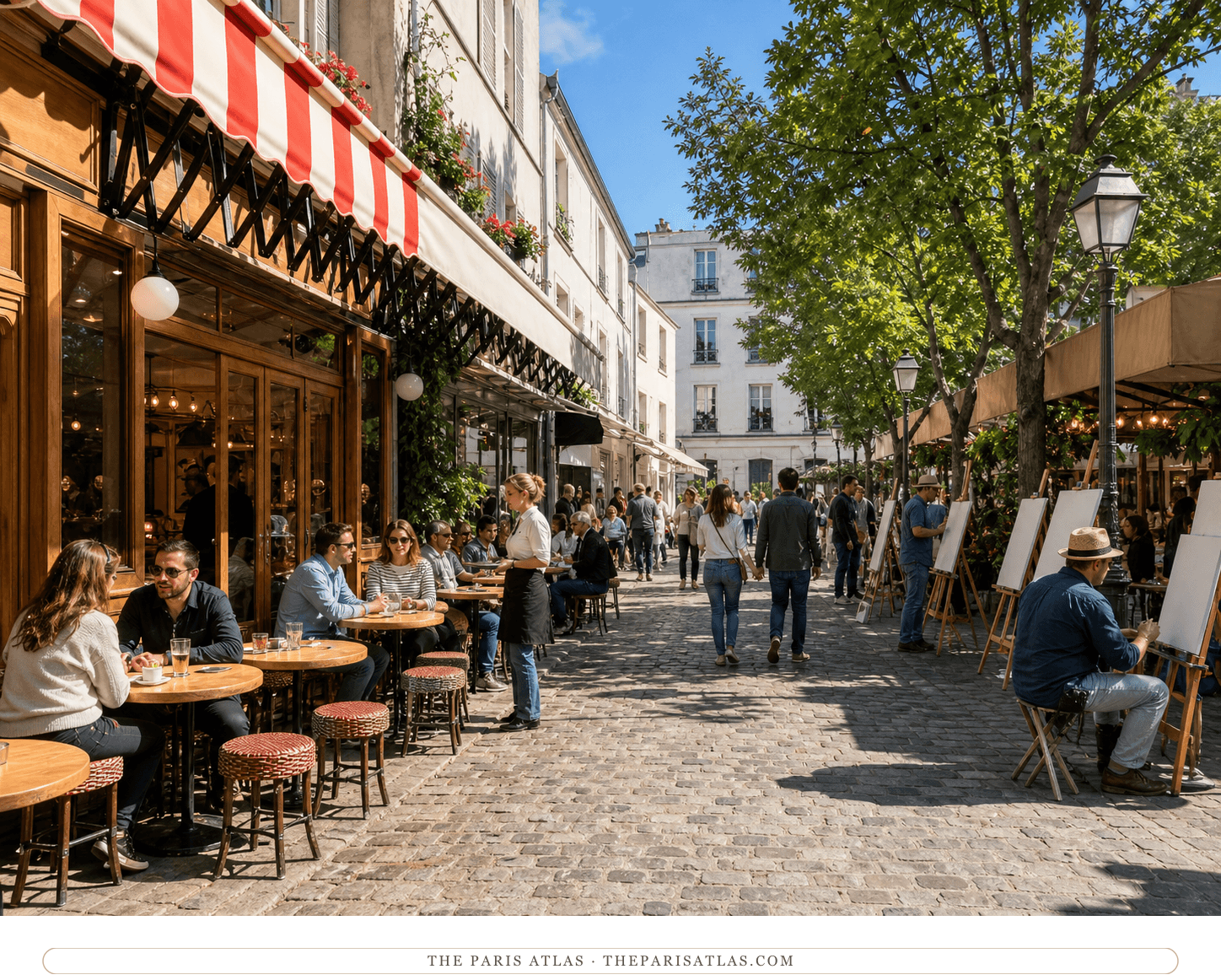
Van Gogh's whole Paris period was spent on and around the butte - Theo's flat below it, the rue Lepic apartment on its slope, Cormon's studio on the boulevard de Clichy, and the windmills at the top.
Visit the place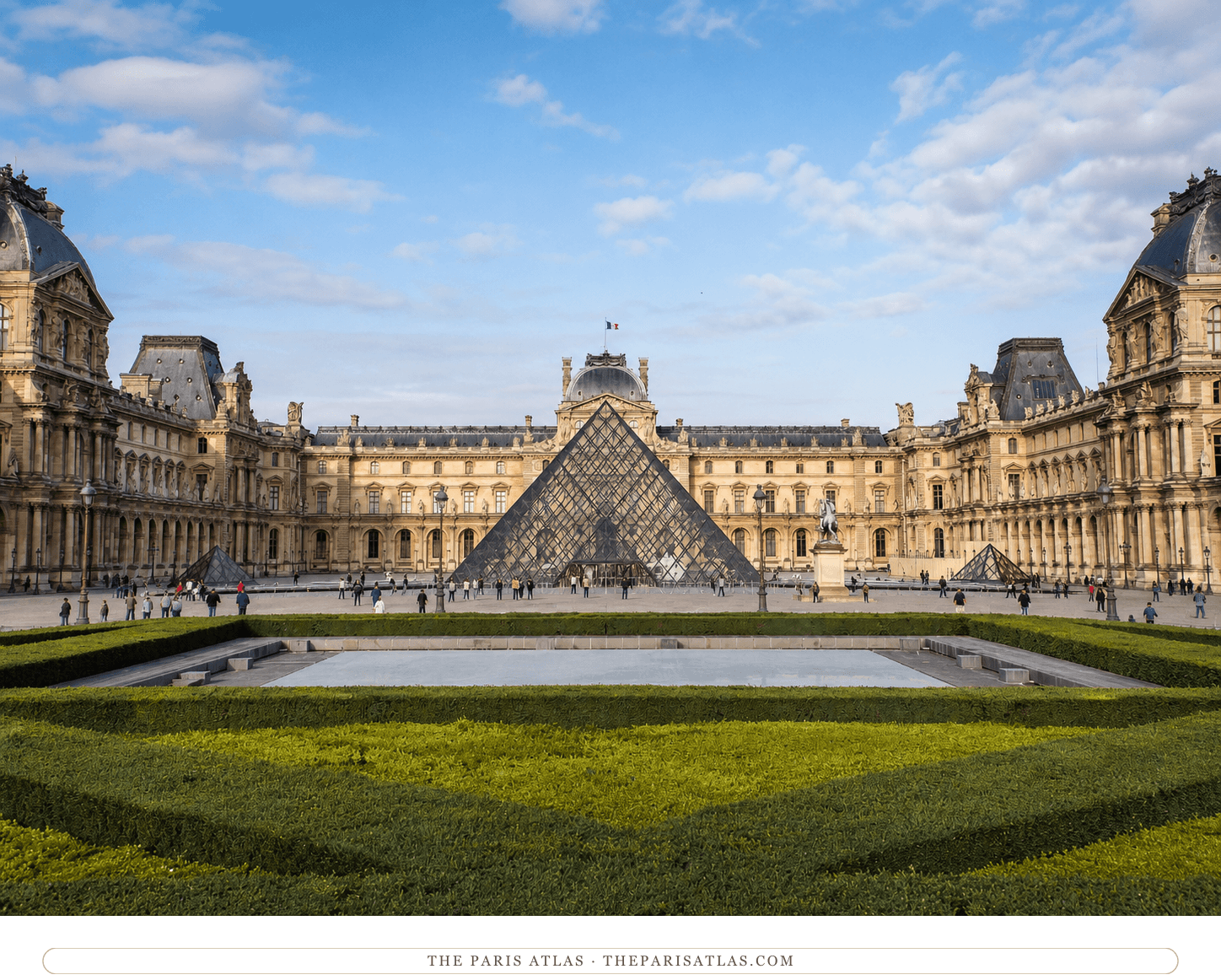
Van Gogh spent his early Paris weeks in the Louvre studying the old masters and Delacroix's colour, groundwork for the change in his own palette over the following two years.
Visit the place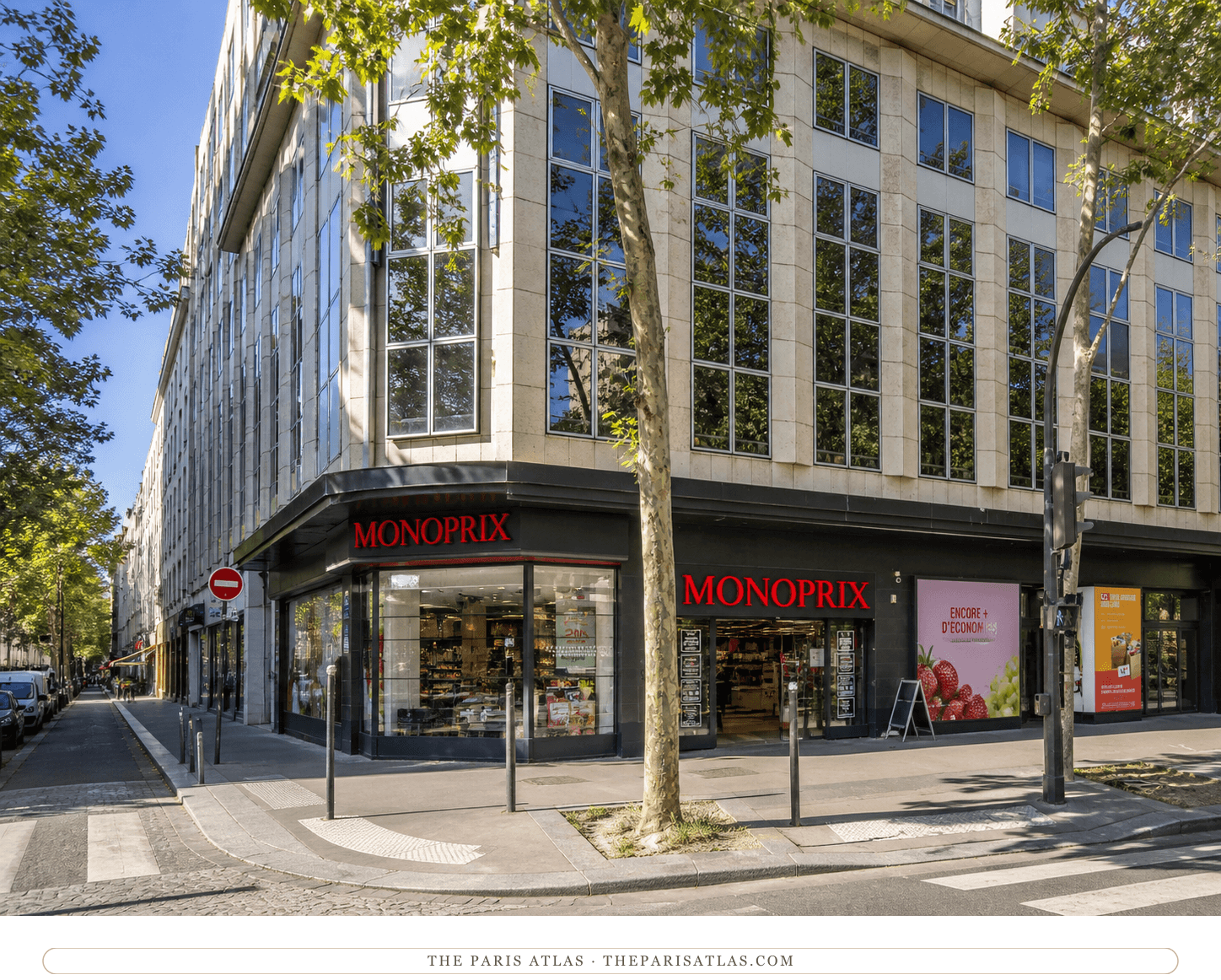
In November 1887 Van Gogh organised an exhibition in this cheap restaurant, showing his own work with Anquetin, Bernard, Toulouse-Lautrec, Koning and Guillaumin. Seurat and Gauguin came to see it.
Visit the place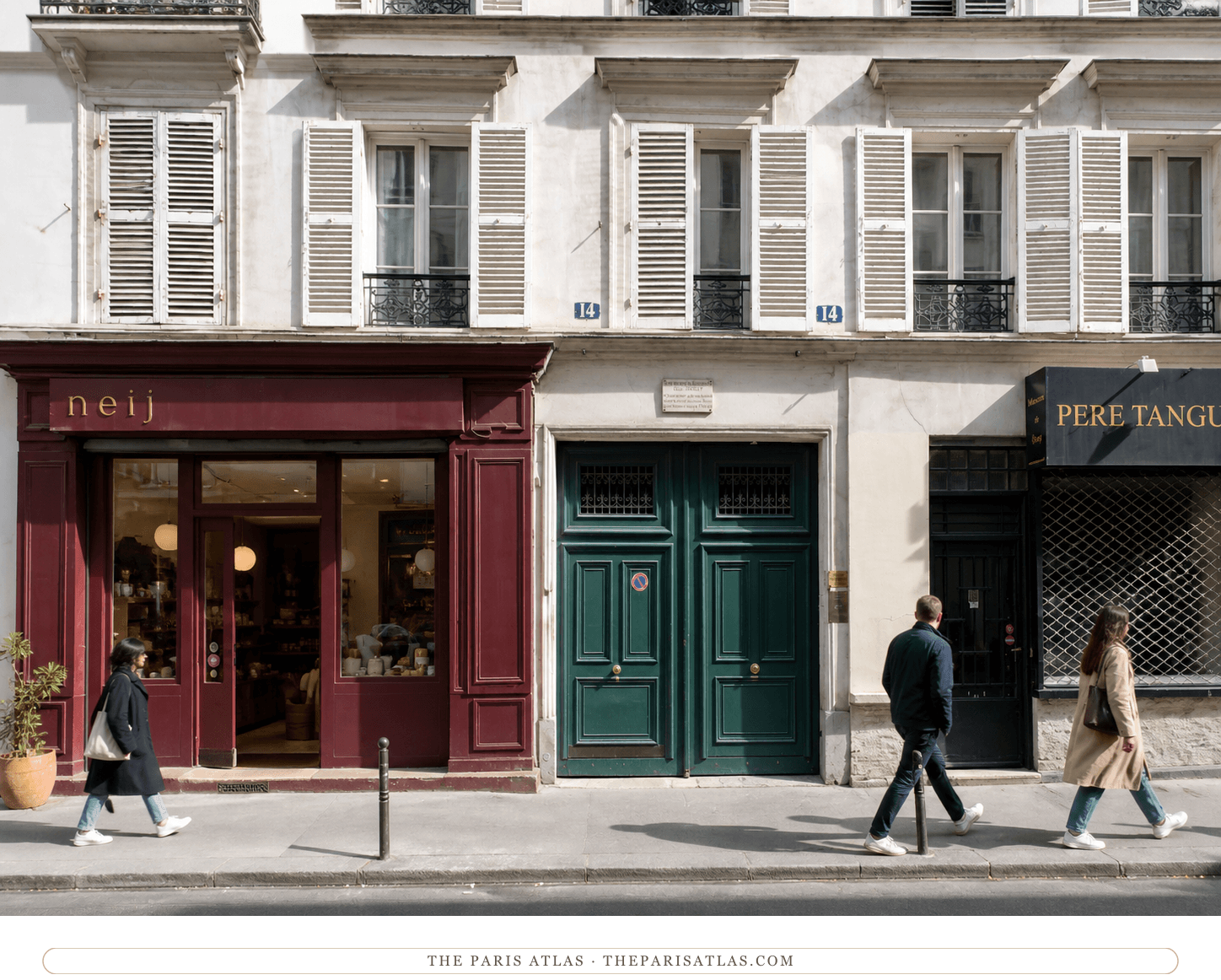
Julien Tanguy's colour shop supplied Van Gogh with paint on credit and showed his canvases when no dealer would. Van Gogh painted three portraits of Tanguy in 1887 and 1888.
Visit the place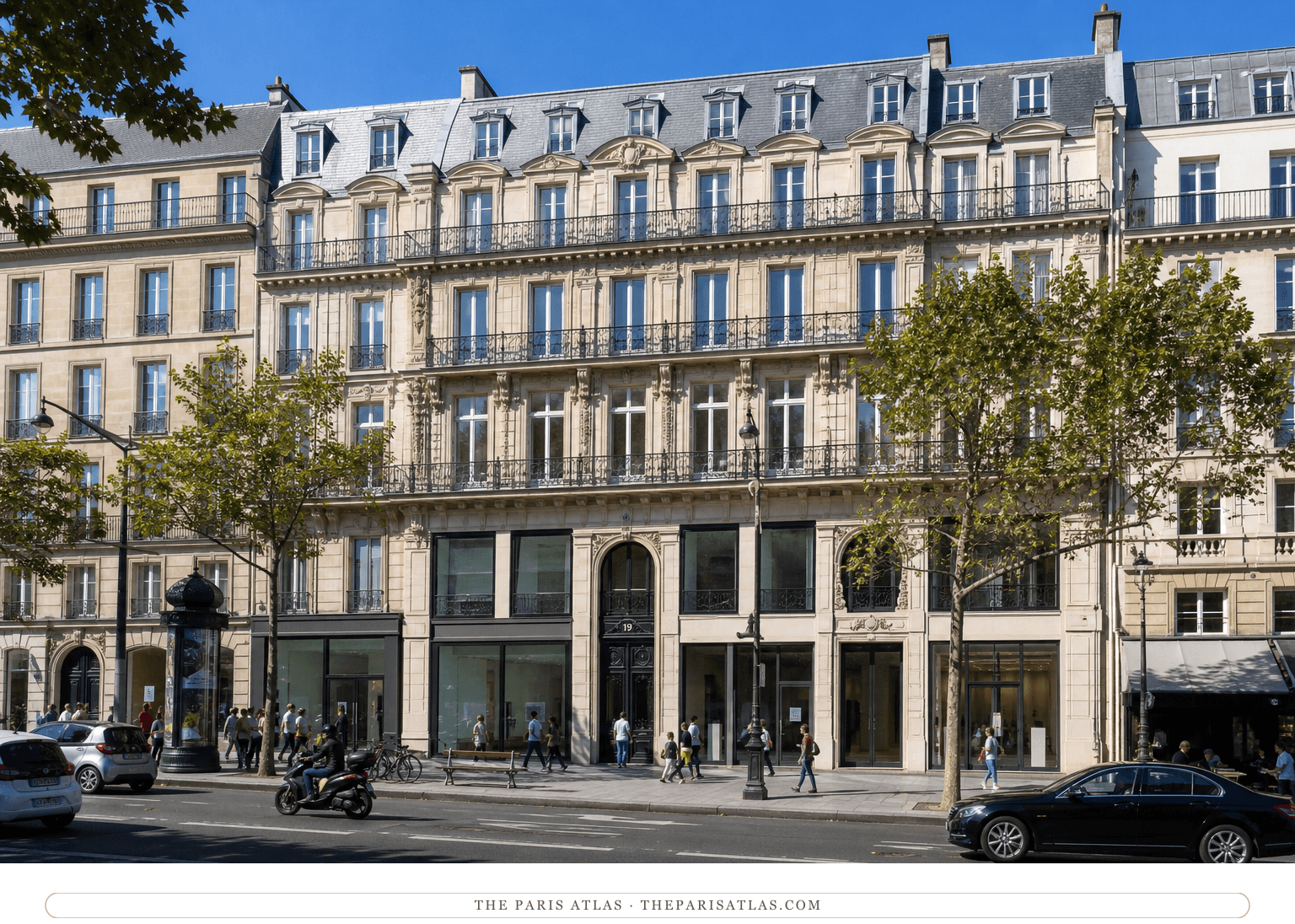
Theo van Gogh managed the Boussod, Valadon branch on the boulevard Montmartre. Vincent used the gallery to study the Impressionists his brother was handling.
Visit the place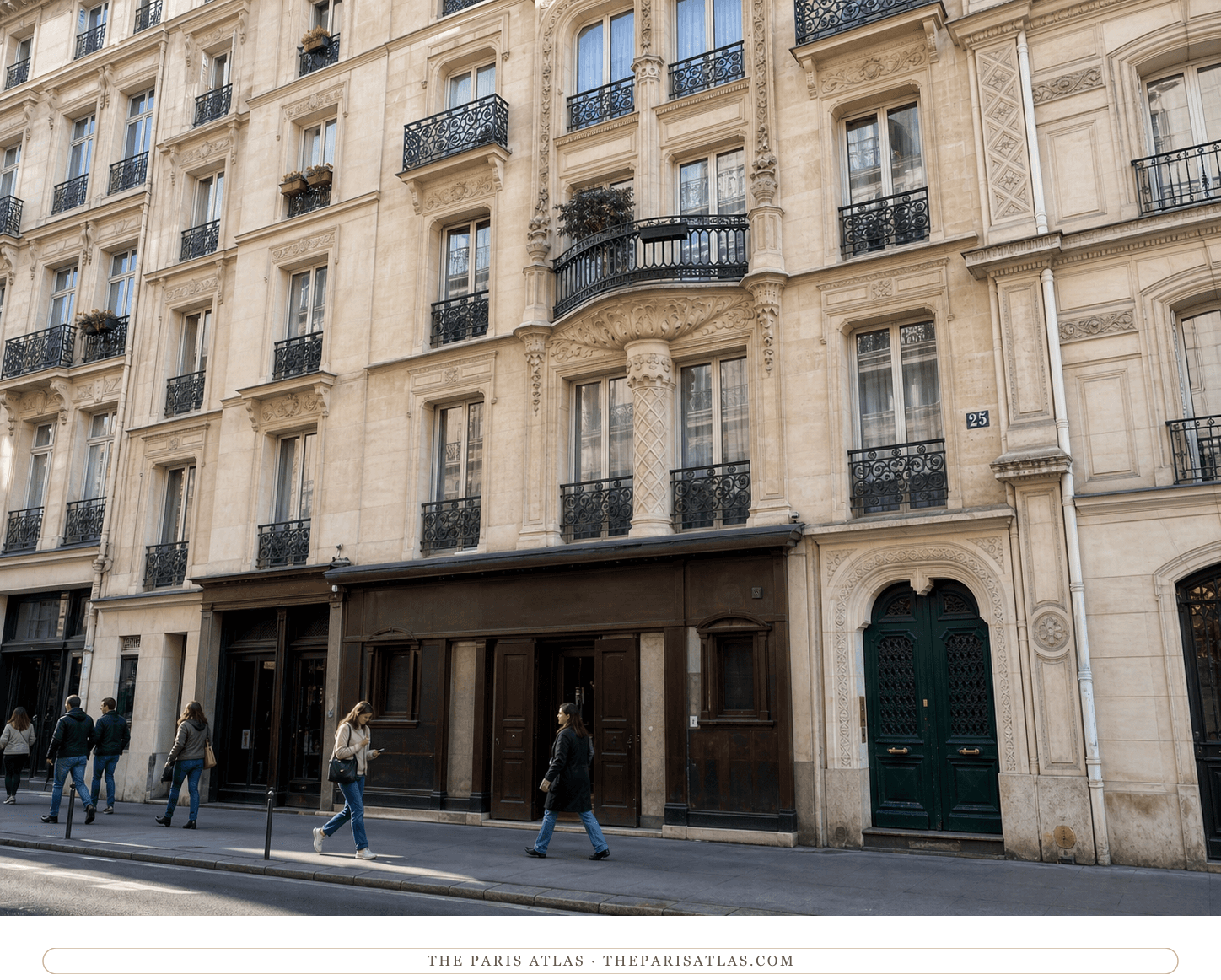
Vincent arrived unannounced from Antwerp in March 1886 and moved into Theo's flat on what was then the rue de Laval. It was too small to paint in, and by June the brothers had taken the larger apartment on the rue Lepic.
Visit the place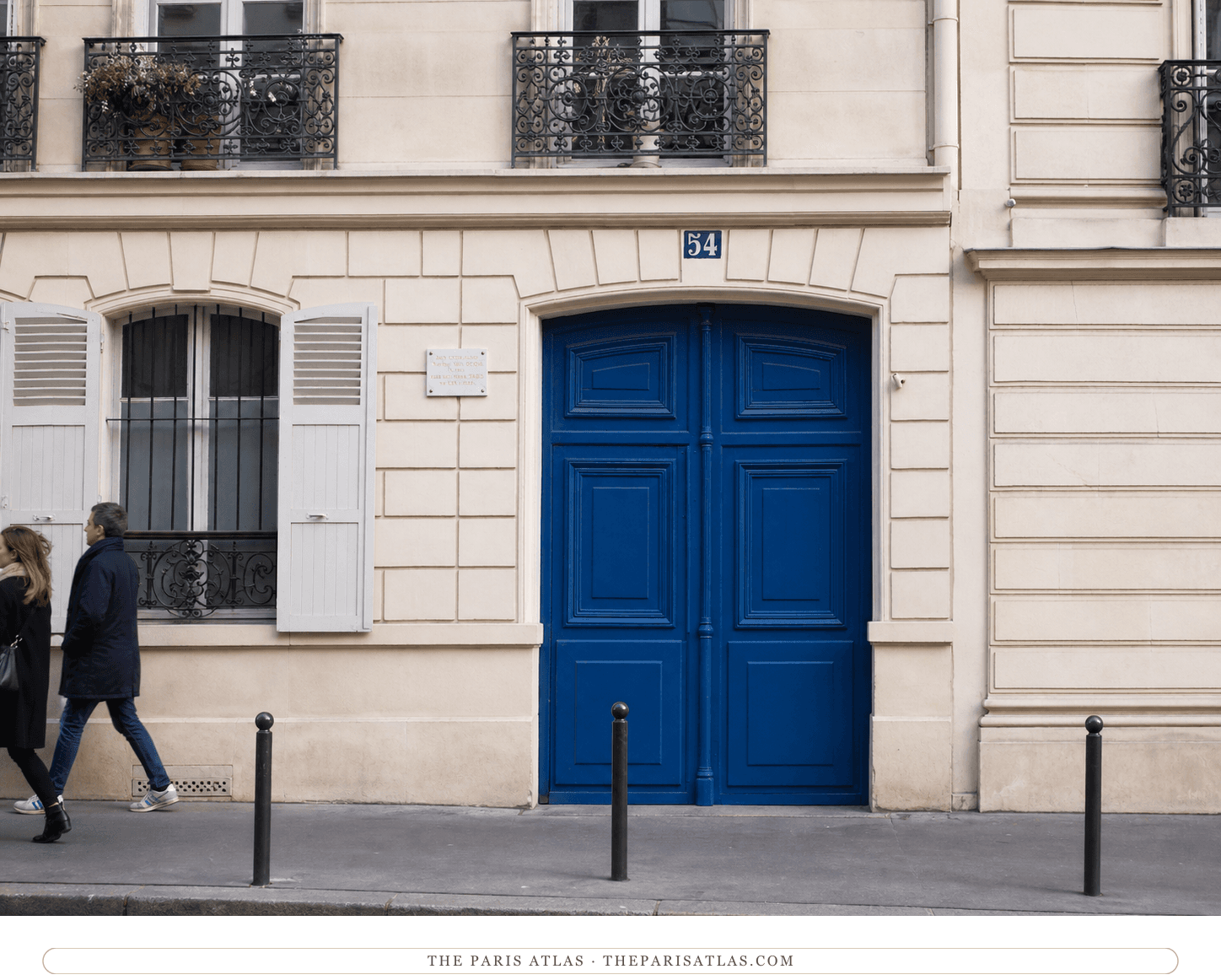
Vincent and Theo van Gogh lived here from June 1886 until Vincent left for Arles in February 1888. He painted the view from the window repeatedly; a plaque marks the building.
Visit the place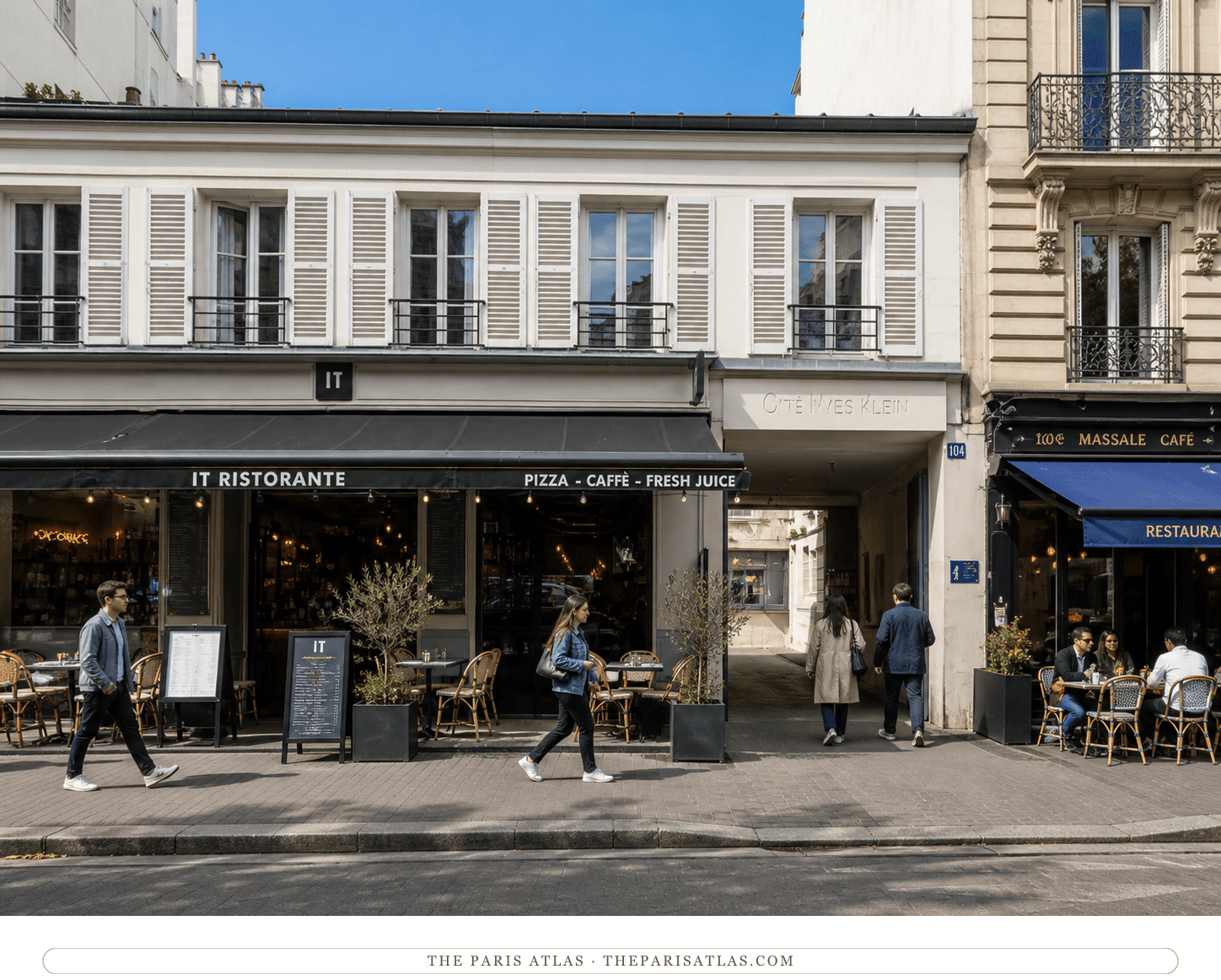
Van Gogh joined Fernand Cormon's atelier libre in March 1886, working mornings from the nude model and afternoons from plaster casts alongside Toulouse-Lautrec, Emile Bernard and Louis Anquetin.
Visit the placeYes, for two years — March 1886 to February 1888 — with his brother Theo, an art dealer, first on the rue Laval and from June 1886 in a third-floor apartment at 54 rue Lepic in Montmartre. The building still stands. He painted more than 200 pictures there, about a fifth of everything he made.
It is where his colour changed. He arrived painting in the browns and greys of The Potato Eaters and left painting in the broken orange-against-blue of the 1887 self-portraits. Seeing the Impressionists, Seurat's pointillism, and the Japanese prints he collected — all at once, all in Paris — is what did it.
They met in 1886 as students in Fernand Cormon's teaching studio on the boulevard de Clichy, alongside Émile Bernard. Henri de Toulouse-Lautrec drew Van Gogh in pastel in 1887, in profile over a café glass — one of the few portraits of Van Gogh made by another artist. It hangs in the Van Gogh Museum in Amsterdam.
In Paris in the autumn of 1887, through his brother Theo's gallery, when Paul Gauguin returned from Martinique — a year before Gauguin joined him at the Yellow House in Arles in October 1888. The nine weeks in Arles ended on 23 December 1888, when, after a quarrel with Gauguin, Van Gogh cut off part of his left ear.
He shot himself in the chest on 27 July 1890 in a field outside Auvers-sur-Oise, north-west of Paris, where he had moved that May to be near the physician Paul Gachet. He walked back to his room at the Auberge Ravoux and died there two days later, on 29 July, with Theo at his bedside. He was thirty-seven. Years of poverty, overwork, drink and repeated breakdowns — he had committed himself to the Saint-Rémy asylum the year before — lay behind it. Theo died six months after him, and the brothers are buried side by side at Auvers.
Very few. The documented sale is The Red Vineyard, bought for 400 francs by the Belgian painter Anna Boch at the Les XX exhibition in Brussels in early 1890, months before his death. The often-repeated claim that it was the only picture he ever sold overstates the case — there were smaller sales and trades — but the poverty was real: Theo supported him for his entire painting life.
The Van Gogh Museum in Amsterdam holds the largest share, including the self-portraits and Agostina Segatori in Le Tambourin. In Paris, the Musée d'Orsay hangs several works including an 1887 self-portrait, and 54 rue Lepic in Montmartre — a private building, viewable from the street — still stands.
Met · 1886
Met in Paris through Theo van Gogh's gallery; Pissarro explained the Impressionists' broken colour to him. In 1890 Pissarro recommended Dr Paul Gachet at Auvers-sur-Oise, which is how Van Gogh came to spend his last seventy days there.
Met · 1886
Fellow students in Fernand Cormon's Paris studio in 1886. Toulouse-Lautrec drew Van Gogh in pastel in 1887, in profile at a café table; the portrait is in the Van Gogh Museum, Amsterdam.
Met · 1887
Met in Paris in late 1887, through Theo van Gogh's gallery, after Gauguin returned from Martinique; the two exchanged paintings. Gauguin's nine weeks at the Yellow House in Arles in 1888 grew out of this Paris acquaintance and ended with the quarrel of 23 December 1888.

Exhibited at · 1887
In November 1887 Van Gogh organised an exhibition in this cheap restaurant, showing his own work with Anquetin, Bernard, Toulouse-Lautrec, Koning and Guillaumin. Seurat and Gauguin came to see it.

Frequented
Julien Tanguy's colour shop supplied Van Gogh with paint on credit and showed his canvases when no dealer would. Van Gogh painted three portraits of Tanguy in 1887 and 1888.

Frequented · 1886
Theo van Gogh managed the Boussod, Valadon branch on the boulevard Montmartre. Vincent used the gallery to study the Impressionists his brother was handling.

Frequented · 1886
Van Gogh painted the surviving Montmartre windmills repeatedly through 1886, from ground a few minutes uphill of his apartment on the rue Lepic.

Lived at · 1886
Vincent arrived unannounced from Antwerp in March 1886 and moved into Theo's flat on what was then the rue de Laval. It was too small to paint in, and by June the brothers had taken the larger apartment on the rue Lepic.

Lived at · 1886–1888
Vincent and Theo van Gogh lived here from June 1886 until Vincent left for Arles in February 1888. He painted the view from the window repeatedly; a plaque marks the building.

Lived at · 1886–1888
Van Gogh's whole Paris period was spent on and around the butte - Theo's flat below it, the rue Lepic apartment on its slope, Cormon's studio on the boulevard de Clichy, and the windmills at the top.
Studied at · 1886
Van Gogh joined Fernand Cormon's atelier libre in March 1886, working mornings from the nude model and afternoons from plaster casts alongside Toulouse-Lautrec, Emile Bernard and Louis Anquetin.
Studied at · 1886
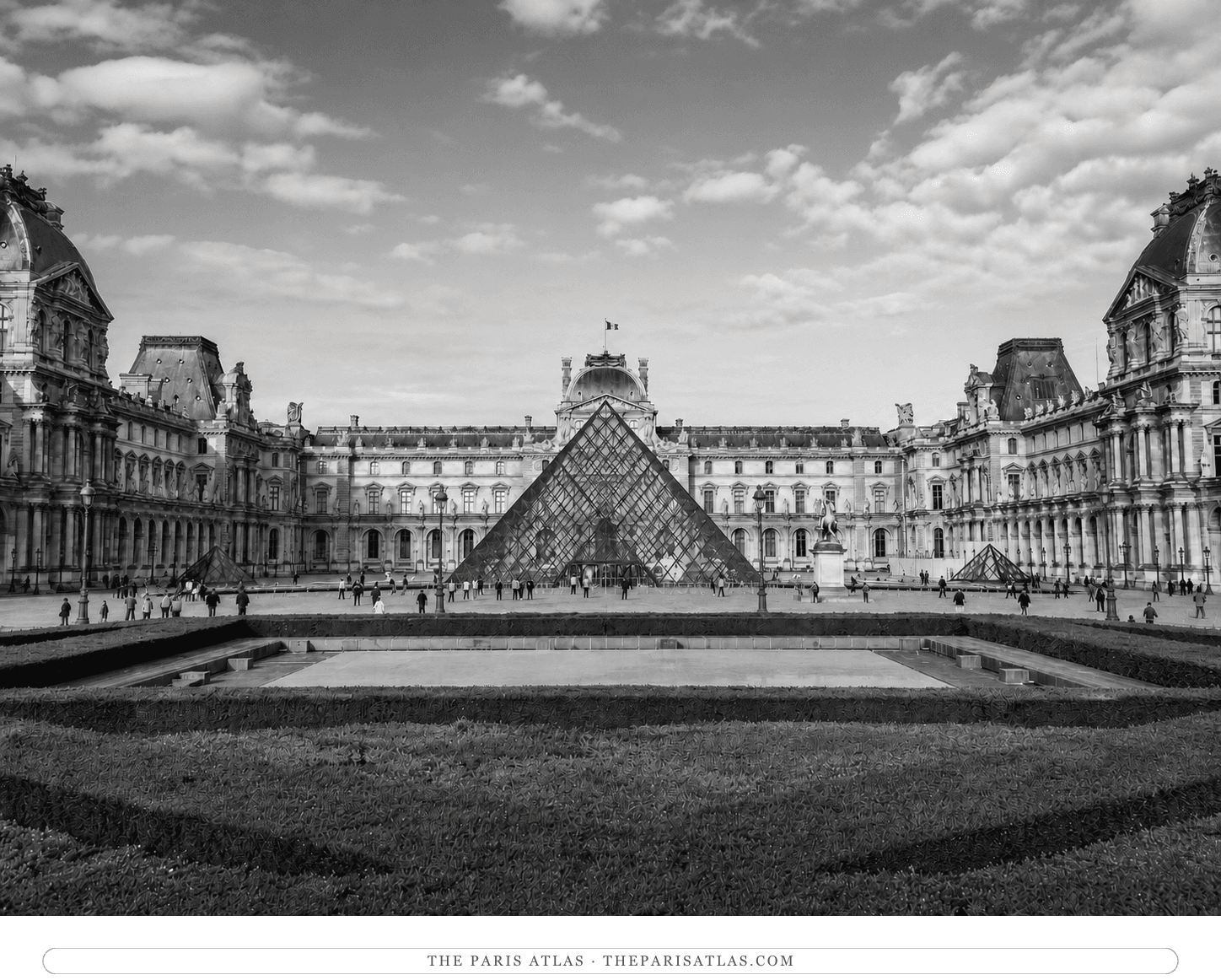
Van Gogh spent his early Paris weeks in the Louvre studying the old masters and Delacroix's colour, groundwork for the change in his own palette over the following two years.
Associated with · 1886–1890
The Starry Night of 1889 keeps the subject of a landscape while turning observation into construction: swirling marks, luminous circles and rhythmic movement make the sky an image rather than a record of the weather.
Associated with · 1886
One of the four painters Tate names as Post-Impressionist. He went on painting from nature while developing a use of colour and brushwork personal enough to carry his response to the subject.
Sat for a portrait by · 1887
Pastel on cardboard, 1887: Van Gogh in profile at a café table with a glass in front of him. The Van Gogh Museum, Amsterdam holds it.
Met · 1886–1889
They met in Paris in 1886, and through 1887 painted together along the Seine at Asnières, river landscapes and cafés. Van Gogh at first chiefly admired Signac's loose technique. In March 1889 Signac visited Van Gogh at Arles, and at the 1890 XX banquet in Brussels he declared he would carry on Toulouse-Lautrec's defence of Van Gogh's honour if a duel over the paintings went ahead.
Influenced by
Van Gogh painted The Prisoners' Round (1890) directly from Doré's plate of the Newgate prison exercise yard in London: A Pilgrimage (1872), one of several English graphic sources he collected and copied.
Influence on
Joan Mitchell knew Vincent van Gogh's paintings from childhood visits to the Art Institute of Chicago and spoke of him with particular admiration. Her Sunflower paintings, begun at Vétheuil in 1969, return to his subject, and she was especially moved by sunflowers as they aged.
Influenced by · 1888
Writing to Émile Bernard from Arles on 29 July 1888, Vincent van Gogh asked whether he knew a painter called Vermeer who had painted a very beautiful pregnant Dutch lady. He described this strange painter's palette as blue, lemon yellow, pearl gray, black and white, and said that the arrangement of lemon yellow, pale blue and pearl gray was as characteristic of Vermeer as black, white, gray and pink were of Velázquez. The editors of the letters identify the painting as Woman Reading a Letter in the Rijksmuseum.
Influenced by · 1885
Vincent van Gogh saw the Rembrandts at the newly opened Rijksmuseum in Amsterdam in October 1885 and wrote to his brother Theo about them from Nuenen on or about 10 October. He called The Syndics “perfect” and “the finest Rembrandt”, and of Isaac and Rebecca, then known as The Jewish Bride, he wrote: “What an intimate, what an infinitely sympathetic painting, painted — with a glowing hand.” In the same letter he wrote that Rembrandt “goes so deep into the mysterious that he says things for which there are no words in any language”.
The sources below include biographies, scholarly essays, interviews, and primary materials that informed this page. They reflect both the historical record and ongoing critical conversations about Vincent van Gogh and their work.

The complete annotated edition of the letters. The documentary record for the unannounced arrival of March 1886, the affair with Agostina Segatori and the Japanese prints at Le Tambourin, the colour pairings he worked through with Theo, and the reed-pen drawings he sent in place of canvases.

Traces the sale of The Red Vineyard to Anna Boch for 400 francs at the Les XX exhibition in Brussels in early 1890, and the painting's route to Moscow.
Contemporary reporting or criticism used to document the historical reception and context of Vincent van Gogh.
The collection record for The Red Vineyard at the museum that holds it.
First-person evidence and historical context used in preparing the Vincent van Gogh page.
Web source consulted for documented facts and historical context presented on the Vincent van Gogh page.
These references anchor the page in the documented record and in the scholarly conversations around Vincent van Gogh. Every claim on this page traces back to one or more of the works listed here.
 Explore more resources