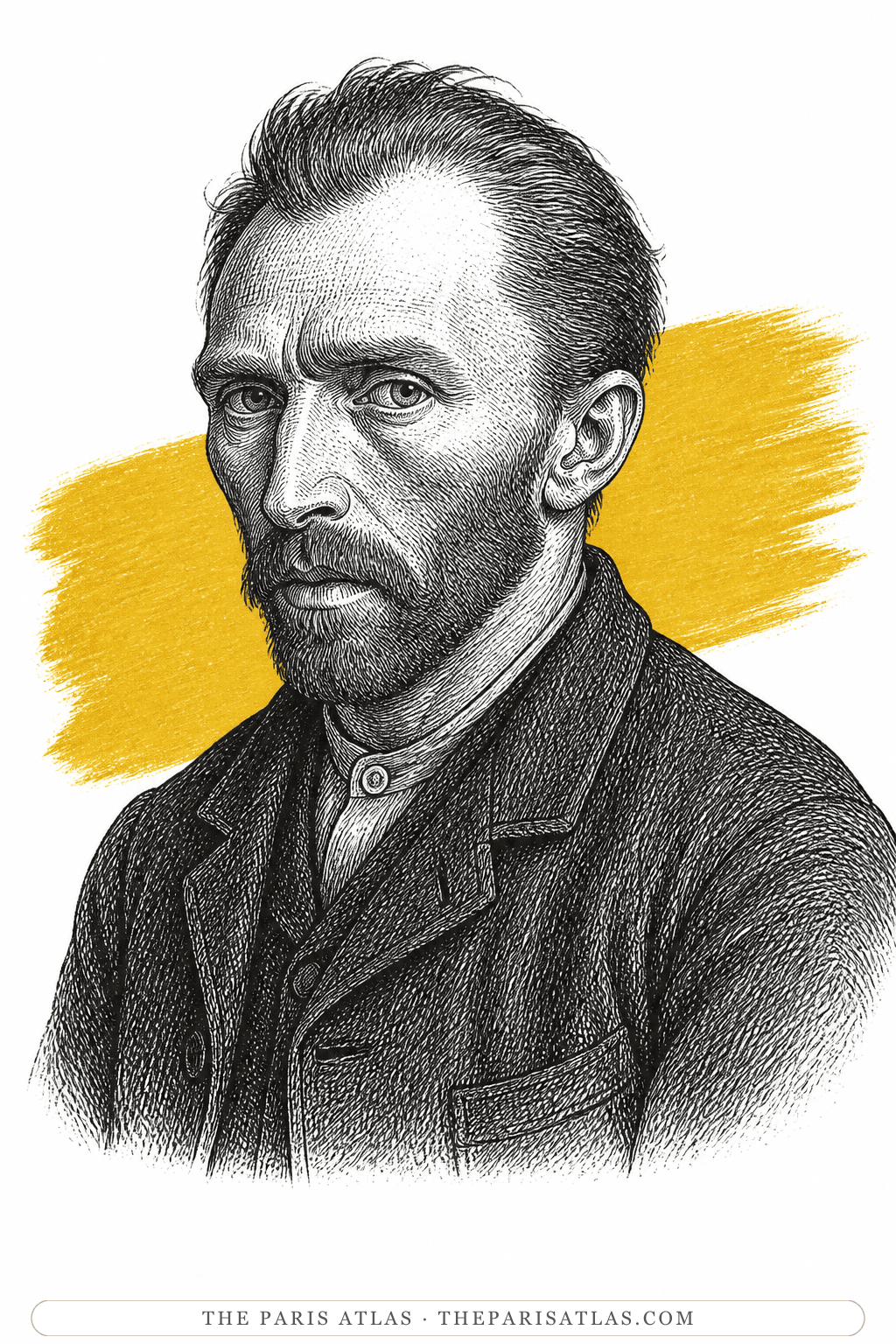
Vincent van Gogh
Julien Tanguy's colour shop supplied Van Gogh with paint on credit and showed his canvases when no dealer would. Van Gogh painted three portraits of Tanguy in 1887 and 1888.
The tiny paint shop of Julien 'Père' Tanguy, who supplied the Impressionists on credit, hung their canvases in his window when no dealer would, and sat three times for Van Gogh's most affectionate portrait.
Julien Tanguy sold colours. He had been a Communard, had done time for it, and ran a small shop on the rue Clauzel where painters with no money could get paint against the promise of payment later, or against a canvas. That arrangement is not a footnote to Impressionist history; for several years it was the difference between working and not working.[1]
A colour merchant occupied a different position from a dealer. Paint, canvas and brushes had to be acquired before an unsold picture existed, which meant the merchant encountered an artist's risk earlier than the gallery did. By extending credit and sometimes accepting work in settlement, Tanguy accumulated pictures the established market regarded as liabilities. The walls and stock of a very small retail business consequently became an accidental collection of advanced painting.
He also hung the pictures. Tanguy's window and back room functioned as an informal gallery at a point when the trade would not touch Cézanne, Van Gogh or Gauguin, and young painters came to the shop specifically to see work they could not see anywhere else. Émile Bernard and others described it as a small school.[1]
That description explains why the address belongs on an atlas of artists rather than merely a list of suppliers. Seeing a Cézanne or a Gauguin in the rue Clauzel shop could change what another painter attempted, even when no sale followed. Tanguy connected artists later separated into movements and museum rooms: the shop's importance lay in circulation, comparison and conversation before the work had financial prestige.
Van Gogh painted him three times in 1887 and 1888, seated, hands folded, in a hat, against a wall of Japanese prints — one of the warmest portraits he ever made and, not coincidentally, of the man who was extending him credit. The best-known version is at the Musée Rodin in Paris.[2]
The Japanese prints behind Tanguy are not generic decoration. Van Gogh was collecting inexpensive ukiyo-e impressions in Paris and studying their cropped compositions, clear contours and unmixed colour. Placing Tanguy before a field of those prints binds the practical supporter of his work to the visual education Paris was giving him. The portrait records both a person and the exchange system around the pictures.
Tanguy died in 1894 and the stock was sold off; Vollard, who would go on to make Cézanne's reputation, bought from it. The shop is gone and the street is quiet.
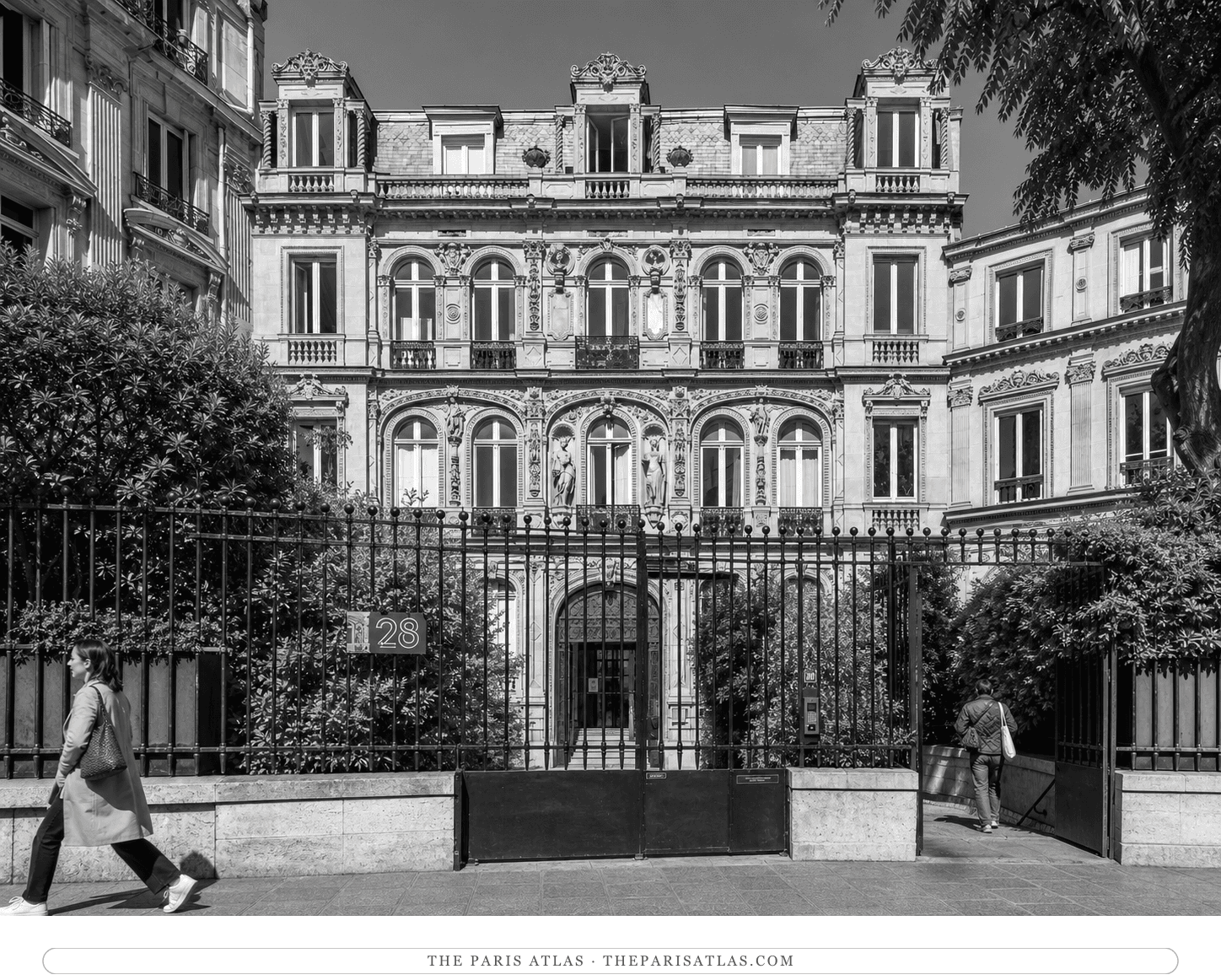
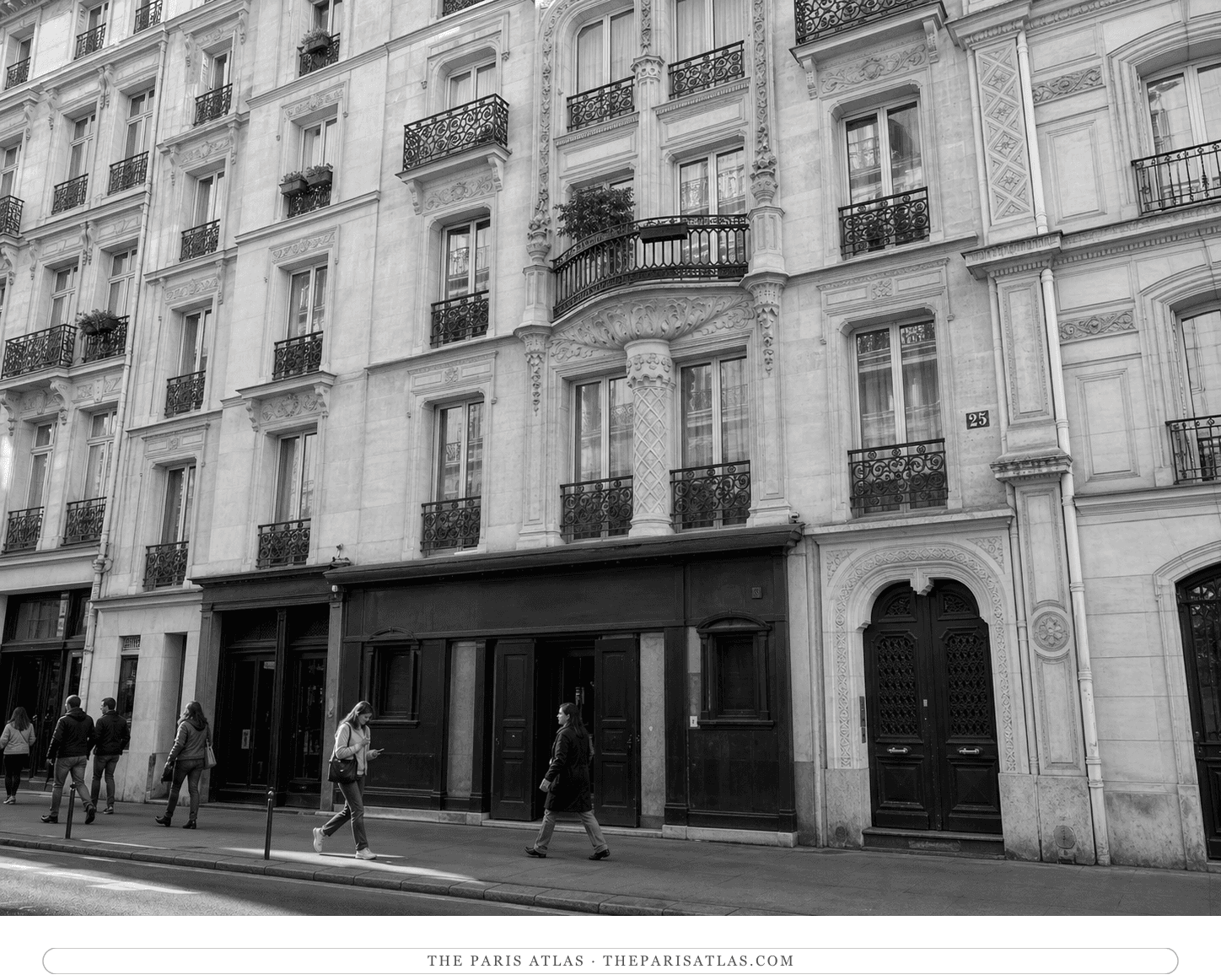
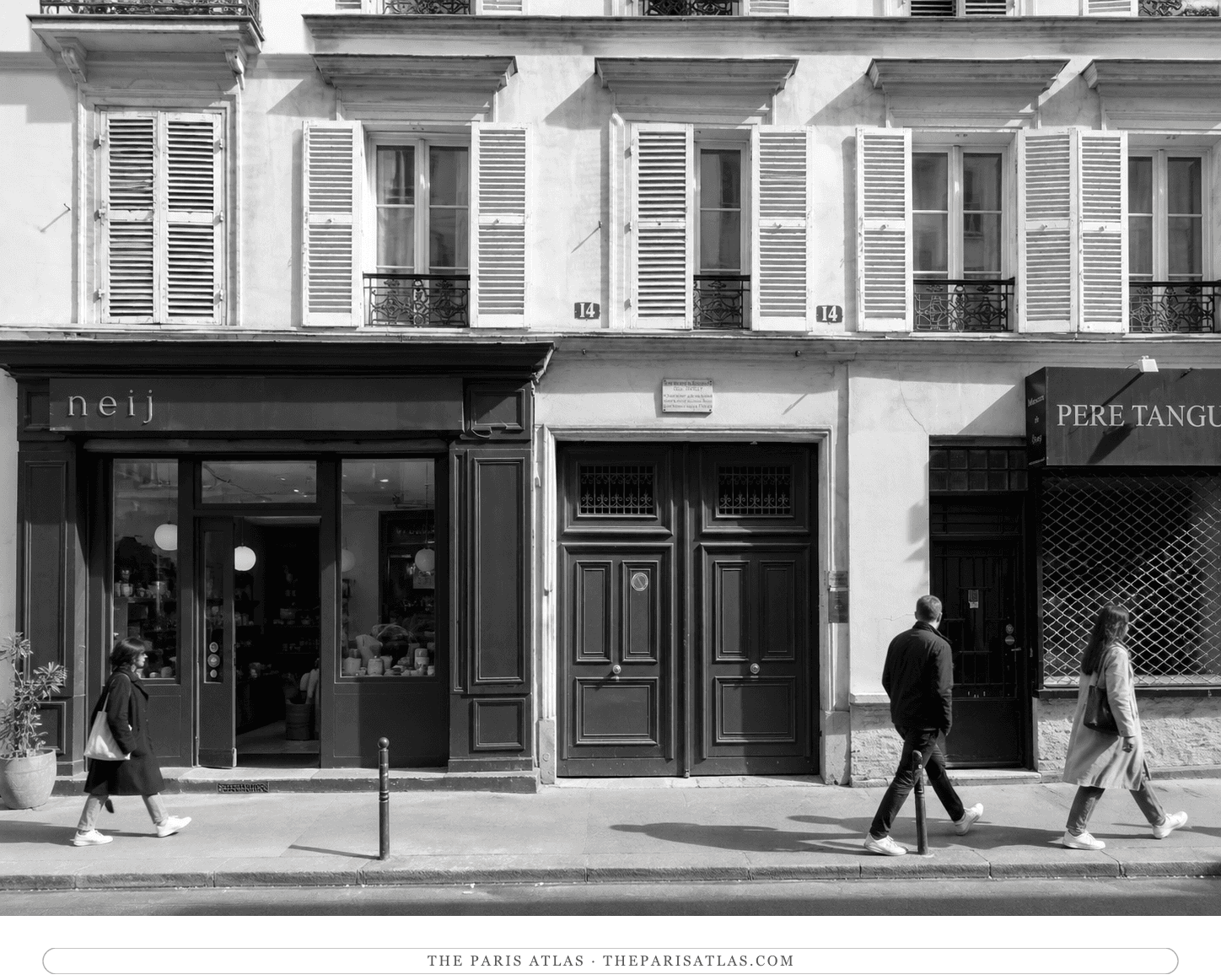
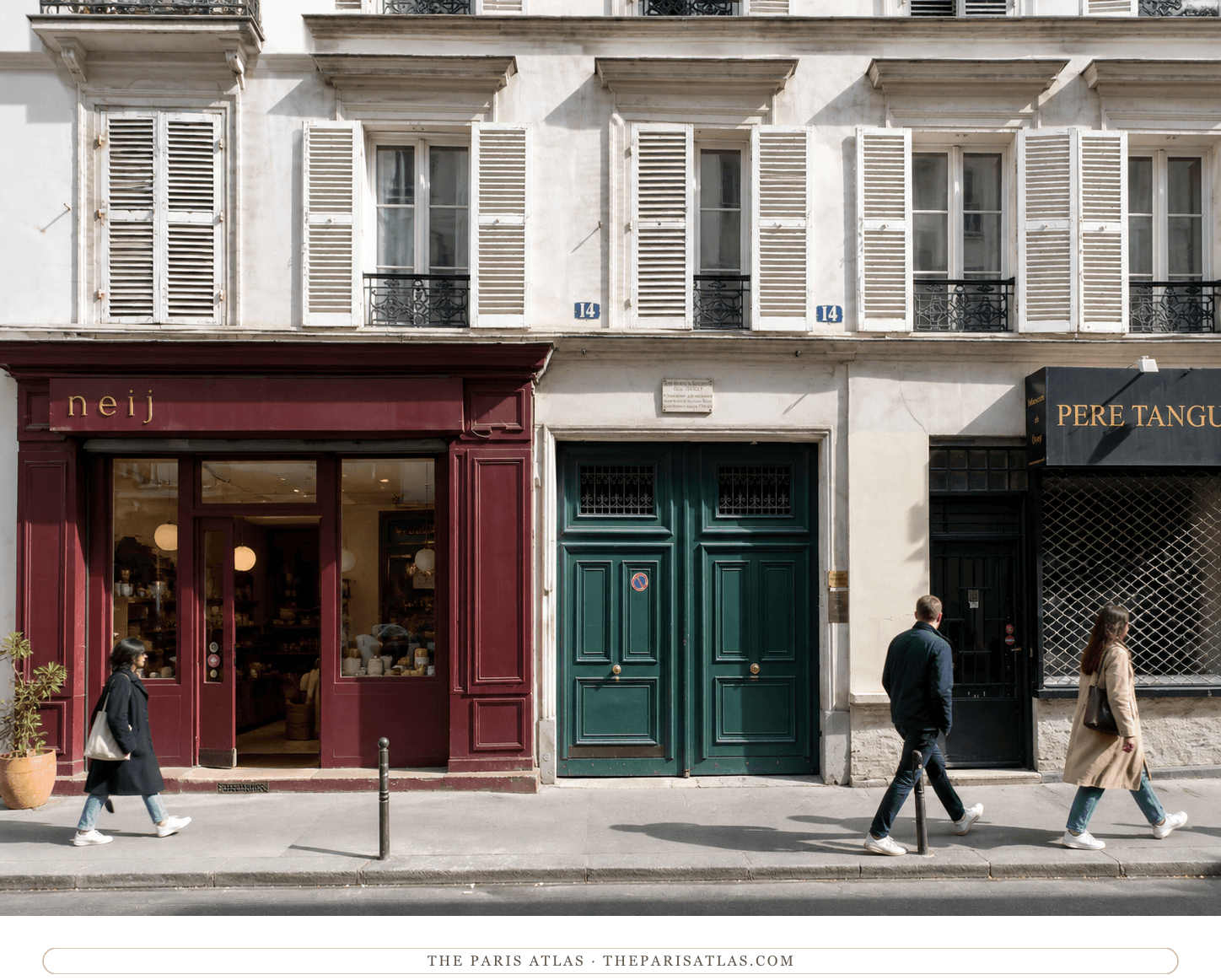
Nothing at number 14 recreates that room today. The building survives, but the colour shop and its improvised display have disappeared. The exterior is most useful when read together with the nearby Van Gogh addresses: it shows how close the material supplier and informal gallery were to the flats and studios that depended on them.
Tanguy's political biography deepens the meaning of that support. He had served in the National Guard during the Paris Commune and was imprisoned after its defeat. The shop he later ran was therefore not an aristocratic salon disguised as retail. It belonged to the modest economy of the neighbourhood and was managed by someone whose own life had been marked by the repression of 1871. Artists remembered his generosity as personal, but it also fitted a durable sympathy for people outside official success.
The portraits Van Gogh made of him document changes across a short period. Tanguy's steady pose remains recognisable while the backgrounds and handling move from relatively restrained colour toward a dense screen of Japanese imagery. Instead of presenting the merchant with the attributes of wealth, Van Gogh surrounded him with inexpensive prints and paint—the visual materials that passed through the shop. The sitter's patience and direct gaze make the pictures an unusually concrete record of trust between an artist with almost no market and a supplier accepting that risk.
Cézanne's presence in the stock points forward to Ambroise Vollard. When Tanguy died, the dispersed pictures entered a changing market, and Vollard soon mounted the exhibition that established Cézanne for a new generation. The sequence should not make Tanguy into a failed version of a major dealer. His achievement was different: he kept work visible and materials available before a profitable market existed, when prediction was hardest and the immediate need was a tube of colour on credit.
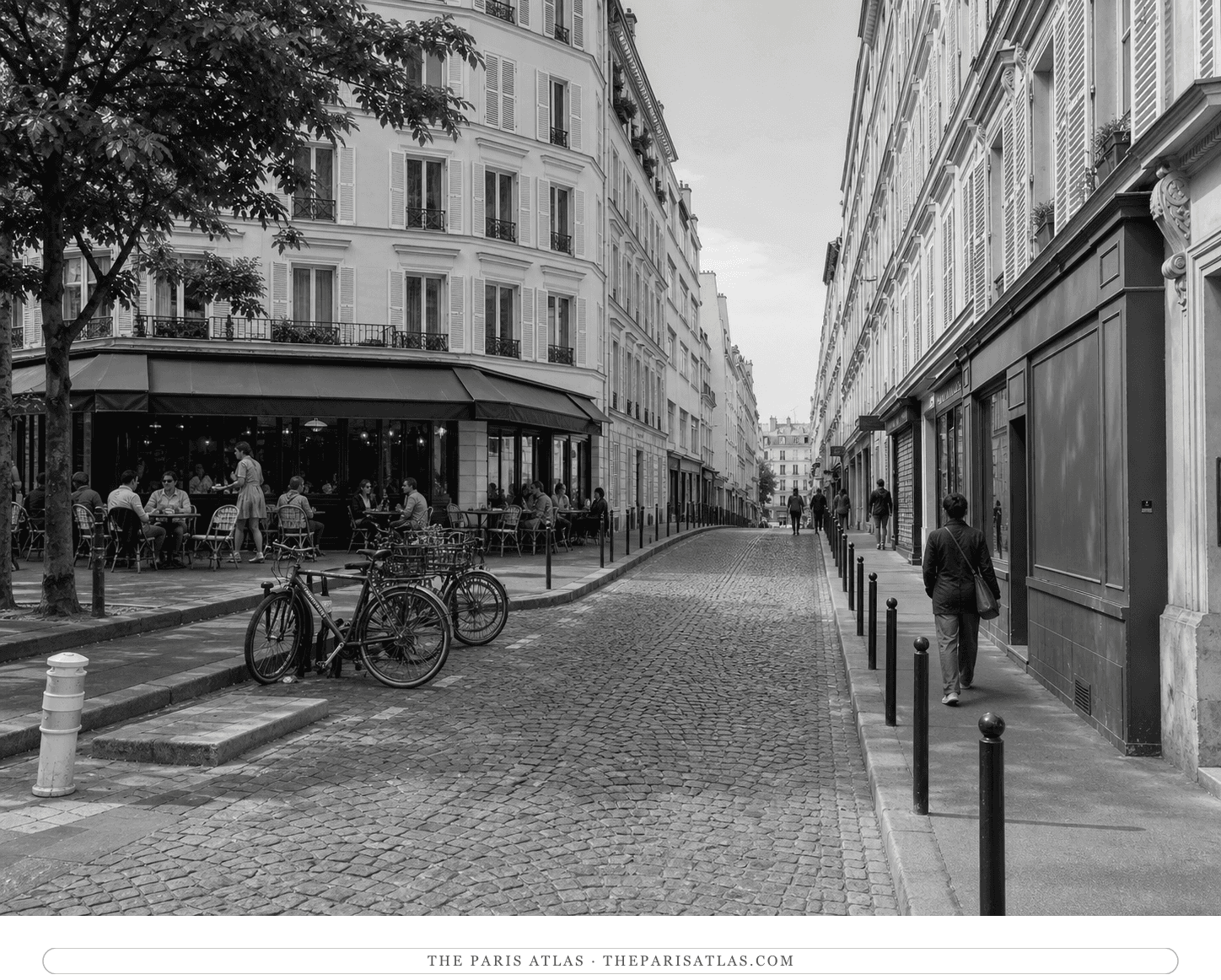
Rue Clauzel lies below the steepest tourist routes of Montmartre, closer to the commercial streets around Notre-Dame-de-Lorette and Pigalle. Walking from here to boulevard de Clichy or rue Lepic demonstrates that the celebrated Paris period depended on short, repeatable journeys. Paint could be collected, pictures inspected and acquaintances encountered without crossing the city. The network was dense enough for a single small shop to become both supply counter and unofficial classroom.
That ordinary scale is the reason not to search for a grand memorial interior. The history belongs to transactions at a counter, pictures crowded onto walls and repeated acts of credit. The surviving building anchors those actions, while the portraits and documentary accounts supply what the present façade cannot show.
Van Gogh buys from Tanguy and shows work in the shop.
He begins the series of portraits of Tanguy against Japanese prints.
Tanguy dies and his stock is sold.
A Paris colour merchant who supplied paint on credit to painters with no money, and displayed their canvases when no gallery would. Van Gogh, Cézanne and Gauguin all depended on him.
He painted three. The best-known version hangs at the Musée Rodin in Paris.
Julien Tanguy's colour shop supplied Van Gogh with paint on credit and showed his canvases when no dealer would. Van Gogh painted three portraits of Tanguy in 1887 and 1888.
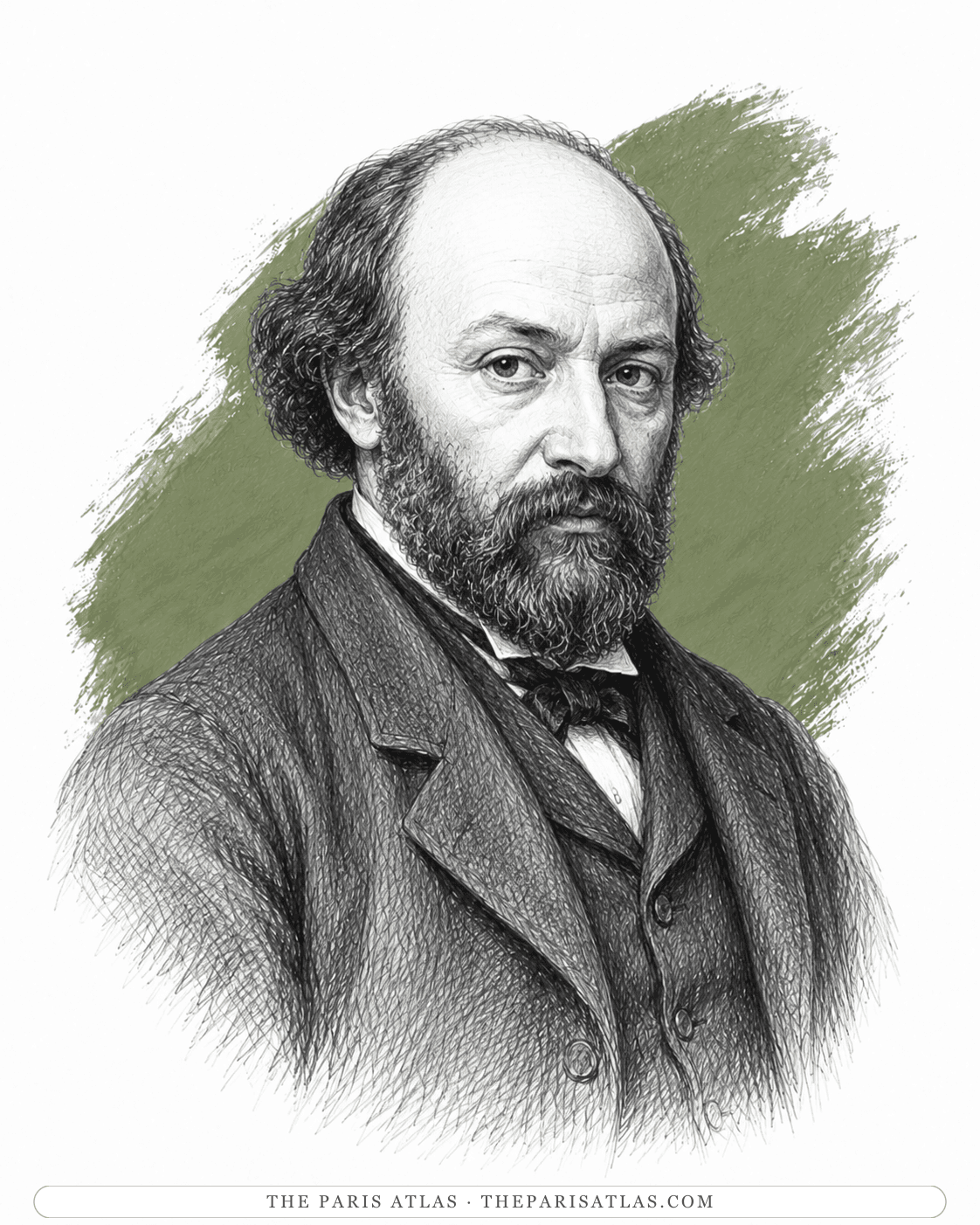
Julien Tanguy's colour shop supplied Cezanne and displayed his canvases when no dealer would. For years it was effectively the only place in Paris where younger painters could see his work.
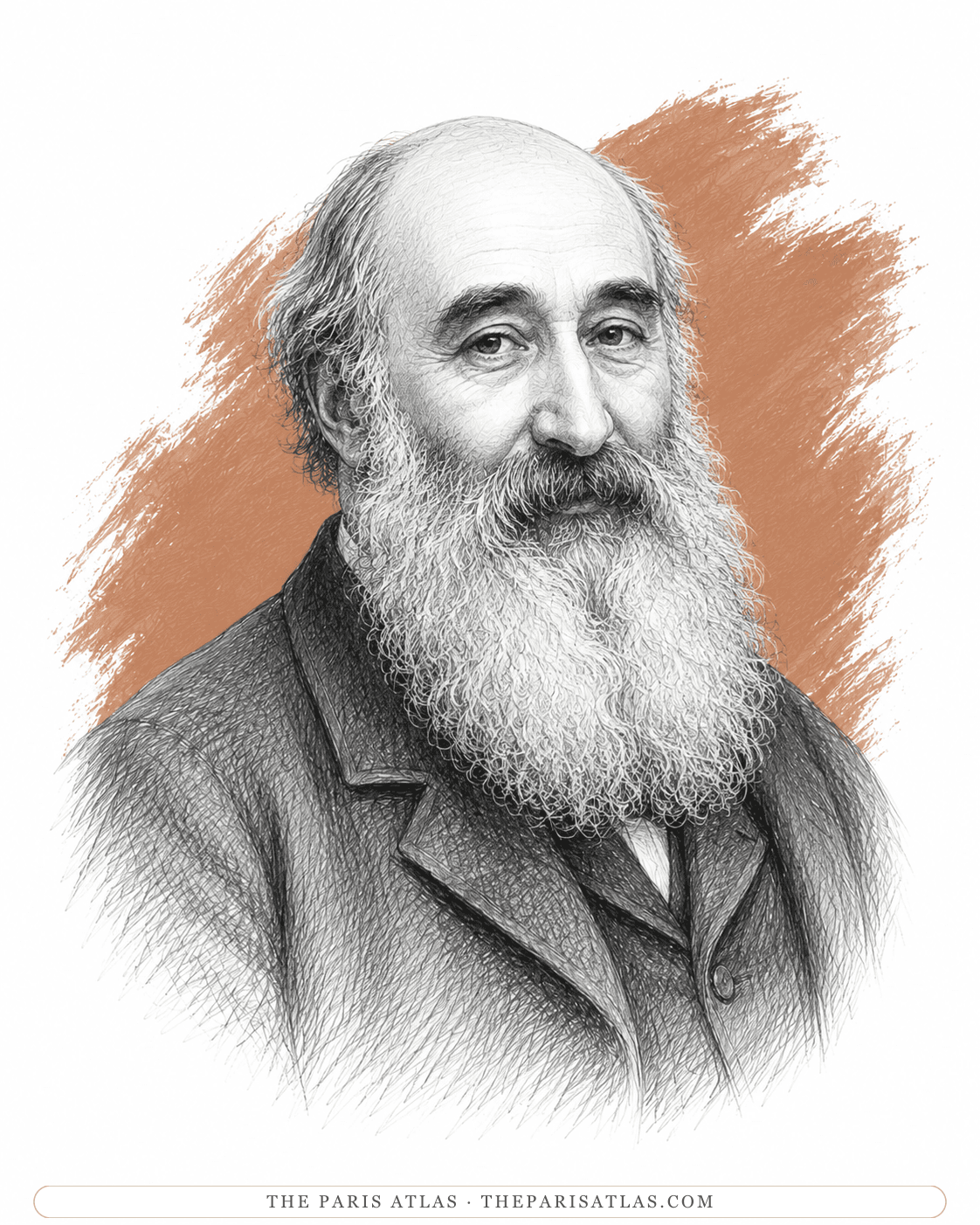
Julien Tanguy's surviving accounts record Pissarro buying 3,313.10 francs of colours from the shop between 1874 and 1880, with the invoices headed 14 rue Clauzel. Tanguy also handled several of his paintings.
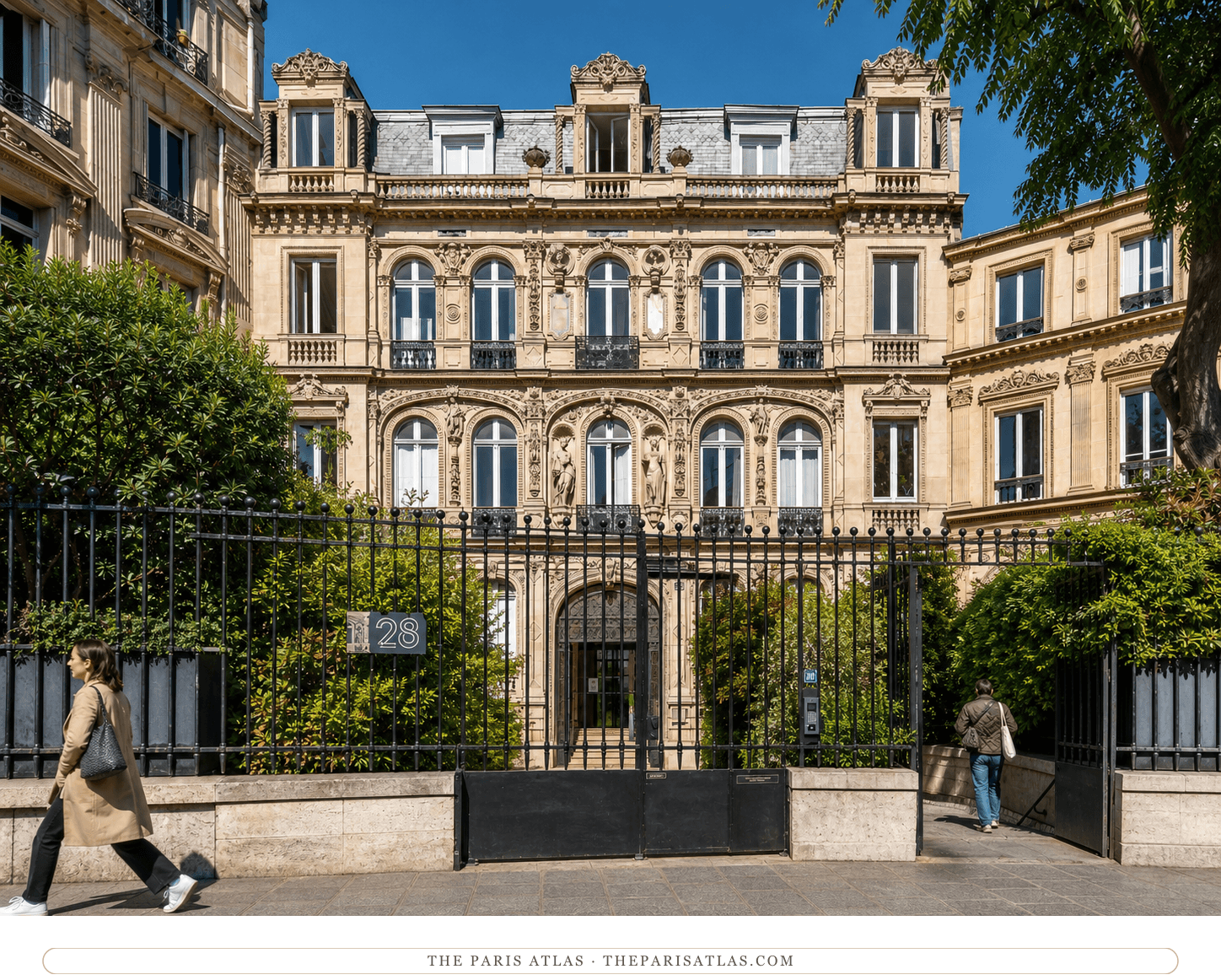
The first home Paul Gauguin shared with his Danish wife Mette Gad after their marriage in 1873, on a handsome small square — the address of a successful stockbroker rather than a painter.
Visit the place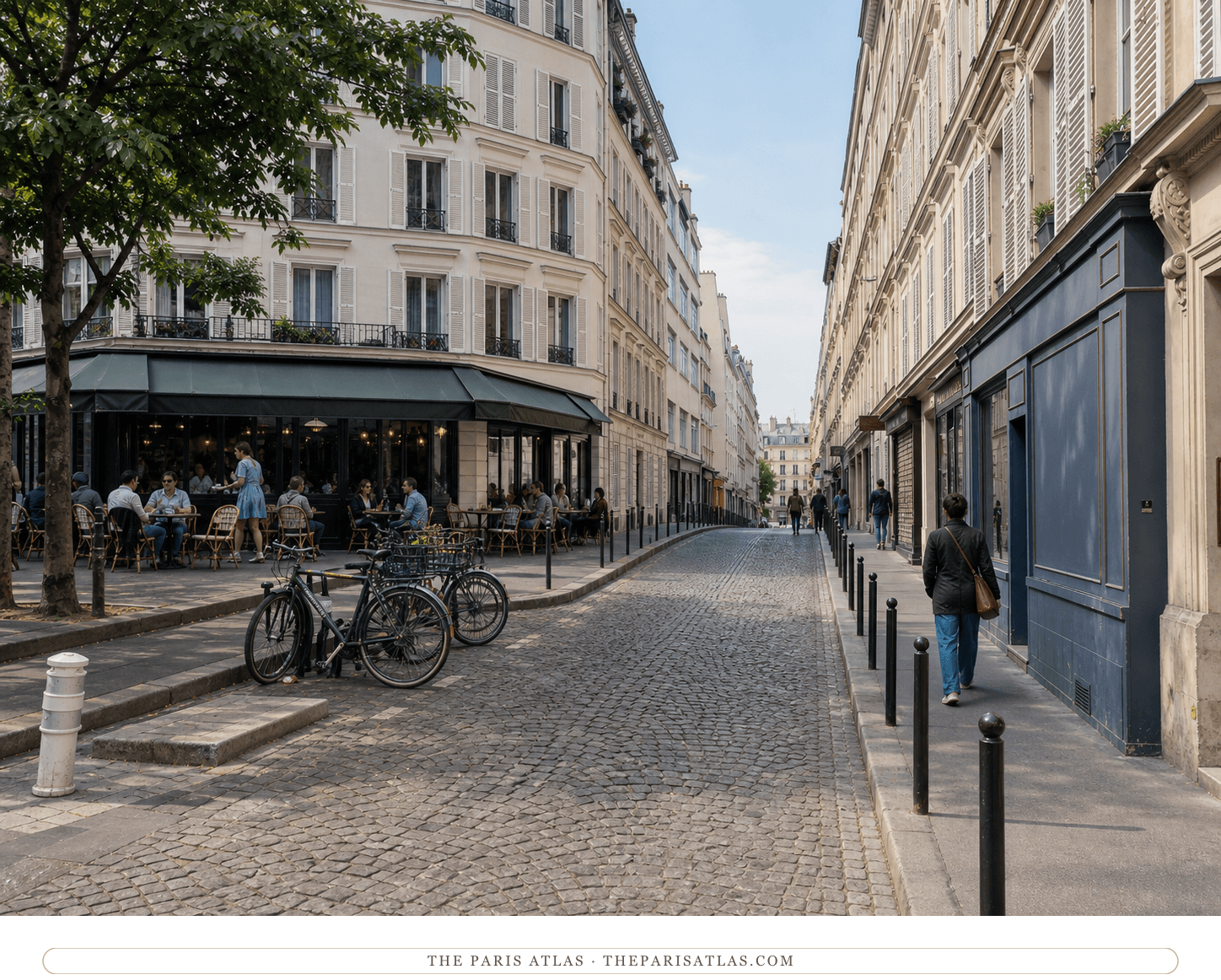
The house of Gustave Arosa — businessman, photographer and collector — who became Paul Gauguin's guardian, found him his job at the Bourse, and owned the Delacroix, Courbet and Pissarro canvases that started him painting.
Visit the place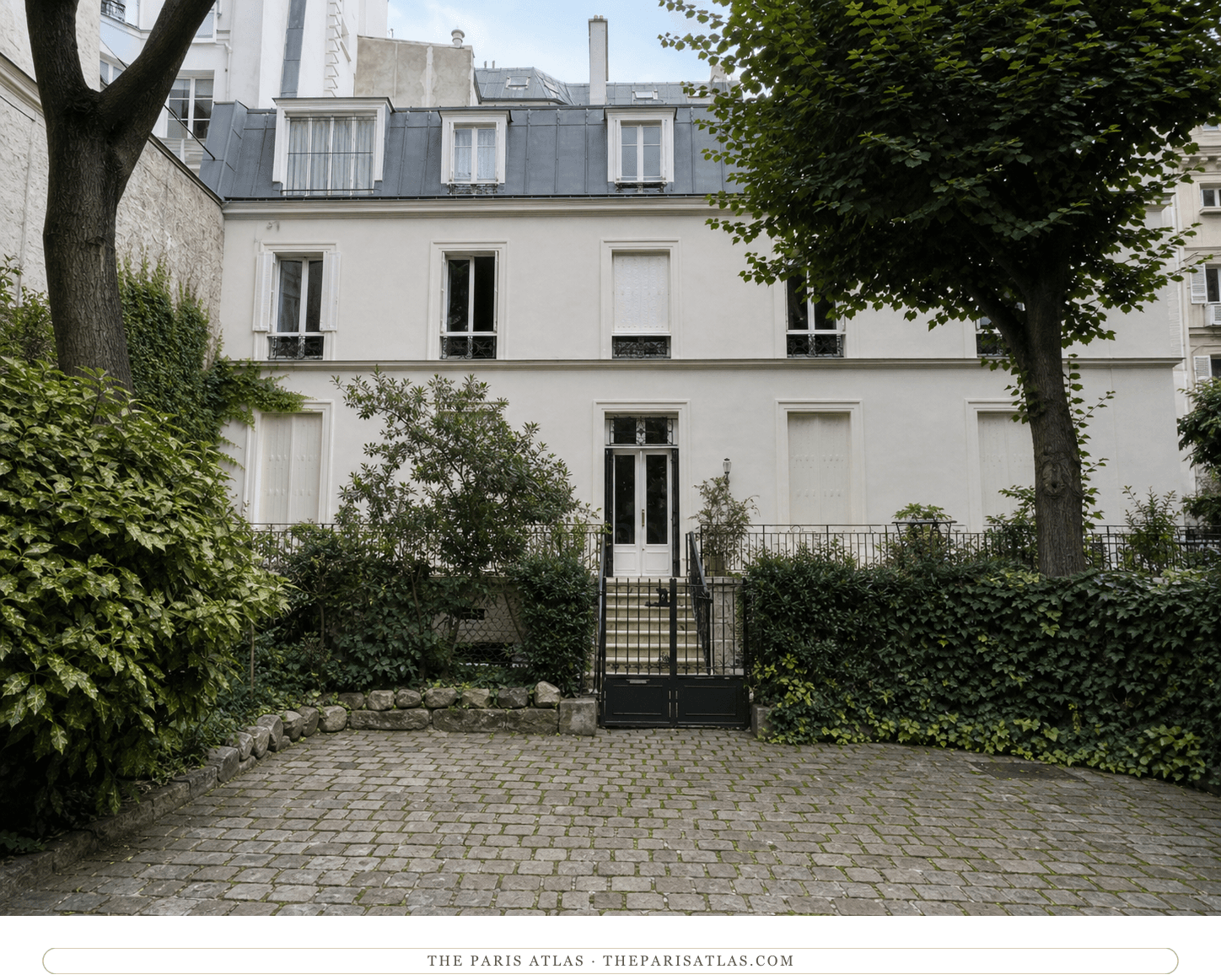
The apartment the young Stefan Zweig rented below Pigalle from November 1904 to June 1905 — the Paris year that runs through The World of Yesterday, on the same street where Degas kept his studio.
Visit the place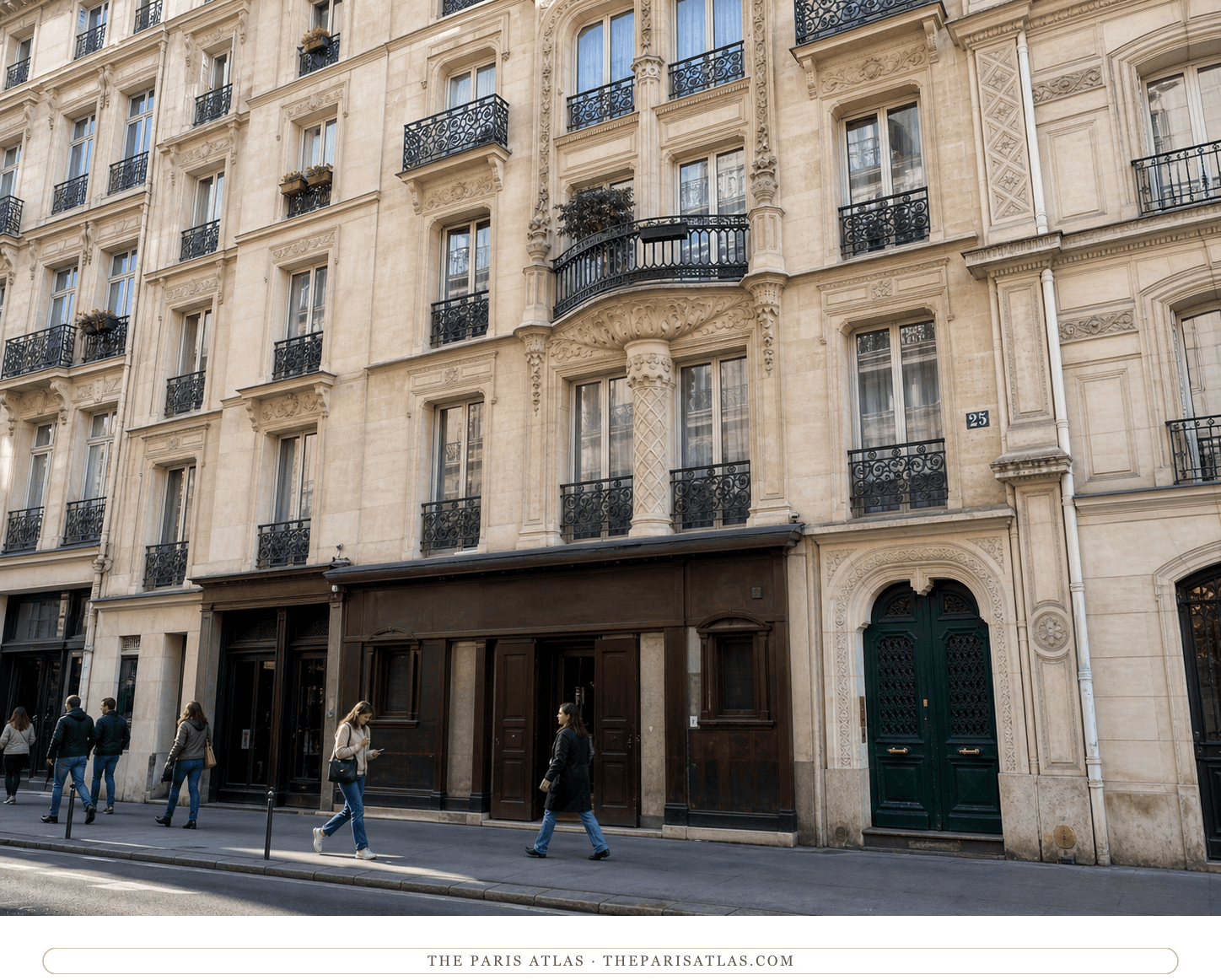
Theo van Gogh's small flat, where Vincent turned up unannounced from Antwerp in March 1886. It was too cramped to paint in, which is why the brothers moved to the rue Lepic three months later.
Visit the placeThe sources below include histories, archival materials, scholarly research, and official records that informed this page. They document Père Tanguy's shop, 14 rue Clauzel, the people connected to it, and its place in Paris.


Web source consulted for documented facts and historical context presented on the Père Tanguy's shop, 14 rue Clauzel page.
Web source consulted for documented facts and historical context presented on the Père Tanguy's shop, 14 rue Clauzel page.
Web source consulted for documented facts and historical context presented on the Père Tanguy's shop, 14 rue Clauzel page.
These references provide the documented foundation for this page's history and context. Claim-level citations remain attached to the specific claims they support.
 Explore more resources
Newsletter
The cafés, studios, and walk-up flats where the work was made — one story from the map in every letter.