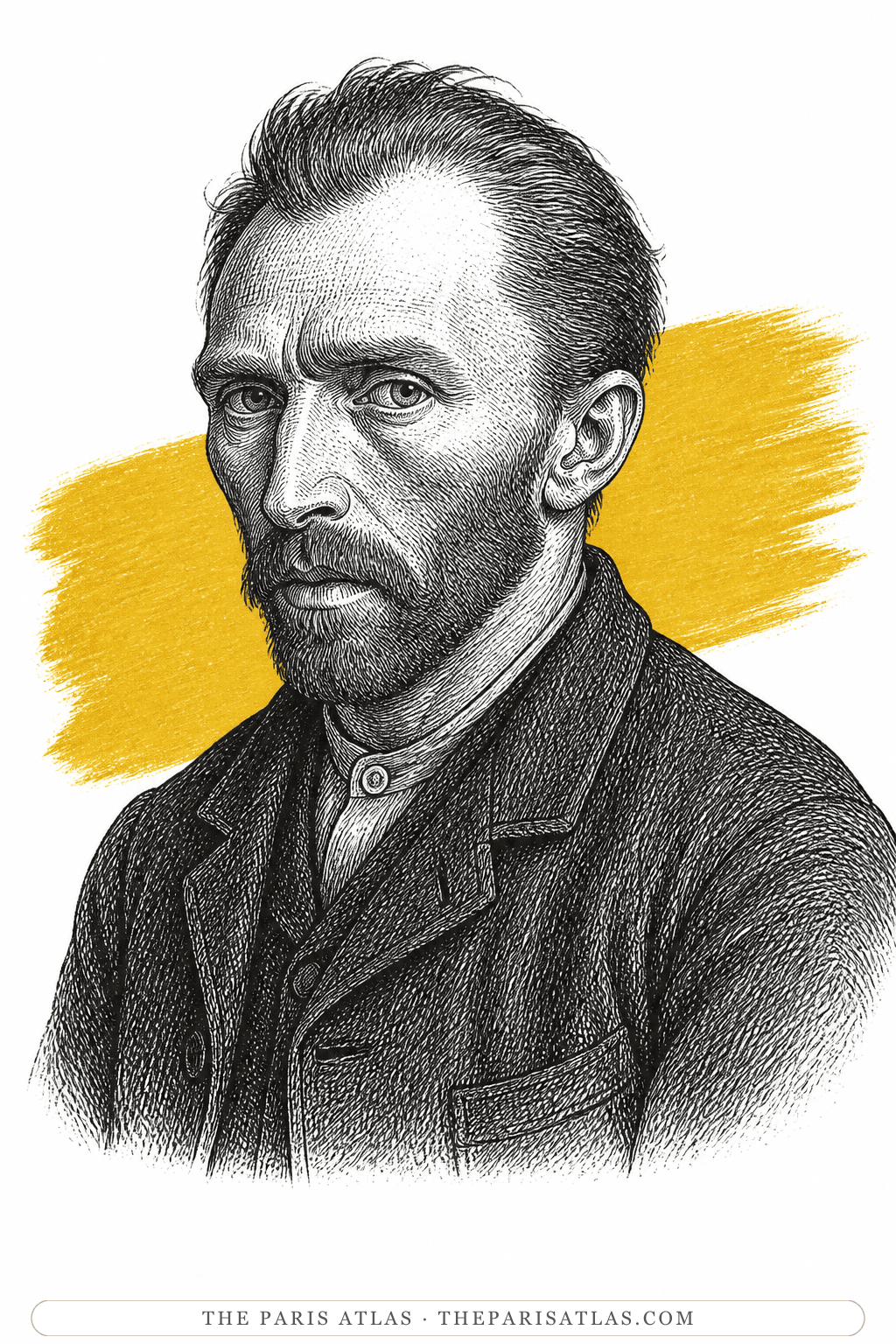
Vincent van Gogh
Vincent arrived unannounced from Antwerp in March 1886 and moved into Theo's flat on what was then the rue de Laval. It was too small to paint in, and by June the brothers had taken the larger apartment on the rue Lepic.
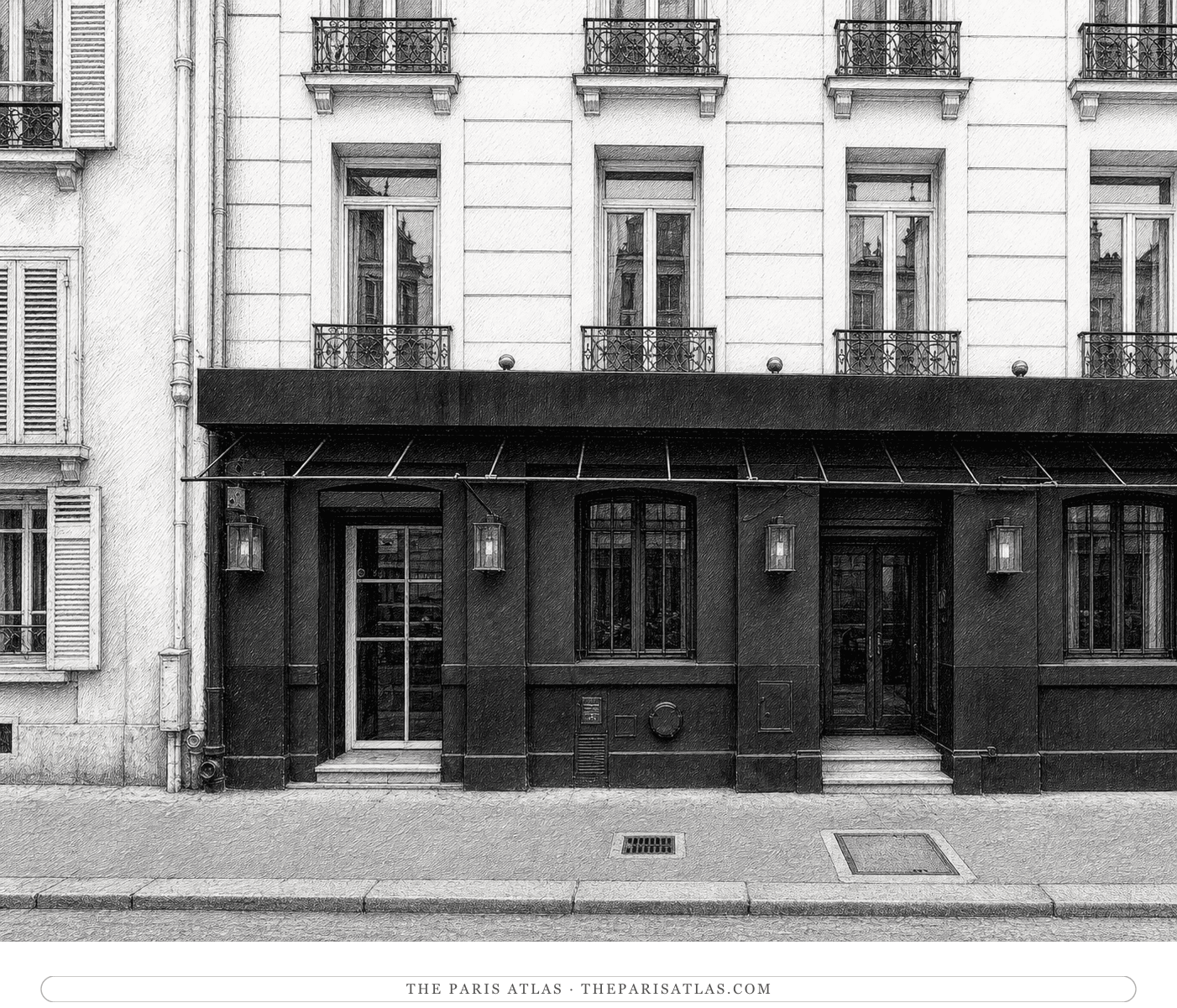
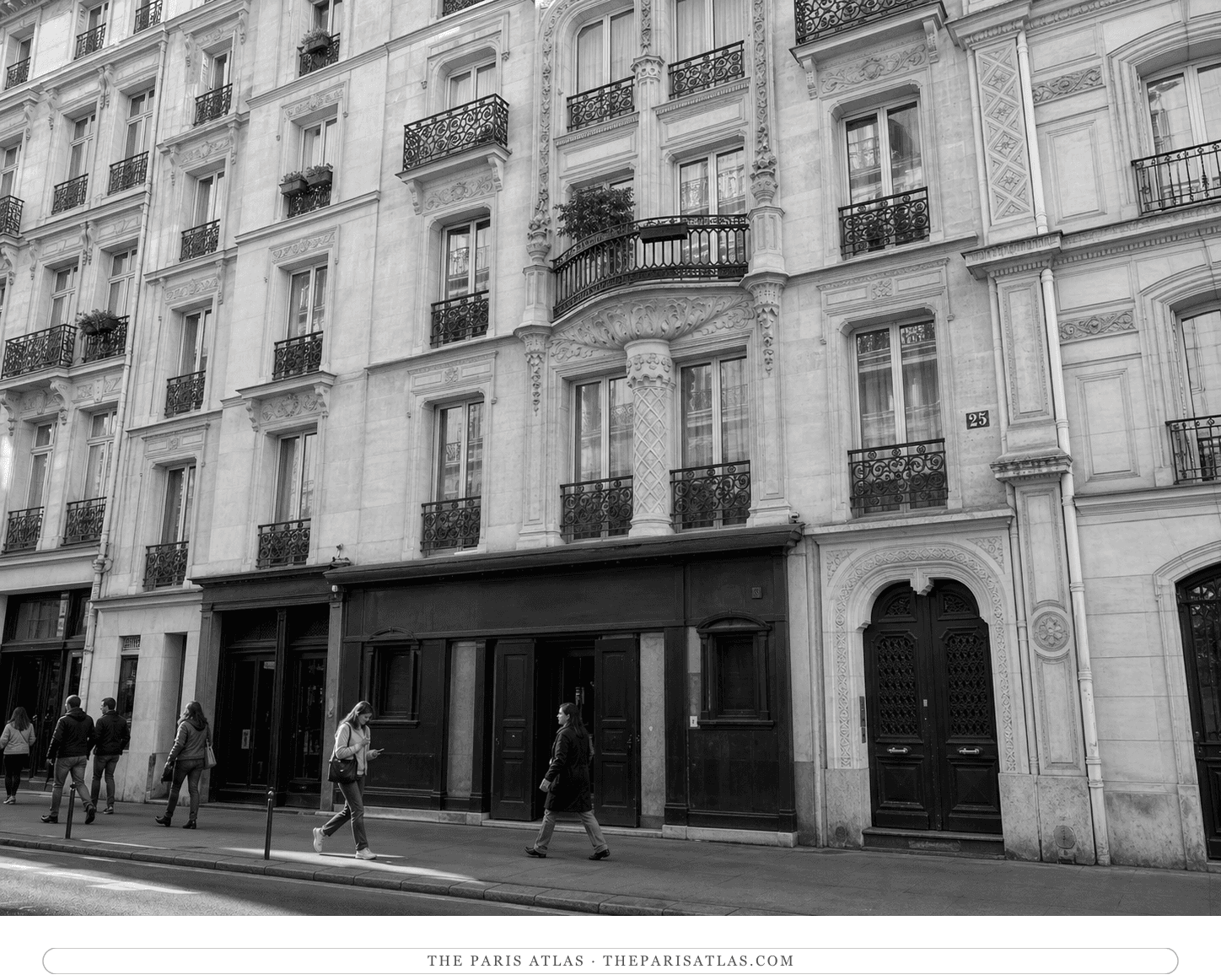
Theo van Gogh's small flat, where Vincent turned up unannounced from Antwerp in March 1886. It was too cramped to paint in, which is why the brothers moved to the rue Lepic three months later.
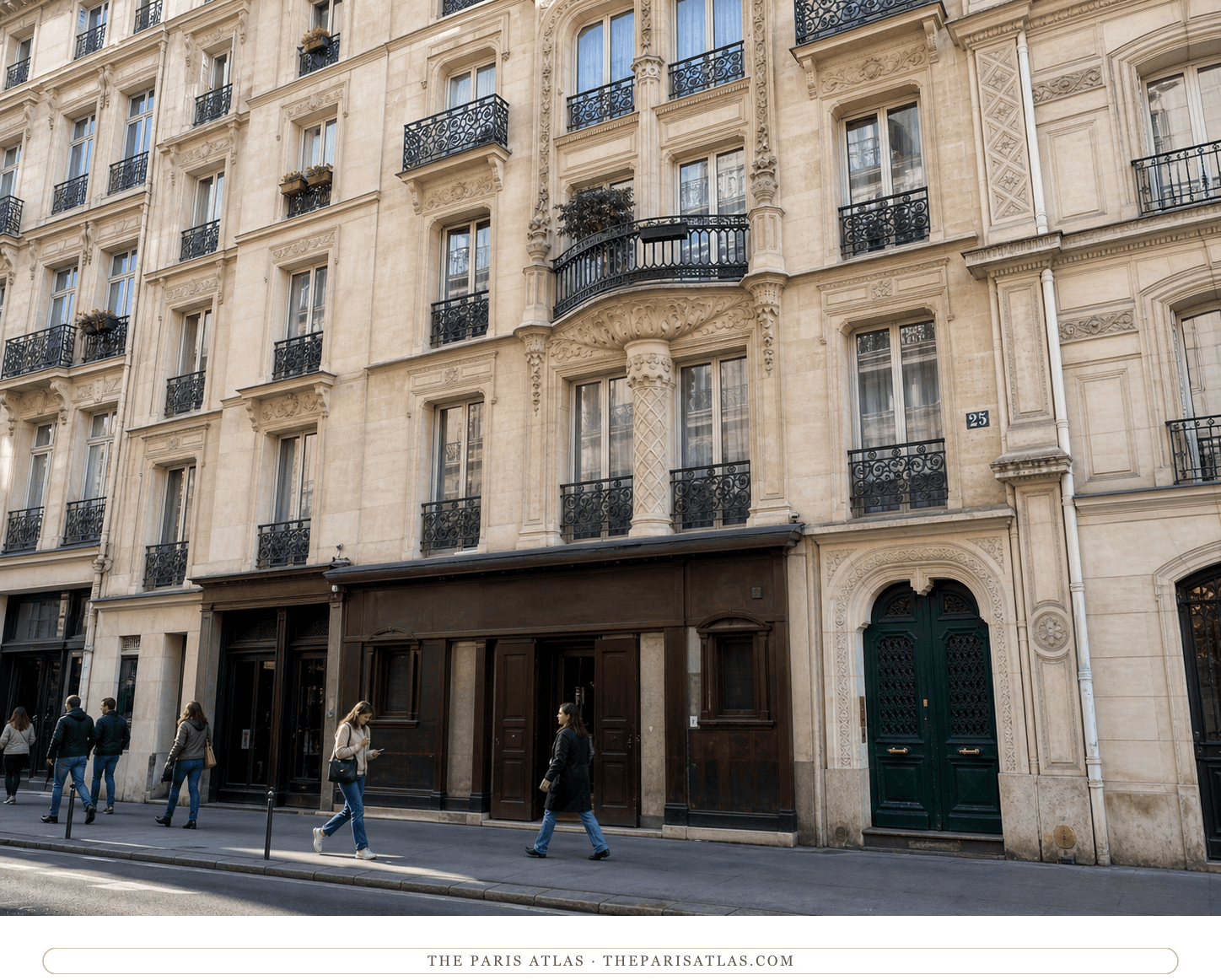
In March 1886 Vincent van Gogh arrived in Paris without warning. He had been in Antwerp, had left the academy there, and simply appeared — reportedly sending Theo a note to come and meet him at the Louvre. Theo, who worked as a gallery manager and was already supporting his brother financially, took him in at this address on what was then the rue de Laval.[1]
It did not work for long. The flat was too small for two men and a painter's practice, and by June they had taken a larger apartment further up the hill at 54 rue Lepic, where Vincent could actually work.[2]
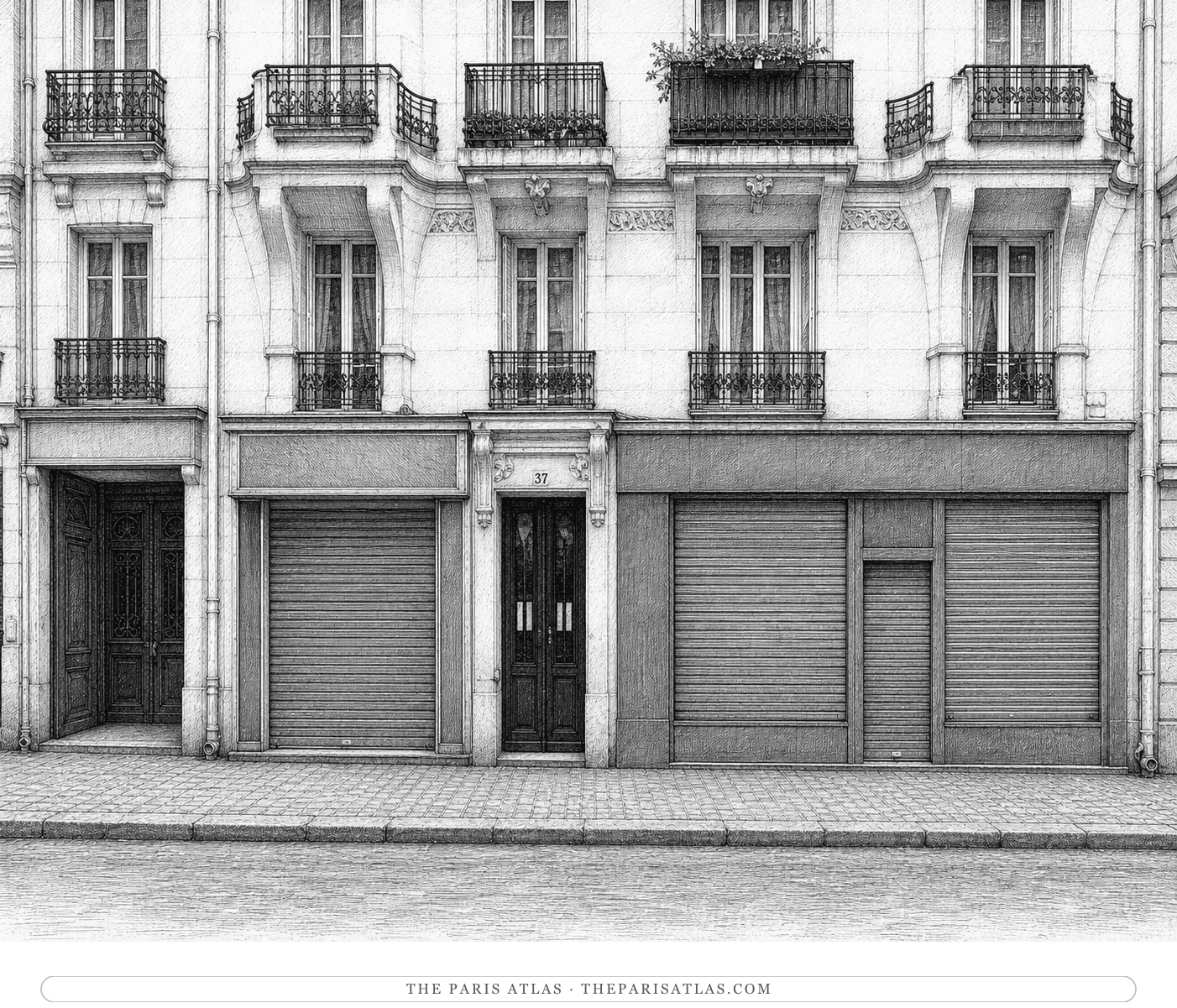
The street is worth pausing on for its own sake. In the 1880s it also held the studio of Edgar Degas at number 37, a couple of minutes' walk up the same pavement — two of the most consequential painters of the century on one short street in the 9th, at the same moment, almost certainly passing each other without particular ceremony.[3]
The building stands, with shops at street level. It is private.
Vincent van Gogh reached Paris unexpectedly at the beginning of March 1886. Theo had expected his brother to wait until early summer, when he could arrange a larger home, but Vincent left Antwerp early and sent a hurried note asking Theo to meet him in the Louvre's Salle Carrée. The note makes the arrival unusually tangible: Vincent was already in the city, had money left for the moment, and wanted to settle the practical questions face to face. Theo took him into this small second-floor flat at 25 rue de Laval, the street now called rue Victor-Massé.[2]
The arrangement put two difficult kinds of work into rooms designed for one salaried tenant. Theo was employed in the Paris art trade and needed the flat as his home; Vincent arrived with paintings, drawings, and the expectation that he would work. The apartment did not have room for an easel. During the spring he therefore used Fernand Cormon's studio, where artists could draw and paint from models. The studio placed him among younger painters including Henri de Toulouse-Lautrec, Louis Anquetin, and John Peter Russell rather than leaving him isolated in Theo's rooms.[4]
Those cramped months were nevertheless the beginning of the decisive Paris period. Vincent had come from the dark earth colours of his Dutch work and now encountered Impressionism, Neo-Impressionism, Japanese prints, and the flower still lifes through which he tested brighter colour. Theo could introduce him to artists and exhibitions through the gallery world; Vincent, in turn, brought Theo into contact with painters outside the conservative market. The address matters less as a studio where masterpieces were produced than as the landing place from which that exchange began.[1]
By early June the flat had proved unsustainable. The brothers moved uphill to 54 rue Lepic, a larger apartment where Vincent had a small room of his own to work in. The difference between the two addresses is useful: rue de Laval records the abrupt arrival and the improvised first weeks, while rue Lepic became the shared home, studio, picture store, and lookout over Paris for most of the brothers' life together in the city.
Rue Victor-Massé also belonged to the artistic geography Vincent was entering. Edgar Degas worked at number 37, only a short walk east along the same street. There is no documented meeting to claim from the coincidence, but the two addresses show how tightly the new art of the 1880s could be concentrated around the streets below Montmartre.
The building at number 25 still stands. Its upper floors are private flats and its street frontage contains shops, so there is no historic interior to enter. The useful visit is an exterior one: read the present street name against the rue de Laval found in the letters, then continue to rue Lepic to see the move the brothers made after only three months.
Because Vincent and Theo were living together, their surviving correspondence becomes less continuous during these Paris years: the daily conversation happened in the rooms rather than by post. That makes addresses and letters sent to other family members unusually important evidence. They fix the brothers' movements and preserve Theo's view of the strain, while the paintings show how rapidly Vincent's visual world changed after the arrival described here.
The renamed street can otherwise create the illusion of two places. Contemporary references to rue de Laval and the modern address 25 rue Victor-Massé identify the same location; the street received its present name after the composer's death. Keeping both names visible is essential for connecting the physical building to nineteenth-century documents without pretending the façade itself explains the story.
This first address is consequently brief in duration but large in consequence. It marks the point where a planned summer move became an immediate shared household, and where Vincent's Paris education had to begin outside the home. The later rue Lepic apartment makes more sense when this cramped starting point remains visible beside it.
Vincent arrives from Antwerp in March and moves in with Theo.
The brothers move to 54 rue Lepic in June.
Vincent arrives unexpectedly from Antwerp, asks Theo to meet him at the Louvre, and moves into the rue de Laval flat.
With no room for an easel at home, Vincent works at Fernand Cormon's studio on boulevard de Clichy.
The brothers leave the cramped flat for a larger apartment and working room at 54 rue Lepic.
At his brother Theo's flat, 25 rue Victor-Massé — then the rue de Laval — from March 1886. They moved to the rue Lepic in June because this one was too small to paint in.
The small second-floor flat had no room for an easel. During these first Paris months he instead worked from models at Fernand Cormon's studio, 104 boulevard de Clichy.
No. The building survives but the upper floors are private and the historic flat is not open. The address can be viewed from the public pavement.
There is no documented friendship. But Degas's studio was a few doors up the same street in the same years, which is a striking coincidence of address.
Vincent arrived unannounced from Antwerp in March 1886 and moved into Theo's flat on what was then the rue de Laval. It was too small to paint in, and by June the brothers had taken the larger apartment on the rue Lepic.
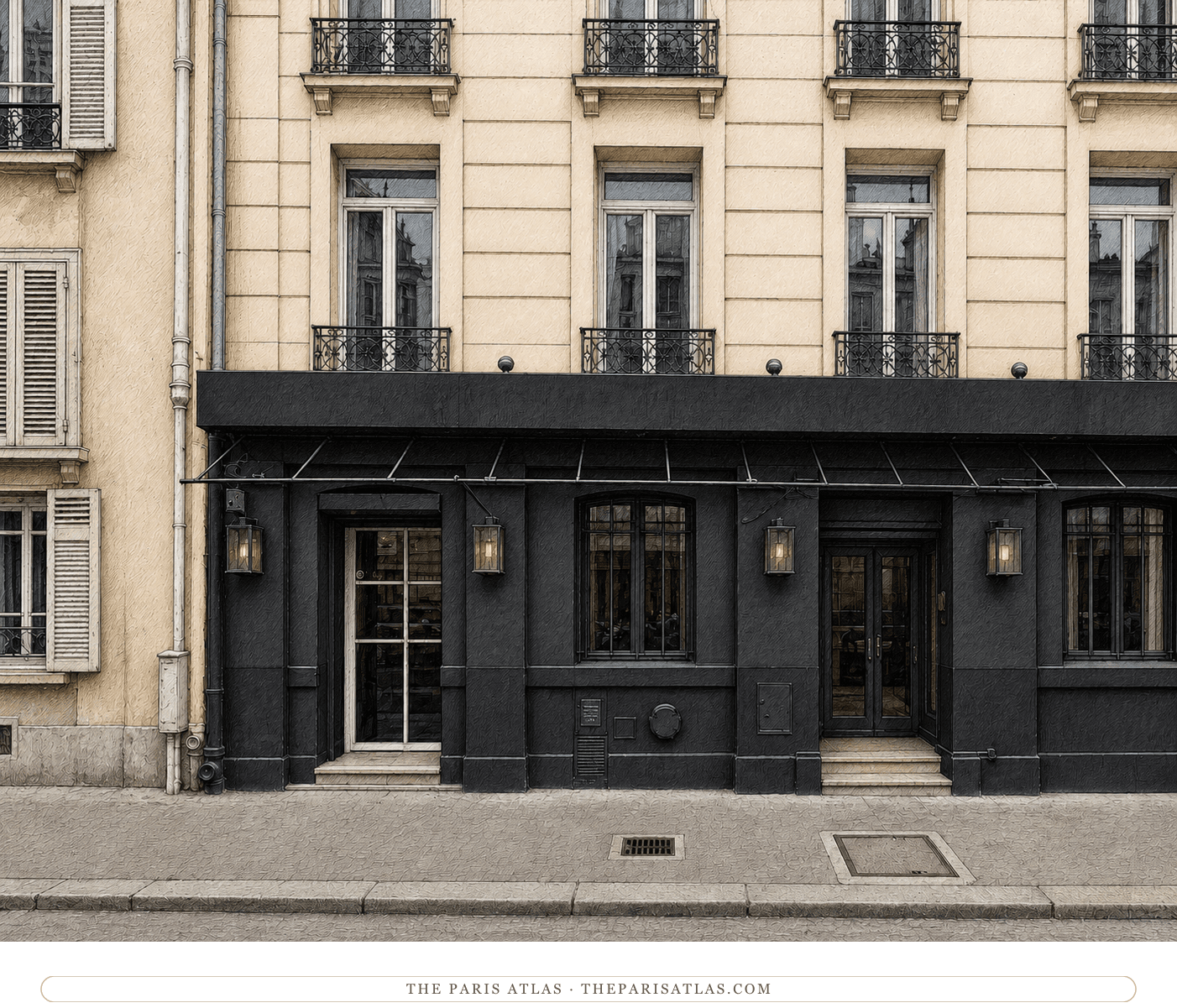
The studio and apartment Edgar Degas settled into in 1877 — the year he was showing the ballet and café pictures that made his name, a few steps from the place Pigalle.
Visit the place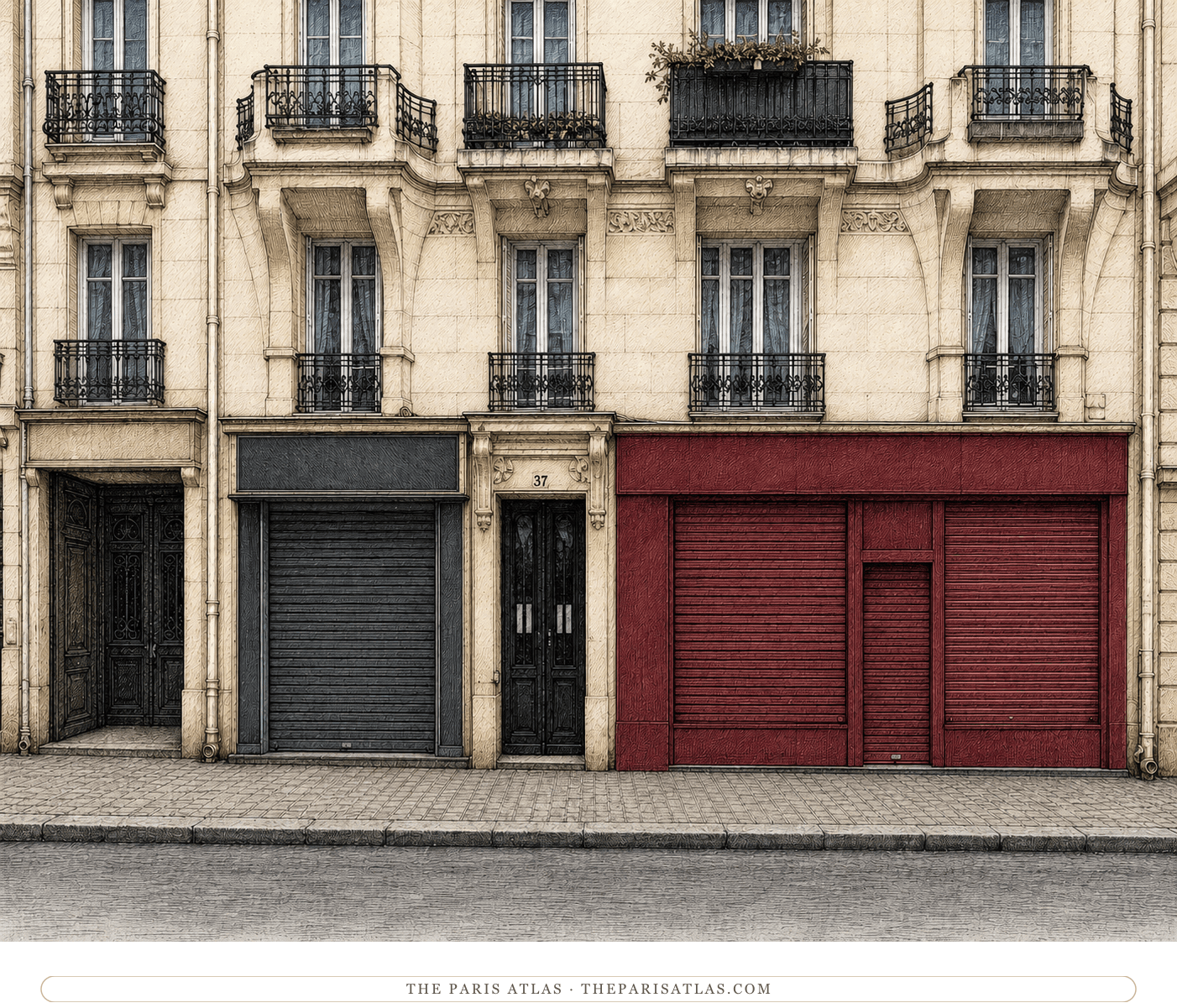
The apartment and studio where Edgar Degas worked for the last quarter-century of his career, on a street then called the rue de Laval. Paul Valéry was brought here to meet him in 1896. Degas was evicted in 1912 and never really worked again.
Visit the place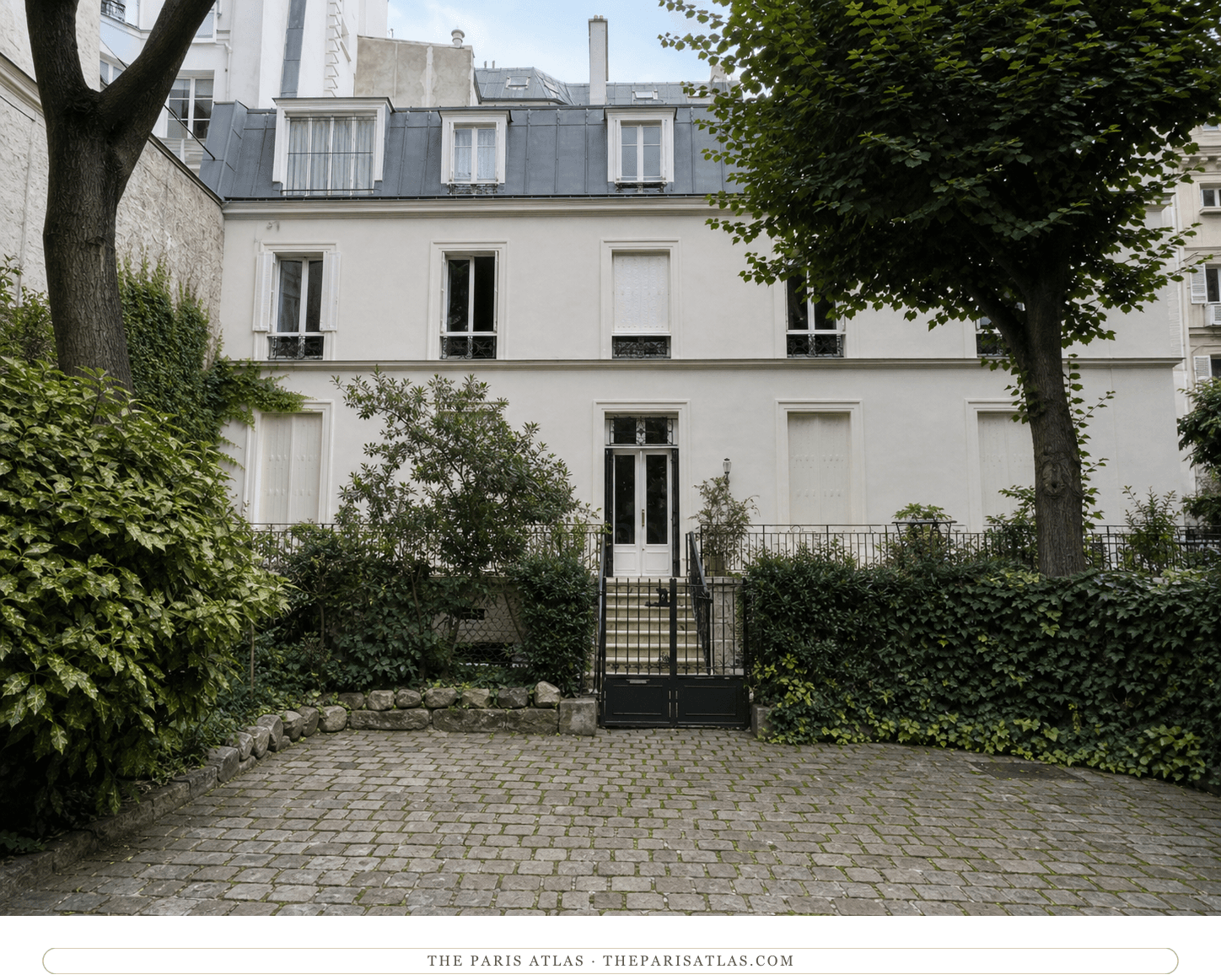
The apartment the young Stefan Zweig rented below Pigalle from November 1904 to June 1905 — the Paris year that runs through The World of Yesterday, on the same street where Degas kept his studio.
Visit the place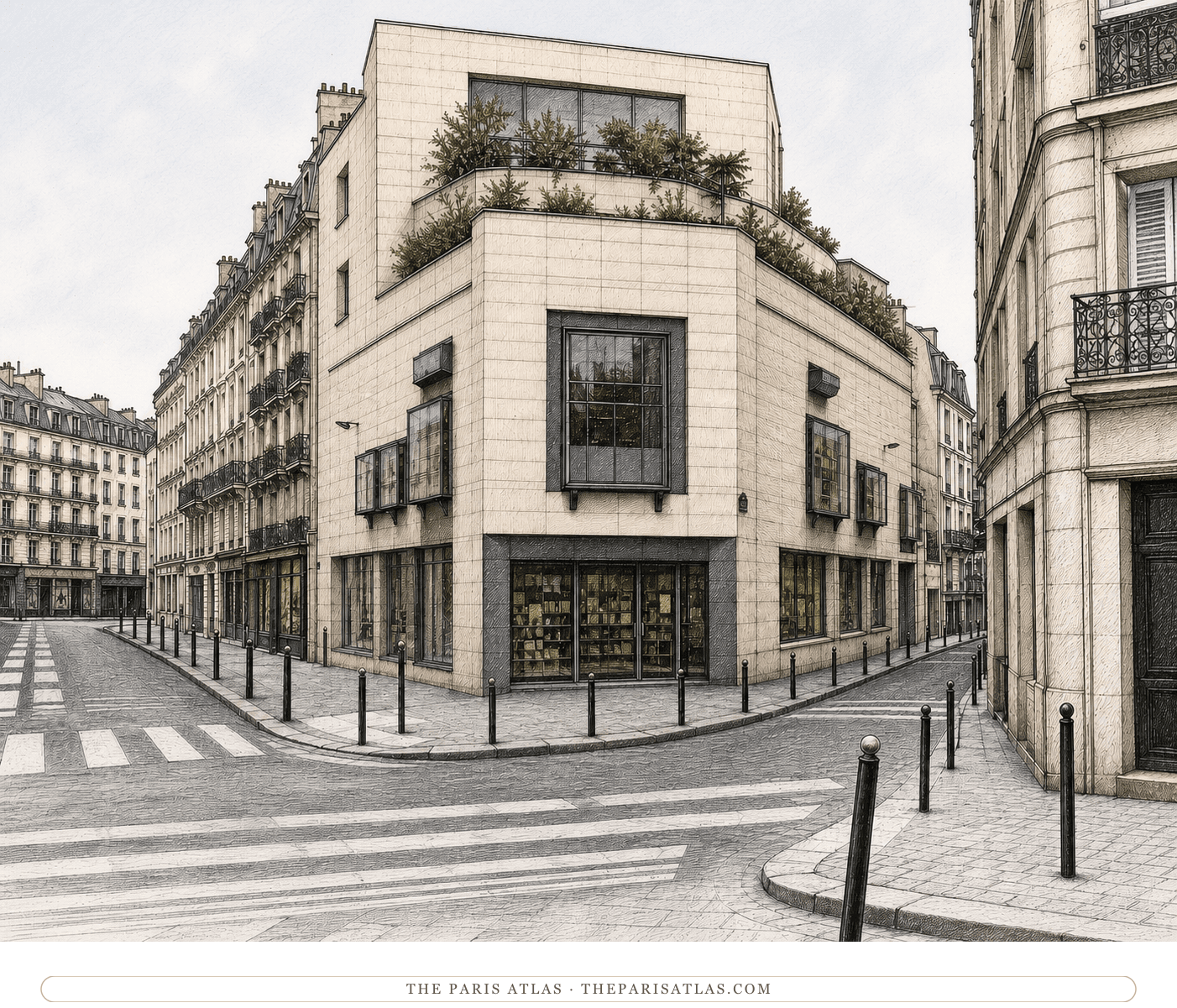
The café on the place Pigalle that took over from the Guerbois as the meeting place of Manet, Degas and their circle in the 1870s — and the room behind the painting usually called L'Absinthe.
Visit the placeThe sources below include histories, archival materials, scholarly research, and official records that informed this page. They document 25 rue Victor-Massé, the people connected to it, and its place in Paris.


Web source consulted for documented facts and historical context presented on the 25 rue Victor-Massé page.
Web source consulted for documented facts and historical context presented on the 25 rue Victor-Massé page.
These references provide the documented foundation for this page's history and context. Claim-level citations remain attached to the specific claims they support.
 Explore more resources
Newsletter
The cafés, studios, and walk-up flats where the work was made — one story from the map in every letter.