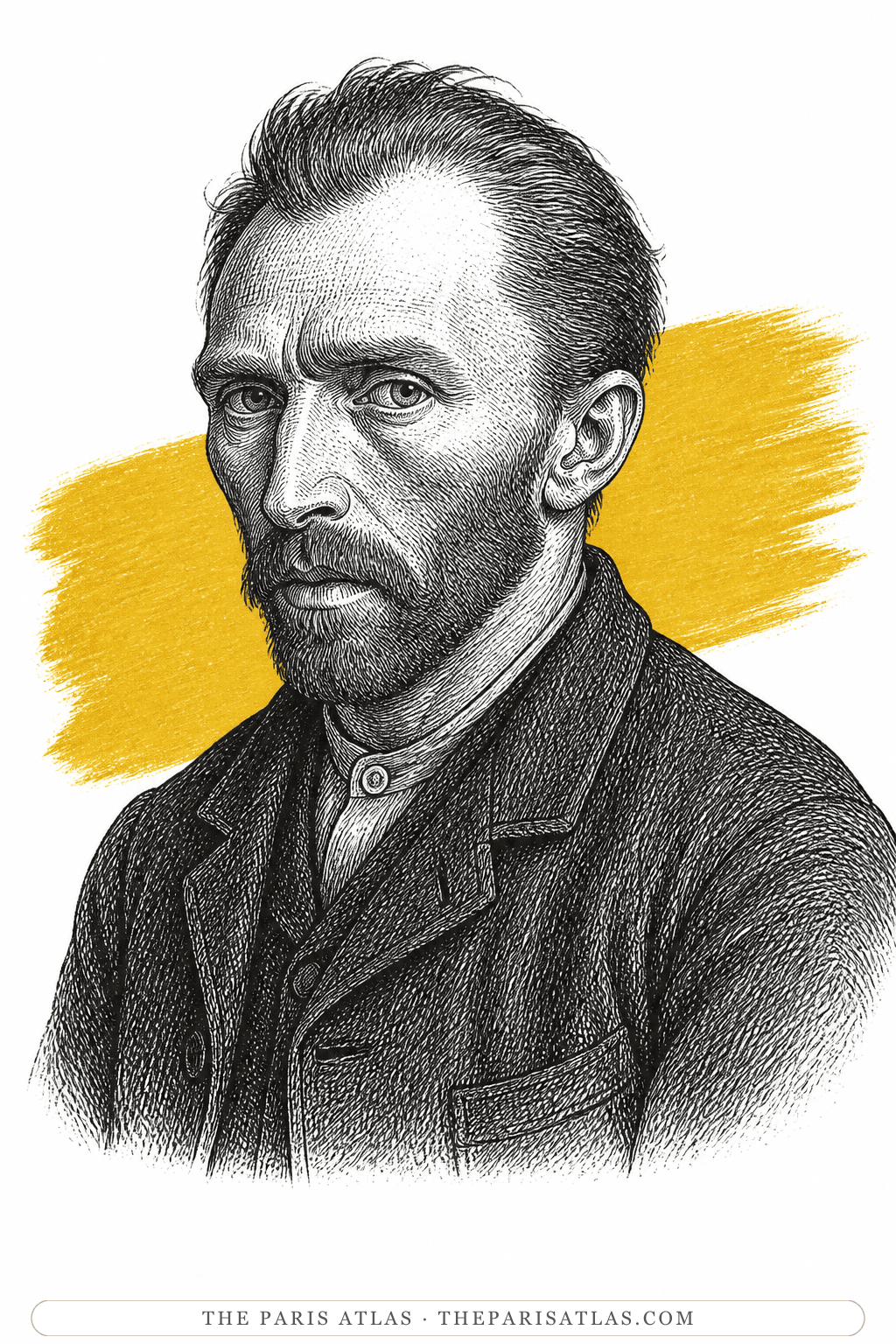
Vincent van Gogh
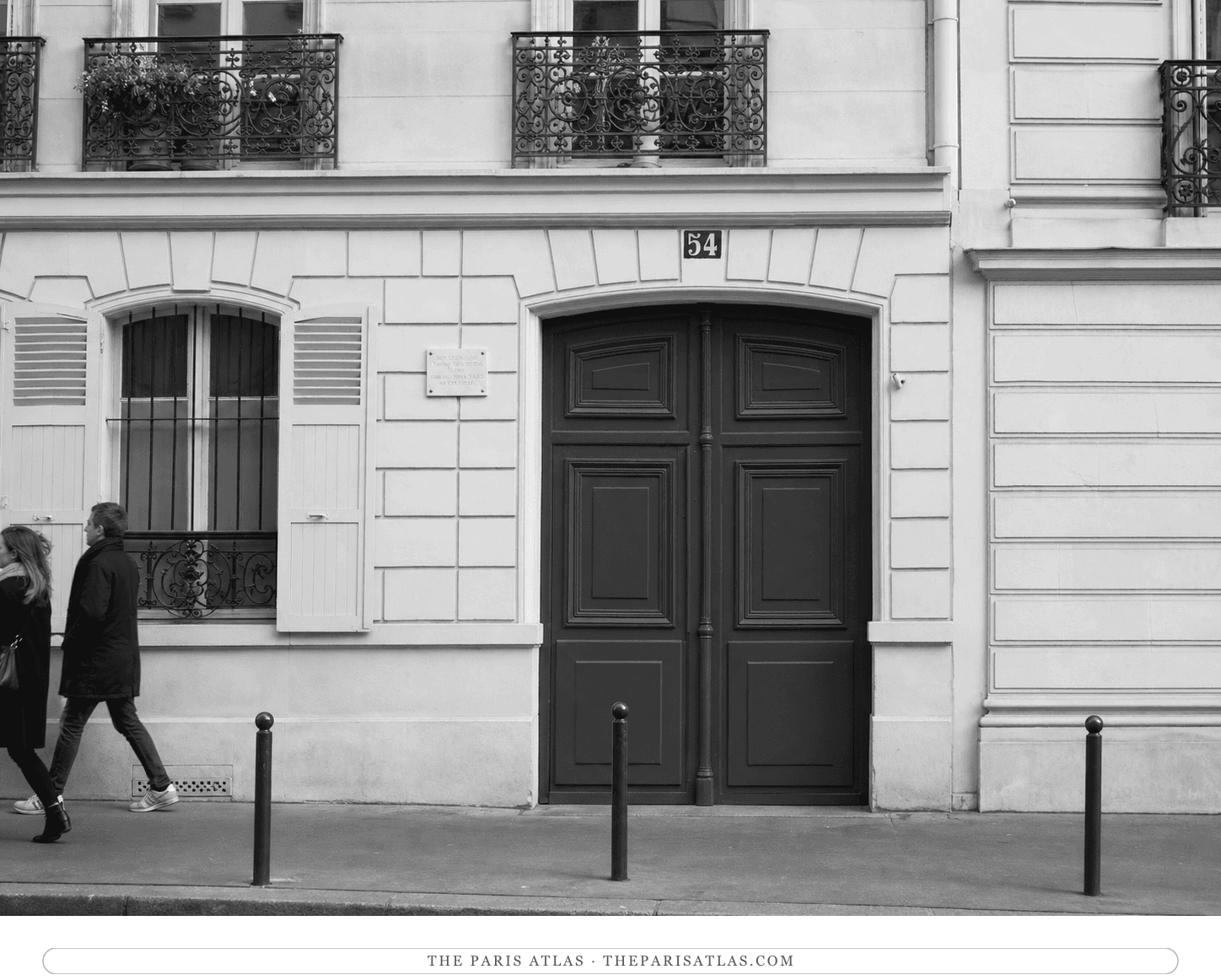
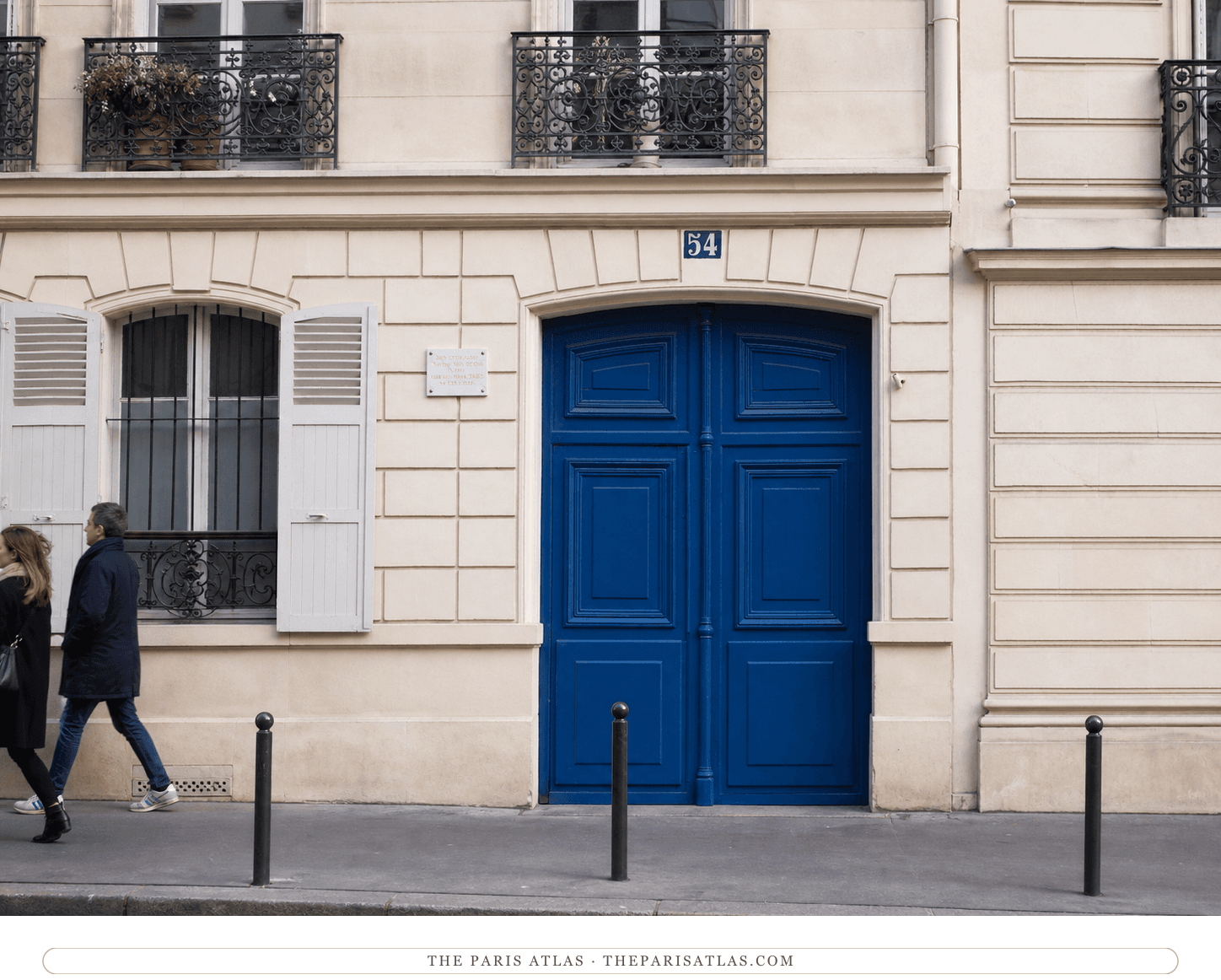
Vincent and Theo van Gogh lived here from June 1886 until Vincent left for Arles in February 1888. He painted the view from the window repeatedly; a plaque marks the building.
The Montmartre flat Vincent van Gogh shared with his brother Theo from June 1886 until he left for Arles in February 1888 — the address where his palette turned from Dutch brown to the colour everyone now knows him for.
Vincent van Gogh arrived in Paris from Antwerp in March 1886, unannounced, and moved in with his brother Theo. Theo's flat on the rue Victor-Massé was too small to paint in, so by June the brothers had taken a larger apartment high on the rue Lepic, on the slope of Montmartre. Sources differ between the third and fourth floor, which is the usual confusion between French and English floor-counting; either way it was near the top, and the height was the point.[1]
Theo wrote about the view: across the whole city, out to the hills beyond, with a great quantity of sky above it. Vincent painted it repeatedly, and the rooftop views from this window are among the first pictures in which his Paris palette appears.[2]
The apartment was more than a viewpoint. Family recollections describe a compact sequence of rooms: Theo's room and the living room toward the street, Vincent working in a room at the back, a small sleeping cabinet and a kitchen. Paintings by Vincent and by artists the brothers bought or received in exchange accumulated on the walls. Home, studio, store and private exhibition space occupied the same address.[3]
What happened at this address is the most important two years in his development. He came in with the dark earth colours of the Dutch pictures — the Potato Eaters had been painted the year before — and he left in February 1888 for Arles with the high-keyed, broken, saturated colour of everything he is now famous for. Between the two lies Paris: the Impressionists in Theo's gallery, the Japanese prints, the pointillists, and a great many self-portraits made because he could not afford models.[1]
The window pictures let that education be watched in a single motif. Roofs and high apartment blocks are built from short strokes and separate notes of colour rather than the continuous brown modelling of the Dutch work. In one view, the city is less a topographic record than a field in which Van Gogh could test the broken touch he had seen in Impressionist and Neo-Impressionist painting. The ordinary view from home became a laboratory.[3]
He also nearly wrecked the household. Theo, who was keeping him, wrote to their sister about how difficult Vincent was to live with. The relief when Vincent left for the south was mutual, and the correspondence that followed is one of the great bodies of letters in art.[4]
That strain should not obscure the collaboration. Theo paid the rent and supplied materials, introduced Vincent to artists and pictures, and tolerated a growing stock of work with little market. Vincent enlarged Theo's contact with the younger avant-garde and pushed him to look beyond the established Impressionists. The rue Lepic apartment was the place where their roles as painter and dealer became inseparable.[1]
A stone plaque marks the building. The flat is private.
From the pavement, the useful evidence is the steepness of rue Lepic and the height of the surviving façade. The plaque confirms the tenancy, but the interior cannot be visited. The route down to boulevard de Clichy, Cormon's former studio and the rue Clauzel colour shop makes clearer how much of Van Gogh's Paris fitted within an ordinary walk from the front door.
Paris also changed what Vincent painted because models cost money. He turned repeatedly to his own face, producing a sequence of self-portraits that could test colour and brushwork without a fee or appointment. Seen beside the apartment's financial reality, those paintings are practical studies as well as psychological images. Theo's support paid for materials, but the household could not make every resource unlimited; economy shaped subject matter.
The collection inside the flat expanded through purchases and exchange. Japanese prints could be studied at close range, and paintings by friends made the rooms a private comparison space. Vincent advocated for the younger painters he admired and proposed exchanges as a way to build solidarity outside the market. The domestic walls therefore held not only his unsold production but an argument about what contemporary art might become.
Montmartre supplied rural-looking motifs without requiring a journey from home. Allotments, gardens, windmills and the remaining open ground on the hill allowed Van Gogh to paint a landscape at the edge of a rapidly modernising city. His views from the window faced the dense roofs below; a short climb reached the Moulin de la Galette and rougher ground above. The rue Lepic address sat between those two visual conditions.
Leaving for Arles in February 1888 ended the shared household but not its consequences. Vincent sought stronger colour, clearer light and a community of artists in the south, ambitions developed through the Paris encounters. Theo remained the practical centre of the project through letters, money, materials and attempts to exhibit the work. The correspondence resumed because distance returned, allowing the next phase to be documented far more fully than the rooms where the brothers had spoken face to face.
Vincent arrives in Paris in March; the brothers move to the rue Lepic in June.
He paints the view from the window, the Montmartre windmills, and a long series of self-portraits.
He leaves for Arles in February.
At 54 rue Lepic in Montmartre, with his brother Theo, from June 1886 until February 1888. Before that they were briefly at Theo's smaller flat on the rue Victor-Massé.
Everything about his colour. He arrived painting in dark Dutch earth tones and left two years later with the bright, broken, saturated palette of the Arles and Saint-Rémy pictures.
No. The building stands and carries a commemorative plaque, but the flat is private.
Vincent and Theo van Gogh lived here from June 1886 until Vincent left for Arles in February 1888. He painted the view from the window repeatedly; a plaque marks the building.
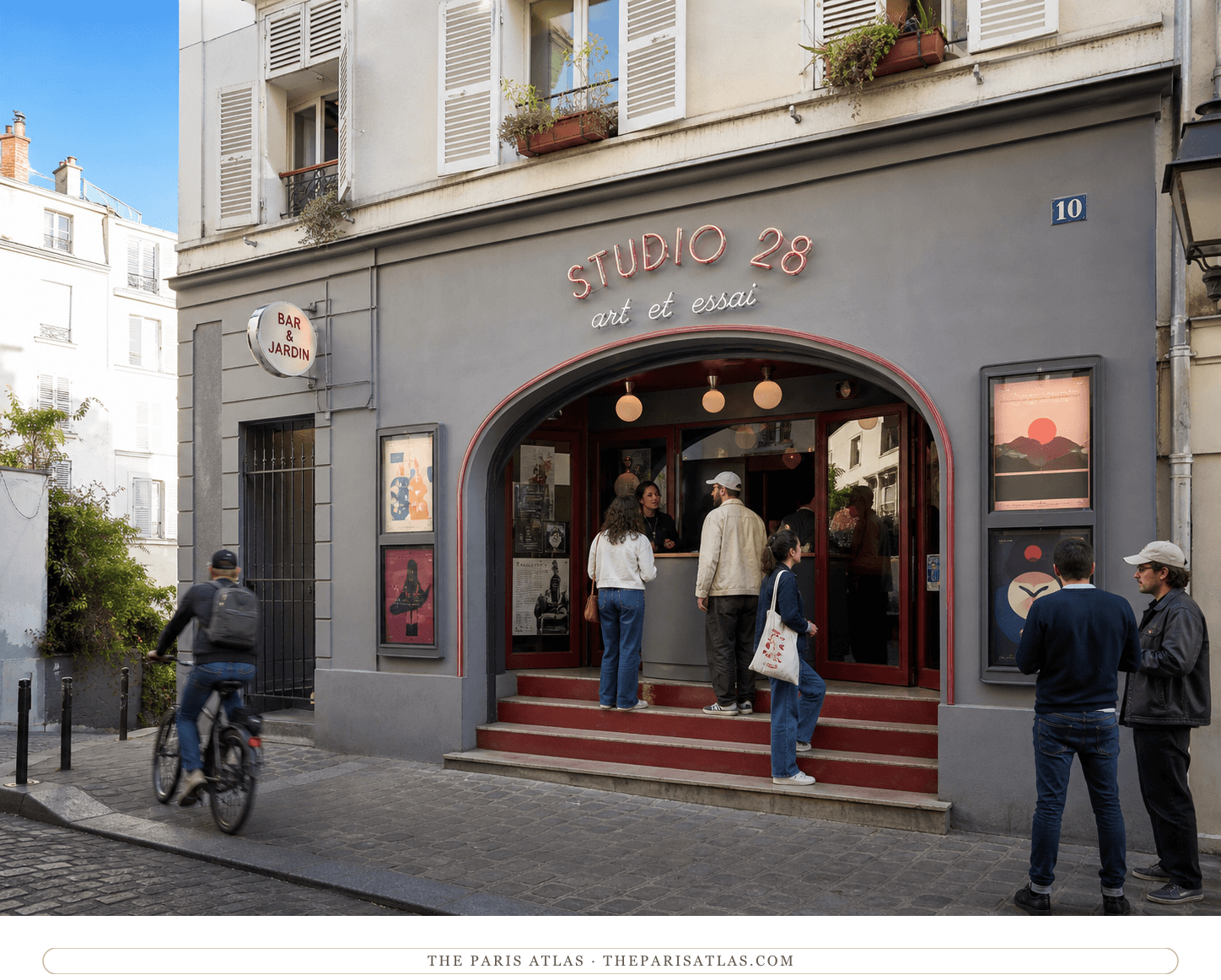
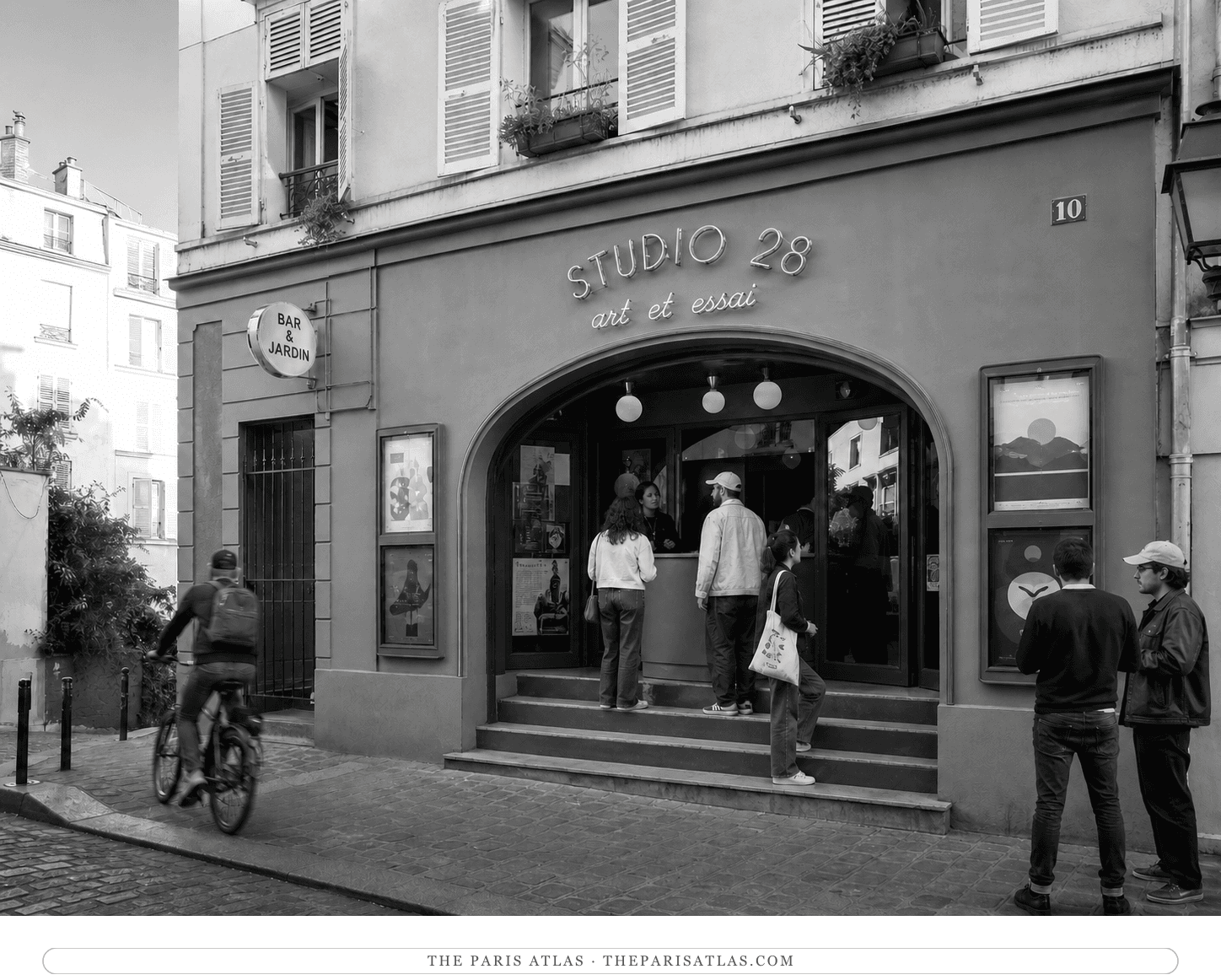
A small Montmartre cinema, opened in 1928 and still running. It gave Un Chien andalou an eight-month run from October 1929, and in December 1930 its screening of Buñuel and Dalí's L'Âge d'or ended with far-right groups attacking the auditorium and slashing the paintings hanging in the foyer.
Visit the place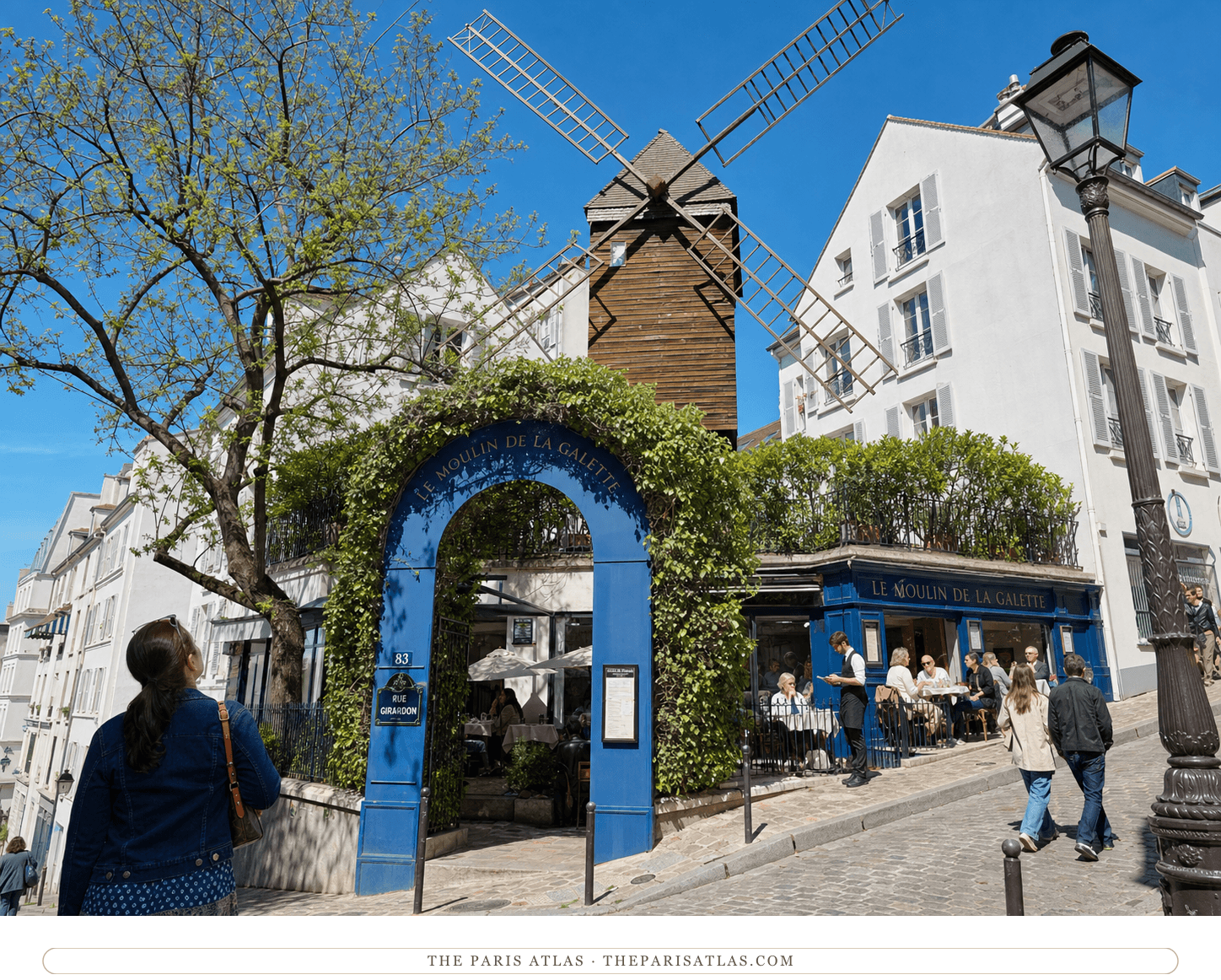
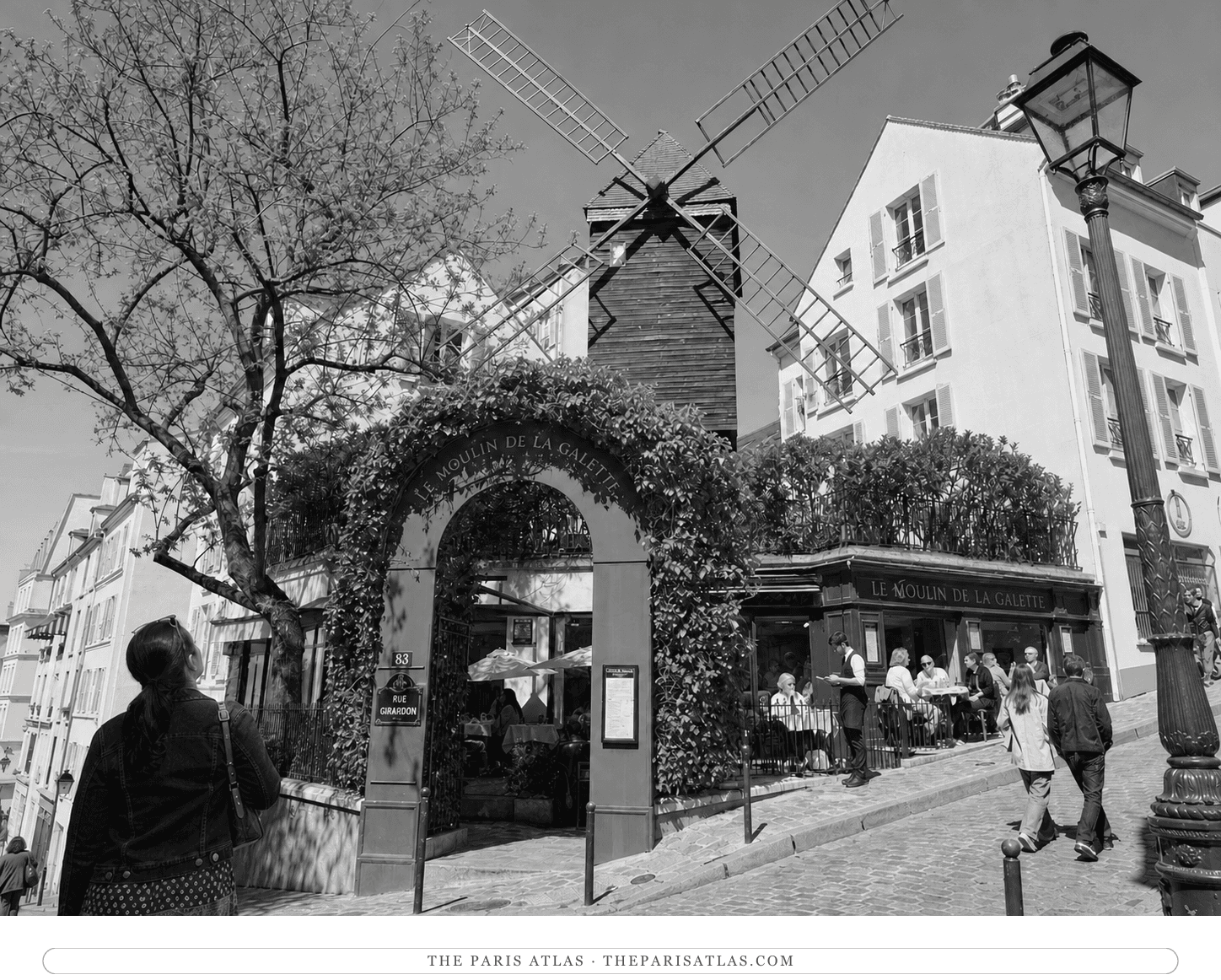
The last working windmills on the butte, turned into an open-air dance hall — painted by Renoir in 1876 and by Van Gogh repeatedly in 1886, a few minutes up the hill from his flat.
Visit the place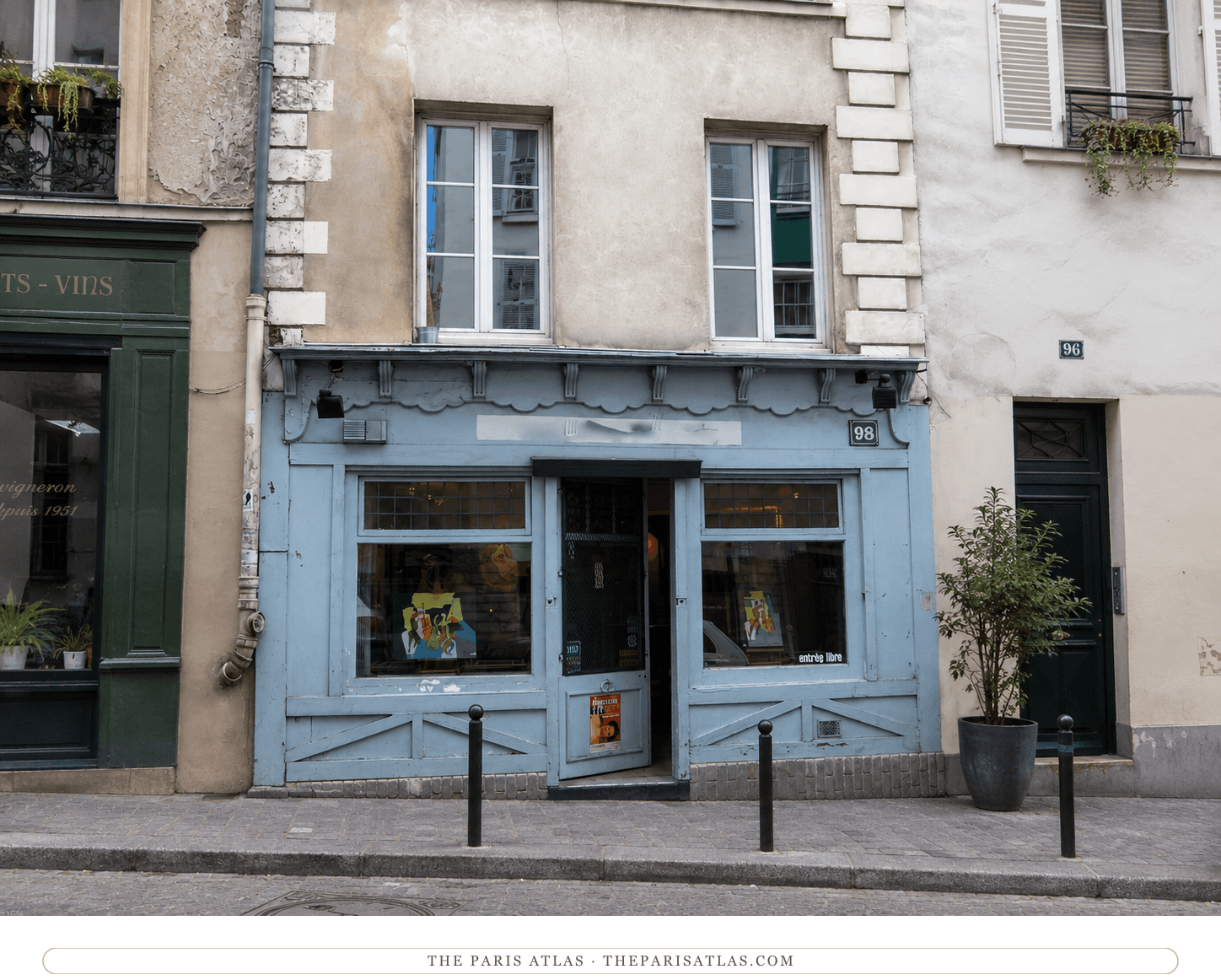
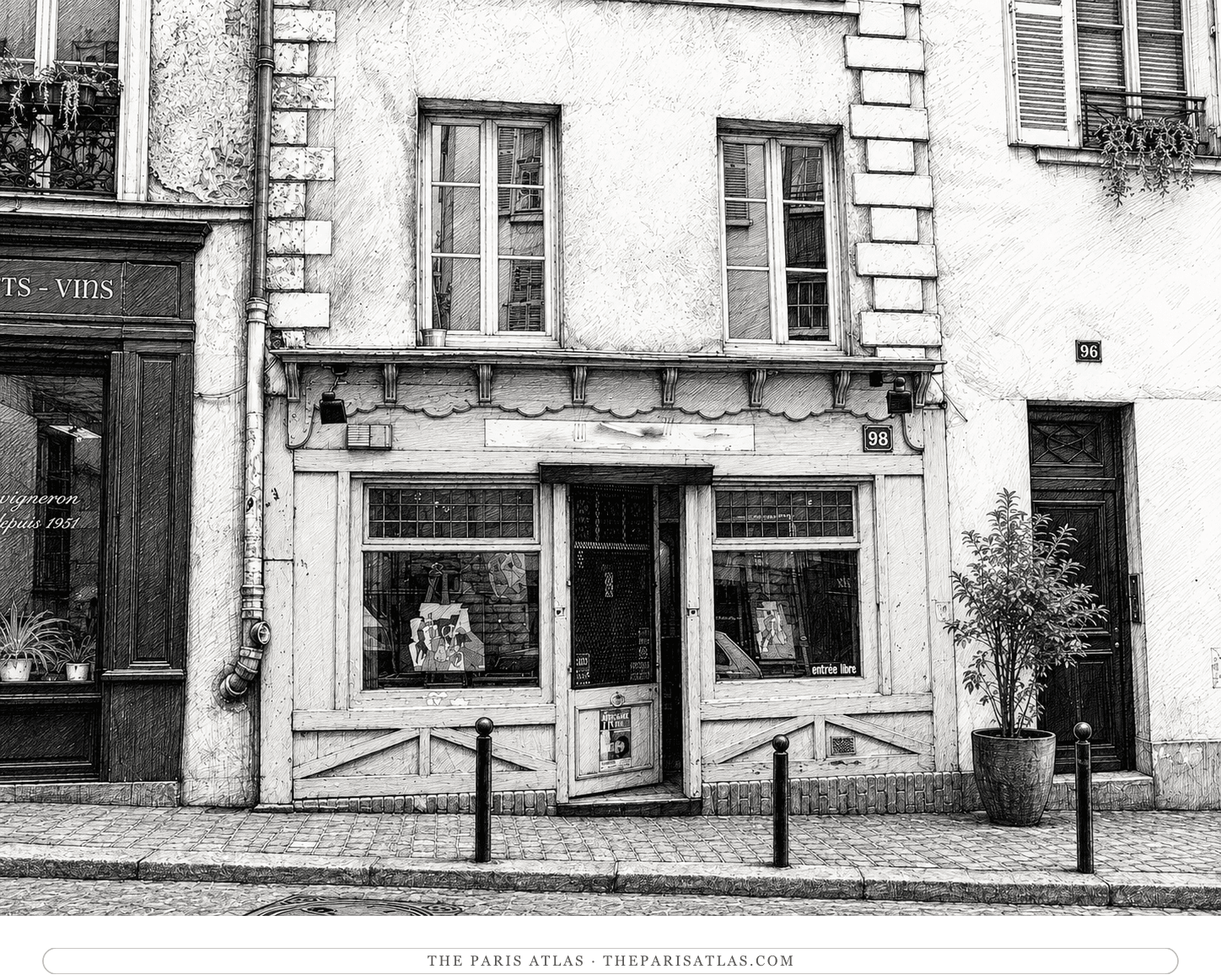
The Montmartre flat Louis-Ferdinand Céline kept for twelve years, and the desk behind both of his novels — Journey to the End of the Night and Death on the Installment Plan were written at this address.
Visit the place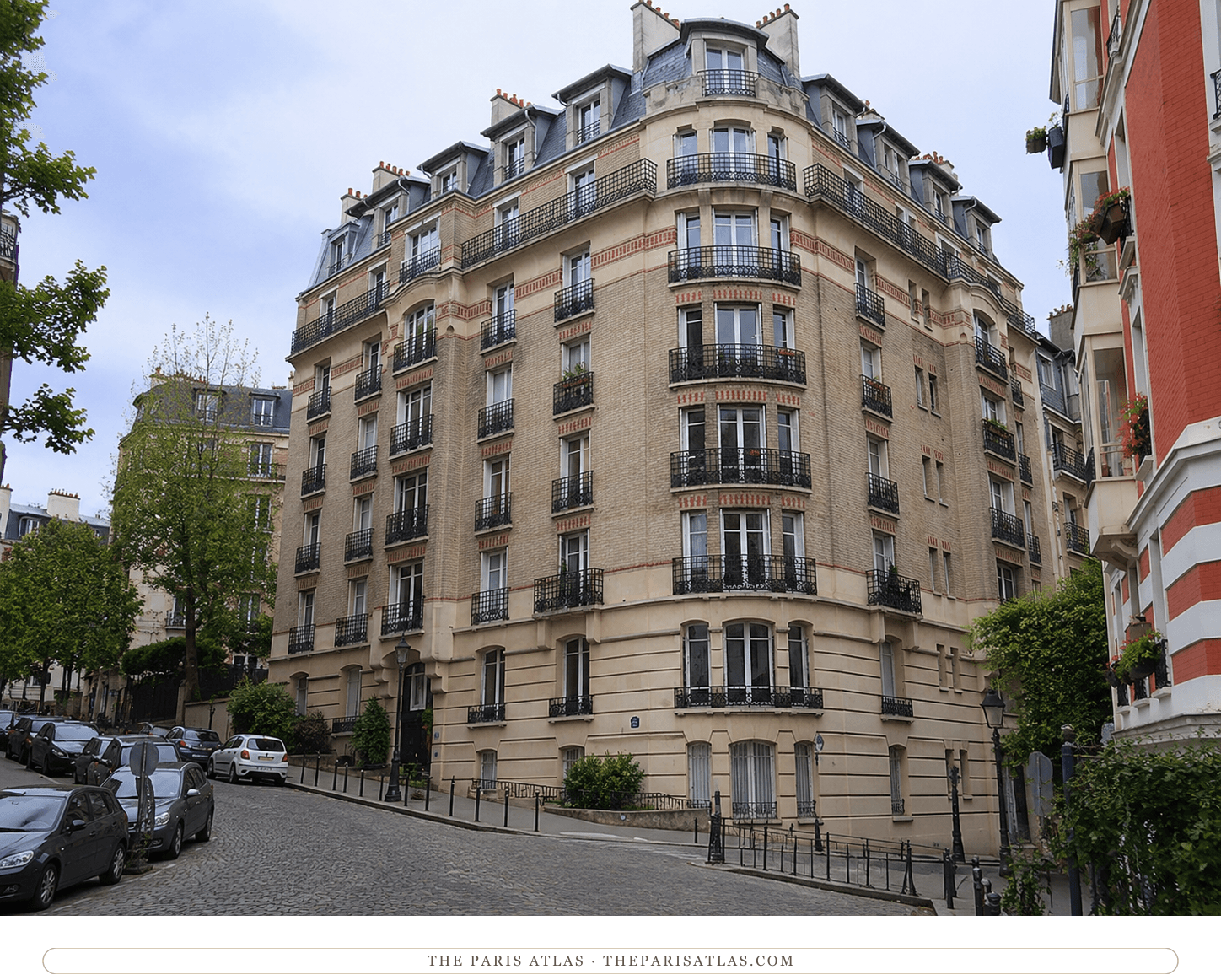
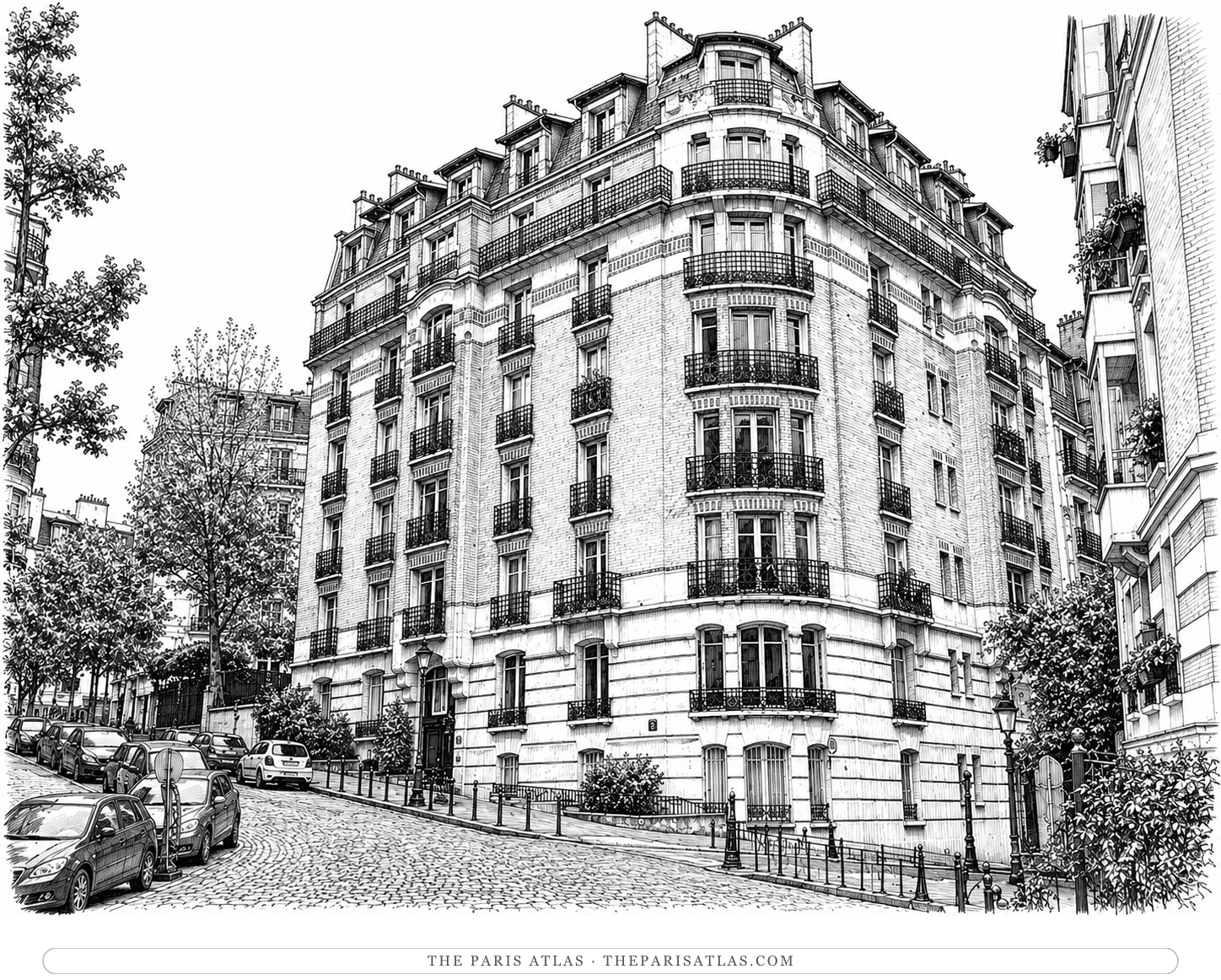
Louis-Ferdinand Céline's Montmartre apartment during the Occupation — where Gen Paul came up from his studio a few doors away, and where the manuscripts later famous as 'the lost trove' were left behind in June 1944.
Visit the placeThe sources below include histories, archival materials, scholarly research, and official records that informed this page. They document 54 rue Lepic, the people connected to it, and its place in Paris.


Web source consulted for documented facts and historical context presented on the 54 rue Lepic page.
Web source consulted for documented facts and historical context presented on the 54 rue Lepic page.
These references provide the documented foundation for this page's history and context. Claim-level citations remain attached to the specific claims they support.
 Explore more resources
Newsletter
The cafés, studios, and walk-up flats where the work was made — one story from the map in every letter.