The Paris AtlasCharting the artists, works, and places worth returning to.
  • Painter
· French · 1839–1906

Paul Cézanne

Painter between Impressionism and everything after — shown in the independents' exhibitions, emulated by the Cubists, and present at the Orangerie through 15 works in the Walter-Guillaume collection.

In images

Details

Lived
1839–1906
Born
19 January 1839
Birthplace
Aix-en-Provence, France
Died
22 October 1906 · aged 67
Place of death
Aix-en-Provence, France
Nationality
French
Married
Marie-Hortense Fiquet · 1886–1906
Roles
Painter

About Paul Cézanne

Paul Cézanne is the painter who connects Impressionism to the art that came after it. He showed in the independents' exhibitions in Paris in the 1870s, withdrew to his native Aix-en-Provence, and spent three decades building pictures out of ordered planes of color — apples on a table, card players, the limestone ridge of Mont Sainte-Victoire. He died in 1906, and within two years painters of the generation of Pablo Picasso and Georges Braque were working in open emulation of him; Cubism took its name from landscapes painted in his manner.

Aix, Zola, and Paris

Paul Cézanne around 1861, the year he abandoned law studies in Aix and moved to Paris. Photographer unknown. (Unknown photographer, via Wikimedia Commons · Public domain)

Cézanne was born in Aix-en-Provence on 19 January 1839, the son of Louis-Auguste Cézanne, a banker. At the Collège Bourbon, which he entered in 1852, he formed a close friendship with Émile Zola, the future novelist, and Baptistin Baille. His father intended a legal career, and Cézanne studied law at the University of Aix from 1859 to 1861 while taking drawing lessons on the side. Zola, who had gone ahead to Paris, kept urging him to follow. In 1861 he did, against his father's wishes.

The start was not smooth. He drew at the Académie Suisse, a free studio with no instruction, was refused by the École des Beaux-Arts, and retreated to Aix and a desk in the family bank before returning to Paris for good in 1862. His early paintings were dark, thickly worked, and often violent in subject, and the official Salon rejected his submissions year after year through the 1860s.

Jas de Bouffan

In 1859 Louis-Auguste bought the Jas de Bouffan, a country house and estate on the western edge of Aix, and it remained the family's principal home for four decades. Cézanne painted there from the beginning — some of his earliest surviving work went directly onto the walls of the salon — and the house, the farm buildings, the chestnut alley, and the pond became subjects he returned to as his method changed. One property records nearly his whole development, from the murals of a twenty-year-old to the ordered landscapes of the 1880s.

The years before Paris were not untrained. From 1857 he studied at Aix's free municipal drawing school, in the building that now houses the Musée Granet, and copied paintings in its collection. The image of Cézanne as an untaught provincial is a legend: he drew from casts and models for years, and he went on studying the old masters in the Louvre for the rest of his life.

The dark manner of the 1860s

Paul Cézanne, Portrait of the Artist with a Rose Background, c. 1875 (Musée d'Orsay). One of around twenty-six self-portraits. (Paul Cézanne, via Wikimedia Commons · Public domain)

His paintings of the 1860s look nothing like the work that made him famous: dark, heavily loaded, sometimes applied with a palette knife, with subjects that run to murder, abduction, and temptation. The models were Romantic and Realist — Eugène Delacroix for the drama, Gustave Courbet for the physical weight of the paint, Édouard Manet for the example of confronting the Salon at all.

The strongest work of the decade is a group of portraits of his uncle Dominique Aubert, begun in 1866, the faces built up in ridges of pigment laid on with the knife. The official Salon refused his submissions year after year; a work of his hung instead in the Salon des Refusés of 1863, the exhibition the state created for the rejected.

Pissarro and the Impressionist exhibitions

The decisive change came in the early 1870s, when Cézanne moved his family to Pontoise and then Auvers-sur-Oise, northwest of Paris, and painted beside Camille Pissarro. Working outdoors under the older painter's example, he lightened his palette and slowed his method, laying in landscapes with small, patient strokes.

He showed with the Impressionists twice — in the first group exhibition of 1874 and the third in 1877 — and drew some of the harshest mockery the critics gave anyone in those rooms. He never exhibited with the group again, and after the 1870s he spent less and less time in Paris. The friendships lasted longer than the exhibitions: Claude Monet and Pierre-Auguste Renoir remained friends from the Impressionist circle onward, and Renoir, like Cézanne, spent the 1880s working his way out of Impressionism toward something more durable.

Hortense, the inheritance, and the break with Zola

In 1869 Cézanne met Marie-Hortense Fiquet, a model. Their son Paul was born in January 1872, and the couple married in April 1886, when the boy was fourteen. His father died that October, leaving Cézanne a share of a fortune of 400,000 francs. At forty-seven he was financially independent for the first time.

The same year brought the famous rupture. In March 1886 Émile Zola published L'Œuvre, a novel whose central figure, the fictional painter Claude Lantier, is a gifted artist who fails and destroys himself. Readers then and since have seen Cézanne in him. Cézanne sent Zola a short, courteous letter of thanks for the book, and the traditional account holds that the two friends never spoke again.

The record is less tidy than the legend. A letter discovered in 2013, dated 28 November 1887, shows Cézanne thanking Zola warmly for a copy of Zola's novel La Terre and proposing to call on him — proof the friendship survived L'Œuvre by at least a year and a half. No later correspondence has surfaced, and when Zola visited Aix in 1896 the two apparently did not meet. When Zola died in 1902, Cézanne is reported to have shut himself in his studio and wept for a day.

Aix and Mont Sainte-Victoire

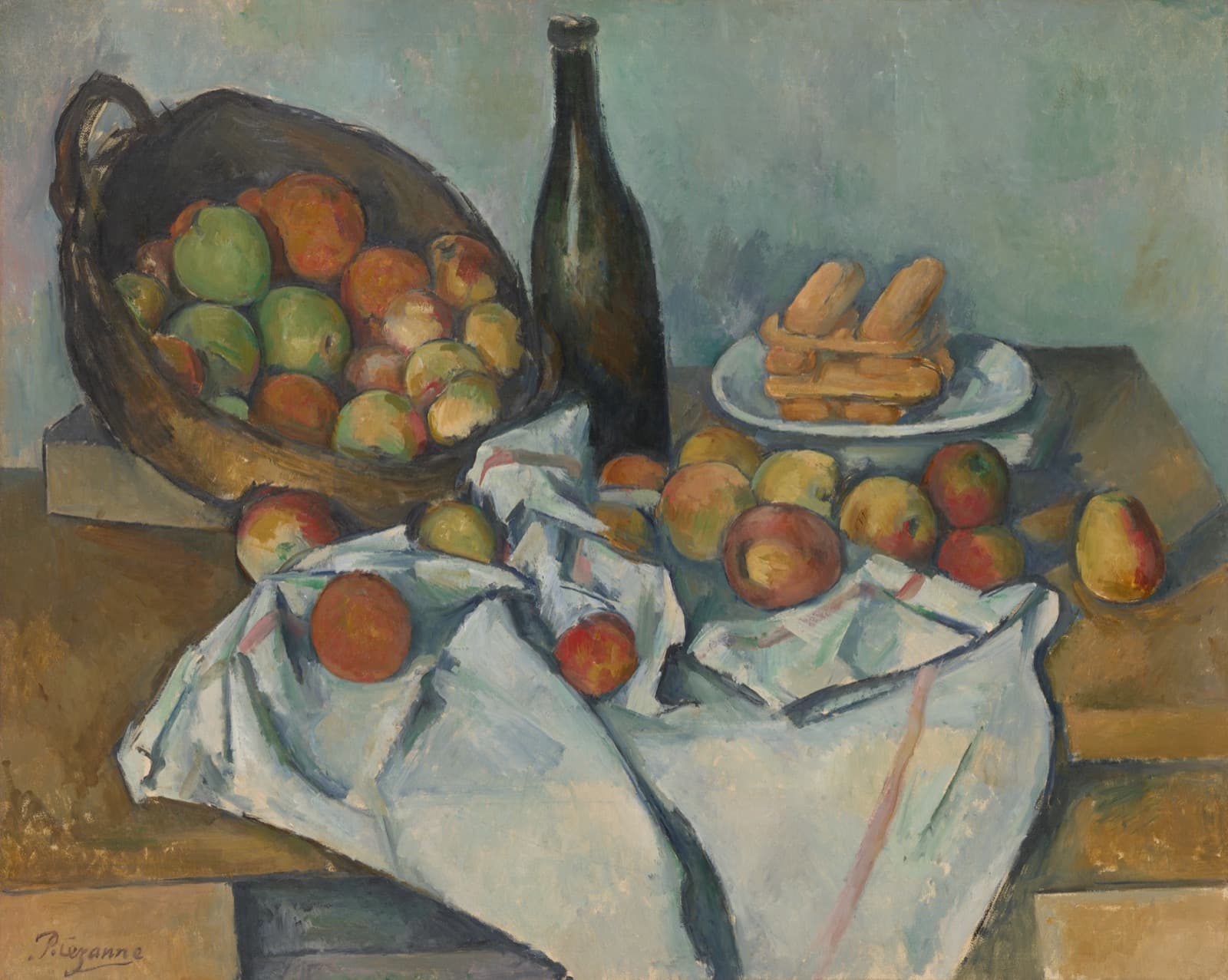
Paul Cézanne, Pommes et biscuits, c. 1880 (Musée de l'Orangerie). Photograph by Jean-Pierre Dalbéra. (Paul Cézanne; photograph Jean-Pierre Dalbéra, via Wikimedia Commons · Public domain)

The inheritance let Cézanne live and work where he chose, and he chose Aix. He painted the same subjects over and over: still lifes of apples, portraits of Hortense, local card players, and above all Mont Sainte-Victoire, the limestone mountain east of the town, which he painted from the 1880s until the month he died — more than sixty oils and watercolors by most counts. The late canvases build their subjects from ordered patches of color, each plane doing structural work, and they are the paintings the next generation studied hardest. He was diagnosed with diabetes in 1890 and grew increasingly solitary.

Treat nature by means of the cylinder, the sphere, the cone.

Traiter la nature par le cylindre, la sphère, le cône.

Paul Cézanne to Émile Bernard, letter of 15 April 1904 (Courtauld Gallery)

The line above, from a letter to the young painter Émile Bernard, became the most quoted sentence he ever wrote — later readers took it as a program for geometric abstraction, though in context it is practical advice about modeling and perspective.

Provence and L'Estaque

The other Provençal motif was the sea. Cézanne had begun visiting L'Estaque, a village on the bay above Marseille, in the 1860s, and returned through the 1870s and 1880s. Its houses, hills, water, and southern light offered sharply defined masses, and in the mature canvases the village becomes almost architecture: roofs as wedges, houses as blocks, the bay as a single plane of blue, hills organized into layered planes of color.

He did not put nature onto the canvas as he found it; he reconstructed it. Trees become vertical rhythms and mountains interlocking planes, yet the pictures rarely lose contact with the sensation of standing in a particular place. The Metropolitan Museum notes that the views of Gardanne from the same years anticipate outright the Cubism of Braque and Picasso — and it was at L'Estaque, in 1908, that Braque painted the landscapes that gave the movement its name.

How a Cézanne is built

Cézanne did not outline an object and fill it in. He constructed it from adjoining patches of color — art historians call them constructive strokes — so that a run of blues, greens, and ochres gradually becomes an apple, a shoulder, or the flank of a mountain. Color does the work that academic painting assigned to line and shadow.

His pictures also refuse a single viewpoint. A tabletop tilts forward as if about to spill its fruit; one side of a bowl is seen from above while the other is seen straight on. These are not mistakes in perspective. Cézanne let different parts of a picture record slightly different acts of looking, which is closer to how eyes actually move across a table than the fixed window of classical perspective. That permission — to reconstruct what is seen rather than copy it — is what the Cubists took from him.

The still lifes make the method easiest to see, which is one reason there are so many of them. Apples do not move. An arrangement of fruit, bottles, and cloth could be studied for weeks while he worked a problem through, and in the mature still lifes every object has weight while the table under it tilts.

Paul Cézanne, Mont Sainte-Victoire and the Viaduct of the Arc River Valley, 1882–85 (The Metropolitan Museum of Art). He painted the mountain east of Aix more than sixty times. (Paul Cézanne, via Wikimedia Commons · Public domain)

The card players and the bathers

Paul Cézanne, The Card Players, 1890–95 (Musée d'Orsay). One of five paintings in the series, the models drawn from farmhands at the Jas de Bouffan. (Paul Cézanne, via Wikimedia Commons · Public domain)

Around 1890 Cézanne began the series of Provençal card players — five paintings and many studies, the models drawn from farmhands at the Jas de Bouffan. Nothing happens in them: two or three men sit at a table and look at their hands, and the figures carry the gravity of sculpture. Importance, the series demonstrates, does not require an important subject.

The bathers occupied him longer still — groups of nude figures in a landscape, worked at throughout his career and rarely painted from a model. He assembled them from drawings, memory, and the museum art he had copied. In the largest late versions, the Grandes Baigneuses, bodies, trees, and sky lock into a single architecture, and Pablo Picasso's experiments toward Les Demoiselles d'Avignon were made in a Paris intently focused on Cézanne's figures.

Paul Cézanne, The Large Bathers, 1900–06 (Philadelphia Museum of Art). The largest of the late bather compositions, worked on until his death. (Paul Cézanne, via Wikimedia Commons · Public domain)

Portraits, and Hortense

Paul Cézanne, Madame Cézanne (Hortense Fiquet) in a Red Dress, 1888–90 (The Metropolitan Museum of Art). He painted nearly thirty portraits of Hortense across two decades. (Paul Cézanne, via Wikimedia Commons · Public domain)

Cézanne painted almost two hundred portraits by the National Gallery of Art's count — around twenty-six of himself and nearly thirty of Hortense. They flatter nobody. Sitters hold still, the faces close to masklike, and the interest lies in how a head and body occupy space rather than in charm. He gave farm workers and servants the same concentrated attention he gave collectors.

The portraits of Hortense, painted across two decades, are the largest sustained record of a single sitter in his work and among the least revealing in the ordinary sense. She is still, self-contained, difficult to read. They are studies of presence, not of mood.

Vollard, late recognition, and the Cubists

Recognition arrived late and through his old colleagues. In 1895 Claude Monet and his fellow Impressionists convinced the dealer Ambroise Vollard to mount a show dedicated to Cézanne — his first solo exhibition, held in Vollard's Paris gallery that November, drawing on some 150 works. It began the painter's rise from obscurity, and by his final decade younger artists were traveling to Aix to seek him out.

The 1895 exhibition showed more than 150 paintings and watercolors in rotation, because the gallery on the rue Laffitte could not hang them all at once. Edgar Degas, Monet, Renoir, and Pissarro bought works; the young Henri Matisse visited. Two years later the Nationalgalerie in Berlin bought the Mill on the Couleuvre at Pontoise — the first Cézanne to enter a public collection anywhere.

In 1901 he bought land on the hill of Les Lauves, north of Aix, and built a studio to his own specification, finished the following year. It was a working room, not a showplace, with a wall of north-facing glass and a narrow slot cut in the side so the largest bathers canvases could be passed outside and examined in daylight. He painted there to the end: the late Mont Sainte-Victoire series from the hilltop above, portraits of his gardener Vallier in the garden below.

On 15 October 1906 Cézanne was caught in a storm while painting outdoors and collapsed. He died of pneumonia in Aix on 22 October 1906, at sixty-seven. The Salon d'Automne mounted a memorial retrospective in 1907, and its effect was immediate: in 1908 Georges Braque painted landscapes at L'Estaque in open emulation of Cézanne, and the critic Louis Vauxcelles's jibe about their 'cubes' gave Cubism its name. Cézanne belongs to the movement's story as precursor rather than participant — he did not live to see it.

The 1907 retrospective hung fifty-six paintings and a group of watercolors, and the painters who walked through it — Picasso, Braque, Matisse, Fernand Léger among them — treated it as a course of instruction. Matisse and the Fauves took the color; the Cubists took the structure. The Musée Granet in Aix now calls him the father of modern art, a title that would have surprised the juries who spent the 1860s refusing him.

What he was actually trying to do

The paintings make more sense understood as investigations rather than pictures of things. Cézanne wanted to stay faithful to sensation — the actual experience of looking — while building a picture with internal order, and those two goals conflict. Human vision moves constantly; traditional perspective pretends the viewer has one eye fixed in one position. His canvases let the instability of real looking stay visible. At the same time he wanted solidity: apples with weight, mountains with mass, people who occupy space. The characteristic tension of a Cézanne comes from holding both at once — movement in seeing, permanence in painting.

That is why he sits at the start of so many accounts of modern art. Painting before him had spent centuries perfecting the illusion of a scene through a window; Cézanne kept his attachment to the visible world while exposing the construction beneath the illusion. A mountain could become patches of blue and ochre and remain a mountain. Artists after him pushed the discovery further — Cubism fractured the space, Fauvism freed the color, abstraction eventually let the object go. He did not abandon nature. He showed painting how radically nature could be reconstructed.

Life events

  1. 1839

    Born in Aix-en-Provence on 19 January, the son of a banker.

  2. 1852

    Enters the Collège Bourbon in Aix, where he befriends Émile Zola.

  3. 1857

    Begins at Aix's free municipal drawing school, copying paintings in the collection that is now the Musée Granet.

    Aix-en-Provence, city of Paul Cezanne

  4. 1859

    His father buys the Jas de Bouffan estate west of Aix. Cézanne paints there for four decades, beginning with murals on the salon walls.

    Bastide du Jas de Bouffan

  5. 1861

    Abandons law studies and moves to Paris against his father's wishes; draws at the Académie Suisse.

    Paul Cézanne around 1861, the year he abandoned law studies in Aix and moved to Paris. Photographer unknown. (Unknown photographer, via Wikimedia Commons)
  6. 1863

    A work of his hangs in the Salon des Refusés, the exhibition created for painters rejected by the official Salon.

    Cézanne and Beyond

  7. 1866

    Begins the palette-knife portraits of his uncle Dominique Aubert, the faces built up in ridges of pigment.

    Portraits by Cézanne

  8. 1872

    Son Paul is born in January. Cézanne begins working beside Camille Pissarro at Pontoise and Auvers-sur-Oise, and his palette lightens.

  9. 1874

    Shows in the first Impressionist exhibition, to harsh reviews.

  10. 1877

    Shows in the third Impressionist exhibition, then never exhibits with the group again.

  11. c. 1880

    Paints Pommes et biscuits, one of the still lifes of apples now in the Musée de l'Orangerie.

    Paul Cézanne, Pommes et biscuits, c. 1880 (Musée de l'Orangerie). Photograph by Jean-Pierre Dalbéra. (Paul Cézanne; photograph Jean-Pierre Dalbéra, via Wikimedia Commons)
  12. 1886

    Marries Marie-Hortense Fiquet in April; his father dies in October, leaving him wealthy. Émile Zola publishes L'Œuvre the same year.

  13. c. 1890

    Begins The Card Players, five paintings of Provençal farmhands at a table, with many studies. Diagnosed with diabetes the same year.

    Paul Cézanne, The Card Players, 1890–95 (Musée d'Orsay). One of five paintings in the series, the models drawn from farmhands at the Jas de Bouffan. (Paul Cézanne, via Wikimedia Commons)

    The Card Players, Paul Cézanne

  14. 1895

    The dealer Ambroise Vollard, urged by Monet and the Impressionists, mounts Cézanne's first solo exhibition in Paris.

  15. 1897

    The Nationalgalerie in Berlin buys the Mill on the Couleuvre at Pontoise — the first Cézanne to enter a public collection.

    Cézanne and Beyond

  16. 1901

    Buys land on the hill of Les Lauves, north of Aix, and builds the studio where he works until his death.

    Atelier des Lauves

  17. 1902

    Émile Zola dies; Cézanne is reported to have spent a day weeping in his studio.

  18. 1906

    Caught in a storm while painting outdoors on 15 October; dies of pneumonia in Aix on 22 October.

  19. 1907

    The Salon d'Automne mounts a memorial retrospective; the Cubists take note.

People they knew

Documented connections — every one carries its source.

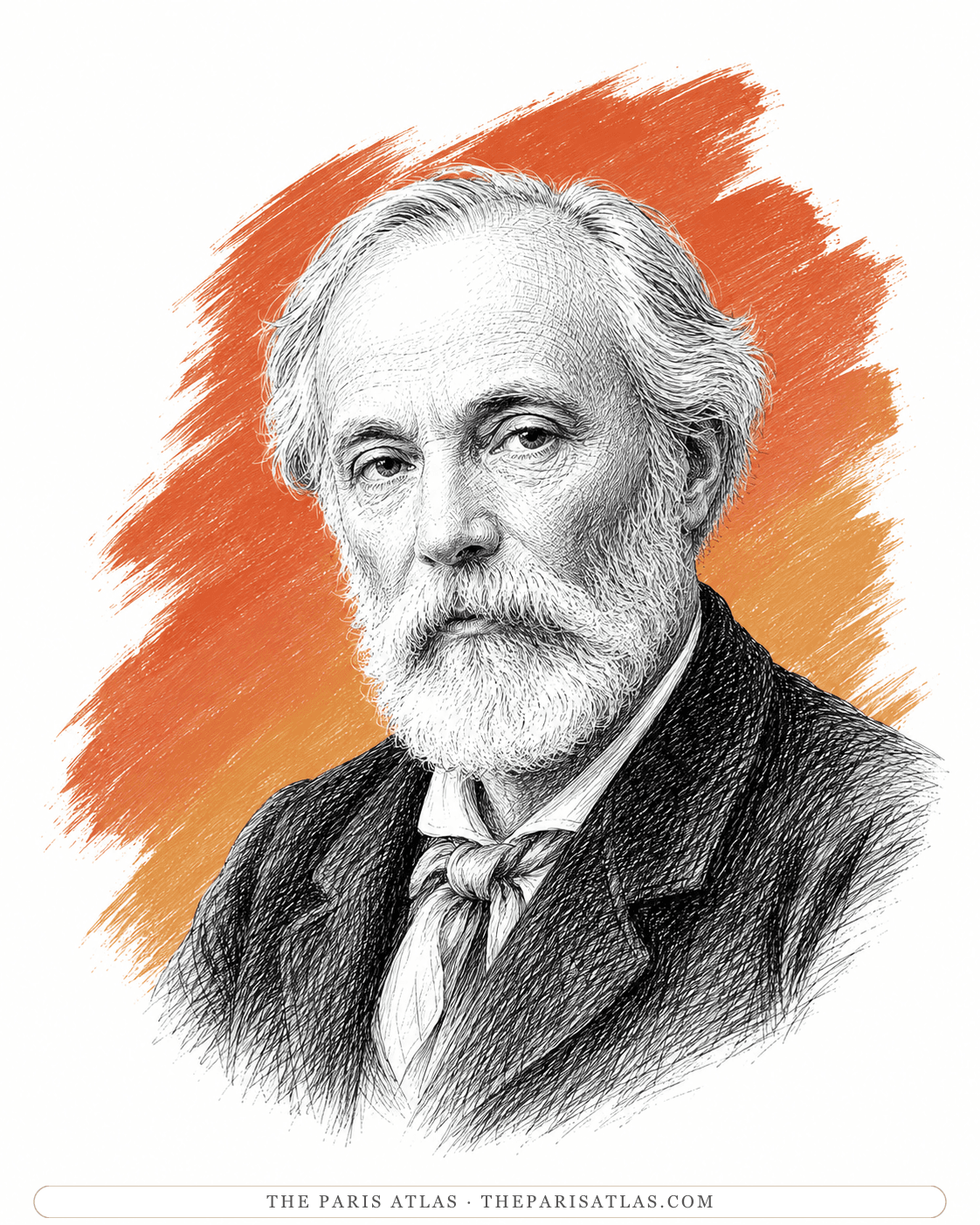
Illustrated portrait of Pierre-Auguste Renoir

Pierre-Auguste Renoir

  • Painter
  • Sculptor

Met

Friends from the Impressionist circle onward — the BMJ study of Renoir's illness, drawing on family papers, counts Cézanne among the friends of his established years. Both spent the 1880s working their way out of Impressionism toward something more durable.

Annelies Boonen, Jan van de Rest, Jan Dequeker, Sjef van der Linden, How Renoir coped with rheumatoid arthritis (1997)

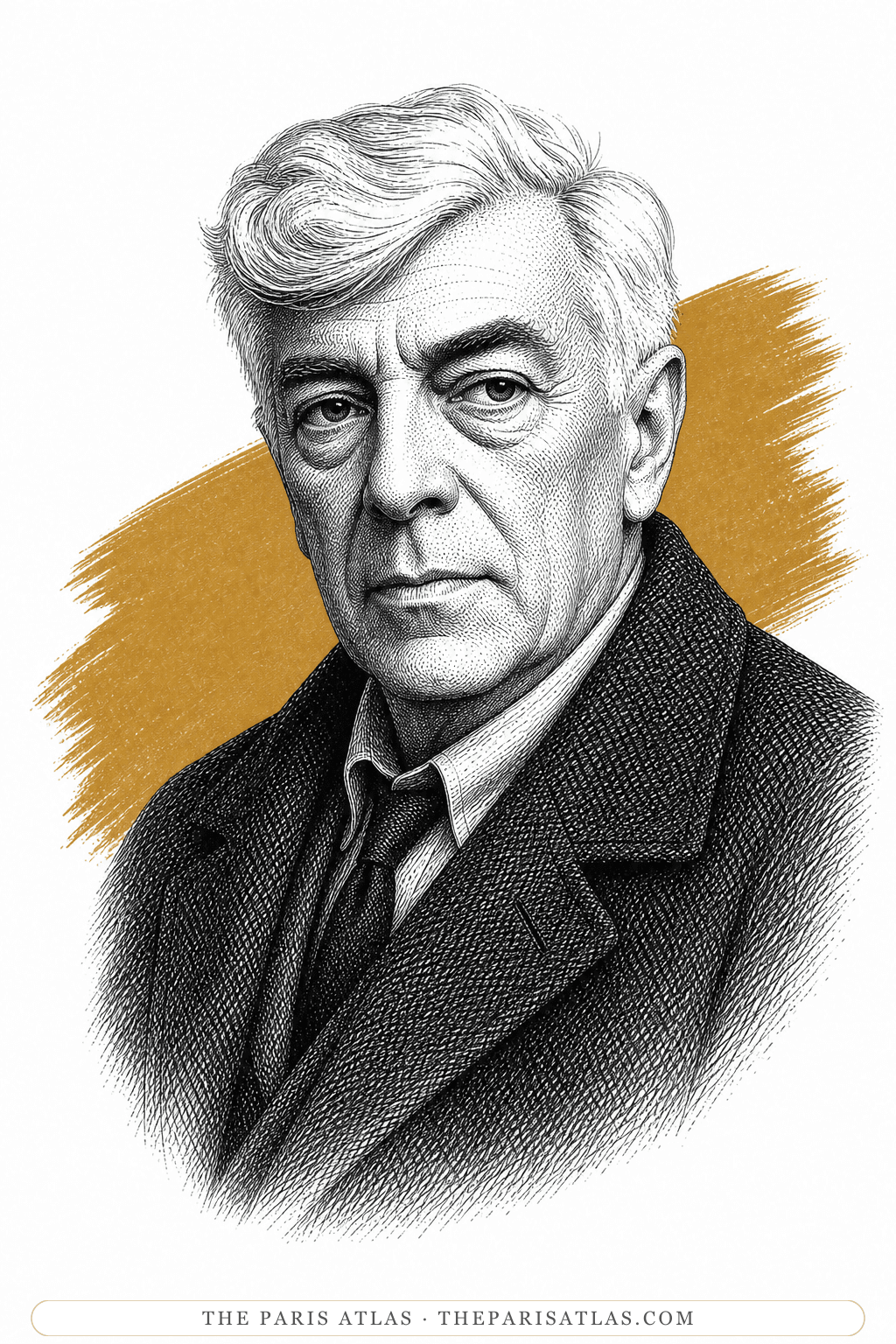
Illustrated portrait of Ambroise Vollard

Ambroise Vollard

  • Art dealer
  • Publisher

Supported by · 1895

In 1895 Monet and his fellow Impressionists convinced the dealer Ambroise Vollard to mount a show dedicated to Cézanne — the exhibition that began the painter's late rise from obscurity.

Cézanne: The Artist's Artist

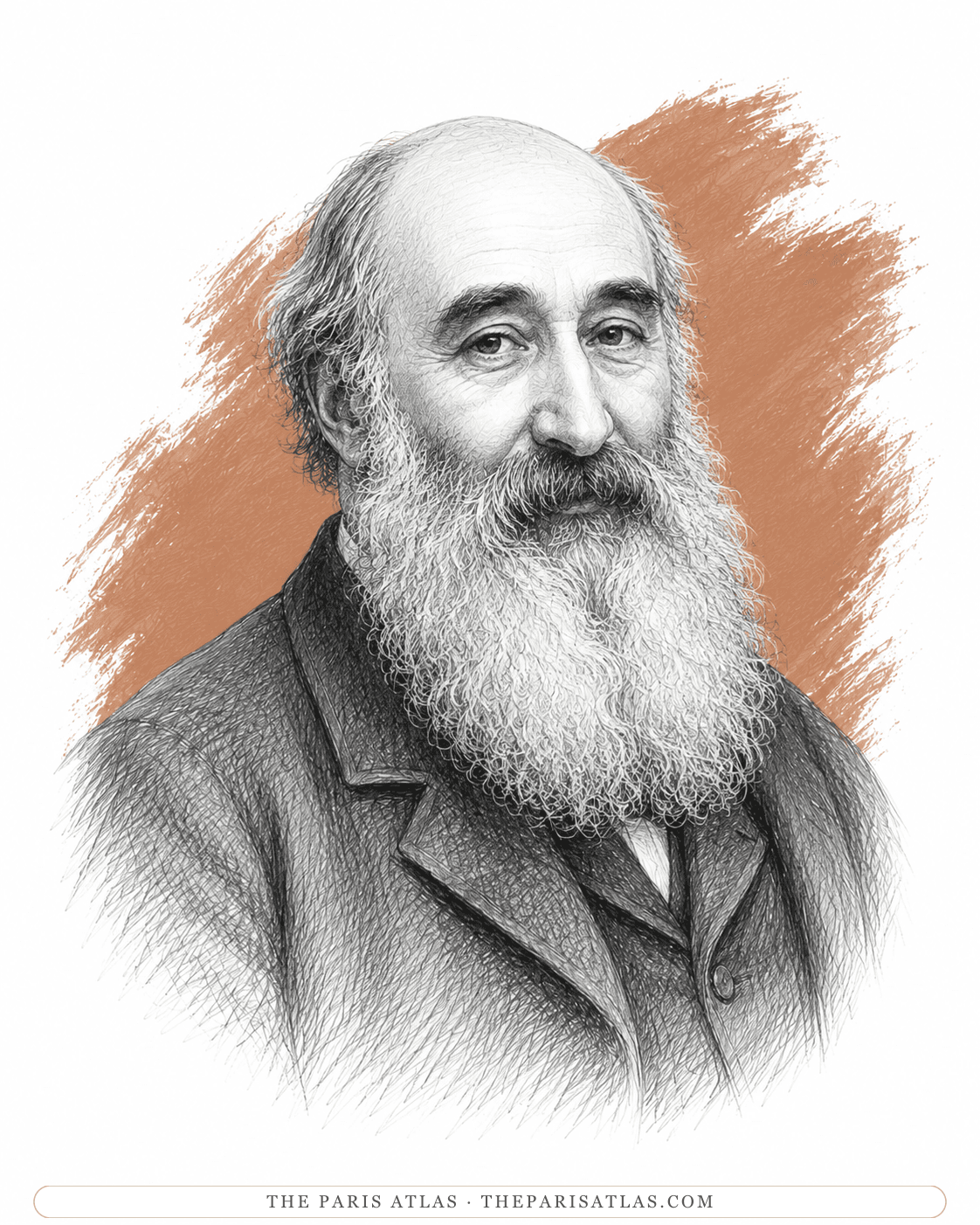
Illustrated portrait of Camille Pissarro

Camille Pissarro

  • Painter

Mentored by

They worked side by side around Pontoise and Auvers-sur-Oise through the 1870s. Pissarro moved Cezanne outdoors and away from the dark, dramatic painting of his early career; as Cezanne's structure tightened it came back the other way.

Pioneering Modern Painting: Cézanne and Pissarro 1865–1885

Movements

The artistic and literary currents this life ran through.

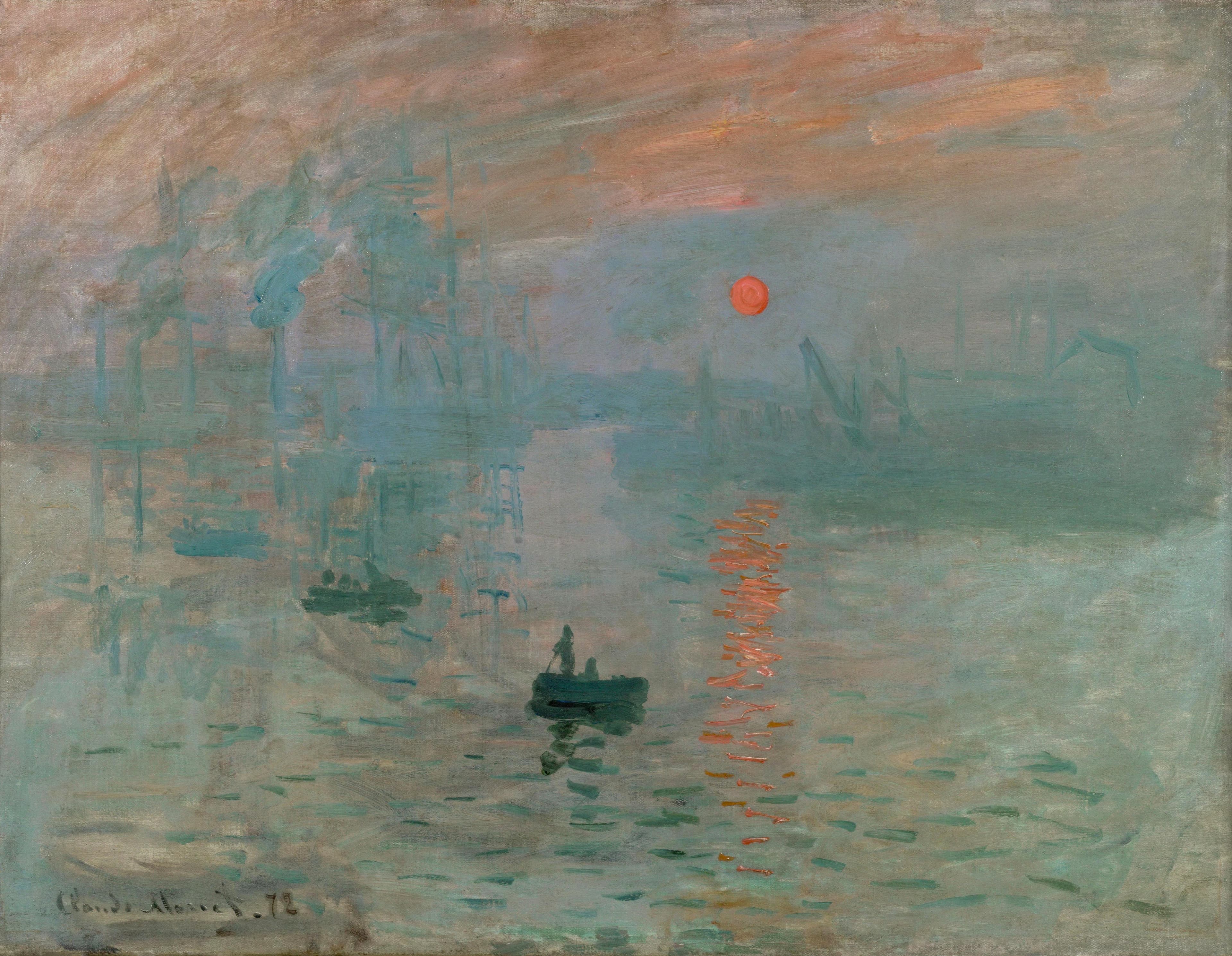
An orange sun over a hazy blue-grey harbor, small boats in the foreground, painted in loose broken strokes

Art movement · 1874–1886

Impressionism

Passed through the roster of the independent exhibitions, per the Met's account — and left it pointing elsewhere: the Cubists painted in open emulation of him within two decades.

Impressionism: Art and Modernity — The Metropolitan Museum of Art; Cubism — The Metropolitan Museum of Art, essays

Sunlight through a railing breaking into diagonal planes of shadow across bare concrete

Art movement · 1907–1914

Cubism

As precursor, not participant — he died in 1906. The Met's account of the movement's naming runs through him: Vauxcelles coined 'cubes' for the landscapes Braque painted at L'Estaque in 1908 in emulation of Cézanne.

Cubism — The Metropolitan Museum of Art, essays

Questions about Paul Cézanne

What is Paul Cézanne famous for?

Cézanne is famous as the painter who bridged Impressionism and twentieth-century art. He showed in the first and third Impressionist exhibitions, then withdrew to Aix-en-Provence and developed a way of building pictures from ordered planes of color — in still lifes of apples, portraits, card players, and repeated views of Mont Sainte-Victoire — that Pablo Picasso, Georges Braque, and the Cubists took as their starting point.

What happened between Cézanne and Émile Zola?

Their boyhood friendship was strained by Zola's 1886 novel L'Œuvre, whose fictional painter, Claude Lantier, is a gifted artist who fails — a figure readers identified with Cézanne. The traditional account says the two never spoke again, but a letter discovered in 2013, dated November 1887, shows Cézanne warmly thanking Zola for his novel La Terre and proposing a visit. No later contact is documented, and when Zola died in 1902 Cézanne is reported to have wept for a day.

What is Mont Sainte-Victoire?

Mont Sainte-Victoire is a limestone mountain east of Aix-en-Provence that Cézanne painted repeatedly from the 1880s until his death — more than sixty oils and watercolors by most counts. The series shows his late method at its clearest, with the mountain and the plain below built from ordered patches of color, and it became one of the most studied bodies of work in modern painting.

How did Paul Cézanne die?

He died of pneumonia in Aix-en-Provence on 22 October 1906, at sixty-seven. A week earlier, on 15 October, he had been caught in a storm while painting outdoors and collapsed; he never recovered. The Salon d'Automne honored him with a memorial retrospective the following year.

Was Cézanne an Impressionist?

Only briefly. He worked beside Camille Pissarro at Pontoise and Auvers in the early 1870s, lightened his palette, and showed in the Impressionist exhibitions of 1874 and 1877. After that he never exhibited with the group again, and he spent the following decades pursuing a more structured art — he is usually classed today as a Post-Impressionist.

Where can you see Cézanne's paintings in Paris?

The Musée de l'Orangerie holds fifteen of his works in the Walter-Guillaume collection, including still lifes such as Pommes et biscuits (c. 1880).

Why did Cézanne paint so many apples?

Because still life let him study a visual problem for as long as it took. Apples do not move: an arrangement of fruit, bottles, and cloth stayed available for weeks while he adjusted the relationships between round and flat forms, warm and cool colors. The still lifes are not really about fruit — they are where his method of building form from patches of color is easiest to see.

Why do the tables in Cézanne's still lifes look tilted?

Because he did not force every object into a single fixed perspective. Different parts of a still life can imply slightly different viewing angles — a tabletop seen from above, a bowl seen straight on — which is closer to how eyes actually move over a scene. The effect is deliberate, and it is one of the ideas the Cubists developed furthest.

Who was Cézanne's wife?

Marie-Hortense Fiquet, a model he met in 1869. Their son Paul was born in 1872 and the couple married in 1886. She was his most persistent sitter — he painted nearly thirty portraits of her across two decades, still and self-contained pictures that are studies of presence rather than of mood.

What are The Card Players?

A series Cézanne began around 1890: five paintings and many studies of Provençal farmhands playing cards at a table, the models drawn from workers at the family's Jas de Bouffan estate. Nothing dramatic happens in them, and that is the point — ordinary men at a table carry the gravity of monumental painting.

Why is Cézanne called the father of modern art?

The phrase is the Musée Granet's, in his home town of Aix, and it describes his influence rather than his fame in life. His way of building pictures from planes of color and his release of painting from single-point perspective opened the paths that Cubism, Fauvism, and eventually abstraction followed. Picasso, Braque, Matisse, and Fernand Léger all studied him closely.

How did Cézanne influence Picasso?

Cézanne showed that objects and landscapes could be simplified into geometric masses and that a picture did not need one fixed viewpoint. Pablo Picasso and Georges Braque pushed both ideas much further after seeing Cézanne's work gathered at the memorial retrospective of 1907, and the result was Cubism — named the following year from Braque's Cézanne-influenced landscapes at L'Estaque.

Who was Ambroise Vollard?

The Paris art dealer whose 1895 exhibition rescued Cézanne from obscurity — his first solo show, more than 150 works rotating through the small gallery on the rue Laffitte, urged into being by Monet and the Impressionists. Degas, Monet, Renoir, and Pissarro bought works from it, and Vollard went on to become one of the leading dealers of modern art.

How did Cézanne influence Matisse?

Henri Matisse encountered Cézanne's paintings as Vollard brought them before the Paris public in the 1890s, bought one himself, and admired him lifelong. What Matisse and the Fauves took was the structural use of color — Cézanne's demonstration that color could organize a picture's space rather than merely describe objects.

Was Cézanne successful during his lifetime?

Eventually, and late. He endured decades of Salon rejection, critical mockery, and few sales; the turn came with Vollard's 1895 exhibition, when Cézanne was fifty-six. By his final decade collectors sought him out, a Berlin museum had bought a canvas, and younger painters were traveling to Aix to meet him — though hostility never entirely disappeared.

What are Cézanne's most important works?

No single canvas stands alone. The Mont Sainte-Victoire series, the still lifes of apples, the five Card Players, the portraits of Hortense, and the late Grandes Baigneuses each carry a different part of the achievement — together they show ordinary subjects used to rethink color, perspective, and structure.

Where was Cézanne's studio?

His last and most famous studio stands on the hill of Les Lauves, north of Aix-en-Provence — purpose-built in 1901–02, with a wall of north-facing glass and a slot cut in the side for passing the large bathers canvases outdoors. He worked there until his death in 1906, and the studio survives as a museum.
Why is Cézanne still important today?

Because his central question is still the live one: does an image have to copy reality, or can it reconstruct reality by its own visual logic? Cézanne showed that a picture could stay rooted in observation while being reorganized through color, geometry, and multiple viewpoints — and much of twentieth-century art grew from the possibilities that opened.
Sourced claims

Every connection the graph holds for Paul, with the evidence behind it.

Associated with

Impressionism

Passed through the roster of the independent exhibitions, per the Met's account — and left it pointing elsewhere: the Cubists painted in open emulation of him within two decades.

Impressionism: Art and Modernity — The Metropolitan Museum of Art; Cubism — The Metropolitan Museum of Art, essays

Associated with

Cubism

As precursor, not participant — he died in 1906. The Met's account of the movement's naming runs through him: Vauxcelles coined 'cubes' for the landscapes Braque painted at L'Estaque in 1908 in emulation of Cézanne.

Cubism — The Metropolitan Museum of Art, essays

Met

Pierre-Auguste Renoir

Friends from the Impressionist circle onward — the BMJ study of Renoir's illness, drawing on family papers, counts Cézanne among the friends of his established years. Both spent the 1880s working their way out of Impressionism toward something more durable.

Annelies Boonen, Jan van de Rest, Jan Dequeker, Sjef van der Linden, How Renoir coped with rheumatoid arthritis (1997)

Supported by · 1895

Ambroise Vollard

In 1895 Monet and his fellow Impressionists convinced the dealer Ambroise Vollard to mount a show dedicated to Cézanne — the exhibition that began the painter's late rise from obscurity.

Cézanne: The Artist's Artist

Mentored by

Camille Pissarro

They worked side by side around Pontoise and Auvers-sur-Oise through the 1870s. Pissarro moved Cezanne outdoors and away from the dark, dramatic painting of his early career; as Cezanne's structure tightened it came back the other way.

Pioneering Modern Painting: Cézanne and Pissarro 1865–1885

Sources and further reading

  • Paul Cézanne (1839–1906)
  • Cézanne and Beyond
  • Cezanne at the musée Granet
  • Major Exhibition of Paul Cézanne's Portraits at the National Gallery of Art
  • Portraits by Cézanne
  • The Card Players, Paul Cézanne
  • Paul Cézanne
  • Aix-en-Provence, city of Paul Cezanne
  • Bastide du Jas de Bouffan
  • Atelier des Lauves