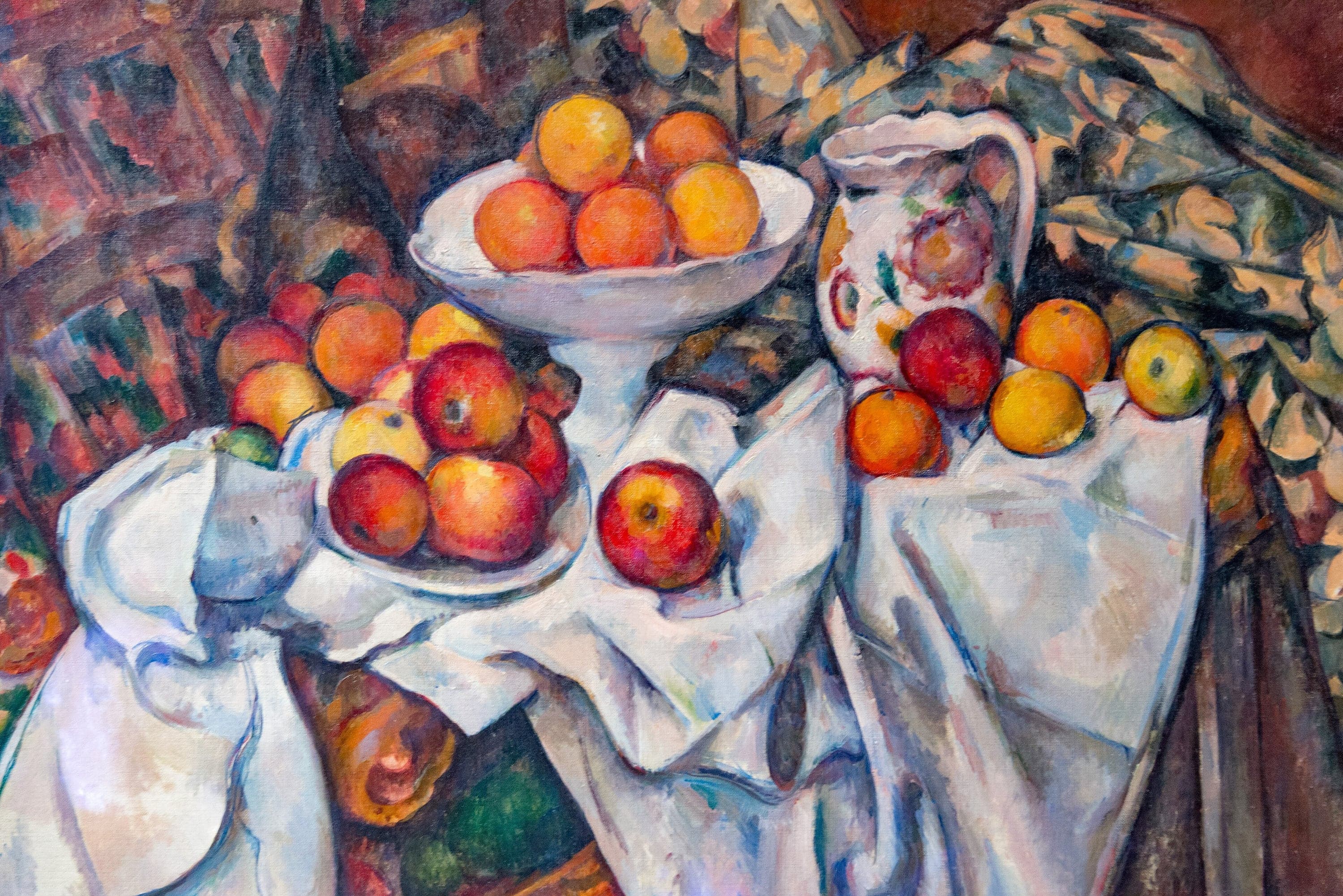
Apples and Oranges
by Paul Cézanne
Fruit sits on a rumpled white cloth with a patterned jug and a shallow dish. Paul Cézanne painted six still lifes in his Paris studio around 1899 using the same few objects each time, and the Musée d'Orsay considers this the most important of them. It came to the French state in the 1911 bequest of Count Isaac de Camondo.
- c. 1899
- Oil on canvas
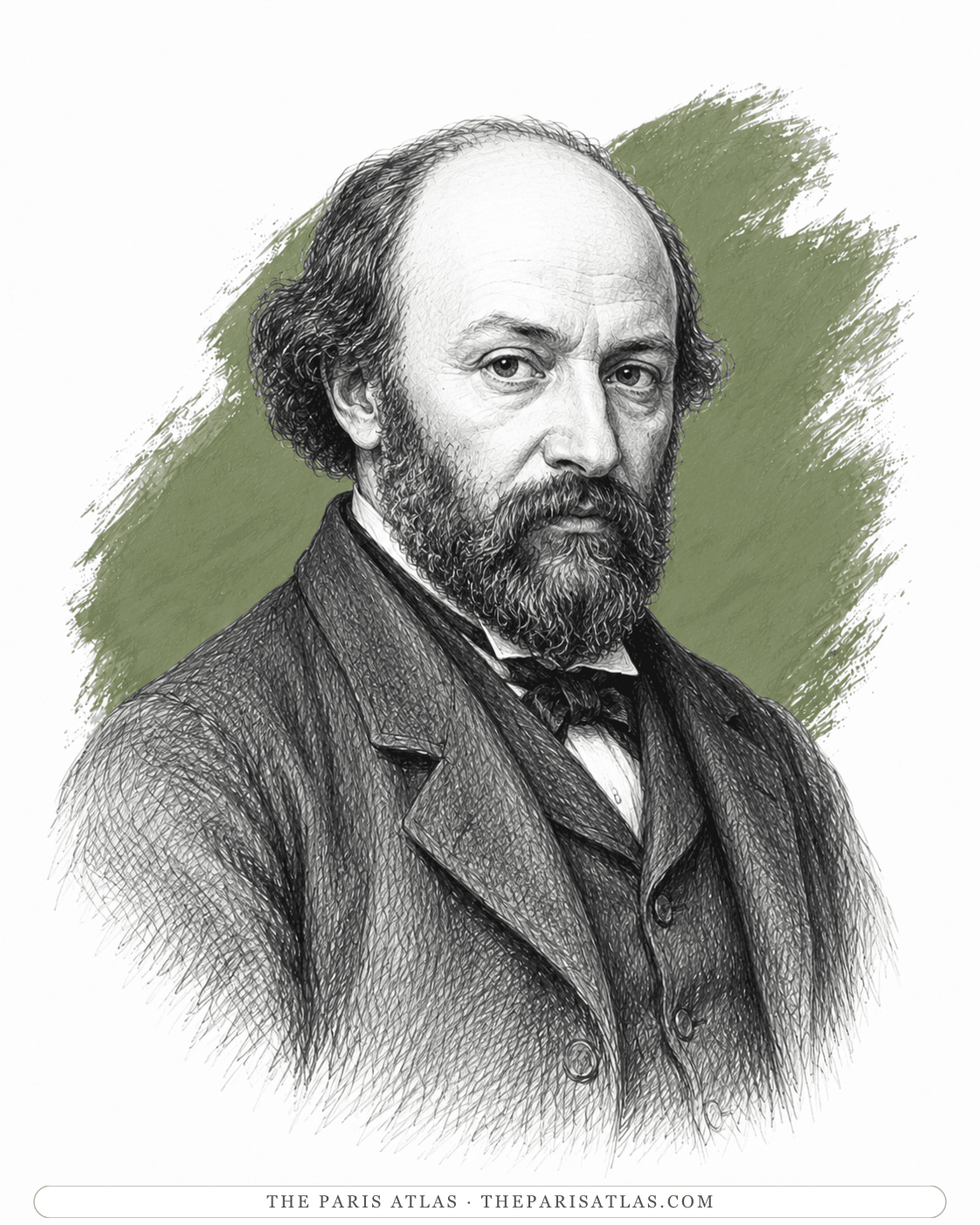
About Paul Cézanne
What the painting shows
Apples and oranges are heaped on a white cloth that has been pushed into deep folds. A white dish raised on a short foot holds the oranges; more fruit rests on a plate at the left and directly on the cloth. Behind stands a white jug painted with a floral motif. A patterned drape, dark with flowers and leaves, hangs behind and to the right and closes off the background.
There is no table edge to steady the arrangement and no clear floor. The cloth rises and falls without a consistent surface underneath it, and the fruit sits at angles that suggest more than one eye level. The dish is tilted towards the viewer far enough that its contents ought to roll out.
The canvas is 74 by 93 centimetres. The Musée d'Orsay notes that the drapery closing the perspective is a device borrowed from seventeenth-century Flemish still life, and that Cézanne's handling makes something quite different of it.
One of six, made with the same props
The Orsay records this as part of a series of six still lifes painted in 1899 in Cézanne's Paris studio. The same objects turn up in each: earthenware dishes, and a jug decorated with a floral pattern. The arrangements are close variations, with a draped cloth shutting off the space behind.
Cézanne had painted still life from the beginning of his career, but the Orsay's account is that the genre only became central to him late. Of that late group this is the one the museum calls the most important still life of his final years in the 1890s.
Why fruit
A bowl of fruit holds still. People, weather and light do not. Working with apples let Cézanne take as long as he wanted over the relationship between one rounded form and the next, and it is the reason the still lifes are where his method is easiest to see.
It also put him in a French line that runs back through Jean-Baptiste-Siméon Chardin in the eighteenth century. The Orsay makes the comparison explicit, describing Cézanne as bringing new life to a genre traditional in French painting since Chardin.
The Camondo bequest
The painting was in the collection of the critic Gustave Geffroy until 1907, when the Bernheim-Jeune gallery bought it from him. It then entered the collection of Count Isaac de Camondo in Paris.
Camondo left his collection to the national museums, and the State accepted the bequest in 1911. The same bequest brought the Orsay's version of The Card Players. The painting's accession number is RF 1972.
Close reading
Reading the work, detail by detail
Six still lifes came out of Cézanne's Paris studio in 1899 using the same dish, the same jug and the same cloth. Close views show what he was actually doing with them: every object is seen from a slightly different height, and nothing in the picture rests on a surface you could point to.
1.Oranges in a dish seen from above
The rim is opened into a broad ellipse, which means the viewer is looking down into it. Tip a real dish that far and the fruit goes on the floor. Cézanne needed to show the oranges, so he showed them, and left the physics unresolved.
2.The jug, seen from the side
The jug's mouth is a narrow ellipse, so it is being seen from close to its own height. The dish beside it is seen from well above. Two eye levels, side by side on one table, and the painting does not admit to either.
3.Apples crowded off a plate
The plate cannot hold what is on it. Fruit sits across the rim and out onto the cloth, and the plate itself is half buried in the folds. Cézanne uses it as a place where shapes gather rather than as a container.
4.One apple on its own
It sits alone in the middle of the white cloth, the one piece of fruit given space. The roundness is built from flat patches of red, yellow and green laid next to each other, with no line around the edge. This is the handling that the still lifes exist to work out.
5.Cloth folded into planes
The cloth takes up more of the picture than the fruit and hides the table completely. There is no edge, no leg and no floor. Everything is resting on a heap of folded white planes, which is why the arrangement feels unanchored however solid each object looks.
6.A patterned drape closing the back
The drape blocks the background completely, a device borrowed from seventeenth-century Flemish still life. It stops the eye from travelling back and forces everything into a shallow band at the front, which is where Cézanne wants it.
Timeline
c. 1899
Painted in Cézanne's Paris studio, one of six still lifes using the same dishes and floral jug.
1907
Sold by the critic Gustave Geffroy to the Bernheim-Jeune gallery in Paris.
1911
Enters the national collections in the bequest of Count Isaac de Camondo, as RF 1972.
Where to see it
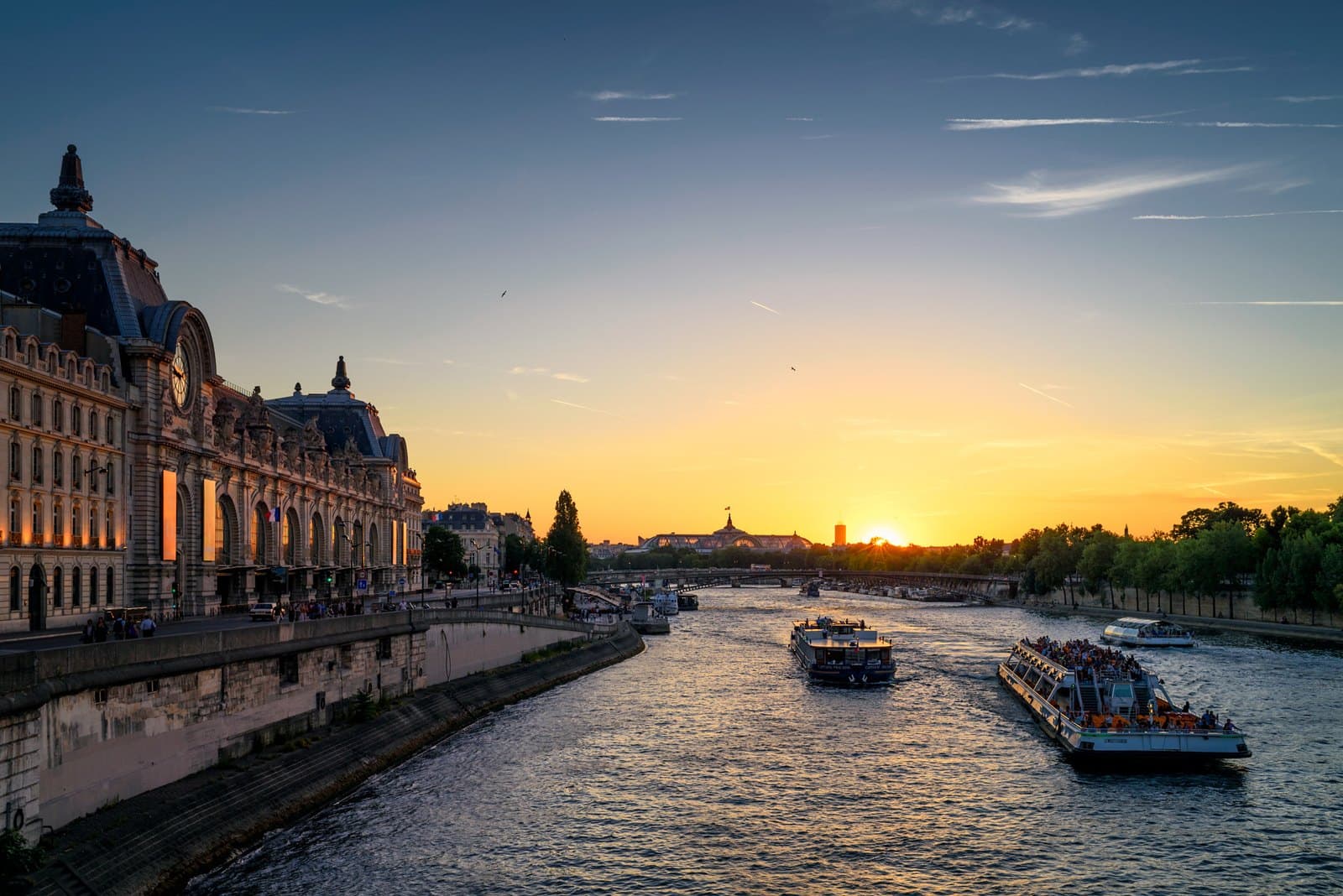
Musée d'Orsay
Esplanade Valéry Giscard d’Estaing, 75007 Paris, France
Displays and loans can change. Check whether this work is on view before making a special trip.
Plan your visitFrequently asked questions
Where is Cézanne's Apples and Oranges?
The Musée d'Orsay in Paris, accession number RF 1972. It arrived with the 1911 bequest of Count Isaac de Camondo, the same bequest that brought the Orsay's version of The Card Players.
When did Cézanne paint Apples and Oranges?
Around 1899, in his Paris studio. It is one of a group of six still lifes he made there that year using the same props — earthenware dishes and a jug with a floral pattern — in slightly different arrangements.
What is in Apples and Oranges?
Apples and oranges heaped on a deeply folded white cloth, a white dish raised on a short foot, a plate, a white jug painted with a floral motif, and a patterned drape hanging behind that closes off the background.
Why does the fruit look like it is about to fall?
Because the objects are painted from more than one viewpoint. The dish tilts towards the viewer more than a single fixed eye level would allow, the cloth has no steady surface under it, and there is no table edge to anchor the arrangement. Cézanne balanced the picture by relating the shapes to each other rather than by keeping one perspective.
How big is Apples and Oranges?
74 by 93 centimetres, roughly twenty-nine by thirty-seven inches. With its frame it measures 105.5 by 125 centimetres.
Why did Cézanne paint so much fruit?
Because it stays where it is put. Still life let him work slowly on how one form sits against another without a sitter losing patience or the light changing, which is why his method is clearest in these pictures. It also placed him in a French tradition running back to Chardin in the eighteenth century.
More by Paul Cézanne
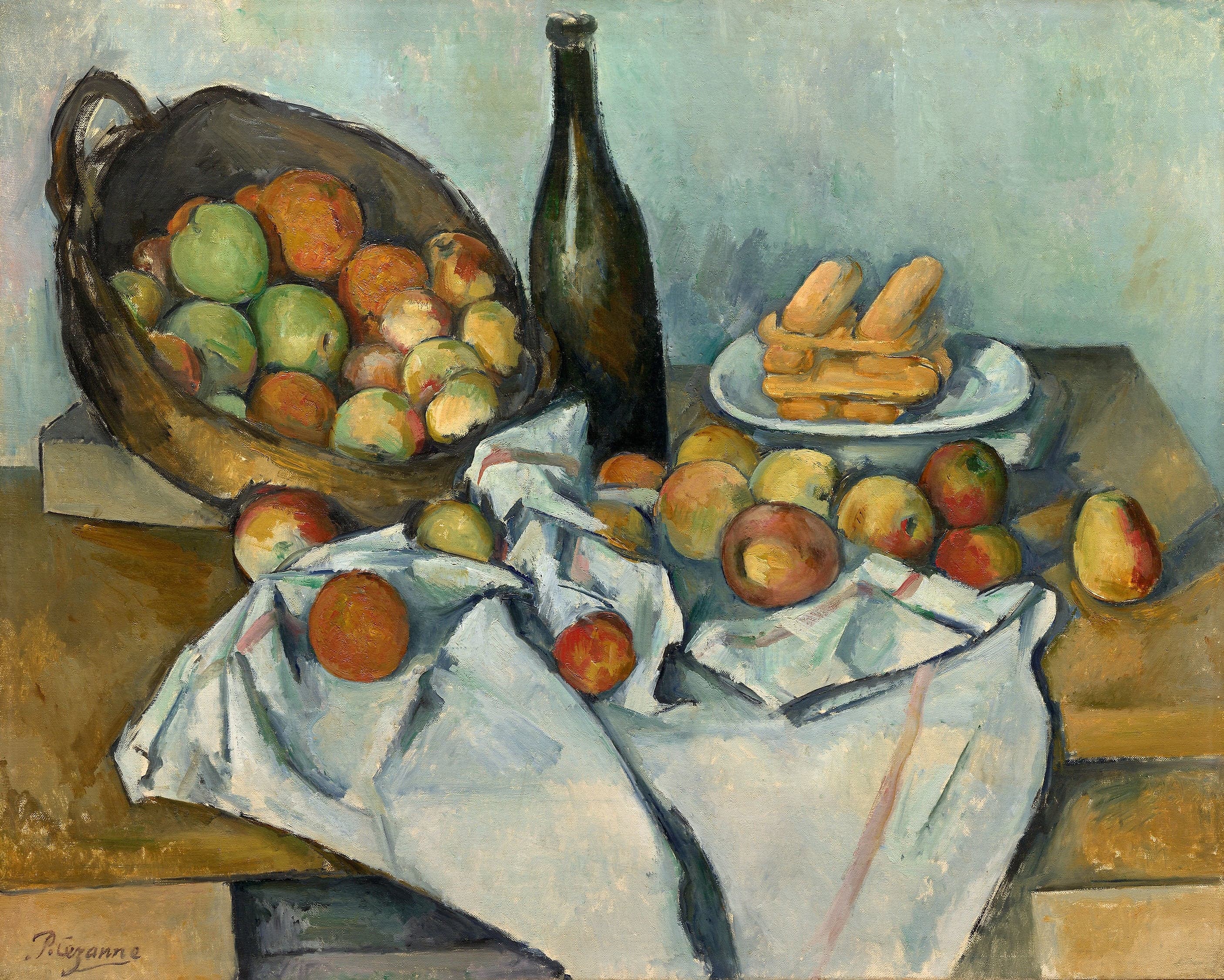
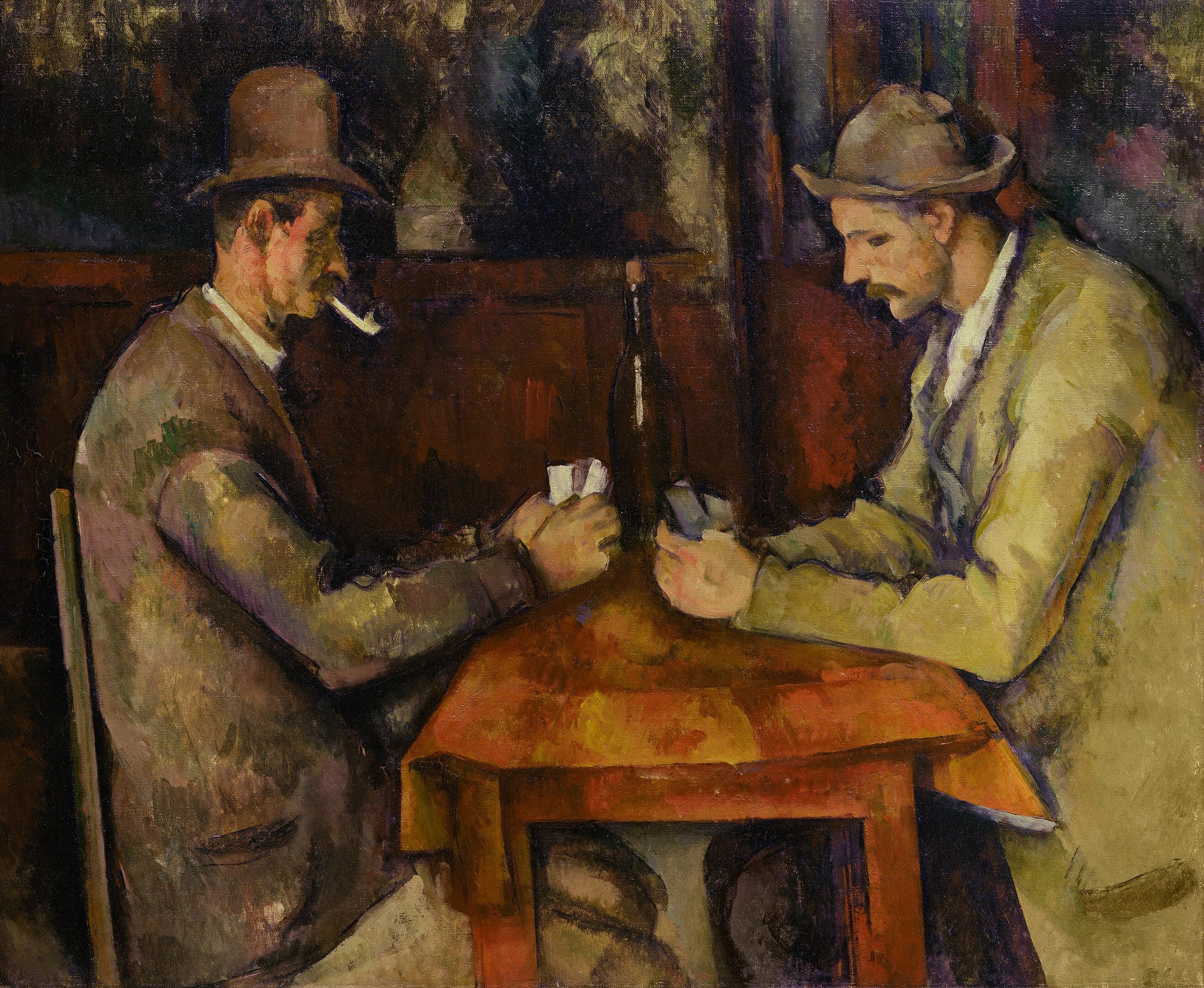
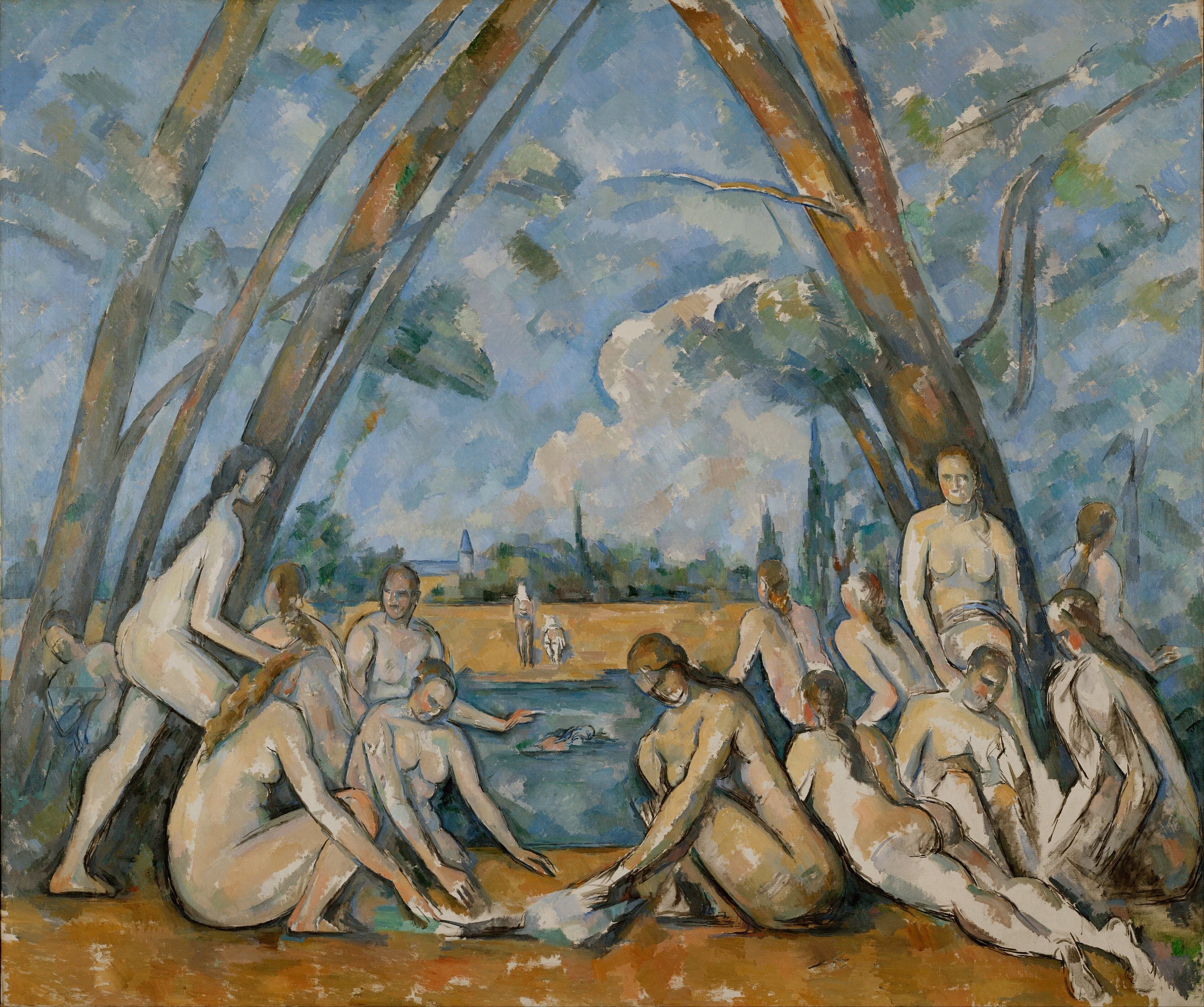
If you like Paul Cézanne
Explore painters from the same movements and circles.
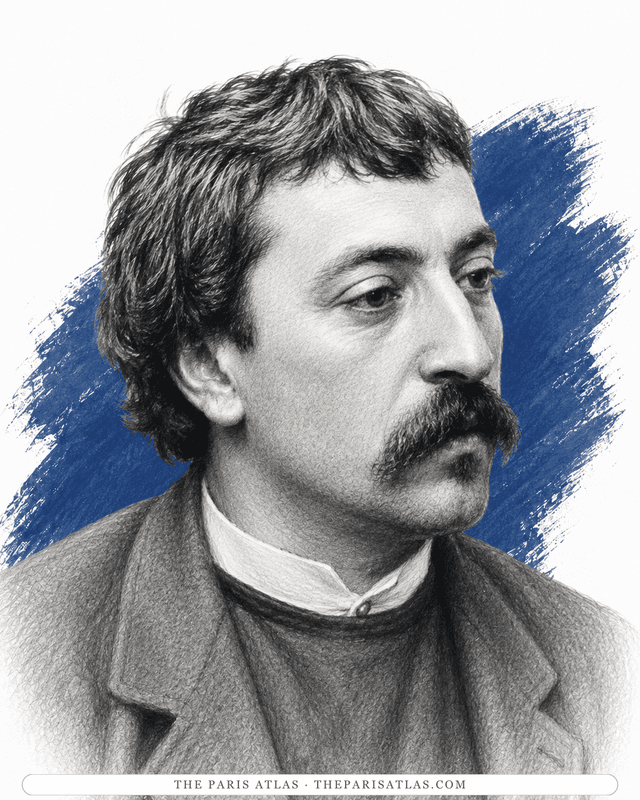
Paul Gauguin
Stockbroker turned painter who came into art through Camille Pissarro, showed with the Impressionists, and left Europe for Polynesia.
View artist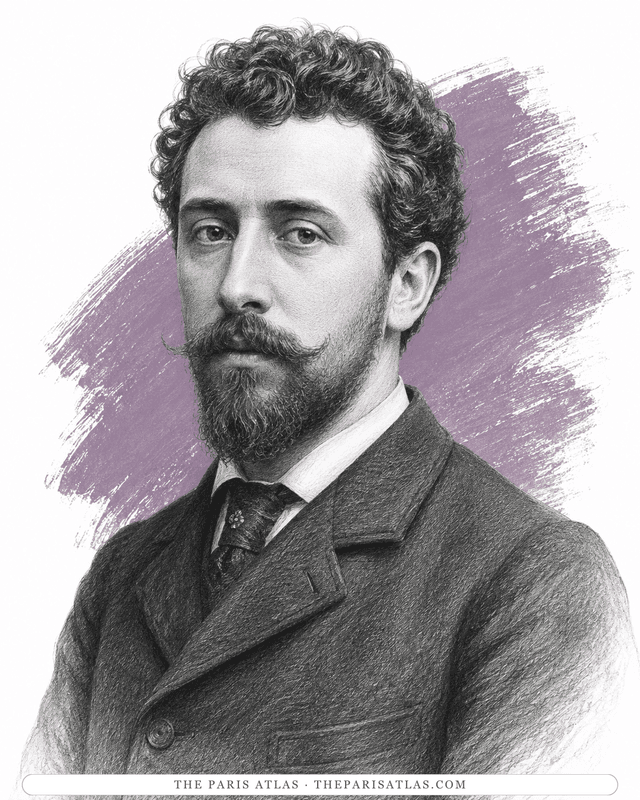
Georges Seurat
Parisian painter who built pictures from small dots of pure colour on optical principle, co-founded the Salon des Indépendants, and detonated the last Impressionist exhibition of 1886 with A Sunday on La Grande Jatte. He died at thirty-one.
View artist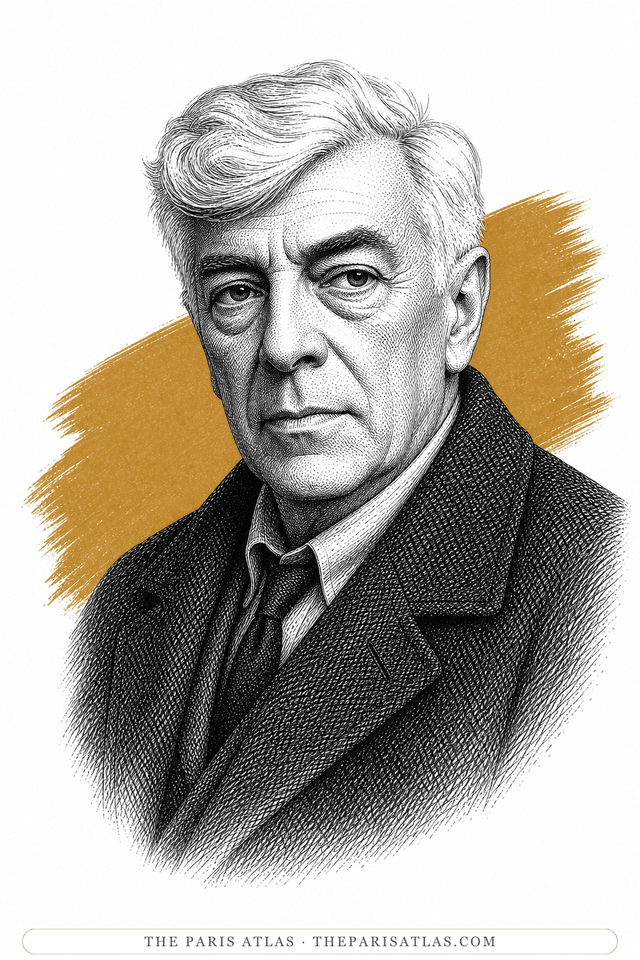
Georges Braque
The Le Havre house-painter's son who invented Cubism in Montmartre with the Spanish painter Pablo Picasso between 1908 and 1914 — the quieter half of the most consequential partnership in modern art — and who invented papier collé, the pasted-paper picture, in September 1912. He was given a French state funeral in 1963.
View artist
References
The sources below include collection records, catalogues, scholarly research, and primary materials that informed this page. They document Apples and Oranges, its making, and its place in cultural history.


1Pommes et oranges, Paul Cézanne (RF 1972)
Official recordMusée d'OrsayUsed forOfficial record used to verify names, dates, institutional details, or other factual information on this page.

2Paul Cézanne (1839–1906)
WebsiteThe Metropolitan Museum of ArtUsed forWeb source consulted for documented facts and historical context presented on the Apples and Oranges page.
3Ambroise Vollard, Paul Cézanne: His Life and Art (1923 English translation) — Internet Archive scan
BiographyAmbroise Vollard, 1923Used forBiographical evidence used to verify chronology, relationships, and historical context connected to Apples and Oranges.
4Cézanne: The Artist's Artist
WebsiteArt Institute of ChicagoUsed forWeb source consulted for documented facts and historical context presented on the Apples and Oranges page.
These references provide the documented foundation for this work's history and interpretation. Claim-level citations remain attached to the specific claims they support.
 Explore more resources