Mont Sainte-Victoire
by Paul Cézanne
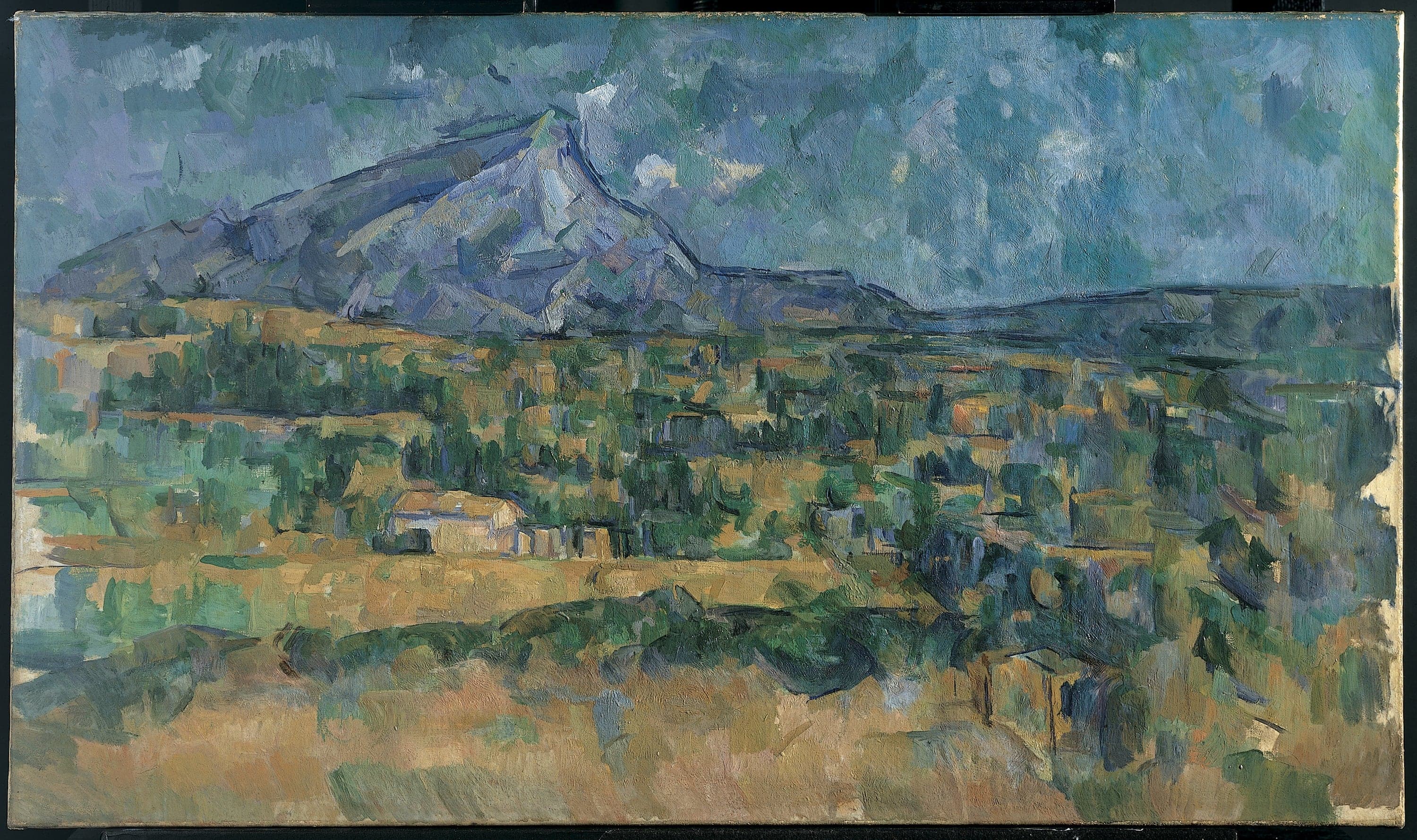
A limestone ridge sits above a plain of green and ochre patches. Paul Cézanne painted Mont Sainte-Victoire, the mountain east of his home town of Aix-en-Provence, more than eighty times across thirty years. This is one of the last of them, painted between about 1902 and 1906, the year he died, and it is in the Metropolitan Museum of Art in New York.
- c. 1902–1906
- Oil on canvas
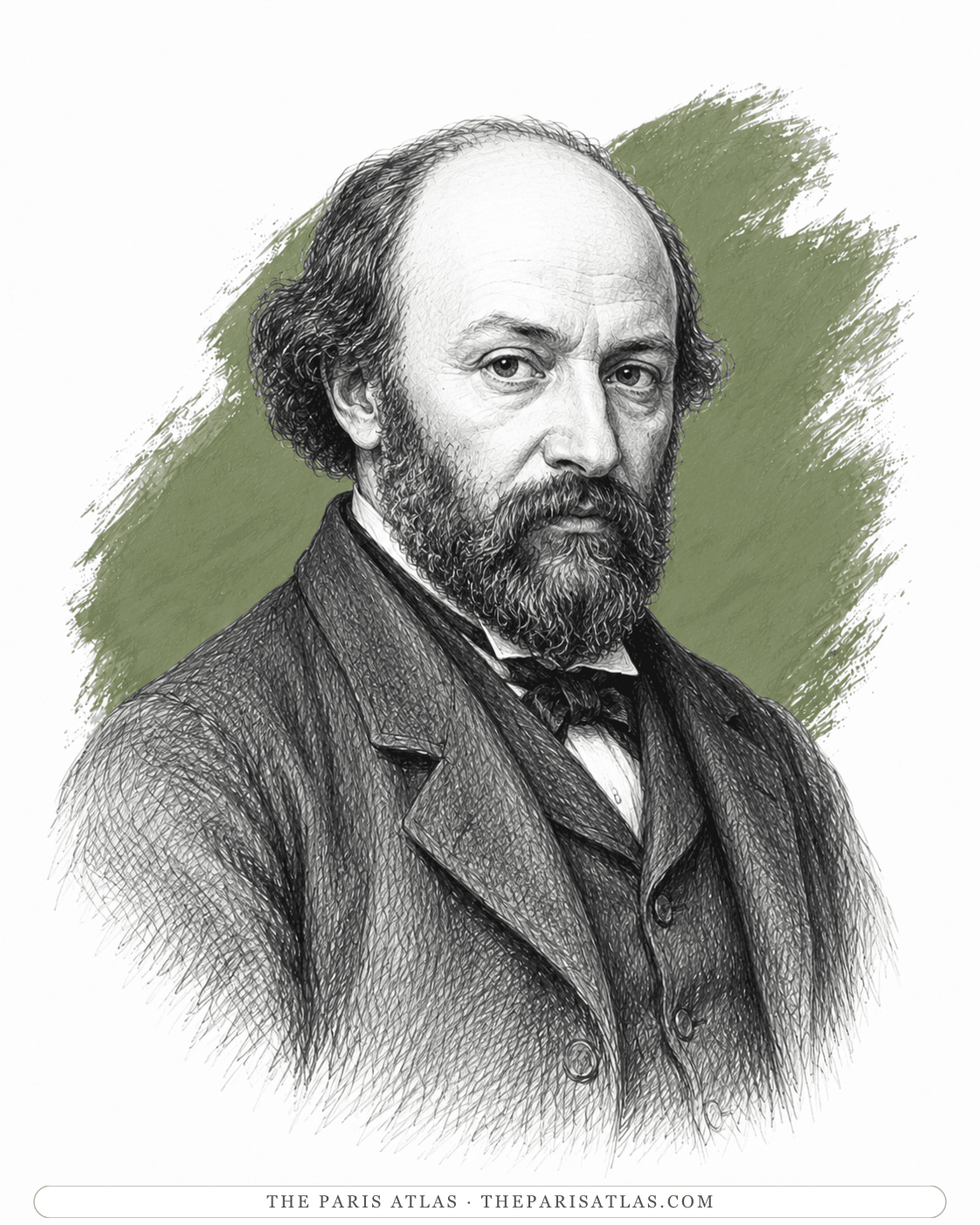
About Paul Cézanne
What the painting shows
The mountain runs across the upper third of the canvas, pale grey-blue with a long shallow slope on the left and a steeper drop on the right. Below it the plain is built out of small rectangular strokes — green, ochre, rust, blue — laid side by side rather than blended. A few of them read as roofs or fields. Most do not resolve into anything in particular.
There is no path into the picture and no figure in it. The sky is worked with the same kind of patches as the ground, in slightly cooler colours, so that air and earth are made of the same material. Up close the canvas is a mosaic of separate marks; at a distance it settles into a landscape.
It measures 57.2 by 97.2 centimetres, about twenty-two and a half by thirty-eight inches — a wide, low format that suits a long horizontal ridge.
The same mountain, eighty times
Mont Sainte-Victoire is a limestone ridge running east of Aix-en-Provence, where Cézanne was born in 1839 and where he died in 1906. He painted and drew it from his teens onward and returned to it steadily in his last two decades. He worked from different distances and angles: from the Bellevue estate, from the Bibémus quarry, from the road to Le Tholonet, and from the studio he built at Les Lauves in 1902.
The count usually given is more than eighty works, oils and watercolours together. He was not making variations on a view for their own sake. Painting the same thing repeatedly let him change the question from what the mountain looks like to how a sensation of it can be built out of marks on a flat surface.
The late manner
In the last canvases the patches grow larger and more separate and the drawing loosens. Areas of bare canvas are left showing between strokes. Edges stop being continuous: the mountain's profile is stated in several short marks that do not quite join.
This is what later painters took from him. The Metropolitan's own account of Cézanne treats the late landscapes as the point where his method became a model for the generation that followed, and the Cubists in particular read these broken planes as permission.
How New York got it
The painting belongs to the Walter H. and Leonore Annenberg Collection at the Metropolitan Museum of Art, given by the Annenbergs in 1994 and completed by Walter Annenberg's bequest. Its accession number is 1994.420.
The Met publishes the object as open access, so its photograph of the painting may be reused freely, including commercially.
Close reading
Reading the work, detail by detail
At arm's length this is a landscape. Up close it is a field of separate marks with bare canvas showing between them. Close views work through both readings — the shape of the ridge, the one building that resolves, and the places where Cézanne simply stopped covering the surface.
1.The summit, stated in short marks
The profile is not drawn as a line. It is a run of short marks laid next to each other, with gaps, so the edge of the mountain is something the eye completes rather than something the paint states. Cézanne painted this ridge more than eighty times and by this date had stopped outlining it at all.
2.The long shallow flank to the left
The ridge falls away gently to the left and drops sharply on the right, and that asymmetry is what makes the silhouette recognisable from anywhere around Aix. Cézanne builds the slope from flat planes of colour rather than from light and shade.
3.One building that resolves
Almost nothing in the plain resolves into an object, but this one does: a low house with an orange roof, built from a handful of strokes. It gives the scale of everything around it. Without it the middle of the canvas would read as pure pattern.
4.Canvas left showing
Towards the edges Cézanne stops covering the surface. The bare weave is left doing the work of light, and the strokes sit on it as separate events rather than as a continuous skin. He did not treat this as unfinished.
5.Sky made of the same blocks as the ground
The sky is built from the same kind of marks as the fields, in cooler colours. Air and earth are made of one material, which is why the picture holds together as a flat surface at the same time as it reads as distance.
6.The plain as a mosaic
There is no path in and no figure anywhere. The plain is a mosaic of small blocks of colour that only sorts itself into trees and fields at a distance. This is the handling the Cubists took from him five years later.
Timeline
1839
Cézanne is born in Aix-en-Provence, in sight of the mountain.
1902
Builds a studio at Les Lauves, on the hill north of Aix, with a view towards Mont Sainte-Victoire.
c. 1902–06
Paints this canvas, among the last of the more than eighty works he made of the mountain.
1906
Dies at Aix on 22 October.
1994
Enters the Metropolitan Museum of Art with the Walter H. and Leonore Annenberg Collection, as 1994.420.
Where to see it
The Metropolitan Museum of Art
1000 Fifth Avenue, New York, NY 10028, United States
Displays and loans can change. Check whether this work is on view before making a special trip.
Plan your visit on the museum’s official website (opens in a new tab)Frequently asked questions
Where is this Mont Sainte-Victoire?
The Metropolitan Museum of Art in New York, accession number 1994.420, in the Walter H. and Leonore Annenberg Collection. Cézanne painted the mountain more than eighty times, so versions are spread across many museums, including the Philadelphia Museum of Art, the Courtauld in London and the Cleveland Museum of Art.
How many times did Cézanne paint Mont Sainte-Victoire?
More than eighty times in oil and watercolour, over about thirty years. He painted it from several directions — from the Bellevue estate, the Bibémus quarry, the Le Tholonet road, and from his studio at Les Lauves after 1902.
Where is Mont Sainte-Victoire?
It is a limestone ridge in Provence, running east of Aix-en-Provence in southern France. Cézanne was born in Aix in 1839 and died there in 1906, and the mountain is visible from the town.
Why does the painting look unfinished?
Because Cézanne left it that way on purpose. In the late landscapes he laid down separate blocks of colour without blending them, let bare canvas show between the strokes, and stated edges in short marks that do not join. Up close it reads as a mosaic of patches; at a distance it holds together as a landscape.
How big is the Met's Mont Sainte-Victoire?
57.2 by 97.2 centimetres, about twenty-two and a half inches high by thirty-eight wide — a wide, low canvas that matches the shape of the ridge.
What did Cézanne's Mont Sainte-Victoire paintings influence?
The late landscapes, with their broken planes and unblended patches of colour, were treated by the next generation as a starting point. Braque and Picasso's Cubism from 1907 onward is the clearest case, and Cézanne's memorial retrospective at the Salon d'Automne that year is where many of them saw the work together.
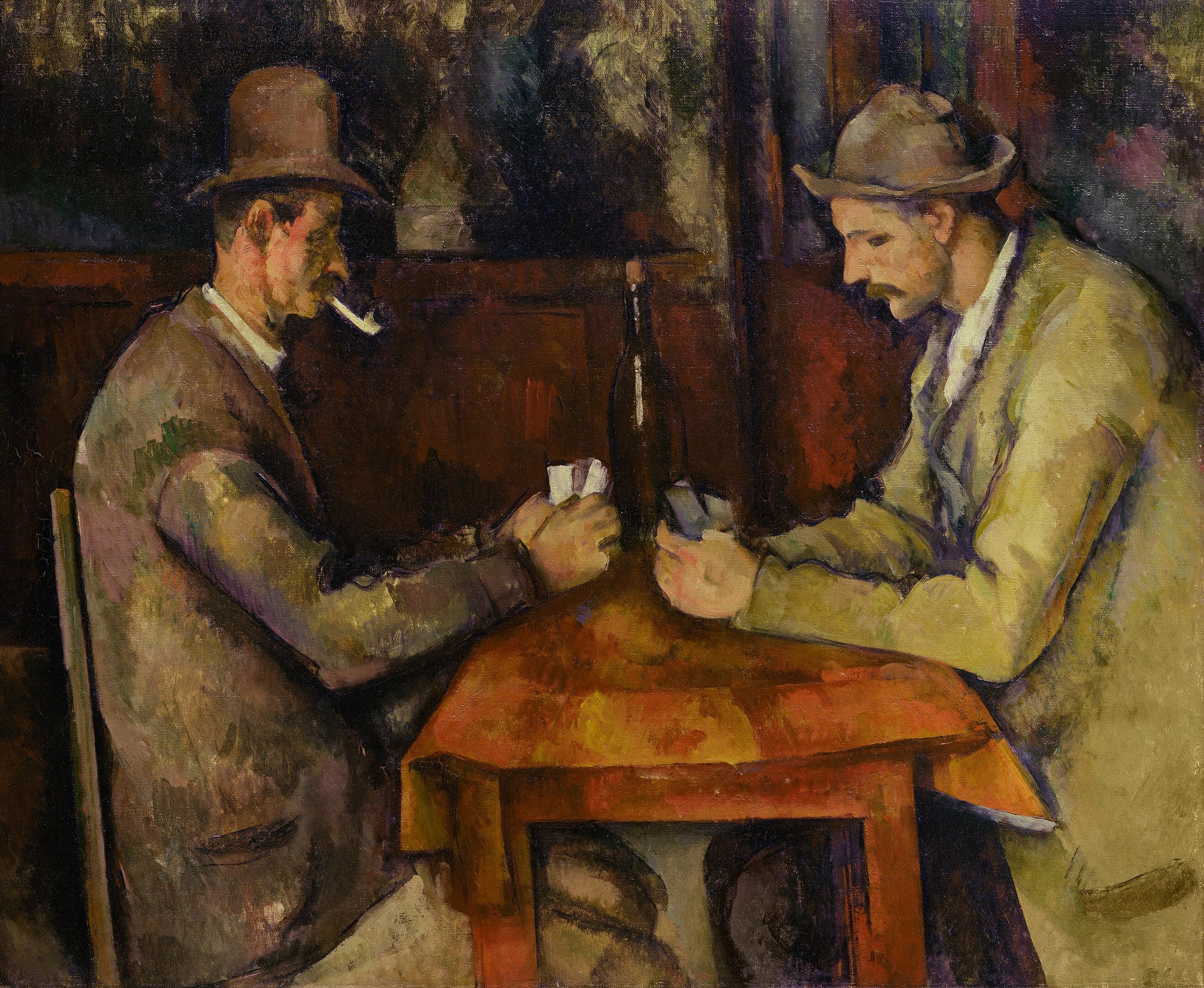
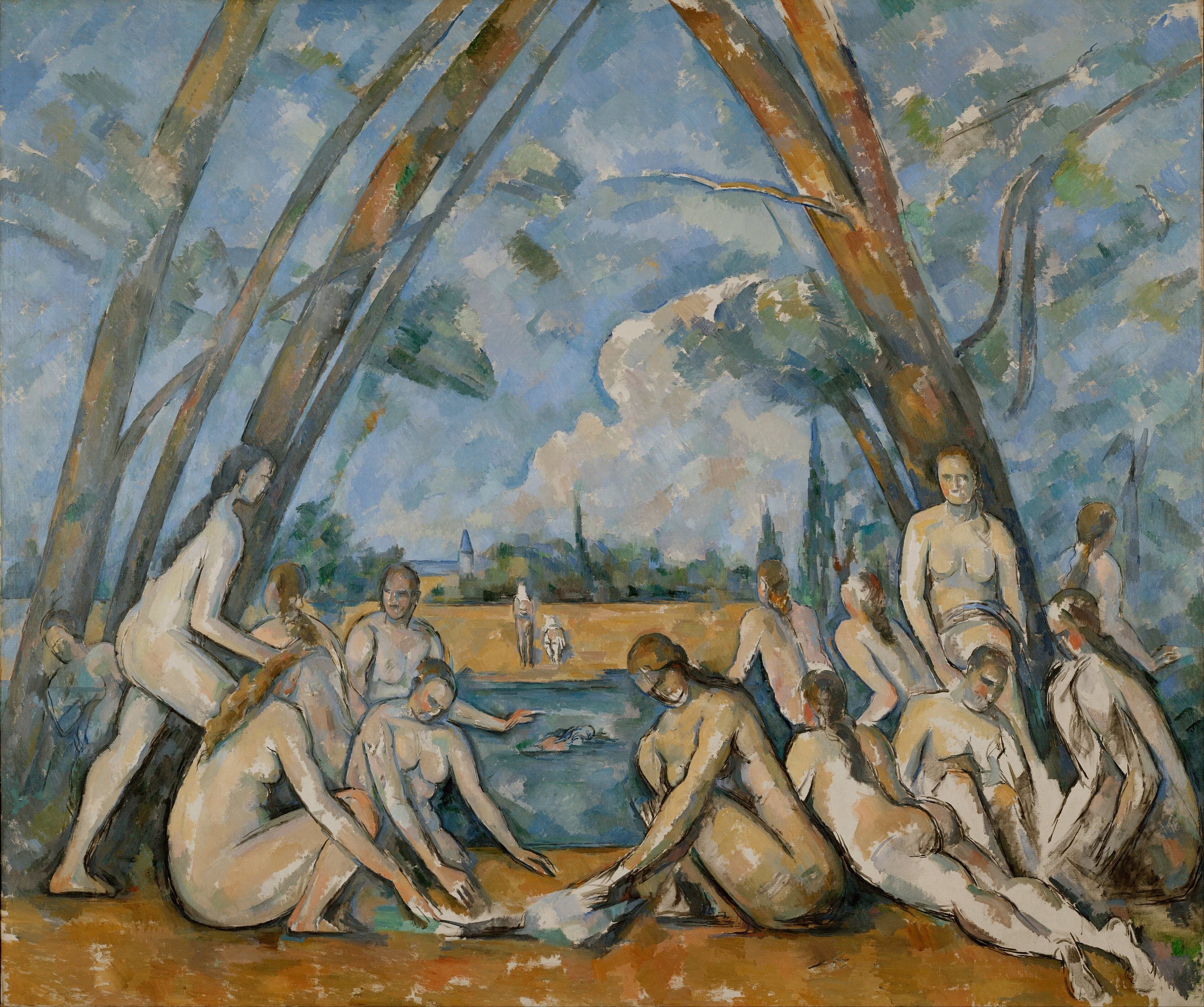
More by Paul Cézanne
If you like Paul Cézanne
Explore painters from the same movements and circles.
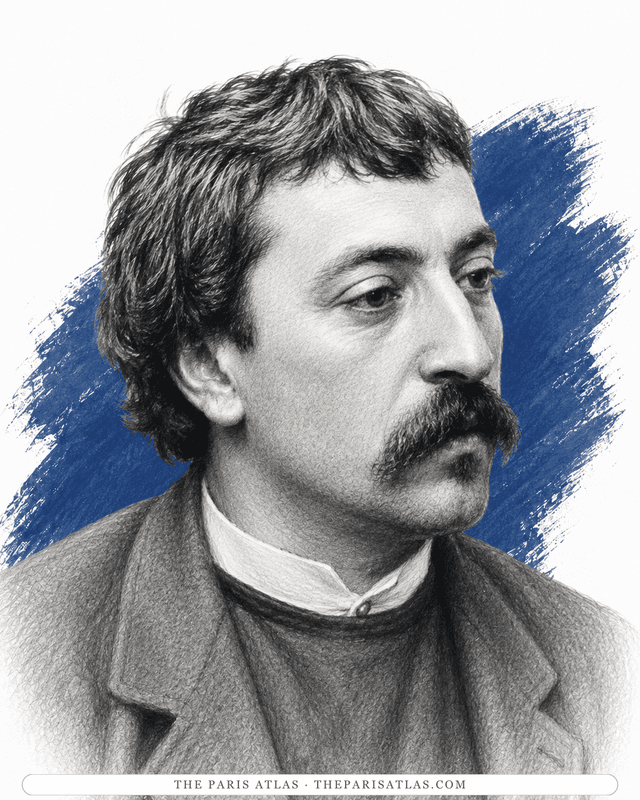
Paul Gauguin
Stockbroker turned painter who came into art through Camille Pissarro, showed with the Impressionists, and left Europe for Polynesia.
View artist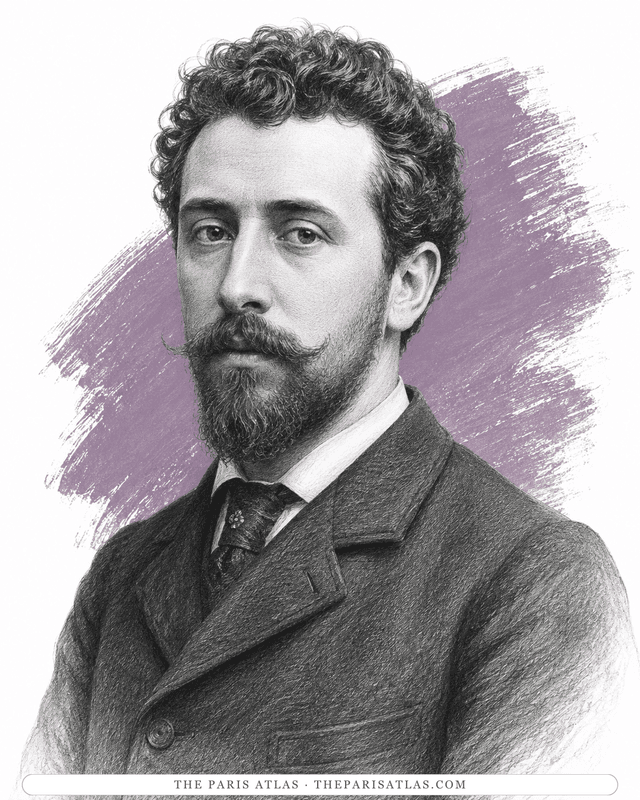
Georges Seurat
Parisian painter who built pictures from small dots of pure colour on optical principle, co-founded the Salon des Indépendants, and detonated the last Impressionist exhibition of 1886 with A Sunday on La Grande Jatte. He died at thirty-one.
View artist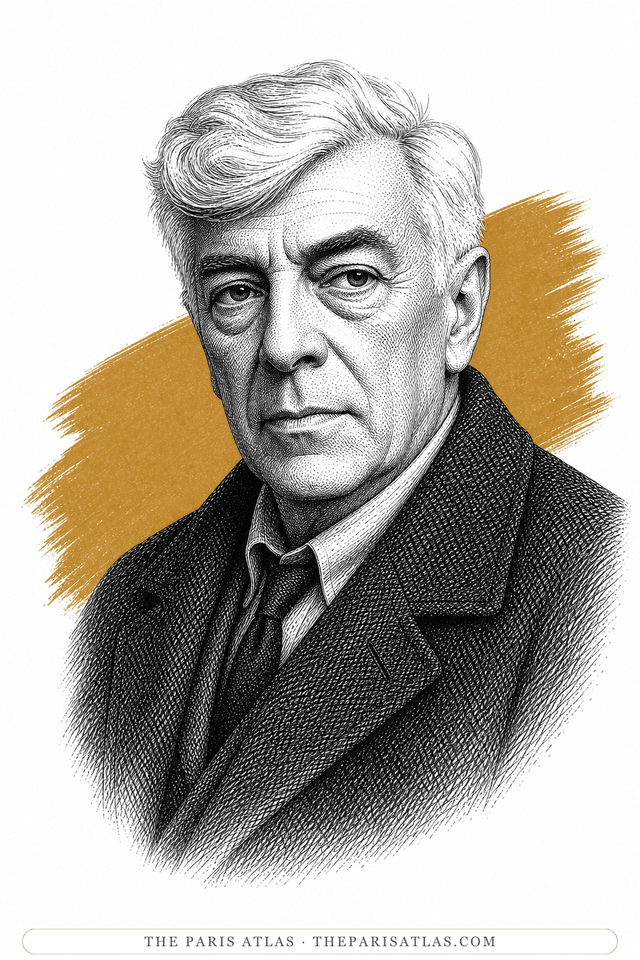
Georges Braque
The Le Havre house-painter's son who invented Cubism in Montmartre with the Spanish painter Pablo Picasso between 1908 and 1914 — the quieter half of the most consequential partnership in modern art — and who invented papier collé, the pasted-paper picture, in September 1912. He was given a French state funeral in 1963.
View artist
References
The sources below include collection records, catalogues, scholarly research, and primary materials that informed this page. They document Mont Sainte-Victoire, its making, and its place in cultural history.

1Paul Cézanne, Mont Sainte-Victoire, ca. 1902–6 (1994.420)
Official recordThe Metropolitan Museum of ArtUsed forOfficial record used to verify names, dates, institutional details, or other factual information on this page.

2Mont Sainte-Victoire and the Viaduct of the Arc River Valley — Paul Cézanne
WebsiteThe Metropolitan Museum of Art — collection record and Asher Miller’s commentaryUsed forWeb source consulted for documented facts and historical context presented on the Mont Sainte-Victoire page.
3Paul Cézanne (1839–1906)
WebsiteThe Metropolitan Museum of ArtUsed forWeb source consulted for documented facts and historical context presented on the Mont Sainte-Victoire page.
4Aix-en-Provence, city of Paul Cezanne
WebsiteOffice de Tourisme d'Aix-en-ProvenceUsed forWeb source consulted for documented facts and historical context presented on the Mont Sainte-Victoire page.
These references provide the documented foundation for this work's history and interpretation. Claim-level citations remain attached to the specific claims they support.
 Explore more resources